Caffeine Shampoo for Women: Does It Actually Work?
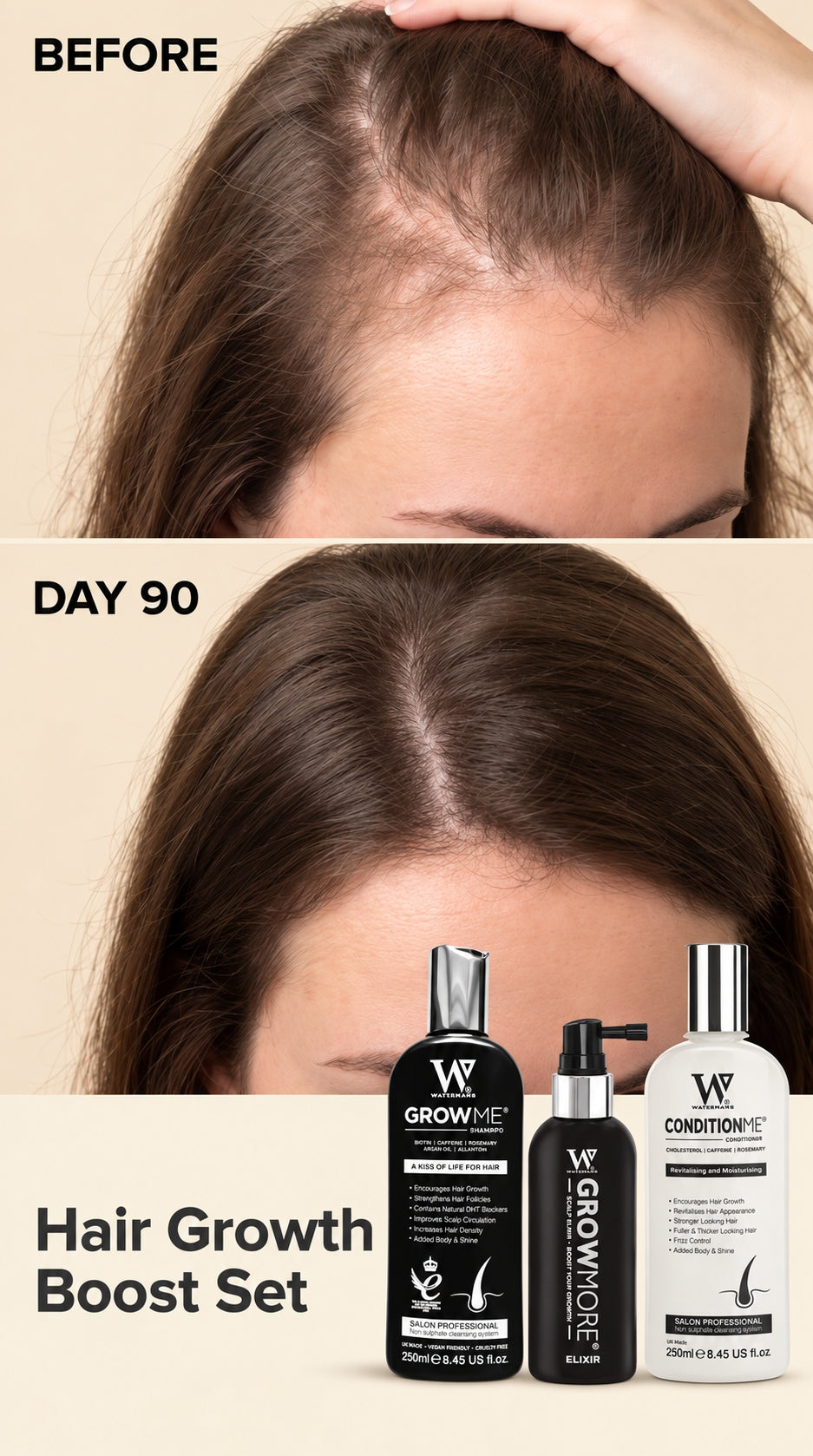
Caffeine shampoo for women is a cleansing shampoo built around caffeine, an ingredient that penetrates the scalp quickly and has laboratory evidence behind its effect on hair follicle cells. Used consistently it can support a comfortable scalp environment and help finer hair look fuller. What it cannot do is change your hormones, and no rinse off wash ever will. The honest verdict is that caffeine earns its place in a formula, but works far harder with company than alone.
Our caffeine shampoo, in one line
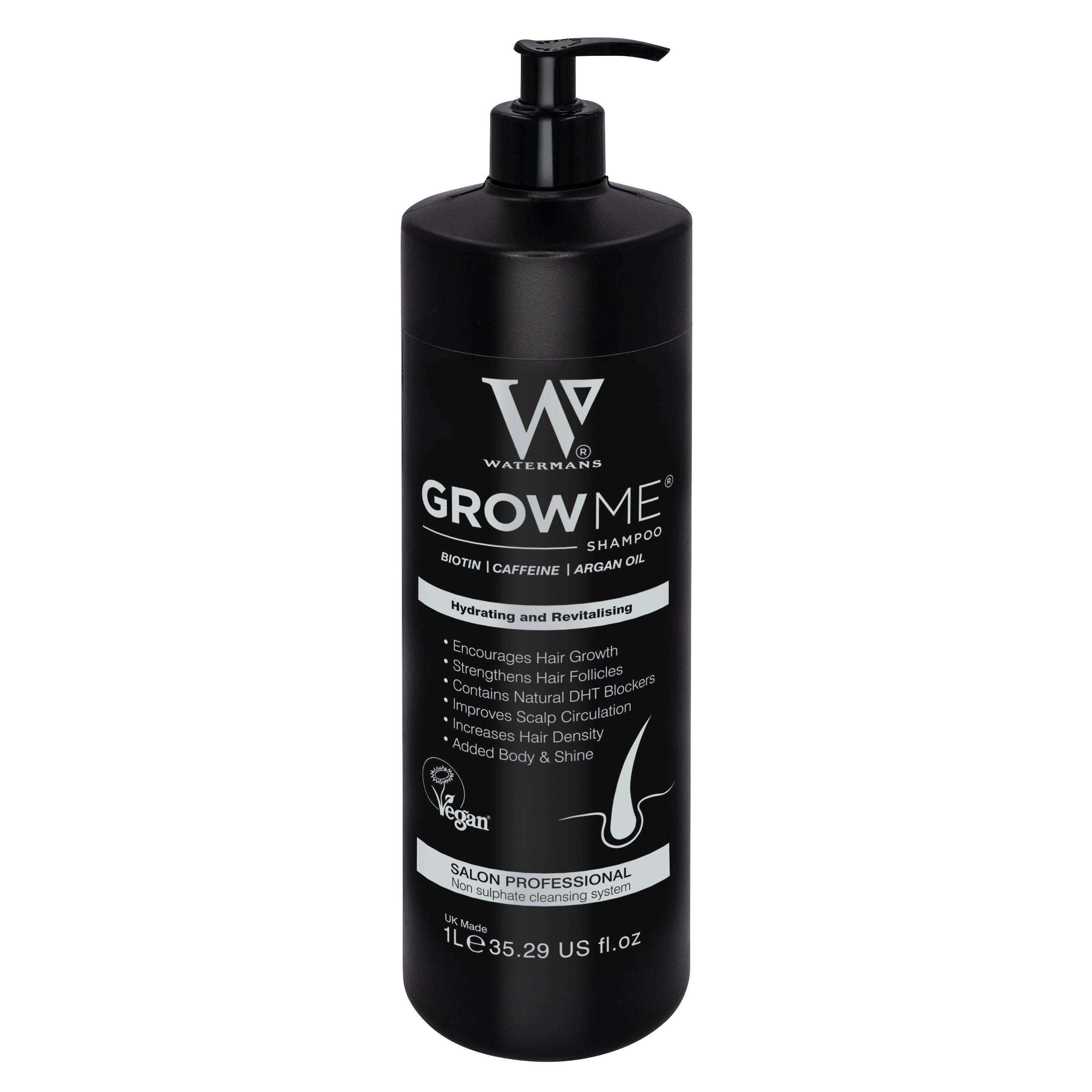
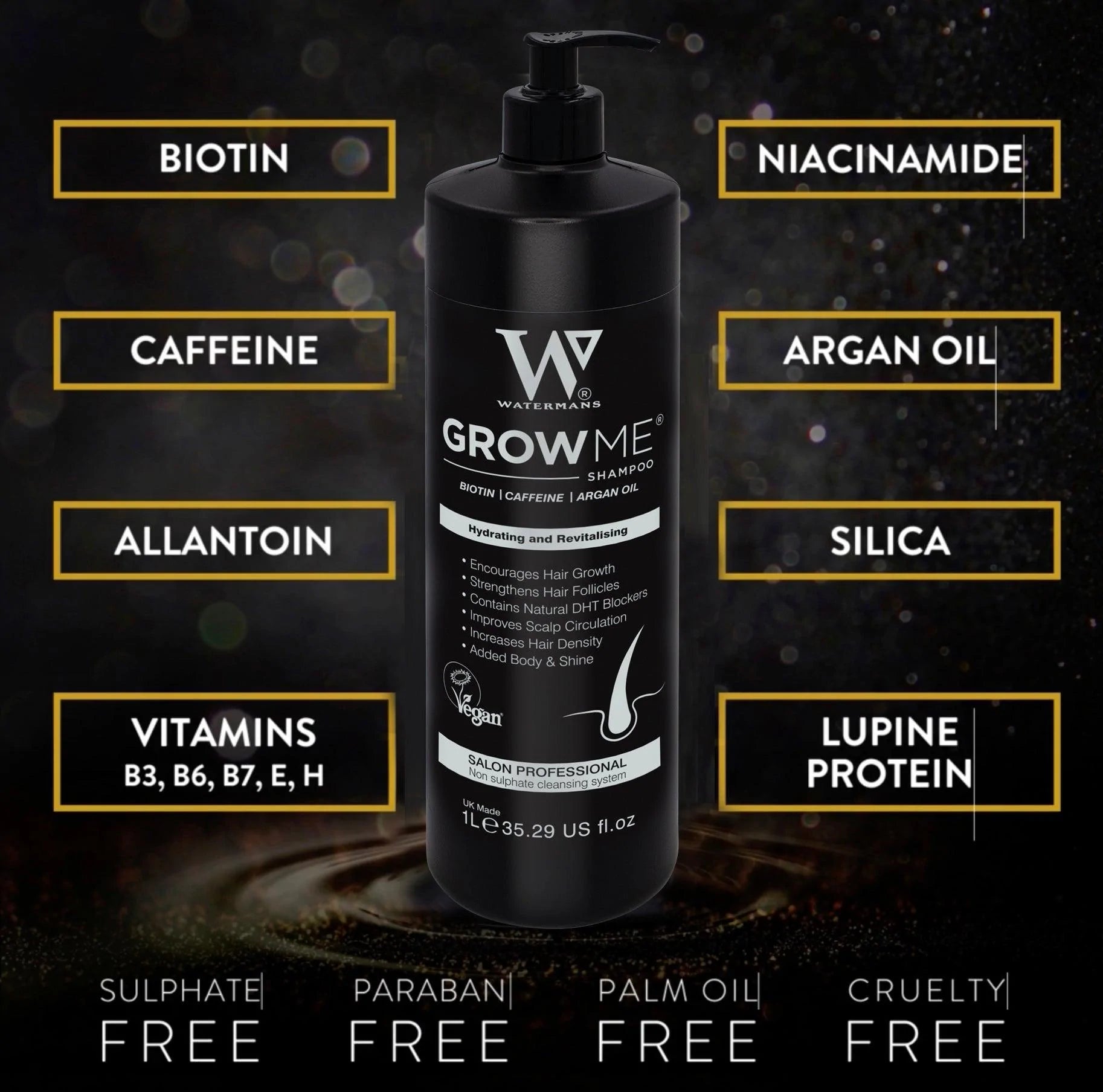
Grow Me® Shampoo, £14.95, is a sulphate free caffeine shampoo with rosemary, biotin and niacinamide. It is cosmetic: it supports a healthy scalp environment and reduces breakage for fuller looking hair.
Key takeaways
- Caffeine is one of the better studied cosmetic ingredients in hair care, but the evidence is mostly laboratory work, not large human trials.
- A wash sits on your scalp for around two minutes. Contact time is the real limit on what any shampoo achieves.
- Nothing you rinse off changes hormone levels in your body, whatever the bottle implies.
- Caffeine paired with biotin, rosemary, niacinamide, a protein and a moisturising oil covers scalp, strength and moisture. Caffeine alone covers one of the three.
- Shedding, pattern thinning and breakage are three separate problems, and shampoo only genuinely helps with the third.
- Give any new wash eight to twelve weeks before you judge it. Hair grows about 1.25 cm a month.
Does caffeine shampoo for women actually work?
Caffeine applied to the scalp does reach the follicle, and quickly. Research using human follicles grown in the laboratory found that caffeine counteracted some of the suppressive effect of DHT on follicle cells, and that finding is why the ingredient moved from novelty to standard. Take the result seriously and take its limits seriously too. Laboratory follicles sit in caffeine continuously. Your scalp meets it for the length of a wash, then rinses it away. The realistic outcome from a good caffeine wash is a calmer scalp, less breakage and hair that looks fuller, not a change in the biology driving thinning.
There is a second reason the marketing overreaches. DHT is produced and circulates in the body, so a topical wash is working at the very end of a process that starts nowhere near your scalp. Any bottle promising to change that is selling you something it does not control.

What is the difference between hair loss, shedding and breakage?
Three different problems get lumped together as "my hair is thinning", and they respond to completely different things. Working out which one you have decides whether a shampoo is relevant at all.
- Hair shedding is whole hairs released from the follicle, each with a small pale bulb at the root end. It is diffuse, usually triggered by illness, stress, childbirth or low iron, and it corrects itself over months. Shampoo neither causes it nor shortens it.
- Hair loss in the pattern sense is follicular miniaturisation. Follicles produce a finer, shorter hair each cycle until the hair barely shows. It is gradual, it follows a pattern at the parting and crown, and it is the one no cosmetic product resolves.
- Hair breakage is the fibre snapping along its length. The broken pieces have blunt ends and no bulb. Heat, bleach, tight styling and dry rough combing cause it, and this is where hair care genuinely earns its keep.
Look at what comes out on your brush. A pale bulb at one end means the follicle let it go. Blunt at both ends means the fibre broke, and that is the problem you can act on today.
Why is caffeine alone not enough?
Hair that looks flat, fine or fragile rarely has one cause, so a single ingredient rarely answers it. Four things have to go right at once: cleansing that does not strip, a scalp comfortable enough to grow from, moisture and protein so the fibre bends instead of snapping, and decent nutrition arriving from the inside. A caffeine only formula addresses the scalp and ignores the rest, which is why the more useful question is not "which caffeine shampoo for women is strongest?" but "what else is in the bottle?"

Which ingredients should sit alongside the caffeine?
Biotin
Vitamin B7 is part of the machinery behind keratin, the protein hair is built from. It contributes to the maintenance of normal hair, and it is a fixture of any serious growth focused formula.
Rosemary
An antioxidant botanical with more human evidence behind it than most plant extracts in hair care. Our guide to rosemary oil for hair sets out what the research does and does not show.
Niacinamide
Vitamin B3 supports the skin barrier and helps keep the scalp calm, which matters because a scalp that itches, flakes or feels tight is not a good foundation. There is more in our niacinamide for hair guide.
Argan oil
A moisturiser that smooths the cuticle, adds shine and helps the fibre resist snapping, which is where most length is quietly lost.
Allantoin
A soothing agent for anyone whose scalp runs itchy or sensitive, particularly useful if you wash often.
Lupin protein
A plant protein rich in amino acids that supports strength and elasticity, so hair flexes under a comb rather than breaking.
Caffeine only or multi ingredient: how do they compare?
| What hair needs | Caffeine only wash | Multi ingredient formula |
|---|---|---|
| Scalp comfort | Caffeine alone | Caffeine, niacinamide and allantoin |
| Strength and breakage resistance | Not addressed | Biotin and lupin protein |
| Moisture and shine | Not addressed | Argan oil |
| Evidence backed botanicals | No | Rosemary |
| Effect on hormones | None | None, and be wary of anything claiming otherwise |
Get a discount on your next order
Join the Watermans mailing list and we will email a discount code straight to your inbox. Made in the UK, over 6.5 million bottles sold since 2012.
How should you use a caffeine shampoo for women to get anything out of it?
Most of the disappointment with these products comes from how they are used, not what is in them. Six habits make the difference.
- Work it into the scalp, not the lengths. The ingredients are aimed at the skin. The lengths only need what runs down during rinsing.
- Give it two minutes. Lather, leave it while you do something else in the shower, then rinse. A ten second wash and rinse wastes the formula.
- Wash as often as your scalp needs. Skipping washes does not save hair. It just collects several days of already released hairs into one alarming handful.
- Always condition the mid lengths and ends. Slip is what lets a comb pass without force, and force is what breaks hair.
- Detangle from the ends upwards on conditioned hair. Never drag a brush from the roots down through a knot.
- Photograph your parting on day one. In the same light, at the same angle. Memory is a terrible judge over eight weeks.

When is a shampoo not the right answer?
Hair care sits on top of whatever else is going on, and some situations need a GP rather than a better bottle. Book time with yours if you notice heavy shedding that has run beyond six months, a smooth completely bare patch, a sore, scaly or painful scalp, a parting that is visibly widening month on month, or shedding alongside exhaustion, weight change or very heavy periods. Iron stores and thyroid function are the two things most worth measuring, and both are ordinary blood tests. Watermans products are 100% cosmetic and do not treat medical hair loss. Individual results may vary.
If you are unsure whether what you are seeing is within normal range, our guide on whether hair loss is normal for a woman walks through the self checks, and if the change started around your forties, the menopause hair thinning guide covers the wider picture honestly.
Which Watermans wash fits this brief?
We make the multi ingredient kind this article argues for, so take the recommendation with that in mind and judge it against the ingredient list rather than the promise.

Caffeine with biotin, rosemary, niacinamide, argan oil, allantoin and lupin protein in one sulfate free everyday wash. Formulated to support a comfortable scalp environment and leave finer hair looking fuller. Vegan, cruelty free and made in the UK, with over 6.5 million bottles sold since 2012.

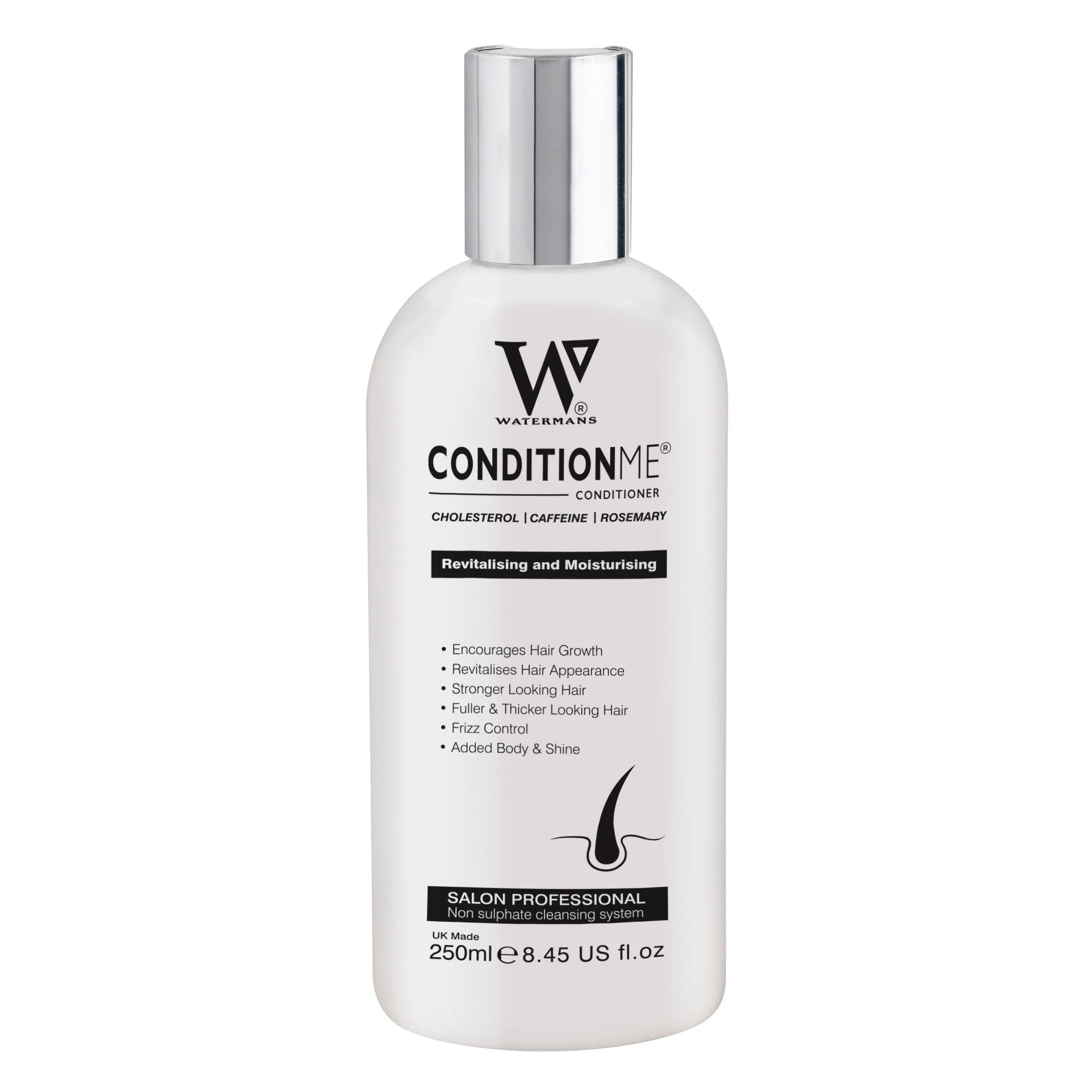
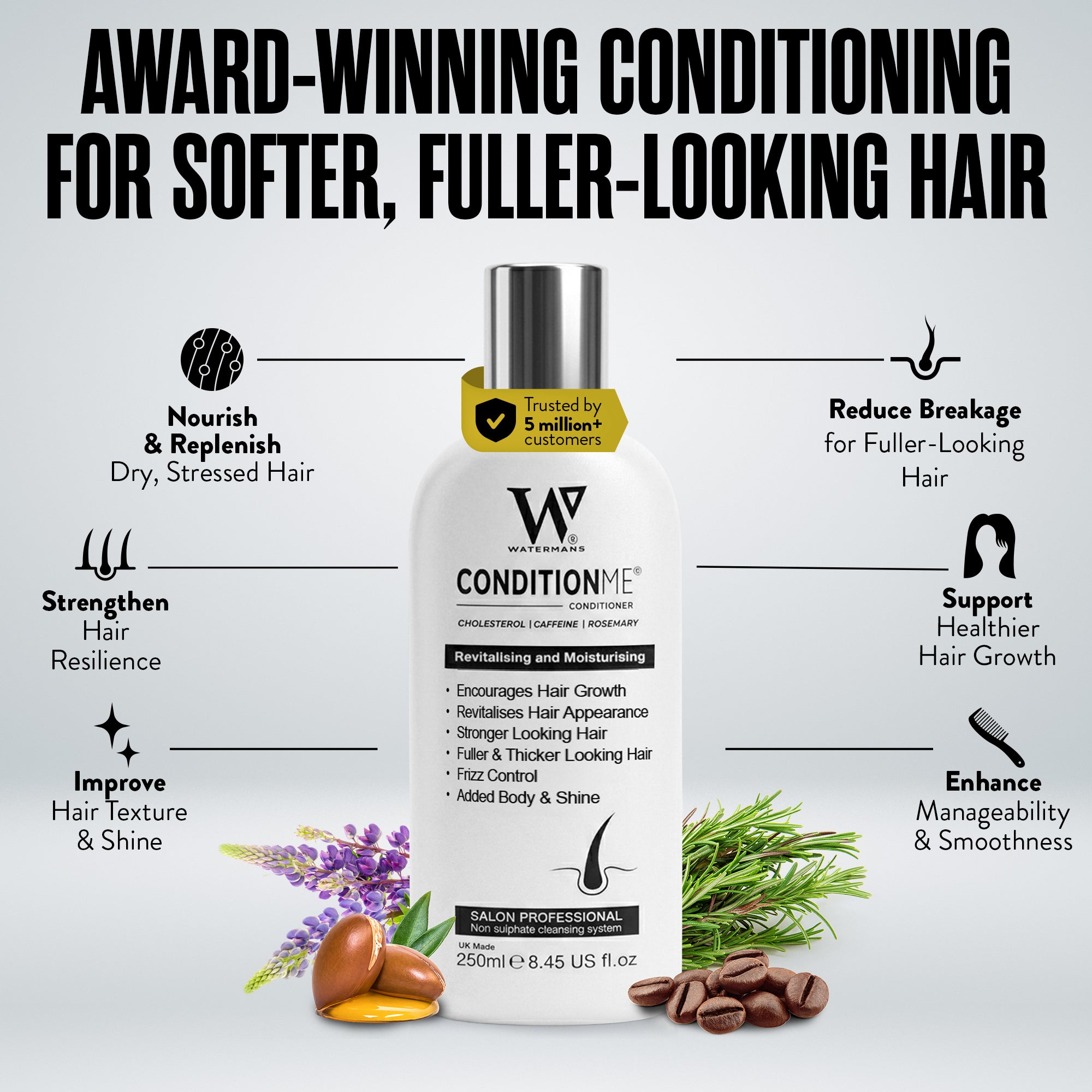
Condition Me Hair Growth Conditioner
The half people skip, and the half that does most of the visible work. Slip through the mid lengths is what stops the comb taking length with it, so if you only add one thing to a caffeine wash, add this.
Frequently asked questions
Does caffeine shampoo for women really work?
Caffeine has genuine laboratory evidence for supporting follicle cells, so it is a credible ingredient rather than a gimmick. The realistic result from consistent use is a comfortable scalp, less breakage and hair that looks fuller. It is not a medical result and no shampoo delivers one.
Can a caffeine shampoo change DHT levels?
No. DHT is produced and circulates in the body, and a product you rinse off after two minutes does not alter that. Laboratory work suggests caffeine can counteract some of DHT's effect on follicle cells in a dish, which is a much narrower claim than the bottles usually make.
How long before I can judge a new shampoo?
Eight to twelve weeks of consistent use. Hair grows roughly 1.25 cm a month, so any real change arrives slowly. Photograph your parting at the start, in the same light, or you will have nothing to compare against.
Is caffeine shampoo suitable during the menopause?
Yes, a gentle caffeine formula with scalp supporting extras is a sensible everyday choice through the menopause years. Just keep it in proportion: nutrition, iron stores, thyroid checks and gentle handling are the bigger levers at that stage.
Can I use caffeine shampoo every day?
A well formulated sulfate free one is gentle enough for daily use. Wash as often as your scalp actually needs rather than to a rule, and always condition the lengths afterwards.
Will caffeine shampoo help postpartum shedding?
It will not shorten the shed, because those follicles committed to resting months earlier. What it can do is keep the scalp comfortable and reduce the breakage that stacks on top, so you keep the length you still have.
Does caffeine shampoo work for men too?
The ingredient behaves identically on any scalp. The formulas differ mostly in fragrance and marketing, so read the ingredients list rather than the label on the front.
Should I take a caffeine supplement instead?
No. The research on caffeine and hair is topical, on the scalp, not oral. Drinking more coffee does nothing for your hair and may cost you sleep, which does matter.
What is the bottom line on caffeine shampoo for women?
Caffeine shampoo for women is worth buying when caffeine is one of several working ingredients rather than the whole pitch. The evidence for caffeine at the follicle is real but comes mostly from the laboratory, contact time in a shower is short, and nothing you rinse away touches your hormones. So pick a formula that covers scalp comfort, strength and moisture together, use it properly for eight to twelve weeks, take a photograph on day one, and if the shedding is heavy or the parting is widening, get your iron and thyroid checked rather than buying a stronger bottle.
Most routines fall over because they are complicated, so start with the Grow Me hair growth shampoo and nothing else.
Sources & References
- Fischer TW, Hipler UC and Elsner P, Effect of caffeine and testosterone on the proliferation of human hair follicles in vitro, International Journal of Dermatology, 2007, the laboratory work behind the caffeine and DHT finding.
- Fischer TW and colleagues, Topical caffeine penetrates into human hair follicles, Skin Pharmacology and Physiology, 2016, on follicular penetration and contact time.
- NHS, public information on hair loss, including when to speak to a GP and which causes are temporary.
- NICE Clinical Knowledge Summaries, alopecia scenario guidance, on the investigations commonly considered for diffuse shedding, including ferritin and thyroid function.
- British Association of Dermatologists, public information leaflets on telogen effluvium and female pattern hair loss, on distinguishing shedding from patterned thinning.
- Panahi Y and colleagues, Rosemary oil vs 2% topical solution for the treatment of androgenetic alopecia, Skinmed, 2015, the human trial most often cited for rosemary.
If your question is about products or a routine rather than a medical one, you can talk to Gail Waterman, our co-founder, as an AI avatar on the Watermans homepage.