Capilia Longa: What It Is, Evidence and What to Check
Capilia Longa is turmeric, sold as a hair-care active. The marketing has run further than the evidence, so here is the honest version.
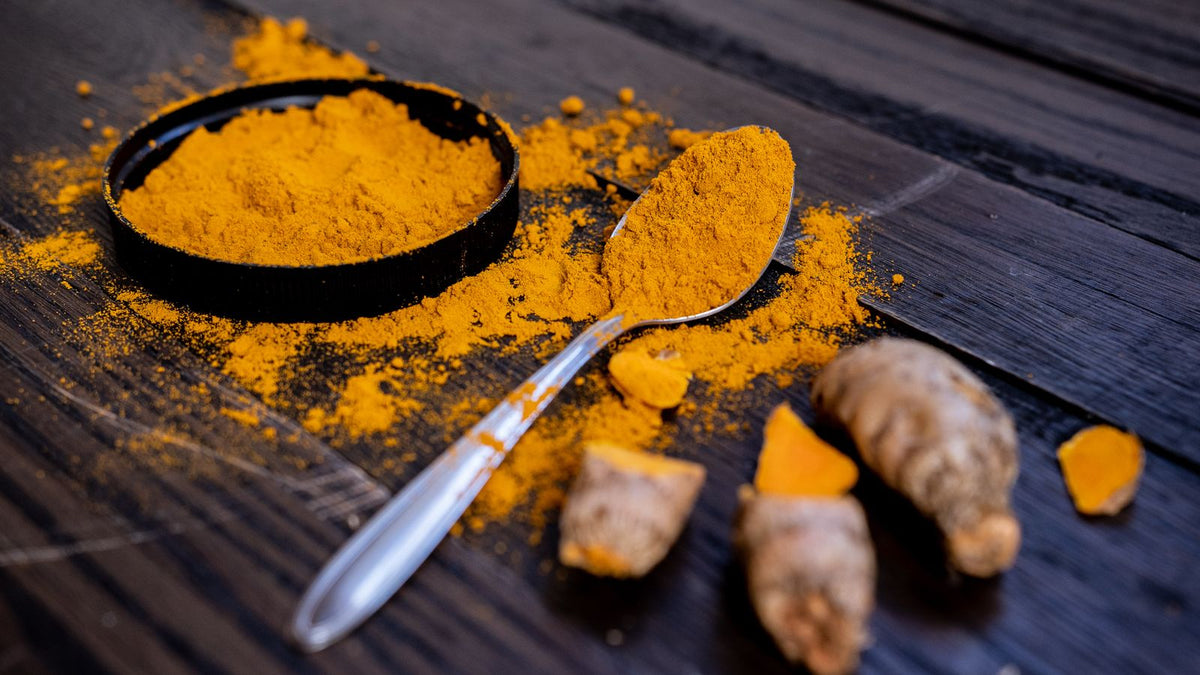
Capilia Longa is a cosmetic ingredient made from cultured stem cells of the turmeric plant, Curcuma longa, by the Spanish plant biotech company Vytrus. It appears in scalp serums, shampoos and other leave-on products, usually at 1 to 2 percent, where it acts as an antioxidant and a scalp-soothing agent. The maker's own studies report less shedding and fuller-looking hair; peer-reviewed human trials have not yet repeated that. Think of it as a promising supporting ingredient with a plausible mechanism, not as a reason to choose one product over another.
Our hair growth shampoo
Grow Me® Hair Growth Shampoo, £14.95. A sulphate free daily shampoo that supports a healthy scalp environment and helps reduce breakage, so lengths hold on and look fuller.
Key Takeaways
- Capilia Longa is a branded cosmetic extract of turmeric stem cells, not a medicine and not a new discovery about hair biology.
- The strongest claims about it come from the maker's own technical data rather than from peer-reviewed human trials, so they need reading carefully.
- The plausible mechanism is antioxidant and soothing activity at the scalp, which is a real and useful thing for a cosmetic to do.
- Turmeric on skin has better peer-reviewed evidence than turmeric on hair. The systematic review evidence is about skin health.
- It is a reasonable ingredient to have in a product. It is not a reason to abandon a routine that is already working.
- If you are shopping for it, a leave-on scalp serum gives the extract far more contact time than a shampoo, and the ingredients panel tells you more than the front label does.
What is Capilia Longa actually made from?
The name is a trade mark for an ingredient produced by culturing stem cells taken from Curcuma longa, the turmeric plant, and then extracting the medium those cells were grown in. The resulting material is standardised, water-soluble and formulated into cosmetic products at low percentages.
The phrase "stem cells" does a lot of heavy lifting in the marketing. It is worth being clear about what it does not mean. Plant stem cells applied to a human scalp do not become human cells, do not integrate into your follicles and do not repopulate anything. What you are applying is a plant extract with a particular chemical profile. That can still be useful. It is just a much more ordinary thing than the phrase suggests.
The active chemistry people point to is the curcuminoid family, the same yellow compounds that make turmeric turmeric. Curcumin is genuinely well studied as an antioxidant and anti-irritant, which is why it has crossed over from food into skincare and now into hair care.
What does the evidence say about Capilia Longa?
The evidence for the extract sits in four tiers of very different strength, and honesty matters more than enthusiasm here, so the table below separates them.
| Claim | Where the evidence comes from | How much weight to give it |
|---|---|---|
| Reduces hair shedding over three months | Small studies published by the ingredient maker in its own technical material, not yet in a peer-reviewed journal. | Low to moderate. The groups were small and the result has not yet been repeated in a peer-reviewed trial. |
| Antioxidant activity at the scalp | Well established for curcuminoids in general laboratory work. | Reasonable. The mechanism is real. Whether the dose in a rinse-off product matters on a human scalp is a separate question. |
| Soothes an irritated scalp | Supported indirectly by the clinical literature on turmeric and skin, including a systematic review of turmeric for skin health published in Phytotherapy Research in 2016. | Reasonable, and this is the claim we would actually stand behind. |
| Affects the hormone pathway behind pattern hair loss | Isolated laboratory work on enzymes in cell culture. | Very low. A result in a dish is not a result on a head, and no good human data shows a topical turmeric product changes scalp hormone levels. |
The fourth row is the one that gets stretched furthest in marketing, and it is the one worth pushing back on hardest. The honest position is that nobody has shown a topical turmeric extract meaningfully alters the hormonal pathway involved in pattern hair loss in people. If a product page implies otherwise, that is marketing running ahead of the science.
Where good sources disagree
Laboratory researchers and cosmetic formulators tend to be more positive about curcuminoids than dermatology reviewers are, and the disagreement is mostly about bioavailability. Curcumin is famously poorly absorbed. Formulators argue that a topical scalp application sidesteps that problem; sceptics point out that penetrating the scalp barrier in a useful quantity has not been demonstrated. Both positions are defensible on the current data.

Which hair problem could a turmeric scalp extract realistically help with?
A turmeric scalp extract can only plausibly help with shedding and scalp comfort, not with follicular hair loss or with breakage, and most disappointment with any ingredient comes from aiming it at the wrong problem. Three different things get lumped together as thinning and they are not the same.
- Hair loss is follicular. The follicle itself changes behaviour, producing progressively finer and shorter hairs, as in androgenetic alopecia. No cosmetic ingredient changes this, turmeric extracts included.
- Hair shedding is a cycle event. A larger than usual number of follicles enter the resting phase together, usually two to three months after a trigger such as illness, a crash diet or significant stress. Most shedding of this kind resolves on its own. A calmer scalp does no harm while you wait.
- Hair breakage is the fibre snapping along its length. It has nothing to do with follicles and everything to do with the cuticle, and it is the problem cosmetic products are genuinely good at addressing.
The extract is most plausible against the middle of those three, and only in the sense of supporting a comfortable scalp environment. If your actual problem is breakage, a conditioner or a mask will do more for you than any headline ingredient. Our guide to what causes hair damage explains how to tell breakage apart from the rest.
Get a discount on the thinning hair range
Join the Watermans mailing list and we will email a discount code straight to your inbox, so you can try the thinning hair range for less. Vegan, made in the UK, over 6.5 million bottles sold since 2012.
How do you use Capilia Longa sensibly?
The extract is used on the scalp, in a leave-on product where possible, for a trial of three to six months with nothing else changed at the same time. Those four practical points make the difference between a fair trial and a wasted three months.
- Prefer leave-on over rinse-off. A serum that stays on the scalp gives any active far more contact time than a shampoo that is on for a minute.
- Apply to the scalp, not the lengths. The claimed action is at the skin. Rubbing it through the ends does nothing.
- Give it three to six months. The hair cycle sets the pace, not the bottle. Our explanation of the hair growth cycle covers why.
- Do not stack five new things at once. If you change your shampoo, add a serum, start a supplement and cut your hair in the same week, you will learn nothing about any of them.
- Watch for staining and sensitivity. Turmeric stains. Reputable cosmetic versions are processed to avoid this, but patch test on a small area if you have very light hair or sensitive skin.

Which products contain Capilia Longa, and what should you check before you buy?
Leave-on scalp serums are where the extract appears most, with brands typically listing it at 1 to 2 percent, and less often in shampoos and conditioners, where contact time is too short for a scalp active to do much. It is a topical cosmetic ingredient only, so a turmeric capsule or tea is a different product with different evidence behind it.
| Product type | How the extract is used | Worth it? |
|---|---|---|
| Leave-on scalp serum | Applied to the parting and massaged in, usually once a day, often alongside other actives such as caffeine or peptides | The only format where the ingredient gets enough contact time to matter. Judge the whole formula, not the one name. |
| Shampoo | On the scalp for a minute or two, then rinsed away | Fine as a bonus, weak as the main reason to buy. A shampoo earns its place by how it cleanses and how the hair feels afterwards. |
| Conditioner or mask | Applied to the lengths, rarely to the scalp | Little point. The claimed action is at the scalp, and conditioner mostly never touches it. |
| Capsule, powder or tea labelled turmeric | Swallowed | Not the same ingredient. This is food or a supplement, with curcumin's well known absorption problem, and it says nothing about a scalp extract. |
Five checks separate a sensible purchase from an expensive one.
- Find it on the ingredients panel, not just the front label. The extract is declared under its technical name, which refers to Curcuma longa callus conditioned media rather than to turmeric powder. If the panel only lists Curcuma longa root extract or powder, you are looking at ordinary turmeric, which stains and is a different thing.
- Look at where it sits in the list. UK cosmetic ingredient lists run in descending order of weight down to 1 percent, below which the order is free. An active that appears after the preservatives is almost certainly under 1 percent.
- Read the claim, not the ingredient. A UK cosmetic is not allowed to make a medical claim about hair loss or any other condition, so a product promising to bring hair back or undo thinning is either overreaching or not a cosmetic. Fuller-looking, stronger-looking and less breakage are the honest cosmetic claims.
- Check the rest of the formula. Caffeine, niacinamide, panthenol and hydrolysed proteins have longer records than any turmeric extract. A serum that carries those as well is a better bet than one resting on a single trending name.
- Price the trial, not the bottle. A fair test is three to six months of daily use, so work out what that costs before you start, and patch test first if your skin is reactive.
What ingredients have a longer track record?
Caffeine, niacinamide, panthenol, hydrolysed proteins and rosemary all have a longer record in hair care than any turmeric extract, so none of this means you should avoid the ingredient. It means you should not pay a large premium for it alone. Each of those five has either a clear conditioning mechanism or genuine human data behind it. Our evidence-ranked look at rosemary oil for hair is a good comparison point for how a botanical claim should be weighed up.
The Watermans range is built on that more conventional set. We do not use the turmeric extract, and we would rather say so plainly than imply we have every trending ingredient on the shelf. What we do have is a cosmetic routine designed around reducing breakage and keeping the scalp comfortable.

Grow Me® Hair Growth Shampoo £14.95
A sulphate-free cleanse with caffeine, biotin, rosemary and niacinamide. Reduces breakage for fuller-looking hair without stripping the scalp. Vegan and made in the UK.

Grow More® Scalp Elixir £25.50
The leave-on step, for anyone who wants scalp actives with real contact time rather than ninety seconds in the shower.
Does turmeric help skin as well?
This is where turmeric has its firmest ground. A systematic review of the clinical evidence on turmeric and skin health, published in Phytotherapy Research in 2016, found that topical and oral turmeric preparations showed benefit across a range of skin conditions in the trials available, while also noting that study quality was variable and larger trials were needed.
That is a fair summary of turmeric generally: plausible mechanism, encouraging early data, not yet a settled case. Applying it to hair specifically stretches the evidence further than applying it to skin.
When should you see a GP or pharmacist rather than change your shampoo?
Some scalp changes need a professional look, and an ingredient conversation is a distraction from them. Speak to your GP or a pharmacist if you notice any of the following.
- Hair coming out in distinct round or oval patches rather than thinning evenly.
- A scalp that is sore, scaly, weeping or has visible broken-off stubble.
- A heavy shed that has continued for more than three months.
- Hair change alongside fatigue, weight change or a new medicine.
Watermans sells cosmetics. We do not run clinics and cannot tell you what is happening on your scalp. If your question is about products or a routine rather than a medical one, you can talk to Gail Waterman, our co-founder, as an AI avatar on the Watermans homepage.
Please note: Watermans products are 100% cosmetic and do not treat medical hair loss. Individual results may vary.
Frequently asked questions
Does Capilia Longa actually work?
The extract has a plausible antioxidant and scalp-soothing action, and the maker's studies report reduced shedding. Peer-reviewed human evidence is thin. It is a reasonable supporting ingredient rather than a decisive one.
Is the extract the same as eating turmeric?
No. The extract is a standardised cosmetic ingredient produced from cultured turmeric stem cells and applied to the scalp. Eating turmeric delivers curcuminoids to your gut, where absorption is famously poor. The two are not interchangeable.
Will it change hormonal pattern hair loss?
There is no good human evidence that it does. Some laboratory work on curcumin-related compounds and enzymes in cell culture gets cited in support of this idea, but a result in a dish does not demonstrate an effect on a human scalp.
How long should I try a product containing it?
Three to six months, changing nothing else at the same time. The hair cycle is slow, so a shorter trial tells you very little, and running several changes at once makes the result unreadable.
Will it stain my hair or scalp?
Properly processed cosmetic versions are formulated to avoid staining. Raw turmeric powder absolutely will stain, particularly very light or bleached hair, so home turmeric masks are a different and much riskier proposition.
Is it safe to use every day?
Cosmetic products containing it are formulated for regular use and are generally well tolerated. Patch test first if you have sensitive skin, and stop if the scalp becomes itchy or red.
Which products contain Capilia Longa?
Mostly leave-on scalp serums, where brands typically list it at 1 to 2 percent alongside other actives, and a smaller number of shampoos. It is declared on the ingredients panel under a technical name referring to Curcuma longa callus conditioned media, not as turmeric powder. A leave-on serum is the only format that gives it meaningful contact time.
Do Watermans products contain this turmeric extract?
No. Our range is built on caffeine, biotin, rosemary, niacinamide and hydrolysed lupine protein. We would rather use ingredients with a longer track record than chase every trending name.
Is it worth paying more for?
Not on its own. Judge a product on the whole formulation, how it feels in use and whether you will actually keep using it, rather than on one headline ingredient on the front of the bottle.
What is the bottom line on Capilia Longa?
Capilia Longa is a genuinely interesting cosmetic ingredient with a sensible mechanism and encouraging early data, wrapped in marketing that consistently outruns it. The antioxidant and scalp-soothing framing is fair. The suggestion that it acts on the biology of pattern hair loss is not.
If it is in a product you like, that is a small point in its favour. If you are choosing a routine from scratch, choose it on the whole formulation and on whether you will stick with it, because consistency beats every headline ingredient. Watermans has sold over 6.5 million bottles since 2012, all made in the UK, and all cosmetic.
If you want the wash step doing something useful in the meantime, Grow Me hair growth shampoo is the one most people start with.
Sources & References
- Vaughn AR et al., Effects of Turmeric (Curcuma longa) on Skin Health: A Systematic Review of the Clinical Evidence, Phytotherapy Research, 2016
- Physiology, Hair, StatPearls, NCBI Bookshelf
- Telogen Effluvium, StatPearls, NCBI Bookshelf
- Male Androgenetic Alopecia, Endotext, NCBI Bookshelf
- NHS, Hair loss