Comparing Hair Loss Products: A Buyer's Checklist
Comparing hair loss products properly comes down to four things and nothing else: what is actually in the bottle, how much of it there is, what it costs you per month over a year, and whether the product is even aimed at your problem. Do those four and the shelf shrinks quickly. Skip them and you end up paying a brand premium for an identical ingredients list, which is the single most common way money gets wasted on this shelf.
Key takeaways
- Comparing hair loss products starts on the back of the bottle. Read the ingredients list before the front label. Two bottles at very different prices are often the same formula in different packaging.
- Work out cost per month, not cost per bottle. A cheap bottle you use twice as fast is not cheap.
- Match the product to your actual problem. Most disappointment comes from buying for shedding when the issue is breakage, or the other way round.
- Confident wording on the front of a bottle is marketing, not evidence. The ingredients list is the part that is regulated.
- Test one product at a time for twelve weeks with monthly photographs, or you will never know what did anything.
What does the ingredients list actually tell you?
The ingredients list is the most honest part of any hair product, because its contents and its order are regulated in a way the front-of-pack wording is not. Ingredients appear in descending order of quantity down to 1 percent, after which the order is at the manufacturer's discretion. So anything appearing after the preservatives and the fragrance is present in a very small amount, however prominently it is advertised on the front.
That single rule resolves most of the confusion on this shelf. A shampoo advertising a botanical extract that appears second to last in the list contains a trace of it. That is not necessarily a scandal, because many cosmetic actives work at low percentages, but it does mean the front label is describing a marketing decision rather than a formulation one, and you should price it accordingly.
Read the first six ingredients, look for the actives you actually came for, and check where they sit relative to the preservative. Then compare that list against the cheaper bottle next to it. When those two lists match, you have your answer about the price difference, and it has nothing to do with the hair.
Is your problem hair loss, hair shedding or hair breakage?
This is the step people skip, and skipping it makes every other comparison meaningless. Hair loss means the follicle producing progressively finer, shorter hair over years, in a recognisable pattern. Hair shedding means an unusual volume of hairs releasing at once, arriving suddenly, spread evenly across the scalp, usually two to four months after some trigger. Hair breakage means the fibre snapping partway along its length, so the follicle is perfectly healthy and the hair itself is damaged.
| Your problem | What is worth buying | What is a waste of money |
|---|---|---|
| Breakage, snapped ends, no bulbs | Conditioner, a mask, heat protection | Scalp serums and supplements |
| Sudden even shed after an event | Very little. Blood tests and time | Almost everything sold for it |
| Itchy, flaking, uncomfortable scalp | A gentler cleanser, a scalp step | Density serums bought for itch |
| Inherited pattern, widening parting | A GP conversation first, cosmetics second | Anything promising to restore the pattern |
Work through our three clue self-check before you buy anything. It takes ten minutes and it is the highest value ten minutes in this whole process, because it decides which column above you are shopping in.
How should you compare cost when comparing hair loss products?
Cost per bottle is the wrong number. Cost per month over twelve months is the right one, because everything on this shelf works only while you keep using it and the honest question is whether you can sustain it for a year.
To get there, take the bottle size, the amount used per application and the applications per week, and work out how many bottles a year you will need. A 250ml shampoo used three times a week lasts a lot longer than a 50ml serum used daily. This is where price differences invert: the expensive-looking item is frequently the cheaper one annually, and the bargain bottle turns out to be the one draining your account.
Then add the honest question about what happens when you stop. There is no course you complete with any of this, medical or cosmetic, and our page on what happens when you stop is worth reading before you commit rather than a year in. If a routine only makes sense at a price you cannot hold for twelve months, choose a cheaper routine you can.
Own-brand versus big brand. Where a supermarket or warehouse own-label carries the same actives at the same percentages as the famous version, you are comparing packaging and marketing budget, not formulation. Turn both bottles round and read the lists side by side. If they match, buy the cheaper one and spend the difference on something that addresses a different part of your problem.
What do the words on the front of the bottle actually mean?
Front-of-pack wording is written by a marketing team within advertising rules, and those rules leave a lot of room. Phrases built around user surveys, for example "9 out of 10 women agreed", describe how a group of people felt in a questionnaire, not what happened to their hair. Percentages quoted without a sample size, a timeframe or a comparison group tell you almost nothing at all.
Words describing appearance are the honest ones, and they are also the ones a cosmetic company is entitled to use. Fuller-looking, thicker-looking, reduces breakage, supports scalp comfort: these describe genuine cosmetic effects and can be substantiated. Wording that implies a medicine-level result from a shampoo should make you turn the bottle round and check whether anything in the list could plausibly be responsible.
Where good sources disagree on an ingredient, and on several popular ones they do, an honest label reflects that uncertainty rather than resolving it in the seller's favour. Our page on what kopexil can and cannot do is an example of an ingredient with genuinely mixed evidence, described as such.
Get a discount on your next order
Join the Watermans mailing list and we will email a discount code straight to your inbox. Vegan, made in the UK, over 5 million bottles sold since 2012.
How do you run a fair test once you have chosen?
Buy one thing. Not three. If you start a shampoo, a serum and a supplement in the same week you have designed an experiment that cannot produce an answer, and you will renew all three out of uncertainty.
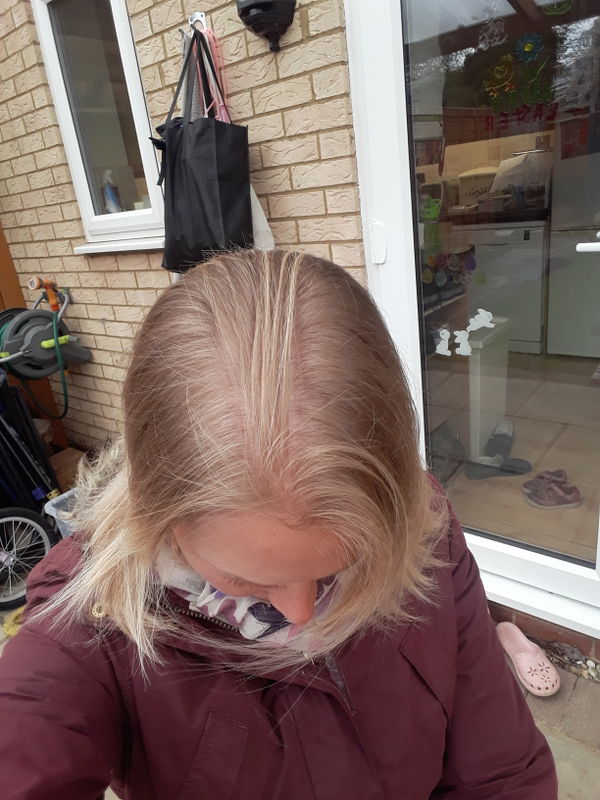
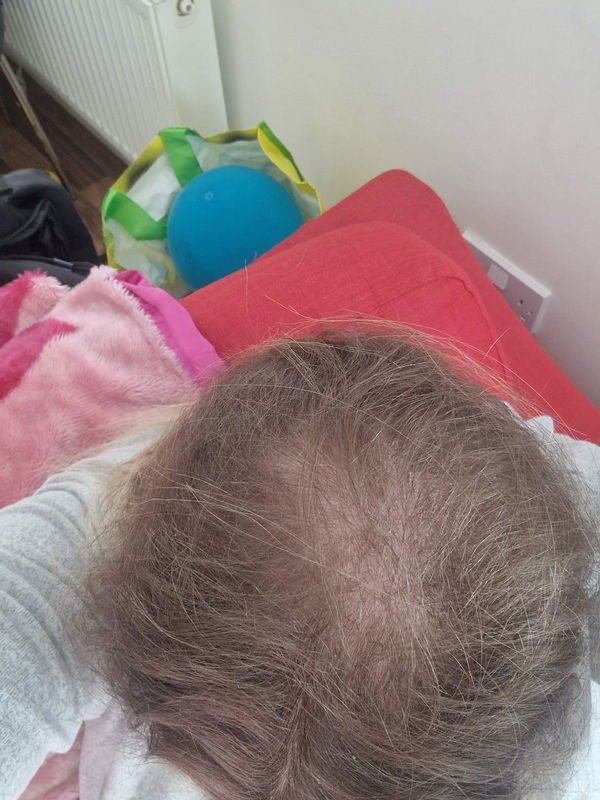
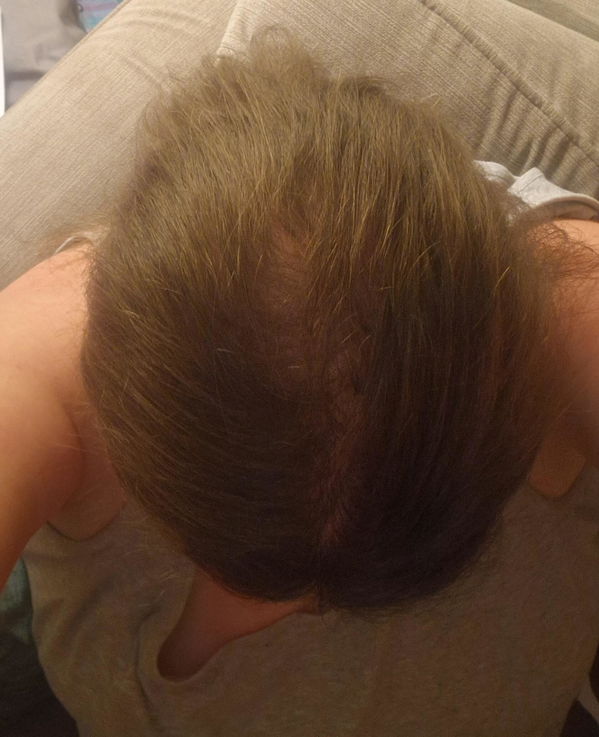
Photograph first: three angles, the hairline straight on, the crown from above, the parting combed to its usual side, same room, same light, hair dry, no filters. Repeat monthly on the same date. Then use the product exactly as directed for twelve weeks, because a hair grows roughly a centimetre a month and anything entering the growing phase today is not visible for a season.
Judge it on three measures, in this order: is the scalp more comfortable, is there less snapped hair on the towel and brush, and do the photographs differ. The first two usually move first and are real results. Density moves last and least. If nothing has changed at week twelve, not renewing is a rational decision, and it is one no product page will ever suggest to you.
For serums specifically, where the marketing is loudest and the price spread is widest, our guide to comparing hair serums applies the same method to that one format in more detail. This page is the general version across shampoos, conditioners, serums and supplements.
Where do Watermans products sit on that checklist?
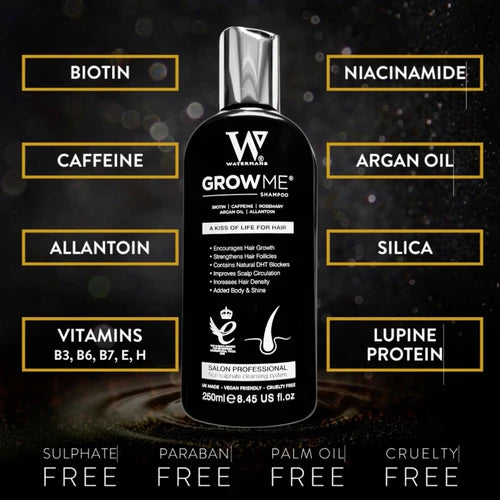
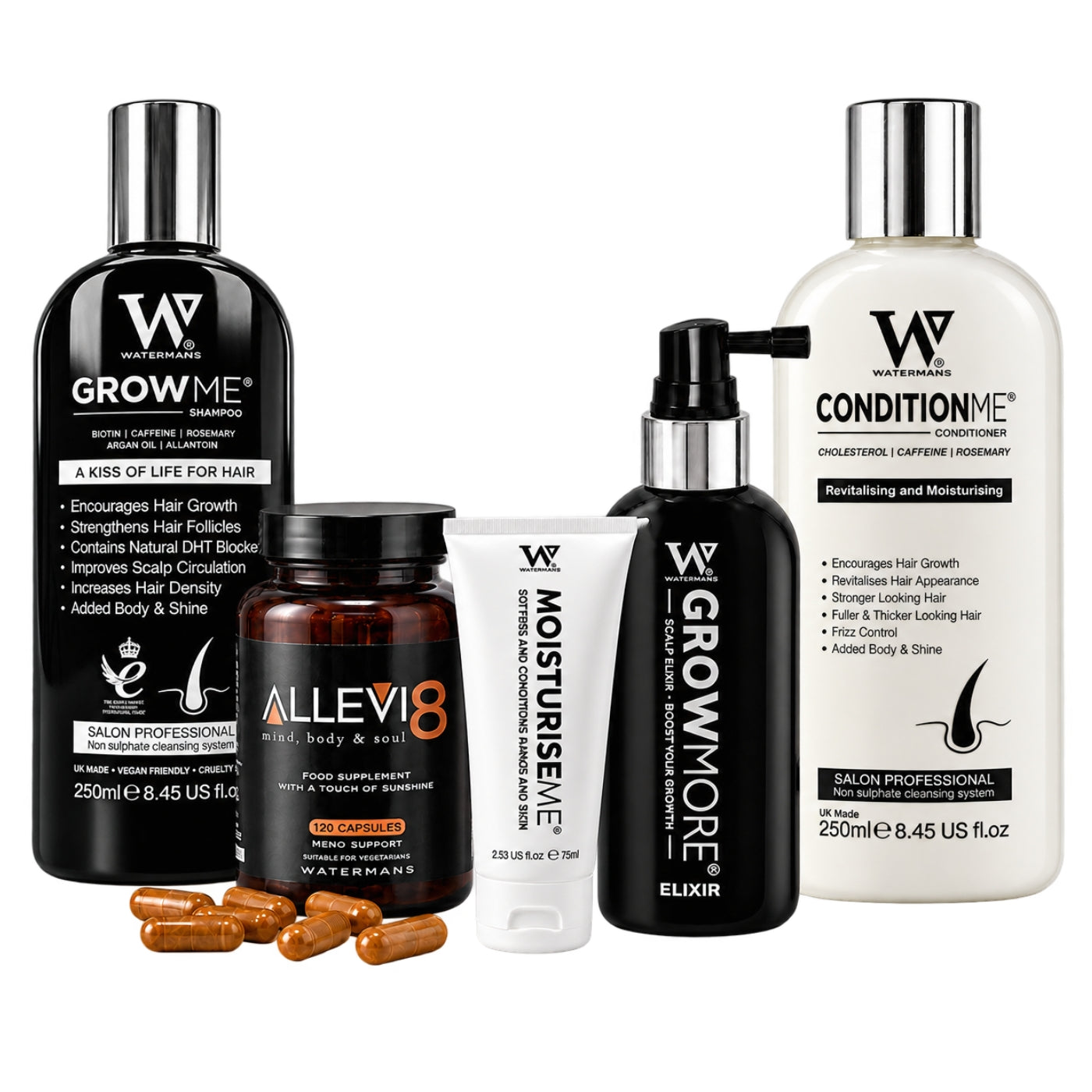
Comparing hair loss products honestly means running the same four checks on our own range, so here they are. We sell cosmetics. Our actives are biotin, caffeine, rosemary, niacinamide and hydrolysed lupine protein at cosmetic levels, they sit where you would expect in the list, and what they honestly do is support a comfortable scalp and reduce breakage so you keep the hair you have grown. They do not change an inherited pattern.
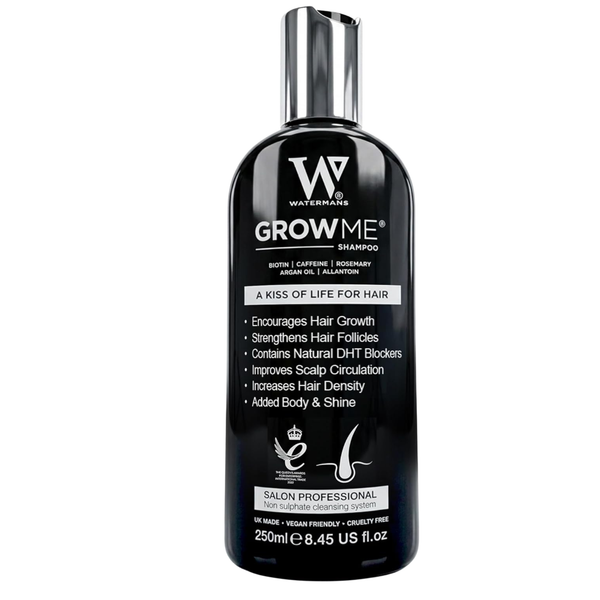
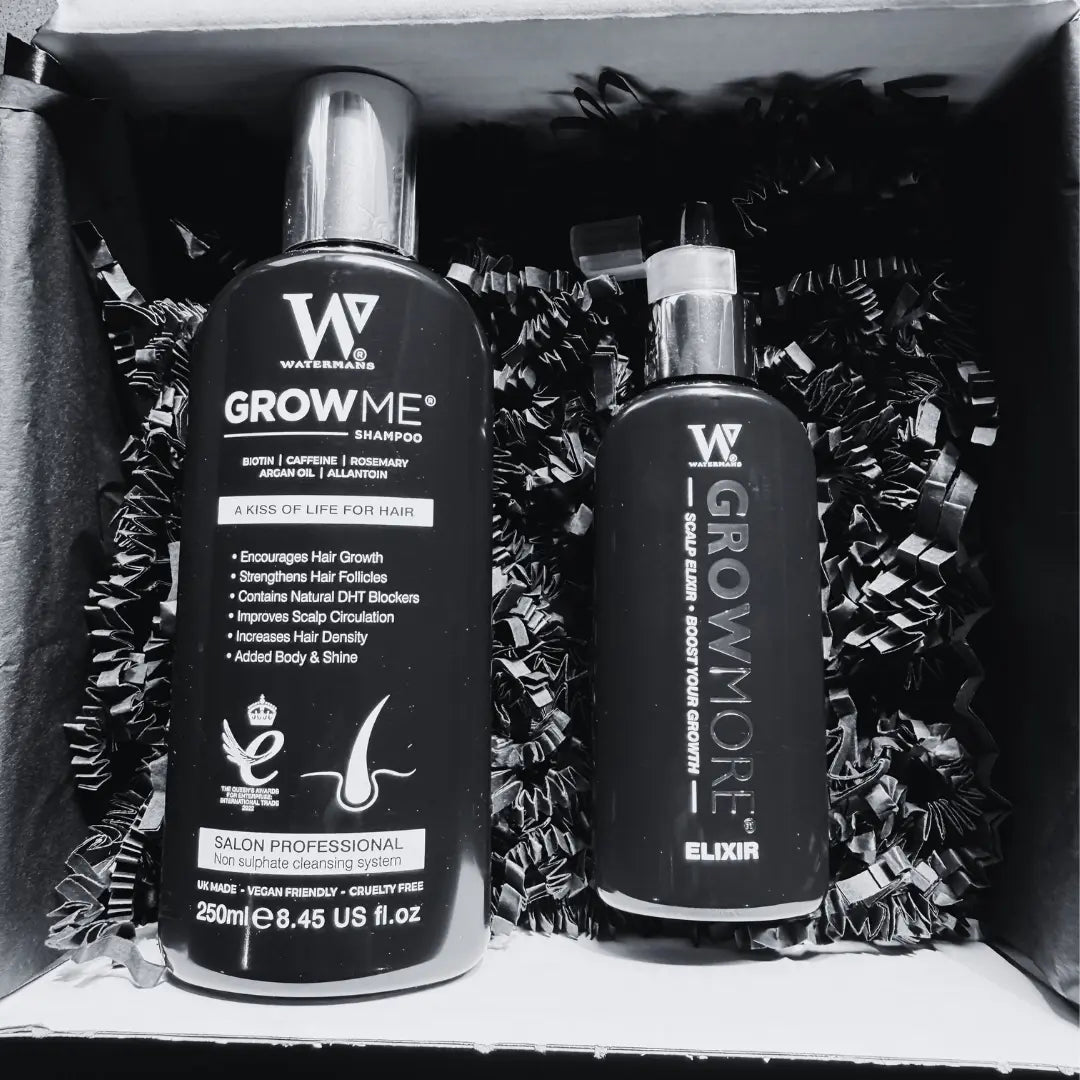
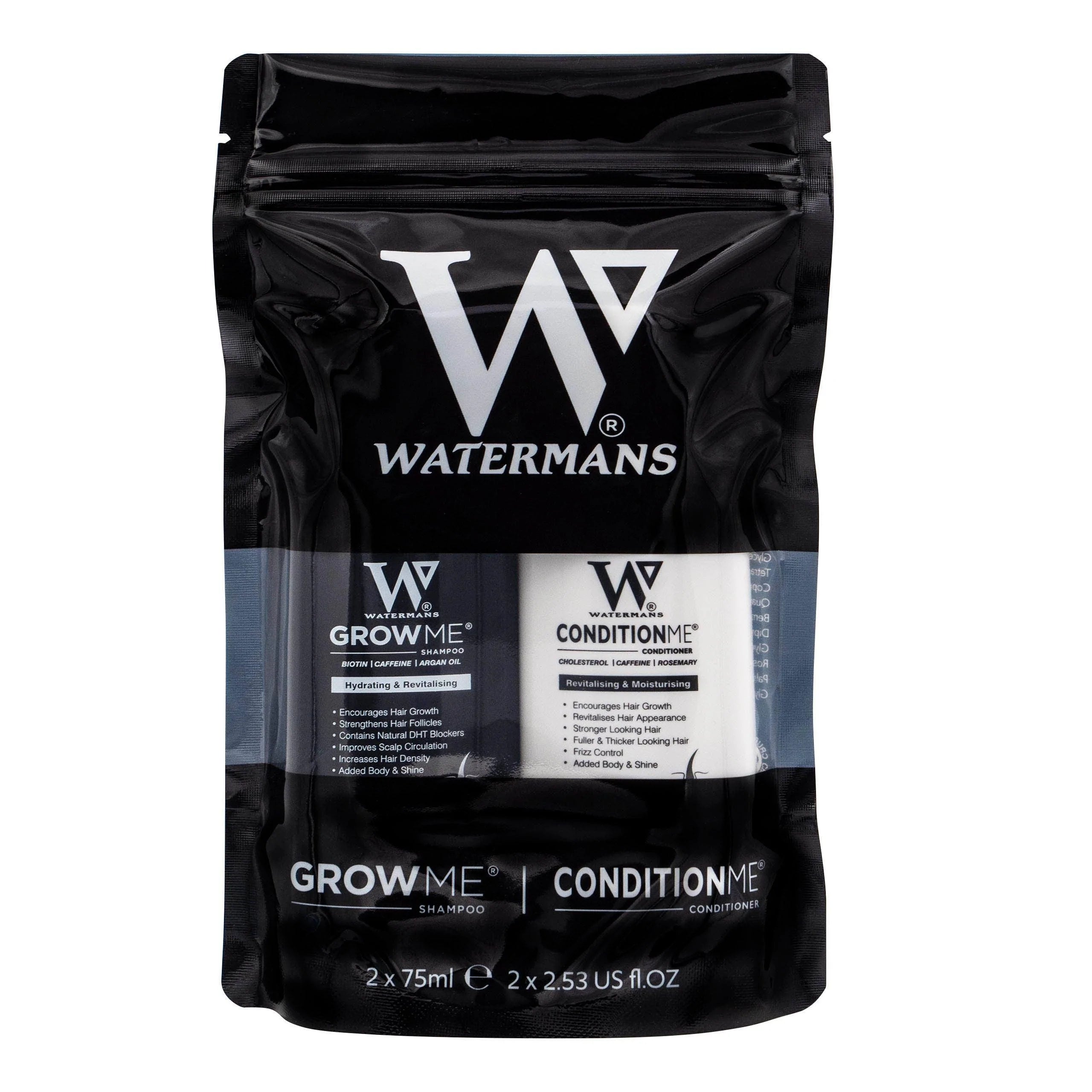
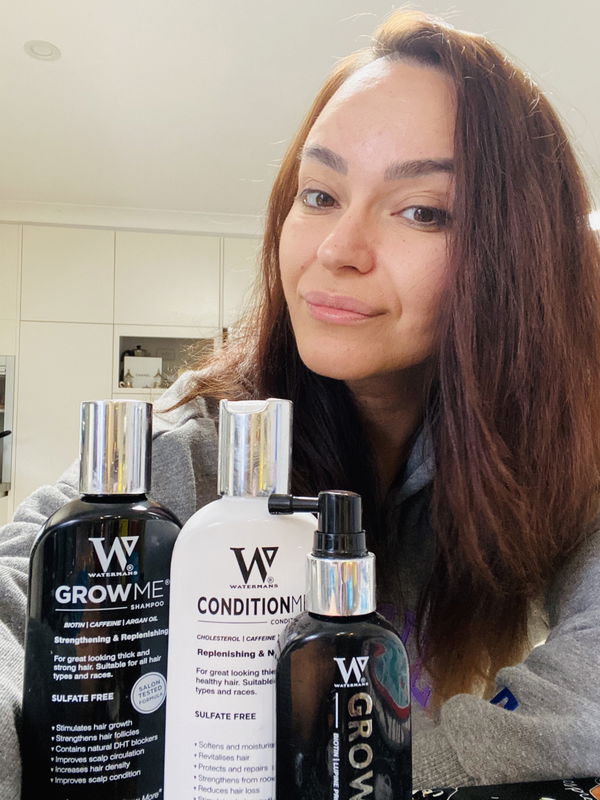
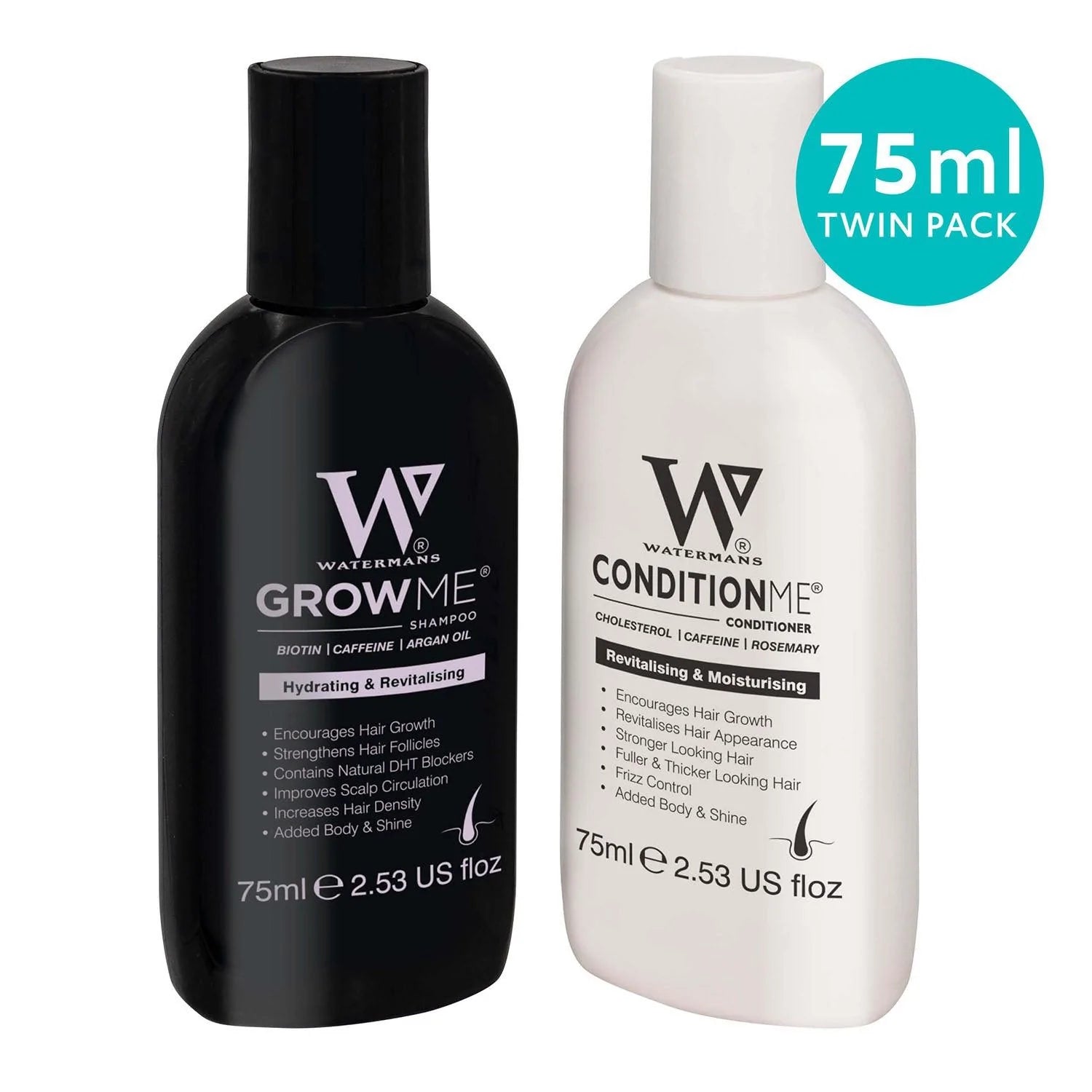
Grow Me Shampoo
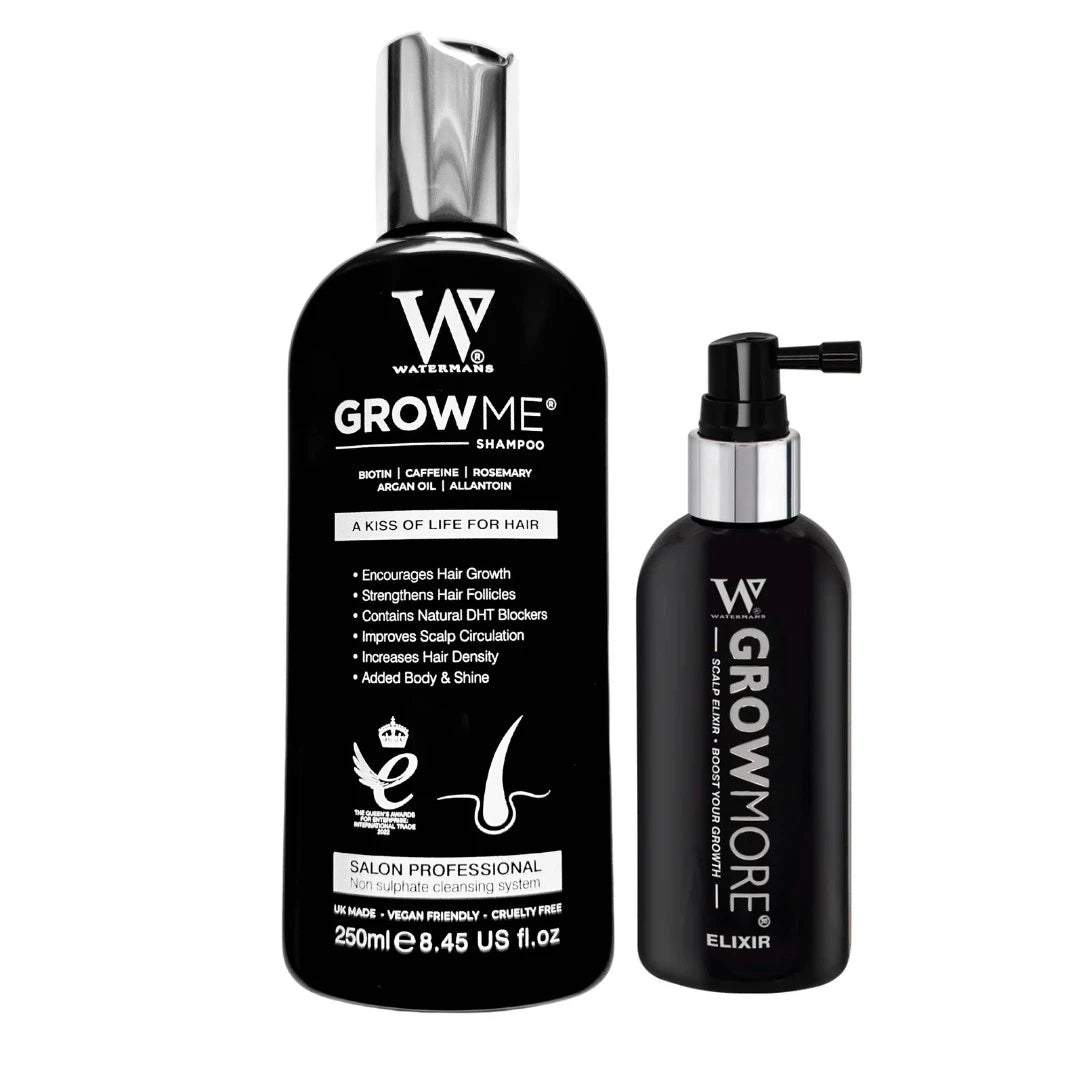
250ml, sulfate free, used two or three times a week. Run the cost per month sum on it against whatever you use now. If your current shampoo leaves your scalp tight, this is the swap worth making. If it does not, you may not need to change anything.
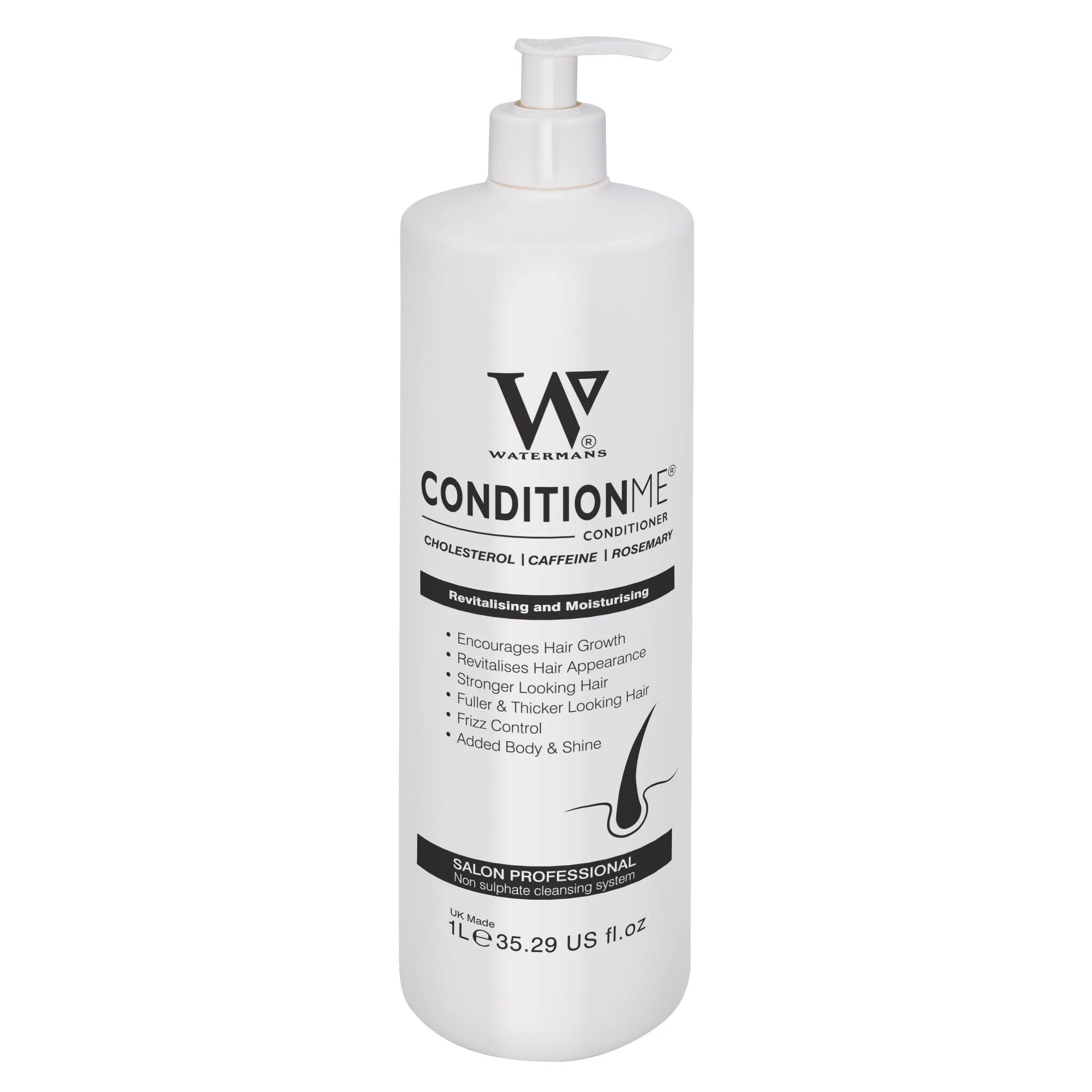
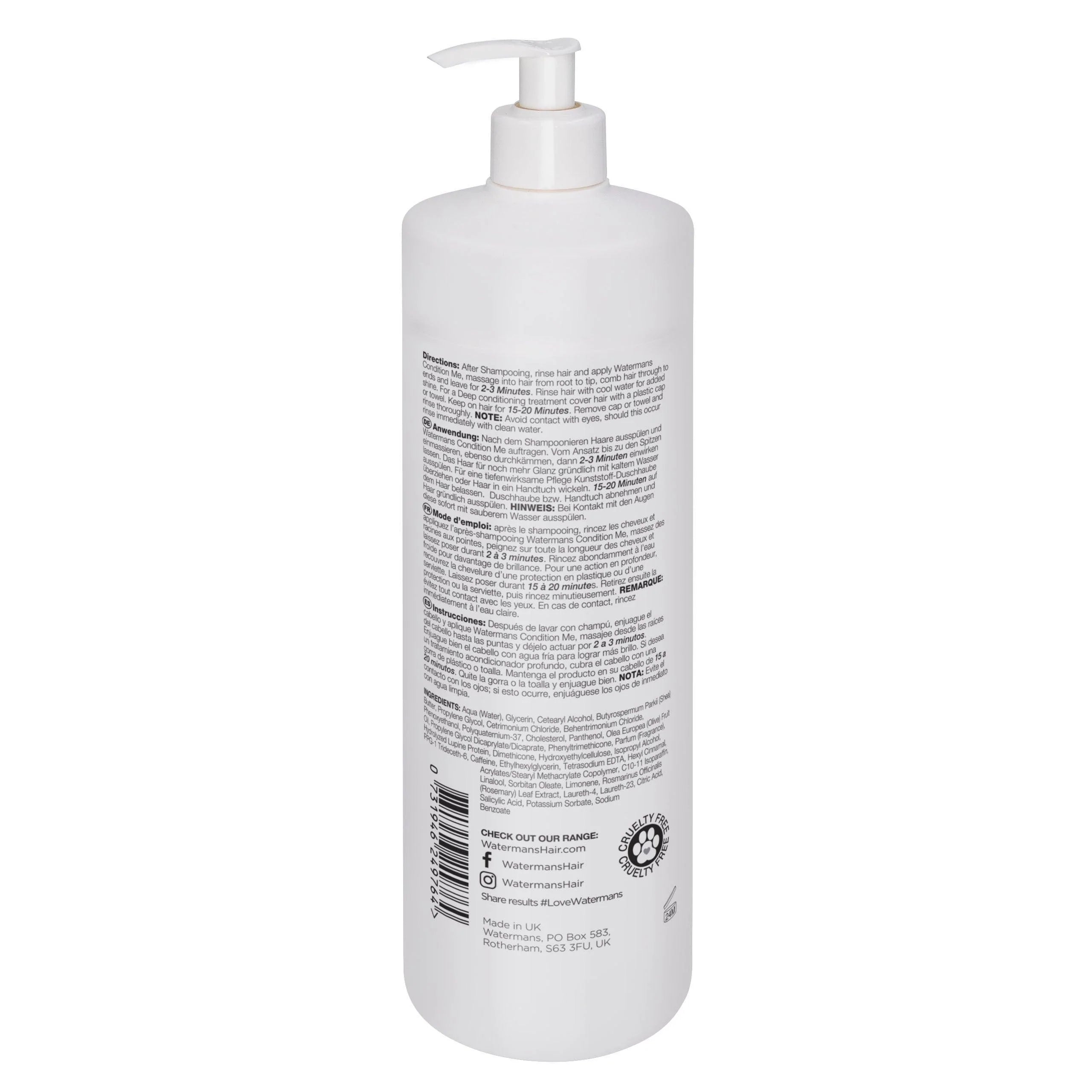
Condition Me Conditioner
If the table above put you in the breakage row, this is the cheapest genuinely useful thing on this page. Slip is what stops hair snapping during detangling, and snapped hair is length that never comes back.
Hair Growth Boost Set
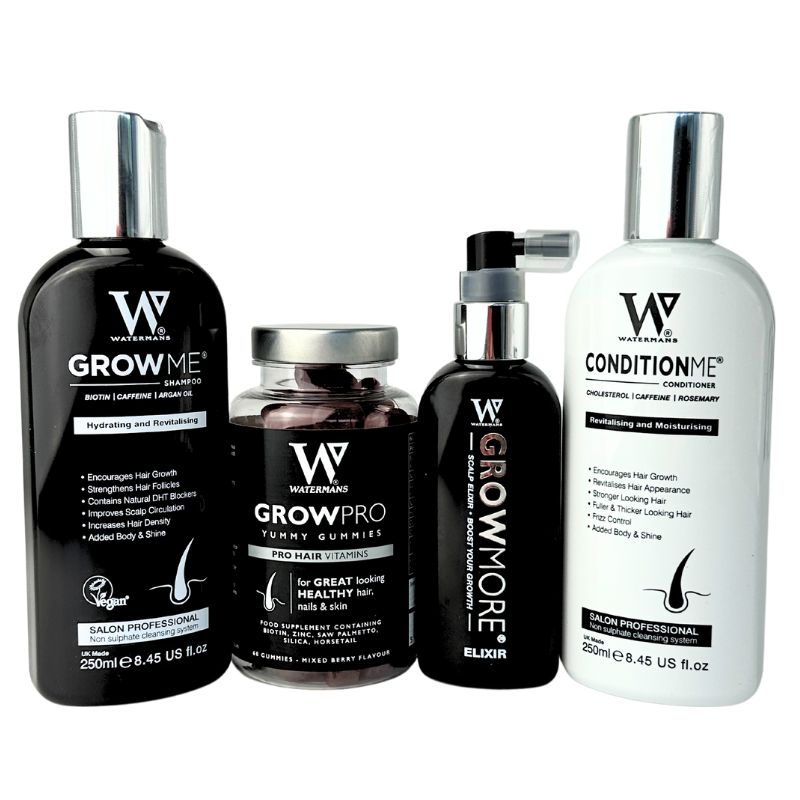
Shampoo, conditioner and leave-on elixir together. Worth it only if you were going to buy all three anyway, in which case the annual sum comes out ahead. If you only need one of the three, buy that one.
Over 5 million bottles sold since 2012, vegan and made in the UK. If the checklist points you at a cheaper bottle from somebody else, buy that one. We would rather be the brand that told you how to check.
When is the answer not a product at all?
Some presentations are not a shopping decision. Round smooth bald patches appearing quickly, hair coming out in clumps, scalp pain, burning, persistent itching, scaling, redness or scarring, thinning alongside new fatigue, weight change or irregular periods, and any sudden loss of eyebrow or eyelash hair all warrant a GP visit rather than a purchase.
Ask about ferritin, full blood count, thyroid function, vitamin D and B12. Low iron stores are common in menstruating women and produce exactly this symptom, and they are correctable once somebody has actually looked. A blood test costs nothing on the NHS and will change your decision far more than any amount of comparing hair loss products on a shelf. Thinning in a child is always a GP matter first.
Frequently asked questions
Is an expensive hair product always better than a cheap one?
No. Price reflects packaging, marketing and brand position as much as formulation. When comparing hair loss products, the ingredients list settles it, not the price tag. Sometimes the expensive one really is a better formula. Often it is the same formula.
Do own-brand versions work the same?
If the actives and their percentages match, there is no formulation reason for a difference. Texture, fragrance and how pleasant it is to use can still differ, and those matter more than people admit, because a product you dislike is one you stop using.
How long should I give a new product before deciding?
Twelve weeks minimum, with monthly photographs from the same three angles. Anything you notice in the first fortnight is the wash routine or the styling, not the follicle.
Should I buy a bundle or single products?
Only buy a bundle if you would have bought every item in it separately. Bundles are good value for a full routine and poor value when you only needed one item and were talked into three.
Do hair supplements belong on the shortlist?
Only if a blood test has shown you are short of something. Taking iron without a documented deficiency is not harmless, and biotin can interfere with some blood test results, so mention supplements to your GP before any testing.
What does a percentage on the front of a bottle mean?
It depends entirely on what follows it. A percentage of an active ingredient in the formula is a real number. A percentage of survey respondents who liked how their hair felt is an opinion poll. The two look identical in large type.
Can I use several products at once?
You can, and plenty of people do, but you lose the ability to tell what is working. Introduce one thing at a time for the first three months, then build the routine once you know what earns its place.
Does the order of ingredients really matter?
Yes, down to 1 percent, after which manufacturers may list in any order. So position tells you a great deal at the top of the list and much less at the bottom, which is worth knowing before you draw conclusions from the last three lines.
The short version
Comparing hair loss products is four checks, not a leap of faith: read the ingredients list and where the actives sit, work out cost per month over a year, match the product to whether your problem is loss, shedding or breakage, and read confident front-of-pack wording as marketing until the list backs it up. Then buy one thing, photograph honestly, and review at week twelve.
Watermans products are 100% cosmetic and do not treat medical hair loss. Individual results may vary.
Sources and References
- UK Cosmetics Regulation, Schedule 34 requirements on ingredient labelling and descending order of concentration to 1 percent. legislation.gov.uk
- Advertising Standards Authority and CAP Code, section 12, on medicines, medical devices, health-related products and beauty claims. asa.org.uk
- NHS, Hair loss: causes, types and when to see a GP. nhs.uk/conditions/hair-loss
- NICE Clinical Knowledge Summaries, Alopecia, androgenetic, and Anaemia, iron deficiency. cks.nice.org.uk
- British Association of Dermatologists, information leaflets on androgenetic alopecia and telogen effluvium. bad.org.uk