Hormonal Hair Thinning: Causes, Signs and What Helps
Two people can say the same sentence and mean completely different things by it.
Hormonal hair thinning is a group of different problems that happen to share a cause, and telling them apart is most of the work. Androgen driven pattern thinning widens the parting slowly over years. The postpartum and perimenopausal drops in oestrogen cause heavy, temporary shedding across the whole head. Thyroid change and PCOS each do something different again. The pattern and the timing point at the cause long before any blood test does.
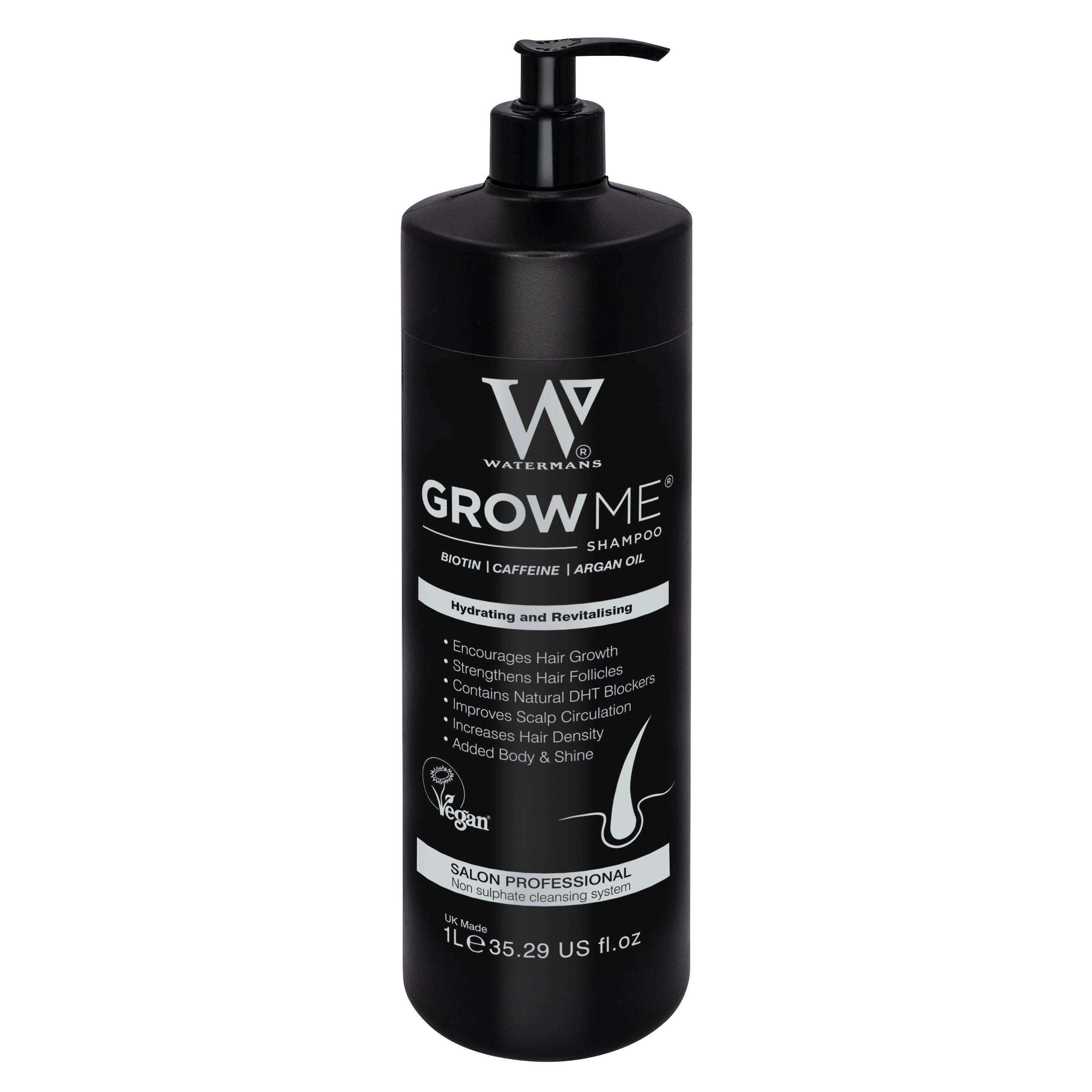
Our hair growth shampoo
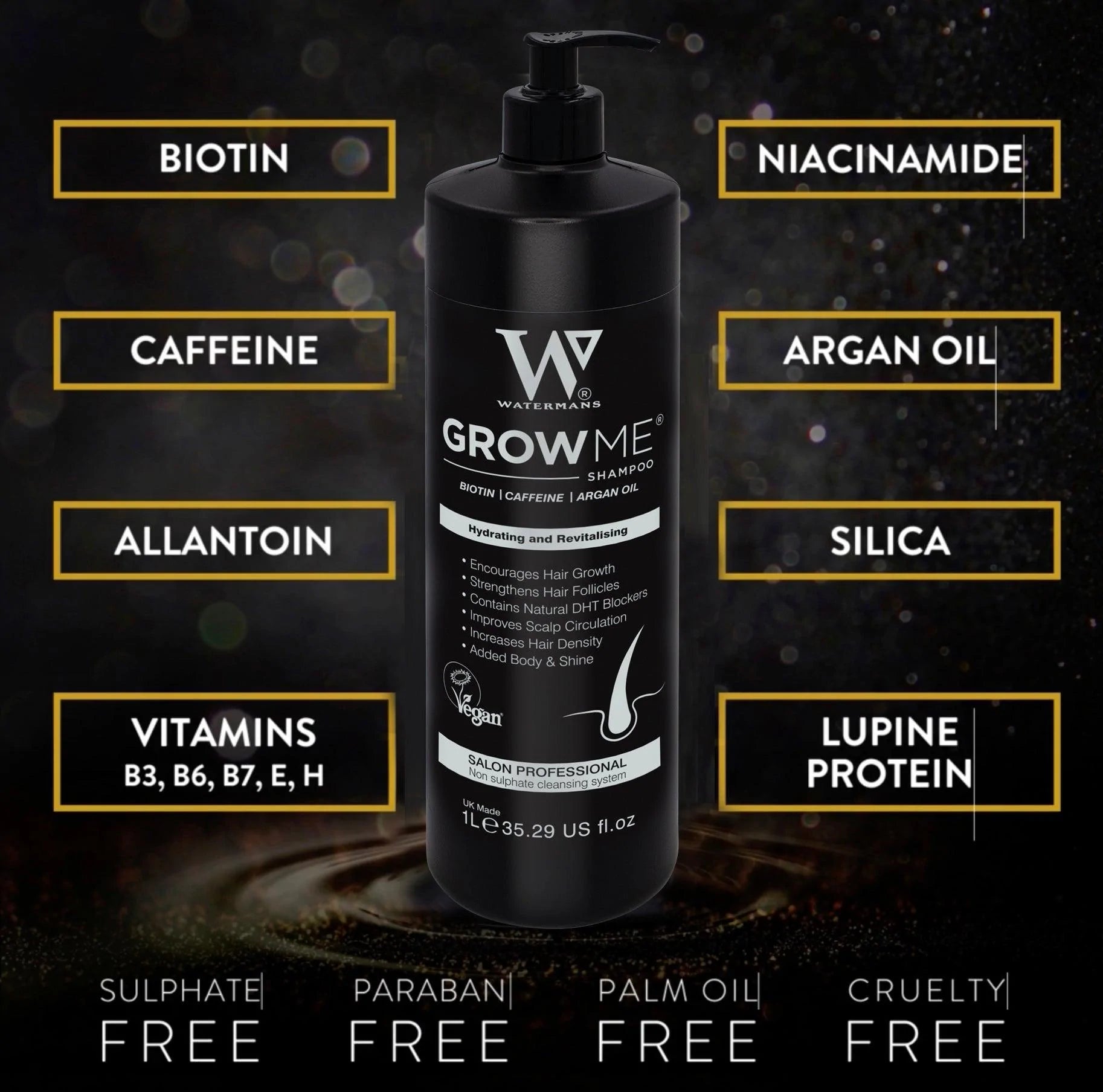
Grow Me® Hair Growth Shampoo, £14.95. A sulphate free daily shampoo that supports a healthy scalp environment and helps reduce breakage, so lengths hold on and look fuller.
Key takeaways
- It is not one condition. Androgens, the postpartum drop, perimenopause, thyroid change and PCOS each behave differently.
- A widening parting over years points at androgen driven pattern thinning. Heavy all over shedding for a few months points at a hormonal shift instead.
- Postpartum shedding usually peaks around three to four months after birth and settles by about a year.
- The four blood results worth asking your GP for are a full blood count, serum ferritin, thyroid function, and vitamin B12 and folate.
- Hair loss, hair shedding and hair breakage are three separate mechanisms, and a hormonal shift can set off two of them at once.
- Watermans products are cosmetic. They reduce breakage and support a healthy scalp environment, and they do not replace medical advice.
What actually causes hormonal hair thinning?
Hormones change hair by changing the hair cycle, not by attacking the strand. Every follicle runs through a long growing phase, a brief transition and a resting phase of roughly three months before the strand is released. Hormones set how long the growing phase runs and how thick the fibre it produces is, so a hormonal shift shows up months later as either finer hair or more of it on the floor.
That delay is the single most confusing thing about hormonal hair thinning. The change that caused it is usually about three months in the past, which is why people so often blame the wrong month, the wrong shampoo or the wrong stressful week.

How do you tell the different types of hormonal hair thinning apart?
Pattern and timing separate the causes better than any single test. Androgen driven thinning is slow and localised to the top of the head. Oestrogen driven shedding is fast and spread across the whole scalp. Thyroid change tends to bring other symptoms with it, and PCOS usually announces itself well before the hair does. Hormones can also push hair growth the other way, and our guide to hypertrichosis, or excessive hair growth explains when that is worth investigating. Our guide to hormone-induced alopecia goes further into the causes, the symptoms and what genuinely helps.
| Cause | What the hair does | Timescale | Other clues |
|---|---|---|---|
| Androgen driven pattern thinning | Parting widens, crown thins, hairline usually stays | Years | Family history, gradual onset |
| Postpartum drop in oestrogen | Heavy shedding all over the head | Starts around 3 months after birth, settles by about 12 | Ponytail suddenly much thinner |
| Perimenopause | Diffuse thinning, often with a widening parting on top | Months to years | Cycle changes, sleep and temperature changes |
| Thyroid change | Diffuse shedding, sometimes coarse or brittle texture | Months | Fatigue, weight change, feeling cold or hot |
| PCOS | Thinning on top with increased hair growth elsewhere | Years | Irregular periods, acne, weight changes |
Is it hair loss, hair shedding or hair breakage?
Hair loss, hair shedding and hair breakage are three separate mechanisms, and hormonal change can set off two of them at the same time. Sorting out which you are looking at is the step that makes everything afterwards sensible.
- Hair loss is follicular. Follicles miniaturise, producing finer and shorter fibres each cycle until they produce almost nothing. The parting widens. This is what androgens do.
- Hair shedding is a cycle problem. A large number of follicles enter the resting phase together and release their strands about three months later. The whole head sheds. This is what the postpartum oestrogen drop does.
- Hair breakage is fibre damage. Short broken pieces snap off mid shaft from heat, bleach or tension. Nothing has left the follicle, and hormones have nothing to do with it, although finer hormone affected fibres break more easily.
Our guide to the three mechanisms behind thinning hair goes into each in detail, and the three clue self check is the fastest way to work out which one you have at home.
Get a discount on the hormonal hair thinning range
Join the Watermans mailing list and we will email a discount code straight to your inbox, so you can try the hormonal hair thinning range for less. Made in the UK, over 6.5 million bottles sold since 2012.
What do androgens actually do to the follicle?
Androgens shorten the growing phase in follicles on the top of the head that are genetically sensitive to them. Each cycle the follicle produces a slightly finer, slightly shorter fibre, a process called miniaturisation. Nothing falls out dramatically; the hair simply becomes less substantial until the scalp shows through.
Two details matter. First, sensitivity is inherited and localised, which is why the back and sides are unaffected in the same person. Second, the process is gradual, so photographs taken a year apart in the same light tell you far more than daily inspection in the bathroom mirror.
Take the photograph
Once a month, same light, same parting, hair dry and unstyled, taken from directly above. It is the single most useful thing you can do, because slow change is invisible day to day and obvious across six months.
Why does hair shed after having a baby?
Pregnancy holds follicles in their growing phase for longer than usual, so far fewer hairs than normal are shed for several months. After the birth, oestrogen falls sharply and all of those held back follicles enter the resting phase at once, releasing their strands together about three months later.
It looks alarming and it is temporary. Shedding typically peaks around three to four months after the birth and settles by around twelve months. The hair that comes through often arrives as a halo of short fine strands around the hairline, which is a sign of progress rather than of damage. Our guide to postpartum shedding and its timeline covers what to expect month by month.

How does perimenopause change hair?
Perimenopause changes hair by shifting the balance between oestrogen and androgens rather than by removing one of them. Oestrogen falls while androgen levels stay comparatively steady, so follicles that were always androgen sensitive begin behaving as though the androgen signal had increased. The result is usually diffuse thinning with a widening parting.
NICE guideline NG23 covers how the menopause is identified and managed, and it is worth reading before an appointment so you know what your GP is working from. Hair change on its own is rarely the deciding factor in any decision about hormone replacement therapy, and the NHS page on HRT sets out what it is and is not for. Our article on menopause and thinning hair goes further into the day to day management.
What about the thyroid and PCOS?
The thyroid and PCOS are the two causes most often missed, and both are checkable. An under or over active thyroid changes hair across the whole head and almost always brings other symptoms with it, most commonly fatigue, weight change, and feeling unusually cold or unusually hot.
PCOS is a common hormonal condition in which raised androgen levels can cause thinning on the top of the head alongside increased hair growth on the face or body, irregular periods and acne. Both are questions for a GP, and both have straightforward blood work behind them. We cover the hair side in thyroid related hair loss and PCOS hair loss.

Which blood tests are worth asking your GP for?
Four blood results carry most of the weight when hair is thinning: a full blood count, serum ferritin, thyroid function, and vitamin B12 and folate. They are free through your GP and they do the one thing no amount of looking in the mirror can do, which is rule out the causes that have nothing to do with hormones at all.
- Full blood count. Picks up anaemia and gives a general picture of blood health.
- Serum ferritin. Reflects total body iron stores. NICE Clinical Knowledge Summaries put the iron deficiency threshold at below 30 micrograms per litre.
- Thyroid function. An under or over active thyroid is one of the most treatable causes of diffuse shedding, and it is easy to miss.
- Vitamin B12 and folate. Both matter to cell turnover and both fall on restricted diets.
One caveat on ferritin: it rises with infection and inflammation, so a comfortable looking number can sit on top of genuinely low stores. If the rest of the picture points at iron, that is worth saying out loud in the appointment rather than letting a borderline result close the conversation. If the extra fall began after a change in your therapy, our guide to the hormone therapy hair shedding timeline sets out when it usually peaks and when it settles.
What genuinely helps at home while you wait for answers?
Home care cannot change a hormone, and pretending otherwise wastes time and money. What it can do is stop the second problem, because hormone affected fibres are finer and finer fibres snap more easily. A head that is already thinning cannot afford to lose more length in the towel.
- Wash two or three times a week with a gentle, sulfate free shampoo, worked into the scalp with fingertips rather than nails.
- Condition the mid lengths and ends every wash, and detangle with a wide tooth comb while the conditioner is still in.
- Dry with a microfibre towel or a cotton t shirt, and let hair get to about 80 per cent dry before any heat.
- Loosen ponytails and rotate where the tie sits, so the same section is not under tension every day.
- Eat enough protein and iron, especially if you are also eating less than you used to.
- Give any change three to six months. Hair grows roughly one centimetre a month, so nothing you do today is visible before then.

Grow Me® Hair Growth Shampoo £14.95
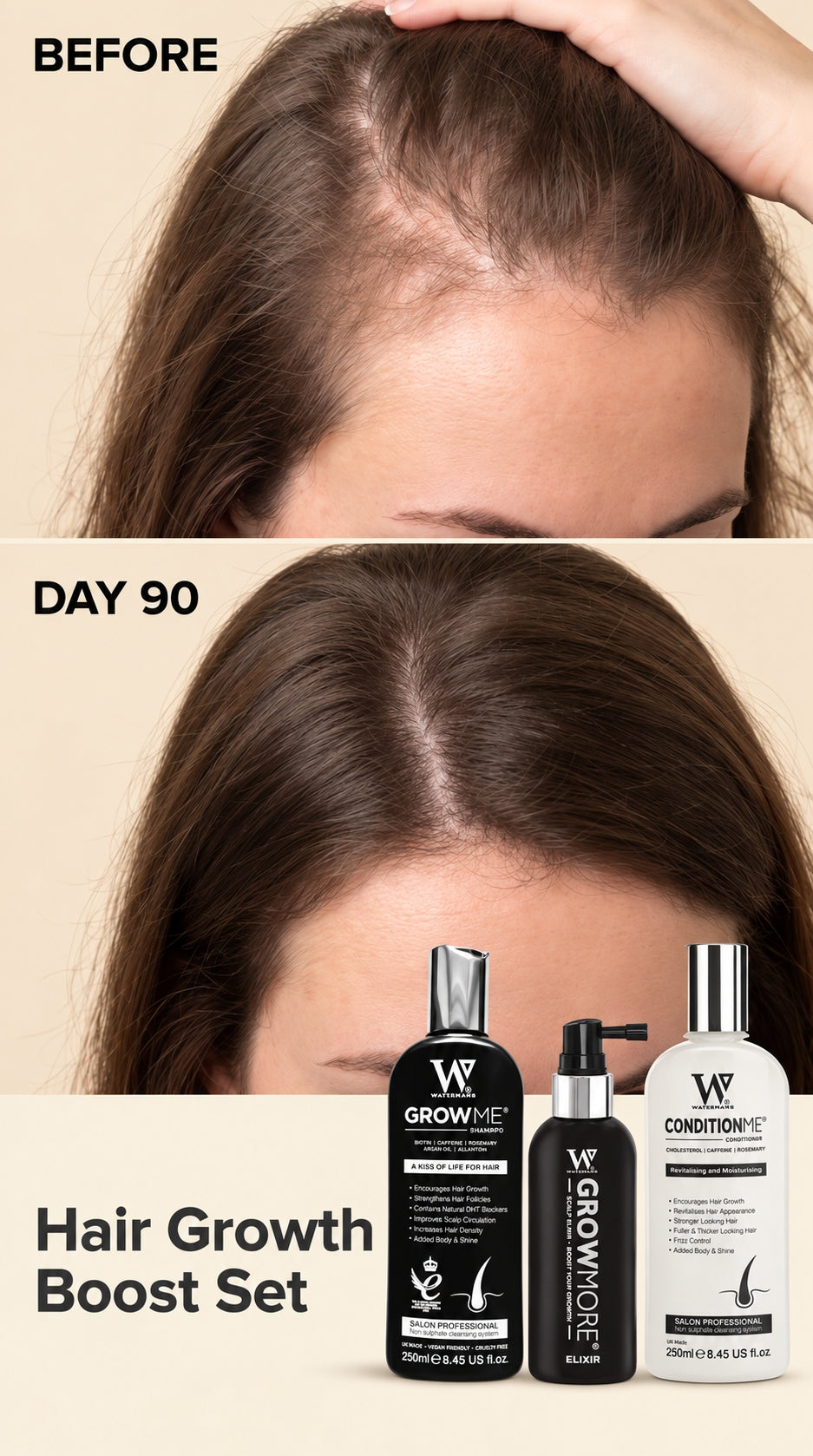
A sulfate free daily shampoo with biotin, caffeine, rosemary, niacinamide and hydrolysed lupine protein. It cleanses gently and supports a healthy scalp environment, so finer hormone affected strands snap off less easily.

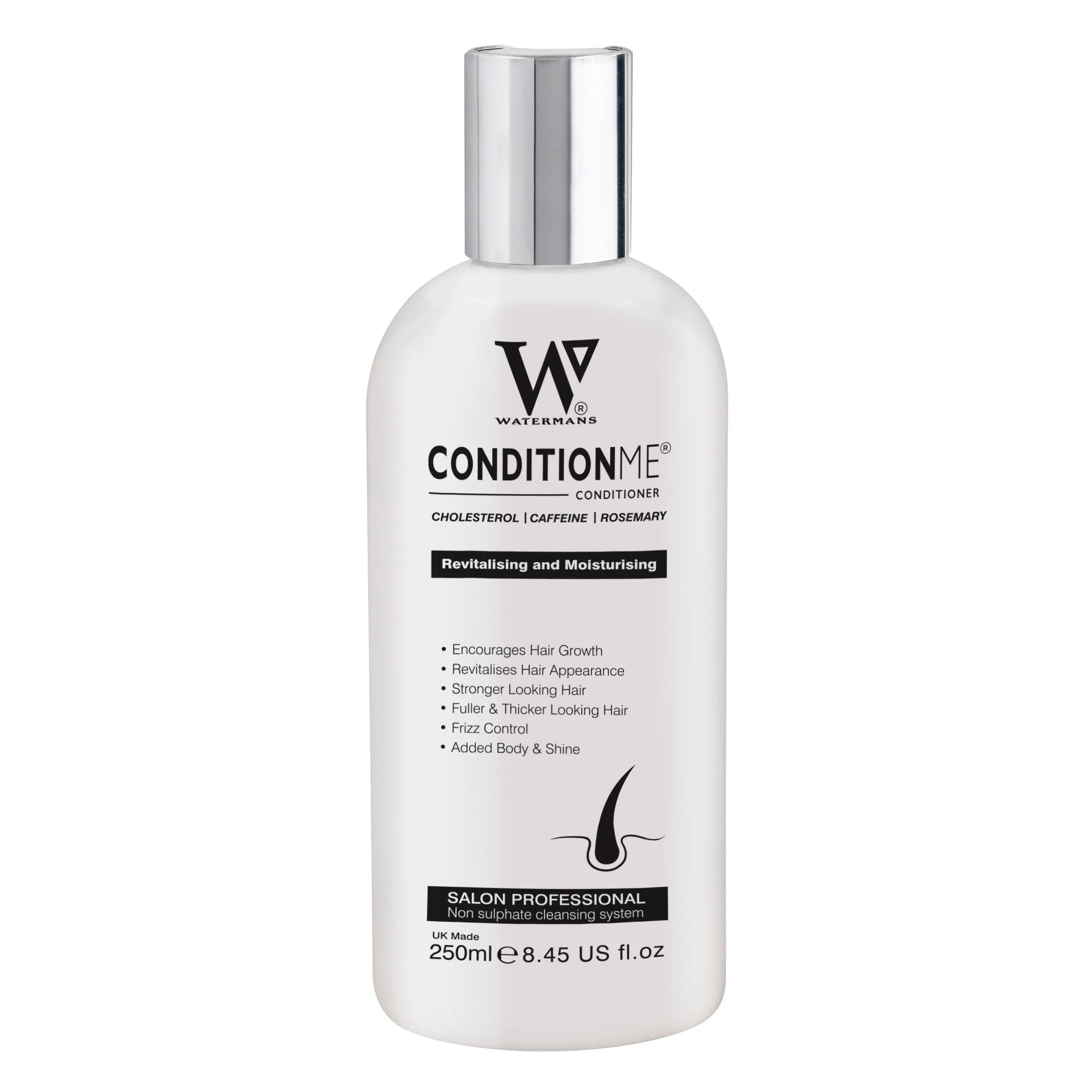
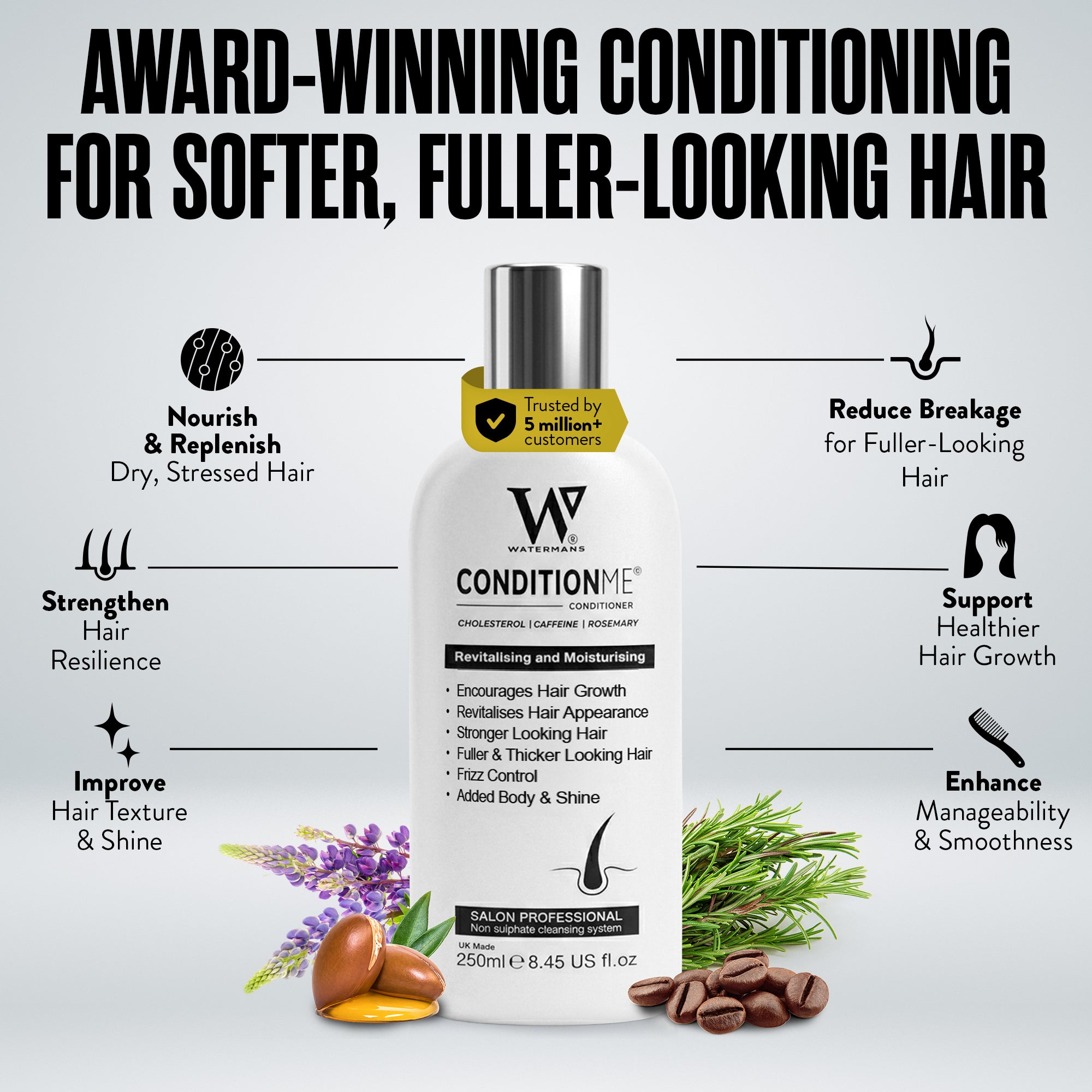
Condition Me® Hair Growth Conditioner £13.95
Breakage defence conditioner with cholesterol, shea butter and hydrolysed lupine protein. Wet detangling is where most avoidable snapping happens on fine hair, and this is the step that makes it easier.

Grow More® Leave-In Scalp Elixir £25.50
A leave in scalp elixir applied to a dry or towel dried scalp and left on. It is a cosmetic scalp conditioner rather than a medicine, used alongside the shampoo and conditioner for people who want a third step in the routine.
What are the frequently asked questions about hormone driven thinning?
How do I know whether my thinning is hormonal?
Look at the pattern and the timing. A parting that has widened slowly over years, with the back and sides unchanged, points at androgen driven thinning. Heavy shedding all over the head that started two to four months after a birth, an illness or a big life change points at a cycle shift instead. If neither fits, blood tests are the next step.
Does hormonal hair thinning grow back?
It depends on the mechanism. Shedding caused by a temporary hormonal shift, such as after a birth, recovers on its own once the cycle resets, usually within a year. Androgen driven miniaturisation is progressive and does not reverse by itself, which is why it is worth raising with a GP early rather than late.
How long does postpartum shedding last?
It usually peaks around three to four months after the birth and settles by around twelve months. The short fine hairs that appear around the hairline afterwards are new growth, not breakage, even though they can look unruly for a while.
Will HRT help my hair?
Hair change on its own is rarely the deciding factor. Hormone replacement therapy is considered for the wider symptoms of the menopause, and NICE guideline NG23 sets out how that decision is approached. Discuss it with your GP as part of the whole picture rather than as a hair decision.
Can stress cause this?
Stress can trigger the shedding type, not the pattern type. A severe physical or emotional stressor pushes follicles into the resting phase together, and the shedding appears about three months later. It settles once the stressor has passed, although the lag makes the connection easy to miss.
Do hair vitamins help?
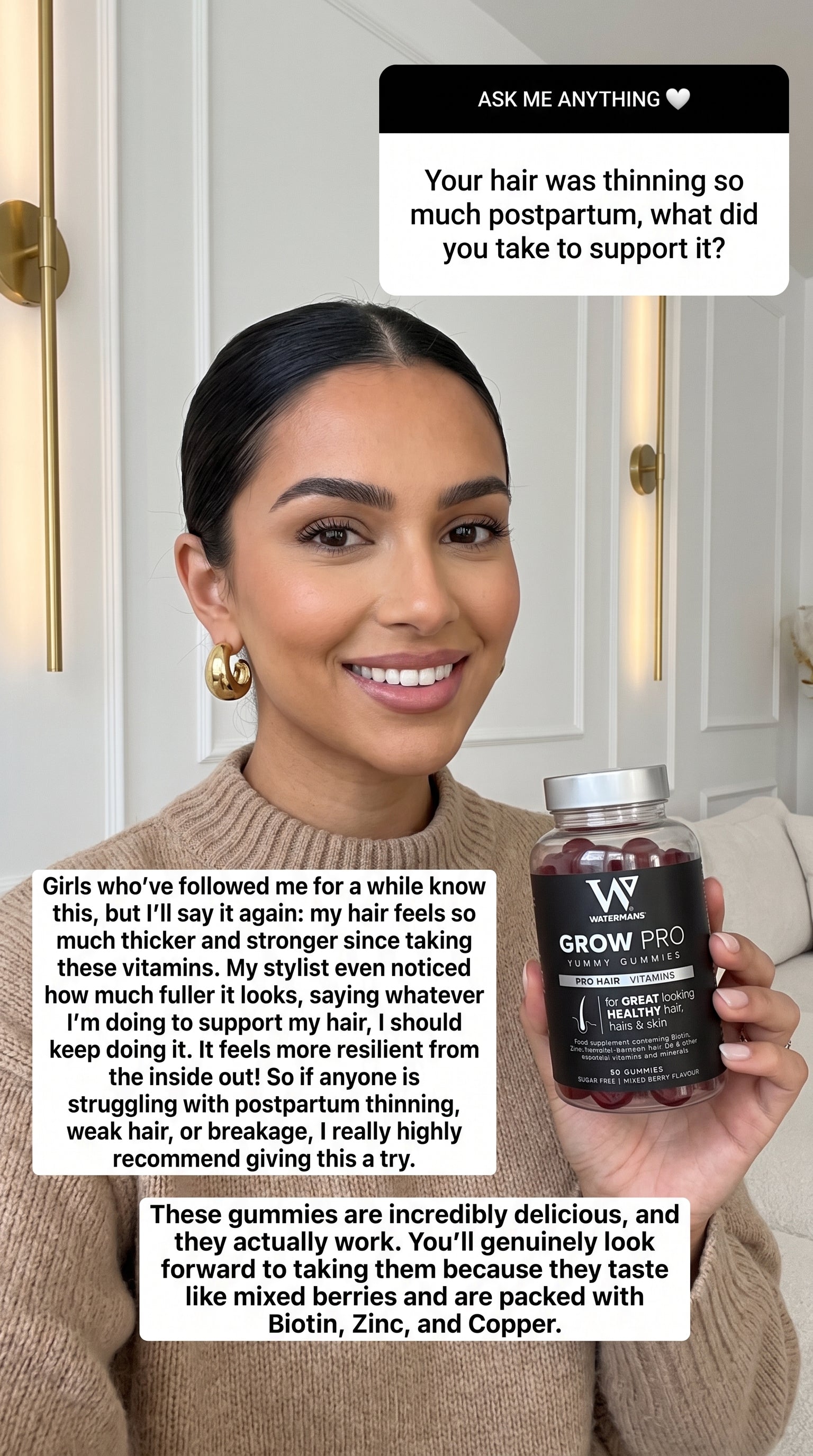
They help only if something is genuinely low. If your blood results are normal, a supplement has nothing to correct. Nutritional support for hair, skin and nails is a reasonable thing to take alongside blood results, and a poor substitute for getting them.
Should I see a trichologist or my GP?
Your GP first, in almost every case. Only a GP can arrange the blood work, and only a GP can look at the hair alongside your periods, your thyroid and your medicines. A trichologist is a hair and scalp specialist, usually not a doctor, and is most useful once you already have results in hand. If your question is about products or a routine rather than a medical one, you can talk to Gail Waterman, our co-founder, as an AI avatar on the Watermans homepage.
Can shampoo do anything about a hormone?
No, and any product suggesting otherwise is overstating its case. A cosmetic shampoo works on the fibre and the scalp surface. What it can genuinely do is reduce breakage, which keeps more of the length you already have, and that is a visible difference even though it is not a hormonal one.
Sources & references
- NHS, Hair loss
- NHS, Menopause
- NICE guideline NG23, Menopause
- NHS, Hormone replacement therapy (HRT)
- NHS, Underactive thyroid (hypothyroidism)
- NHS, Polycystic ovary syndrome (PCOS)
- DermNet, Female pattern hair loss
- NICE Clinical Knowledge Summaries, Anaemia: iron deficiency
What is the bottom line on hormonal hair thinning?
The bottom line on hormonal hair thinning is that the label covers at least five different things, and the useful question is never whether hormones are involved but which pattern you actually have.
A parting that has widened slowly over years is a different problem from a ponytail that halved in three months, and they lead to different conversations with a GP. Ask for the four blood results, take a monthly photograph from directly above in the same light, and note when the change began rather than when you noticed it.
Then, while the picture becomes clearer, protect the fibres you have. It is the one part of this you can act on this week.
If you make one change while you wait for answers, make it the wash. Watermans hair growth shampoo is a sulfate free daily cleanser that reduces breakage and supports a healthy scalp environment, so finer strands stay on your head longer. Vegan, made in the UK, and over 6.5 million bottles sold since 2012.
Please note: Watermans products are 100% cosmetic and do not treat medical hair loss. Individual results may vary.