Trichologist Barnsley: Bleach, Colour and Hair Damage
Whether the hair is coming out or snapping off is not a small distinction.
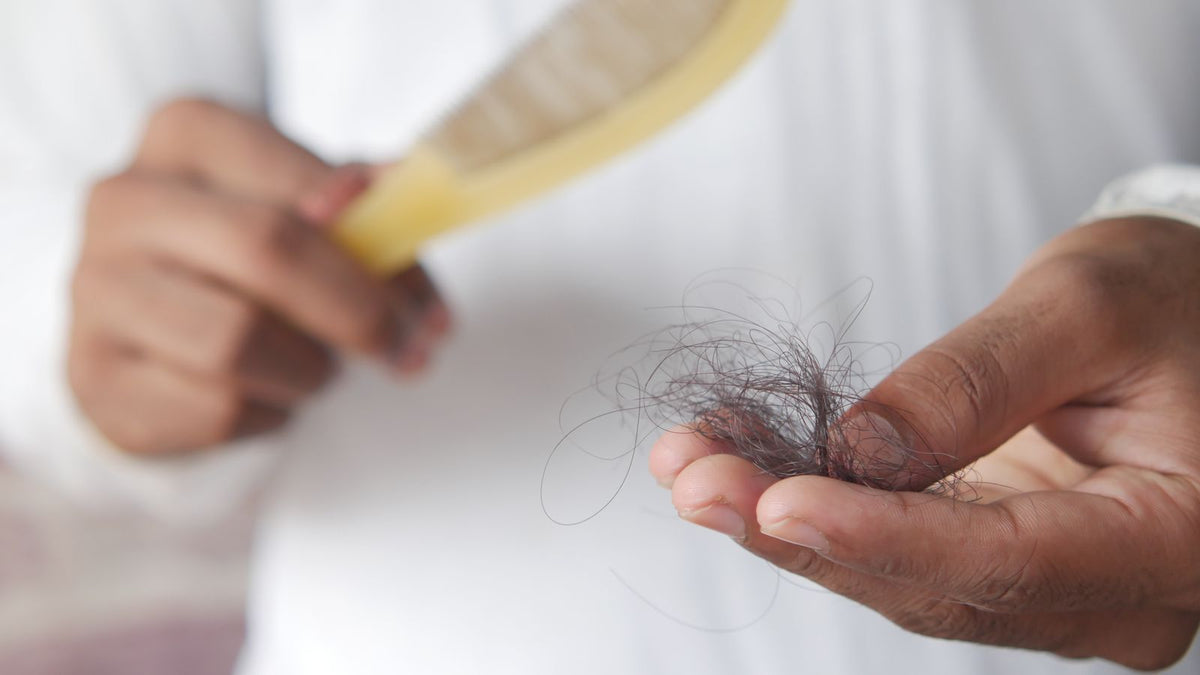
Most people who look for a trichologist Barnsley after a colour appointment are looking at breakage rather than hair loss. Bleach opens the cuticle and removes pigment from inside the fibre, which leaves the strand weaker and more porous, so it snaps mid shaft. The tell is short broken pieces of varying lengths, especially around the crown and the nape, with no widening parting and no white bulb on the ends you find.
Our weekly hair mask
Masque Me® Hair Mask, £24.95. A deep conditioning weekly mask for dry, stressed lengths, adding gloss and hydration where heat and colour have taken their toll.
Key takeaways
- Bleach damages the fibre, not the follicle. Damaged hair snaps off; it does not fall out from the root.
- Short broken pieces of uneven length mean breakage. Full length strands with a small white bulb mean shedding.
- The wet strand test separates protein damage from simple dryness, and the two need opposite answers.
- The NHS says hair dye reactions can take up to 72 hours to appear, which is why patch tests are done well in advance.
- Hair grows roughly one centimetre a month, so damaged length cannot be repaired away. It has to grow out or be cut off.
- Watermans products are cosmetic. They reduce breakage and support a healthy scalp environment, and they do not replace medical advice.
What does bleach actually do to the hair fibre?
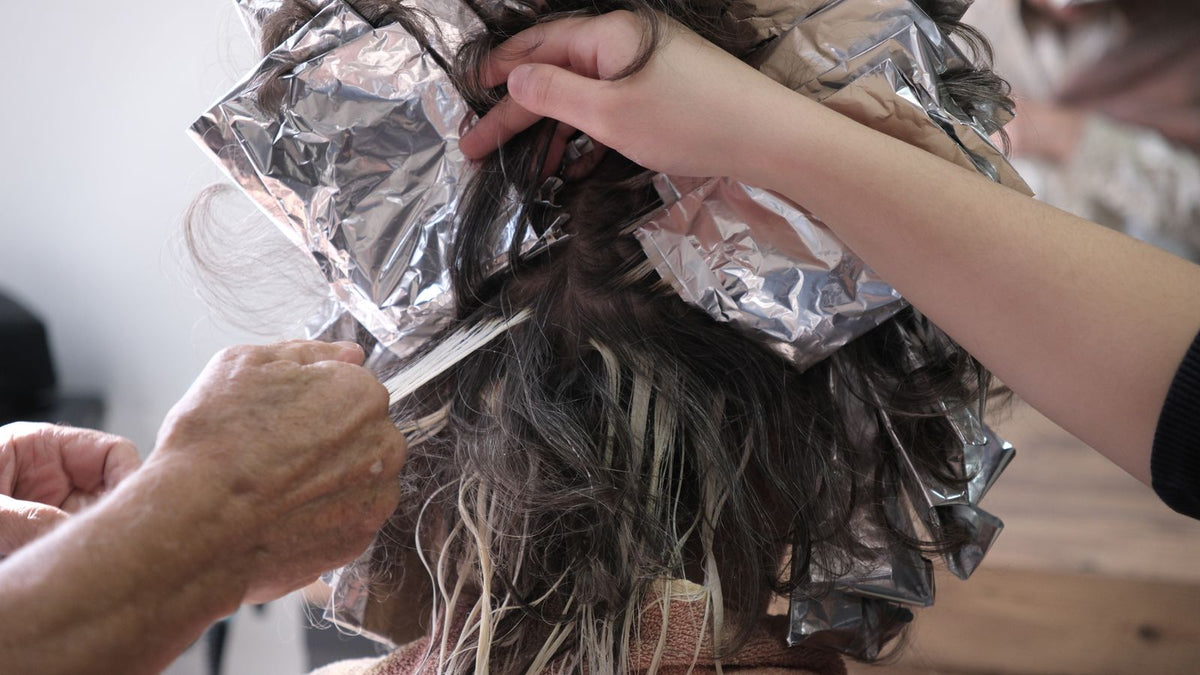
Bleach works by lifting the outer cuticle scales and oxidising the melanin inside the cortex, and both halves of that process cost the fibre something. Once the pigment is gone the space it occupied stays empty, so the strand holds more water, swells more when wet, and loses more of its internal structure with each round.
That is why bleached hair feels fine and soft when dry and turns to elastic mush when wet. The fibre is roughly 90 per cent keratin, a protein, and lightening removes some of it along with the colour. A trichologist Barnsley sees the result as breakage, not as thinning.
| Process | What it does to the cuticle | Typical damage level |
|---|---|---|
| Semi permanent colour | Deposits colour on and just under the surface | Low |
| Permanent colour, no lift | Opens the cuticle to deposit dye | Moderate |
| Permanent colour with lift | Opens the cuticle and removes some pigment | Moderate to high |
| Bleach, one process | Opens the cuticle and strips pigment from the cortex | High |
| Repeated bleach plus heat styling | Cumulative, and the damage does not reset | Highest |

Is it hair loss, hair shedding or hair breakage?
Hair loss, hair shedding and hair breakage look alike in a bathroom bin and are three entirely different problems. Sorting them out is the first thing a trichologist Barnsley does, because bleach can only cause the third one.
- Hair breakage is fibre failure. Short pieces of uneven length, often 2 to 10 centimetres, with no bulb at either end. Worst where the hair is oldest, most processed and most handled.
- Hair shedding is a cycle problem. Full length strands with a small white bulb at the root, all over the head, usually starting about three months after an illness, an operation, rapid weight loss or severe stress.
- Hair loss is follicular. A parting that widens or a crown that thins across years, with the back and sides largely unchanged. Colour has nothing to do with it.
It is entirely possible to have breakage on top of ordinary shedding, and that combination is what usually sends someone looking for help. Our guide to what causes hair damage covers the four main culprits, and the three clue self check is the quickest way to tell them apart at home.

How does the wet strand test work?
The wet strand test tells you whether hair needs protein or moisture, and it takes thirty seconds. Take a single shed strand, wet it, and pull gently from both ends. What the strand does next points at the answer, and the two answers need opposite routines, which is why guessing is expensive.
| What the wet strand does | What it means | What the hair needs |
|---|---|---|
| Stretches a long way then snaps, feels gummy | Too little protein, over conditioned or over processed | Protein and structure first, moisture second |
| Barely stretches at all and snaps quickly | Too little moisture, brittle and dry | Moisture and oils first, protein sparingly |
| Stretches a little and springs back | Healthy balance | Maintain, change nothing |
Do not do both at once
Piling a protein mask and a heavy moisture mask into the same week is the most common self inflicted mistake. Pick the one the strand test points at, run it for four weeks, then reassess. Protein on hair that is already stiff makes it snap faster.
Get a discount on the bleached and coloured hair range
Join the Watermans mailing list and we will email a discount code straight to your inbox, so you can try the bleached and coloured hair range for less. Made in the UK, over 6.5 million bottles sold since 2012.
What is a patch test actually for?
A patch test checks for an allergic reaction to the dye, not for damage to the hair. The NHS says hair dye reactions are fairly common and usually mild, with stinging, burning, an itchy rash, dryness or blisters, and that symptoms can take up to 72 hours to appear. That delay is the whole reason the test is done days ahead rather than in the chair.
On white skin a reaction usually looks red, while on brown and black skin the NHS notes it may look darker brown, purple or grey and can be harder to see. Serious reactions are rare but do happen, and the NHS advice is to see a GP if a reaction gets worse. A previous dye with no problem does not rule out a reaction next time, which is why salons repeat the test.
What repair routine actually works on damaged hair?
A repair routine works by reducing further damage and improving how the existing fibre behaves, because the damage already done cannot be undone. At roughly one centimetre of growth a month, a bleached mid length takes a couple of years to grow out, so everything in this routine is about keeping what is there intact until it can be cut off.
- Wash less, and gently. Two or three times a week with a sulfate free shampoo, worked into the scalp with fingertips. Let the lather rinse through the lengths instead of scrubbing them.
- Condition every wash, ears down. Then detangle with a wide tooth comb while the conditioner is still in. This one change prevents more breakage than any product.
- One mask a week, chosen by the strand test. Protein if it stretched and went gummy, moisture if it snapped short and dry.
- Dry to 80 per cent before heat, and drop the temperature setting rather than the frequency. Wet bleached hair is at its most fragile.
- Sleep on silk or satin and take the hair out of tight styles overnight.
- Book the trims. Split ends travel up the shaft, and cutting is the only thing that stops them.

Masque Me® Repairing Hair Mask £24.95
A weekly deep conditioning mask for dry, porous or bleached hair. Left on for five to ten minutes it smooths the cuticle so mid lengths and ends comb through without tearing, which is exactly where colour damaged hair fails first.

Condition Me® Hair Growth Conditioner £13.95
Breakage defence conditioner with cholesterol, shea butter and hydrolysed lupine protein, for every wash. Wet detangling is where most avoidable snapping happens, and processed hair is at its weakest when it is wet.


Camellia & Black Castor Hair & Body Oil £24.95
A lightweight camellia and black castor oil for the mid lengths and ends. Used on damp hair before drying, or on dry ends afterwards, it adds slip and shine to porous lengths without weighing fine hair down.
If the ends are already splitting, the habits that slow it down are set out in how to prevent split ends, and the correct order for the whole wash routine is in using conditioner properly.
How do you colour hair without wrecking it?
Colouring without wrecking the hair is mostly about spacing, placement and honesty with your stylist. Bleach is not the enemy on its own; bleach plus heat plus tight styling plus a four week rebleach schedule is.
- Stretch the intervals. Root touch ups every eight to twelve weeks are far kinder than full head lifts every six.
- Keep bleach off the previously lightened lengths. Overlapping is the single biggest cause of mid shaft snapping.
- Go slower over more appointments rather than several levels in one sitting.
- Tell your stylist honestly what you have used at home, including box dye and any henna, because both change how a lightener behaves.
- Balayage and highlights spread the damage over fewer strands than a full head, and grow out more forgivingly.
When should you see a GP rather than a trichologist Barnsley?
See your GP rather than a hair specialist whenever the scalp itself is the problem or the pattern does not fit breakage. A trichologist Barnsley can assess a fibre and a scalp surface, but cannot arrange blood tests and is not the right first call for a skin reaction. If your question is about products or a routine rather than a medical one, you can talk to Gail Waterman, our co-founder, as an AI avatar on the Watermans homepage.
- A reaction to hair dye that is getting worse rather than settling.
- A scalp that is weeping, crusting, scarring or losing hair in smooth round patches.
- Heavy all over shedding of full length hairs, which points at the cycle rather than the colour.
- A widening parting over months, with the back and sides unchanged.
- Hair change alongside fatigue, weight change or feeling unusually cold.
Trichology is not a protected title in the UK, so if you do decide to pay for a private assessment, check the practitioner against the Institute of Trichologists register first. UK clinics commonly advertise an initial consultation somewhere between fifty and one hundred and fifty pounds. For a closer look at what hard hats and shift work actually do to hair, see our guide to what hard hats and shift work actually do to hair.
What are the frequently asked questions about bleach and hair damage?
Can bleach make my hair fall out?
Not from the follicle, in the ordinary case. Bleach damages the fibre, so hair snaps off along the shaft and the head looks thinner. The exception is a chemical burn to the scalp itself, which is a scalp injury rather than a hair problem and needs a GP.
How do I know if it is breakage and not hair loss?
Look at what you are picking up. Breakage gives short pieces of uneven length with no bulb at either end. Shedding gives full length strands with a small white bulb at the root. Hair loss gives a parting that has visibly widened in photographs taken months apart.
Can damaged hair be repaired?
Not restored to its original structure, no. A hair fibre is not living tissue and cannot heal itself. What good products do is smooth the cuticle, add slip and reduce further snapping, which makes a real visible difference while the damaged length grows out at about one centimetre a month.
How long should I wait between bleach appointments?
Eight to twelve weeks for a root touch up is a common and much kinder rhythm than the six week full head some people run. The important part is what gets lightened: keeping bleach off already lightened lengths matters more than the calendar.
Do I need a patch test every time?
Salons repeat it because sensitivity can develop after previous uneventful colours. The NHS notes that symptoms of a reaction can take up to 72 hours to appear, which is why the test is done days before the appointment rather than on the day.
Is protein or moisture the answer?
Do the wet strand test rather than guessing. A strand that stretches a long way and feels gummy needs protein. A strand that barely stretches and snaps short needs moisture. Giving hair the wrong one makes things worse, and giving it both at once tells you nothing.
Will cutting it make it grow faster?
No. Growth happens at the follicle, at roughly one centimetre a month, and a haircut does not change that. What a trim does is remove split ends before they travel further up the shaft, which is why hair that is regularly trimmed reaches a greater length than hair that is not.
Is a trichologist Barnsley worth paying for after colour damage?
Sometimes. It is good value if you want an objective assessment of whether the problem is fibre damage or something else, especially if the scalp is also involved. It is poor value if you already know it is breakage, because at that point a good stylist and a better home routine will do more for the money.
Sources & references
- NHS, Hair dye reactions
- NHS, Hair loss
- NHS, Contact dermatitis
- DermNet, Hair loss
- DermNet, Telogen effluvium
- The Institute of Trichologists
What is the bottom line on trichologist Barnsley?
The bottom line on seeing a trichologist Barnsley about bleach damage is that most people arrive with the wrong question. They ask why their hair is falling out when what is actually happening is that it is snapping off, and those two problems have almost nothing in common.
Check the ends of what you are picking up. Short, uneven, no bulb, worst around the crown and nape, means breakage, and breakage responds quickly to a gentler wash, conditioning every time, wet detangling with a wide tooth comb and less heat. Do the wet strand test before you buy anything, because protein and moisture are opposite answers.
And be realistic about the timeline. Damaged length grows out at roughly one centimetre a month, so the plan is to protect it until the scissors can finish the job.
If the ends are the worst of it, start with the weekly step. Watermans deep conditioning hair mask smooths a porous cuticle so bleached mid lengths comb through without tearing, which is where most colour damaged hair is lost. Made in the UK, with over 6.5 million bottles sold since 2012.
Please note: Watermans products are 100% cosmetic and do not treat medical hair loss. Individual results may vary.