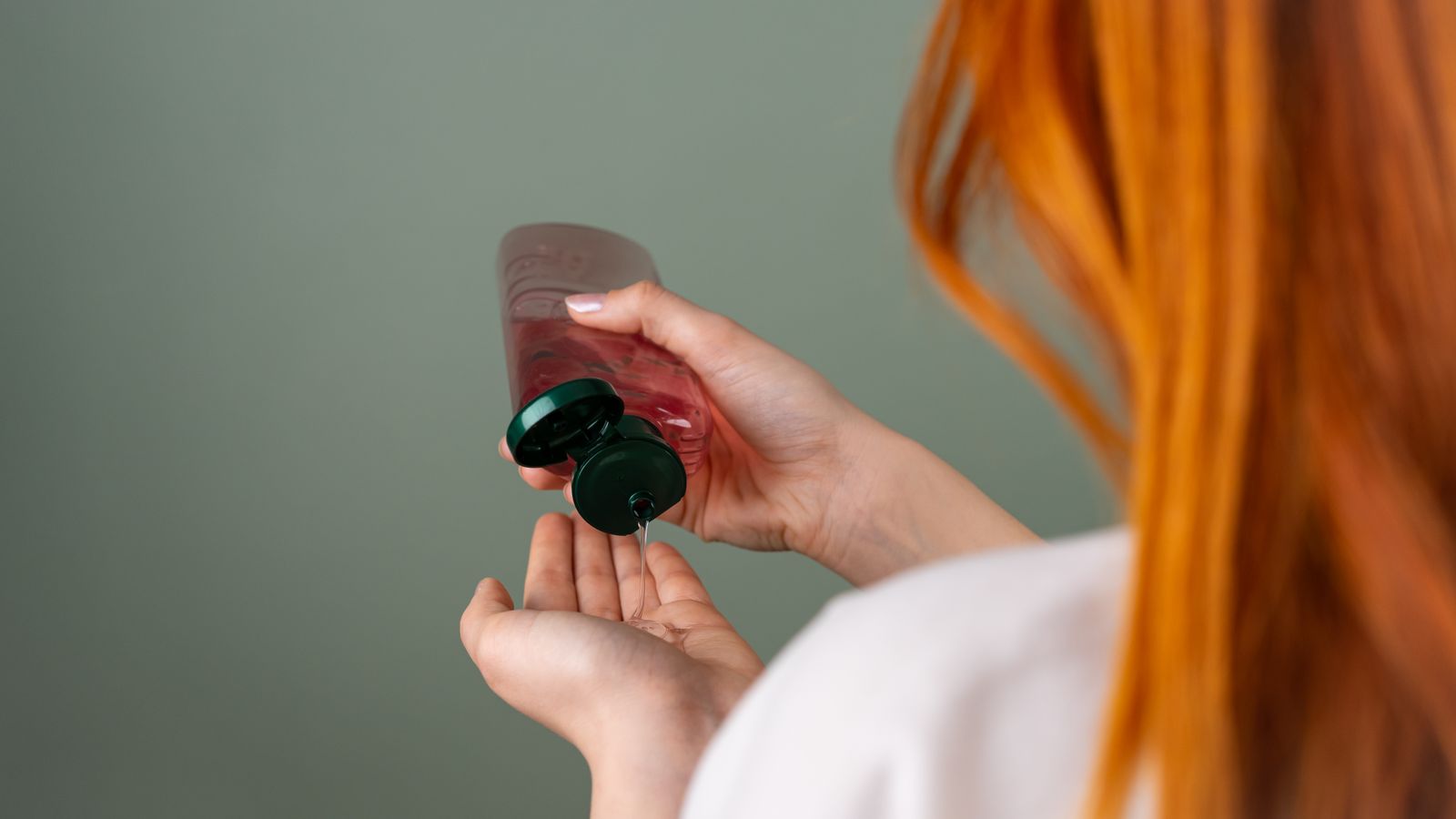
How to Use Hair Growth Shampoo (and Mistakes to Avoid)
The short answer on how to use hair growth shampoo is that two things decide what you get out of it: contact time and consistency. Work it into the scalp rather than the lengths, lather twice, leave the second lather on for two to three minutes, wash as often as your scalp genuinely needs, then leave the verdict alone for 90 days. Technique will not override genetics, but poor technique will waste most of what you paid for.
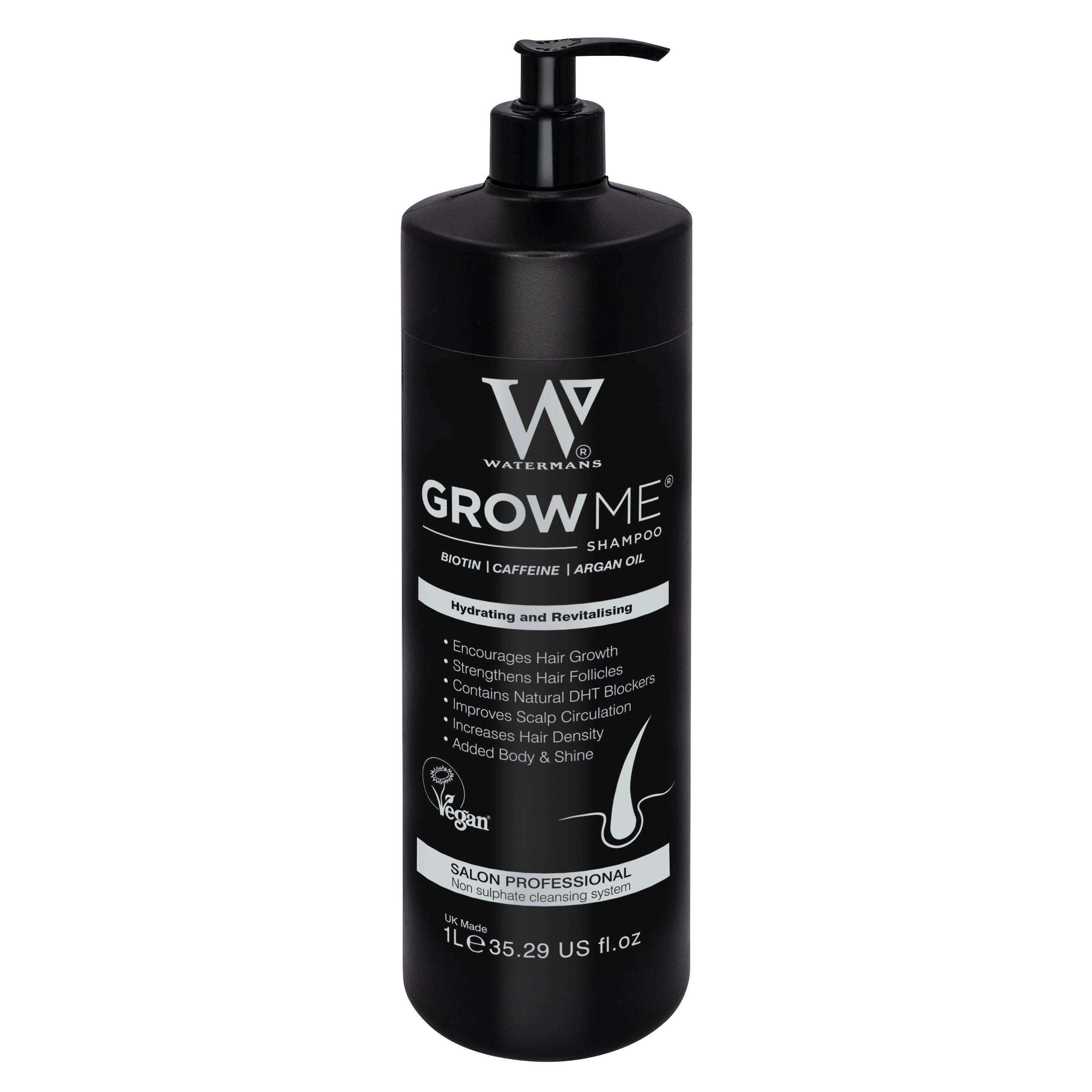
Our hair growth shampoo
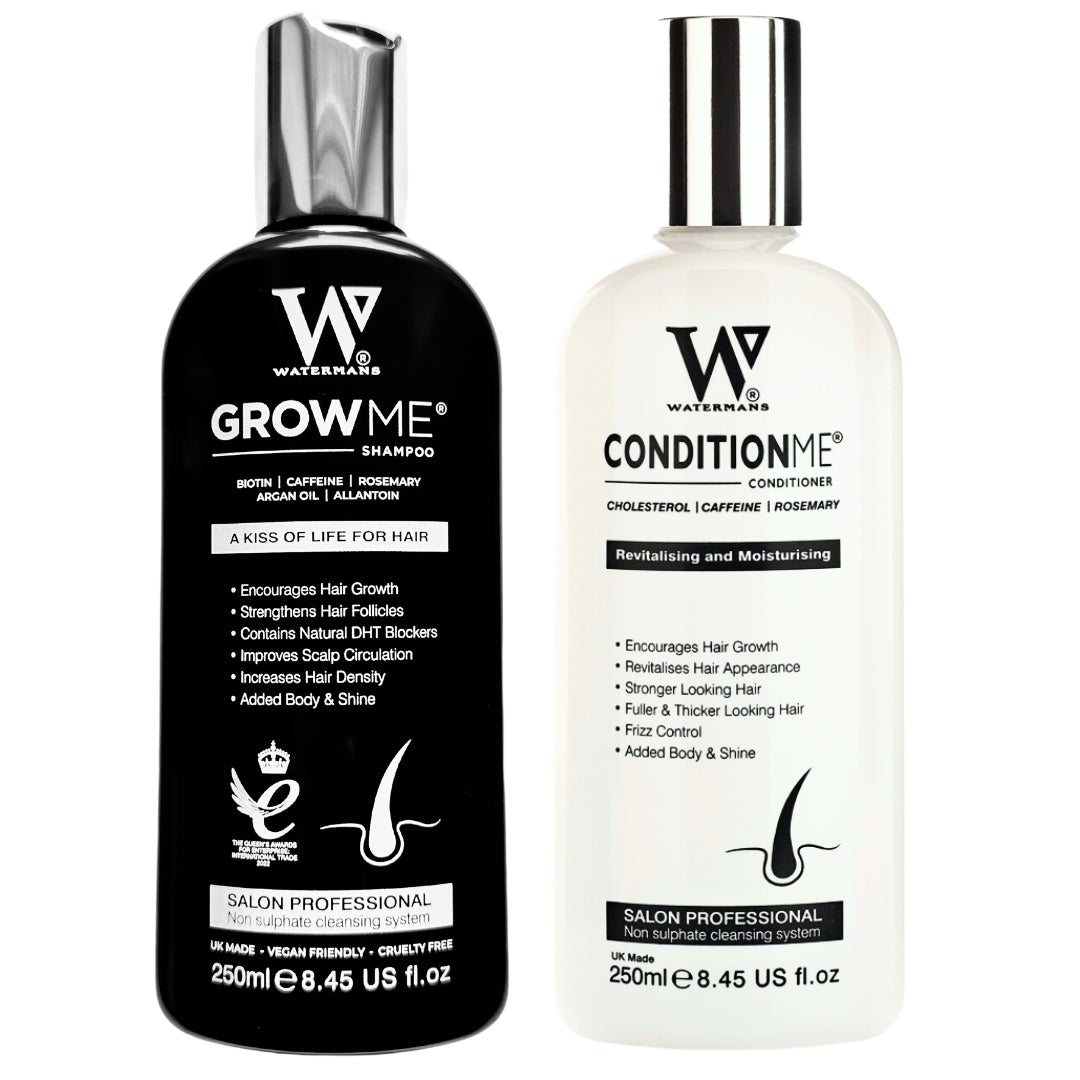
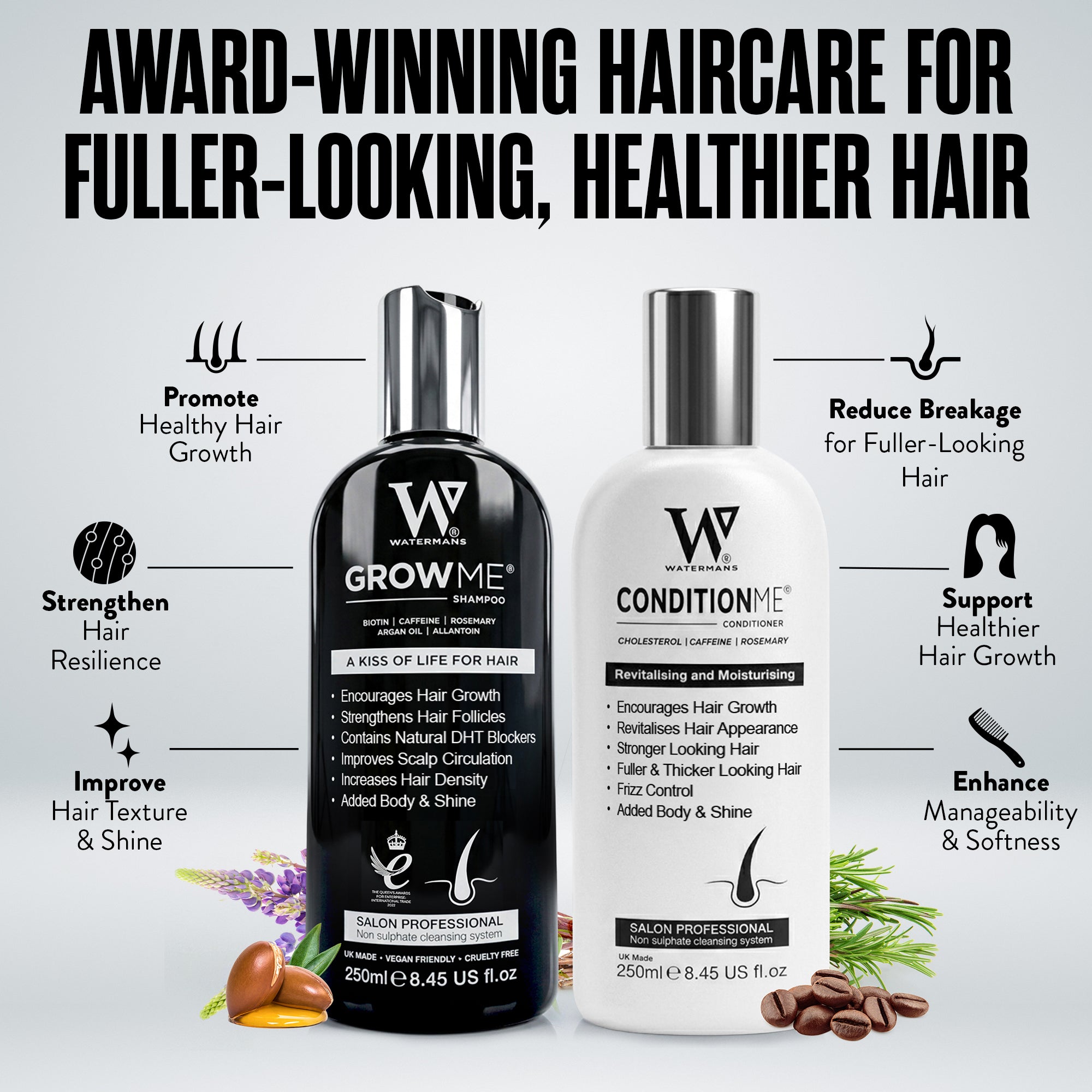
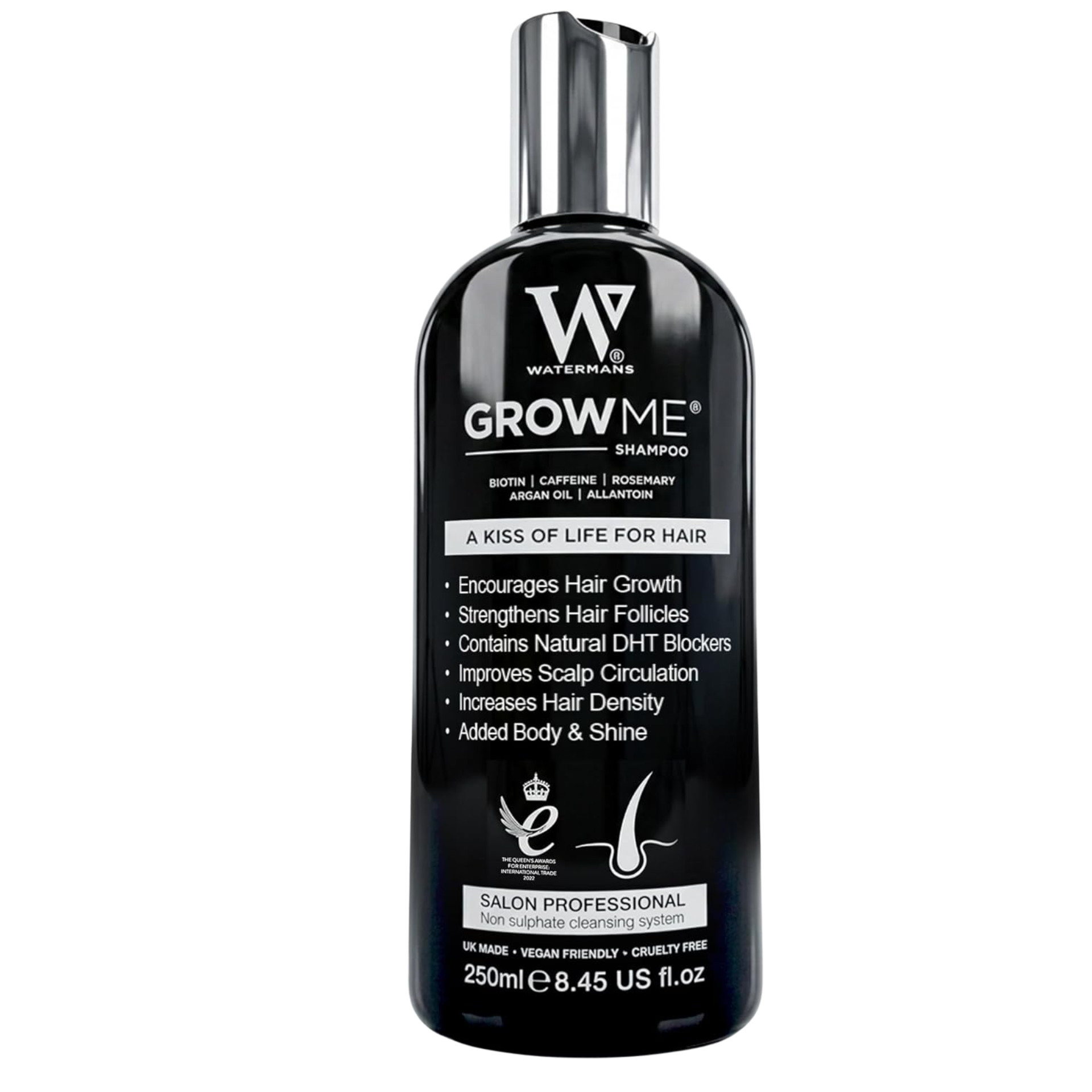
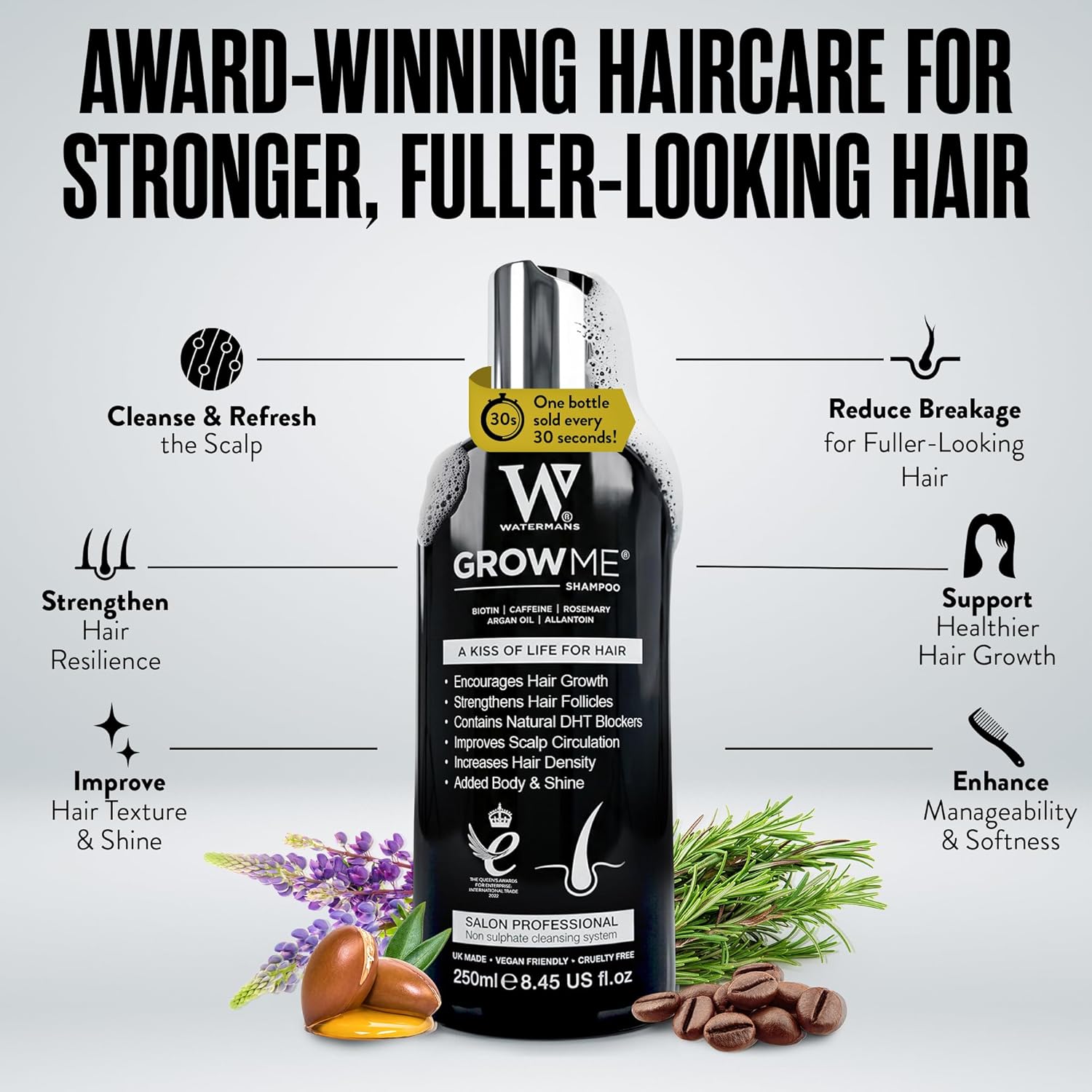
Grow Me® Hair Growth Shampoo, £14.95. A sulphate free daily shampoo that supports a healthy scalp environment and helps reduce breakage, so lengths hold on and look fuller.
Key takeaways
- Two lathers, not one. The first removes oil and product so the second can actually reach the scalp.
- Leave the second lather on for two to three minutes. This is the single highest value change most people can make.
- Shampoo is for the scalp. The lengths get cleaned by the lather rinsing through them, and scrubbing them causes breakage.
- Washing more often does not cause hair loss. Under-washing an oily or flaky scalp is more likely to work against you.
- The hair in the plughole was already shed. It was held in place by surrounding hairs, not attached and pulled out.
- Judge results with monthly photographs in fixed conditions, never with memory, and never before 90 days.
Does the way you wash actually change the result?
Washing technique changes how much of the formula ever reaches your scalp, which is a different question from whether the formula works. A shampoo is a rinse-off product, so every ingredient in it sits on a timer you control. Fifteen seconds of dilute contact is not the same exposure as three minutes, and nothing about the bottle changed between those two washes.
The second lever is consistency. A single hair follicle runs a growth cycle measured in months, and the NHS puts the normal daily shed at roughly 50 to 100 hairs, which is turnover rather than loss. A routine followed for three weeks and abandoned cannot produce a measurable change against that background, however good the product is.
If you have not settled on a bottle yet, our companion guide on how to choose a hair growth shampoo covers reading the label and decoding front-of-pack claims. This article assumes you have one, and everything below is about how to use hair growth shampoo once the bottle is already in your shower.
How do you use hair growth shampoo, step by step?
Learning how to use hair growth shampoo properly takes about four minutes in the shower and none of it is complicated. The sequence below front-loads the two steps that matter most, which are keeping the product on the scalp and giving the second lather real contact time.
- Brush before you get in. Detangling dry hair prevents much of the breakage that happens when you fight knots while wet, which is when the fibre is at its weakest.
- Soak the hair properly. Thirty seconds under running water, right down to the scalp. Shampoo applied to merely damp hair does not distribute or lather correctly, so you use far more than you need.
- First lather: cleaning. Roughly a ten pence piece for shoulder length hair. Emulsify it in your palms, then apply to the scalp in sections, work quickly and rinse. This pass removes sebum, sweat, dry shampoo and styling residue. Expect little foam, because oil suppresses it.
- Second lather: the one that matters. Apply again, less product this time. It will foam readily now the scalp is clean. Work it in with your fingertips across the whole scalp, including the back and crown you cannot see.
- Leave it for two to three minutes. Wash the rest of you while it sits. This is the contact time step, and it is the difference between using the product and rinsing it away.
- Rinse thoroughly, then rinse again. Residue left on the scalp causes itching and flaking and dulls the hair. Most people under-rinse.
- Condition the lengths and ends only. Keep it off the scalp unless your scalp is genuinely dry. Leave for a minute or two, then rinse.
- Squeeze, do not scrub, with the towel. Rubbing wet hair roughens the cuticle and creates frizz and breakage.
Use your fingertips, not your nails. Scratching hard enough to mark the skin creates micro-abrasions and irritation, which is the opposite of the goal. If your scalp itches enough that you want to scratch it that hard, the itch itself is worth investigating rather than powering through.

How often should you actually wash your hair?
Wash frequency is the part of how to use hair growth shampoo that people most often get backwards. It should match your scalp rather than a rule you read somewhere, and the widely repeated advice to wash less is wrong for a great many people. The NHS is explicit that regular washing does not cause hair loss. What follows is a practical starting point by scalp type.
| Your situation | Sensible frequency | Why |
|---|---|---|
| Oily scalp, fine hair | Daily or every other day | Sebum weighs fine hair down and flattens it. Leaving it does not help the follicle. |
| Normal scalp, medium hair | Every two to three days | A comfortable balance between cleansing and natural conditioning. |
| Flaky or itchy scalp | More often, not less | Scale and yeast build up between washes. DermNet notes that regular washing is part of managing seborrhoeic dermatitis. |
| Dry, coarse, curly or coily | Once or twice a week | Sebum travels down a coiled strand slowly, so the lengths need what is there. |
| Training or sweating daily | After sessions, or rinse and condition | Salt and sweat left sitting on the scalp are irritating. |
| Heavy styling product user | Whenever product is on there | Wax, clay and dry shampoo do not belong on a scalp overnight, repeatedly. |
The myth that washing causes hair loss deserves killing properly. Washing does not detach anchored hairs. It releases hairs that had already finished their cycle and were sitting loose, held in place by friction with their neighbours. Wash less often and you simply collect several days of shedding in one go, which looks alarming and means nothing.
Does scalp massage help when using hair growth shampoo?
Scalp massage is pleasant, free and worth doing, but be clear about why you are doing it. The claim usually attached to it is increased circulation delivering more nutrients to the follicle, and the evidence that this matters in pattern hair loss is thin. What massage reliably does is spread the product evenly across the whole scalp, including the crown and back where most people apply almost nothing.
Two to four minutes of firm circular pressure with the finger pads, moving the scalp against the skull rather than dragging the hair, is the right technique. It also makes the two to three minute contact time pass without you standing about counting. Do not use a hard-bristled scalp brush on an already irritated scalp, and stop well short of soreness.

Get a discount on the thinning hair range
Join the Watermans mailing list and we will email a discount code straight to your inbox, so you can try the thinning hair range for less. Made in the UK, over 6.5 million bottles sold since 2012.
How do water temperature, hard water and build-up affect your wash?
Three environmental factors quietly undermine an otherwise good routine, and each has a cheap fix. None of them is a fault in the shampoo, which is worth knowing before you abandon a bottle that was doing its job.
Temperature. Warm, not hot. Very hot water strips more lipid than you want and leaves the scalp tight, and it does nothing beneficial that warm water does not. A cooler final rinse helps the cuticle lie flat, which is a shine benefit rather than a growth one, but it is free.
Hard water. Much of the south and east of England sits in a hard water area, where calcium and magnesium deposit on the fibre over time and leave it dull, rough and harder to lather. A chelating or clarifying wash every two to four weeks lifts the deposit. An inline shower filter helps if the problem is persistent.
Build-up. Silicones, oils, dry shampoo and styling polymers accumulate. The signs are hair that feels coated and limp, a shampoo that suddenly will not foam, and a scalp that itches without visible flaking. One clarifying wash resets it, and doing it weekly is overkill.
A quick test for build-up: if your usual dose produces noticeably less foam than it did a month ago, on hair washed at your normal interval, you almost certainly have deposit rather than a bad batch of product.
Which mistakes waste a good hair growth shampoo?
Most of the wasted product we hear about comes down to eight errors in how to use hair growth shampoo, and the first on the list is by far the most expensive. Each is a behaviour rather than a formulation problem, which means each is free to fix.
- Rinsing straight after lathering. The most common and the most costly. You paid for the actives and then washed them off unused.
- Shampooing the lengths. Detergent belongs on the scalp. Scrubbing the mid-lengths and ends roughens them and causes the breakage that makes hair look thinner.
- Using far too much product. More shampoo does not clean better. It costs more and rinses out less completely.
- Applying to hair that is not properly wet. Poor distribution, poor lather, wasted product.
- Under-rinsing. Residue causes itching, flaking and dullness, and people then blame the shampoo.
- Putting conditioner on the scalp. On most scalps this weighs the roots down. The ends need it, the roots usually do not.
- Brushing hard when wet. Wet hair stretches and snaps far more easily. Detangle before washing, then use a wide-tooth comb from the ends upwards.
- Switching products every three weeks. This means you never complete a fair trial of anything, so you learn nothing and spend more.
Several of these are breakage problems rather than growth problems, and breakage is the thing you have most control over. If your hair feels like it never gets longer, our guide to preventing split ends covers the mechanics, and using conditioner properly covers the second half of the wash.
How should you judge results over 90 days?
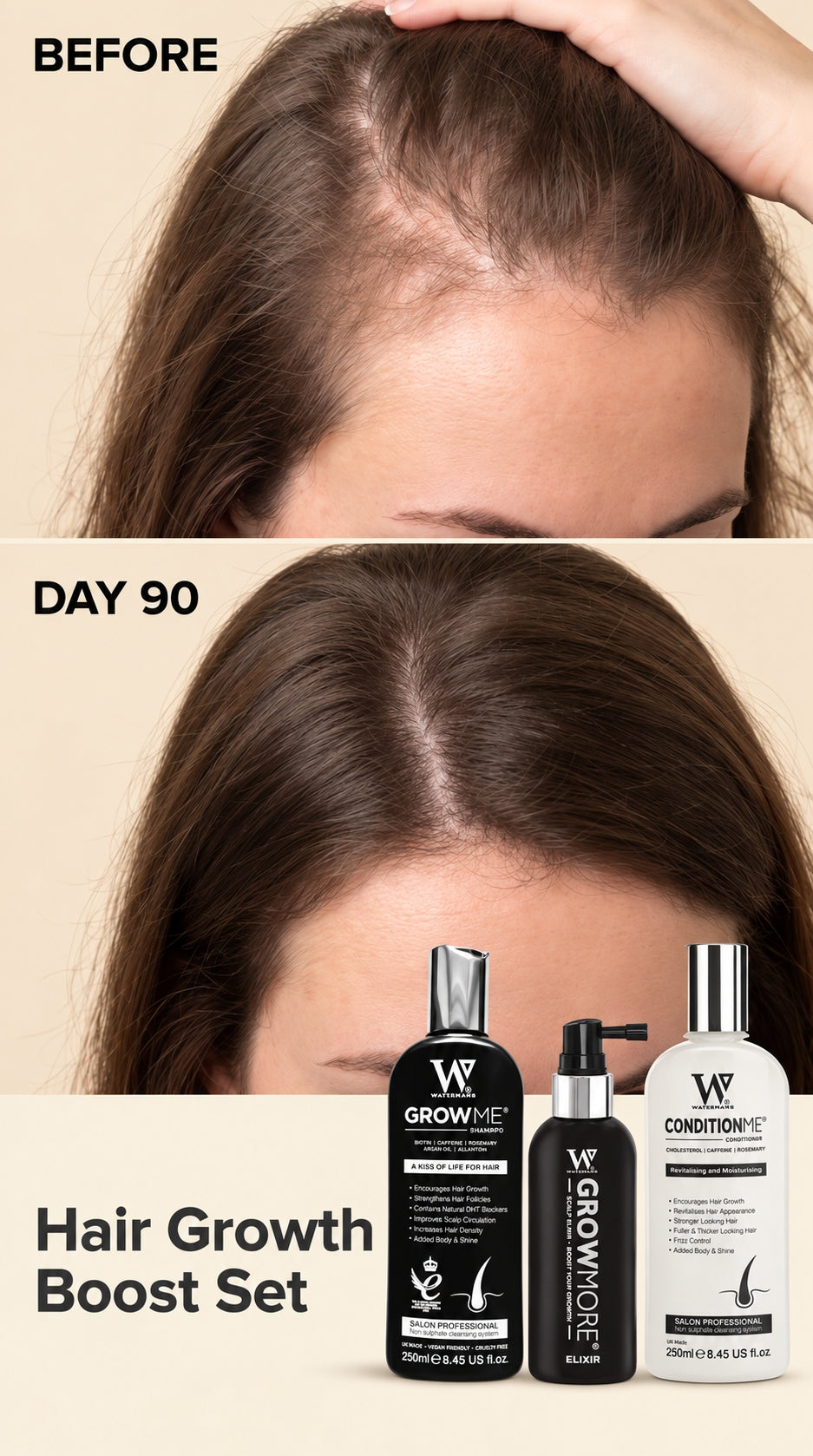
Knowing how to use hair growth shampoo is only half the job, and judging the result honestly is the other half. It needs photographs in fixed conditions, because the eye adapts to gradual change and memory is unreliable. Ninety days is the minimum honest window, since that is roughly the timescale on which the hair cycle turns over. The protocol below is the one that actually works.
- Photograph before you start. Three shots: the parting from directly above, the hairline from the front, and the crown from behind with someone else holding the camera.
- Fix the conditions. Daylight, same room, same distance, dry unstyled hair, same parting position. Changing any of these makes the comparison worthless.
- Repeat monthly. Same day of the month, same time of day, same conditions.
- Do one shed count if you want a number. Collect what comes out during and after one wash at your normal interval and count it. Repeat under identical conditions in six weeks. It only means anything if the interval matches.
- Do not weigh the evidence at week three. Nothing will have happened. That is biology, not the product failing.
Two honest caveats. A temporary rise in shedding when starting something new is a recognised phenomenon, though it is far more associated with medicated options than with cosmetic shampoos. And seasonal shedding is real, with many people shedding more in late summer and autumn, so a change across three months may partly be the calendar.

How much daily shedding is normal?
Normal daily shedding sits in the region of 50 to 100 hairs according to the NHS, and that is a rough guide rather than a clinical threshold. It also depends heavily on wash frequency, because washing every third day concentrates three days of shedding into one wash and makes the plughole look far worse than it is.
It helps to keep three separate things apart, because they have different causes and different answers.
| What it is | What is happening | What actually helps |
|---|---|---|
| Hair loss | The follicle itself is affected, as in pattern hair loss or alopecia areata. Hair returns finer, or not at all. | A GP assessment. No shampoo addresses this. |
| Hair shedding | The cycle has pushed more hairs into the resting phase at once, typically two to three months after a stressor. | Time, and fixing the trigger. It usually recovers. |
| Hair breakage | The fibre snaps along its length. The follicle is fine, the hair is not. | Gentler handling, conditioner, heat protection. This is where cosmetics genuinely help. |
Shedding that resolves is normal turnover. Shedding alongside visible thinning at the parting, or hair growing back noticeably finer, is a different matter. Sudden heavy shedding that began two to three months after a specific stressor is a recognisable pattern with its own timeline, covered in what causes telogen effluvium.
When is technique not the problem?
Technique is not the problem when the pattern of loss points at something medical, and no amount of correct washing will change that. The signs below are worth a GP appointment and a blood test rather than another bottle. Booking that is not an overreaction, and early assessment matters most in the scarring types of hair loss, where follicles that are lost do not come back.
- Hair loss in distinct round patches, or loss of eyebrows or eyelashes.
- A parting that is progressively widening month on month.
- Scalp pain, burning, pustules, or smooth shiny patches where you can no longer see follicle openings.
- Shedding alongside fatigue, unexplained weight change, heavy periods, or brittle nails, since low iron and an underactive thyroid are both checkable with a simple blood test.
- Sudden dramatic shedding with no obvious trigger.
- Any noticeable hair loss in a child.
A good cosmetic routine works far better alongside a proper medical assessment than as a substitute for one.
How do you use Grow Me hair growth shampoo specifically?
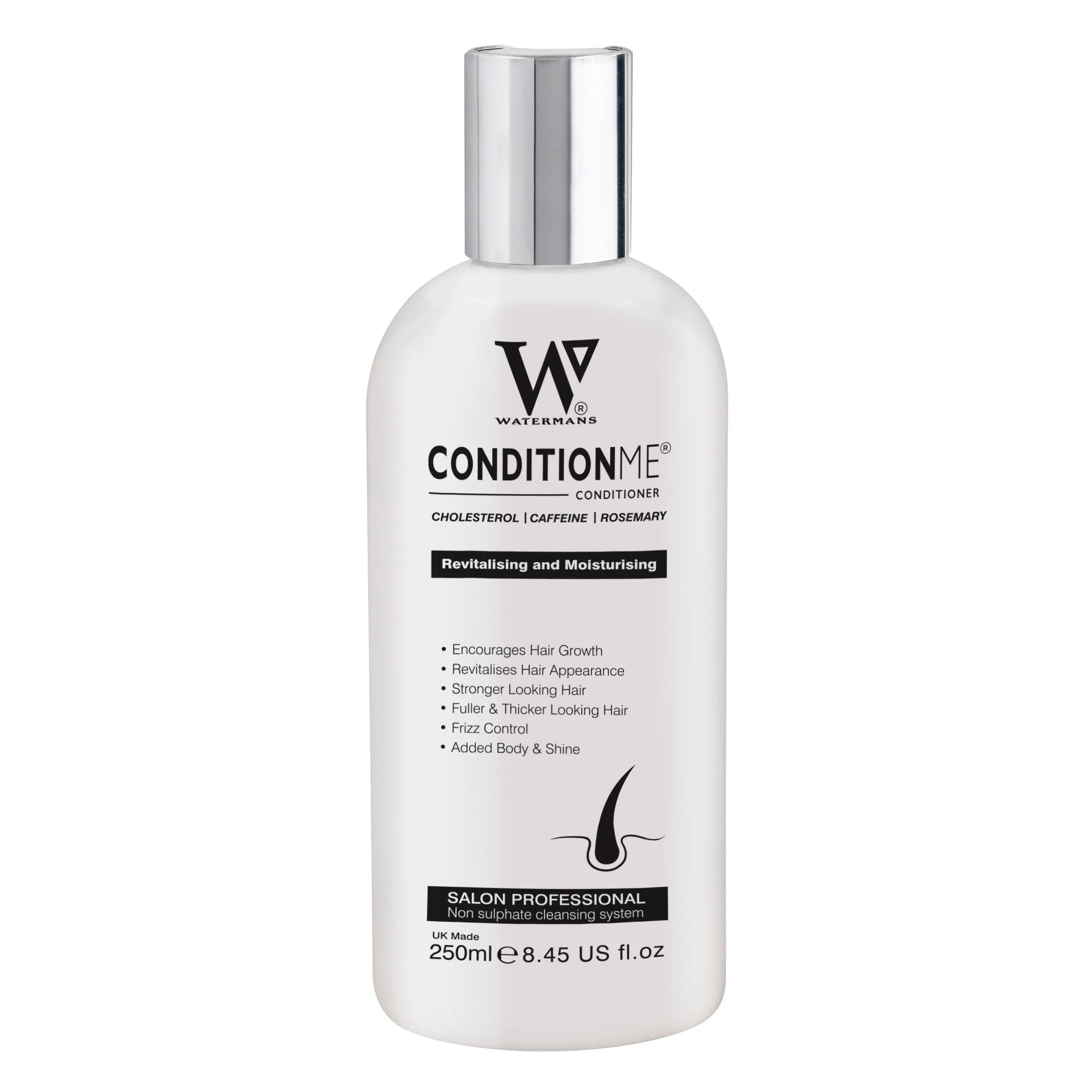
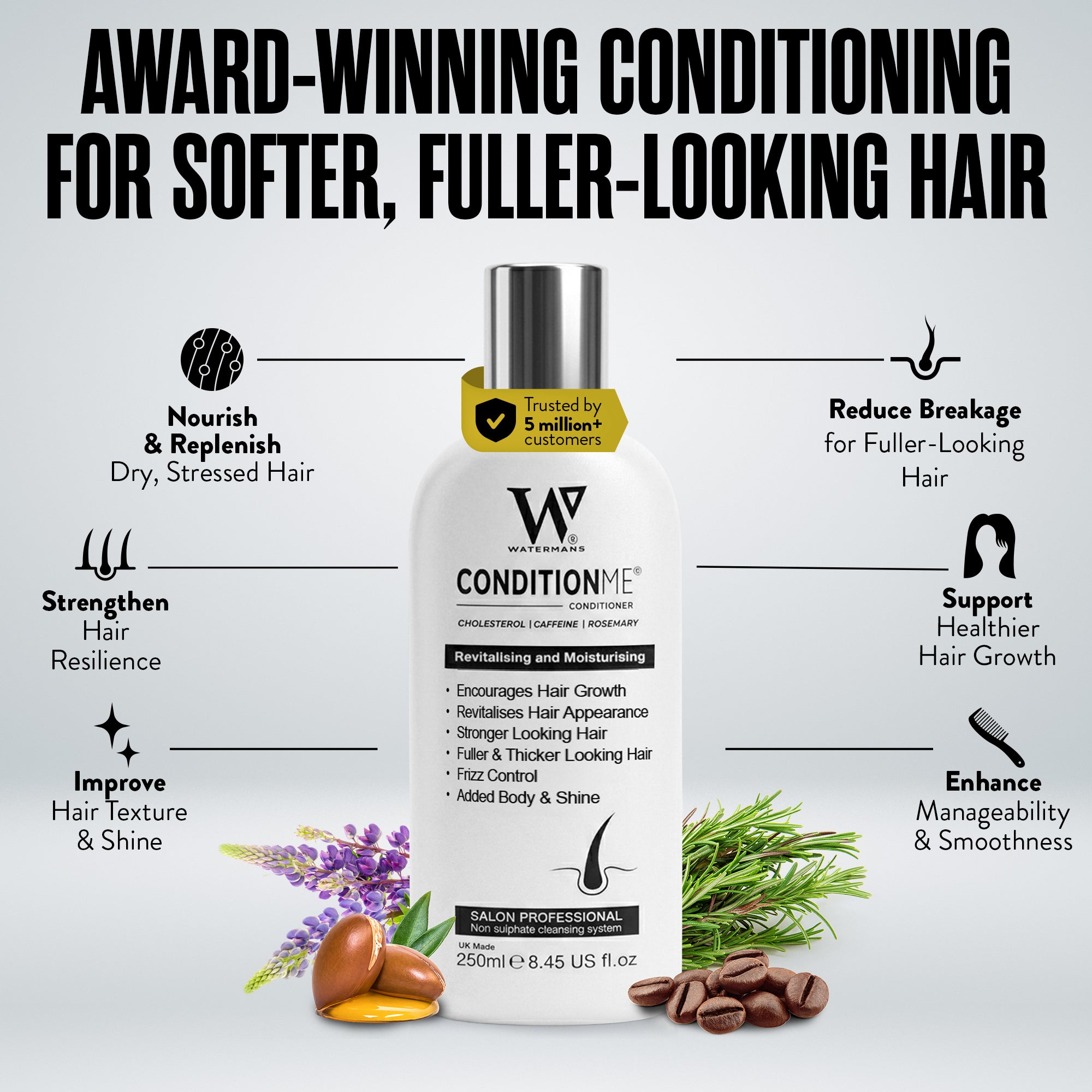
The general rules on how to use hair growth shampoo apply to Grow Me with one adjustment. It is sulphate free, which means it foams less than a detergent-heavy supermarket shampoo. If you are switching, expect a lighter first pass and do not compensate by doubling the dose. Two modest lathers with the second left on for two to three minutes is the intended use, and the 250ml bottle lasts longer at that dose than most people expect.
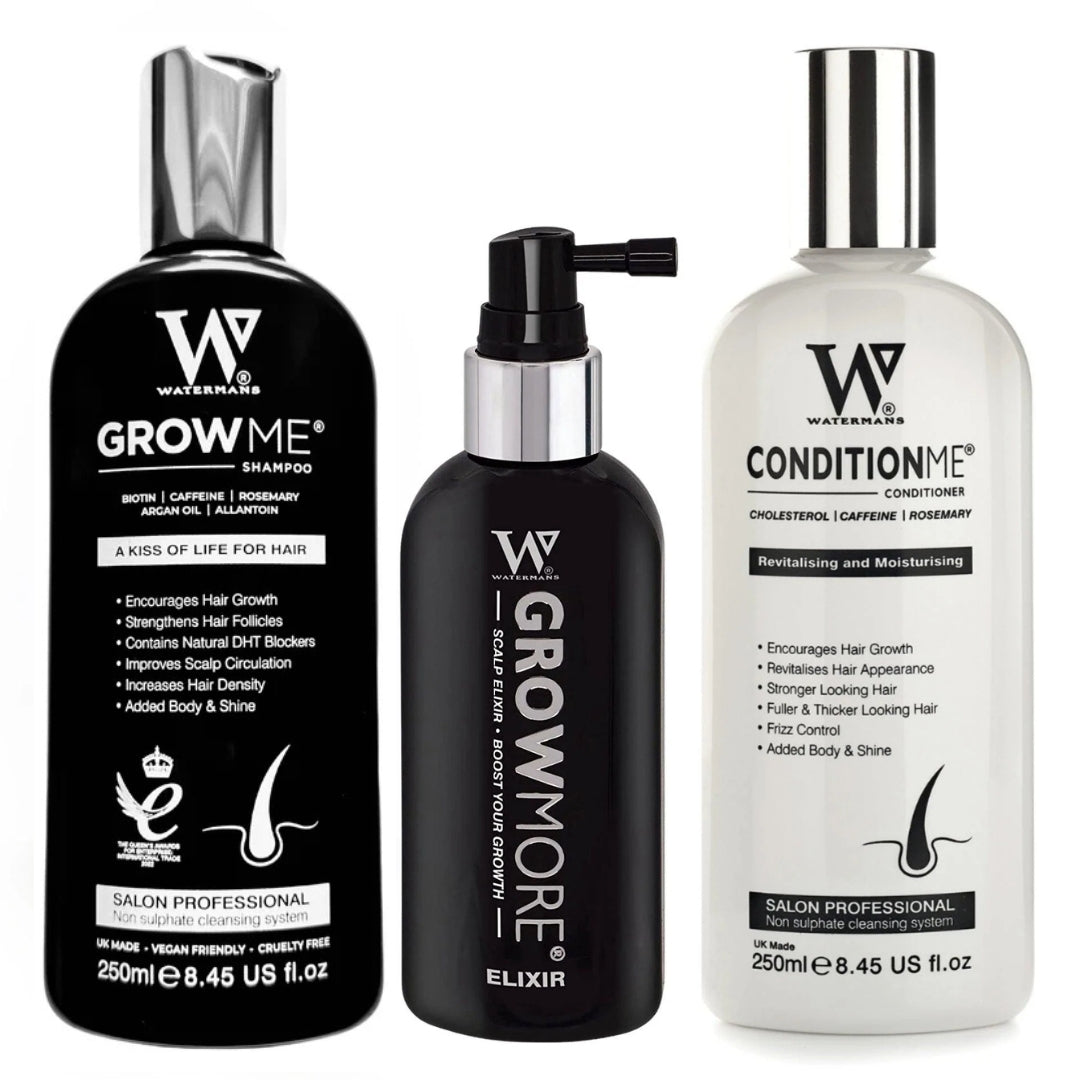
Pairing it with Condition Me on the lengths is the straightforward next step, because retaining length is largely a breakage problem and that is what a conditioner addresses.

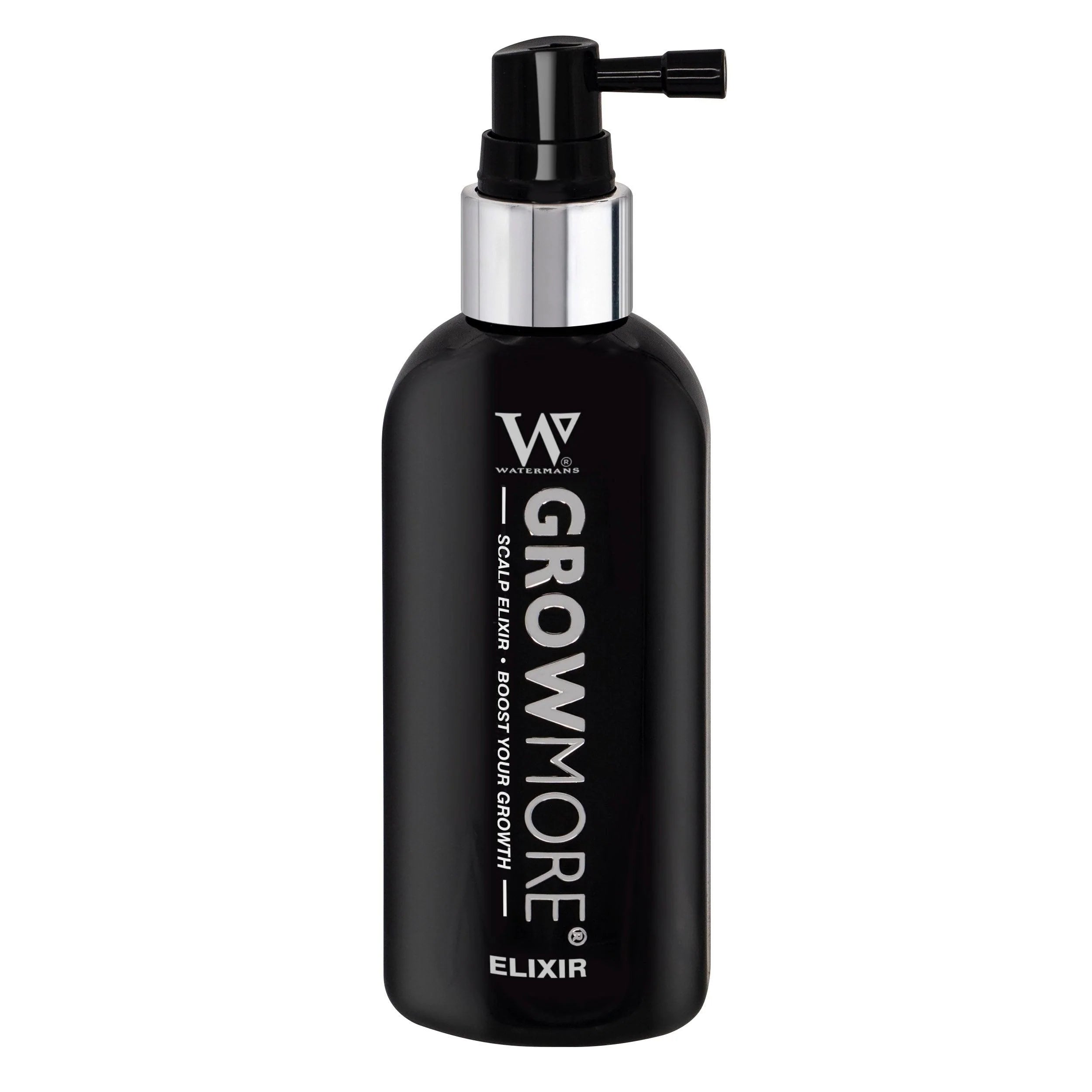
Grow Me® Hair Growth Shampoo, £14.95
Sulphate free, 250ml, vegan. Biotin, caffeine, rosemary, niacinamide and hydrolysed lupine protein. Two lathers, the second left on for two to three minutes.
What it is not: a medicine, and it does not address pattern hair loss or any medical condition.

Condition Me® Hair Growth Conditioner, £13.95
Breakage defence for the mid-lengths and ends. Shea butter, glycerin, hydrolysed lupine protein and rosemary. Keep it off the roots.
What it is not: a scalp product. It is a conditioner for the lengths.
Watermans is a UK brand and we have sold over 6.5 million bottles since 2012.
Frequently asked questions
How do you use hair growth shampoo for the best results?
Lather twice, keep the product on the scalp rather than the lengths, and leave the second lather on for two to three minutes before rinsing thoroughly. Wash as often as your scalp genuinely needs, condition the ends only, and photograph your parting monthly rather than judging by memory.
How long should I leave hair growth shampoo on?
Two to three minutes on the second lather. Longer gives diminishing returns, and ten minutes will not multiply the effect. Two to three minutes is the practical sweet spot between contact time and standing in the shower.
Do I really need to shampoo twice?
If your hair is oily, has styling product in it, or you wash every third day, yes. The first lather removes the barrier and the second does the work. If you wash daily and use no product, one careful lather with proper contact time is fine.
Can I use hair growth shampoo every day?
Yes, if your scalp is comfortable with it. Daily washing suits oily scalps and fine hair. If the lengths start to feel dry, reduce the frequency rather than switching product.
Should I put shampoo on the ends of my hair?
No. Apply to the scalp and let the lather rinse down through the lengths. That cleans them adequately and avoids the roughening and breakage that direct scrubbing causes.
Is it normal to see more hair fall when I start a new shampoo?
Often it is simply the shedding you would have seen anyway, made visible because you are paying attention and washing more thoroughly. A genuine sustained increase over several weeks is worth raising with a GP rather than blaming the shampoo.
Does cold water make hair grow?
No. A cool final rinse helps the cuticle lie flatter, which improves shine and smoothness. It has no effect on growth.
How long until I see a difference?
Feel and manageability change within two or three washes. Anything relating to density needs 90 days minimum, because that is the timescale the hair cycle runs on. Photograph rather than relying on memory.
Do I need to clarify, and how often?
Only if you have build-up, which shows as reduced foaming, a coated feel and dullness. Every two to four weeks is plenty in a hard water area and less often elsewhere. Weekly clarifying is unnecessary and drying.
What is the bottom line on how to use hair growth shampoo?
Knowing how to use hair growth shampoo comes down to two minutes of patience and a bit of consistency. Lather twice, keep it on the scalp, leave the second pass on while you wash the rest of you, rinse properly, condition the ends only, and wash as often as your scalp genuinely needs. Then photograph your parting once a month and leave the verdict alone for 90 days. If the pattern of your loss suggests something medical, see a GP, because no washing technique replaces a proper assessment. If your question is about products or a routine rather than a medical one, you can talk to Gail Waterman, our co-founder, as an AI avatar on the Watermans homepage.
If you want a sulphate-free hair growth shampoo built for the two-lather method described above, Grow Me is the bottle this routine was written around.
Watermans products are 100% cosmetic and do not treat medical hair loss. Individual results may vary.
Sources & references
- NHS, Hair loss: normal daily shedding, common causes, and when to see a GP.
- DermNet, Hair loss: how loss, shedding and breakage differ.
- DermNet, Telogen effluvium: the two to three month delay between a trigger and the shed.
- DermNet, Seborrhoeic dermatitis: why regular washing helps a flaky, itchy scalp.
- NHS, Iron: deficiency symptoms worth a blood test alongside shedding.