Scalp Scrub: Who Needs One and How to Choose It
Looking for topical oestrogen? That is a prescription matter for your GP, and the NHS menopause pages cover it.
A scalp scrub is a rinse off exfoliant for the skin under your hair: either fine granules such as sugar or salt that loosen build up by hand, or a mild acid such as salicylic acid that loosens flakes without rubbing. A scrub suits a scalp carrying heavy styling product, dry shampoo or oil, used once a week at most, and is worth skipping on skin that is sore or inflamed. The routine around it matters more: wash frequency, a gentle wash, and conditioner kept to the lengths.
Our hair growth shampoo
Grow Me® Hair Growth Shampoo, £14.95. A sulphate free daily shampoo that supports a healthy scalp environment and helps reduce breakage, so lengths hold on and look fuller.
Key takeaways
- Wash frequency is the single biggest lever. Most people with an oily or itchy scalp are washing too little, not too much.
- A scalp care routine needs three products at most: a wash, a conditioner for the lengths, and optionally one leave on product.
- Conditioner goes on the mid lengths and ends. The scalp makes its own oil and does not need it.
- Flaking with itch and redness is a skin condition, not a dryness problem, and it needs different handling.
- A scalp scrub is an optional extra, not an essential: useful for heavy product build up, once a week at most, and never on sore or broken skin.
- Scratching with nails, very hot water and daily heat styling undo more than any product adds.
What does a scalp care routine actually involve?
A workable plan involves four things and no more: washing at a frequency that suits how oily your scalp gets, cleaning properly at the roots rather than just lathering the lengths, keeping conditioner away from the scalp, and not interfering between washes. Everything else sold as scalp care is optional on top of those four.
The reason the list is so short is that the scalp is skin, and skin mostly wants to be left alone. It renews itself, it produces its own oil, and it has a barrier that works unless something disrupts it. The common mistakes are all forms of doing too much: washing too rarely and then scratching hard, or reaching for a scalp scrub on skin that was never actually carrying build up.
How often should you wash as part of a scalp care routine?
Wash frequency should be set by how quickly your scalp gets oily, not by a rule someone gave you. An oily scalp usually needs washing every day or every other day. A dry or coarse scalp may be comfortable at twice a week. The correct answer is the frequency at which your scalp never feels itchy, greasy or tight.

| If your scalp is... | Wash roughly | What goes wrong if you stretch it |
|---|---|---|
| Oily, flat by the afternoon | Daily or every other day | Oil and product build up, the scalp itches, and flaking gets worse rather than better |
| Normal, fine by day two | Every two to three days | Roots go limp and the parting looks greasier than the hair actually is |
| Dry, tight, coarse or coily hair | Once or twice a week | Rarely a problem. This is the one scalp type where stretching genuinely suits |
| Flaky with visible redness | As advised by a GP or pharmacist | A skin condition does not respond to frequency changes alone |
The myth worth dropping is that washing hair often is bad for it. Washing removes oil from the scalp, which is the point. It does not accelerate hair loss, and the hairs that come out in the shower were already detached and on their way. Seeing them collect in a drain after three days is a counting artefact, not a new problem.
Is it hair loss, hair shedding or hair breakage you are dealing with?
Looking after the scalp helps enormously with one of these three, a little with the second, and not at all with the third. Knowing which you have stops you spending money in the wrong place, which is the most common way people waste a year on this.
| What it is | What you notice | What daily care can genuinely do |
|---|---|---|
| Hair loss (follicular) | Density genuinely drops over years. The parting widens, the scalp shows through in bright light. | Very little directly. Comfort and cleanliness help the hair that is there look its best, and that is the honest limit. |
| Hair shedding (cycle) | A sharp increase in hairs coming out, often two to three months after illness, stress or childbirth. | Not a cause and not a cure, but a calm scalp and gentle handling avoid adding breakage on top of the shed. |
| Hair breakage (fibre) | Short broken pieces, frizz along the mid lengths, ends snapping when you comb. | A great deal. Breakage is the one that responds directly to what you wash with, how you condition and how you handle it. |
If the pattern is the middle row, our guide to how long a shedding phase lasts explains the usual timeline. If it is the top row, how pattern thinning progresses is the better place to start.
What does the wash step actually need to do?
The wash step has to remove sebum, sweat, dead skin and yesterday product from the scalp without stripping the hair fibre so hard that it snaps later. Those two jobs pull in opposite directions, which is why technique matters as much as the bottle: clean the scalp thoroughly, and let the lengths simply rinse.
How to actually wash a scalp
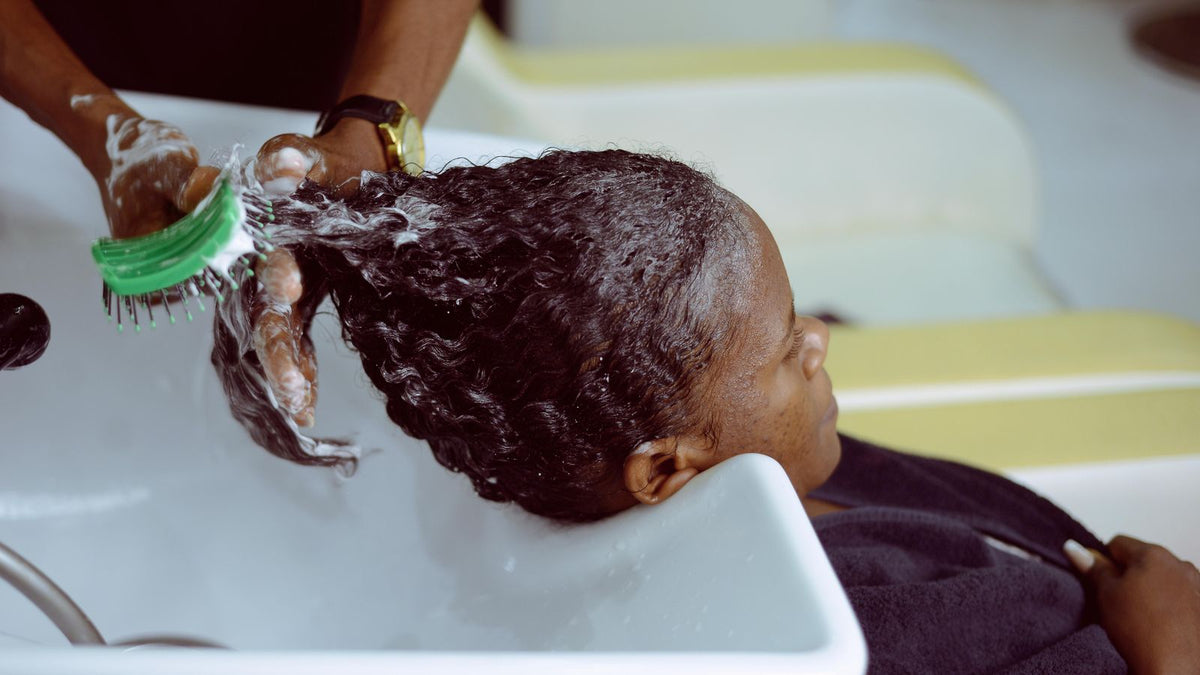
Wet the hair properly for a good thirty seconds first, because water does half the work. Put the shampoo on your scalp, not on the lengths. Use the pads of your fingers in small circles, never your nails. Rinse for longer than feels necessary. If the scalp was very oily, a second short lather will do more than scrubbing harder on the first.
Water temperature is the quiet variable. Very hot water feels like it cleans better and mostly just leaves the scalp tight and the hair rough. Warm is enough for the wash, and a cooler final rinse helps the cuticle lie flat, which is what makes hair look smoother without any extra product.
Get a discount on the scalp care range
Join the Watermans mailing list and we will email a discount code straight to your inbox, so you can try the scalp care range for less. Made in the UK, over 6.5 million bottles sold since 2012.
Which products does a scalp care routine actually need?
Three products cover almost everyone: a shampoo that cleans without stripping, a conditioner for the mid lengths and ends, and at most one leave on product for the scalp itself. Anything beyond that is preference rather than need, and scrubs sit firmly in that optional group: helpful for some scalps, unnecessary for most, as the next section sets out.

The conditioner rule is the one most often broken. Conditioner is for the fibre, which is dead and needs help, not for the scalp, which is alive and makes its own oil. Applied at the roots it weighs hair down and leaves residue that itches by day two, which then gets misread as needing a stronger shampoo.

Grow Me® Hair Growth Shampoo £14.95
Sulfate free daily shampoo with Biotin, Caffeine, Rosemary, Niacinamide and hydrolysed lupine protein. Cleans without stripping, so hair looks fuller and snaps less on the comb.
A sulfate free daily shampoo, which is the point at which most routines are won or lost. Cleans the scalp without leaving the lengths squeaky and brittle.

Condition Me® Hair Growth Conditioner £13.95
A breakage defence conditioner with cholesterol, shea butter and silica. It smooths the cuticle so wet combing pulls far less hair out of the brush.
The mid lengths and ends step. Smoothing the cuticle is what stops combing pulling hair out of the brush.

Grow More® Leave In Scalp Elixir £25.50
An overnight leave on elixir for lower density areas such as the parting and temples. Applied to the scalp rather than the lengths, with Biotin, Caffeine, Rosemary and Allantoin.
The optional third step. A leave on scalp product for lower density areas such as the parting and temples, applied to the scalp rather than the lengths.
If you are weighing up whether a separate scalp product is worth it at all, our guide to choosing a scalp serum goes through what they can and cannot do.
What should you look for in a scalp scrub?
Look for a scalp scrub that matches the problem on your own scalp: fine, dissolving granules such as sugar or salt for product build up, or a leave on then rinse formula with a mild acid such as salicylic acid for loose flakes, in a base that rinses out cleanly and carries as little fragrance as you can find.
Two families sit under the same name, and they behave differently. A physical scrub relies on your fingertips moving granules across the skin. A chemical exfoliant relies on an ingredient loosening the bond between dead skin cells, with no rubbing needed. The NHS lists salicylic acid among the ingredients worth looking for in a shampoo for dandruff, which is why that ingredient turns up in so many scalp exfoliants. Neither family is a hair growth product, and neither changes how many hairs you have.
| What to check | What to look for | Why it matters |
|---|---|---|
| Exfoliant type | Sugar or fine salt granules, or a mild acid such as salicylic acid | Granules shift styling product and oil. An acid based formula loosens flakes without friction, which is kinder on a scalp that is easily irritated. |
| Granule size | Small, rounded and able to dissolve in water | Large or sharp particles scratch the skin and lodge in long or curly hair. Granules that dissolve rinse out fully. |
| Base | A gel or light cream that lathers or rinses easily | Heavy oil or butter bases leave their own residue, which defeats the point of the product. |
| Fragrance and menthol | As little as possible if your scalp is reactive | A cooling tingle is a sensation, not a sign of cleaning, and freshly exfoliated skin is more likely to sting. |
| Directions | Weekly or less often, on a wet scalp, followed by shampoo | A product that tells you to use it at every wash is asking you to over exfoliate. |
| Claims | Clean, comfortable scalp and less build up | Be wary of any label promising thicker growth from exfoliating alone. |
How you use it matters as much as which one you buy. Wet the hair fully, part it in sections, and work a small amount onto the skin with the pads of your fingers for about a minute, using light pressure. Rinse until the water runs clear, then shampoo and condition as normal. Once a week is the ceiling for most scalps, and once a fortnight is plenty if you use little styling product.
Skip scrubs altogether if the skin is sore, cracked, weeping or very itchy, or if you have red, scaly patches. The NHS advises seeing a GP when the scalp is red or swollen or when flaking has not settled after four weeks of a dandruff shampoo, and rubbing granules into skin in that state tends to make it angrier rather than calmer.
We do not sell a scalp scrub, so there is nothing for us to push here. Where our range fits is the step that follows: a wash that cleans the roots properly every time means there is far less build up for a scrub to remove in the first place.
How do you build a weekly scalp care routine?
A weekly plan turns the principles above into something you can actually follow. The version below assumes a scalp that gets oily by day two, which is the most common pattern. Shift the wash days to suit your own scalp rather than following it literally.

| Day | What you do | Why |
|---|---|---|
| Monday | Wash, focusing on the scalp. Conditioner on the lengths only. | Clears the weekend build up of product and oil |
| Tuesday | Nothing. Dry style if needed, with heat protection. | The scalp does not need daily interference |
| Wednesday | Wash. Leave on scalp product afterwards if you use one. | Damp scalp is when a leave on product spreads best |
| Thursday | Nothing. Loose styling, no tight ties. | Tension at the hairline causes more loss than most products prevent |
| Friday | Wash. Conditioner on the ends, a little longer if they feel rough. | Going into the weekend with the fibre in good condition |
| Saturday | Optional deep conditioner or mask on the lengths only. | Weekly is plenty. More often and fine hair goes limp |
| Sunday | Nothing, or a wash if the scalp is oily. | Flexible day. Follow the scalp, not the calendar |
What should you stop doing?
Stopping the wrong habits changes more than adding right ones, because most irritated scalps are irritated by something being done to them. Five habits account for the bulk of it, and all five are free to change today.
Scratching or scrubbing with nails, which breaks the skin surface and starts an itch cycle. Very hot water on every wash. Conditioner at the roots. Tight ponytails, buns and braids worn daily in the same spot, which is the mechanism behind traction alopecia. And piling on scalp exfoliants, which on an already irritated scalp makes things worse.
Flaking is not automatically dryness
White, fine, dry looking flakes with no redness are often simple build up. Yellowish greasy flakes with red, sore looking skin underneath are a skin condition and will not respond to moisturiser or a gentler shampoo. That is a conversation with a pharmacist or GP, not a shopping decision.
When should you see a GP instead of changing shampoo?
Some scalp problems are medical and no routine fixes them. See a GP if the scalp is sore, red, scaly or weeping, if hair is coming out in distinct patches rather than thinning evenly, if there is scarring or shiny smooth skin where hair used to be, or if the itching is keeping you awake. If your question is about products or a routine rather than a medical one, you can talk to Gail Waterman, our co-founder, as an AI avatar on the Watermans homepage.
Also worth a conversation: hair changes that came on suddenly, changes alongside new medication, or thinning that is genuinely distressing you. The NHS hair loss pages set out what a GP will usually ask and what tests might follow, and nothing on this page is a substitute for that.
Frequently asked questions
Is a scalp scrub good for your scalp?
A scalp scrub can be useful if your scalp carries a lot of styling product, dry shampoo or oil, because it lifts residue that a quick wash leaves behind. Used more than once a week, or on skin that is already sore, itchy or flaking with redness, the same product is more likely to irritate than help. Think of it as an occasional extra on top of regular washing rather than a replacement for it.
How long does it take to see a difference from a scalp care routine?
Comfort changes within a week or two: less itch, less grease, less tightness. How the hair looks follows over roughly six to eight weeks, because that is how long it takes for less breakage to show as thicker looking ends. Density changes are a different question and a much slower one.
Is it bad to wash your hair every day?
Not for most people. Washing removes oil from the scalp, which is what an oily scalp needs. The thing to watch is what you wash with and how you handle the hair afterwards, since daily rough towel drying and hot tools cause far more damage than daily washing does.
Do I need a separate scalp scrub or exfoliant?
Most people do not. A proper wash with fingertips removes everyday build up perfectly well. Scrubs are most likely to help someone using a lot of heavy styling product, and most likely to cause problems on a scalp that is already itchy or inflamed.
Should I put conditioner on my scalp?
No. Conditioner is designed for the hair fibre, which is dead and benefits from smoothing. The scalp is living skin that produces its own oil, and conditioner left there weighs the roots down and can leave residue that itches.
Does looking after your scalp help with hair loss?
Only indirectly and only honestly stated. A clean, comfortable scalp is the best environment for the hair you have, and reducing breakage keeps more length on your head. Genetic thinning is a separate matter and no shampoo changes it.
What about scalp massage?
A few minutes of gentle fingertip massage while washing is pleasant and costs nothing, and it is a good way to make sure you are actually cleaning the scalp rather than the lengths. Treat it as technique rather than as something that changes growth.
Can I use a dry shampoo between washes?
Occasionally and sparingly. Dry shampoo absorbs oil at the roots for a day, which is useful, but it is product sitting on the scalp. Using it repeatedly instead of washing is one of the more common causes of build up and itching.
Does hard water affect how you wash?
It affects the hair more than the scalp. Mineral deposits from hard water leave the fibre rougher and duller, which makes hair harder to comb and more prone to snapping. A thorough rinse and a smoothing conditioner handle most of it.
What is the bottom line on a scalp scrub?
A scalp scrub is an occasional tool for a scalp carrying build up, chosen for fine granules or a mild acid and used once a week at most. The scalp care routine underneath it is what does the daily work, and a good one is short, boring and consistent. Wash at the frequency your own scalp needs, clean the roots rather than the lengths, keep conditioner off the scalp, and stop scratching. Three products cover almost everyone, and the fourth, fifth and sixth products in the category rarely earn their place.
The honest limit is worth repeating. A routine changes comfort, breakage and how the hair looks. It does not change genetic thinning, and anything on a shelf claiming otherwise is overselling. If the scalp is sore, patchy or scarred, that is a GP conversation rather than a shopping one.
If you are starting from scratch, the wash step is where to put the money: a hair growth shampoo that cleans the scalp without stripping the lengths does more for a routine than anything you add afterwards.
Sources & references
Every source below was opened and checked while writing this page.
- NHS: hair loss, when hair changes warrant seeing a GP
- NHS: dandruff, how flaking is assessed and when it needs pharmacist or GP input
- NHS: menopause, general menopause guidance, including where hormone questions belong
- DermNet: traction alopecia, why repeated tension at the hairline causes lasting loss
- DermNet: female pattern hair loss, how pattern thinning presents, and what a routine cannot change
Watermans products are 100% cosmetic and do not treat medical hair loss. Individual results may vary.