Transfeminine Hair: A Styling Guide by Face Shape and Texture
Styling transfeminine hair well comes down to three decisions: a cut that adds width where your face is narrow and softness where it is angular, a parting and fringe that frame the forehead, and a drying technique that builds volume at the root. Texture and density decide what is achievable far more than the length you are aiming for.
Our hair growth conditioner
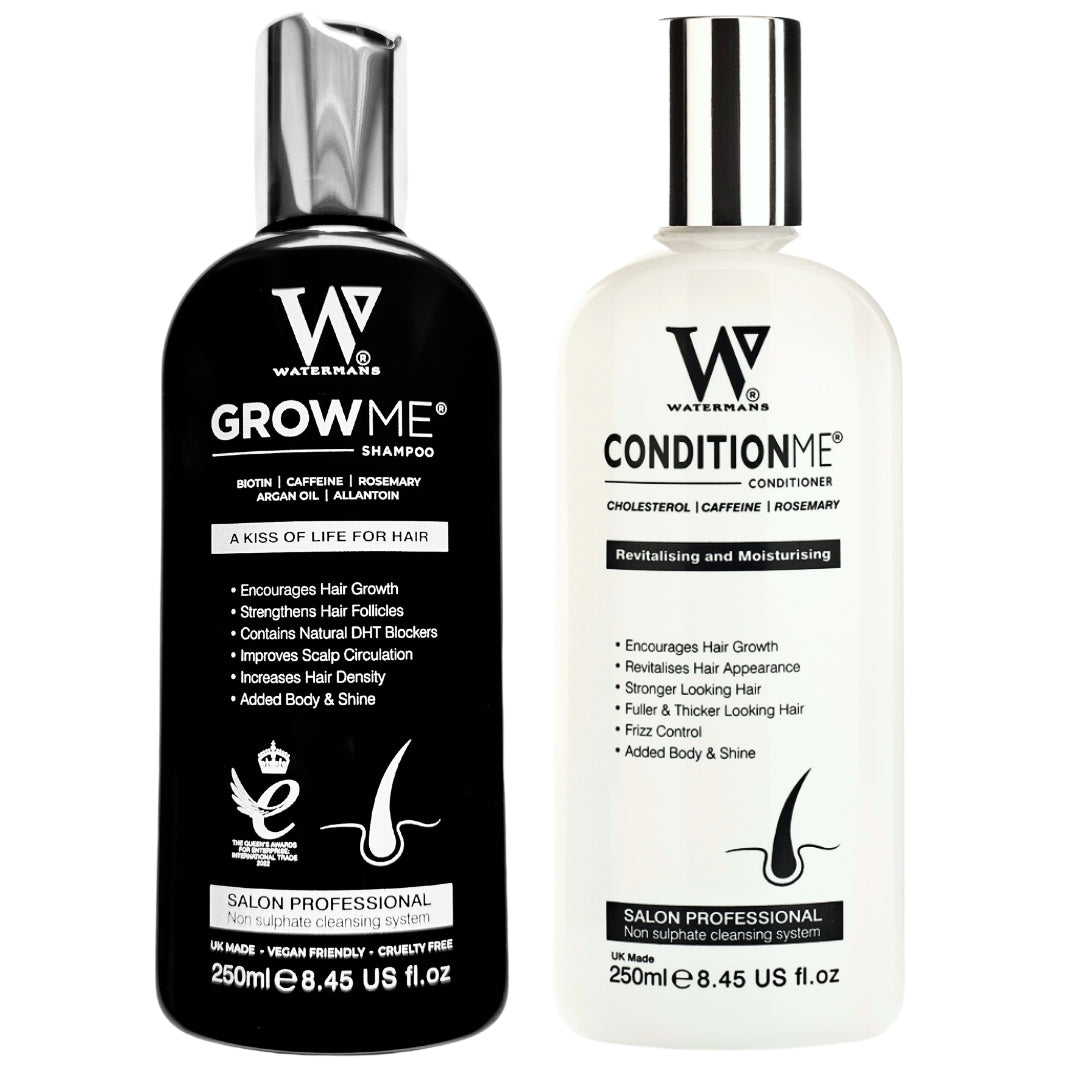
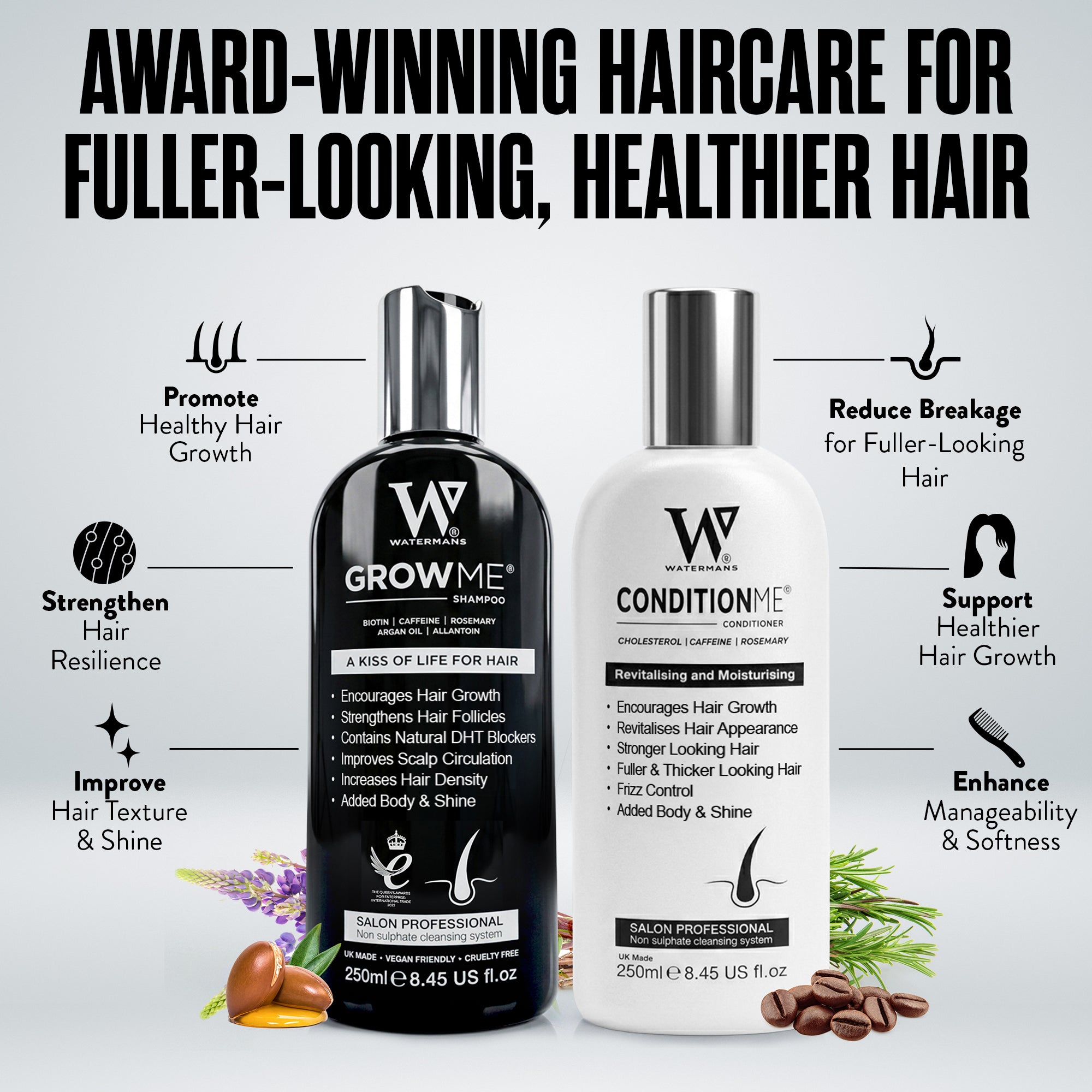
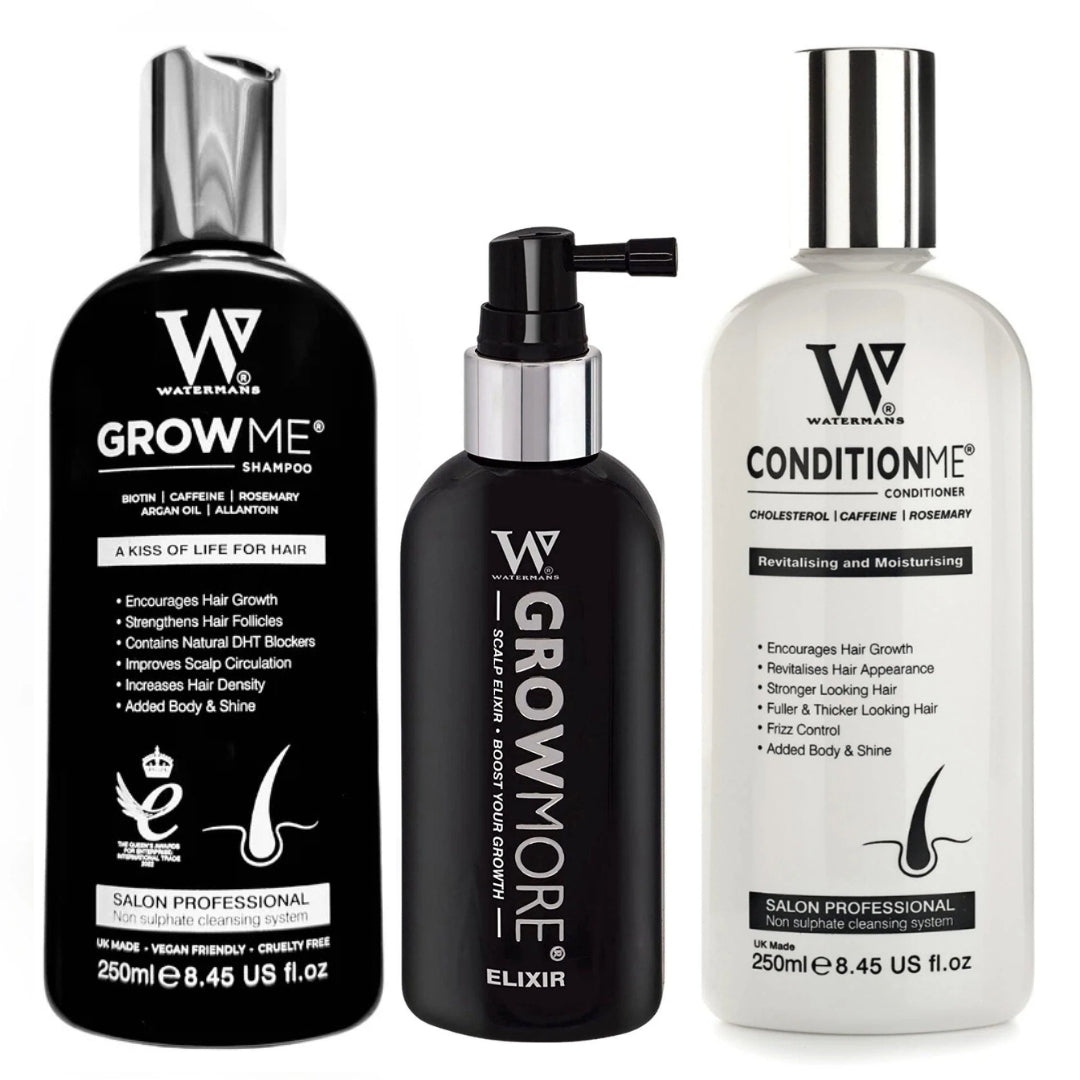
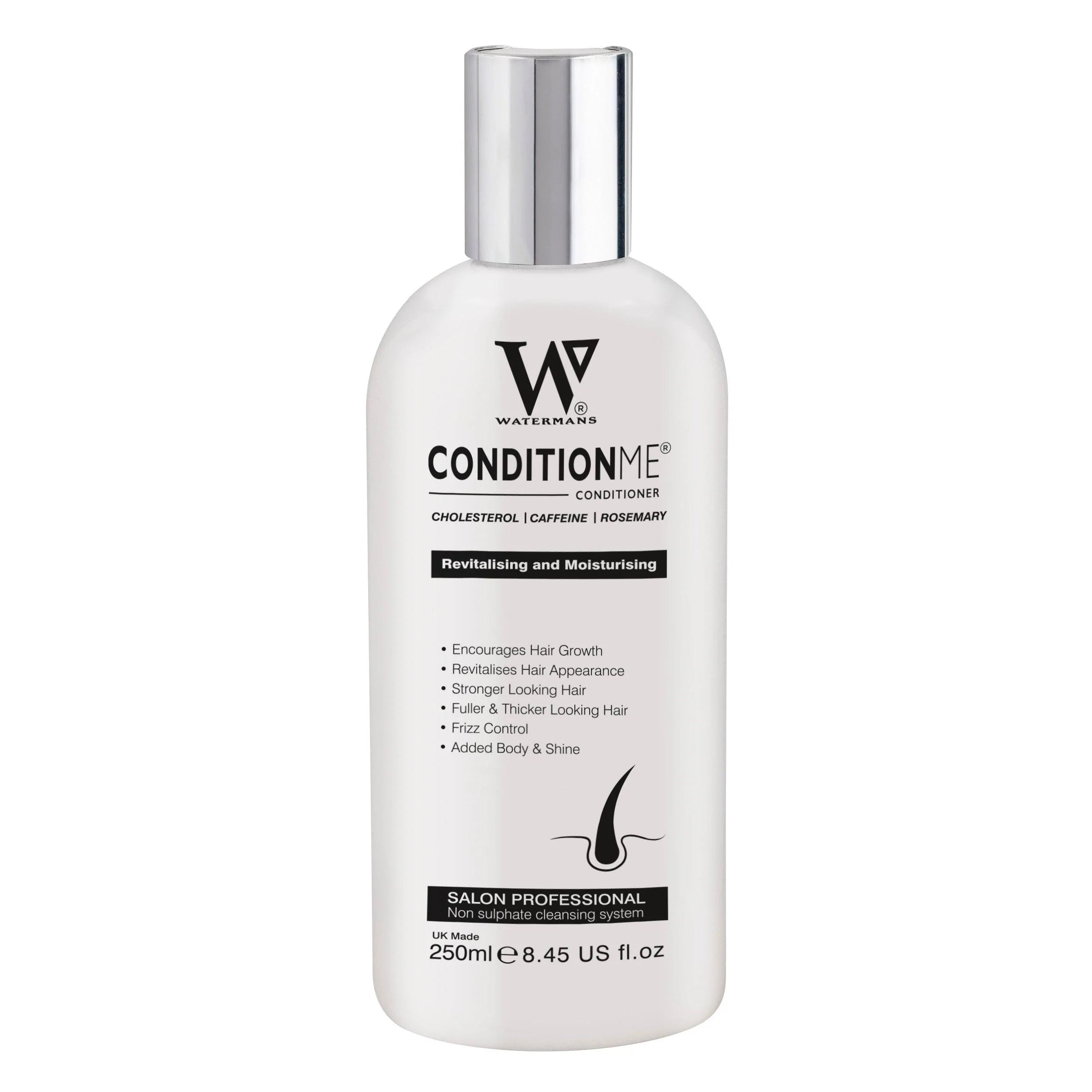
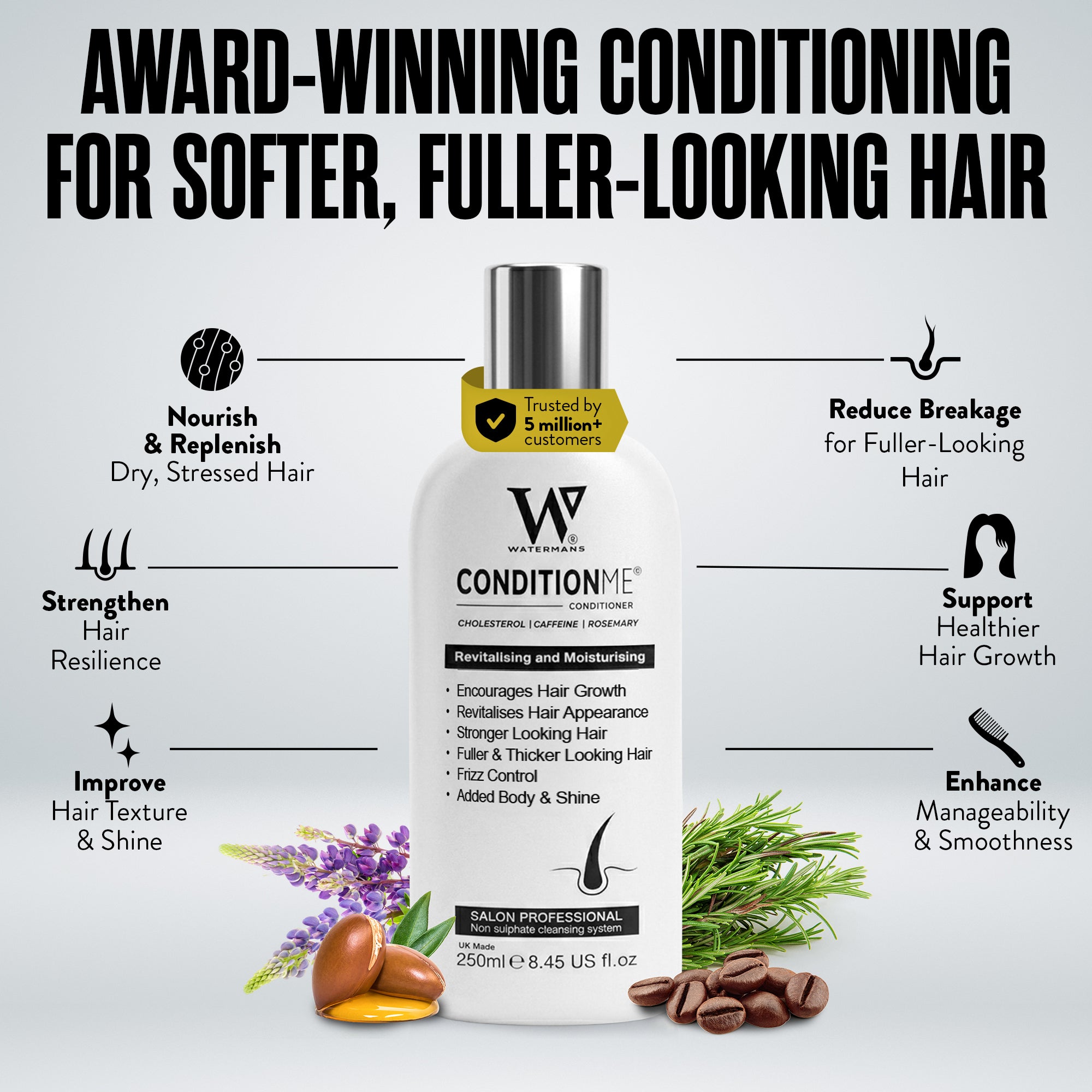
Condition Me® Hair Growth Conditioner, £13.95. Detangles and strengthens the hair fibre so lengths snap less on the brush and look thicker through the ends.
Key takeaways
- The cut does most of the work. Face framing layers and a soft fringe change the shape of the face more than any product.
- Volume is built at the root while drying, not added from a bottle afterwards.
- Coarse hair holds shape and resists curl. Fine hair takes shape instantly and drops it just as fast. Both need different handling.
- Heat is the main cause of breakage in hair being grown long, so protection before hot tools is not optional.
- A good stylist consultation starts with the words face framing, weight and movement, not a photograph of someone else.
What actually decides how transfeminine hair behaves?
Three properties decide what transfeminine hair will do: the diameter of each strand, how many strands there are, and how much the strand curves. Strand diameter sets whether hair holds a shape or collapses. Density sets how much bulk you have to work with. Curve sets whether hair falls straight or builds body on its own.
These matter more than the style you want, because they set the cost of getting there. Fine and dense hair looks thick but goes flat by lunchtime. Coarse and sparse hair holds a shape beautifully but shows scalp at the parting. The realistic plan is the one that works with your combination rather than fighting it.
| Your hair | What it does well | What it fights you on | The lever that works |
|---|---|---|---|
| Fine and dense | Looks full, takes any colour, moves well | Goes flat within hours, will not hold a curl | Root lift while drying, blunt ends, lighter products |
| Fine and sparse | Soft, easy to style, dries fast | Shows scalp at the parting, no visible bulk | A shorter blunt cut, a side parting, root volume |
| Coarse and dense | Huge amount of material, holds any shape | Heavy, wide, slow to dry, can look solid | Layers to remove weight, length to weigh it down |
| Coarse and sparse | Holds a set for days, strong fibre | Wiry, individual strands visible, gaps show | Moisture and smoothing, mid length blunt cuts |
Which cut suits which face shape?
Cut selection for transfeminine hair follows one principle: add width where the face is narrow, and add softness where it is angular. A stronger jaw wants volume above it rather than beside it. A longer face wants horizontal interest rather than more length. A rounder face wants height at the crown and length past the chin.

| Face shape | What usually works | What usually fights you |
|---|---|---|
| Oval | Almost anything. Long layers, blunt bob, fringe or no fringe | Very little. This is the shape other shapes are cut towards |
| Square or strong jaw | Soft layers starting below the jaw, side swept fringe, waves at the ends | Blunt chin length bobs and hard centre partings, which echo the jaw line |
| Long or oblong | A fringe, width at the cheekbones, chin to shoulder lengths | Long flat hair with no layers, which lengthens the face further |
| Round | Height at the crown, length past the collarbone, long side parting | Chin length bobs and heavy full fringes, which widen the face |
| Heart | Length and volume below the jaw, curtain fringe | Very short pixie shapes with volume at the crown, which widen a broad forehead |
Forehead shape deserves its own mention because it changes so much. If the hairline has receded at the corners, a fringe covers the recession and lowers where the eye reads the hairline, which is the single most effective styling change available. Our guide to softening the hairline with styling goes through that in detail.
How do you build real volume in fine or flat hair?
Volume is created while the hair dries and locked in by the cut, not sprayed on afterwards. Wet hair sets into whatever shape it dries in, so the direction the root is pointing during that first ten minutes decides how much lift you get for the rest of the day. Everything else is maintenance of that decision.

The root lift method
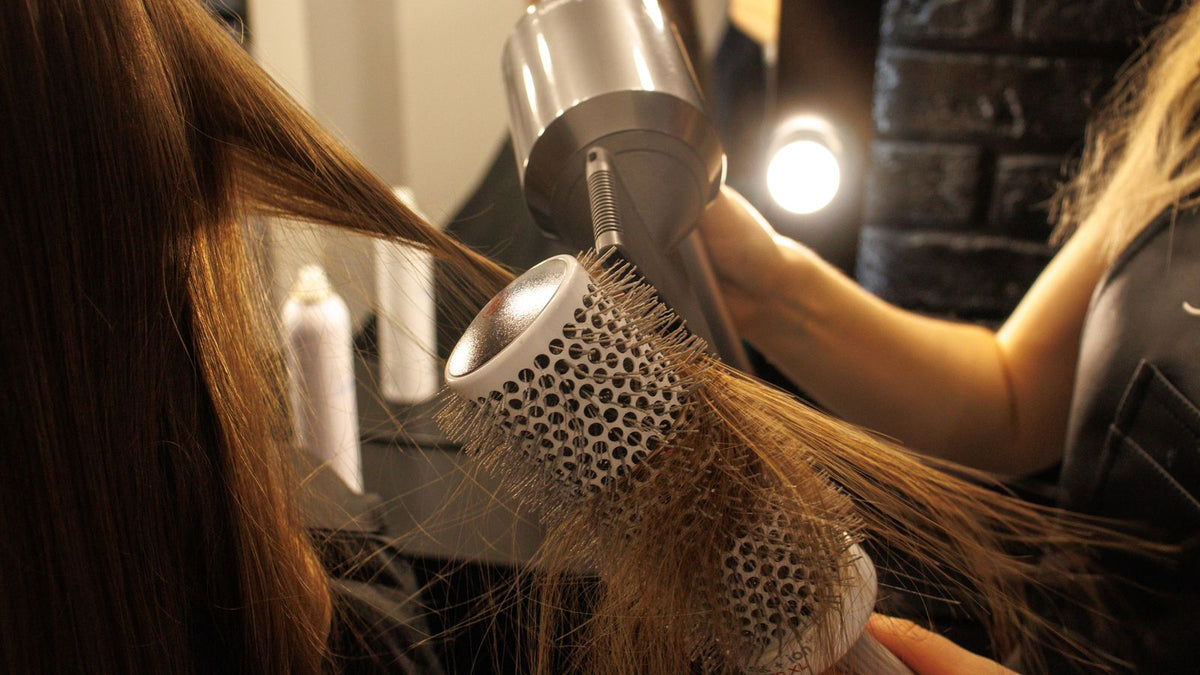
Rough dry to about eighty per cent first. Then tip your head forward and dry the roots against their natural direction with your fingers. Finish upright with a round brush, lifting each section straight up from the scalp and holding the heat for a few seconds before blasting cool. The cool shot is what sets it.
Three other levers help. Move the parting away from where it naturally falls, because hair trained in one direction for years lies flat there. Keep the ends blunt rather than heavily thinned, since a blunt edge reads as denser. And apply any product to damp hair at the root rather than to dry hair at the lengths, where it simply weighs things down.
Is it hair loss, hair shedding or hair breakage getting in the way?
Styling problems and hair problems get confused constantly, and the fix is different for each. If hair will not grow past a certain length, that is usually breakage rather than a growth ceiling. If the parting has widened, that is density. If handfuls are coming out, that is shedding.
| What it is | The styling symptom | What to do about it |
|---|---|---|
| Hair loss (follicular) | The parting widens, the scalp shows under bright light, the ponytail gets thinner over years | Understand the pattern, and take the hormonal side to your gender clinic team or GP rather than to a stylist |
| Hair shedding (cycle) | A sudden increase in hair everywhere, often two to three months after illness, surgery or a major stress | Usually settles over a few months. Handle gently and avoid adding breakage on top |
| Hair breakage (fibre) | Hair will not get past shoulder length, ends look wispy, short broken pieces stand up along the parting | Cut back the heat, condition the lengths, loosen the styling. This one responds fastest |
The last row is the one most people growing their hair out are actually facing. Our guide to how long a shedding phase lasts covers the middle row, and how hormone therapy changes hair texture and routine covers the longer arc of what changes and when.
Get a discount on the fine and fragile hair range
Join the Watermans mailing list and we will email a discount code straight to your inbox, so you can try the fine and fragile hair range for less. Made in the UK, over 6.5 million bottles sold since 2012.
How do you heat style without paying for it in breakage?
Heat styling damages hair by driving water out of the fibre faster than it can cope with, and the damage is cumulative rather than dramatic. Transfeminine hair being grown out is the most exposed, because the ends have been through every hot tool session for years. Protection and temperature discipline are what let length actually accumulate.

Four rules cover most of it. Always use a heat protectant before any hot tool. Dry to at least eighty per cent before a straightener or wand touches the hair, because hot metal on wet hair boils water inside the fibre. Use the lowest temperature that actually works on your hair. And take fewer, slower passes rather than many fast ones.
The fringe exception
The fine hairs at the front hairline are the thinnest on the head and the most frequently styled, which is why they break first and why the breakage is so visible. Treat the fringe as its own zone: lower heat, fewer passes, and never a straightener on a fringe that is already snapping.
What should you ask a stylist for?
Stylist consultations go better with vocabulary than with photographs. A photograph shows a result on someone else hair. Describing the effect you want lets a stylist reach it with the hair you have, which is a different route to the same place.
Useful phrases: face framing layers starting at cheekbone level, weight kept low rather than piled at the crown, movement through the ends, a soft fringe I can push aside, and softening the corners above my outer eyebrows. It is also entirely reasonable to say what you want the cut to do for your face rather than what you want it to look like.

Condition Me® Hair Growth Conditioner £13.95
A breakage defence conditioner with cholesterol, shea butter and silica. It smooths the cuticle so wet combing pulls far less hair out of the brush.
The single most useful product for hair being grown long. Smoothing the cuticle is what stops combing and heat styling snapping the lengths.

Masque Me® Hair Growth Mask £24.95
An 8 in 1 deep conditioning mask for hair that has been bleached, heat styled or worn long. Use it weekly when the ends are snapping rather than the roots thinning.
A weekly deep conditioner for hair that has been bleached, heat styled or worn long, when the ends are snapping rather than the roots thinning.

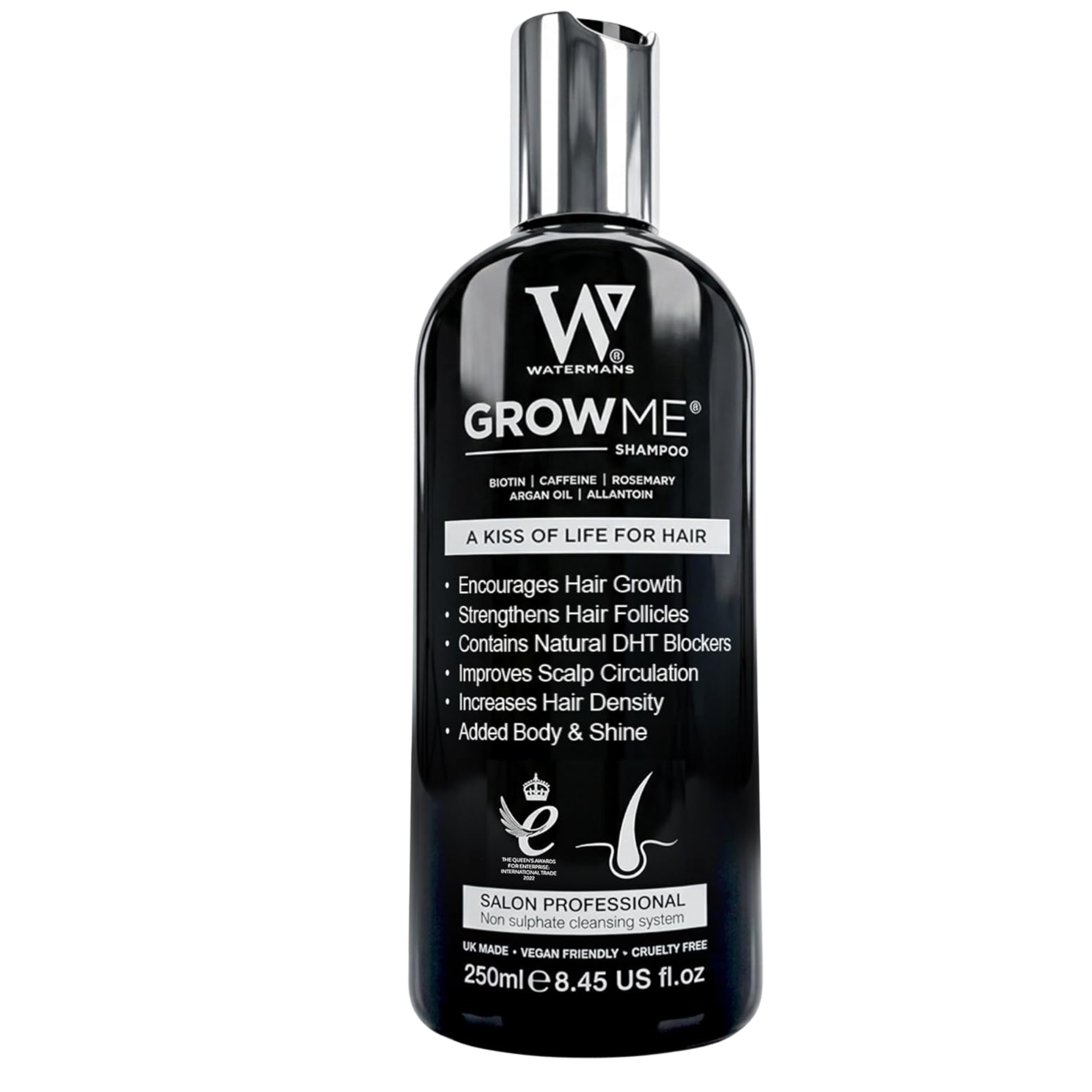
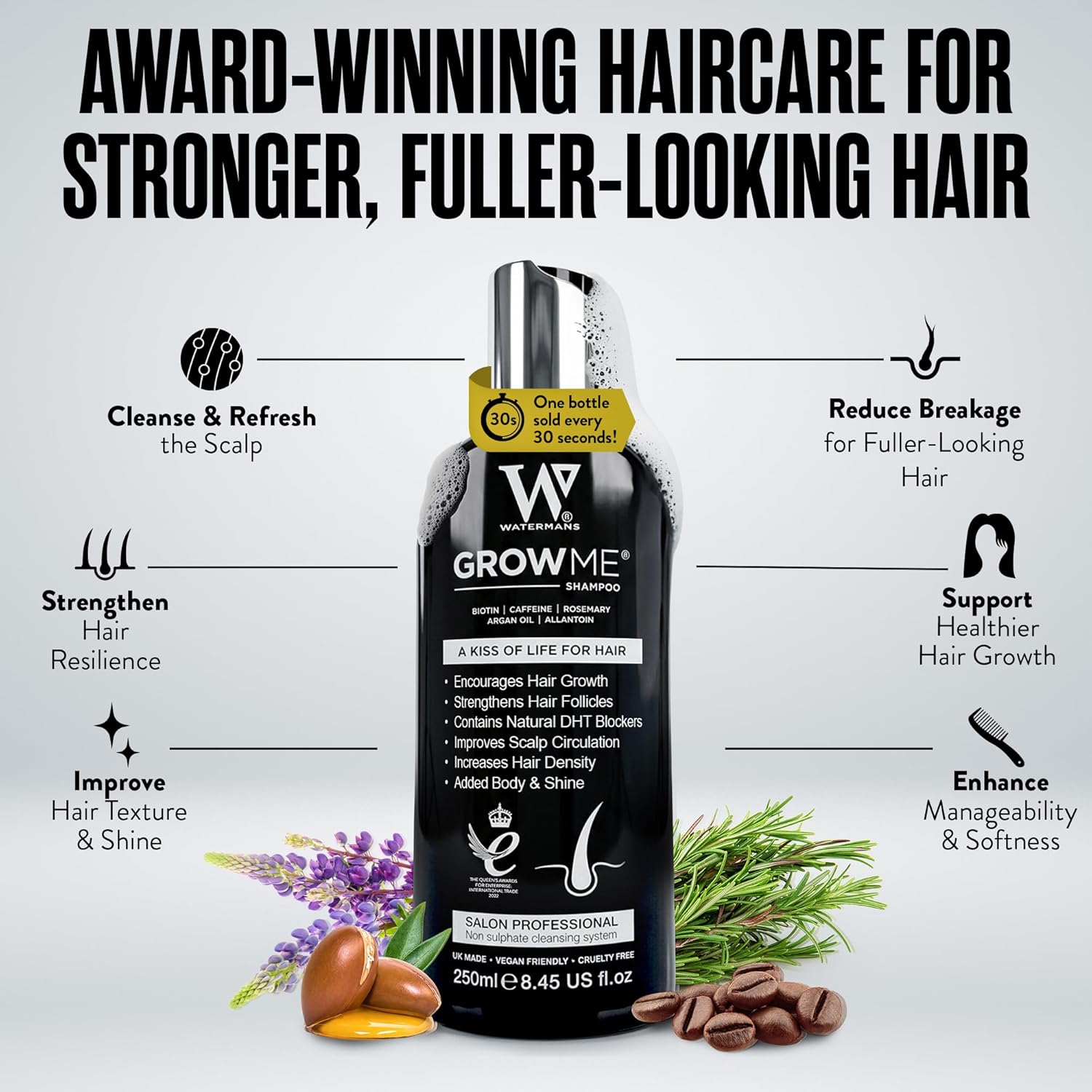
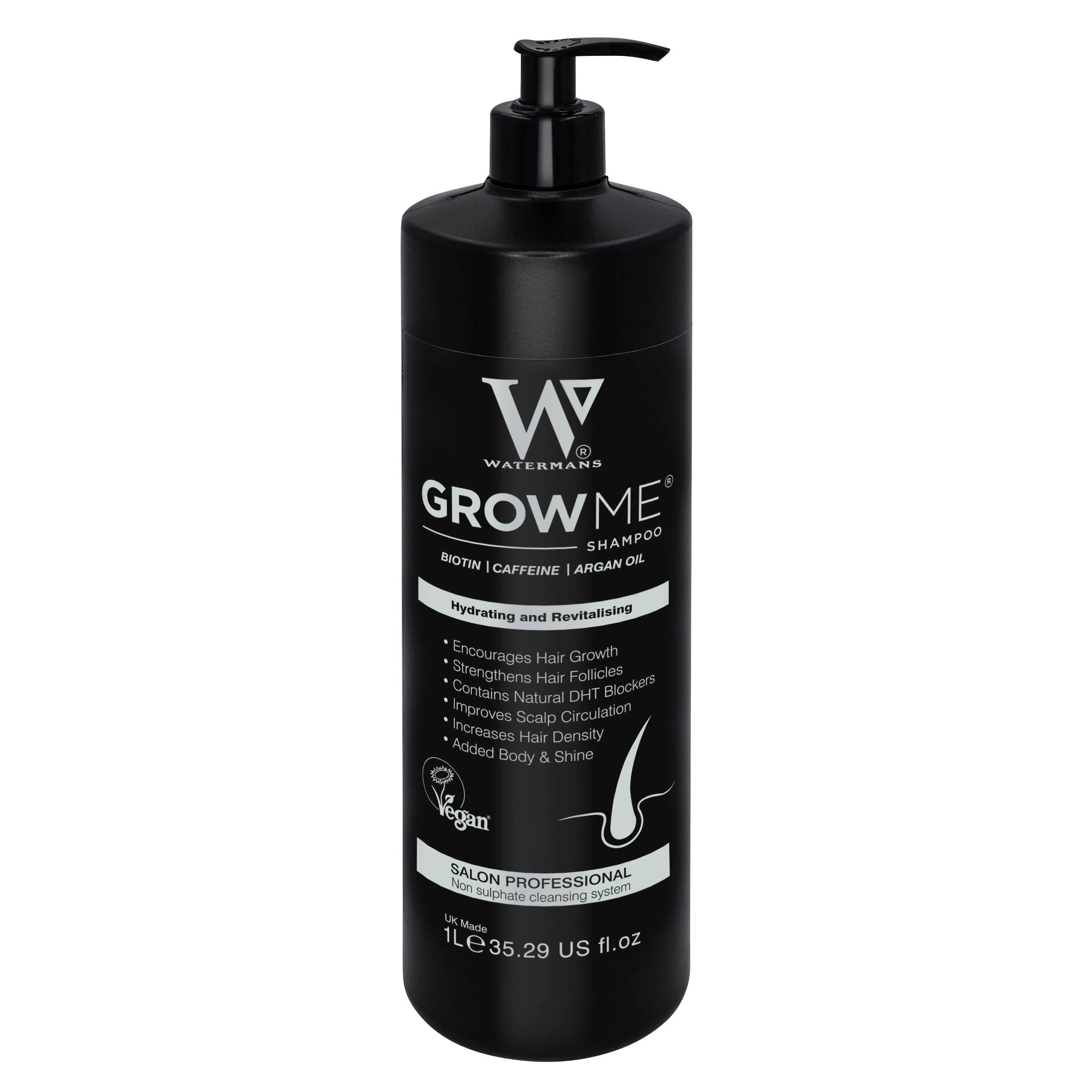
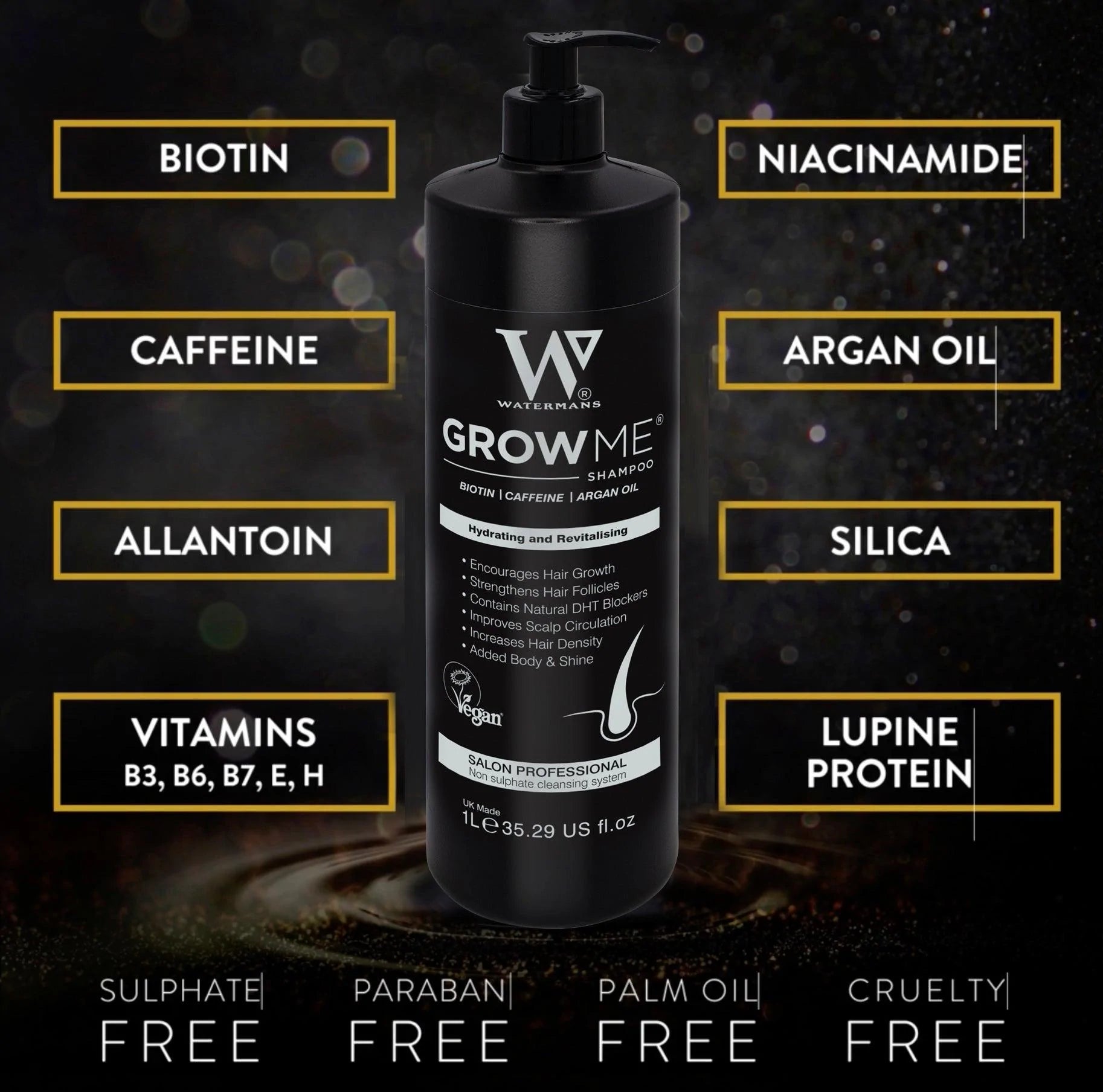
Grow Me® Hair Growth Shampoo £14.95
Sulfate free daily shampoo with Biotin, Caffeine, Rosemary, Niacinamide and hydrolysed lupine protein. Cleans without stripping, so hair looks fuller and snaps less on the comb.
A sulfate free daily wash, worth switching to if the scalp is oily at the root while the ends are dry and splitting.
Frequently asked questions
How long does it take to grow hair to shoulder length?
Scalp hair grows roughly a centimetre a month, so from a short crop to shoulder length is commonly two to three years. The variable that actually decides it is breakage: hair that snaps at the ends never reaches the length it grew to.
Why does my hair go flat within hours?
Fine hair has the least structural stiffness, so it collapses under its own weight once the set relaxes. Root lift during drying and a blunter cut hold it longer than any product. Heavy conditioners and oils applied near the root make it worse.
Does transfeminine hair need different products?
No. Hair does not have a gender, it has a diameter, a density and a curve pattern. Choose products for those properties. The one practical difference is that hair being grown out from short styles has ends of wildly different ages, so conditioning matters more.
Should I get a fringe?
A fringe is the highest impact single change available if your forehead is tall or the hairline has receded at the corners. A soft or curtain fringe is more forgiving than a blunt heavy one, and it can still be pushed aside on days you want it off your face.
Can I use a wig while I grow my own hair?
Yes, and many people do. The one thing to watch is what is underneath: wig caps, clips and tight fittings worn daily in the same spot create tension at the hairline, which is exactly where you least want to lose hair. Vary the fitting and give the scalp time uncovered.
How often should I get it cut while growing it out?
Roughly every ten to twelve weeks for a light dusting of the ends. It feels counterproductive, but split ends travel upwards, so removing half a centimetre regularly preserves more length over a year than avoiding the salon does.
Will hormone therapy change what styles work?
Texture changes are commonly reported over the first couple of years, so a cut that suited at the start may behave differently later. That is a clinical matter for your gender clinic team, and it is a good reason to review the cut annually rather than committing to one shape.
What about colour?
Colour is the fastest way to add apparent thickness, because lighter pieces around the face create contrast that reads as depth. The trade off is fibre strength, since bleach permanently weakens the strand. On fine hair, keep lightening away from the fragile front hairline.
What is the bottom line on transfeminine hair?
Styling transfeminine hair is a craft problem with well understood answers. The cut decides the shape of the face, the drying technique decides the volume, and the heat discipline decides whether length ever accumulates. Work with the diameter, density and curve you actually have, and almost everything else follows from a good consultation.
The part worth protecting is the fibre itself. Hair grown over years carries the record of every hot tool session, and breakage at the ends is what stops length arriving. That is the one place where daily care genuinely changes the outcome.
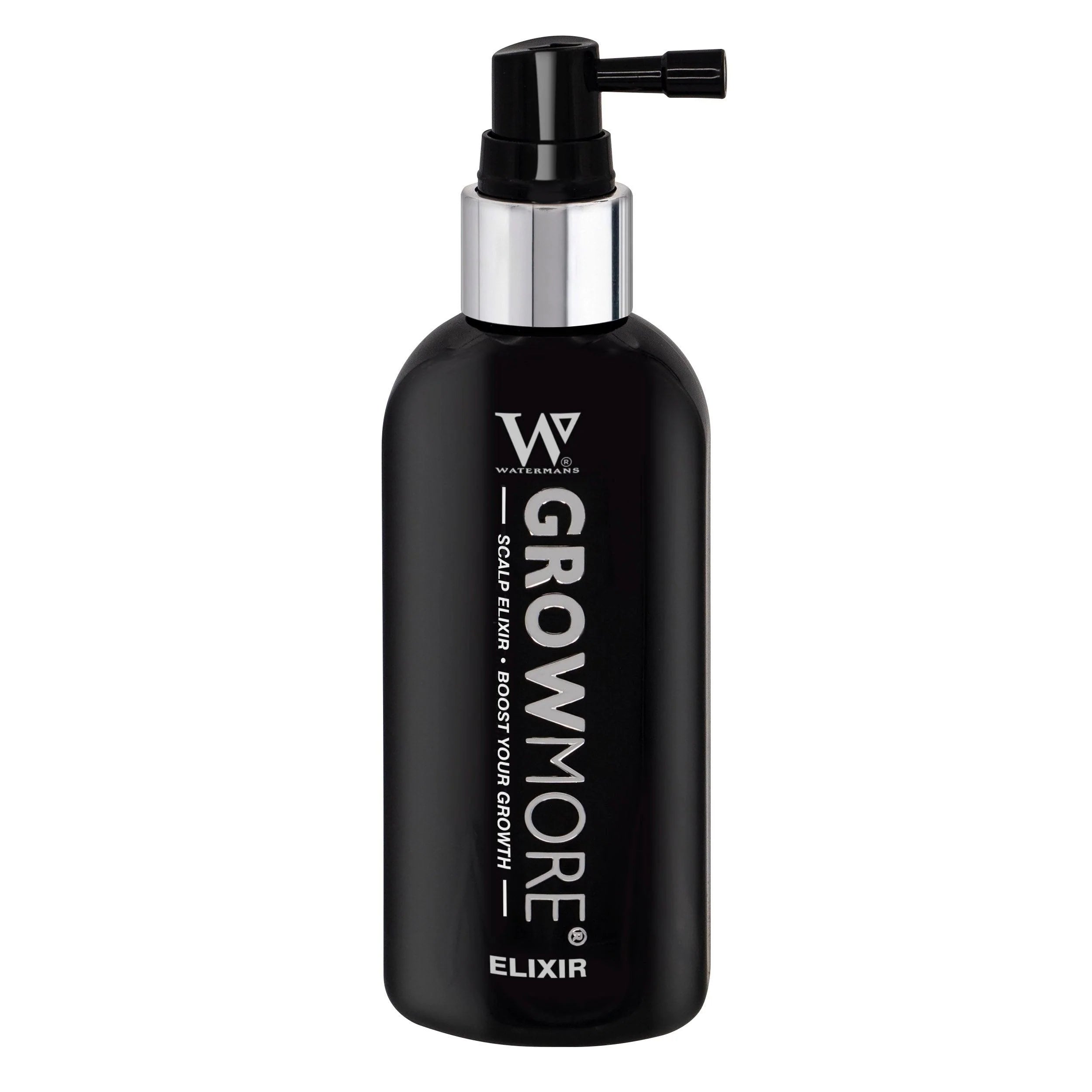
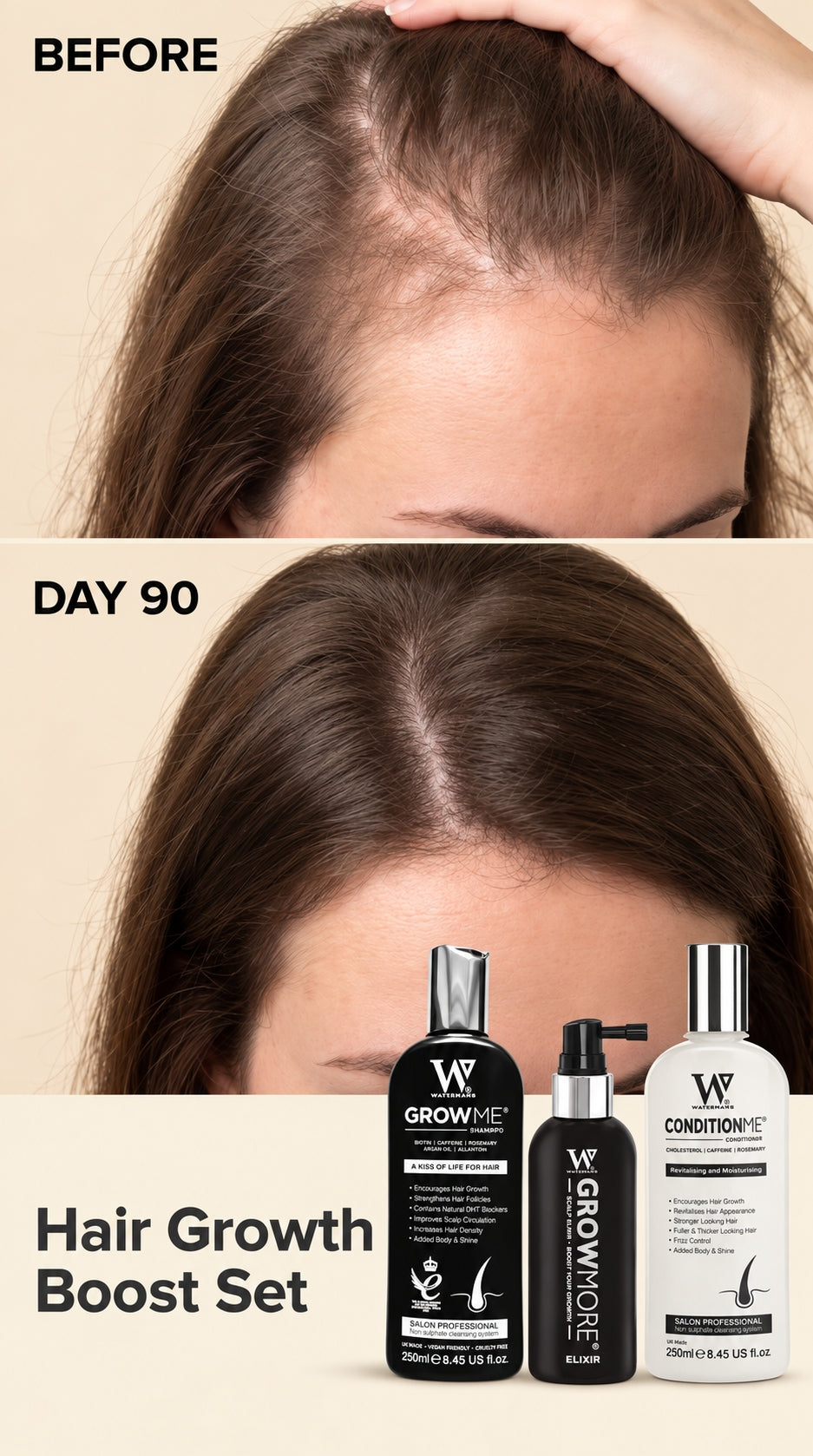
If you are growing length out, the highest value product is a hair growth conditioner for the mid lengths and ends, because smoothing the cuticle is what keeps the length you have already grown. If your question is about products or a routine rather than a medical one, you can talk to Gail Waterman, our co-founder, as an AI avatar on the Watermans homepage.
Sources & references
Every source below was opened and checked while writing this page.
- NHS: hair loss, when hair changes are worth seeing a GP about
- NHS: gender dysphoria, how UK gender identity services and referrals work
- DermNet: traction alopecia, why tension from clips, caps and tight styling causes lasting loss at the hairline
- DermNet: female pattern hair loss, how pattern thinning presents at the parting
Watermans products are 100% cosmetic and do not treat medical hair loss. Individual results may vary.