Copper Peptides for Thinning Hair: Where They Actually Fit
Copper peptides for thinning hair make most sense as a scalp care step rather than as a first move. Before buying one it is worth establishing whether you are seeing shedding, genuine follicular thinning or breakage, because those three have different causes and only one of them is even loosely in a cosmetic serum territory. For a lot of people the cheaper steps they have not yet done, gentler washing, less tension and less heat, change the look of the hair more than the serum will.
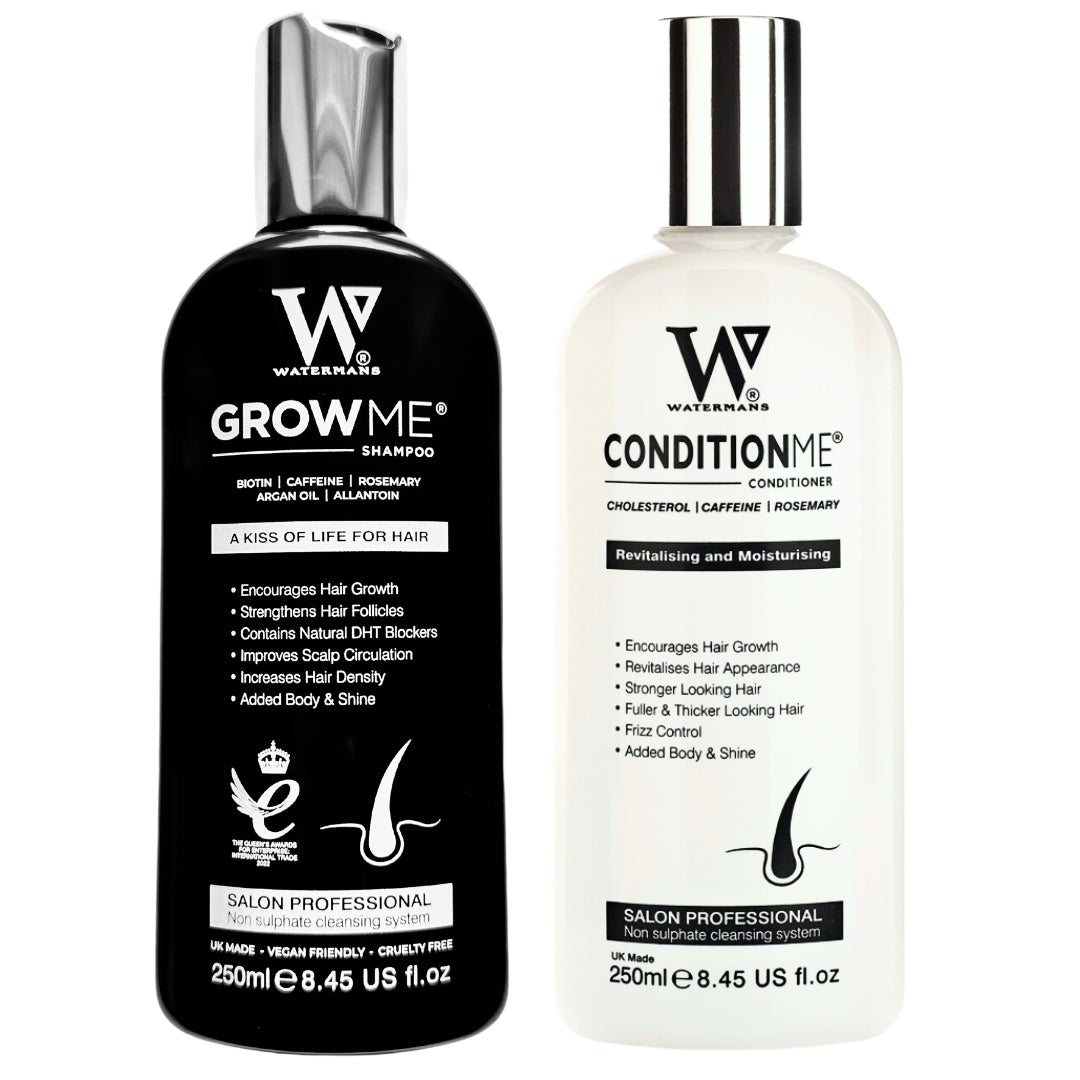
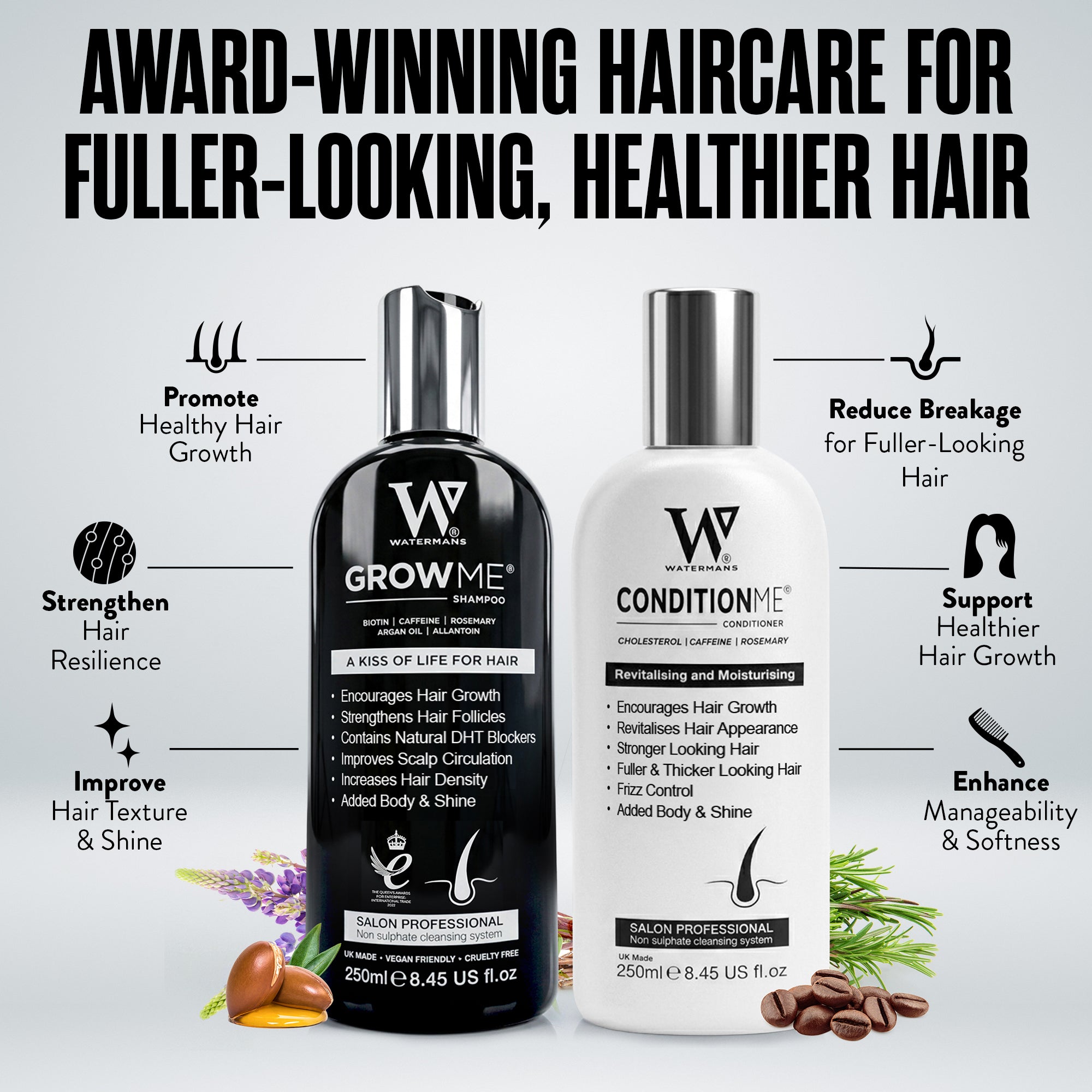
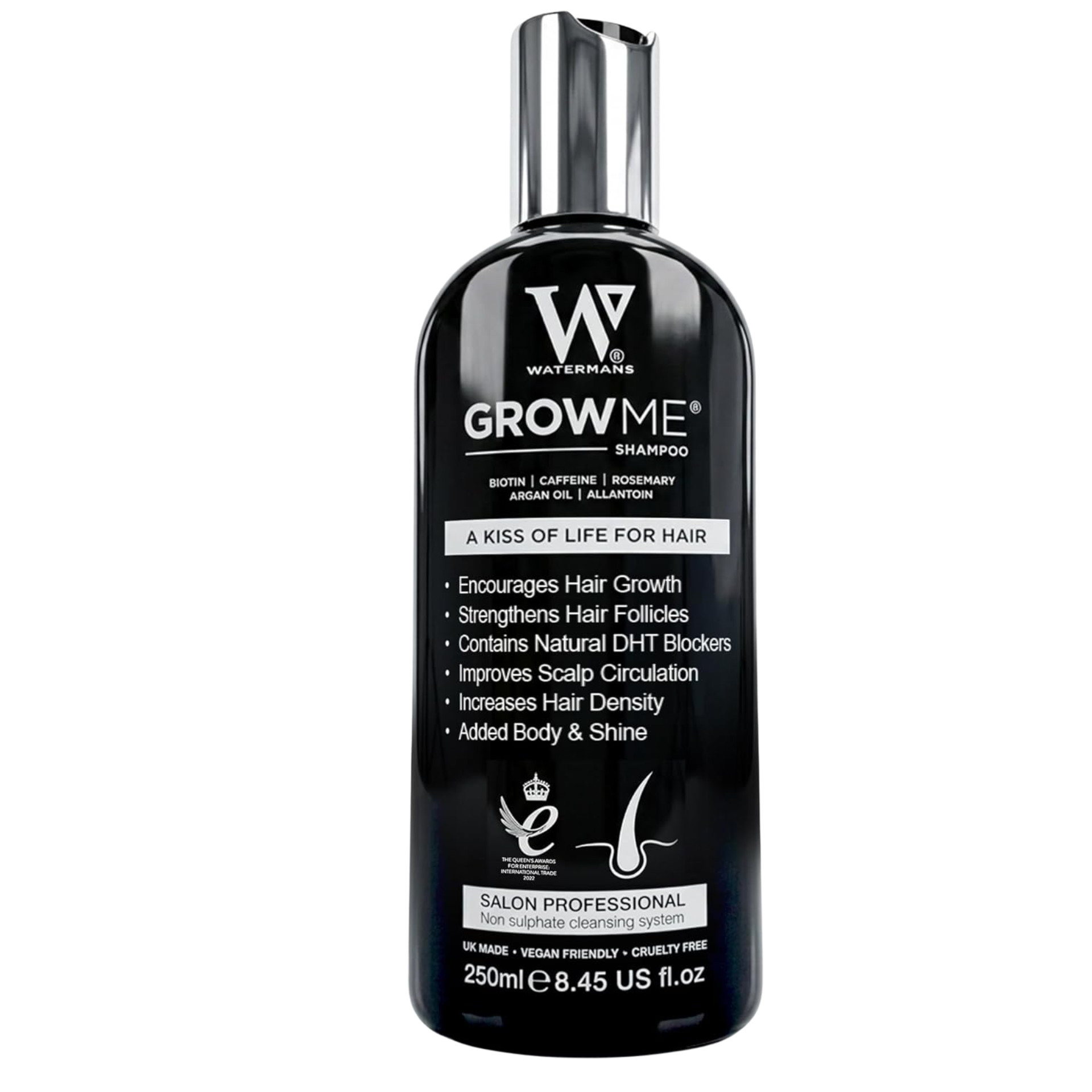
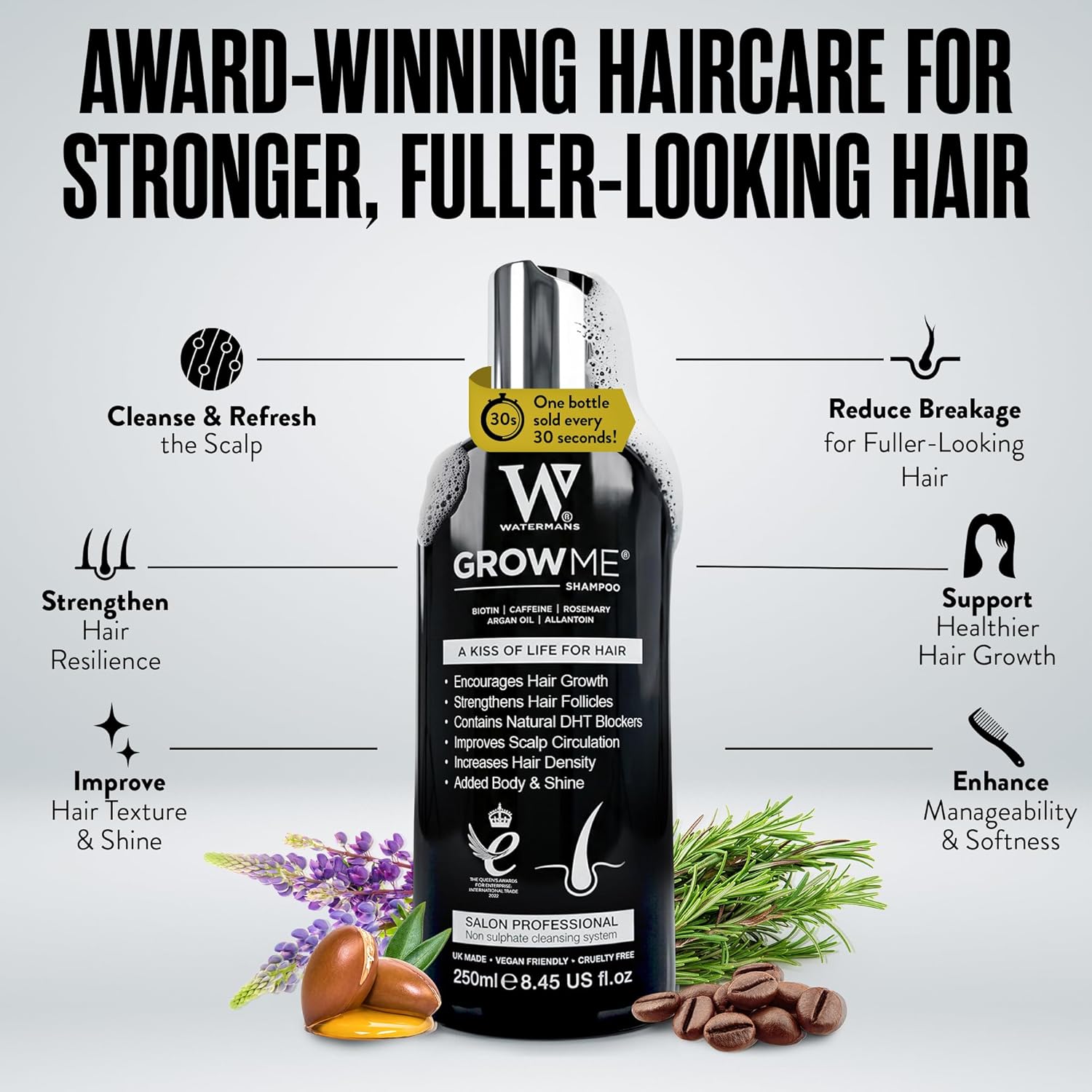
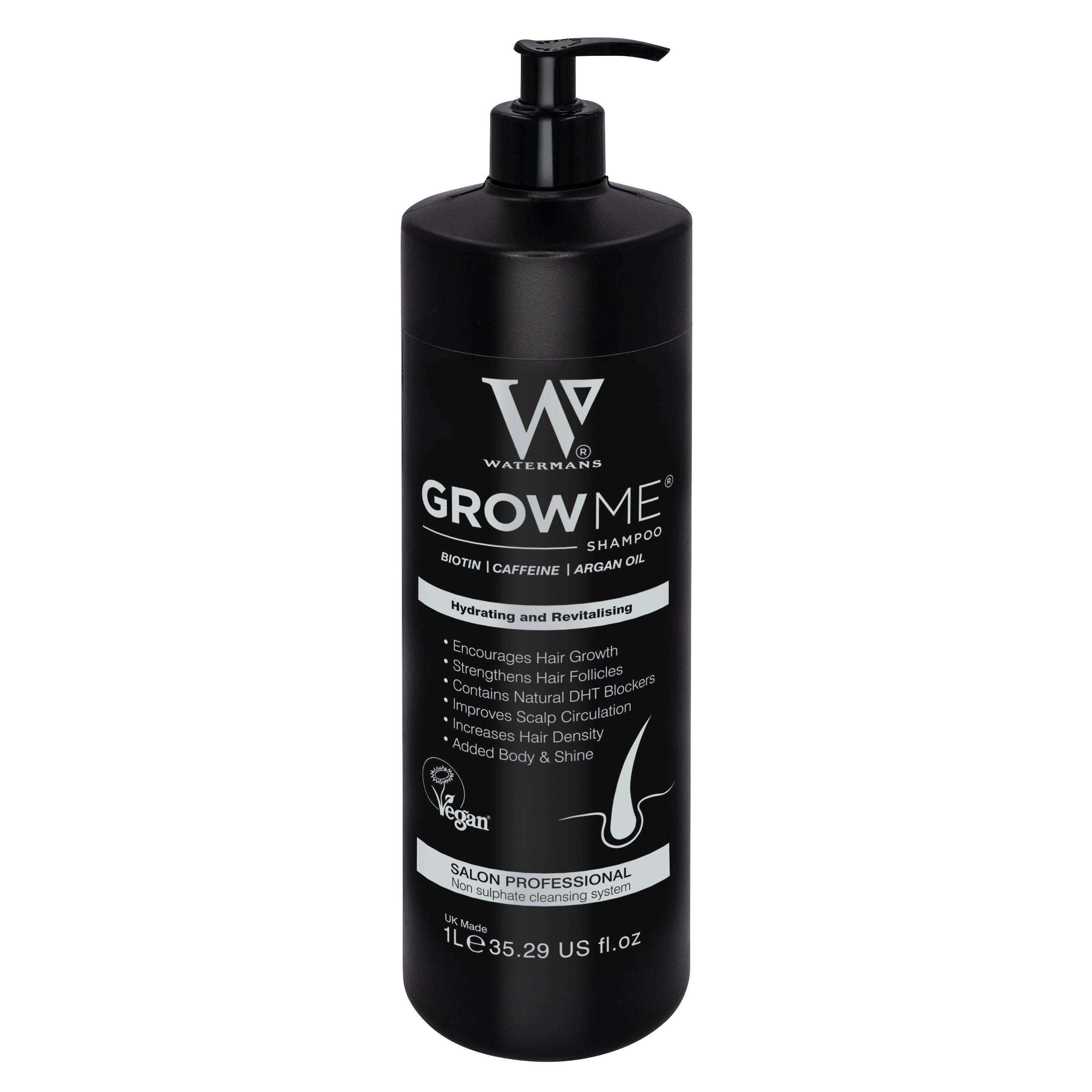
Our hair growth shampoo
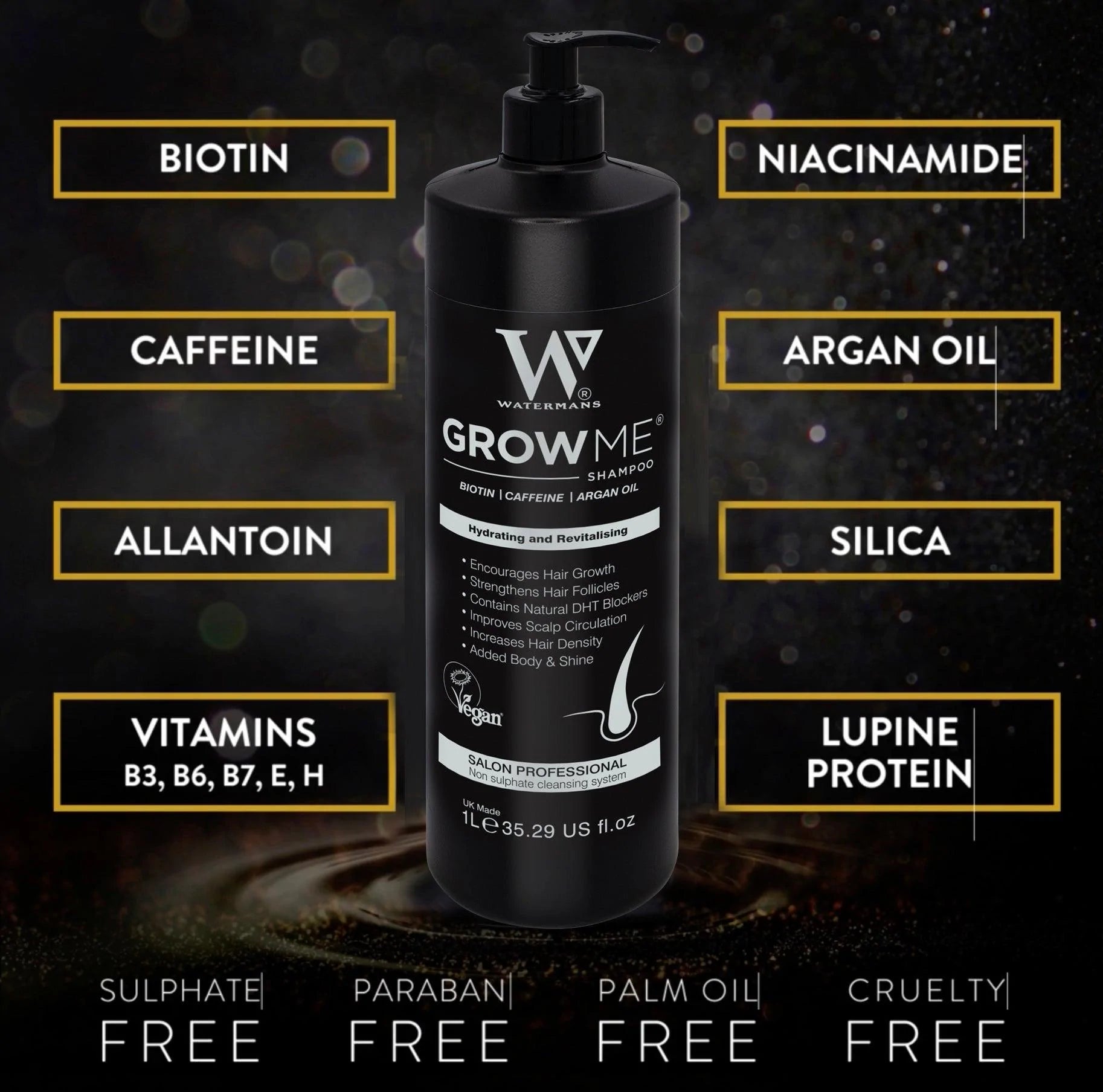
Grow Me® Hair Growth Shampoo, £14.95. A sulphate free daily shampoo that supports a healthy scalp environment and helps reduce breakage, so lengths hold on and look fuller.
Key takeaways
- Work out which of the three you have first: shedding from the root, gradual follicular thinning, or fibre breakage. They need different answers.
- A copper peptide serum is a leave on scalp product. It goes on the scalp along the parting, not down the lengths.
- Give any scalp product three to six months and dated monthly photographs before judging it. Hair grows about 1cm a month.
- Cheaper steps come first: a shampoo that does not strip, less tension on the hairline, and less heat. These are free or nearly free and reliably visible.
- Copper can tint bleached, grey or very light hair with repeated use, so keep it on the scalp and watch the new growth.
- A widening parting over years, visible scalp, or patches with defined edges are GP territory, not shopping decisions.
What does thinning hair actually mean in your case?
Thinning is a description of what you see rather than an explanation of what is happening, and three quite different processes produce it. Hair shedding means whole hairs releasing from the follicle, usually with a small pale bulb on the end, and typically follows illness, childbirth, stress or a period of eating badly by two to four months. Hair loss in the follicular sense means the follicles themselves progressively shrinking, which is the pattern in female and male pattern hair loss and happens over years rather than weeks. Hair breakage means the fibre snapping along its length, leaving short pieces with ragged ends and no bulb. To see where this sits against everything else on offer, read our overview of options for thinning hair.
The test takes two minutes. Collect the hairs from your brush and look at the ends under a decent light. A small pale bulb at one end means the hair came out from the root. Ragged ends at both ends and a shorter length than your hair means it snapped. A ponytail that has thinned steadily over several years while the brush stays normal points at the third process. Our guide to how to tell if your hair is thinning runs through six home checks in more detail.

Where do copper peptides for thinning hair rank against everything else?
Ranking the options honestly is more useful than arguing about any one of them. The table below puts copper peptides alongside the steps people usually skip, ordered by how reliably each one changes what you see in the mirror.
| Step | What it changes | Cost | How reliable |
|---|---|---|---|
| Reduce tension: looser ties, no tight braids or extensions on a thinning hairline | Stops ongoing damage at the temples and hairline, which is often the visible part | Free | Very reliable where tension is a factor |
| Reduce heat and use a heat protectant | Cuts breakage, so hair keeps its length and the ends stop looking wispy | Low | Very reliable |
| Switch to a shampoo that cleans without stripping | Scalp comfort, less residue, less drag when combing | Low | Reliable, and it is the base every other product sits on |
| Condition properly and detangle gently | Fewer hairs snapping on the comb, which is often mistaken for shedding | Low | Reliable |
| Sort out iron, protein and overall intake if they are short | Addresses a genuine cause of shedding rather than its appearance | Low to moderate | Reliable where a shortfall genuinely exists, and worth a blood test first |
| Add a leave on scalp serum, copper peptide or otherwise | Scalp condition, and the routine of looking after the area | Moderate to high | Variable, and the evidence for hair density is thin |
| See a GP about medical options | The only route that addresses follicular thinning itself | NHS or private | The right step when the pattern is progressive |
Copper peptides sit near the bottom of that list on reliability and near the top on price, which is the opposite of how they are usually sold. That does not make them a bad purchase, it makes them a late one. If you have already done the steps above and want to add a scalp step, it is a reasonable choice. If you have not, the serum is buying you less than a hair tie would.
What should you check before buying any copper peptide serum?
Three checks separate copper peptides for thinning hair that are worth the money from a bottle with a good story. First, find copper tripeptide-1 in the ingredient list and note where it sits: cosmetic lists run in descending order down to 1%, so an ingredient after the preservatives and fragrance is present in a token amount. Second, check it is a leave on product for the scalp rather than a rinse off, since contact time is the whole point. Third, look at what the claims are measured against and over what period, because a four week claim is describing how hair sits rather than how it grows.
The companion piece on what GHK-Cu is and what the research shows covers the ingredient itself in detail, including why most of the published work is about skin rather than scalp. This page is about whether it belongs in your routine; that one is about the molecule.
The percentage is usually missing, and that is information too
Most brands do not disclose the concentration of copper tripeptide-1. A brand confident in its formula tends to say. Where the number is absent and the ingredient sits near the end of the list, assume the amount is small and price the product accordingly.
How do you build a routine around copper peptides for thinning hair?
Copper peptides for thinning hair are a last step of a wash day, not the only one, and it lands on whatever the earlier steps leave behind. Applied over residue from a heavy conditioner or dry shampoo it has to work through a film before it reaches skin, which is why the cleansing step quietly decides how well the expensive step performs.
In practice the order is: cleanse without stripping, condition the lengths rather than the roots, towel dry, part the hair in sections, apply the serum to the scalp along each parting, and massage for a minute. Once daily or every other day is the usual instruction. Our guide to choosing a scalp serum compares the categories if you are still deciding.


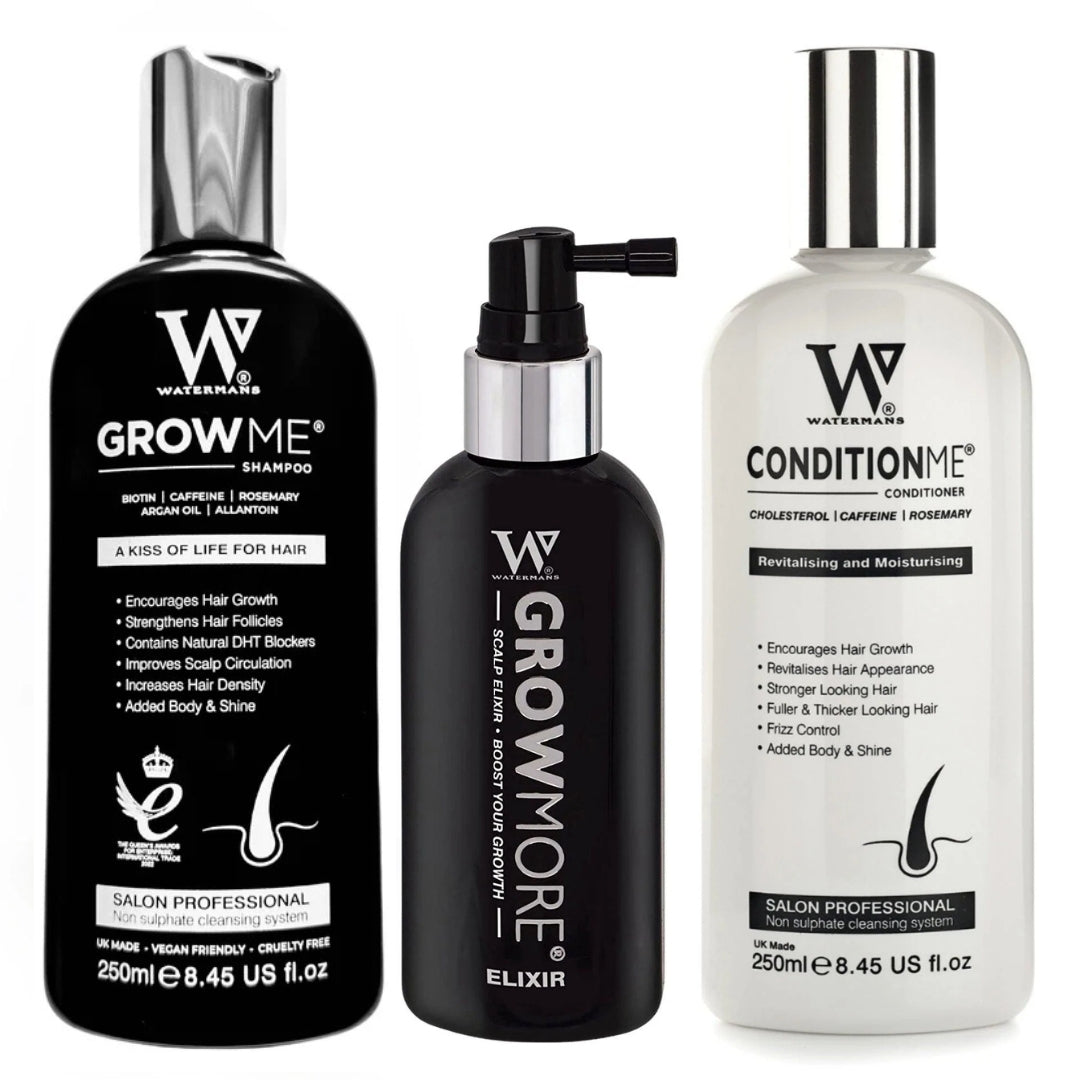
Grow Me® Hair Growth Shampoo £14.95
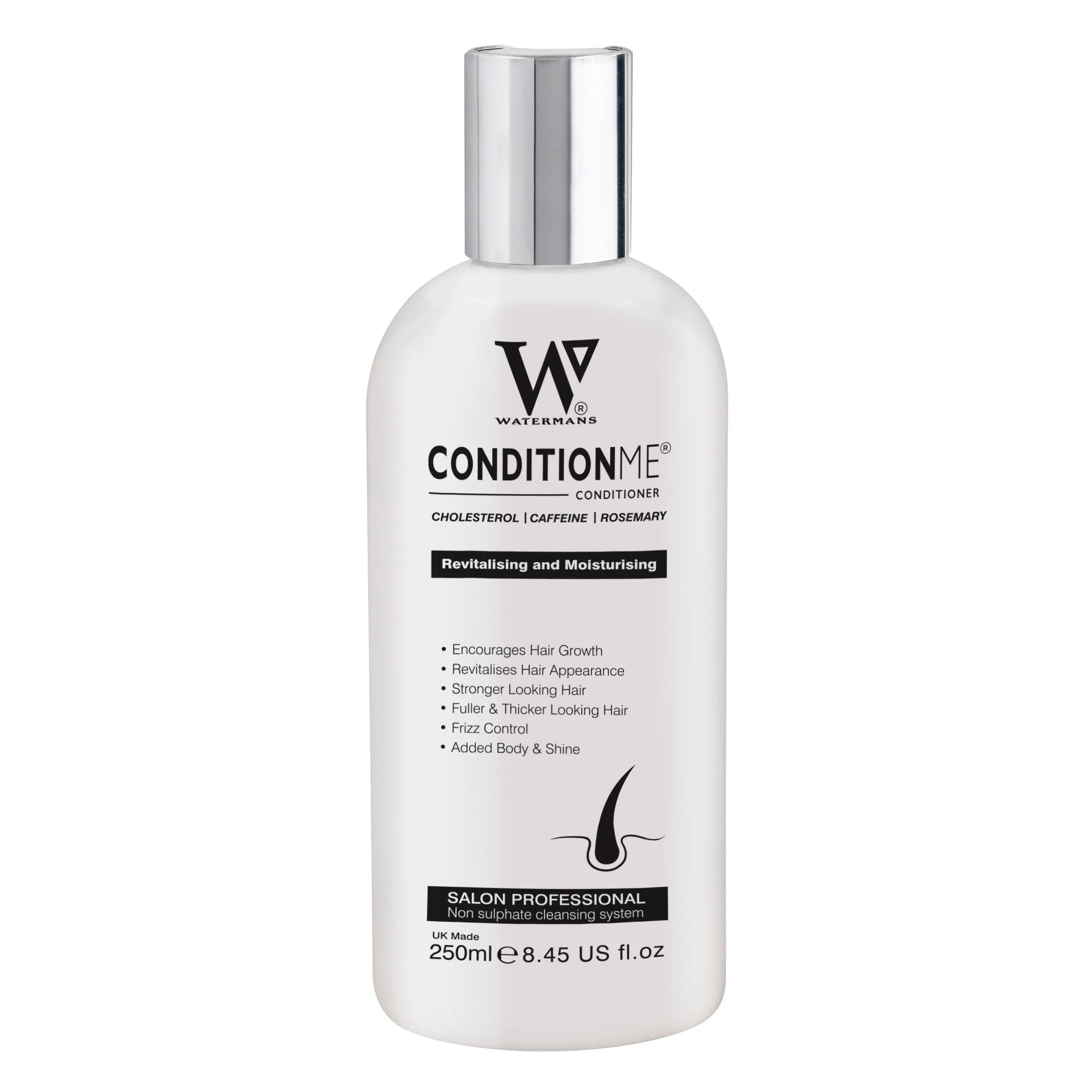
Sulfate free daily shampoo with Biotin, Caffeine, Rosemary, Niacinamide and hydrolysed lupine protein. Cleans without stripping, so hair looks fuller and snaps less on the comb.
The cleansing step that decides what any leave on product afterwards has to work through. Sulfate free, so it does not strip the scalp.

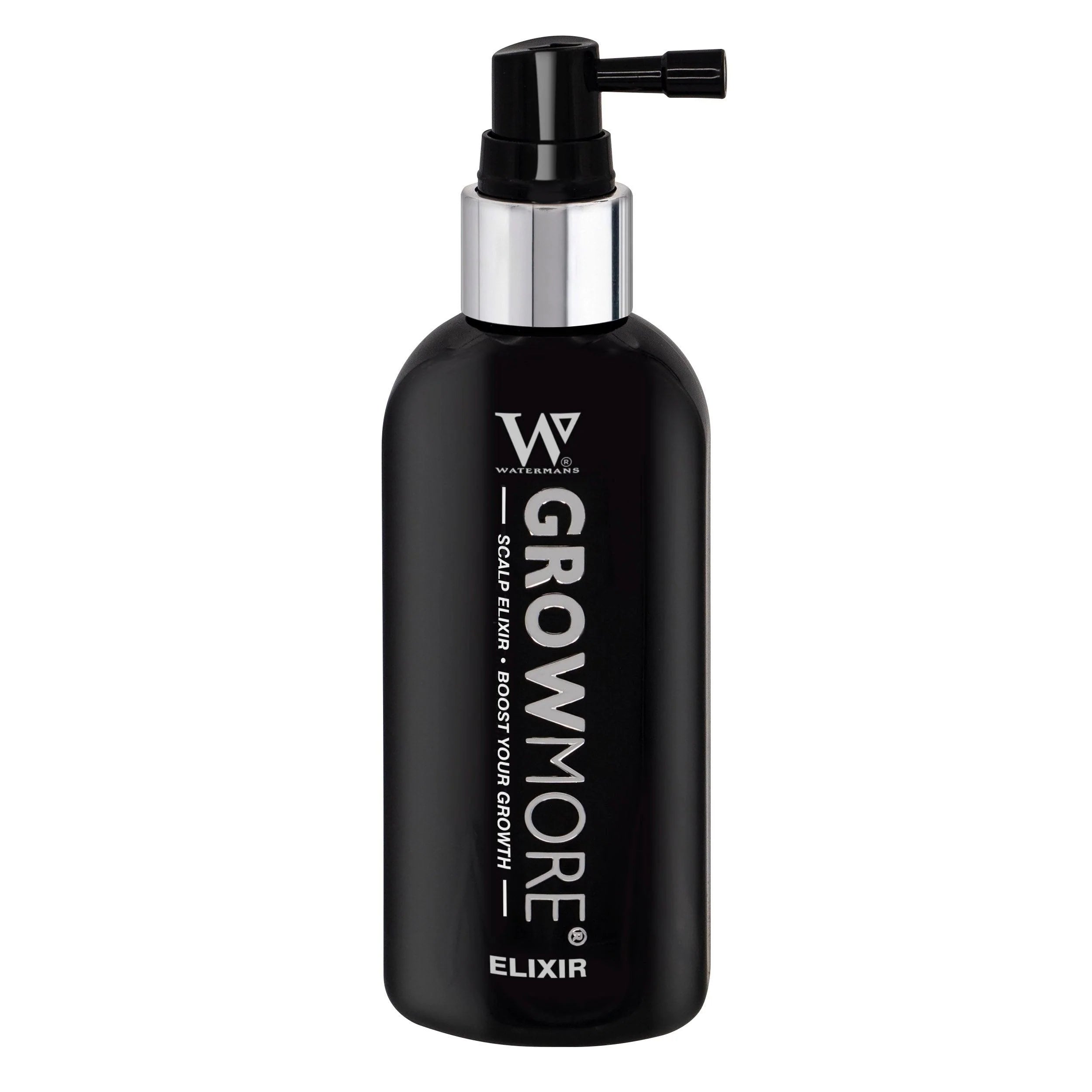
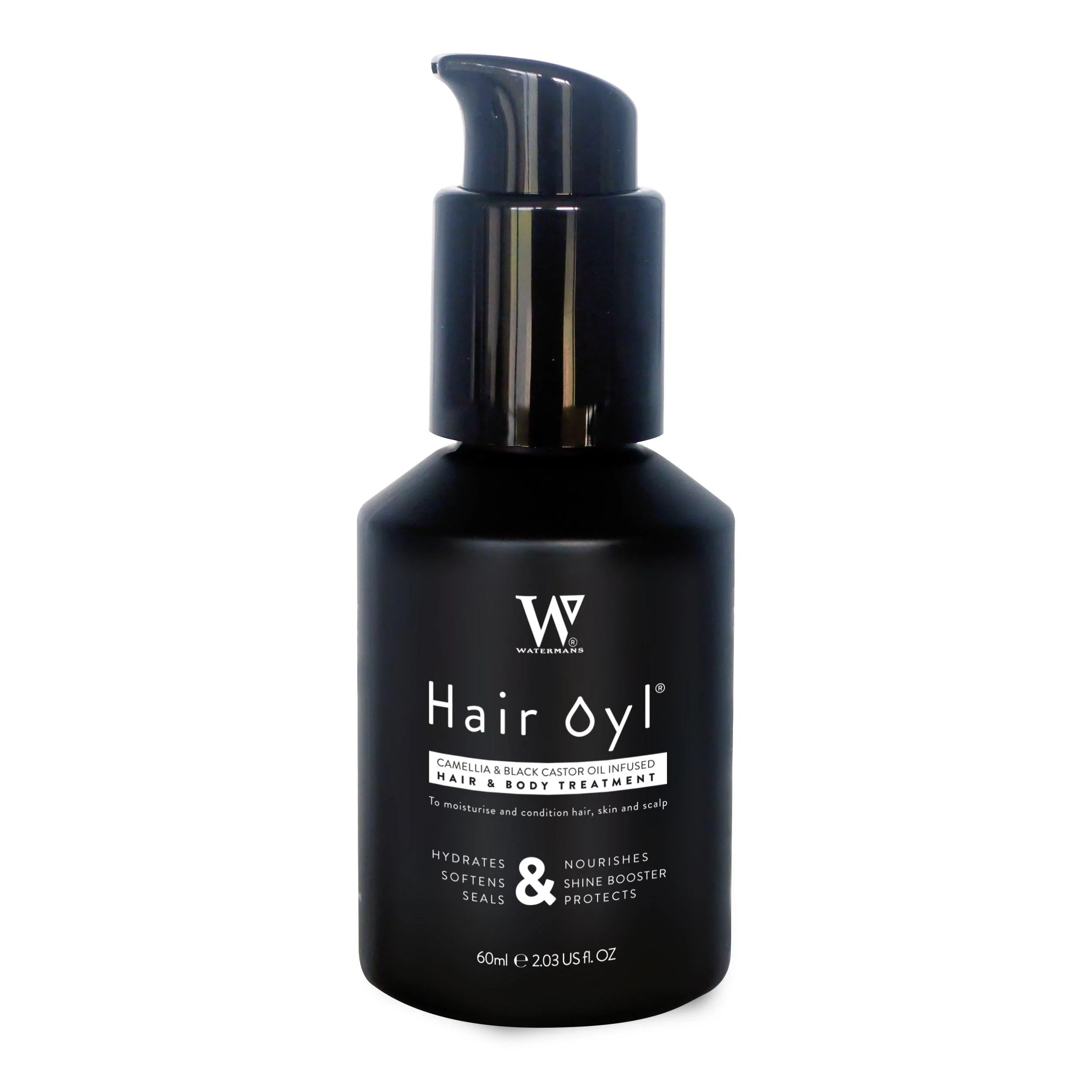
Grow More® Leave In Scalp Elixir £25.50
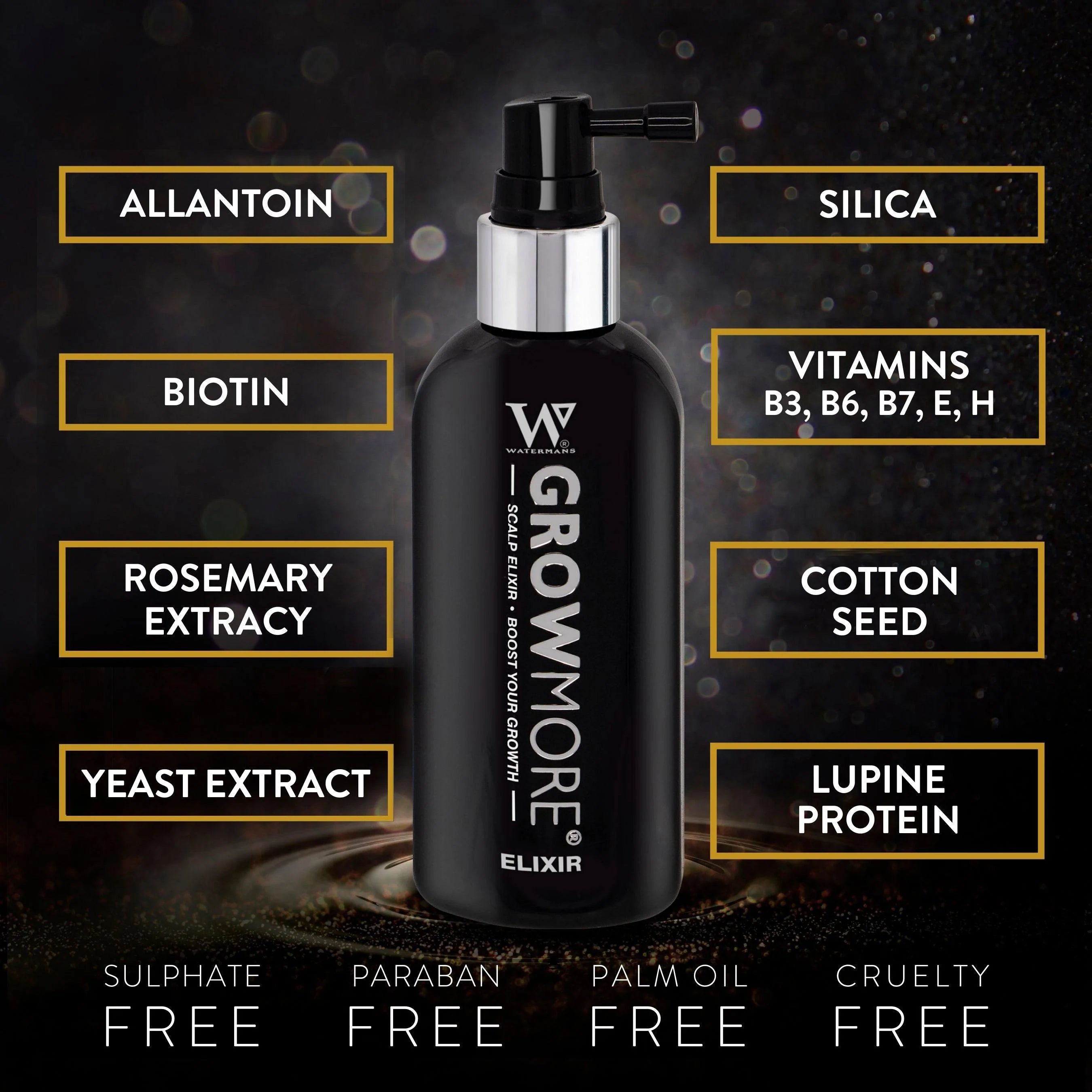
An overnight leave on elixir for lower density areas such as the parting and temples. Applied to the scalp rather than the lengths, with Biotin, Caffeine, Rosemary and Allantoin.
A leave on scalp elixir applied exactly as a copper peptide serum would be, along the parting rather than down the lengths.
Get a discount on the thinning hair range
Join the Watermans mailing list and we will email a discount code straight to your inbox, so you can try the thinning hair range for less. Vegan, made in the UK, over 6.5 million bottles sold since 2012.
How long should you give it, and what should you actually measure?
Three to six months is the minimum honest window, because hair grows roughly one centimetre a month and anything shorter is measuring noise. The mistake most people make is judging by feel, which is unreliable, on a schedule of every few days, which all but ensures they see nothing.
Measure three things instead. Photograph the parting monthly in the same light, from the same angle, with dry hair and the parting in the same place. Measure the circumference of your ponytail with a tape or a piece of string at the same point. And count roughly how many hairs come out on a normal wash day, which does not need to be exact, only consistent. Our guide on how long hair products take to show results sets out realistic timelines across product types.

What are the signs a product is not worth continuing?
Stop if the scalp becomes red, itchy, sore or flaky and stays that way after a few days, because an irritated scalp is a worse environment for hair than no serum at all. Stop if a warm tint appears in the first few centimetres of new growth on light or grey hair, which is copper depositing on the fibre. And stop, or at least reconsider, if six months of consistent use and dated photographs show nothing.
The sunk cost on a half used bottle is a bad reason to keep going. The more expensive the product, the stronger that pull is, which is worth naming before you are three bottles in.
What does a realistic budget look like?
Costs vary more than the products do. The table below is a rough guide to what each layer of a thinning hair routine runs to in the UK, so the serum can be priced against everything else rather than in isolation.
| Layer | Typical UK cost | Notes |
|---|---|---|
| Gentler handling: looser ties, silk pillowcase, wide tooth comb | £0 to £25 once | The best value on the list, and it never runs out |
| Shampoo and conditioner that suit a thinning scalp | £25 to £35 every couple of months | The base layer everything else sits on |
| Heat protection spray | £10 to £15, lasts months | Only relevant if you heat style, and essential if you do |
| A leave on scalp serum | £20 to £60 a month | The widest price range and the widest quality range |
| Copper peptide serums specifically | £25 to £90 a month | Price correlates weakly with the amount of active in the bottle |
| Blood tests through your GP | NHS, or £50 to £100 privately | Worth doing before supplementing iron on a hunch |
When should you see a GP instead of buying another product?
See your own GP if the parting has widened steadily over a year or more, if you can see scalp through the hair rather than simply having a thinner ponytail, if there are patches with defined edges, or if the scalp is sore, scaly or scarring. Those are all situations where a cosmetic product is the wrong category of answer and delay costs you options.
The NHS hair loss page sets out what a GP will consider and is worth reading before the appointment. Take your dated photographs with you, because a set of monthly images answers the questions far better than trying to describe the change from memory.
Frequently asked questions
Are copper peptides for thinning hair worth the money?
As a scalp care step added on top of the basics, they are a defensible purchase. As a first move, or as an answer to a parting that has been widening for years, they are not. Do the cheaper and more reliable steps first and price the serum against them.
Can copper peptides help with pattern hair loss?
No. Pattern hair loss involves follicles progressively shrinking, which is a medical process that a cosmetic ingredient does not change. If that is the pattern you are seeing, a GP conversation is the useful next step.
Will copper peptides help shedding after childbirth or illness?
Shedding after a trigger like that usually settles by itself over several months once the trigger has passed. A serum will not shorten the timeline, and the more useful focus is on eating adequately and handling the hair gently while it resolves.
Do copper peptides for thinning hair stain grey or blonde hair?
They can. Copper is a metal ion and pale or porous hair picks up metal ions readily. Keep the product on the scalp rather than the lengths and check the first few centimetres of new growth for any warm tone.
Can I use a copper peptide serum with a derma roller?
Microneedling increases how much of anything gets through the skin, which raises both the potential effect and the risk of irritation. If you do both, separate them into different sessions rather than applying the serum straight afterwards.
How do I know if the concentration is high enough?
Most brands do not say, so use position in the ingredient list as the proxy. Cosmetic lists run in descending order down to 1%, so copper tripeptide-1 appearing after the preservatives and fragrance indicates a token amount.
Is a copper peptide better than caffeine or rosemary in a scalp product?
There is no clean answer, because the hair specific human evidence is limited for all of them. What separates products in practice is whether the active is present in a meaningful amount, whether the product stays on the scalp, and whether you use it consistently for long enough.
Should I stop my shampoo while using a serum?
No. Cleansing matters more, not less, when you are adding a leave on product, because the serum has to reach skin rather than sit on residue. A shampoo that cleans without stripping is the base the serum works from.
What is the bottom line on copper peptides for thinning hair?
Copper peptides for thinning hair are a reasonable late addition and a poor first move. Establish which of the three processes you are actually seeing, do the cheap and reliable things first, and if you then want a scalp step, buy on the ingredient list rather than the packaging and commit to three to six months with dated photographs. If the parting is widening year on year, stop shopping and see your GP, because that is the one situation where time genuinely matters. If your question is about products or a routine rather than a medical one, you can talk to Gail Waterman, our co-founder, as an AI avatar on the Watermans homepage.
If you are starting at the base rather than the top, a sulfate free hair growth shampoo is the step that everything else in the routine has to work through, and it costs a fraction of a peptide serum.
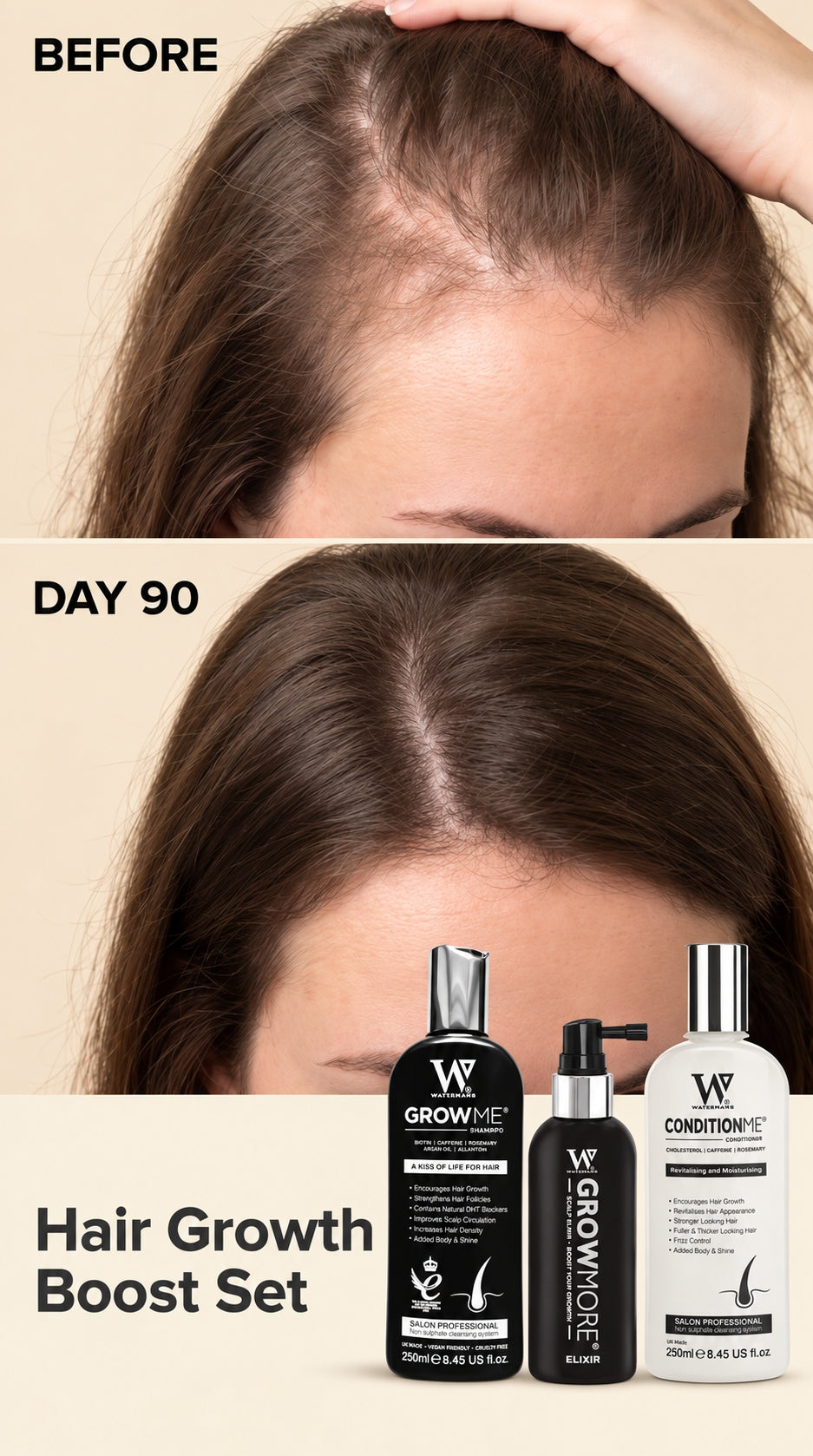
Watermans products are 100% cosmetic and do not treat medical hair loss. Individual results may vary.
Sources & references
Every source below was opened and checked while writing this page.
- NHS, Hair loss, causes, what a GP will consider and when to seek help
- DermNet, Female pattern hair loss, the miniaturisation process behind progressive thinning
- DermNet, Telogen effluvium, the delayed shedding pattern after illness, childbirth or weight loss
- Pickart L, Margolina A. Regenerative and Protective Actions of the GHK-Cu Peptide in the Light of the New Gene Data. International Journal of Molecular Sciences, 2018, a review of laboratory and gene expression findings rather than a hair trial
- GOV.UK, Decide if your product is a medicine or a medical device, why a cosmetic serum and a medicine are different categories in UK law
- Committee of Advertising Practice, CAP Code section 12, the evidence a UK advertiser must hold for a beauty claim