


Does Oily Skin Need Moisturiser? The Honest Answer
Short answer: yes, oily skin still needs moisturiser, but almost certainly not for the reason you have been told. The popular claim that skipping moisturiser makes your skin produce more oil to compensate is not supported by good evidence. How much oil your skin makes is driven mainly by hormones, genetics, age and temperature, not by how much water is sitting in the surface layers. Moisturiser is still worth using, because it keeps the skin barrier comfortable and makes everything else you do, including acne treatments, far easier to tolerate.
Key takeaways
- Oiliness and dryness are two different measurements. Oiliness is about lipids on the surface. Dryness and dehydration are about water content. You can absolutely have both at once.
- Sebum output is mostly hormonal. Androgens acting on the sebaceous glands set the baseline, with genetics, age, skin temperature and humidity adjusting it.
- The rebound-oil myth is wrong on mechanism even though its advice happens to be right. Skin does not measure its own water content and respond by making more oil.
- Over-cleansing is the real culprit behind most tight, irritated, paradoxically shiny skin. Stripping the barrier does not reduce sebum, it just makes the surface uncomfortable.
- Shine that increases through the day is normal. Sebum output rises measurably with skin temperature, which is why you look oilier on a hot commute.
- If oiliness arrives suddenly alongside irregular periods, new facial hair or thinning on the scalp, that is a conversation for your GP rather than a skincare purchase.
Does oily skin need moisturiser?
It does, and the honest reasons are better than the myth. A moisturiser adds water to the outer layer of skin and helps hold it there. That layer, the stratum corneum, works properly when it has enough water in it. When it does not, skin feels tight, looks dull, can flake at the edges and becomes noticeably less tolerant of everything else you apply.
That last point is the one that matters most for oily skin, because oily skin is also the skin most likely to be using benzoyl peroxide, salicylic acid or a retinoid. Those are the ingredients with real evidence behind them for congestion and breakouts, and the single most common reason people abandon them is irritation. A simple moisturiser is the cheapest way to stay on a treatment long enough for it to work.
So the recommendation you have heard is correct. The explanation attached to it usually is not.

What actually controls how much oil your skin makes?
Sebum is produced by sebaceous glands, which sit alongside hair follicles and are densest on the face, scalp, chest and upper back. Their output is set by a fairly short list of factors, and skincare products are not high on it.
| Factor | Effect on sebum | Can you change it? |
|---|---|---|
| Androgens | The main driver. Testosterone is converted within the gland to a more potent form, which increases output | Only medically, and only where there is a clinical reason |
| Genetics | Sets your baseline gland size and sensitivity | No |
| Age | Peaks in the teens and twenties, then declines gradually. Many people become less oily in their forties | No, but it does resolve with time for many |
| Skin temperature | Output rises measurably as skin warms, which is why heat and exercise mean more shine | Partly, by managing heat and humidity |
| Menstrual cycle | Many people notice more oiliness and congestion in the week before a period | Not directly, but it is predictable |
| Your moisturiser | No meaningful effect on how much sebum the gland produces | Not the lever people think it is |
Notice what is absent from that list. Nothing you apply to the surface of your skin tells a sebaceous gland to speed up or slow down. Products can absorb oil, mattify the surface, or affect how oily you look. That is a genuinely useful cosmetic effect, and it is a different thing from changing production.
Correcting the rebound-oil myth
The claim: if you skip moisturiser, your skin panics, decides it is dehydrated, and produces extra oil to compensate.
The problem: sebaceous glands are regulated by hormones, not by a moisture sensor in the skin. There is no established mechanism by which the water content of the outer skin layer instructs a gland to increase output, and the studies people cite for this claim do not actually show it.
What is really happening: stripping the skin causes irritation, tightness and flaking. Flaky patches sitting next to oily patches make the oiliness look worse and feel more uneven. People then cleanse harder, which makes the irritation worse again. The loop is real and worth breaking. The oil-production story attached to it is not.
Oily or dehydrated? The difference that changes what you buy
This distinction is the most useful thing on this page, because the two states look similar in the mirror and need opposite responses.
| Sign | Oily skin | Dehydrated skin |
|---|---|---|
| What it lacks | Nothing. It has plenty of lipids | Water in the outer layer |
| How it feels | Comfortable, slick, shiny by midday | Tight, especially after cleansing |
| Pores | Visibly larger across nose and inner cheeks | Unrelated to pore size |
| Fine lines | Often fewer, since surface lipids plump the look | Fine crepey lines that appear when you smile |
| Is it permanent? | A skin type. Largely genetic and hormonal | A temporary condition. It can be fixed in weeks |
| What helps | Light textures, niacinamide, sensible cleansing | Humectants, gentler cleansing, less exfoliation |
You can be both. Oily and dehydrated is one of the most common combinations we hear described, and it is usually the result of an aggressive routine applied to skin that was only ever oily. The fix is not more products. It is fewer, gentler ones.
A simple self-test
Cleanse with a mild face wash, pat dry, and apply nothing at all. Wait thirty minutes and check.
- Shiny across the T-zone, comfortable: oily skin, not dehydrated.
- Tight and slightly rough, then shiny later: oily and dehydrated. This is the group most often over-cleansing.
- Tight everywhere, no shine: dry skin rather than oily, and a lot of oil-control products will be too harsh for you.
- Oily centre, tight outer cheeks: combination, the most common pattern of all.

Does drinking more water help oily skin?
Being properly hydrated is good for you for many reasons, but drinking extra water beyond your normal needs is not a reliable route to less oily or better hydrated skin. Your body prioritises water for organs and circulation, and the outer layer of skin gets its water largely from the layers beneath and from what you apply on top. If you are genuinely dehydrated you will notice it, but the two litre rule is not a skincare treatment.
The over-cleansing trap
This is where most oily-skin routines go wrong, and it is worth being specific about what it looks like.
- Cleansing three or four times a day. Twice is enough for almost everyone, plus after heavy exercise.
- Reaching for the squeaky-clean feeling. That tight squeak is the sound of a stripped barrier, not the sound of clean skin.
- Stacking exfoliants. A scrub, plus an acid toner, plus a peel pad, plus a retinoid, is four times more than anyone needs.
- High-strength alcohol toners. Instantly matte, then tight, then flaking a week later.
- Blotting hard with a facecloth. Friction is irritation, and irritated oily skin behaves worse than oily skin.
The same logic applies above the hairline. Harsh detergents strip the scalp exactly as they strip the face, which is one reason gentler formulas have become the norm. We explain the trade-offs in our guide to switching to sulphate-free shampoo. If your scalp is not just oily but flaking in greasy yellowish scales, with redness at the sides of the nose or brows too, that pattern points towards seborrheic dermatitis, which needs a different approach entirely.

What a sensible routine looks like
- Morning: gentle cleanse. Or just water if your skin is comfortable. You cleansed eight hours ago.
- Morning: light moisturiser. A gel or gel-cream on slightly damp skin.
- Morning: sunscreen. The last step and the one with the strongest long-term evidence. Many oily-skin sunscreens hydrate enough to replace step two in summer.
- Evening: cleanse properly. This is the cleanse that matters, removing sunscreen, makeup, sweat and the day.
- Evening: any active, if you use one. One at a time, a few nights a week to begin with.
- Evening: the same light moisturiser. Before or after the active. Before is gentler while you are adjusting.
That is the whole thing. If you want the detail on picking the moisturiser itself, including the texture comparison and the label test, our companion guide covers how to choose the best moisturiser for oily skin.
Give it four weeks. Barrier recovery is not instant. If you have been over-cleansing for months, expect two to four weeks of simplified, gentle care before the tightness settles. Judging a new routine after five days is the most common reason people conclude that nothing works.
When oiliness is telling you something else
Oiliness that has been there since your teens is usually just your skin type. Oiliness that arrives suddenly, or that comes with other changes, is worth a proper look.
In women, a combination of increased oiliness and acne with irregular or absent periods, new coarse hair on the face or body, and thinning through the top of the scalp can point towards a hormonal picture such as polycystic ovary syndrome. That is a diagnosis made by a doctor with blood tests, not by a skincare quiz, and it is treatable. Our guide to PCOS and hair loss explains what that pattern looks like and what to ask for. If several of those signs are present, please book an appointment rather than buying another serum.
One thing we do make, and what it is honestly for
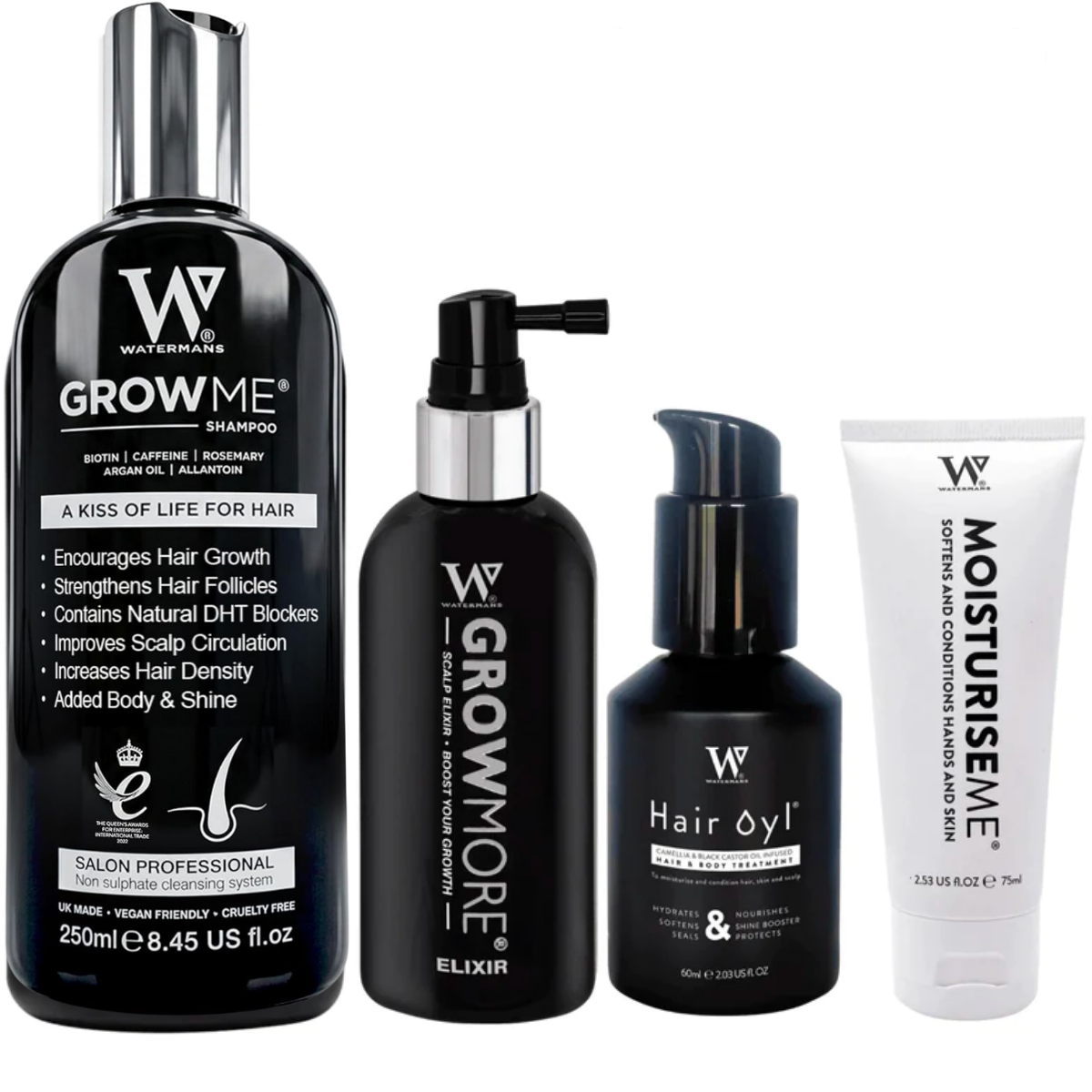
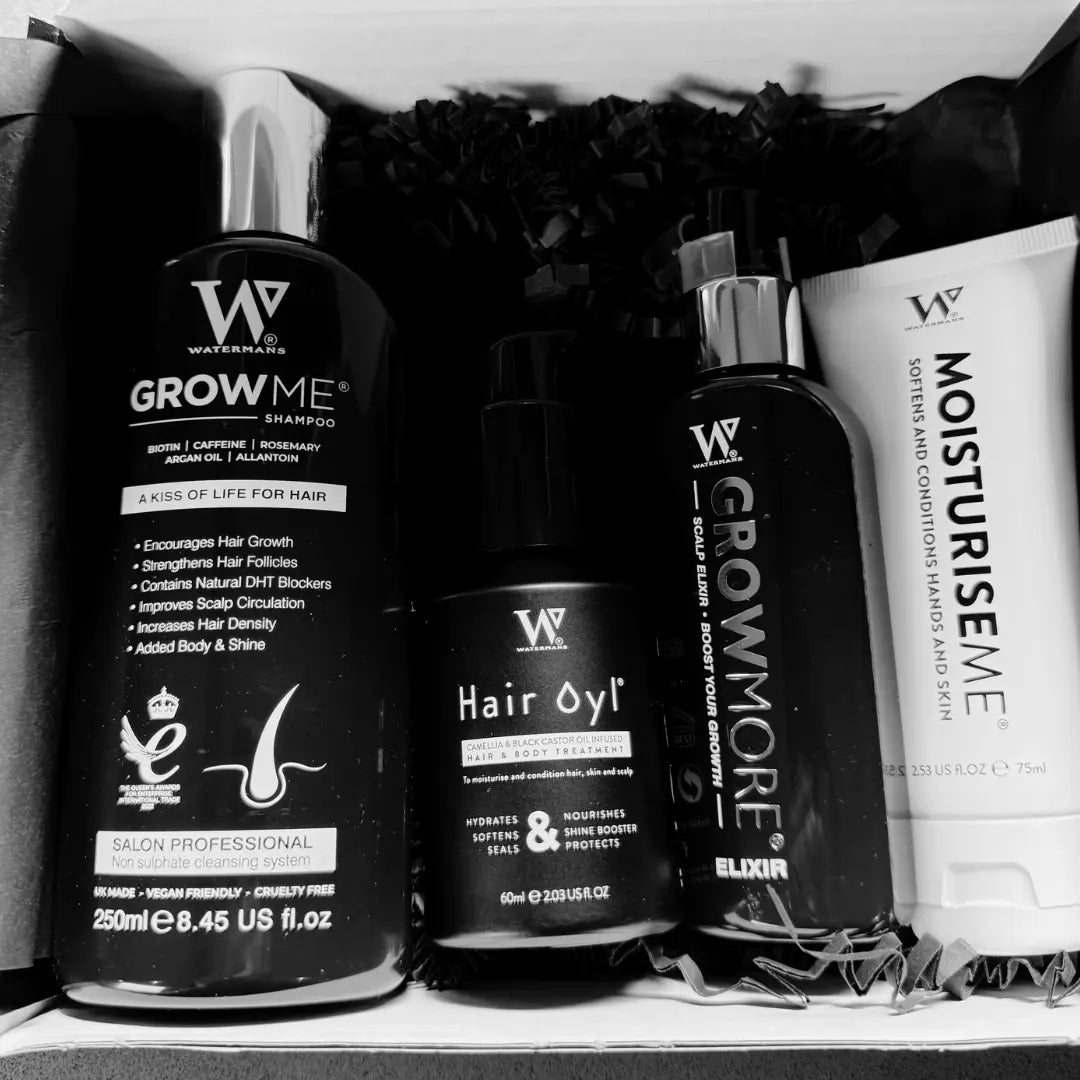
Watermans is a hair care company. We do not make a gel moisturiser for an oily face, and this page is not the place to pretend otherwise. What we do make is a rich, butter-based cream, and there is a genuine reason to mention it here: people with oily faces very often have dry hands, especially anyone washing their hands frequently at work or through a British winter. Oily face and dry hands is an extremely normal combination.

Moisturise Me Face & Hand Cream
A rich cream with cupuacu, shea and cocoa butters, allantoin and almond oil. Built for hands, elbows and dry body skin, and for genuinely dry facial areas in cold weather.
Not for an oily T-zone. This is a butter-rich occlusive formula, which is the opposite of what oily facial skin needs. If your face is shiny by midday, use a light gel there and keep this for your hands.
If dry, cracking hands are your actual problem, we go through the causes and the fixes properly in how to rescue dry hands. Watermans has sold over five million bottles since 2012, all vegan and made in the UK, and we would rather point you at the right product for the job than the one that happens to be ours.
When to see a pharmacist or GP
Speak to someone if you have painful, deep or cystic spots, acne that is leaving scars or marks, a rash rather than ordinary oiliness, oiliness that appeared suddenly in adulthood, or any of the hormonal signs described above. A pharmacist can advise on over-the-counter options, and a GP can prescribe or refer. Nothing here is medical advice, and no cosmetic product treats a medical condition.
Frequently asked questions
Does skipping moisturiser really make skin oilier?
No. Sebum production is controlled by hormones acting on the sebaceous glands, not by the water content of the skin surface, and there is no good evidence that skin increases oil output because you left moisturiser off. Skipping it does tend to leave skin tight and irritated, which makes oiliness look and feel worse, so the advice to moisturise is still sound.
Can skin be oily and dehydrated at the same time?
Yes, and it is very common. Oiliness is about lipids on the surface. Dehydration is about water in the outer layer. Skin that feels tight and rough yet turns shiny by lunchtime is usually oily skin that has been over-cleansed or over-exfoliated.
How often should I wash an oily face?
Twice a day, plus after heavy exercise. The evening cleanse is the important one, since it removes sunscreen, makeup and the day. More frequent washing does not reduce oil production and often makes the skin less comfortable.
Will drinking more water make my skin less oily?
Not in any reliable way. Staying reasonably hydrated is good general health advice, but drinking beyond your normal needs is not a treatment for oiliness or a substitute for a moisturiser.
Why am I oilier in summer?
Sebum output rises measurably as skin temperature rises, and higher humidity makes what is already there sit on the surface for longer. A lighter texture and a mattifying sunscreen usually handle it. Many people switch back to something slightly richer in winter.
Do mattifying products stop oil production?
No, they absorb or blur oil that is already there, which is a real and useful cosmetic effect. Nothing you apply to the surface tells the gland underneath to produce less.
Does oily skin age better?
There is a grain of truth in it. More surface lipids can mean fine lines are less obvious, and oily skin tends to be thicker. It makes no difference to sun damage, though, which is the largest driver of skin ageing, so sunscreen matters just as much.
Should I use a toner?
Only if it does something useful. A hydrating toner is fine. A high-strength alcohol toner that leaves skin squeaky is the classic route into the over-cleansing trap and is best avoided.
The bottom line
Oily skin needs moisturiser, but treat the myth and the advice separately. Nothing you put on the surface changes how much sebum your glands make. What a light moisturiser does is keep the barrier comfortable, stop the tight-then-strip cycle, and let you stay on the treatments that genuinely work for congestion. Cleanse twice, moisturise light, wear sunscreen, change one thing at a time, and give it a month.