

Ceramide Sunscreen: What Ceramides in SPF Really Do
A ceramide sunscreen is an SPF product with ceramides added to the base. The SPF filters do the sun protection, exactly as they would without ceramides, and the ceramides sit alongside them as barrier support ingredients that help skin hold water and feel less tight. That is a genuine benefit for dry or easily irritated skin, but it is a texture and comfort benefit, not extra sun protection. Choose your SPF on filters first.
Key takeaways
- Ceramides are natural skin lipids. They help hold the outer layer of skin together and slow water loss.
- Adding them to an SPF does not raise the SPF number or the UVA rating.
- The people who notice the difference most are those with dry, tight or easily irritated skin.
- In the UK, look for SPF 30 or above plus 4 or 5 UVA stars, or the UVA logo in a circle.
- Most people underapply. The NHS suggests roughly 6 to 8 teaspoons to cover a whole adult body.
- Your scalp parting and hairline get sun on them all summer and almost nobody covers them.

What are ceramides, and what makes a ceramide sunscreen different?
Ceramides are fatty molecules that your own skin makes. They sit in the outermost layer, the stratum corneum, in roughly equal company with cholesterol and free fatty acids. Together those three lipids form the mortar between skin cells. A published review of ceramide-containing formulations describes their job plainly: they help structure the water permeability barrier, which is the reason well-supplied skin feels supple and poorly supplied skin feels tight and rough.
A ceramide sunscreen takes an ordinary SPF base and adds one or more of these lipids to it, usually alongside cholesterol, fatty acids, glycerin or niacinamide. On an ingredients list they appear as ceramide NP, ceramide AP, ceramide EOP or occasionally as phytosphingosine, which is a precursor.
What changes is the feel and the after-effect on skin comfort. What does not change is the number on the front. The sun protection in any sunscreen comes from its UV filters, and nothing else in the formula raises that figure. It is worth being clear about this because the marketing rarely is.
Do the ceramides in a ceramide sunscreen actually do anything?
Yes, but not the thing most shoppers assume. The evidence on ceramides in leave-on skincare is reasonable: reviews of ceramide-containing formulations report improved water retention and better barrier function in dry and barrier-compromised skin. That work was largely done on moisturisers worn for weeks, not on sunscreen worn for a few hours and then washed off.
So the honest position is a middle one. Ceramides in an SPF are unlikely to be doing nothing, because you are still leaving lipids on the skin for hours. They are also unlikely to match a dedicated barrier moisturiser used morning and night, because the dose is smaller and the wear time is shorter.
Where a ceramide sunscreen earns its place is in tolerability. If dryness or tightness is the reason you keep skipping SPF, a formula that leaves your face comfortable is the one you will actually reapply. Compliance beats chemistry here. A slightly plainer sunscreen you use every day protects you far better than a sophisticated one that sits in a drawer.
Where good sources disagree is on how much of a barrier effect survives the wash-off. Formulation researchers point to measurable lipid deposition even from rinse-prone products, while dermatology guidance tends not to credit sunscreen with barrier benefits at all and judges it purely on UV protection. Both positions are defensible, which is why the sensible reading is to buy on filters and count the ceramides as a bonus.

Who genuinely benefits from ceramides in an SPF?
Some skin genuinely runs short of these lipids, and some does not. The groups most likely to feel a difference are:
- Dry and very dry skin. Lipid levels in the outer layer fall as skin dries out, so topping them up is doing real work.
- Eczema-prone and sensitive skin. Barrier lipids are reduced in eczema-prone skin, and emollient routines built around them are standard NHS advice for daily care.
- Skin over 50. Barrier lipid production drops with age, which is part of why mature skin feels tighter after cleansing.
- Anyone using strong actives. Acids, retinoids and physical exfoliation all leave the barrier temporarily less robust.
- Cold, windy or heavily air-conditioned environments. Low humidity pulls water out of skin faster than it can be replaced.
If your skin is oily, comfortable and never tight, ceramides are not solving a problem you have. Buy on filters, finish and price instead, and put the money towards a formula you enjoy wearing. Our guide to choosing a sunscreen for oily skin goes through the textures worth trying.
Which ceramide sunscreen claims should you be sceptical about?
Three claims come up again and again on packaging and none of them survives contact with the science.
Claims worth ignoring
"Ceramides boost your SPF." They do not. SPF is measured on the filter system. Adding lipids does not move that number, and no UK product may imply a protection level it has not been tested for.
"Restores your skin barrier in one use." Barrier lipid renewal happens over days and weeks, not over a morning. Single-use language is marketing, not measurement.
"Ceramides mean you can use less." The opposite is true. Underapplication is the single most common reason people get less protection than the label promises.
One more to watch: the word "ceramides" on the front of a bottle tells you nothing about how much is inside. If ceramides appear near the very end of the ingredients list, after the preservatives and the fragrance, you are paying for the word rather than the lipid.
Is a ceramide sunscreen better than a moisturiser plus a separate SPF?
This is the practical question, and the answer depends on how likely you are to do two steps every morning.
| All in one ceramide sunscreen | Barrier moisturiser, then SPF | |
|---|---|---|
| Barrier support | Modest. Small dose, short wear time. | Stronger. Higher dose, worn day and night. |
| Likelihood you stick to it | High. One step is hard to skip. | Lower on rushed mornings. |
| Reapplication | Simple. Same product every two hours. | Only the SPF needs redoing. |
| Cost per month | Usually higher per millilitre. | Usually better value. |
| Best for | Minimal routines, travel, tight mornings. | Genuinely dry or reactive skin. |
If your skin is dry all year rather than only in February, the two step version is doing more for you. If your problem is that you own SPF and never put it on, the single bottle wins by default. There is more on winter barrier care in our guide to dry skin in winter.
Get a discount on the skin and scalp care range
Join the Watermans mailing list and we will email a discount code straight to your inbox, so you can try the skin and scalp care range for less. Vegan, made in the UK, over 5 million bottles sold since 2012.
How do you read a UK sunscreen label?
UK labels carry two separate numbers and it pays to know which is which.
SPF describes protection against UVB, the wavelengths mainly responsible for burning. The NHS advises at least factor 30. The jump from 30 to 50 is real but smaller than the numbers suggest, and it matters far less than whether you applied enough.
The UVA rating describes protection against the longer wavelengths linked to ageing and to skin cancer risk. In the UK this appears either as a star rating, where the NHS advises at least 4 stars, or as the letters UVA printed inside a circle, which signals that UVA protection is at least a third of the labelled SPF under the EU standard. The British Association of Dermatologists recommends 4 or 5 star products.
Water resistance is not a fixed standard, and nothing is waterproof. Reapply after swimming or towelling, whatever the bottle says.
Everything else on the front, including the word ceramide, is a formulation choice rather than a protection claim. Get those two ratings right first and the rest is preference.
What actually decides whether your sunscreen works?
Four things, and only one of them is what you bought.
- How much you use. Laboratory SPF testing uses a thick, even layer. Real people apply a fraction of it, which is why measured protection in normal use often falls well below the label. The NHS figure of roughly 6 to 8 teaspoons for a whole adult body is a useful reality check, and about a teaspoon of that belongs to the face and neck.
- Whether you missed anywhere. Ears, the back of the neck, the tops of the feet, the parting in your hair. These are the places that burn.
- Whether you reapplied. Every two hours, and straight after swimming or heavy sweating.
- What else you did. NICE guidance on sunlight exposure and the British Association of Dermatologists both make the same point: sunscreen is one layer of protection, used with shade and clothing, not a substitute for them.
None of that changes if ceramides are in the bottle. It is worth repeating because this kind of product tends to be a premium purchase, and a premium purchase applied thinly is worse value than a supermarket SPF 50 applied properly.

Does your scalp need sun protection too?
Your scalp does need protection, and it is the part almost everyone forgets. The skin along a parting and around a receding hairline has the same UV vulnerability as the skin on your nose, with far less covering it. Anyone with fine hair, a wide parting, a close crop or a thinning crown is exposing bare skin every time they go outside.
It also helps to be precise about what sun does and does not do to hair, because these three things get muddled constantly:
- Hair loss means hair coming from the follicle in reduced quantity or quality, as in androgenetic alopecia or alopecia areata. Sunlight is not a recognised cause of it. That is a matter for your own GP.
- Hair shedding means more hairs than usual moving out of the anagen growth phase and into telogen and falling. Telogen effluvium after illness, surgery or a stressful period is the usual explanation, not sunbathing.
- Hair breakage means the fibre snapping along its length. This one sunlight genuinely contributes to. UV degrades keratin and strips lipids from the cuticle, and combined with salt water, chlorine and heat styling it leaves lengths dry, porous and easy to snap. Breakage looks like thinning in the mirror while the follicles underneath are perfectly fine.
Practical version: wear a hat when the UV index is high, use a light SPF spray or stick along an exposed parting, rinse salt and chlorine out promptly, and be gentler with heat afterwards. If you want the detail on fibre damage, we cover it in how barrier ingredients like niacinamide behave on hair and scalp.
For the skin that takes the worst of a summer, hands and face especially, a straightforward barrier cream at the end of the day is a sensible habit.

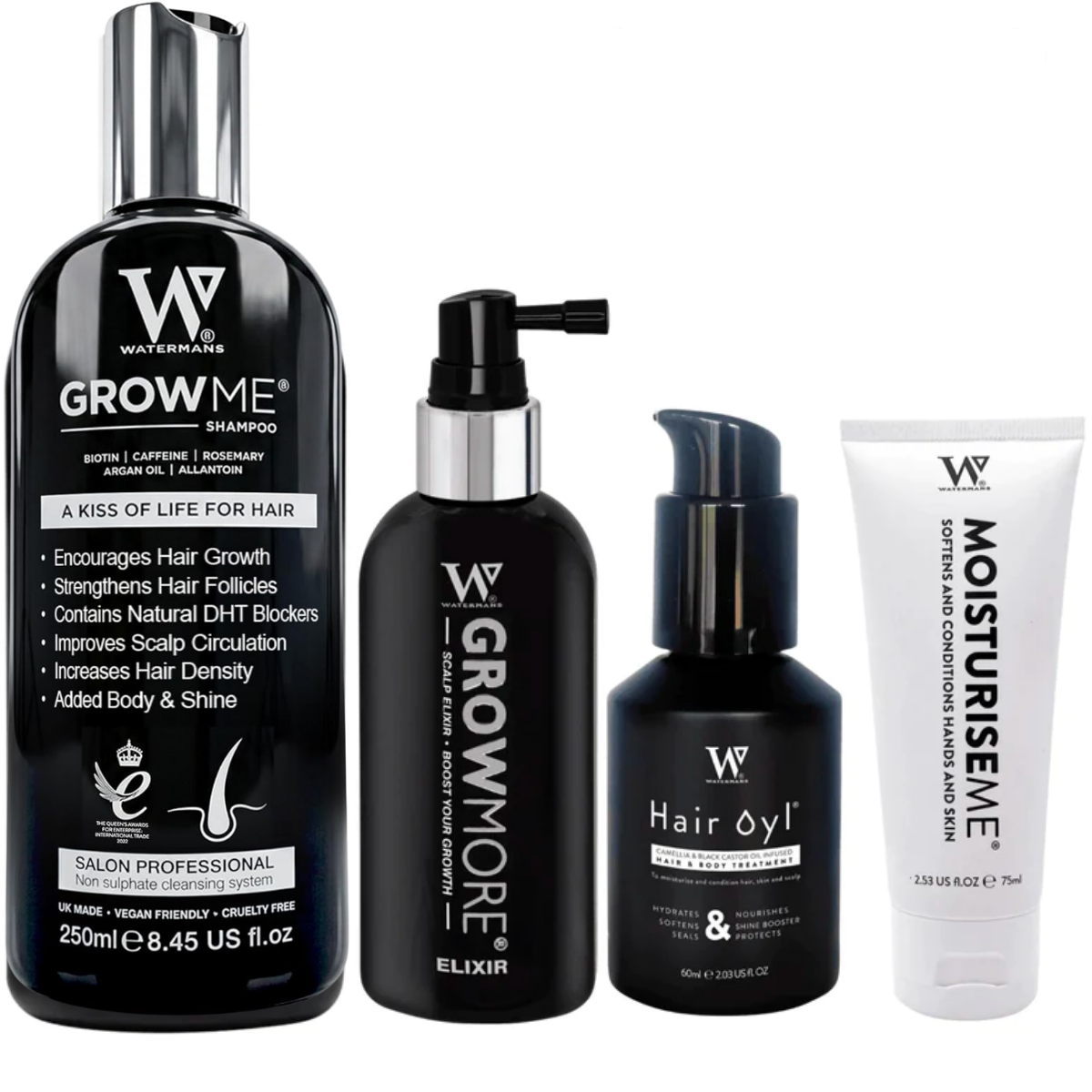
Plumping Moisturise Me Face & Hand Cream
A rich cupuacu, shea and cocoa butter cream for skin that feels tight and dry after a day outdoors. Vegan, made in the UK.
Frequently asked questions
Is an SPF with ceramides good for oily skin?
It can be, though oily skin is rarely short of barrier lipids in the first place. Oily skin that feels tight after cleansing is usually dehydrated rather than dry, and a lightweight gel or fluid SPF is often the better answer. Judge the product on finish and filters rather than on the ceramide claim.
Can I use an SPF with ceramides under makeup?
Yes. Give it two to three minutes to settle before foundation, and use the same generous amount you would use without makeup. If it pills, you are usually layering it over a silicone-heavy primer or applying it too soon after a thick moisturiser.
Does an SPF with ceramides replace my moisturiser?
For normal skin in mild weather, often yes. For genuinely dry skin, or in winter, keep the moisturiser. The lipid dose in an SPF is smaller and it is only on your face for part of the day.
Do ceramides make sunscreen less likely to sting my eyes?
Sometimes, indirectly. Stinging usually comes from emulsifiers and certain chemical filters migrating with sweat rather than from the lipids. If stinging is your issue, a mineral filter stick used around the orbital bone tends to stay put better than a lotion.
How long does an opened sunscreen last?
Check the small open jar symbol on the back, which is usually 12M and means twelve months after opening. Do not carry last summer's half bottle into this one, and never leave sunscreen baking on a car dashboard.
Is SPF 50 with ceramides better than SPF 30 without?
On sun protection, marginally, and only if you apply both properly. On barrier comfort, the ceramide version may feel nicer. The bigger win is picking whichever bottle you will happily use every day and reapply.
Do I need sunscreen on a cloudy UK day?
Up to about 80 percent of UV passes through light cloud, so on bright overcast days from spring to early autumn the answer is yes for exposed skin. In deep midwinter, UV levels across the UK are low enough that daily facial SPF becomes a preference rather than a necessity.
The bottom line
A ceramide sunscreen is a reasonable product with an unreasonable amount of marketing attached. The ceramides are real ingredients doing real work on skin comfort, particularly if your skin is dry, mature, eczema-prone or recovering from strong actives. They do not add sun protection, they do not let you use less, and they do not replace a proper barrier moisturiser for skin that genuinely needs one. Buy on SPF 30 or above with 4 or 5 UVA stars, apply far more than feels natural, reapply every two hours, and cover your parting while you are at it.
Watermans products are 100% cosmetic and do not treat medical hair loss. Individual results may vary. This article is general information, not medical advice. If you are worried about your skin or your hair, speak to your own GP or a pharmacist.
Sources & References
- NHS. Sunscreen and sun safety. Minimum SPF 30, at least 4 star UVA, 6 to 8 teaspoons for a whole adult body, reapply every two hours.
- British Association of Dermatologists. Sun Protection Fact Sheet. SPF 30 or above, 4 or 5 star UVA products, sunscreen used alongside shade and clothing.
- National Institute for Health and Care Excellence. NG34: Sunlight exposure, risks and benefits.
- Cancer Research UK. Sun, UV and cancer.
- Spada F, Barnes TM, Greive KA. Clinical significance of the water retention and barrier function improving capabilities of ceramide containing formulations. Journal of Cosmetic Dermatology, peer reviewed.