


How to Reduce Your Stroke Risk: What Works, and Where Garlic Fits
If you think someone is having a stroke right now, stop reading and call 999. Use FAST: Face drooping on one side, Arms, can they hold both up, Speech slurred or muddled, Time to call 999. Stroke treatment is measured in minutes. Do not wait to see if it passes, and do not drive yourself.
You cannot take your stroke risk to zero. You can, however, move it a very long way. A large international study of stroke patients across dozens of countries found that around nine in ten strokes were associated with a short list of risk factors that can be measured and changed, and the biggest single one by a clear margin was high blood pressure.
Garlic gets brought into this conversation constantly. It is a genuinely healthy food, and it has a small, measurable effect on blood pressure. But it is a seasoning, not a stroke prevention strategy, and for anyone taking blood thinning medication its effect on platelets is a reason for caution rather than a benefit to chase. This guide covers what actually reduces stroke risk, in rough order of how much difference each one makes, and then places garlic honestly on that list.
Key Takeaways
- Learn FAST. Recognising a stroke fast is worth more than every prevention step on this page combined, because the treatments that save brain tissue only work in a narrow time window.
- Blood pressure is the main event. It is the largest modifiable risk factor for stroke, it usually has no symptoms at all, and it is easy to measure.
- Atrial fibrillation is the most missed one. An irregular heartbeat sharply raises stroke risk, is often silent, and is highly treatable once found.
- A mini stroke is an emergency. Symptoms that clear up within minutes still mean a hospital assessment the same day.
- Garlic is a nice-to-have, not a plan. Supplements produce a modest blood pressure reduction in trials, but no study has shown garlic prevents strokes, and it does not replace medication.
- Garlic thins the blood a little. If you take warfarin, a DOAC, aspirin or clopidogrel, or you have surgery coming up, talk to your pharmacist before taking concentrated garlic supplements.
What actually happens during a stroke?
A stroke is a sudden interruption of the blood supply to part of the brain. Brain tissue starved of oxygen begins to die quickly, which is why the response is time critical. There are two main types, and they are not the same problem.
An ischaemic stroke accounts for the large majority of cases. A clot blocks an artery feeding the brain, either forming there or travelling from elsewhere, commonly the heart. A haemorrhagic stroke is the opposite mechanism: a vessel bleeds into or around the brain. This distinction matters enormously, because the emergency treatments for one can be dangerous in the other. It is the reason a brain scan happens before clot busting treatment is given, and it is also the reason self medicating with anything that thins the blood is not a sensible plan.
A transient ischaemic attack, often called a mini stroke, produces the same symptoms but they resolve, sometimes within minutes. People routinely dismiss these. That is a serious mistake, because a TIA is one of the strongest warning signs that a full stroke may follow, and the risk is highest in the days immediately afterwards. Symptoms that came and went still warrant urgent medical assessment.

Which risk factors matter most?
Not all risk factors are equal, and treating them as a flat list is how people end up meticulously managing something small while ignoring something large. The table below ranks the main modifiable factors by roughly how much they contribute at population level.
| Risk factor | Roughly how much it matters | What to actually do |
|---|---|---|
| High blood pressure | The largest single contributor, for both stroke types | Get it measured. Treat it properly if raised, with medication if that is what is needed. |
| Smoking | Very large, and risk falls substantially after stopping | Use NHS stop smoking services. Combining support with medication beats willpower alone. |
| Atrial fibrillation | Large, and frequently undiagnosed until after a stroke | Check your pulse for regularity. Anticoagulation is very effective once AF is confirmed. |
| Physical inactivity | Substantial, and it improves several other factors at once | Aim for regular moderate activity. Brisk walking counts and needs no equipment. |
| Diet quality | Meaningful, mostly through blood pressure and weight | Cut salt, raise vegetables and fibre. Whole dietary pattern beats any single food. |
| Diabetes | Meaningful, and it compounds with blood pressure | Know your HbA1c. Manage it alongside blood pressure, not instead of it. |
| Blood lipids | Meaningful for ischaemic stroke specifically | Get a lipid profile. Statins are the treatment where risk justifies it. |
| Heavy alcohol use | Clear at higher intakes, and it raises blood pressure directly | Stay within UK guidance of 14 units a week, spread out, with drink free days. |
Why is blood pressure the one to fix first?
Blood pressure earns its top billing for three reasons. It contributes more than any other modifiable factor. It raises the risk of both stroke types, not just one. And it is almost entirely symptomless, which means people carry it for years without knowing.
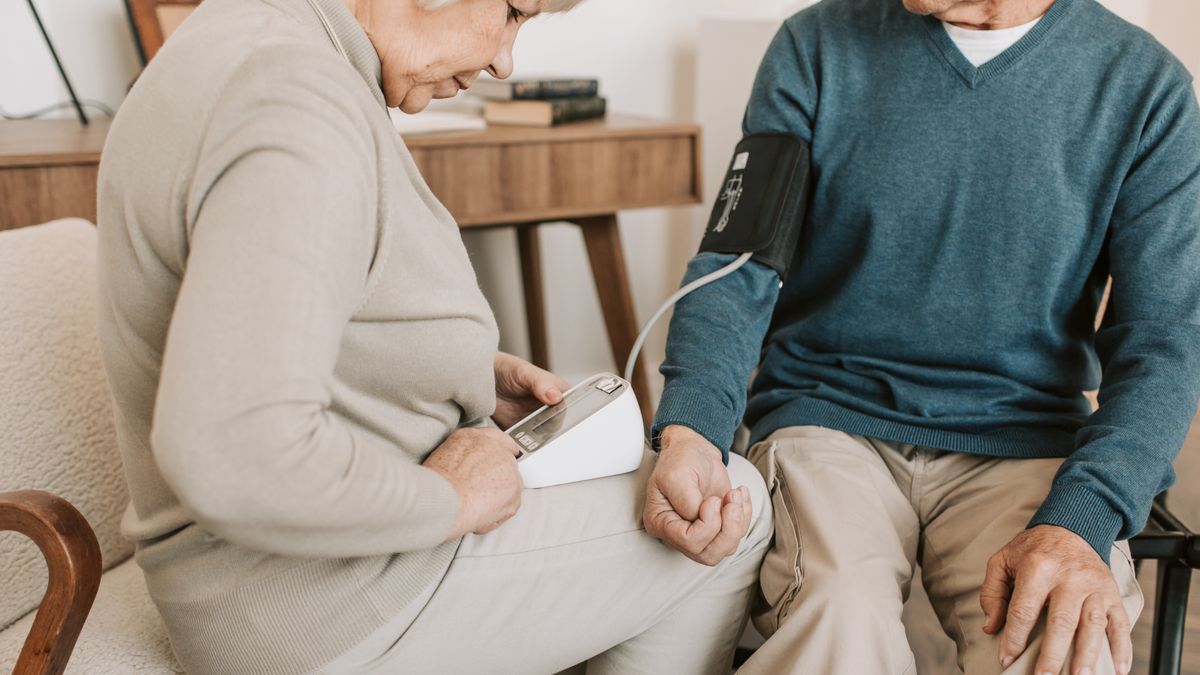
That last point is the practical problem. High blood pressure does not usually cause headaches, nosebleeds or dizziness, despite the folklore. The only way to know is to measure it. In the UK you can have it checked free at a GP surgery, and many pharmacies offer the same service without an appointment. Home monitors are inexpensive, and a validated upper arm cuff used properly gives a better picture than a single reading taken in a clinic while you are slightly stressed about being there.
If your reading comes back raised, the important thing is not to try to manage it alone with food. Lifestyle changes genuinely help, particularly cutting salt, losing excess weight, moving more and drinking less. But when readings stay high, medication is what reliably brings them down, and the evidence that lowering blood pressure lowers stroke risk is about as solid as evidence in medicine gets. Declining treatment in favour of a supplement is a bad trade.
Atrial fibrillation: the risk factor people do not know they have
Atrial fibrillation is an irregular, often rapid heart rhythm. When the upper chambers of the heart quiver rather than contracting cleanly, blood can pool and form clots, and a clot that leaves the heart can travel to the brain. Strokes caused this way tend to be more severe than average.
The difficulty is that AF is often silent, or produces vague symptoms like occasional palpitations, breathlessness or tiredness that are easy to attribute to age or stress. Plenty of people learn they have AF only after the stroke it caused.
You can do a rough check yourself in thirty seconds. Sit down, rest for a few minutes, then feel the pulse at your wrist with two fingertips. You are not judging the speed so much as the rhythm. A healthy pulse has a steady, even beat. An irregularly irregular pulse, one with no discernible pattern, is worth reporting to your GP. Many smartwatches and home blood pressure monitors now flag possible irregular rhythms too, and while these are screening prompts rather than diagnoses, an alert is a good reason to book an appointment for a proper ECG.
This matters because AF is one of the most treatable stroke risk factors there is. Anticoagulant medication substantially reduces the risk of AF related stroke. It is a genuine success story of modern prevention, but only for people who know they have it.

So where does garlic actually fit?
Here is the honest position, separated into what is reasonably established and what is speculation.
Garlic contains sulphur compounds, most famously allicin, which forms when a clove is crushed or chopped. These compounds do have measurable biological activity. In laboratory work they reduce the production of thromboxane, a signalling molecule that makes platelets clump together and makes blood vessels constrict. That is the mechanism the internet gets excited about, and the mechanism is real.
What does not follow is the leap from that mechanism to stroke prevention. A compound that does something interesting in a test tube has cleared the lowest bar in the entire evidence hierarchy. The question that matters is whether people who take garlic have fewer strokes, and no trial has been designed or run to answer that.
| Claim about garlic | Where the evidence actually stands |
|---|---|
| It lowers blood pressure | Reasonably supported, modestly. Meta analyses of garlic supplements show a small reduction in systolic pressure, mainly in people who already have hypertension. Real, but smaller than a single standard medication. |
| It reduces platelet clumping | Shown in the laboratory and in some short human studies. Note this is also the source of its main safety issue, covered below. |
| It prevents strokes | Not demonstrated. No clinical trial has shown that taking garlic reduces the number of strokes. Anyone stating this as fact is extrapolating well beyond the data. |
| It can replace blood pressure medication or anticoagulants | No, and this is the dangerous one. Stopping prescribed treatment in favour of garlic increases stroke risk rather than lowering it. |
| Eating it in food is worthwhile | Sensible, in context. Garlic makes vegetables and pulses taste better, and it helps food taste good with less salt. That indirect benefit is arguably its most useful cardiovascular contribution. |
If you want the detail on the blood pressure findings, we have covered them separately in what the trials show about garlic and blood pressure. The related claim that garlic can stand in for cholesterol medication is addressed in garlic and cholesterol, and the broader picture is in our overview of what garlic health benefits the evidence actually supports.

Safety note: garlic and blood thinning medication
The antiplatelet effect that gets promoted as a benefit is also the reason for caution. Concentrated garlic supplements are worth discussing with your GP or pharmacist first if you:
- take an anticoagulant such as warfarin or a DOAC, or an antiplatelet such as aspirin or clopidogrel
- have any surgery or dental extraction planned, where stopping supplements around 7 to 10 days beforehand is commonly advised
- have a bleeding disorder, or have been told you bruise or bleed easily
Normal culinary amounts of garlic in cooking are not the concern here. Concentrated extracts and high dose capsules are. Garlic can also interact with certain other medications, so mention any supplement you take when your prescriptions are reviewed.
What about a mini stroke that went away?
Treat it as urgent. The symptoms of a TIA are identical to a stroke, and the fact that they resolved tells you nothing reassuring about what comes next. UK guidance is that suspected TIA needs same day assessment, because the period immediately afterwards carries the highest risk of a full stroke, and that is exactly the window in which starting the right treatment does the most good.
People talk themselves out of this constantly. The arm went numb but it is fine now. The words came out wrong for a minute. Vision blurred in one eye and then cleared. All of those deserve a call, not a wait and see.
A practical plan for the next month
Prevention advice fails when it is a vague instruction to live better. Here is a concrete sequence, ordered so that the highest value actions come first.
- Learn FAST properly, and teach it to your household. Most strokes are witnessed by someone else. The person who needs to recognise yours may well be a family member.
- Get your blood pressure measured this month. GP surgery or pharmacy, free, no appointment needed in many places. If it is raised, follow it up rather than filing it away.
- Check your pulse rhythm. Thirty seconds, at rest. Report anything irregular.
- Ask for a review if you are over 40 and have never had one. The NHS Health Check covers blood pressure, cholesterol and diabetes risk together.
- Pick the single largest lifestyle factor you personally have, and work on that one. For a smoker it is smoking, and nothing else comes close. For someone sedentary it is activity. Attempting to change everything simultaneously tends to change nothing.
- Reduce salt before you add supplements. Most UK salt intake comes from processed food and bread rather than the salt cellar. Cooking more from scratch, with garlic and herbs doing the flavour work, is a better use of effort than a capsule.
- Take prescribed medication as prescribed. Unglamorous, and the most effective item on this list for anyone who already has a diagnosis.
Frequently asked questions
Does eating raw garlic every day prevent strokes?
There is no evidence that it does. Garlic has a modest blood pressure lowering effect in trials of supplements, and lower blood pressure across a population is associated with fewer strokes, but no study has tested whether eating garlic changes how many strokes occur. Treat it as a healthy ingredient, not a preventive treatment.
Is garlic a natural blood thinner?
It has a mild antiplatelet effect, which is not the same thing as an anticoagulant like warfarin. It is far too weak and too variable to be used for that purpose, and it is not monitored or dosed. Its practical significance is as a possible interaction with real blood thinning medication rather than as a substitute for one.
Can I take garlic supplements alongside my blood pressure tablets?
Often yes, but check with your pharmacist first rather than assuming. They can look at your full prescription list at once. The important thing is that the supplement is an addition, never a replacement, and that you keep taking the tablets.
What blood pressure reading should I be aiming for?
Targets are individual and depend on age, other conditions and whether you are already being treated, so the number to aim for is one your GP sets with you. What is universal is that you need to know your actual reading, and that a single high reading is a prompt to measure again properly rather than a diagnosis on its own.
Are the warning signs of stroke different in women?
The classic FAST signs apply to everyone and remain the ones to act on. Some people, including women, additionally report less typical symptoms such as sudden severe headache, confusion, nausea or general weakness. These are harder to interpret, which is all the more reason to call 999 on the FAST signs rather than waiting for a fuller picture.
Does stress cause strokes?
Stress is linked to stroke risk, though largely through the routes it drives: raised blood pressure, poor sleep, smoking, drinking more and moving less. Managing stress is worthwhile, but it works best alongside the measurable factors rather than instead of them. Prolonged stress affects the body in a range of ways, including how much hair you shed, which is often what first prompts people to take it seriously.
Is chest pain a sign of stroke?
Chest pain points more towards a heart problem than a stroke, and it needs its own urgent assessment. If you get chest tightness or pain on exertion, our guide to stable versus unstable angina and when to call 999 explains which patterns are an emergency.
I get bloating and reflux from garlic. Should I persist for the health benefits?
No. The cardiovascular case for garlic is modest enough that tolerating real digestive symptoms for it makes little sense. If garlic reliably upsets you, the likely culprit is its fructan content rather than the sulphur compounds, which we explain in why garlic upsets your stomach. There are better tolerated ways to eat well.
Does a family history of stroke mean it is inevitable?
No. Family history does raise risk and you cannot change it, which is exactly why the modifiable factors deserve more attention rather than less. A strong family history is a good reason to get your blood pressure and cholesterol checked earlier and more regularly.
The bottom line
Stroke prevention is unglamorous, and that is precisely why it works. Know the FAST signs. Get your blood pressure measured and treated if it is high. Find out whether your heart rhythm is regular. Stop smoking if you smoke. Move regularly. Treat any mini stroke as an emergency, even after it passes.
Garlic sits at the far end of that list, a pleasant, healthy ingredient that helps you cook well with less salt and has a small effect on blood pressure. Enjoy it on that basis. Just do not let it stand in for the things that genuinely change outcomes, and do check before combining concentrated supplements with blood thinning medication.
A note on why there are no products on this page. Watermans makes hair and scalp care, and nothing in our range is relevant to stroke risk. We are not going to pretend otherwise on an article about a medical emergency. This page exists to be useful, and the useful advice here is to see your GP or pharmacist. If you came looking for our actual products, they are for hair, and you can find them on our main site.
This article is general information, not medical advice. It is not a substitute for assessment by a doctor. If you have concerns about your stroke risk, blood pressure, heart rhythm or medication, speak to your GP or pharmacist. In an emergency, call 999.