

Garlic Health Benefits: What the Evidence Actually Supports
Garlic is a genuinely useful food, but the health claims made for it run a long way ahead of the evidence. The strongest finding is a modest reduction in blood pressure, and only in people who already have raised blood pressure, using standardised supplements rather than a clove on toast. Most of the rest, from cleaning out arteries to boosting immunity, is either unproven or simply wrong. This guide separates the two, explains which form of garlic actually delivers the active compound, and covers the interactions that matter.
This is general information about a food, not medical advice. Garlic supplements interact with several common medicines. Speak to a GP or pharmacist before taking them, and never stop or change a prescribed medicine on your own.
Key takeaways
- Whole garlic contains no allicin. It forms only when an intact clove is crushed and two separate compounds meet. That single fact explains most of the confusion about forms and doses.
- Best supported benefit: a modest blood pressure reduction, in the region of 8 mmHg systolic, in people who are already hypertensive. Little to no effect in people with normal readings.
- Cholesterol is mixed at best. A well known six month trial found no effect on LDL from raw garlic or garlic supplements.
- Not supported: removing calcium or plaque from arteries, detoxing, curing infections, or boosting the immune system. These are marketing claims, not findings.
- Garlic does affect platelets, which is why it matters with warfarin, antiplatelets and surgery. That is a caution, not a benefit to seek out.
- Form matters enormously. Aged garlic extract, garlic powder tablets, garlic oil and raw crushed garlic are chemically different products with different evidence behind them.
- For hair: eating garlic does nothing measurable. Rubbing raw garlic on your scalp can cause chemical burns. Do not do it.
What is actually in garlic?
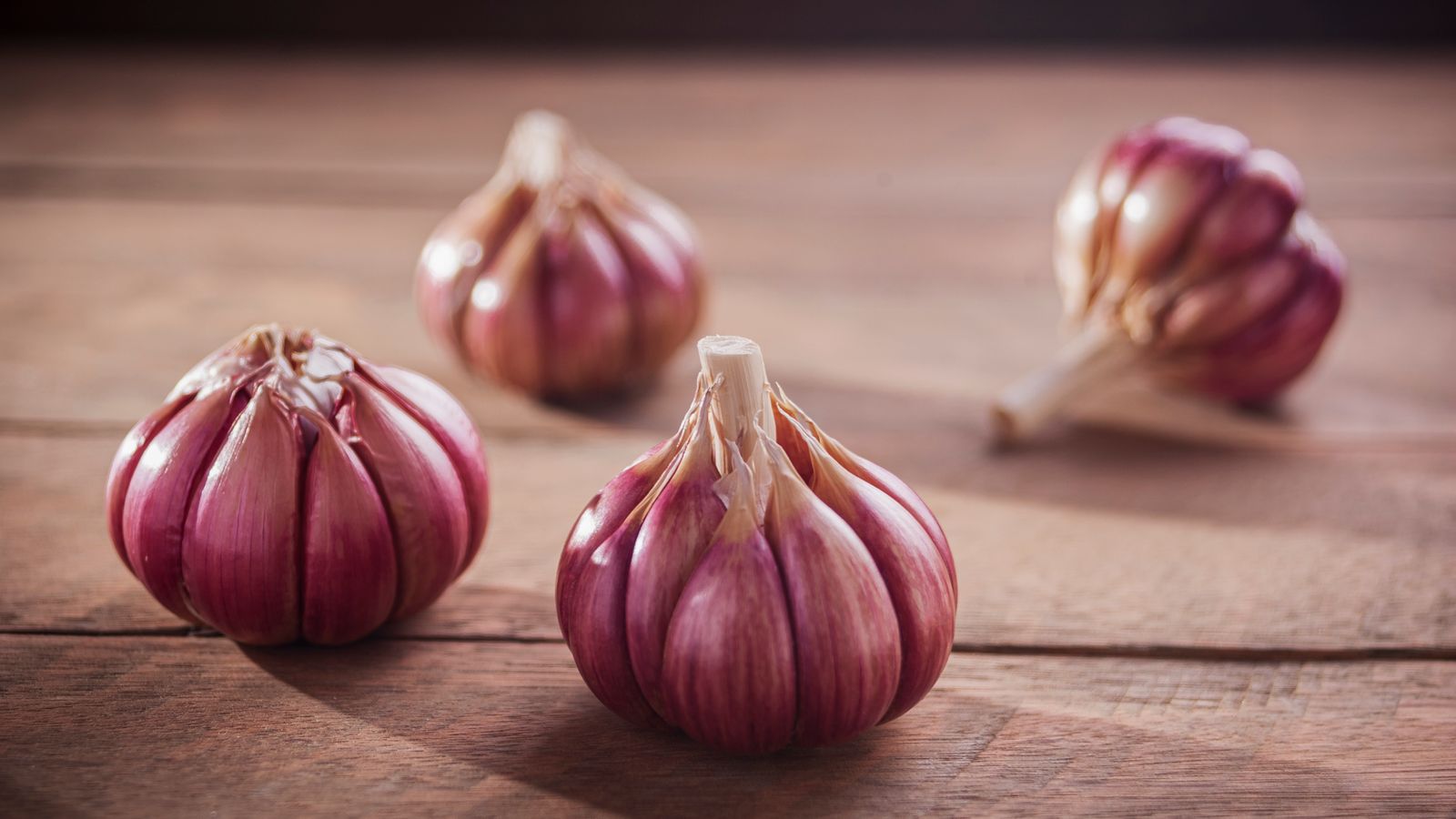
An intact garlic clove is chemically quiet. It contains a sulfur-containing amino acid called alliin, and separately, in a different compartment of the cell, an enzyme called alliinase. Neither does much on its own.
When you crush, chop or chew the clove, you break those compartments open and the enzyme meets its substrate. Within seconds it converts alliin into allicin, which is the compound responsible for garlic's pungency and for most of its studied activity. Allicin is also the reason cut garlic smells completely different from a whole bulb.
Allicin is unstable. It begins breaking down almost immediately into a family of secondary compounds including ajoene, diallyl disulfide and diallyl trisulfide, and it is largely gone within hours. Heat is the other complication: alliinase is destroyed by cooking, so garlic that goes straight from the press into a hot pan produces very little allicin. Letting crushed garlic stand for about ten minutes before it hits the heat allows the conversion to happen first, and the resulting compounds survive cooking far better than the enzyme does. Our guide to garlic water and the ten minute rule covers that chemistry in more detail.
Aged garlic extract is a different animal again. Ageing sliced garlic in dilute ethanol over many months converts the harsh compounds into stable, water soluble ones, chiefly S-allyl cysteine. It is odourless, gentler on the stomach, and it is what a good deal of the supplement research has actually used. It is not simply concentrated raw garlic.

What does the evidence actually support?
Here is an honest scorecard. The grades reflect the quality and consistency of human trial evidence, not enthusiasm.
| Claim | Strength of evidence | The honest version |
|---|---|---|
| Lowers blood pressure | Reasonable | Around 8 mmHg systolic in people already hypertensive, using standardised extracts. Minimal effect if your blood pressure is normal. |
| Lowers cholesterol | Mixed | Early meta-analyses were positive, but a six month trial published in the Archives of Internal Medicine in 2007 found no LDL effect from raw garlic or from supplements. |
| Affects platelet stickiness | Real, but a caution | Measurable in studies. This is why it interacts with blood thinners and surgery, not a reason to self-treat. |
| Prevents or shortens colds | Weak | One small trial is quoted endlessly. Cochrane reviewers have repeatedly called the evidence insufficient. |
| Kills bacteria and fungi | Misleading | True in a petri dish. A petri dish is not a person, and eating garlic does not produce antibiotic concentrations in your tissues. |
| Reduces cancer risk | Observational only | Populations eating more allium vegetables show lower rates of some cancers. That is association, and people who eat lots of garlic differ in many other ways. |
| Removes arterial calcium or plaque | None | No food does this. Established calcification is not reversed by diet. |
| Detoxes the body | None | Your liver and kidneys do this. Detox is a marketing word, not a physiological process. |
Notice the shape of that table. The one claim with decent support is also the most boring one, and it comes with a condition attached. That pattern is typical of food and health research, and it is worth remembering the next time you read that a single ingredient transforms your wellbeing.
Which form of garlic gives you the most?
This is where most people go wrong, because these products are not interchangeable.
| Form | Main active compounds | Notes |
|---|---|---|
| Raw, crushed, rested 10 minutes | Allicin, then its breakdown products | Highest allicin yield. Harshest on the stomach and the breath. |
| Cooked straight after crushing | Very little | Heat destroys alliinase before it can work. Still a fine food, just not an active one. |
| Garlic powder tablets | Alliin plus alliinase, if enteric coated | Allicin yield varies hugely between brands. Look for a stated allicin potential. |
| Aged garlic extract | S-allyl cysteine | Odourless, well tolerated, and the form used in much of the cardiovascular research. |
| Garlic oil | Sulfides, no allicin | Steam distilled. A different chemical profile again. |
| Black garlic | Melanoidins, S-allyl cysteine | Delicious. Very little research on health outcomes. |
The practical rule
If you are eating garlic as food, crush it and let it sit for ten minutes before cooking. It costs nothing and it is the single highest-yield habit. If you are taking garlic as a supplement for a specific reason, choose a standardised product and tell your GP or pharmacist you are taking it, because that is the version most likely to interact with medication.
How much garlic, and does it have to be raw?
Trials showing a blood pressure effect have typically used standardised supplements providing the equivalent of roughly one to two cloves per day, often as aged garlic extract at doses in the region of 600 to 1200 mg daily, taken consistently for eight to twelve weeks. Two points follow from that.
First, consistency matters more than quantity. A single enormous garlicky meal does nothing. The studied effect comes from daily intake over weeks. Second, you cannot reliably reach a research dose by cooking, because the allicin yield of home cooked garlic is so variable. That is not an argument for supplements over food, it is an argument for being realistic about what a Sunday roast is doing for you.
Raw is more potent, but it is also much harsher, and there is little point forcing down raw garlic if it gives you reflux for the rest of the day. Eating garlic generously as part of a diet with plenty of vegetables is a perfectly good position to land on, without pretending it is a treatment.

Four garlic myths worth retiring
Myth one: garlic is a natural blood thinner you should take for your heart
Garlic does have a measurable effect on platelet aggregation. But describing that as a benefit you should pursue confuses a side effect with a treatment. Nobody is prescribed a food because it makes bleeding slightly more likely. The correct response to this finding is caution if you take anticoagulants or antiplatelets, or if you are heading for surgery, not enthusiasm.
Myth two: garlic clears calcium and plaque out of your arteries
Arterial calcification is structural. It is not dissolved by a food, and there is no mechanism by which crushed garlic could remove it. Some research has looked at whether aged garlic extract slows the progression of calcium scores, which is a very different and much more modest question, and it remains an open one. Slowing a process is not the same as reversing it.
Myth three: garlic boosts your immune system
The phrase itself is close to meaningless. An immune system that is genuinely boosted is an immune system attacking your own tissue. What people mean is fewer or shorter infections, and for that the garlic evidence is weak and inconsistent. Sleep, vaccination and not smoking do far more.
Myth four: garlic is nature's antibiotic and can replace one
Allicin does kill bacteria in a laboratory dish, including some resistant strains. That does not transfer to the human body, where the compound is degraded and diluted long before it reaches infected tissue at anything like an effective concentration. Treating a real bacterial infection with garlic instead of a prescribed antibiotic is genuinely dangerous.
Safety: who should be careful with garlic supplements
- Anyone on warfarin, clopidogrel, aspirin or another anticoagulant or antiplatelet. Garlic supplements may add to the effect. Check with your GP or pharmacist before starting.
- Anyone due surgery or a dental extraction. Standard advice is to stop garlic supplements 7 to 10 days beforehand. Tell your surgical team you were taking them.
- People taking certain antiretrovirals, notably saquinavir, where garlic can reduce drug levels.
- Reflux, gastritis and IBS. Garlic is high in fructans and is a common trigger. Raw garlic is the worst offender.
- Never apply raw garlic to skin or scalp. It is a well documented cause of chemical burns, with published case reports of second degree burns from garlic left in contact with skin.
- Never substitute garlic for prescribed treatment. Raised blood pressure and raised cholesterol cause no symptoms at all until they have already done damage.

Does garlic do anything for your hair?
Short answer: eating it, no. There is no evidence that dietary garlic changes hair growth or density, and any nutrition benefit comes from eating well generally rather than from one bulb.
The folklore usually traces back to a single small study in which a prepared garlic gel was used alongside a prescribed topical corticosteroid in alopecia areata, an autoimmune condition, and appeared to improve the response. That is a real finding, but note what it is not. It was a formulated gel rather than a kitchen clove, it was an add-on to a prescribed medicine rather than a replacement for one, and it was in a specific autoimmune condition rather than general thinning. Alopecia areata needs a GP or dermatologist, not a home remedy.
What is genuinely worth avoiding is the advice, still circulating widely, to rub crushed raw garlic into a thinning patch. Raw garlic held against skin causes chemical burns, and burning the skin over a follicle is a good way to make things permanently worse rather than better.
If your hair is shedding, the useful first step is working out why. Our guides to telogen effluvium and its triggers and to what hair vitamins can and cannot do are more useful starting points than any single ingredient, and our honest look at biotin applies the same evidence-first approach to the nutrient people ask about most.

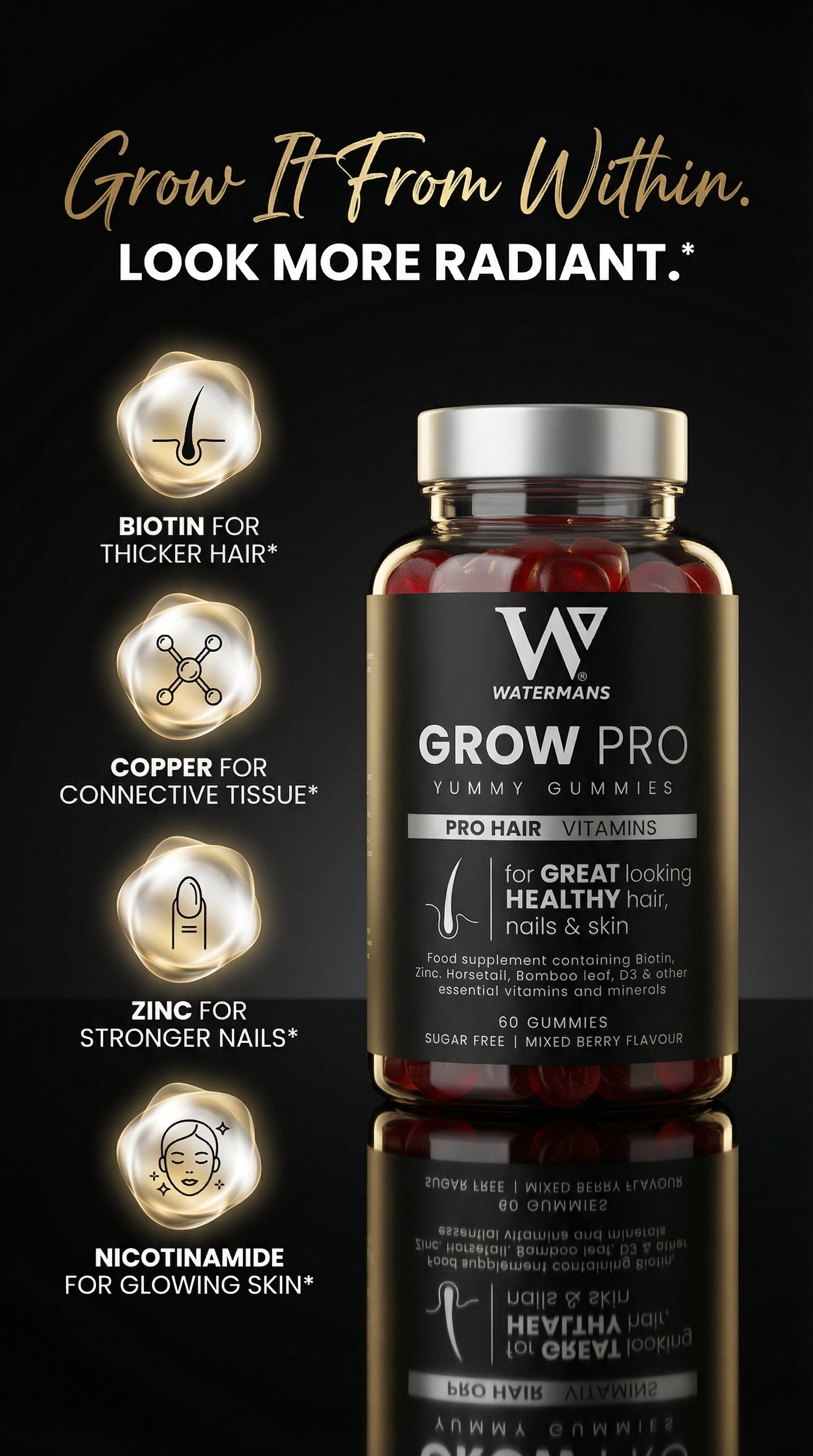
GrowPro® Hair, Skin & Nails Gummies
If you would rather take something with an actual regulated basis than a garlic capsule bought on a claim, these are sugar free vegan gummies with biotin, zinc and selenium, nutrients that contribute to the maintenance of normal hair. They are a food supplement, not a medicine, and they do not treat hair loss or any medical condition. A varied diet comes first.
View GrowPro® Gummies
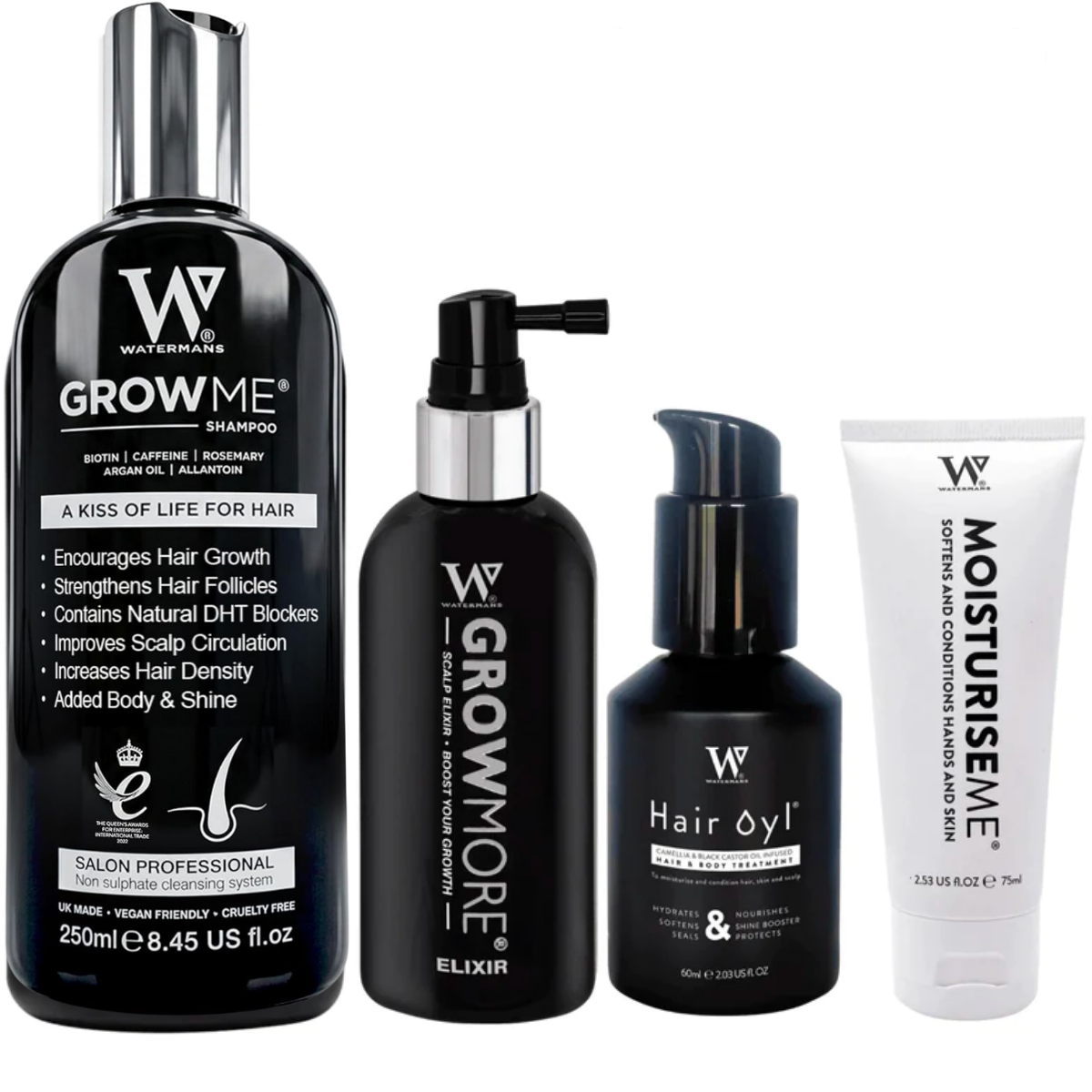
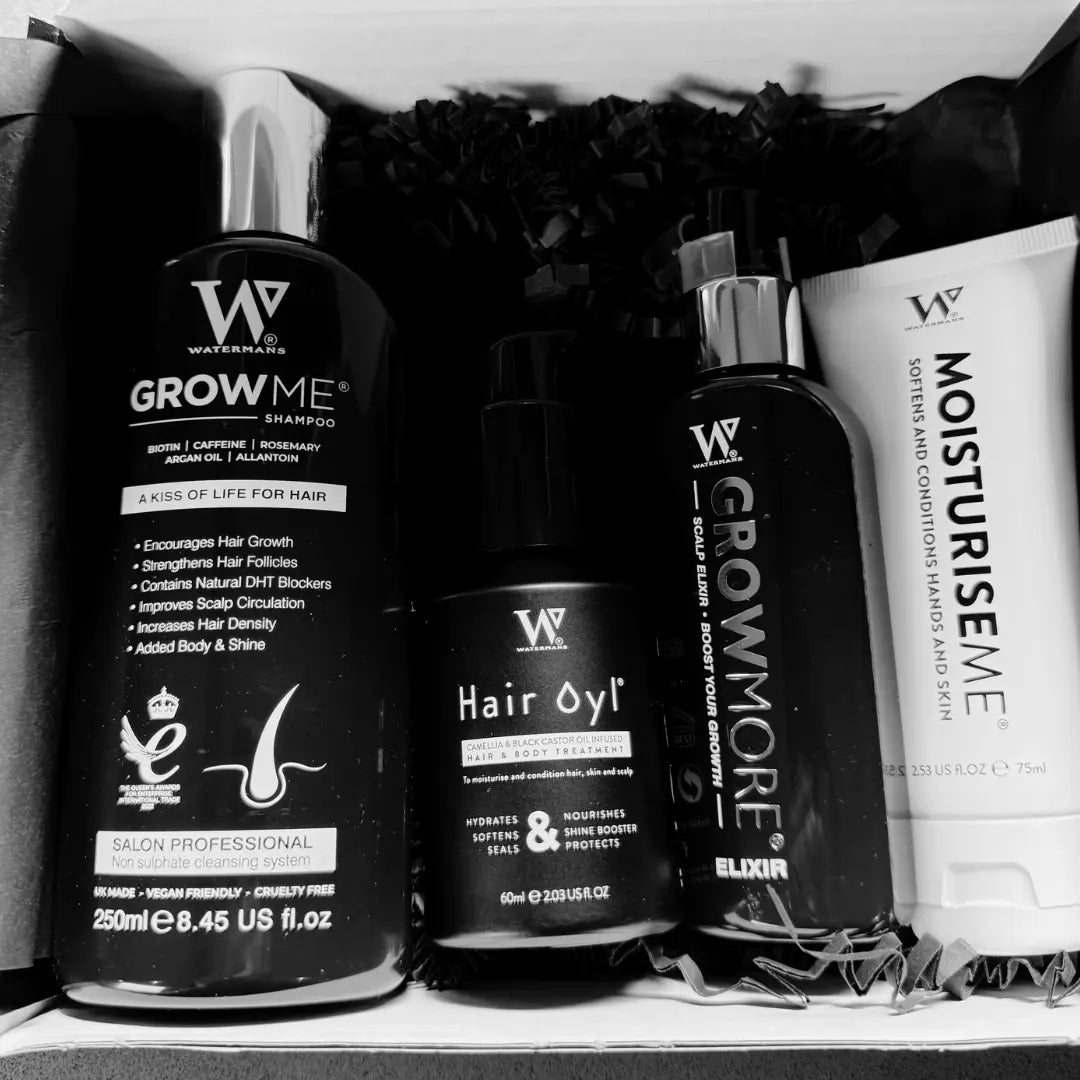
Grow Me® Shampoo, the formulated alternative to a kitchen remedy
A sulfate free everyday shampoo with rosemary, caffeine, biotin and niacinamide, formulated and skin tested for use on the scalp, which is precisely what crushed raw garlic is not. It cleanses without stripping and leaves hair looking fuller. A cosmetic product for the look and feel of your hair, not a treatment for hair loss.
View Grow Me® ShampooFrequently asked questions
How much garlic should I eat a day?
There is no official recommendation, because garlic is a food rather than a nutrient with a set requirement. Research showing a blood pressure effect has generally used the equivalent of one to two cloves daily, taken consistently over eight to twelve weeks. Eating garlic regularly as part of a vegetable-rich diet is sensible. Forcing down large amounts of raw garlic is not, and it commonly causes reflux and stomach upset.
Is raw garlic better than cooked garlic?
For allicin yield, yes. Heat destroys the enzyme that makes allicin, so garlic cooked immediately after crushing produces very little. The compromise that works is to crush or chop the garlic, leave it for about ten minutes so the conversion happens, and then cook. Cooked garlic is still a good food, it just is not doing what the supplement studies were measuring.
Do garlic supplements work as well as fresh garlic?
They are different products rather than stronger or weaker versions of the same thing. Aged garlic extract contains S-allyl cysteine and almost no allicin, garlic oil contains sulfides and no allicin, and powder tablets vary enormously in how much allicin they can actually release. If you take one, choose a standardised product that states its allicin potential or names its extract type, and tell your pharmacist.
Can garlic replace my blood pressure or cholesterol medication?
No, and this is the most important line in this article. The blood pressure effect seen in trials is modest and it is nowhere near equivalent to prescribed treatment. Raised blood pressure and cholesterol are silent until they cause a heart attack or stroke, so stopping medication in favour of a food carries real risk. If you want to add garlic alongside your treatment, discuss it with your GP first.
Does garlic thin your blood?
It has a measurable effect on platelet stickiness, which is why it can add to the effect of anticoagulants and antiplatelets and why supplements are usually stopped 7 to 10 days before surgery. It is not a substitute for a prescribed blood thinner, and the effect is a reason for caution rather than something to seek out.
Does garlic get rid of plaque in the arteries?
No. Established arterial calcification is structural and is not reversed by any food. Some studies have investigated whether aged garlic extract slows the progression of calcium scores, which is a much narrower question and remains unsettled. Claims that garlic cleans out arteries are not supported.
How do I stop garlic breath?
The odour comes largely from allyl methyl sulfide, which is absorbed and released through the lungs, so brushing your teeth only partly helps. Raw apple, lettuce, mint and green tea have all been shown to reduce it, and drinking milk with the meal helps too. Aged garlic extract is the odourless supplement option if this is the sticking point.
Can I put garlic on my scalp for hair growth?
Please do not. Raw garlic in prolonged contact with skin causes chemical burns, and there are published case reports of second degree burns from exactly this practice. The one study people cite used a prepared gel alongside a prescribed corticosteroid for alopecia areata, which is an autoimmune condition that needs a GP or dermatologist. Damaging the skin over a follicle risks making thinning permanently worse.
The bottom line
Garlic earns its place in your kitchen on flavour alone, and it comes with a genuine, if modest, blood pressure benefit for people who already have raised readings and who take it consistently in a standardised form. That is a reasonable thing to know. It is not a blood thinner you should be seeking out, it does not clean your arteries, it will not replace an antibiotic, and it does nothing for your hair except burn your scalp if you are unwise enough to apply it. Crush it, wait ten minutes, cook with it generously, and keep your expectations proportionate to the evidence.
Watermans has been making vegan, UK-made hair care since 2012, with over 5 million bottles sold. Our products are cosmetics for the look and feel of your hair, and we would always rather point you to a GP than to a home remedy. Read our guide to garlic water and the ten minute rule next.