

Shampoo Ingredients Explained: Sulphates, Silicones and What Matters
Sulphates and silicones are not villains, and most people do not need to avoid either. Sulphates are detergents that clean the scalp, and the harsher ones can strip natural oils and fade colour. Silicones are smoothing agents that coat the hair, and only some of them build up. The genuinely useful skill is not memorising a banned list, it is being able to read an ingredients list and work out what a bottle will actually do to your hair. This guide covers shampoo, conditioner, masks and oils, and what each ingredient class is really for.
Last updated: August 2026
Key takeaways
- Sulphates do not cause hair loss. They can strip lipids from the hair and fade colour faster, which is a cosmetic problem, not a follicle one.
- Sodium lauryl sulfate (SLS) and sodium laureth sulfate (SLES) are not the same. SLES is meaningfully milder, and it is the one in most mainstream shampoos.
- Silicones ending in -cone, -conol or -xane are the smoothing agents. Ones with a PEG or PPG prefix rinse out in water, so they cannot build up.
- The curly girl argument is more logical than it sounds: avoid silicones so you never need a harsh sulphate to remove them. It only works if you do both halves.
- Ingredients are listed in descending order of concentration down to 1 percent, so anything after the preservatives is present in tiny amounts.
- Conditioner and a hair mask do different jobs. Conditioner is a daily surface fix, a mask is a weekly saturation treatment.

What do sulphates actually do in shampoo?
Sulphates are anionic surfactants, which means one end of the molecule attracts water and the other attracts oil. That dual nature is what lets them lift sebum, sweat, pollution and styling product off the scalp and carry it down the plughole. They are also cheap, stable, and produce the thick lather most people unconsciously read as cleanliness.
Nothing about that is sinister. The problem is that the strongest sulphates are not selective. They remove the oil you want gone and a proportion of the lipid layer that keeps the cuticle smooth and water resistant. On an oily scalp with short hair, that barely matters. On long, dry, coloured or coily hair, it matters a great deal, because the ends are years old and cannot replace what is taken.
Are sulphates bad for your hair?
Sulphates are not bad for hair in any general sense, and the claim that they cause hair loss has no support. They are surface cleansers that sit on the scalp for around 60 seconds and rinse away. What they can do is dry the strand, roughen the cuticle, and accelerate colour fade, and how much depends entirely on which sulphate is in the bottle.
| Cleanser on the label | Strength | Best suited to |
|---|---|---|
| Sodium lauryl sulfate (SLS) | Strongest, most irritating of the common options | Very oily scalps, occasional clarifying. Used in dermatology research as a standard irritant, which tells you something. |
| Sodium laureth sulfate (SLES) | Strong but noticeably milder than SLS | Normal to oily hair. The workhorse in most high-street shampoos. |
| Cocamidopropyl betaine | Mild, amphoteric, usually a secondary cleanser | Almost everyone. Softens the effect of whatever it is paired with. |
| Sodium cocoyl isethionate | Mild, lathers well for a gentle surfactant | Dry, coloured, curly and coily hair that still wants a proper foam. |
| Coco glucoside, decyl glucoside, lauryl glucoside | Very mild, low lather | Sensitive scalps and very dry hair. Takes more effort to rinse product out. |
Read that table again and the practical conclusion is obvious: "sulphate free" is a blunt instrument. A shampoo built on sodium cocoyl isethionate and cocamidopropyl betaine is gentler than one built on SLS, and that is the real difference. If you want the fuller case for making the switch, we cover it in why you should switch to sulphate-free shampoo, and the same logic applies to gentle formulas for small children in is baby shampoo sulfate-free.
What do silicones do, and do they really cause build-up?
Silicones are synthetic polymers that form a thin, flexible film on the hair surface. That film fills in gaps in a roughened cuticle, so light reflects evenly and hair looks glossy, strands slide past each other instead of catching, and detangling gets dramatically easier. They also slow water loss and reduce the swelling and shrinking cycle that roughens hair over time.
Build-up is real but heavily overstated, and it depends on which silicone you have. Not all of them are the same molecule doing the same thing.
| Silicone type | Examples | Builds up? |
|---|---|---|
| Non-soluble | Dimethicone, dimethiconol | Yes, if you never use a surfactant shampoo. A normal wash removes it. |
| Volatile | Cyclopentasiloxane, cyclomethicone | No. They evaporate off the hair within minutes of application. |
| Amino-functional | Amodimethicone, bis-aminopropyl dimethicone | Rarely. They attach selectively to damaged, negatively charged areas rather than coating everything. |
| Water soluble | PEG-12 dimethicone, PPG-, any -cone with a PEG or PPG prefix | No. They rinse out in plain water. |
The rule that covers 95 percent of cases: if the ingredient ends in -cone, -conol or -xane it is a silicone. If it has PEG or PPG in front of it, it washes out in water. If it starts with amo-, it is the selective kind. Everything else needs a surfactant shampoo to remove, which is exactly what shampoo is for.
Why do curly hair guides tell you to avoid both together?
The curly girl argument is far more coherent than the way it usually gets repeated online. The reasoning is a chain, not two separate bans: non-soluble silicones need a strong detergent to remove, strong detergents strip curly hair badly, curly hair is already the driest hair type because sebum struggles to travel down a coiled strand. So the fix is to remove the first link. Use no non-soluble silicones, and you never need the harsh shampoo that removes them.
That logic holds. What does not hold is doing half of it. Going sulphate free while still using dimethicone-heavy conditioners and serums is the one combination that genuinely produces the limp, coated, dull hair that people blame on silicones. Either avoid both, or use both and wash properly. The incoherent middle is where the complaints come from.

What should curly, coily and afro hair look for on a label?
Coiled and coily hair has a structural disadvantage that has nothing to do with product marketing. Sebum travels easily down a straight fibre and struggles to travel down a spiral, so the ends are chronically drier than the scalp regardless of how well you look after them. The cuticle also lifts more at every bend in the curl, which means more moisture loss and more friction between strands.
That points to a specific shopping list: a mild primary surfactant, generous conditioning agents, slip so you can detangle without snapping the hair, and no need for aggressive clarifying. Our full routine guides cover this in more depth in the best products for afro hair growth and how to make black and afro hair grow faster.

Curly Hair Shampoo and Curl Definition Conditioner Set, GBP 24.95
A sulphate-free cleanse and condition pair built for curly, coily and afro textures, with enough slip to detangle without snapping the hair. Supports defined, softer-feeling curls and helps reduce breakage during washing and combing.
Vegan and made in the UK.
Which shampoo is right for colour-treated hair?
Colour fades for three reasons: dye molecules leaching out through a lifted cuticle, surfactants speeding that up, and hot water opening the cuticle wider. Only one of those three is about the shampoo, which is why people who buy an expensive colour-safe shampoo and keep washing in very hot water still see their colour go.
- Drop the water temperature. Warm rather than hot, and a cool final rinse. This is free and does more than most products.
- Choose a mild surfactant base. Cocamidopropyl betaine, sodium cocoyl isethionate or glucosides rather than SLS.
- Wash less often. Fade is per wash, not per day, so stretching from five washes a week to three cuts the fade rate directly.
- Keep silicones if they help. A smoother cuticle holds pigment better, and the anti-silicone advice is not a colour rule.
- Protect from heat and sun. Ultraviolet degrades both natural and artificial pigment.
If colouring has left your hair fragile as well as faded, recovering hair health after colouring covers the repair side of it.
What is the difference between conditioner and a hair mask?
Conditioner and a hair mask contain broadly similar ingredient families and differ in three practical ways: concentration, contact time, and where you apply them. Conditioner is a light daily surface treatment left on for one to three minutes. A mask is a heavier, more concentrated treatment left on for 10 to 20 minutes, used weekly.
Both work mainly through cationic conditioning agents, which carry a positive charge and are attracted to the negative charge of damaged hair. That is why conditioner deposits itself where the hair is most worn, and why it is largely wasted on the roots, where the hair is newest and least damaged. Most people also apply conditioner to hair that is far too wet, which dilutes it to almost nothing. Squeeze the water out first. Our guide on how to use conditioner properly covers the technique in full.

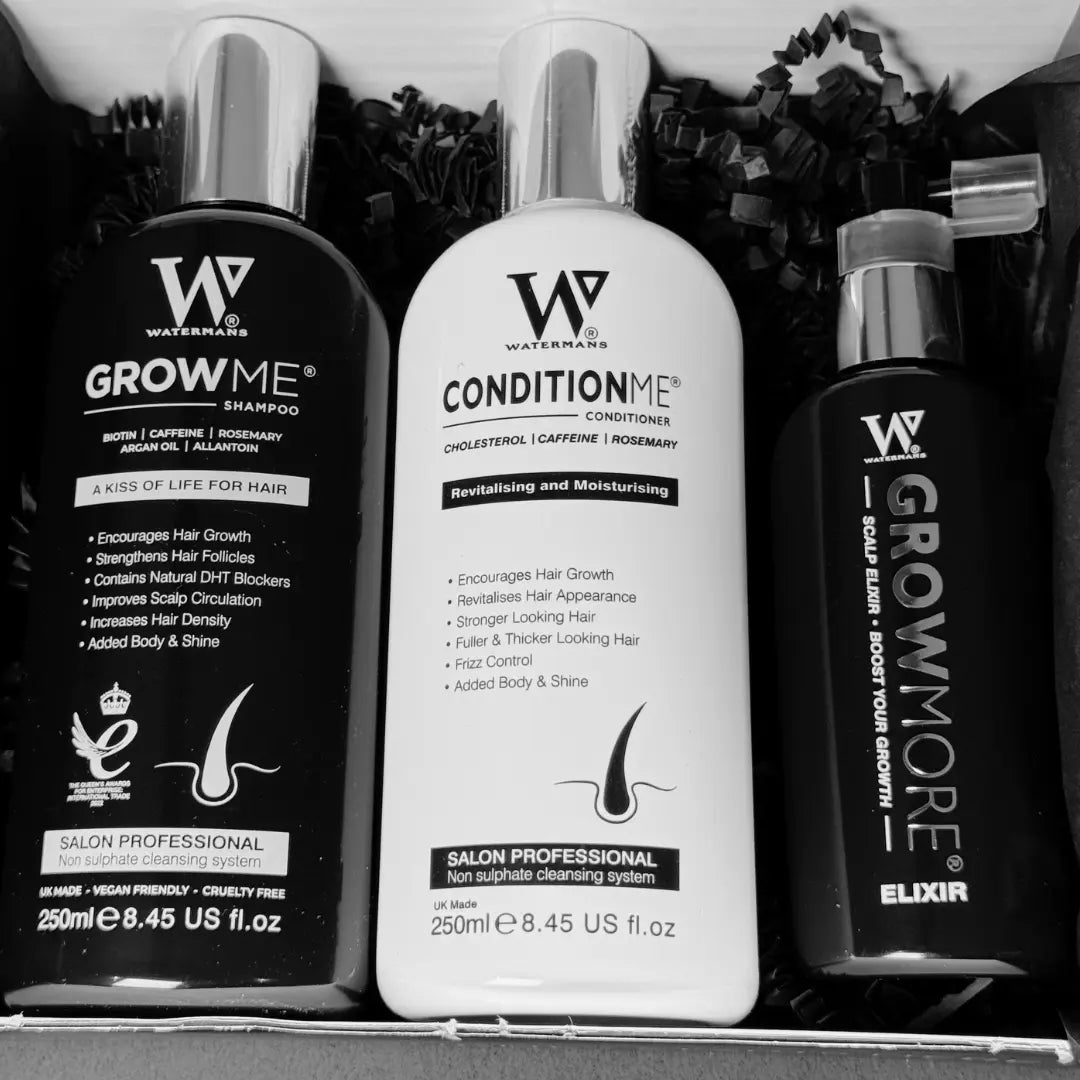
Condition Me Hair Growth Conditioner, GBP 13.95
A breakage-defence conditioner formulated with cholesterol, shea butter, glycerin, hydrolysed lupine protein and niacinamide. Apply from mid-length to ends on squeezed-out hair, comb through, and leave two to three minutes for detangling and smoother, fuller-looking hair.
Sulphate-free, vegan and UK-made.
Where does hair oil fit, and when does it backfire?
Hair oil does two genuinely different jobs depending on when you apply it, and confusing them is why people get poor results. Applied to dry ends after washing, oil is a sealant that reduces friction and adds shine. Applied before washing, it does something more interesting: it reduces how much water the hair absorbs during the wash, and that repeated swell-and-shrink cycle is a real source of cumulative damage.
Coconut oil is the most studied here. Research published in the Journal of Cosmetic Science in 2003 found that coconut oil reduced protein loss in hair both before and after washing, which was attributed to its lauric acid content and low molecular weight letting it penetrate the shaft rather than just sit on it. Mineral oil and sunflower oil did not show the same effect in that work. It is one study, on hair tresses rather than a large human trial, so treat it as a good reason to try pre-wash oiling rather than as proof of anything dramatic.
Where oil backfires is on the scalp. Malassezia, the yeast involved in dandruff and seborrheic dermatitis, feeds on skin lipids, so heavily oiling an already flaky scalp can make flaking worse rather than soothing it. Oil the lengths, go light on the roots, and if your scalp is persistently itchy and flaking, that is a scalp condition to treat rather than an oil deficiency. Our guide on argan oil for hair covers the lighter, everyday option.

How do you read a shampoo label in 60 seconds?
Cosmetic ingredients are listed in descending order of concentration until you reach 1 percent, after which the manufacturer can list them in any order. That single rule tells you almost everything, because it means the first five ingredients are the product and most of what follows is present in trace amounts.
- Ingredient one is almost always water (aqua). If it is not, you are holding something unusual, usually an oil or a cleansing balm.
- Ingredients two to four are the cleansing system. Find them in the surfactant table above and you know how strong the shampoo is.
- Look for the -cone, -conol and -xane endings to see whether it contains silicones, and check for a PEG or PPG prefix.
- Find the preservatives (phenoxyethanol, sodium benzoate, benzyl alcohol). Almost everything listed after them is below 1 percent.
- Treat the hero actives with realism. If biotin, caffeine or rosemary appears after the preservatives, it is present in a small amount. That is normal and not automatically a scandal, but it does mean the marketing is running ahead of the formula.
- Ignore the front of the bottle. "Natural", "clean", "detox" and "chemical free" have no legal definitions in UK cosmetics.
Which ingredients matter if your hair is thinning?
This is where expectations need to be set honestly. A shampoo sits on the scalp for around a minute and rinses off, so no shampoo can change the hormonal or genetic processes behind pattern hair loss. What a well-formulated shampoo can do is stop making things worse: clean without stripping, reduce breakage so the hair you have keeps its length, and keep the scalp comfortable.
The ingredients with the most interesting research behind them for hair are caffeine, which has been studied for its effects on hair follicles in laboratory settings, biotin, which is genuinely important in keratin production but only helps if you are actually deficient, and rosemary, which has one small comparative trial behind it. That evidence is early and mostly about the ingredient rather than about any finished product, which is an important distinction the industry routinely blurs. If your hair is thinning noticeably, working out the actual cause matters far more than the shampoo aisle, and sudden or patchy loss should go to a GP.

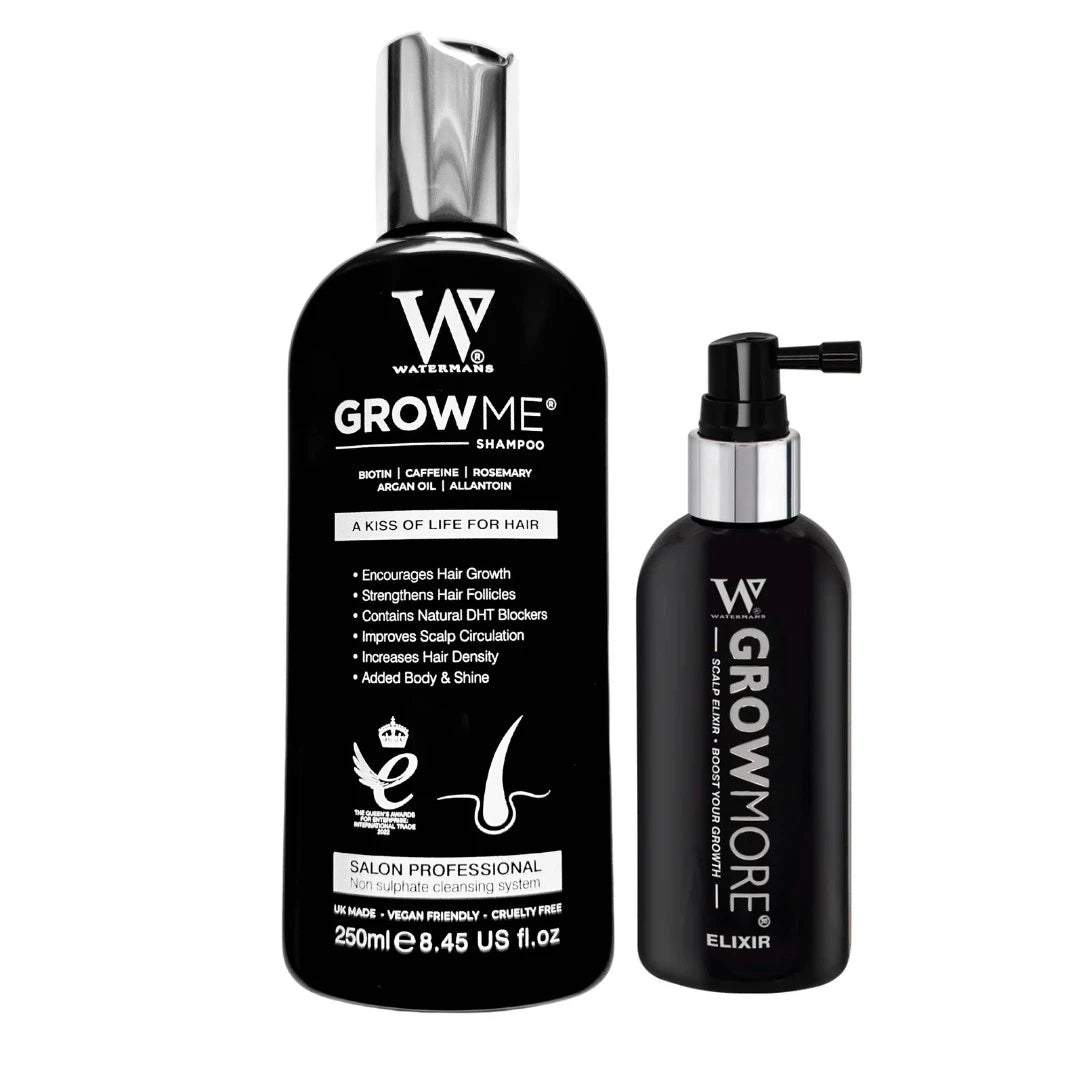
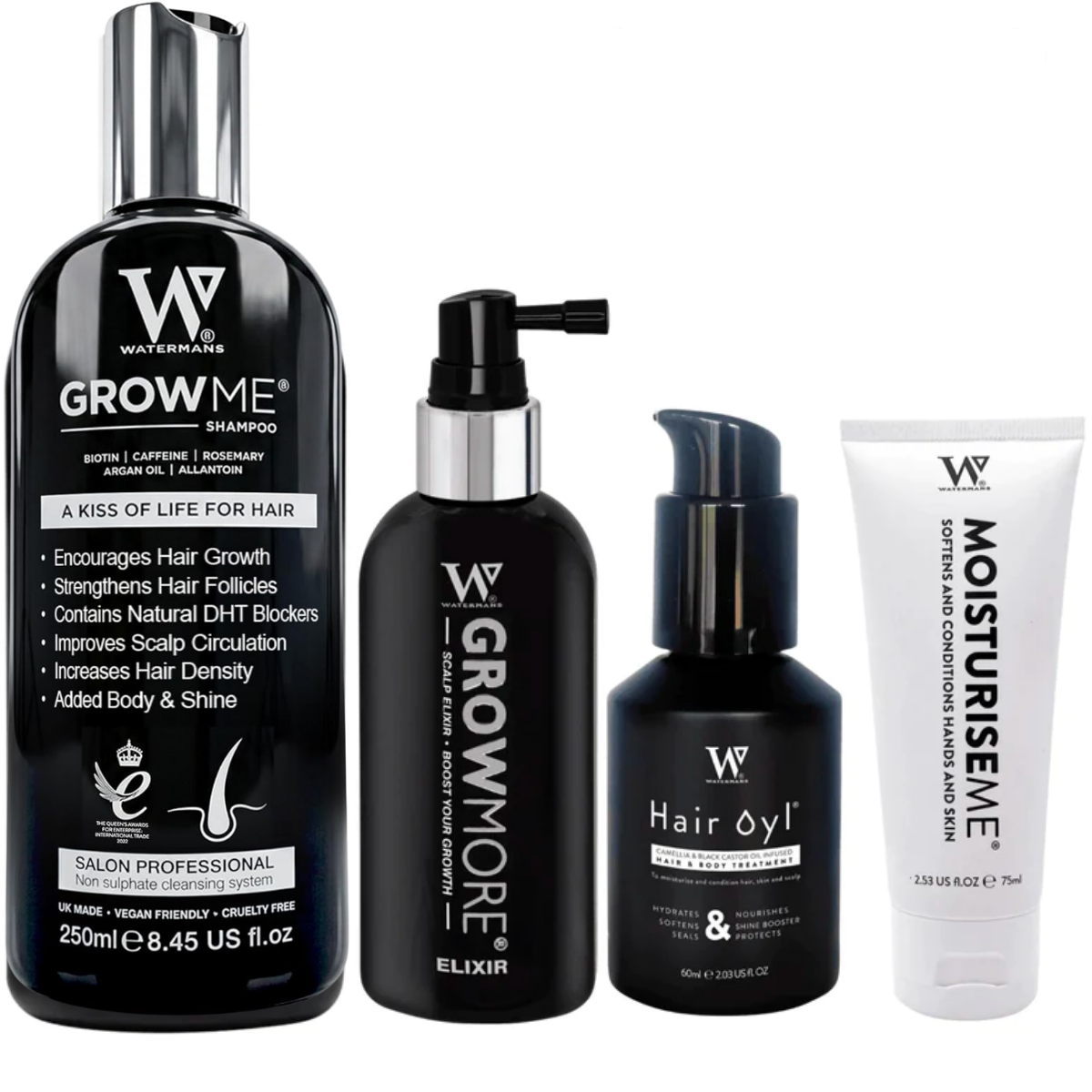
Grow Me Hair Growth Shampoo, GBP 14.95
A sulphate-free shampoo formulated with biotin, caffeine, rosemary, niacinamide and hydrolysed lupine protein. It cleanses without stripping and helps reduce breakage for fuller-looking hair. Cosmetic care only. It is not a treatment for hair loss and it will not change the cause of thinning.
Vegan, UK-made, and part of a range that has sold over 5 million bottles since 2012.

The short version
Match the cleanser to your scalp, not to a hashtag. Oily roots and short hair can take a stronger sulphate happily. Dry, long, coloured, curly or coily hair does better on a mild surfactant base. Silicones are a tool, and if you use the non-soluble ones you need a shampoo capable of removing them. Condition on squeezed-out hair from the mid-lengths down, mask once a week, and oil the lengths rather than the scalp. That is genuinely most of it.
For the chemical side of smoothing services, including why "formaldehyde free" so often is not, see our companion guide on whether keratin treatments are safe.
Want a sulphate-free routine that reads well on the back of the bottle? Watermans makes vegan, UK-made hair care and has sold over 5 million bottles since 2012. Pair Grow Me shampoo with Condition Me conditioner, or start with the curly hair set for coily and afro textures.
Cosmetic hair care only. For sudden, patchy or rapidly worsening hair loss, or a persistently sore or flaking scalp, see your GP.
Frequently asked questions about shampoo ingredients
Do sulphates cause hair loss?
No. Sulphates are surface cleansers that sit on the scalp for about a minute and rinse away, and there is no evidence they affect hair follicles. They can dry the hair shaft, roughen the cuticle and speed up colour fade, which causes breakage rather than loss from the root.
What is the difference between SLS and SLES?
Sodium lauryl sulfate (SLS) is the harsher of the two and is used in dermatology research as a standard skin irritant. Sodium laureth sulfate (SLES) is ethoxylated, which makes the molecule larger and meaningfully milder. Most mainstream shampoos use SLES rather than SLS.
How do I know if a product contains silicone?
Look for ingredients ending in -cone, -conol or -xane, such as dimethicone, dimethiconol and cyclopentasiloxane. A PEG or PPG prefix means the silicone is water soluble and rinses out. Names starting with amo-, such as amodimethicone, attach selectively to damaged areas and rarely build up.
Do I need to avoid silicones if I have curly hair?
Only if you are also avoiding strong sulphates. The curly girl logic is a chain: non-soluble silicones need harsh detergents to remove, and harsh detergents dry curly hair. Doing half of it, avoiding sulphates while still using dimethicone, is what actually produces limp, coated hair.
What order are shampoo ingredients listed in?
Cosmetic ingredients are listed in descending order of concentration until 1 percent, after which they may appear in any order. So the first five entries are effectively the product, and anything listed after the preservatives such as phenoxyethanol is present in trace amounts.
Is a hair mask better than conditioner?
They do different jobs rather than one being better. Conditioner is a light daily treatment left on for one to three minutes to smooth the cuticle and aid detangling. A mask is more concentrated, left on for 10 to 20 minutes, and used weekly for dryness and damage.
Should I put oil on my scalp or just my hair?
Concentrate oil on the lengths and ends and go light at the roots. Malassezia, the yeast involved in dandruff and seborrheic dermatitis, feeds on skin lipids, so heavily oiling a flaking scalp can worsen the flaking rather than soothe it.
Does pre-wash oiling actually protect hair?
There is reasonable support for it. Research published in the Journal of Cosmetic Science in 2003 found coconut oil reduced protein loss in hair both before and after washing, attributed to lauric acid penetrating the shaft. Mineral and sunflower oil did not show the same effect in that study.