

Gallstones Symptoms: What the Pain Feels Like and When It Is Urgent
Last updated: August 2026
Classic gallstone pain is a severe, steady ache high in the centre or right upper abdomen, often spreading to the right shoulder blade, lasting from 30 minutes to several hours, and frequently starting in the evening or after a fatty meal. It is not a crampy come-and-go pain despite being called biliary colic. Most gallstones cause no symptoms at all and need no treatment. Pain with fever, or with yellowing of the eyes and dark urine, is a medical emergency and needs same-day assessment.
Key takeaways
- Roughly 8 in 10 people with gallstones never develop symptoms, and stones found incidentally on a scan are usually left alone.
- Biliary colic is steady, not colicky. It builds, plateaus for 30 minutes to a few hours, then fades.
- Fever, jaundice or pain lasting more than 6 hours changes the situation from painful to urgent.
- Rapid weight loss is one of the strongest modifiable risk factors, including weight loss on very low calorie diets, weight loss injections and after bariatric surgery.
- Gallbladder flushes do not work. The green objects people find are saponified oil, not stones.
What do gallstones symptoms actually feel like?
The typical episode is a severe, constant pain in the upper abdomen, either in the middle just below the breastbone or under the right ribs, that builds over minutes, holds steady, and then eases. It commonly radiates round to the right shoulder blade, often wakes people in the night, and can come with nausea, sweating and vomiting. Between attacks people usually feel completely normal.
The name biliary colic is misleading. A stone temporarily blocking the gallbladder outlet produces a sustained pain, not the waves people associate with the word colic. If your pain rises and falls every few minutes, gallstones are a less likely explanation.
| Feature | Typical of gallstones | Points elsewhere |
|---|---|---|
| Location | Upper middle or right upper abdomen, under the ribs | Lower abdomen, or shifting around |
| Character | Severe, steady, builds then plateaus | Burning, gnawing, or waves every few minutes |
| Duration | 30 minutes to several hours, then gone | Constant background ache for weeks |
| Radiation | To the right shoulder blade or between the shoulders | Down into the groin, or across the chest with breathlessness |
| Trigger | Often follows a fatty meal, often at night | Relieved by eating, or worse on an empty stomach |
| Between attacks | Completely well | Ongoing bloating, urgency, or altered bowels |
Bloating, burping, indigestion and fatty food intolerance are frequently blamed on the gallbladder, but on their own they are poor predictors, and removing a gallbladder rarely fixes them. If those are your main symptoms, our guide to what pale stools, bloating and nausea can actually mean covers the other conditions worth ruling out.
Get urgent medical help the same day if you have
- Pain lasting more than 6 hours that is not settling
- A temperature, shivering or feeling generally unwell with the pain, which suggests infection of the gallbladder
- Yellowing of the eyes or skin, dark urine or pale stools, which suggests a blocked bile duct
- Severe pain boring through to the back with repeated vomiting, which can indicate pancreatitis
- Confusion or feeling faint alongside fever and jaundice, which is a medical emergency
In the UK, call 111 for advice or 999 if someone is seriously unwell. Do not wait for a routine GP appointment with these features.

How do gallstones actually form?
Around 80 percent of gallstones in the UK are cholesterol stones, and they form when three things line up: bile that is oversaturated with cholesterol relative to the bile salts and phospholipids that keep it dissolved, a gallbladder that empties sluggishly so the bile sits and concentrates, and proteins in the bile that encourage crystals to clump together.
That three-part picture is why single-cause explanations fail. Eating cholesterol is not the driver, and neither is any kind of toxin. The liver secretes cholesterol into bile as a normal disposal route, and the problem is the ratio and the stasis rather than the presence of cholesterol itself.
The other main type, pigment stones, forms from excess bilirubin and is associated with conditions that break down red cells quickly, such as sickle cell disease, and with chronic liver disease.
Why does rapid weight loss cause gallstones?
Rapid weight loss hits both halves of the mechanism at once. Mobilising fat pushes extra cholesterol into bile, and eating very little, especially very little fat, means the gallbladder is not stimulated to contract, so concentrated bile sits still and forms sludge and then stones. It is one of the few gallstone risk factors people actively create for themselves while trying to get healthier.

This matters more now than it did a decade ago, because far more people are losing weight quickly. Three situations carry a recognised increase in gallstone risk:
- Very low calorie diets and crash dieting, particularly where fat intake is minimal.
- Weight loss medications, where gallbladder and biliary problems are listed as recognised effects, largely as a consequence of the speed of weight loss.
- Bariatric surgery, after which gallstone formation is common enough that some patients are given preventive medication.
None of this is a reason to avoid losing weight, and losing excess weight reduces gallstone risk in the long run. It is a reason to do it at a sensible pace, keep some fat in your meals so the gallbladder keeps emptying, and mention any right-sided upper abdominal pain to whoever is supervising the weight loss rather than pushing through it.
The hair connection, and why we are mentioning it
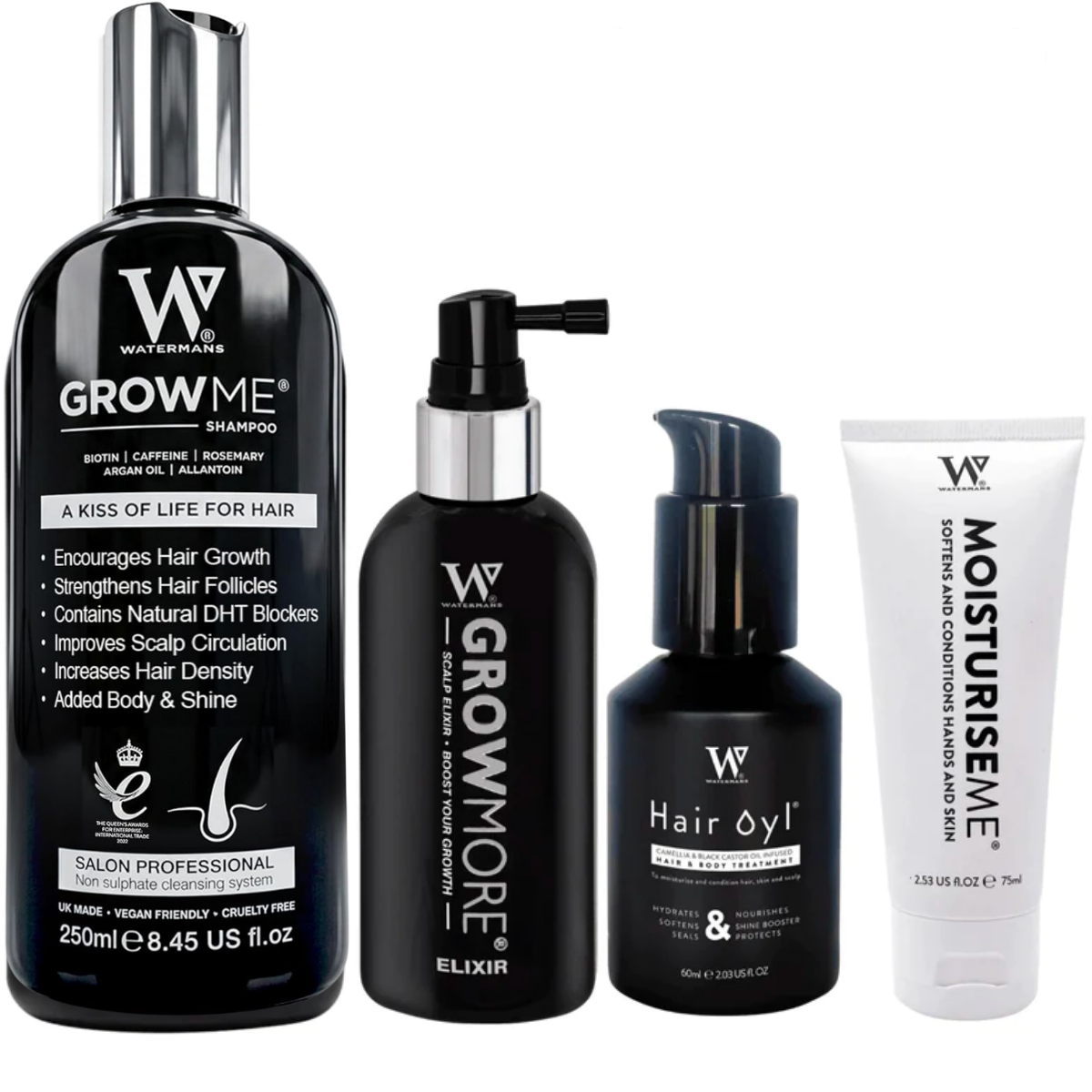
Rapid weight loss is also one of the most reliable triggers of diffuse hair shedding, typically appearing 2 to 4 months after the weight comes off. If you are shedding heavily after a period of fast weight loss, that is telogen effluvium rather than anything to do with your gallbladder, and it usually recovers once intake and weight stabilise. A gentle sulphate-free shampoo such as Grow Me reduces breakage so the hair you still have looks fuller while it recovers. That is a cosmetic benefit and nothing more. It has no effect on gallstones, bile or the liver.
Who is most at risk of gallstones?
Gallstones become more common with age and are roughly two to three times more common in women than in men, largely because oestrogen increases cholesterol secretion into bile and progesterone slows gallbladder emptying. The old teaching aid of the four Fs is crude and unkind, but the risk factors behind it are real.
| Risk factor | Why it matters | Can you change it? |
|---|---|---|
| Female sex and pregnancy | Oestrogen raises biliary cholesterol, progesterone slows emptying | No |
| Age over 40 | Cholesterol saturation of bile rises with age | No |
| Family history | Genetic variation in bile transport | No |
| Obesity and insulin resistance | Raises cholesterol secretion and impairs emptying | Yes, gradually |
| Rapid weight loss | Cholesterol flood plus gallbladder stasis | Yes, pace it |
| Prolonged fasting or skipping meals | Gallbladder does not empty, bile concentrates | Yes |
| Diabetes and high triglycerides | Associated with impaired gallbladder motility | Partly |
| Some medications | Including oestrogen-containing therapies and certain lipid drugs | Discuss with your prescriber |
How are gallstones diagnosed in the UK?
An abdominal ultrasound is the first and usually the only test needed, and it detects gallbladder stones reliably. Blood tests are done alongside it to check liver function, inflammation and pancreatic enzymes, since those are what distinguish simple stones from a blocked duct, an infected gallbladder or pancreatitis.

If the ultrasound is normal but the story is convincing, or if a stone is suspected in the bile duct rather than the gallbladder, further imaging such as MRCP may follow. Stones in the bile duct itself are usually removed endoscopically rather than by removing the gallbladder alone.
What is the treatment for gallstones?
Silent gallstones found by chance are normally left alone, because most never cause trouble and surgery carries its own risks. Once stones have caused a genuine attack, the standard treatment in the UK is keyhole removal of the gallbladder, because attacks tend to recur and complications become more likely with each one.
- Watchful waiting. Appropriate for stones with no symptoms.
- Laparoscopic cholecystectomy. Removal of the gallbladder, usually a day case or one night in hospital, and the definitive treatment.
- Bile acid dissolution therapy. Occasionally used when surgery is not an option. It works slowly, only on small cholesterol stones, and stones frequently return afterwards.
- Preventive medication during rapid weight loss. Sometimes prescribed around bariatric surgery to reduce stone formation.
You can live perfectly well without a gallbladder. Bile simply drips continuously into the intestine instead of being stored and released in a bolus. A minority of people get looser stools afterwards, particularly after fatty meals, and that usually settles over a few months. If it does not, it is treatable, and worth raising rather than living with.
What should you eat if you have gallstones?
There is no diet that dissolves gallstones, but eating regularly and keeping moderate fat in your meals keeps the gallbladder emptying, which is the opposite of the advice people often assume. A Mediterranean style pattern, high in fibre, vegetables, unsaturated fats and wholegrains, is associated with lower gallstone risk in observational studies.

- Do not skip meals for long stretches. Extended fasting lets bile sit and concentrate.
- Keep some fat in each meal. Fat is the signal that makes the gallbladder contract and empty.
- Aim for gradual weight loss rather than the fastest possible route.
- Eat plenty of fibre from vegetables, pulses and wholegrains.
- Stay active. Regular physical activity is associated with lower gallstone risk.
- Be careful with supplements. Several herbal liver and gallbladder products have been linked to liver injury, and none is shown to dissolve stones.
If you are already managing liver fat as well, the evidence-based dietary approach overlaps almost completely, and we have set it out in detail in our guide to what actually reduces liver fat.
Do gallbladder flushes and cleanses work?
No. The olive oil and lemon juice protocols circulating online do not remove stones. The soft green objects that appear in the stool afterwards have been analysed and shown to be saponified oil, formed when the oil reacts with digestive juices, not gallstones. Ultrasound before and after these flushes shows the stones are still there.
Beyond being ineffective, they carry a real risk: forcefully stimulating a gallbladder full of stones can push one into the bile duct, which is precisely the complication you least want. We cover this and other liver myths in our guide to fatty liver symptoms and what shoulder pain really means, which is the companion piece on referred pain.
What we are not selling you here. Gallstones are a medical condition. We make hair and skin products, and none of them affect bile, the gallbladder or the liver, so there is no product card on this page. Anyone selling you a supplement to dissolve gallstones is selling you something that does not work. If you have the symptoms described above, the useful next step is an ultrasound, not a purchase.
Frequently asked questions
Can gallstones go away on their own?
Established gallstones do not usually dissolve without treatment, although small stones can sometimes pass out through the bile duct. Sludge, the precursor to stones, can resolve if the cause such as rapid weight loss or prolonged fasting is removed. Symptomatic stones tend to recur until the gallbladder is removed.
Where exactly is gallbladder pain felt?
Usually in the upper middle abdomen just below the breastbone, or under the right ribs, often radiating to the right shoulder blade or between the shoulders. Pain confined to the lower abdomen, or that moves around, is more likely to be bowel related.
Can gallstones cause back pain?
Yes, referred pain between or below the right shoulder blade is a classic feature, because the same nerve pathways serve both areas. Back pain alone with no abdominal component and no relationship to meals is unlikely to be gallstones.
Do I have to have my gallbladder removed?
Not if the stones have never caused symptoms, in which case they are usually monitored rather than treated. Once you have had a genuine attack, surgery is normally recommended because attacks tend to recur and complications such as infection or pancreatitis become more likely.
Will losing weight on a weight loss injection give me gallstones?
Gallbladder problems are a recognised effect of rapid weight loss by any route, including weight loss medication. It is not a reason to avoid treatment, but pace matters. Report any severe right upper abdominal pain to your prescriber rather than waiting for the next review.
Can I eat eggs and fat again after gallbladder removal?
Most people return to a normal diet within a few weeks. Some find very fatty meals cause loose stools at first, so it helps to reintroduce fat gradually. If diarrhoea persists beyond a few months, ask your GP, because bile acid malabsorption is treatable.
Are gallstones linked to fatty liver?
They share risk factors rather than causing each other. Obesity, insulin resistance and high triglycerides all raise the odds of both, which is why they often turn up together on the same scan. Our guide to fatty liver diet covers the shared dietary approach.
Can gallstones cause hair loss?
Not directly. What connects them is the shared trigger of rapid weight loss and, in cases of long-standing fat malabsorption, low levels of nutrients such as iron and zinc. If you are shedding hair after fast weight loss, that is telogen effluvium and it usually recovers once intake stabilises.
This article is general health information, not medical advice. Gallstone complications can be serious and progress quickly. If you have severe abdominal pain, fever, or yellowing of the eyes or skin, contact NHS 111 or seek urgent medical care rather than self-treating.