Scalp Folliculitis vs Acne: How to Tell the Difference
Last updated: August 2026
Scalp folliculitis is inflammation of the hair follicle itself, usually driven by bacteria, yeast or friction, while acne starts with a blocked pore. On the scalp they look almost identical: small red bumps and whiteheads around the hair. The practical tell is uniformity and itch. Folliculitis tends to produce lots of same-sized, itchy pustules that each sit on a hair, appears fast after sweating or occlusion, and often gets worse on antibiotics. Acne produces a mix of blackheads, papules and deeper tender lumps, and rarely itches.
Key takeaways
- Itchy, uniform, same-sized pustules that all sit on a hair point to folliculitis. A mix of blackheads, whiteheads and deep tender lumps points to acne.
- Malassezia (fungal) folliculitis is the most commonly missed cause and it gets worse, not better, on antibiotics and on heavy oils.
- Most ordinary cases settle with a wash change, less occlusion and prompt showering after sweating, over 4 to 6 weeks.
- Anything painful, boggy, crusted, or leaving smooth shiny bald patches needs a GP or dermatologist quickly, because a small number of scalp folliculitis types scar permanently.
- A shampoo is a cleanse, not a treatment. No cosmetic shampoo, ours included, treats a bacterial or fungal infection.
What is scalp folliculitis, and how is it different from scalp acne?
Scalp folliculitis is inflammation of the hair follicle, most often triggered by Staphylococcus aureus bacteria, Malassezia yeast, or physical friction and occlusion. Scalp acne is the same process that causes facial acne: a follicle blocked with sebum and dead skin, colonised by Cutibacterium acnes. Both produce spots on the scalp, so the difference is in the pattern, not a single bump.
| Feature | Scalp folliculitis | Scalp acne |
|---|---|---|
| Starting point | The follicle wall, inflamed by bacteria, yeast or friction | A pore blocked with oil and dead skin |
| What the bumps look like | Uniform, same-sized pustules, each pierced by a hair | Mixed: blackheads, whiteheads, papules, deeper nodules |
| Main symptom | Itch, sometimes stinging or tenderness | Soreness rather than itch |
| Blackheads present? | No | Usually yes somewhere on the face, chest or back |
| Typical trigger | Sweat, hats, helmets, humidity, a recent antibiotic course | Hormonal cycles, genetics, heavy styling products |
| Response to antibiotics | Bacterial type improves, yeast type often worsens | Generally improves |
| Speed of onset | Days, often after one hot or sweaty week | Weeks to months, waxes and wanes |
Because the two conditions overlap so heavily and share several treatments, the honest advice is to stop trying to name it perfectly at home and instead do the three things that help both: reduce sweat and friction, stop scrubbing, and switch to a cleanser with an active that suits your pattern. If four to six weeks of that changes nothing, that is your signal to get it looked at properly rather than buying a fourth product.
What does scalp folliculitis actually look like on the scalp?
Scalp folliculitis usually shows as clusters of small red or white-topped bumps along the hairline, the nape, the crown, or wherever a hat or headband sits. Each bump has a hair coming out of it. The itch is the most reliable clue: people describe wanting to scratch through their hair rather than the soreness of a single spot.
There are several distinct types, and they are not equally harmless:
- Bacterial (staphylococcal) folliculitis. Yellow-topped pustules, sometimes tender, often following a scratch, a shave or a new hat. Usually superficial and self-limiting.
- Malassezia folliculitis, often called fungal acne. Very itchy, remarkably uniform 1 to 2 mm bumps on the scalp, forehead hairline, upper back and chest. Common in warm weather and after antibiotics.
- Hot tub folliculitis. Caused by Pseudomonas aeruginosa in inadequately treated water. Appears 8 to 48 hours after the soak and usually clears on its own.
- Acne keloidalis nuchae. Firm bumps at the nape and occipital scalp that can harden into keloid-like scars. More common in men with tightly coiled hair and closely clipped necklines.
- Folliculitis decalvans. A scarring alopecia, not a cosmetic problem. Boggy, crusted, painful patches with several hairs emerging from one opening, leaving permanent smooth bald areas. Needs dermatology, not a shampoo.

Why do the scalp, back and chest break out when the face is clear?
The scalp, upper back and chest carry a high density of large sebaceous glands, and they are the areas most often covered, rubbed and left damp with sweat. That combination of oil, warmth, occlusion and friction is exactly what both acne bacteria and Malassezia yeast need. It is why a clear face can sit above a broken-out hairline.
Friction is the factor most people underestimate. Caps, cycling and building-site helmets, headbands, wigs and weaves, tight ponytails, hood linings and even sleeping on the same pillowcase for a fortnight all rub the follicle opening and trap moisture against it. On the body, the same job is done by backpack straps, sports bras, leggings and shared gym mats.
Practical tip: if your bumps map exactly onto where something sits on your head, treat the friction before you treat the skin. Two weeks without the hat is a cheaper and faster test than any product.
Is it fungal acne? The one cause people miss
Malassezia folliculitis is the single most commonly misdiagnosed cause of stubborn scalp and upper-back bumps. Malassezia is a yeast that lives on almost everyone's skin and feeds on sebum. When heat, humidity, occlusion or a recent antibiotic course tips the balance, it overgrows inside follicles and produces itchy, monotonously identical little pustules.
Three signs that point towards it rather than ordinary acne:
- Every bump is the same size. Acne is untidy, with different stages at once. Malassezia folliculitis is uncannily uniform.
- It itches. Acne mostly does not.
- It got worse on antibiotics. Antibiotics knock back the bacteria competing with the yeast, so the yeast expands.
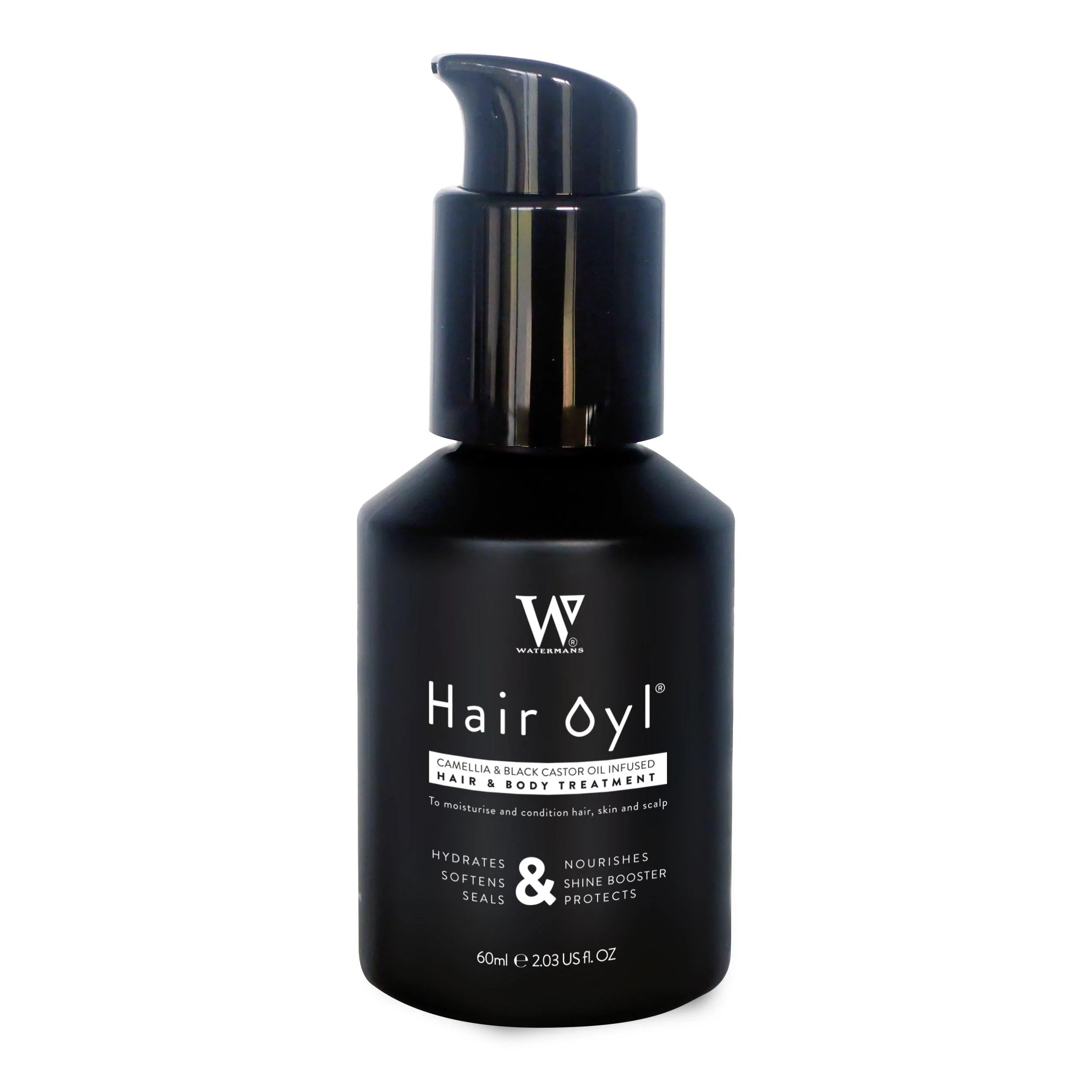
It also explains a frustrating pattern many people report: the more oils and rich butter-based masks they apply to soothe an itchy scalp, the worse it gets. Malassezia uses the fatty acids in many plant oils as a food source, so a nightly oiling routine can feed the exact organism causing the problem. This is worth saying plainly even though we sell a hair oil: if your scalp is actively itchy and studded with uniform pustules, that is not the moment for our Camellia and Black Castor oil or any other rich oil treatment. Get the flare settled first, keep oils to the mid-lengths and ends, and use them on a calm scalp.
Which ingredients actually help scalp folliculitis?
The active you need depends on which cause you are dealing with, which is why one product rarely fixes everyone. In the UK, the most useful options are sold either on the shelf or from behind the pharmacy counter, so a conversation with a pharmacist is usually the fastest, cheapest next step.
| Active | Best for | UK availability | How to use it |
|---|---|---|---|
| Ketoconazole 2% | Malassezia folliculitis, seborrhoeic dermatitis | Pharmacy medicine, ask at the counter | Twice weekly, left on 3 to 5 minutes before rinsing |
| Selenium sulphide | Yeast-driven flaking and folliculitis | Pharmacy shelf | Twice weekly, can lighten colour-treated hair |
| Piroctone olamine | Everyday antifungal maintenance | Cosmetic shelf, in most modern anti-dandruff ranges | Regular washes, gentler than the medicated options |
| Benzoyl peroxide | Bacterial folliculitis and body acne | Pharmacy shelf, 4% and 5% washes | Short-contact wash on body skin, bleaches towels and pillowcases |
| Salicylic acid | Blocked pores, build-up, scaling | Cosmetic shelf | 2 to 3 times weekly, avoid on broken skin |
| Topical or oral antibiotics | Confirmed bacterial folliculitis | Prescription only | Only when a clinician has assessed it, not as a first guess |
One historic note that catches people out when they compare old advice with a new bottle: zinc pyrithione, for decades the default anti-dandruff active, has been phased out of most European and UK cosmetic formulas and replaced by piroctone olamine. If a forum thread from years ago recommends a zinc pyrithione shampoo you can no longer find on a British shelf, that is why.
What should you stop doing while your scalp settles?
Stopping the wrong habits usually helps faster than starting a new product. The single most counterproductive instinct is to scrub an irritated scalp, because physical exfoliation damages the follicle opening and spreads bacteria across the skin.
- Stop scrubbing. No loofahs, no scalp brushes with hard bristles, no gritty scrubs on inflamed skin.
- Stop leaving sweat on. Rinse the scalp within about 30 minutes of finishing training rather than waiting until evening.
- Stop the daily oiling. On an itchy, uniform-bumped scalp, oils and heavy butters can make things worse.
- Stop re-wearing the same cap, buff or headband. Wash them like underwear, not like a coat.
- Stop picking. Squeezing a scalp pustule is the most reliable way to turn a two-week nuisance into a scar.
- Stop washing less. People often reduce washing to be gentle, but for a sweaty, occluded scalp, more frequent gentle cleansing beats infrequent aggressive cleansing.

Fabric hygiene matters more than most product choices. Pillowcases pick up sebum, product residue and yeast overnight, so changing them twice a week during a flare is a reasonable ask. Towels should be used once, then washed. Gym mats, bike helmet liners, headphones and hairbrushes all sit against the same skin repeatedly and rarely get cleaned at all.
Can scalp folliculitis cause hair loss?
Yes, in two very different ways. Ordinary, short-lived folliculitis causes temporary shedding because inflammation around the follicle can push hairs out of their growing phase early. That hair grows back. Scarring folliculitis, particularly folliculitis decalvans and advanced acne keloidalis nuchae, destroys the follicle and the loss is permanent.
The difference matters enormously, and it is the reason we push people towards a diagnosis rather than a routine. Temporary inflammatory shedding behaves like telogen effluvium, where a trigger tips many hairs into the shedding phase at once, and recovers over several months once the trigger is removed. Scarring loss leaves smooth, shiny skin with no visible follicle openings, and no product recovers it.
See a GP or ask for a dermatology referral if you have any of these
- Painful, boggy or crusted patches rather than simple small bumps
- Several hairs emerging from a single follicle opening, described as tufting
- Smooth, shiny areas where the hair has gone and the follicle openings have disappeared
- Bumps at the nape hardening into raised, firm scars
- Fever, spreading redness or a rapidly enlarging tender lump
- Bumps that have not improved after 6 weeks of sensible self-care
How should you wash your scalp during a flare?
Use a gentle, sulphate-free cleanse frequently rather than a harsh one occasionally, and give any medicated shampoo enough contact time to work. A workable pattern is a medicated wash twice a week on your pharmacist's advice, with a mild everyday shampoo on the other wash days so the scalp is never left sitting in sweat and sebum.
- Rinse with lukewarm water first. Hot water increases itch and redness.
- Work the shampoo into the scalp with fingertip pads, not nails. Two rounds of 30 seconds beats one aggressive round.
- Leave a medicated shampoo on for the full time stated on the pack, usually 3 to 5 minutes. Most people rinse too early and conclude it did not work.
- Keep conditioner on the mid-lengths and ends, away from the inflamed scalp.
- Dry properly. Going to bed with a damp scalp under a wrap or bonnet creates the warm, humid conditions yeast prefers.


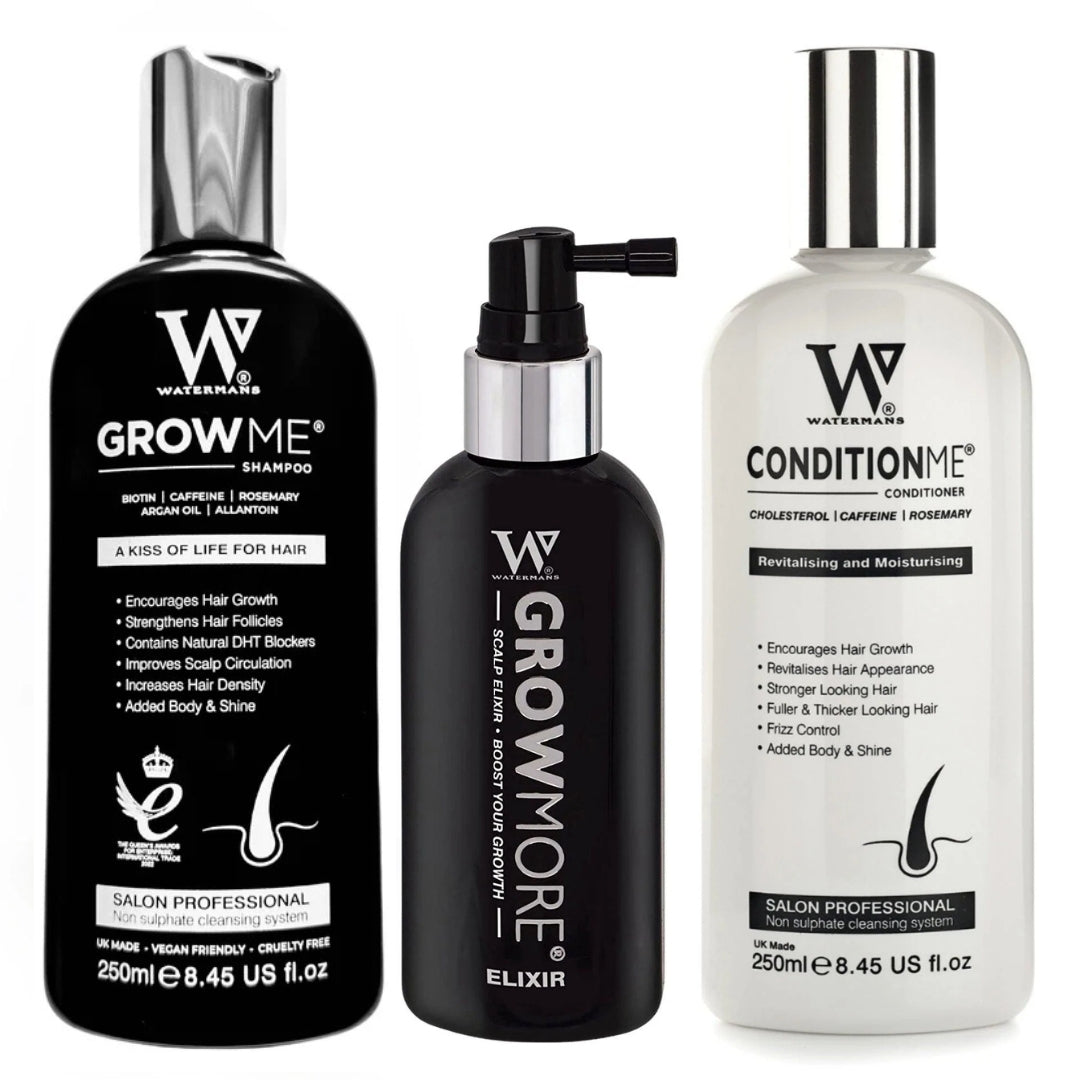
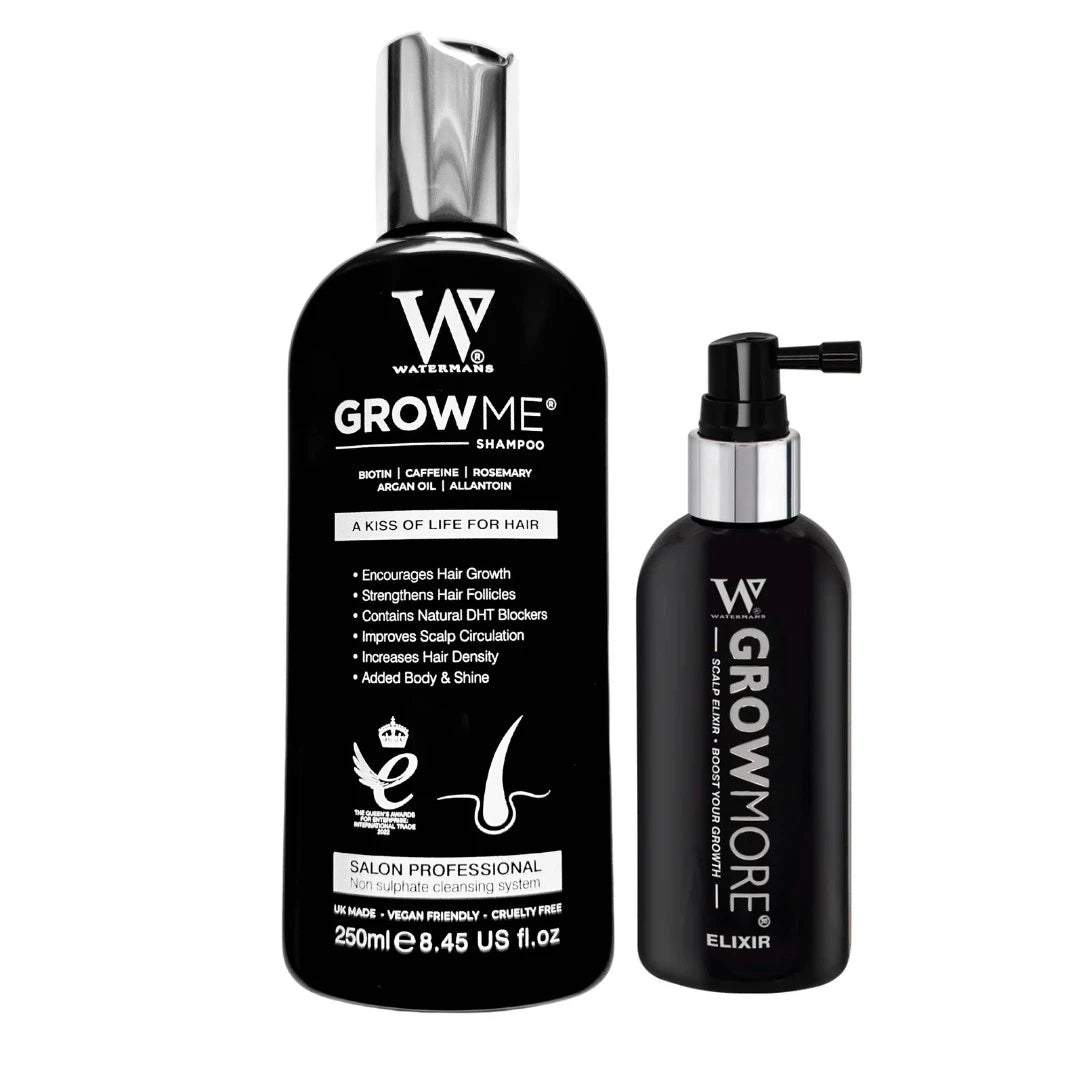
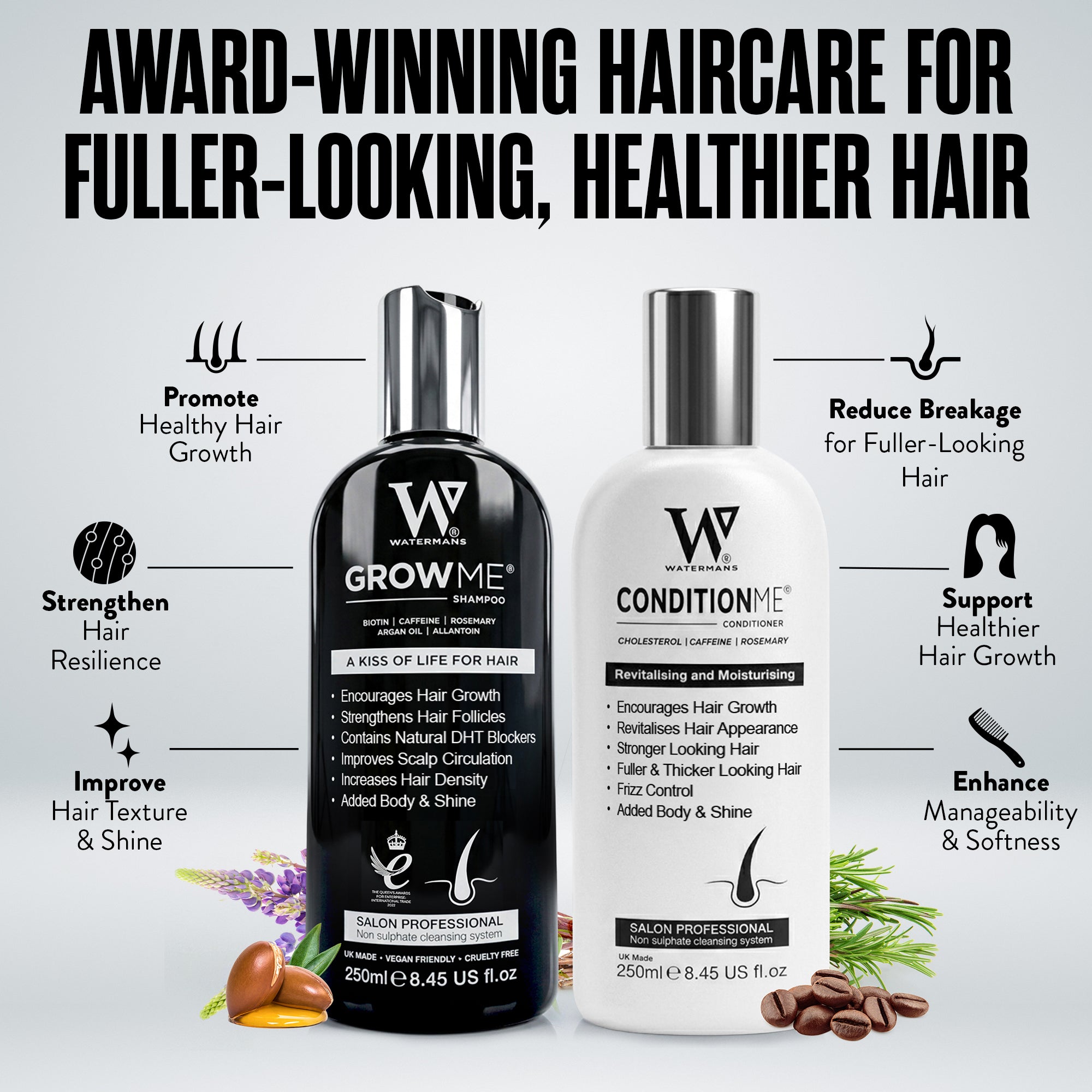
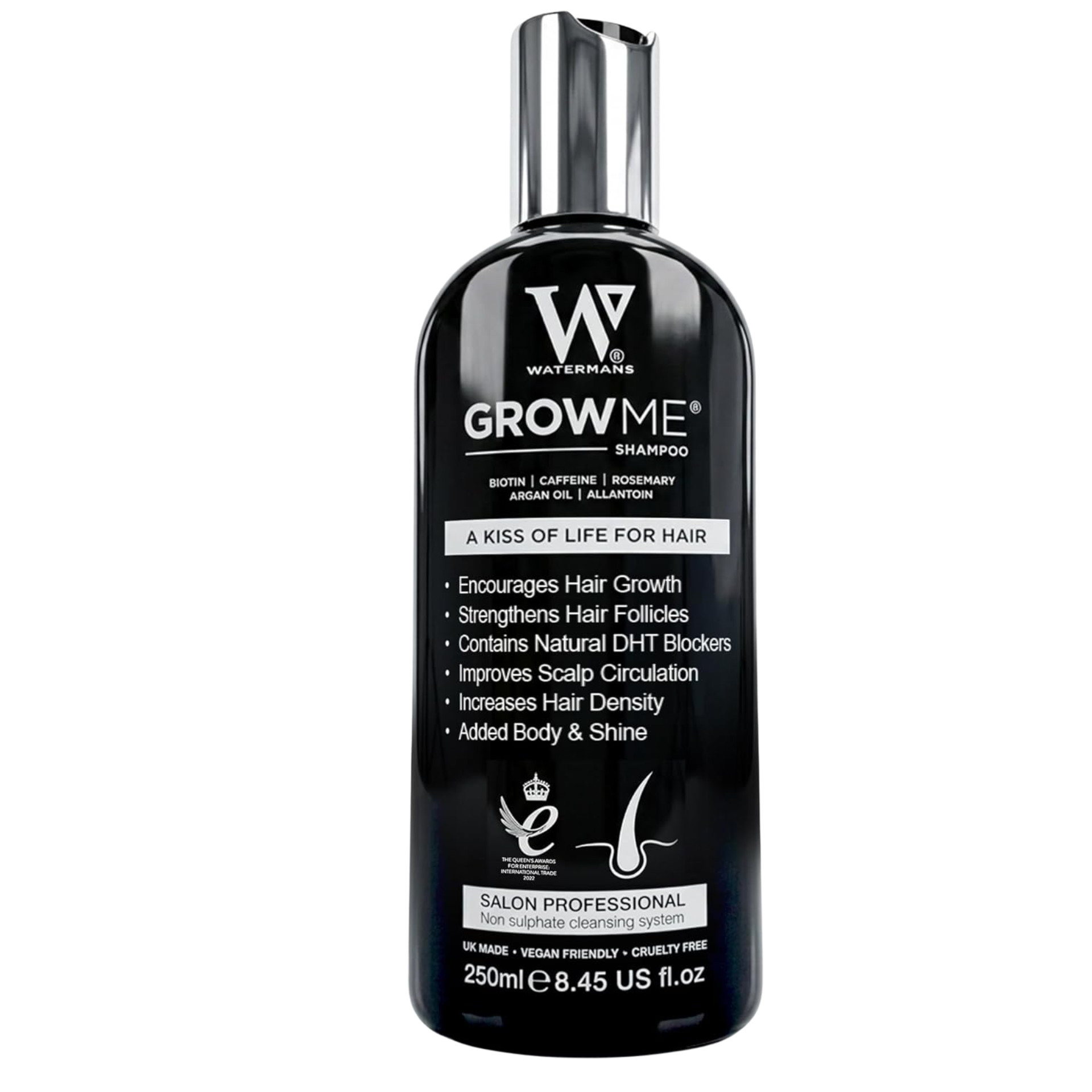
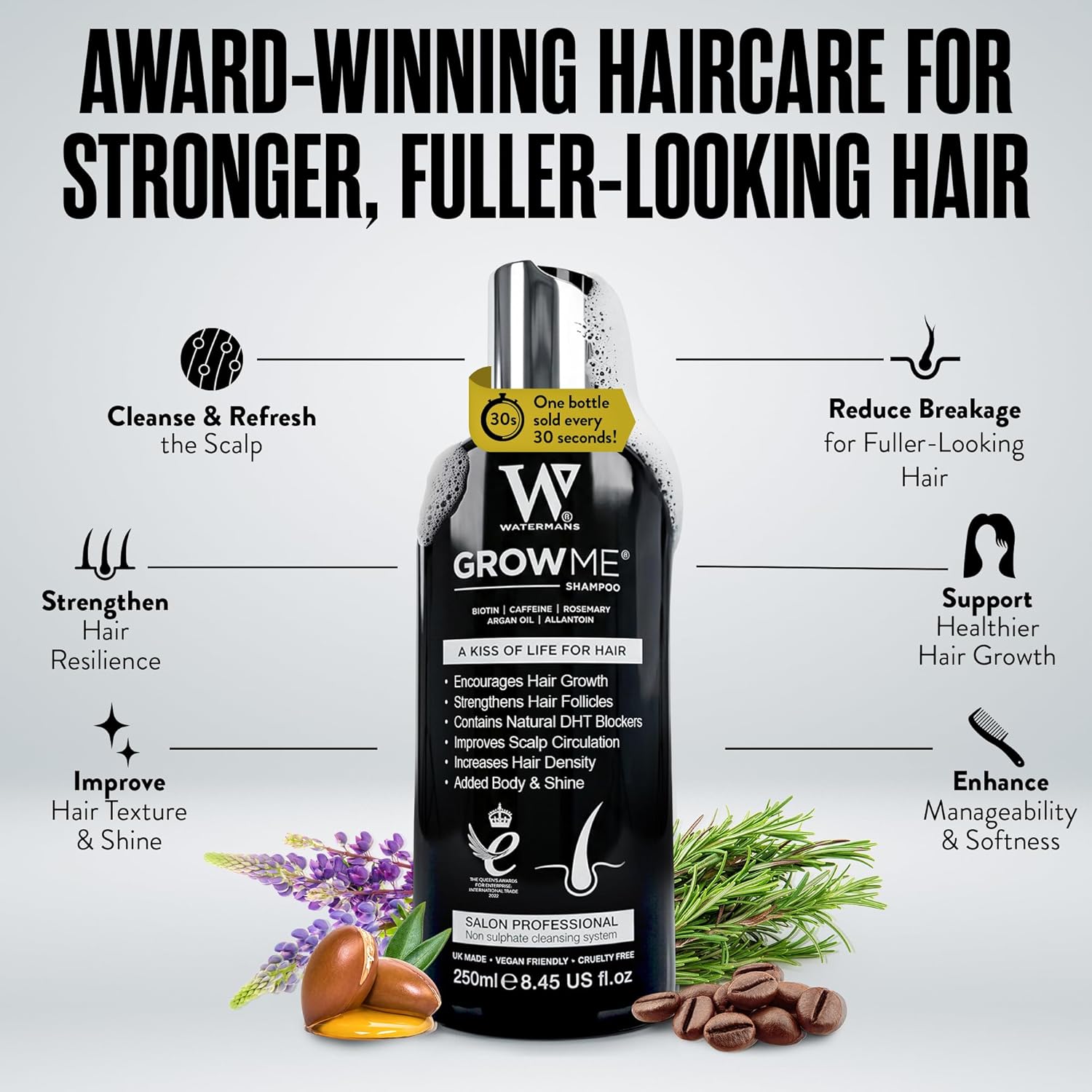
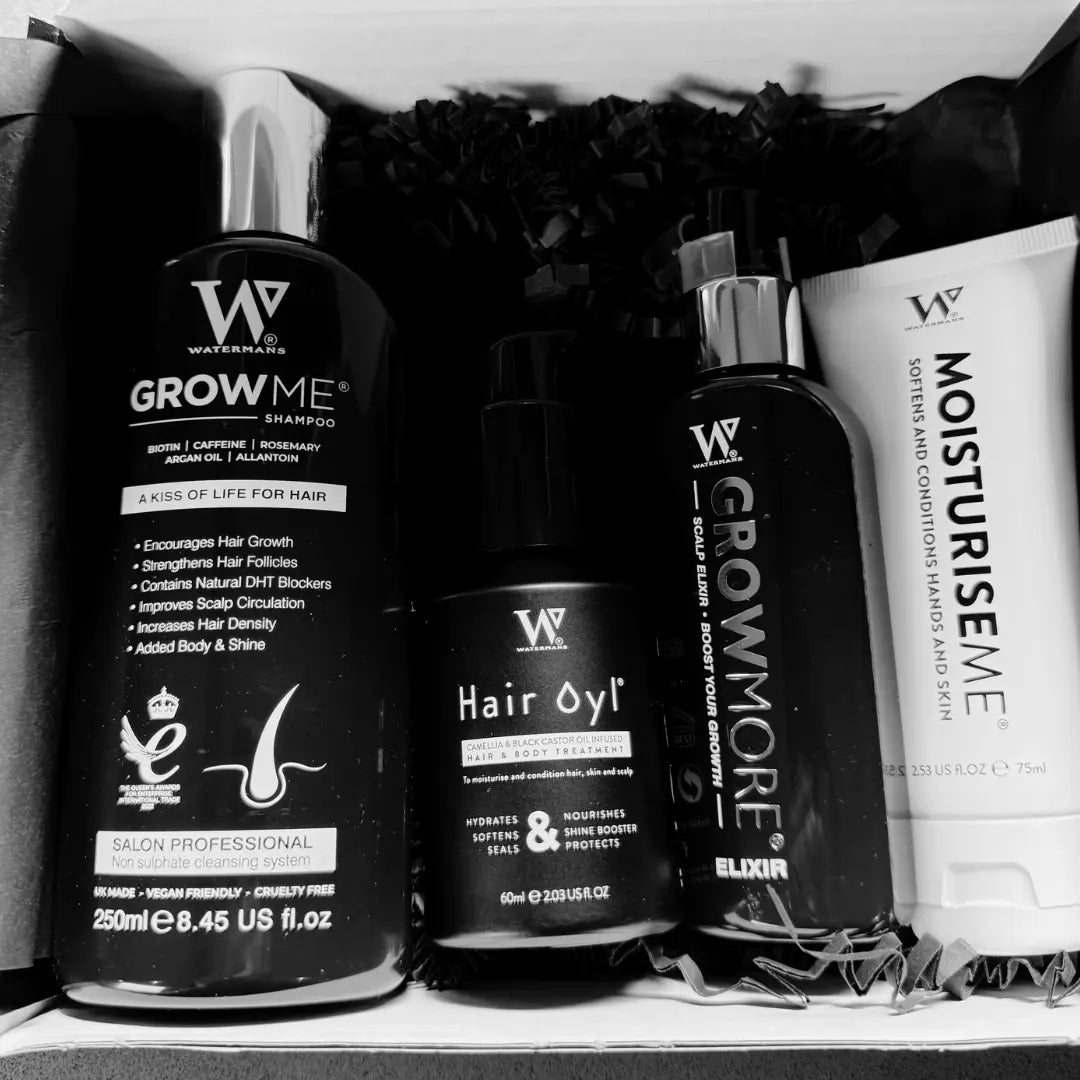
Grow Me® Hair Growth Shampoo, £14.95
A sulphate-free everyday shampoo formulated with caffeine, biotin, rosemary and niacinamide. It is designed as a mild daily cleanse that reduces breakage for fuller-looking hair, which makes it a sensible partner for the non-medicated wash days in the routine above.
Being straight with you: this is a cosmetic shampoo. It is not an antifungal, it is not an antibiotic, and it does not treat folliculitis, seborrhoeic dermatitis or any infection. If you have uniform itchy pustules, the active you need comes from a pharmacist, not from us.
What about acne on the back and chest?
Body acne follows the same rules as scalp bumps, with one addition: the back carries larger sebaceous glands than the face, so lesions tend to be bigger and are more likely to leave marks. Benzoyl peroxide washes used as a short-contact cleanse are the standard first move for bacterial body acne, and the same friction and sweat rules apply to backpacks, straps and gym kit.
Two things worth reading alongside this if body skin is your main concern: our guide to choosing a sunscreen when your skin is acne prone, which covers why some SPF formulas sting and clog, and our guide to caring for dry skin without over-stripping the barrier, since aggressive acne routines often swing skin from oily to raw.
How do you tell folliculitis from dandruff and seborrhoeic dermatitis?
Dandruff and seborrhoeic dermatitis produce flaking and redness across the skin surface, while folliculitis produces raised bumps centred on individual hairs. They frequently coexist, because both are associated with Malassezia, which is why one antifungal shampoo often improves both at once.
If flaking is your dominant symptom rather than bumps, start with our detailed guide to seborrhoeic dermatitis and a persistently flaky scalp. If your scalp is broadly healthy and you simply want to keep it that way, our practical scalp health routine is the better starting point. And if harsh detergents are part of your problem, it is worth understanding why sulphate-free shampoo suits reactive scalps.

How long does scalp folliculitis take to clear?
Uncomplicated bacterial or friction-related folliculitis often settles within 7 to 14 days once the trigger is removed. Malassezia folliculitis usually needs 4 to 6 weeks of consistent antifungal washing and tends to return each summer or during humid spells, so many people move to a maintenance wash once weekly rather than expecting a permanent cure.
Set expectations by cause, not by hope. If you are four weeks into a sensible routine with no change at all, the working diagnosis is probably wrong, and another product from the same shelf is unlikely to be the answer.
Frequently asked questions
Can I use a face acne treatment on my scalp?
You can, but most face products are impractical in hair and some make things worse. Benzoyl peroxide will bleach hair and bedding, and thick creams sit on the scalp and add occlusion. A medicated shampoo or a lotion designed for hair-bearing skin is a better delivery format for the same actives.
Does hard water make scalp folliculitis worse?
Hard water does not cause folliculitis, but it leaves mineral and surfactant residue that can add to itch and build-up on an already irritated scalp. A clarifying wash every couple of weeks helps some people. Treat it as a comfort factor, not a cause.
Should I stop wearing my hat or wig entirely?
Not necessarily, but reduce contact hours and clean the item properly. Wigs, weaves and caps should be washed regularly and given drying time between wears. If bumps map exactly onto where the item sits, a two-week break is a genuinely useful diagnostic test.
Is scalp folliculitis contagious?
Most cases are not passed person to person in everyday contact. However, shared razors, clippers, towels, helmets and inadequately treated hot tubs can transfer the bacteria involved, so avoid sharing anything that touches skin directly during a flare.
Why did my folliculitis get worse after antibiotics?
That pattern strongly suggests Malassezia folliculitis rather than a bacterial one. Antibiotics reduce the bacteria that normally compete with the yeast, giving it room to overgrow. Mention this specific detail to your pharmacist or GP, because it changes which treatment makes sense.
Will my hair grow back after folliculitis?
After ordinary inflammatory folliculitis, yes, though regrowth can take several months because the hair has to complete its cycle. After a scarring type such as folliculitis decalvans, the follicle is destroyed and the loss is permanent, which is why early assessment matters so much.
Can stress cause scalp folliculitis?
Stress does not directly infect a follicle, but it changes the behaviours that do: more sweating, more picking, worse sleep, less regular washing. Stress is also a well-recognised trigger for diffuse shedding, which is covered in our guide to stress-related hair loss.
Does diet affect scalp folliculitis?
There is no strong evidence that a specific food causes folliculitis. General skin health benefits from adequate protein, iron and zinc, and our overview of niacinamide and its role in skin and hair explains one nutrient that appears in both diet and topical products. Treat diet as support, not treatment.
Looking after a calm scalp
Once a flare has settled and the itch and pustules have gone, the aim is a gentle, consistent routine that does not provoke it again. A sulphate-free wash, conditioner kept to the lengths, and clean fabrics do more than any complicated regimen.
Watermans is a family-run British brand and has sold over 5 million bottles since 2012. Our formulas are vegan and made in the UK.
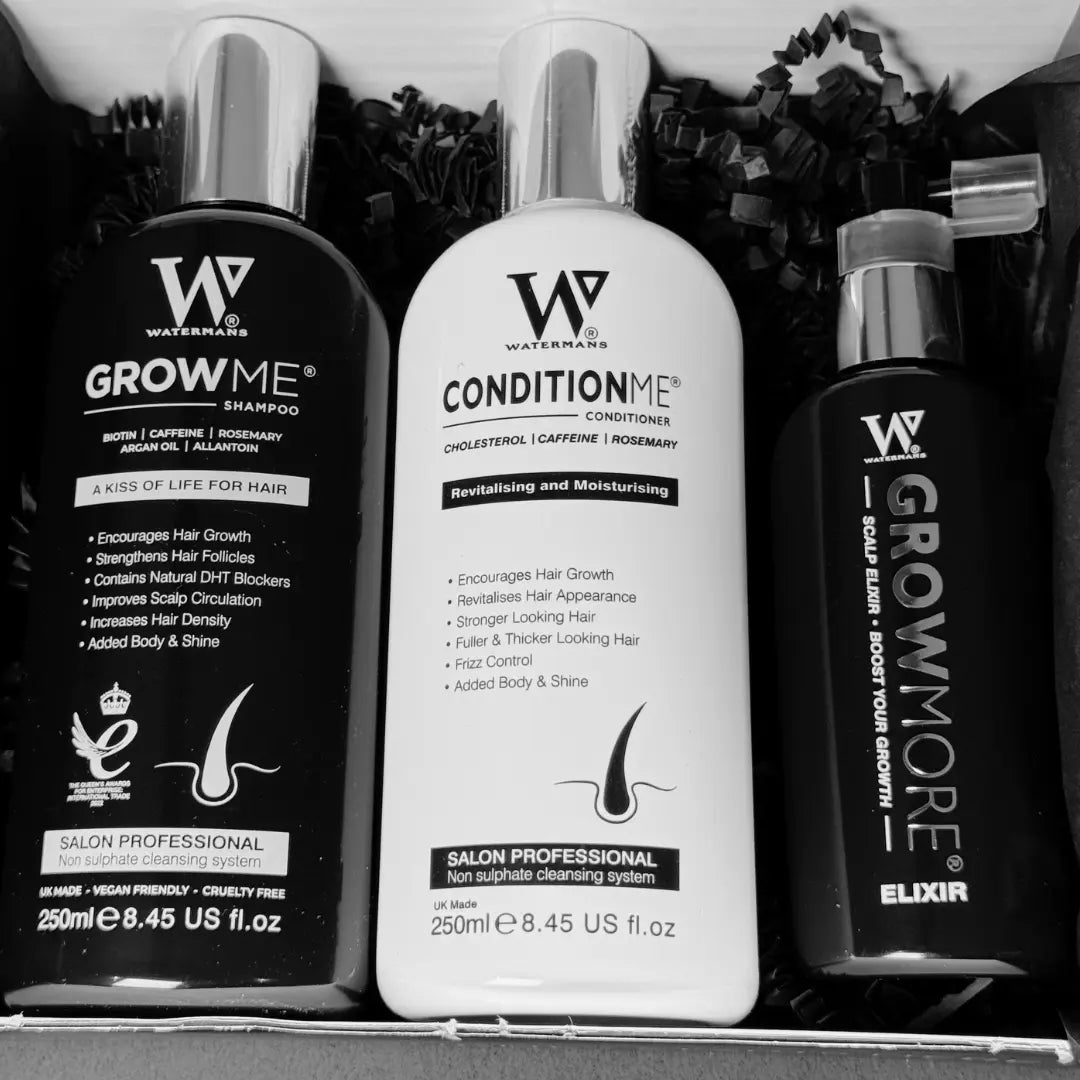
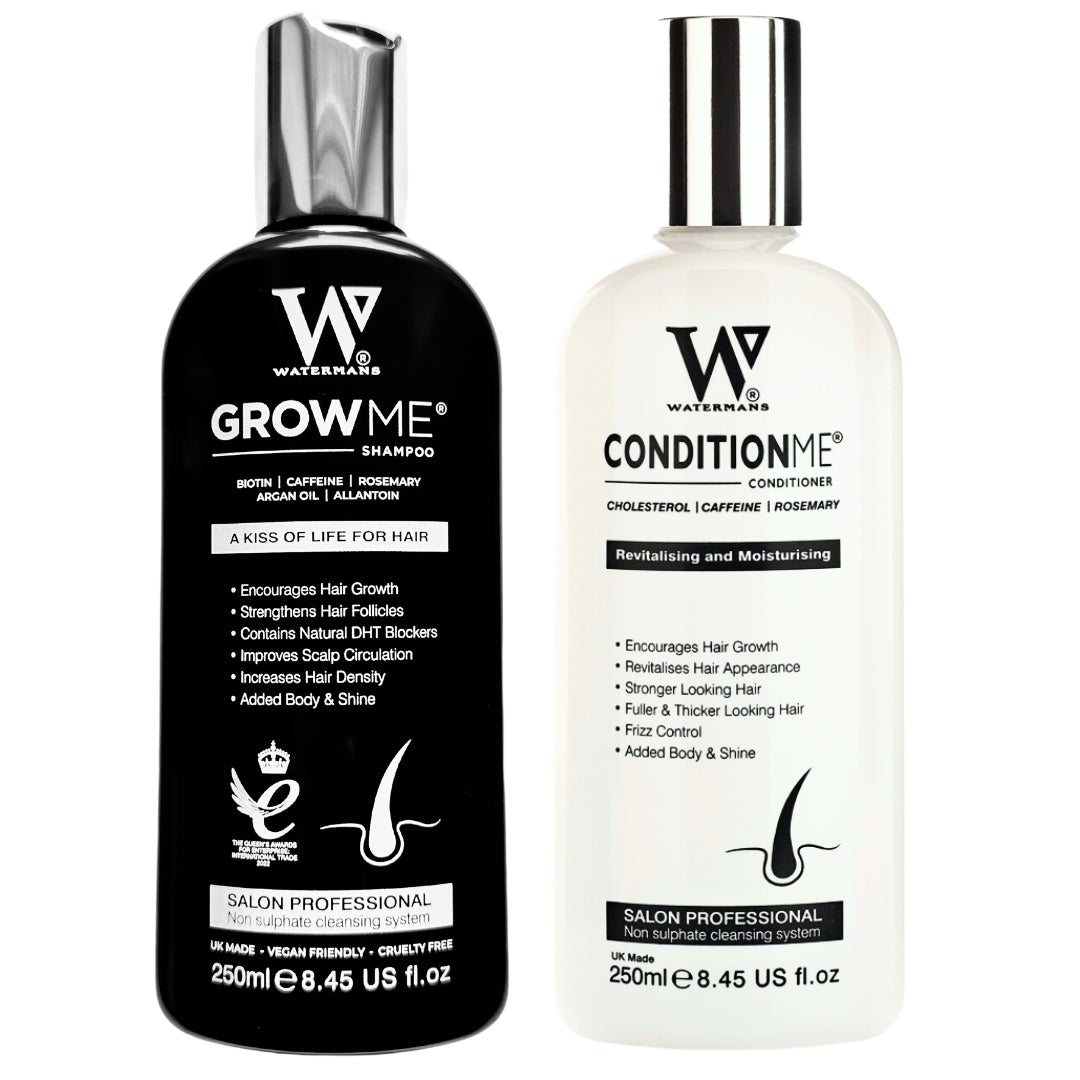
Shop Grow Me hair growth shampoo or pair it with Condition Me conditioner for the mid-lengths and ends.
This article is general information about hair and scalp care, not medical advice. Scalp folliculitis can look like several other conditions, some of which scar permanently. If your scalp is painful, crusted, spreading, or leaving bald patches, see a GP or pharmacist rather than continuing to self-treat.