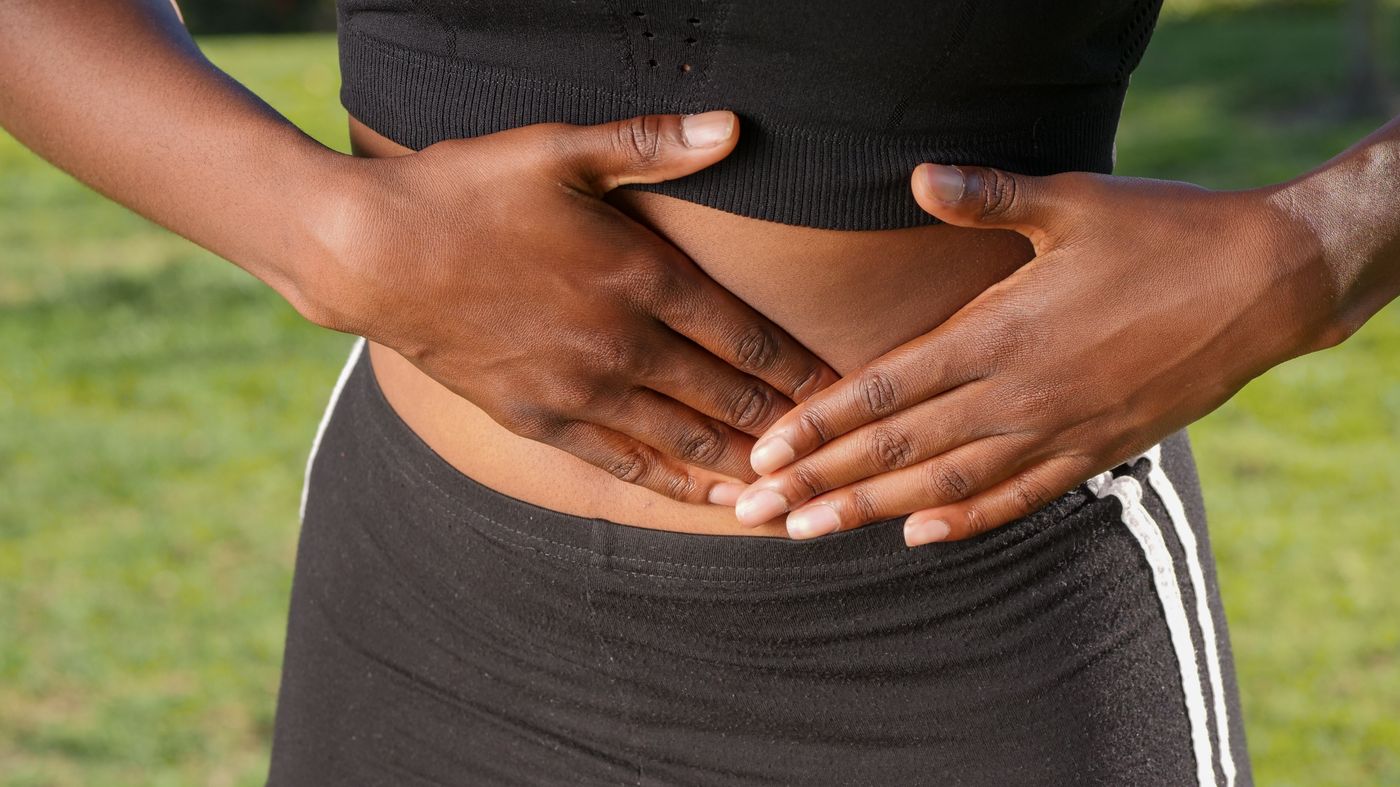
Fat Malabsorption Symptoms: What Pale Stools, Bloating and Nausea Can Mean
Fat malabsorption symptoms are the signs that fat is passing through the gut undigested rather than being absorbed. The classic set is pale, greasy, bulky stools that float and are hard to flush, bloating and wind a few hours after a fatty meal, nausea, and unexplained weight loss despite a normal appetite. The cause is usually a problem with bile, the pancreas or the small bowel lining, and a GP can narrow it down with a short set of tests.
Our hair growth shampoo
Grow Me® Hair Growth Shampoo, £14.95. A sulphate free daily shampoo that supports a healthy scalp environment and helps reduce breakage, so lengths hold on and look fuller.
Key takeaways
- The most specific sign is stool that is pale, greasy and floats, not simply loose stool.
- Bloating and nausea alone are far more often ordinary indigestion or IBS than fat malabsorption.
- Three systems produce these signs: bile flow from the liver and gallbladder, pancreatic enzymes, and the small bowel lining.
- Yellowing of the skin or eyes, dark urine, blood in the stool or steady unexplained weight loss all warrant same-week medical advice.
- Long-running malabsorption can show up in your hair months later, because iron, zinc and the fat-soluble vitamins arrive short.
What are the main fat malabsorption symptoms?
The main fat malabsorption symptoms are pale or clay-coloured stools, an oily or greasy film in the toilet bowl, stools that float and resist flushing, abdominal bloating and wind that builds a few hours after a fatty meal, nausea, and weight loss that happens despite eating normally. Doctors call the stool change steatorrhoea, and it is the single most useful sign because the rest are shared with dozens of ordinary digestive complaints.
Timing matters as much as the sign itself. Ordinary indigestion tends to arrive within an hour of eating and sits high in the chest. Fat that is not being absorbed causes trouble lower down and later, typically two to six hours after the meal, because that is how long it takes to reach the part of the bowel where the problem lies. A fry-up or a takeaway curry provokes it; a plain jacket potato does not.
What does bile actually do in digestion?
Bile emulsifies dietary fat so that pancreatic enzymes can break it down. The liver makes roughly 500 to 600ml of it a day, the gallbladder concentrates and stores it between meals, and a fatty meal triggers the gallbladder to squeeze it into the small bowel. Without enough bile arriving at the right moment, fat stays in large globules that enzymes cannot reach, and it travels on to the colon largely intact.
Bile does a second job that explains several of the knock-on effects. Vitamins A, D, E and K dissolve in fat rather than water, so they ride into the bloodstream on the back of absorbed fat. When fat absorption drops, those four vitamins drop with it, which is why long-running problems eventually show up as brittle nails, poor night vision, easy bruising or low vitamin D on a blood test.
Why do stools turn pale when bile flow drops?
Stools turn pale because bile pigment is what makes them brown. Bilirubin, a breakdown product of old red blood cells, is excreted in bile and converted by gut bacteria into stercobilin, the brown pigment. If bile cannot reach the bowel, that pigment never arrives and the stool takes on a putty, clay or pale yellow colour. Unabsorbed fat adds the greasy texture and the tendency to float.
A pale stool with dark urine is a different level of urgency
When bile is obstructed, the bilirubin that cannot leave through the bowel is excreted by the kidneys instead, which turns urine dark brown. Pale stool plus dark urine, especially with any yellow tinge to the whites of the eyes, is the combination that should be seen by a doctor within days rather than watched for a month.
What causes reduced bile flow or fat malabsorption?
Three organ systems produce fat malabsorption symptoms, and which one is involved changes what a GP looks for. Bile problems block the emulsifying step, pancreatic problems remove the enzymes that do the actual digestion, and small bowel problems damage the surface that absorbs the end products. The pattern of other signs usually points to one of the three.
| System | Typical causes | Clues that point here |
|---|---|---|
| Bile (liver, gallbladder, bile ducts) | Gallstones, bile duct narrowing, primary biliary cholangitis, gallbladder removal | Pale stool with dark urine, pain under the right ribs, itching, yellowing of skin or eyes |
| Pancreas | Chronic pancreatitis, cystic fibrosis, pancreatic duct blockage | Greasy stool with belt-like pain through to the back, long history of alcohol use or repeated attacks, diabetes appearing alongside |
| Small bowel lining | Coeliac disease, Crohn's disease, bacterial overgrowth, bowel surgery | Loose stool with mouth ulcers, iron or B12 deficiency, a family history of coeliac disease, symptoms tied to gluten |
Coeliac disease is worth singling out because it is common, frequently missed and needs a specific order of testing. Coeliac UK reports that around one in 100 people in the UK have it, and that the average person waits years for an answer. Crucially, you must still be eating gluten for the blood test to work, so do not cut it out before being tested.
Get a discount on the digestive and hair changes range
Join the Watermans mailing list and we will email a discount code straight to your inbox, so you can try the digestive and hair changes range for less. Vegan, made in the UK, over 6.5 million bottles sold since 2012.
Which tests will a GP order for fat malabsorption symptoms?
A GP investigating these signs usually starts with blood tests and a stool sample rather than a scan. The first round typically covers liver function, a full blood count, ferritin, vitamin D and B12, and coeliac antibodies, plus a faecal elastase test that measures how well the pancreas is working. That combination separates the three systems in the table above in most cases.

- Liver function tests. A raised alkaline phosphatase with a raised GGT points at the bile ducts rather than the liver cells themselves.
- Faecal elastase. A low result suggests the pancreas is not producing enough enzymes. It is a simple stool sample, not an invasive procedure.
- Coeliac serology (tTG-IgA). Only reliable while you are still eating gluten regularly, which is why the advice is to keep eating it until the result is back.
- Ferritin, B12, folate, vitamin D. These show whether absorption has been poor for long enough to leave a mark, and they are the ones most relevant to hair.
- Ultrasound of the abdomen. Usually the first imaging step, looking for gallstones or a dilated bile duct.
What actually helps once a cause is found?
What helps depends entirely on which system is involved, which is why chasing a fix before the cause is known so often wastes months. Gallstones blocking a duct are dealt with surgically. A pancreas that is not producing enough enzymes is managed with enzyme replacement taken with meals, arranged through a GP or gastroenterology team. Coeliac disease is managed with a strict lifelong gluten-free diet, and the bowel lining recovers over months once gluten is out.
The honest point to hold on to is that none of these are things you can sort out from a supplement aisle. Each one needs the cause identified first, and in two of the three cases the answer is a prescription-strength intervention or a surgical one arranged by the NHS.
Do ox bile, TUDCA and milk thistle supplements work?
Ox bile, TUDCA and milk thistle are the three supplements most heavily marketed for bile problems, and the evidence behind them is much thinner than the marketing suggests. Ox bile provides bile salts and may help a narrow group of people who have had their gallbladder removed or have documented bile acid deficiency, but it does nothing for a mechanical blockage and can loosen stools further. TUDCA is a bile acid studied mostly in liver conditions rather than in everyday bloating. Milk thistle has been studied for years in liver disease with results that remain inconsistent.
There is also a safety point that gets skipped. If bile flow is blocked, pushing more bile production is not a neutral act, and the supplements can mask a change worth investigating. If you are curious about supplement safety more generally, we have written about whether biotin supplements are safe for your liver and about what vitamin K2 does for hair and bone health.
What can you safely change with food while you wait for tests?
You can safely spread fat across the day rather than cutting it out, because fat is where four vitamins get absorbed and a very low-fat diet makes the deficiency side of the problem worse. Four or five smaller meals with a modest amount of fat in each are usually tolerated better than one large fatty meal, and the difference is often noticeable within a week.

Keep a short written record while you wait. Note what you ate, the time, and what the stool looked like, for two weeks. It sounds fussy, but a GP working with a dated record can tell in one reading whether the pattern is fat-linked or not, and that single page frequently shortens the route to an answer.

Alcohol is the one change worth making straight away
Alcohol is directly toxic to the pancreas and is the leading cause of chronic pancreatitis in the UK. If pancreatic enzyme output is already low, continuing to drink keeps the damage going while you wait for results. The NHS guidance of no more than 14 units a week, spread over three or more days, is the floor rather than the target here. Our guide to alcohol and hair health is the place to go next on that.
Can fat malabsorption affect your hair?
Fat malabsorption can affect hair, but indirectly and on a delay of roughly three months. Hair follicles are among the most metabolically demanding structures in the body, and they are deprioritised when iron, zinc, protein or the fat-soluble vitamins run short. The result is usually diffuse shedding from all over the scalp rather than a receding hairline, and it typically appears two to four months after the nutritional shortfall began.
It is worth being precise about which hair problem is in play, because the three get conflated and they respond to completely different things. Hair loss means the follicle itself is affected, as in pattern hair loss or alopecia areata. Hair shedding means more hairs than usual have switched into the resting phase and are falling out on schedule, which is what nutritional shortfalls cause and what how telogen effluvium shedding works describes. Hair breakage means the fibre is snapping along its length, so you find short broken pieces rather than hairs with a white bulb at the root. Malabsorption drives the middle one. If you are unsure which you are seeing, the everyday reasons hair starts thinning walks through how to tell them apart.
Shedding driven by a nutritional shortfall settles once the underlying cause is dealt with and stores are rebuilt, which takes months rather than weeks. In the meantime, the sensible thing is gentle handling: hair growing in under nutritional stress is more fragile, and losing length to breakage on top of shedding makes the thinning look considerably worse than it is.

Grow Me® Hair Growth Shampoo
A sulphate-free shampoo with biotin, caffeine and rosemary. It is a cosmetic product, not a medical one: it will not fix a nutritional shortfall, but it cleanses gently and helps hair look fuller while the underlying cause is being sorted out.

GrowPro Hair Growth Gummies, £22.95
Sugar free vegan gummies with biotin, zinc, MSM and bamboo silica. Nutrients that contribute to the maintenance of normal hair, two a day.
When should you speak to a GP about fat malabsorption symptoms?
You should speak to a GP if pale or greasy stools last longer than two weeks, if you are losing weight without trying, or if the bloating and nausea are steadily getting worse rather than fluctuating. None of that is an emergency, but none of it settles on its own either, and the tests involved are simple.

Get urgent medical advice the same day for any of these
Yellowing of the skin or the whites of the eyes; dark brown urine with pale stools; severe abdominal pain that goes through to your back; blood in the stool or black tarry stool; vomiting that will not stop; or fever with abdominal pain. Contact a GP urgently or call NHS 111. If the pain is severe and sudden, call 999. If your question is about products or a routine rather than a medical one, you can talk to Gail Waterman, our co-founder, as an AI avatar on the Watermans homepage.
Frequently asked questions
What do fat malabsorption symptoms look like in the toilet?
Pale, clay or putty coloured stool that is bulky, greasy, floats and leaves an oily film is the classic picture. Colour alone is the most useful single sign, because loose stool on its own has many other causes.
How long after eating do fat malabsorption symptoms appear?
Usually two to six hours after a fatty meal, which is later than ordinary indigestion. The delay reflects how long it takes food to reach the part of the bowel where absorption is failing.
Can fat malabsorption symptoms come and go?
Yes. Gallstones that intermittently block a duct produce symptoms that appear for a few days and then settle completely, which is one reason people delay getting checked. An intermittent pattern does not mean the cause is minor.
Is bloating on its own a sign of fat malabsorption?
Rarely. Bloating is far more commonly IBS, swallowed air, constipation or ordinary dietary triggers. Bloating becomes meaningful here only when it appears alongside a change in stool colour or texture.
Should I stop eating gluten to see if it helps?
No, not before testing. Coeliac blood tests only work while you are still eating gluten regularly, so cutting it out first can produce a false negative and delay an answer by months.
Do I still need bile after my gallbladder is removed?
You still make bile; you simply lose the storage tank that releases a concentrated burst with a fatty meal. Most people adapt within a few months, and spreading fat across smaller meals helps during that period.
Will taking vitamin D fix the deficiency while absorption is poor?
Only partly. Vitamin D is fat soluble, so absorption of an oral supplement is also reduced. It is worth taking on NHS advice, but correcting the underlying absorption problem is what actually restores levels.
How quickly does hair recover once absorption improves?
Expect months rather than weeks. Shedding typically slows around three months after stores are rebuilt, and visible density takes a further six to twelve months because hair grows about a centimetre a month.
What is the bottom line on fat malabsorption symptoms?
The bottom line on fat malabsorption symptoms is that stool colour and texture carry nearly all the diagnostic weight, and bloating and nausea carry very little on their own. Pale, greasy, floating stool lasting more than two weeks is worth a GP conversation and a short round of blood and stool tests, because the three likely causes are all manageable once identified and all get harder to live with if left. Keep eating gluten until you have been tested, spread fat across smaller meals rather than cutting it out, and take any yellowing of the eyes or dark urine to a GP within the week.
If the fallout you are most aware of is your hair rather than your gut, handle it gently while the cause is sorted: a sulphate-free hair growth shampoo will not correct a nutritional shortfall, but it cleanses without stripping and helps finer hair look fuller through the months it takes for stores to rebuild.
Watermans products are 100% cosmetic and do not treat medical hair loss. Individual results may vary.