

Fatty Liver Symptoms: What They Are, and What Shoulder Pain Really Means
Fatty liver usually causes no symptoms at all, and that is precisely what makes it dangerous. Most people are diagnosed by accident, through a raised liver enzyme on a routine blood test or an ultrasound done for something else. When symptoms do appear they are vague: tiredness, a dull ache or sense of fullness under the right ribs. Right shoulder pain is not a reliable sign of fatty liver, and treating it as one can mean missing something that matters more.
Last updated: August 2026
Key takeaways
- Fatty liver is usually silent. Most diagnoses come from an incidental blood test or a scan done for another reason.
- The condition was renamed in 2023: NAFLD became MASLD, and the inflammatory form NASH became MASH.
- Right shoulder pain is referred through the phrenic nerve from the diaphragm. Gallbladder disease can cause it. Simple fatty liver is not a recognised cause.
- Shoulder or arm pain with chest tightness, breathlessness, sweating or nausea can be cardiac. Call 999 rather than reading further.
- Liver and gallbladder flushes do not remove stones. The green objects people find are soap formed from the oil and juice they drank.
- Diagnosis now relies on blood tests, ultrasound and a FIB-4 score, with elastography where needed. Biopsy is far less common than it used to be.
- Losing 7 to 10 percent of body weight can reduce inflammation and scarring, and exercise lowers liver fat even without weight loss.
What is fatty liver, and what changed with MASLD?
Fatty liver means fat has accumulated inside liver cells to the point where it makes up more than about 5 percent of the liver by weight. In 2023 the condition was renamed from non-alcoholic fatty liver disease, or NAFLD, to metabolic dysfunction-associated steatotic liver disease, or MASLD, which describes what actually drives it rather than what it is not.
It sits on a spectrum. Simple fat accumulation is the mildest stage and often stays stable for years. In some people it progresses to MASH, where inflammation damages liver cells, then to fibrosis as scar tissue forms, and in a minority to cirrhosis. The important point is that fibrosis is the stage that predicts serious outcomes, and it develops silently over years.
What symptoms does fatty liver actually cause?
In most people, none. When symptoms do occur they are non-specific: persistent tiredness, a dull ache or heaviness under the right ribs, and a general sense of being unwell. None of these are distinctive enough to diagnose anything, which is why the condition is found on tests rather than recognised from how someone feels.
| Symptom | How often it relates to fatty liver | What it more commonly means |
|---|---|---|
| No symptoms at all | The usual presentation | Found on blood tests or a scan by chance |
| Persistent fatigue | Commonly reported, but not specific | Sleep, anaemia, thyroid, depression, many others |
| Dull ache or fullness under the right ribs | Possible, from stretching of the liver capsule | Also gallbladder, muscular, or gut causes |
| Right shoulder or trapezius pain | Not a recognised feature of fatty liver | Musculoskeletal, gallbladder, or occasionally cardiac |
| Jaundice, swelling, confusion, easy bruising | Advanced disease only | Needs urgent medical assessment |

Is right shoulder pain a sign of fatty liver?
No. Referred pain to the right shoulder happens through the phrenic nerve, which supplies the diaphragm and originates from nerve roots in the neck. When something irritates the underside of the diaphragm, the brain interprets the signal as coming from the shoulder. That mechanism requires irritation of the diaphragm, which simple fat accumulation in the liver does not produce.
The conditions that genuinely refer pain to the right shoulder include gallbladder inflammation, where pain to the right shoulder blade is a recognised feature, irritation or bleeding under the diaphragm, and pain after abdominal surgery involving gas. On the left side, the equivalent sign is associated with splenic problems. Fatty liver appears on none of these lists.
Far more often, right shoulder and trapezius pain is exactly what it looks like: a musculoskeletal problem from posture, a desk setup, sleeping position or the neck itself. Attributing it to your liver risks two bad outcomes. You may spend months on liver supplements while a treatable shoulder or neck problem goes unmanaged, or you may dismiss something more urgent.
Call 999 rather than reading on
Shoulder, arm, jaw or back pain can be cardiac. Treat it as an emergency if it comes with any of these:
- Chest tightness, pressure or a heavy, squeezing sensation.
- Breathlessness, sweating, feeling sick or lightheaded.
- Pain that spreads to the jaw, neck, back or either arm.
- Pain that comes on with exertion and eases with rest.
Also seek urgent care for severe pain under the right ribs lasting more than a few hours, particularly with fever, vomiting or yellowing of the eyes, which can indicate an inflamed or infected gallbladder.

Do liver and gallbladder flushes work?
No, and the mechanism behind the apparent result is well understood. A typical flush involves drinking a large quantity of olive oil with citrus juice. The green or brown objects that appear afterwards are not gallstones. They are soap-like clumps formed when the fatty acids in the oil react with digestive juices in the gut, and they form whether or not you have stones.
Beyond being ineffective, flushes carry real risks. Drinking a large volume of oil triggers strong gallbladder contraction, which in someone who does have stones can push one into a duct and cause an obstruction. If you think you have gallstones, an ultrasound costs nothing on the NHS and answers the question properly. Our guide to what pale stools, bloating and nausea can mean covers the bile side of this in detail, including the red flags.
Does fatty liver stop your body converting thyroid hormone?
This claim is overstated in a specific and important way. It is true that most active thyroid hormone comes from conversion of T4 into T3 outside the thyroid gland, roughly 80 percent of circulating T3. It is not true that the liver does all of that. The enzymes responsible also work in the kidneys, skeletal muscle, the brain and other tissues.
There is a genuine phenomenon where serious illness reduces T3 levels, sometimes called non-thyroidal illness syndrome, but it accompanies significant acute illness rather than mild fatty liver. The version of this claim that circulates online, where normal thyroid results supposedly hide a conversion problem your liver is causing, is mainly used to sell supplements. If you have thyroid symptoms, ask for thyroid function testing and pursue the result, rather than assuming a normal result is wrong.
Thyroid disorders do genuinely affect hair, and that is worth separating from anything liver-related. Our guide to thyroid hair loss and whether it is reversible covers what that actually looks like and how it is treated.
How is fatty liver actually diagnosed?
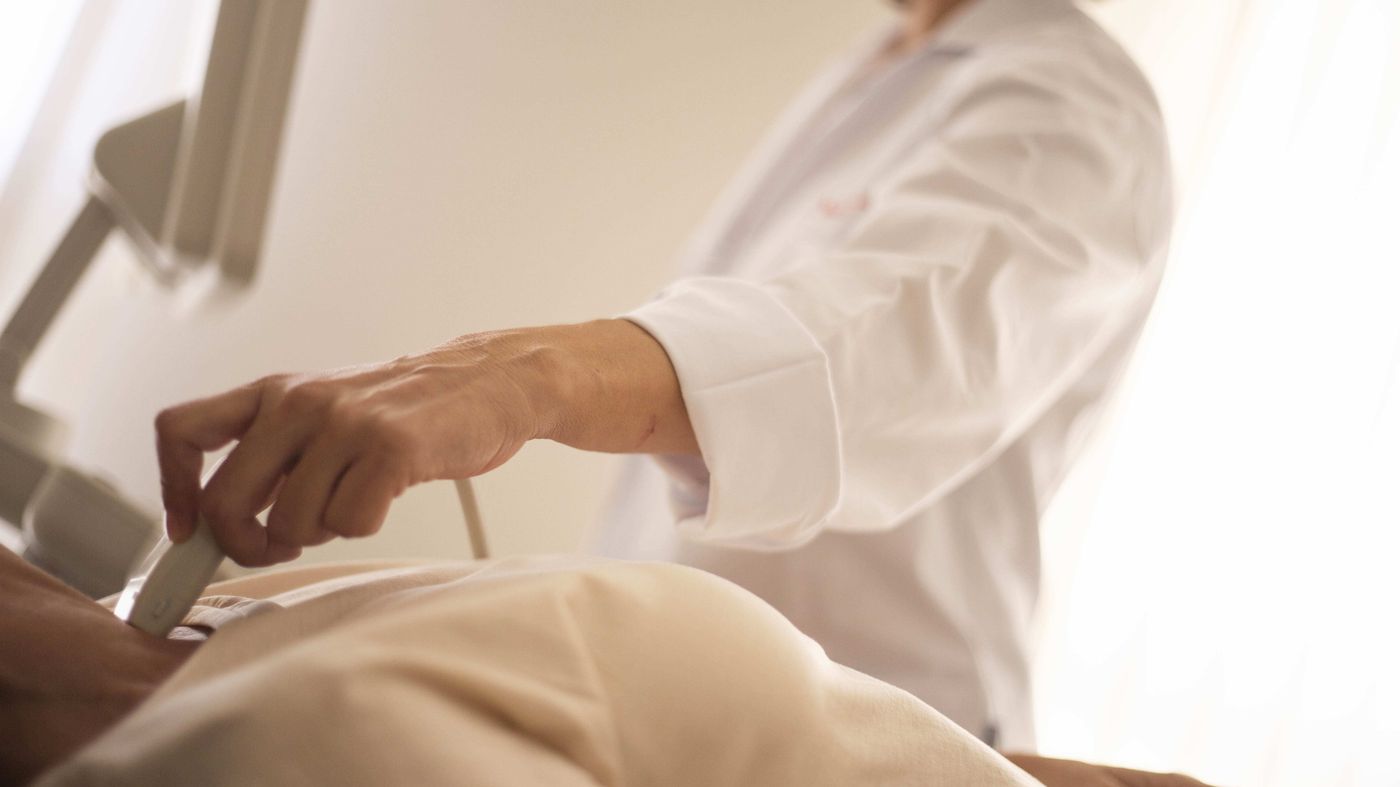
Diagnosis usually starts with a raised ALT found incidentally on a blood test, followed by an ultrasound showing a bright or fatty-looking liver. The more important step is assessing scarring, which is done first with a calculated score from routine blood results rather than with a scan or a biopsy.
- Liver blood tests. ALT and AST are commonly raised, though a normal ALT does not rule fatty liver out, which surprises people.
- Ultrasound. Detects fat well, but cannot measure how much scarring is present.
- FIB-4 score. Calculated from age, ALT, AST and platelet count. It costs nothing extra and is the standard first step for assessing fibrosis risk in UK practice.
- Transient elastography. A scan that measures liver stiffness, used when the FIB-4 result is indeterminate or high.
- Liver biopsy. Now reserved for uncertain cases. The earlier version of this article presented it as routine, which is out of date.
- Checking everything else. Alcohol intake, viral hepatitis, diabetes, cholesterol and thyroid function are all assessed, since they change what the fat means.

What actually reduces liver fat?
Weight loss is the intervention with the strongest evidence, and it works in a dose-dependent way. Losing around 5 percent of body weight reduces liver fat, 7 percent or more is associated with improvement in inflammation, and 10 percent gives the best chance of improving fibrosis. There is currently no supplement with comparable evidence.
Alongside that, a Mediterranean-style eating pattern performs well in trials, cutting sugar-sweetened drinks matters because fructose is processed largely in the liver, and reducing alcohol helps regardless of whether alcohol caused the problem. We cover the food side properly in our guide to what actually reduces liver fat, and why detox shakes do not, which goes through the evidence, the myths and the supplement risks in detail.

Does exercise help even without weight loss?
Yes, and this is one of the more encouraging findings in the field. Both aerobic exercise and resistance training reduce liver fat even when body weight does not change, because they improve how muscle handles glucose and reduce the insulin resistance that drives fat into the liver in the first place.
That matters practically, because weight loss is difficult and progress on the scales can stall for weeks. Someone training consistently is improving their liver even during a plateau. Resistance training is particularly worth including, since it is often lower-impact and more sustainable than long cardio sessions for people who are carrying extra weight or have joint problems.
Can fatty liver affect your hair?
Not directly, but two indirect routes are worth knowing about. The first is rapid weight loss. Losing weight quickly, whether through very low calorie dieting or surgery, is a well-recognised trigger for telogen effluvium, a diffuse shedding that typically begins two to three months later and then recovers.
The second is the insulin resistance that underlies fatty liver in the first place. The same metabolic picture lowers SHBG and raises free androgens, which is the mechanism behind pattern hair thinning, and it is why fatty liver is more common in people with PCOS. Our guides to what causes telogen effluvium and how the liver affects hormones through SHBG explain both routes. If you are losing weight deliberately and your hair starts shedding, the answer is usually to slow the rate of loss and check iron and ferritin, not to stop.
Why there is no product recommendation on this page. Watermans makes hair and skin cosmetics. Nothing we sell reduces liver fat, improves fibrosis or treats MASLD, and the earlier version of this article listed our products as a step in managing the condition. That was wrong. If fatty liver has caused hair shedding through rapid weight loss, the thing that resolves the hair is time and correcting the trigger, and the liver itself is a matter for your GP.
When should you see a GP?
Book an appointment if you have persistent fatigue with any risk factor for fatty liver, such as type 2 diabetes, a raised BMI, high cholesterol or regular drinking, or if a blood test has shown a raised liver enzyme. Ask specifically whether a FIB-4 score has been calculated, because that is what assesses scarring rather than just fat.
Seek urgent care for yellowing of the skin or eyes, swelling of the abdomen or legs, vomiting blood, black tarry stools, confusion, or severe pain under the right ribs with fever. For chest tightness or arm pain with breathlessness or sweating, call 999.
Frequently asked questions
What are the first symptoms of fatty liver?
Usually there are none. Most people are diagnosed incidentally through a raised liver enzyme on a blood test or an ultrasound done for another reason. When symptoms occur they are non-specific, typically persistent tiredness or a dull ache under the right ribs, neither of which is distinctive enough to diagnose on its own.
Can fatty liver cause right shoulder pain?
It is not a recognised cause. Right shoulder pain is referred from the diaphragm through the phrenic nerve, and gallbladder inflammation is a genuine cause of it. Most right shoulder pain is musculoskeletal. Shoulder or arm pain with chest tightness, breathlessness or sweating needs emergency assessment.
Is NAFLD the same as MASLD?
Yes, MASLD is the new name for the same condition. The terminology changed in 2023 to metabolic dysfunction-associated steatotic liver disease, describing the metabolic cause rather than defining it by the absence of alcohol. The inflammatory form NASH was renamed MASH at the same time.
Do liver flushes remove gallstones?
No. The green objects that appear afterwards are soap-like clumps formed when olive oil reacts with digestive juices, and they form whether or not stones are present. Flushes also risk pushing a genuine stone into a duct. An ultrasound answers the question safely and definitively.
Can fatty liver be reversed?
The fat itself can be substantially reduced, and early-stage disease often improves considerably. Losing around 7 to 10 percent of body weight is associated with reduced inflammation and, at the upper end, improvement in fibrosis. Advanced scarring is harder to reverse, which is why earlier assessment matters.
Does fatty liver affect thyroid hormone conversion?
Around 80 percent of circulating T3 comes from conversion outside the thyroid gland, but that happens across the liver, kidneys, muscle and other tissues rather than in the liver alone. Meaningful reductions in T3 accompany serious illness. Normal thyroid results with symptoms should be investigated, not dismissed as a conversion problem.
Can you have fatty liver with normal liver blood tests?
Yes, and this is a common misunderstanding. A normal ALT does not rule out fatty liver, and some people with significant fibrosis have normal enzymes. That is why a FIB-4 score, which uses platelet count and age alongside the enzymes, is more informative than the enzymes alone.
Does fatty liver cause hair loss?
Not directly. Two indirect routes exist: rapid weight loss can trigger diffuse shedding around two to three months later, and the insulin resistance behind fatty liver lowers SHBG and raises free androgens, which contributes to pattern thinning. Treating the underlying metabolic picture addresses both.
The short version
The genuinely surprising thing about fatty liver is not a hidden symptom. It is that there usually is no symptom at all, which is why a condition affecting a large share of adults goes unnoticed until a blood test picks it up. If you have risk factors, the useful move is a conversation about your liver enzymes and a FIB-4 score, not a symptom checklist.
And if your right shoulder hurts, it is far more likely to be your shoulder. Get it looked at as a shoulder, and get the emergency signs above taken seriously if they appear. This article is general information, not medical advice.