The HRT Hair Cycle: A Month by Month Timeline of What to Expect

The HRT hair cycle is the delay between starting hormone therapy and seeing any hair change, and it runs on the follicle's own clock rather than on the prescription date. Expect little visible difference for the first three months, a shedding wave somewhere around months three to five as resting hairs are released, then gradual filling from month six. Twelve months is the first fair point to judge.
Our hair growth shampoo
Grow Me® Hair Growth Shampoo, £14.95. A sulphate free daily shampoo that supports a healthy scalp environment and helps reduce breakage, so lengths hold on and look fuller.
Key takeaways
- Nothing visible happens for roughly three months because scalp hair grows at about one centimetre a month.
- Losing 50 to 100 hairs a day is normal, so a rising count matters more than any single day's brush.
- A shedding wave around months three to five is the cycle resetting, not the hormone therapy failing.
- Telogen shedding typically settles within about six months once the trigger has passed.
- Photograph the same parting in the same light monthly. Memory is a poor comparison tool.
- Hair loss, hair shedding and hair breakage are three different problems and only one of them is about hormones.
What is the HRT hair cycle, and why does it run on a delay?
The HRT hair cycle is the follicle's growth cycle playing out after a hormone change, and the delay exists because every scalp follicle is on its own independent schedule. Growing (anagen) hair runs for years, the brief transition (catagen) lasts around two weeks, and the resting (telogen) stage lasts roughly three months before the hair is released. A hormone change nudges follicles between those stages rather than switching hair on.
Two numbers explain almost all the impatience. Scalp hair grows at about a centimetre a month, so even a follicle that responds immediately needs a season to produce hair long enough to see. And because roughly nine in ten follicles are growing at any moment while the rest rest, a change in the balance only becomes visible once enough follicles have moved through a full lap. our explainer on the anagen phase goes into how long a single hair can keep growing.
NHS guidance on hormone replacement therapy is worth reading alongside this, because it sets the same expectation from the other direction: it can take a few weeks to feel the benefit of hormone therapy at all, and early side effects often settle within about three months. Hair sits at the slow end of that. Our wider HRT and hair loss guide covers what hormone therapy can and cannot change.
What happens in months 1 to 3?
Months one to three are the quiet stretch, when the hormone change has registered inside the follicle but has produced nothing you can photograph. Hairs already in the growing stage carry on unchanged. Hairs already resting carry on resting. The visible scalp looks exactly as it did the week before you started.
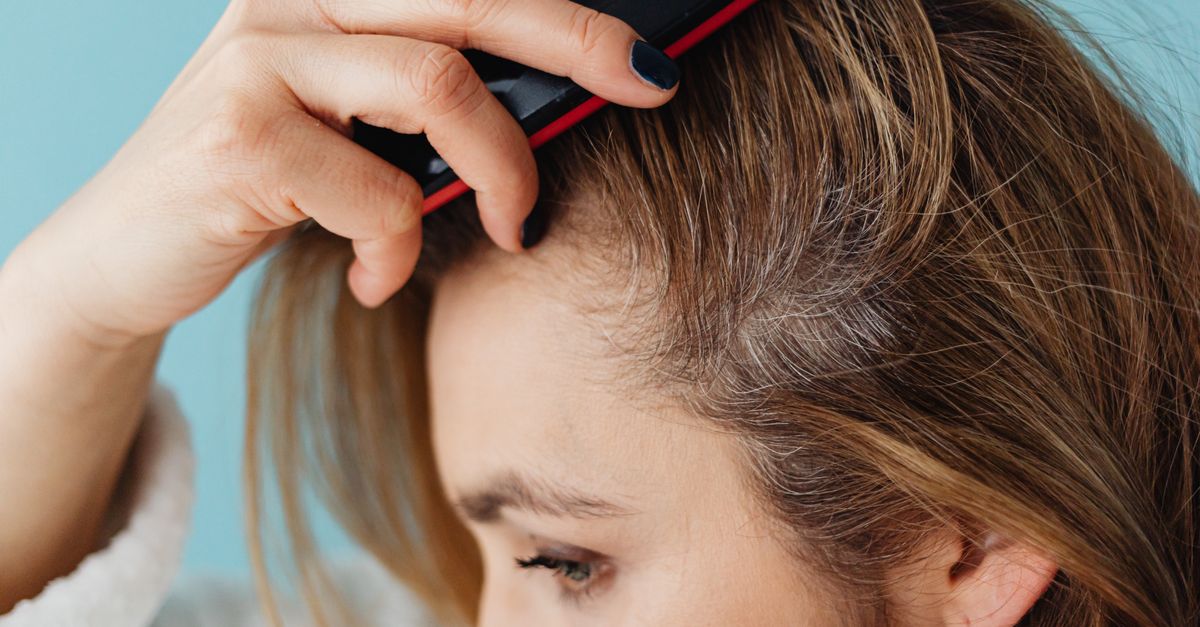
The useful work in this window is measurement, not inspection. Take one photograph of your parting under the same bathroom light on the same day each month, and note roughly how many hairs come out on a wash day. Both numbers will matter in four months when you are trying to remember whether something has genuinely changed.

A rough weekly count beats a vivid memory. The brush is the only honest record most people keep.
Why does shedding often peak around month 3 or 4?
Shedding peaks around months three to five because telogen lasts about three months, so hairs pushed into resting by the hormone change all reach the release point together. The shed is therefore a delayed echo of something that happened at the start, which is why it arrives just as people have decided nothing is happening.
Dermatology sources describe this pattern as telogen effluvium: a diffuse shed that begins roughly two to three months after a trigger and usually settles within about six months once the trigger has passed. It thins all over rather than in a patch, and the hairs that come out have a small pale club at the root. Our telogen effluvium guide covers the full list of triggers.
The number that actually tells you something
Losing 50 to 100 hairs a day is normal on the NHS figure, and a shed wave often doubles that for a few weeks. What matters is the trend across a month, not the worst single shower. If the count is still climbing after six months, that is the point to ask your GP for a review rather than to change shampoo again.
| Window | What is happening inside the follicle | What you can actually see |
|---|---|---|
| Months 0 to 3 | Follicles register the hormone change; existing growing hairs are unaffected | Nothing. This is normal and is not evidence of failure |
| Months 3 to 5 | Hairs pushed into telogen reach the end of their roughly three month rest and release | A diffuse shedding wave, often the most alarming phase |
| Months 5 to 8 | Released follicles re-enter anagen and begin producing new fibre | Short new hairs at the parting and hairline, easy to mistake for breakage |
| Months 8 to 12 | New hairs reach a few centimetres and start contributing to coverage | Density begins to read differently in photographs, not yet in the mirror |
| Month 12 onward | A full cycle has passed for most of the scalp | The first fair comparison against your month zero photograph |
Get a discount on the thinning hair range
Join the Watermans mailing list and we will email a discount code straight to your inbox, so you can try the thinning hair range for less. Made in the UK, over 6.5 million bottles sold since 2012.
What changes between months 4 and 8?
Months four to eight are when released follicles restart, so the shed slows and short new hairs appear along the parting and hairline. These new hairs are fine, stand up awkwardly and are frequently mistaken for breakage or flyaway damage. Measured against a bare centimetre a month of growth, hair that started in month five is only three centimetres long by month eight.
This is also the window where people give up, because the shed has stopped but nothing has visibly filled in. Density is a count of hairs per square centimetre and it recovers before it looks recovered. Our guide to measuring HRT hair density explains how that count is actually assessed.
The cruel arithmetic of the hair cycle is that recovery is invisible for exactly as long as it takes to stop believing in it.
What can you fairly judge at 12 months?
Twelve months is the first fair judging point because most of the scalp has completed a full lap of growth, rest and release by then. Compare photographs rather than impressions, look at the width of the parting and the density at the temples, and accept that the honest answer is often partial improvement rather than a restored head of hair.
It is also the point to be realistic about what hormone therapy was for. NICE guidance on menopause frames hormone therapy around symptom relief, not around hair. Any hair benefit is a by-product, which is why judging hormone therapy by your parting alone is unfair to a decision that was made for other reasons.
How do hair loss, hair shedding and hair breakage differ here?
Hair loss, hair shedding and hair breakage look similar in the plughole and have almost nothing in common underneath. Hair loss means follicles producing progressively finer fibre or none at all. Hair shedding means whole hairs released on schedule from the resting stage. Hair breakage means fully grown fibre snapping partway along its length.
| What you notice | Most likely mechanism | What actually helps |
|---|---|---|
| Whole hairs with a pale club root, all over the scalp, months 3 to 5 | Shedding (telogen), the hormone change working through the cycle | Time and a shed count. The wave is self limiting in most cases |
| Parting widening slowly over a year or more, finer hairs at the temples | Hair loss (follicles miniaturising) | A GP review, plus cosmetic care to keep the hair you do have |
| Short broken pieces with no root, worse after styling or colouring | Breakage in the fibre itself | Conditioner, heat protection and less tension. Nothing hormonal about it |
Getting this wrong wastes the year. Someone whose real problem is breakage will spend twelve months waiting for a cycle that was never the issue. Our breakdown of the three thinning mechanisms sets out the self checks for each.

A pale club at the root means the hair was released, not snapped. That single detail separates shedding from breakage.
What can cosmetic care do while the HRT hair cycle runs?
Cosmetic care cannot alter the cycle, but it owns the one variable the cycle does not control: how much of the hair you have grown survives to be counted. A hair that snaps at month nine never contributes to the month twelve photograph, however well the follicle underneath is behaving.
Watermans products are made in the UK and over 6.5 million bottles have been sold since 2012. They are cosmetic products for the look and feel of hair, and that is deliberately the limit of the claim.

A sulphate free daily cleanse with caffeine, biotin, rosemary and hydrolysed lupine protein, formulated to leave finer hair looking fuller while you wait the cycle out.

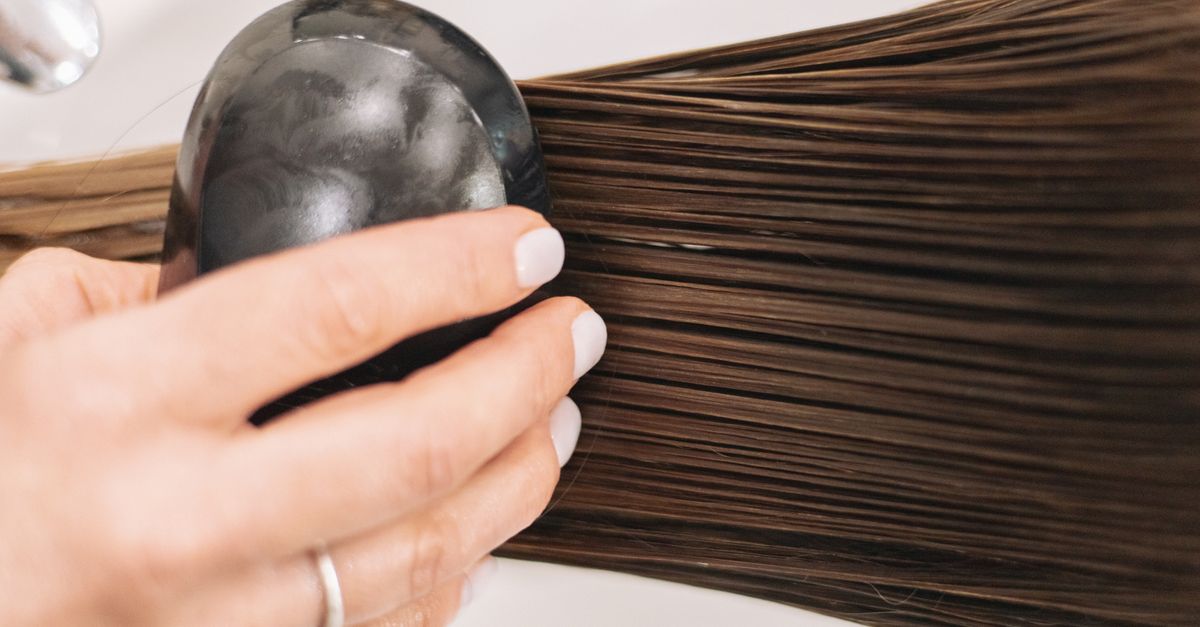
Improves slip so wet combing snaps fewer strands. The single most useful habit change during a shedding wave, when hair is already fragile and you are handling it more anxiously.

A leave on scalp serum for lower density areas at the parting and temples, used overnight alongside the daily routine.
What is the bottom line on HRT hair cycle?
The bottom line on the HRT hair cycle is that it runs on the follicle's schedule and not on yours: three quiet months, a shedding wave around months three to five, restart from month five or six, and a fair verdict at twelve. Count sheds weekly, photograph the same parting monthly, and take a rising count after six months to your GP rather than to another shelf of products.
For the part cosmetics genuinely own, Grow Me hair growth shampoo is a sulphate free daily cleanse for finer looking hair, and it does the job the cycle cannot: keeping the hair you have already grown intact long enough to count. If you are thinking about coming off hormone therapy, our guide to hair changes after HRT discontinuation covers what to expect and when. For what hormones can and cannot change, see our guide to realistic HRT hair expectations.
Frequently asked questions
How long is the HRT hair cycle from start to visible change?
Roughly twelve months for a fair verdict, with the first three months producing nothing visible at all. Scalp hair grows about a centimetre a month, so a follicle that responds in month one still needs most of a year to produce enough length to change how the parting reads in a photograph.
Is shedding at month three a sign hormone therapy is not working?
Usually the opposite. A shed around months three to five is hairs that were pushed into the resting stage at the start reaching the end of their roughly three month rest together. Telogen shedding of this kind typically settles within about six months once the trigger has passed.
How many hairs a day is too many?
The NHS puts normal daily loss at 50 to 100 hairs. A shed wave often runs well above that for several weeks, which is expected. A count that is still rising six months in is the signal to ask your GP for a review. If your question is about products or a routine rather than a medical one, you can talk to Gail Waterman, our co-founder, as an AI avatar on the Watermans homepage.
Should I stop hormone therapy because of the shedding?
That is a decision for the GP or specialist who started it, never one to make from a bathroom floor. Hormone therapy is generally started for symptom relief rather than for hair, and NICE guidance frames the benefits and risks around those symptoms.
Do the short new hairs at my hairline mean breakage?
Not necessarily. Short fine hairs standing up along the parting and hairline from around month five are usually new growth restarting after the shed. Broken hairs are the giveaway when they have no root and appear alongside styling or colouring damage.
Does anything speed the cycle up?
No cosmetic product changes how fast a follicle cycles, and any product that says otherwise is overclaiming. What care can do is reduce breakage so more of the hair you grow survives long enough to be counted.
Why does my hair look worse at month six than at month zero?
Because the shed has happened but the replacement hairs are only a centimetre or two long. Density is recovering while appearance is still at its low point, which is the single most common reason people abandon a routine that was working.
When should I see a GP rather than wait?
Sudden loss, patchy bald areas, scalp pain, scaling or a shed that is still worsening after six months all warrant a GP appointment rather than more waiting. The NHS hair loss page sets out which changes are worth getting looked at.
Sources and references
- NHS: Hair loss
- NHS: Hormone replacement therapy (HRT)
- NICE NG23: Menopause guideline
- DermNet: Telogen effluvium
- DermNet: Female pattern hair loss
- The Institute of Trichologists
Watermans products are 100% cosmetic and do not treat medical hair loss. Individual results may vary.