HRT Hair Density: How to Measure What Changes
HRT hair density is a measurement rather than a feeling, and that distinction decides everything that follows. Density means how many hairs occupy an area of scalp and how thick each one is. Shedding, the thing everyone actually watches, is a different measurement on a much faster clock. You can shed heavily for three months with density unchanged, so judge this with dated photographs over twelve months, not with the shower drain.
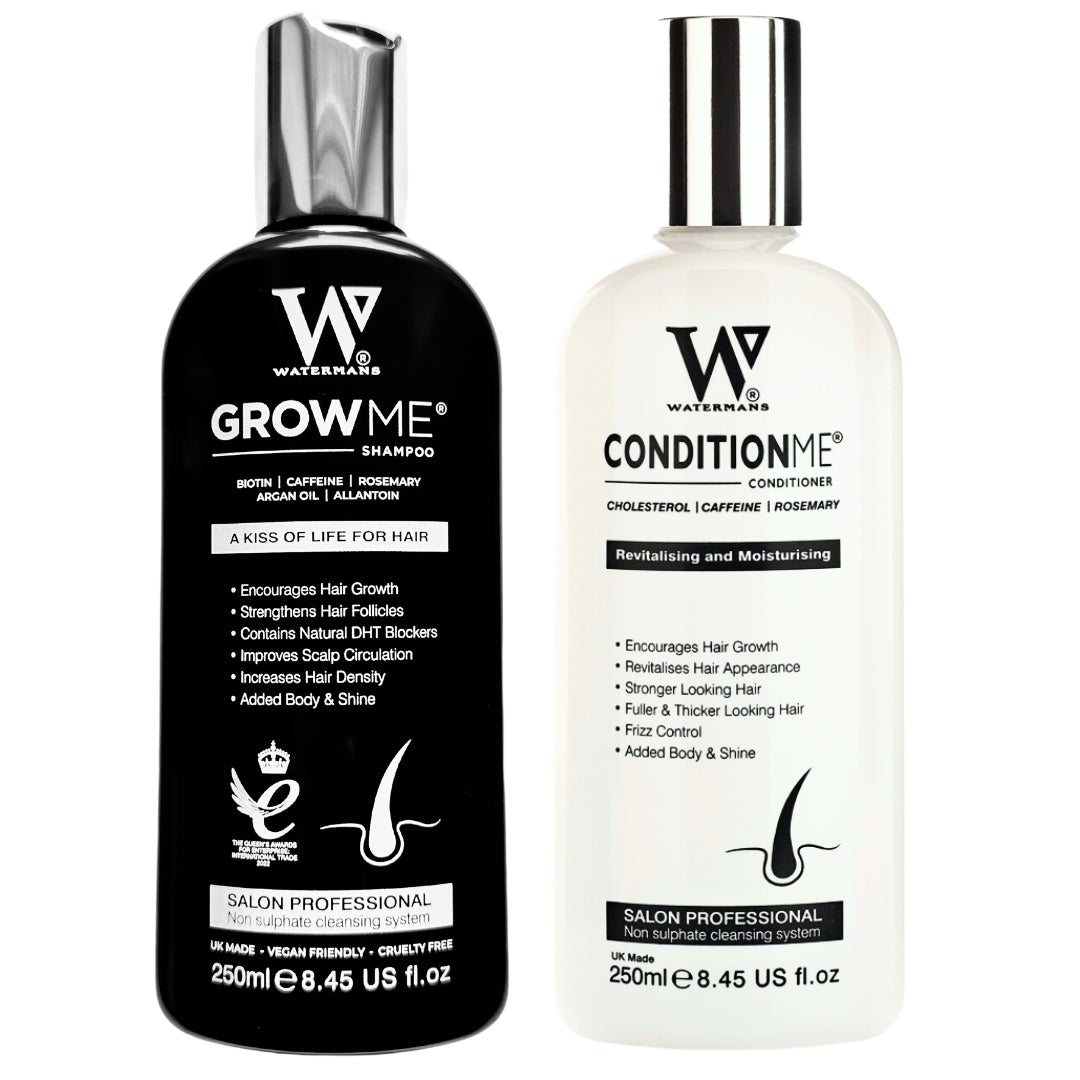
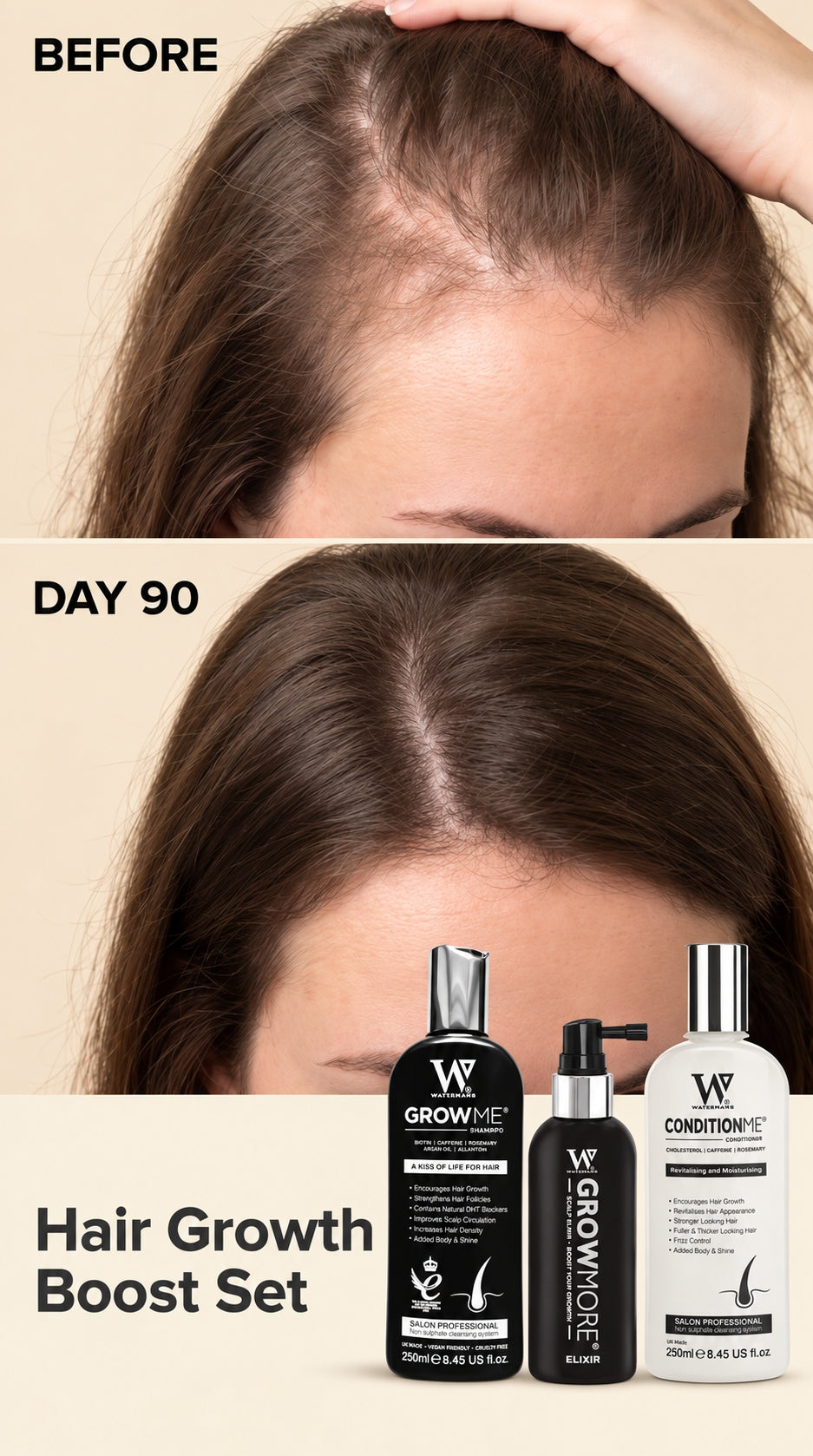
Our hair growth shampoo
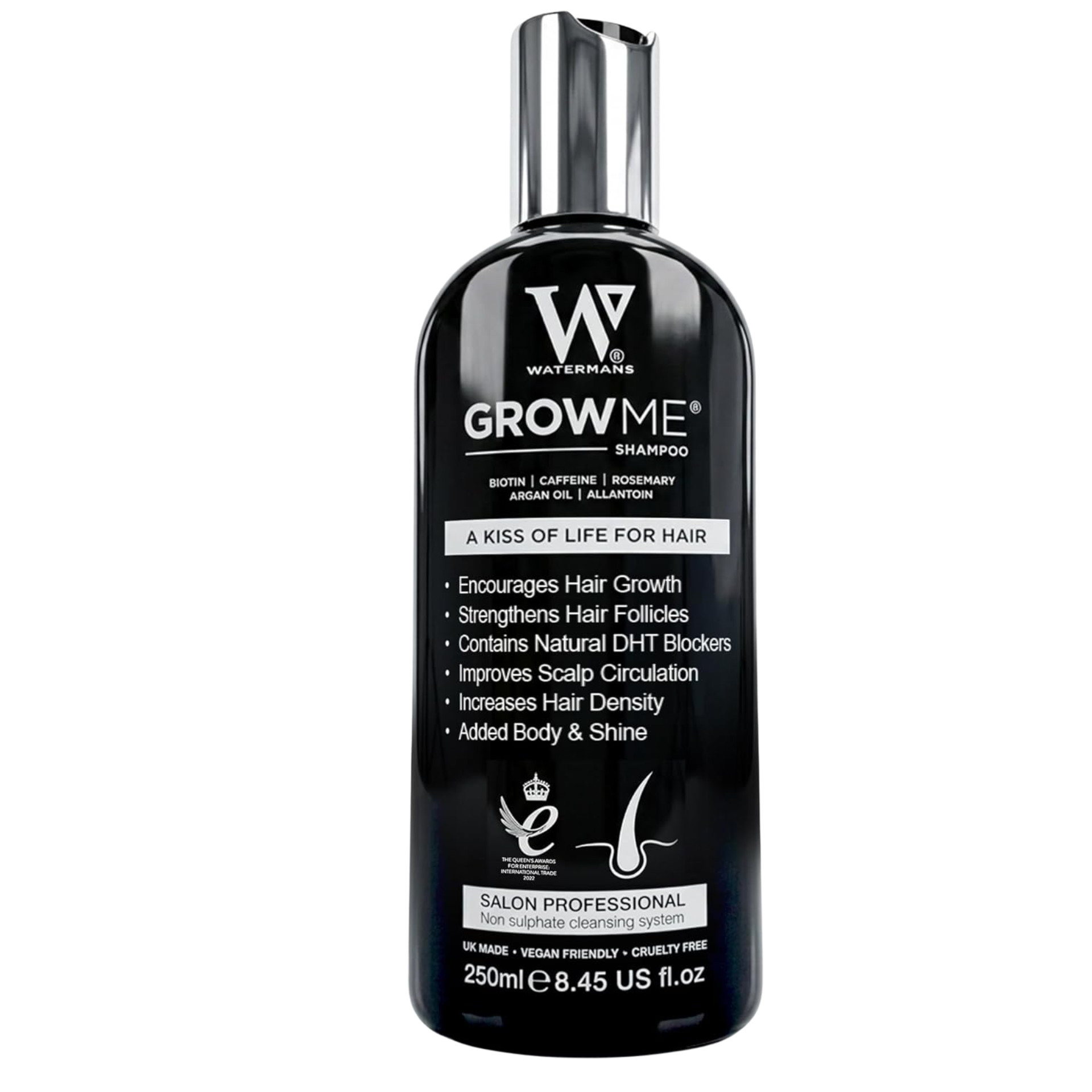
Grow Me® Hair Growth Shampoo, £14.95. A sulphate free daily shampoo that supports a healthy scalp environment and helps reduce breakage, so lengths hold on and look fuller.
Key takeaways
- Density is hairs per area plus the calibre of each hair. Shedding is hairs leaving. Breakage is hairs snapping. Three measurements, three timescales.
- NHS inform lists hair loss or thinning among the recognised signs and symptoms of menopause, alongside an increase in facial hair.
- Hair density is not a licensed reason to take HRT, and the evidence on it is limited and inconsistent. Be sceptical of any confident claim either way.
- Twelve months is the honest window, because hair grows roughly a centimetre a month.
- Ferritin, full blood count, thyroid function and vitamin D are still worth having rather than attributing everything to hormones.
- Cosmetic products work on the fibre and the scalp, not on follicle count. They reduce breakage and make hair look fuller.
What does hair density actually mean?
Density combines two things: how many hairs occupy a given area of scalp, and how thick each of those hairs is. A scalp can lose density by producing fewer hairs, by producing progressively finer ones, or by both at once, and the second route is the quieter and more common one in midlife. That is why the HRT hair density question is so often answered wrongly by people watching the wrong number.
A practitioner measures it with trichoscopy, which magnifies the scalp enough to show follicle openings, how many hairs emerge from each, and the variation in calibre between them. Wide variation in thickness across neighbouring hairs is the signature of miniaturisation, and it appears well before anything is obvious in a mirror.
At home you cannot count follicles, but you can track the three proxies in the section below. None of them is precise. All of them are more honest than remembering what your hair looked like last spring.

How is density different from shedding and breakage?
Three different things get described with the same words, and confusing them is the reason people reach the wrong conclusion about hormones. Each has a different cause, a different timescale and a different thing to do about it.
| What it is | How it shows up | Timescale |
|---|---|---|
|
Hair density Hairs per area, plus calibre |
A parting that widens over a year. New hairs noticeably finer than the ones they replaced. | Years. Judged at twelve months, never at eight weeks. |
|
Hair shedding Hairs leaving from the resting phase |
A sudden, alarming increase in the brush and the shower. NHS inform notes losing up to 100 hairs a day is normal. | Appears about three months after a trigger, then usually settles. |
|
Hair breakage The fibre snapping mid length |
Short broken ends of uneven length along the shaft, not tapered new hairs at the root. A ponytail that measures thinner. | Weeks. The fastest of the three to improve. |
The practical consequence is this. A heavy shed three months after starting or stopping anything will frighten you and tell you very little about density. DermNet notes that telogen effluvium usually recovers once the trigger has passed. Meanwhile a slow decline in calibre makes almost no noise at all and is the thing actually worth tracking. For more on this, see how HRT hair thickness differs from density.
What does the evidence say about HRT and hair?
Less than either the enthusiasts or the sceptics suggest. Hair density is not a licensed reason to take HRT: it is used for menopausal symptoms, and NHS inform sets out what it is for and what the considerations are. Any effect on hair sits downstream of that, and the research on it is limited, inconsistent and not the basis for a decision either way.
What is well established is the association. NHS inform lists hair loss or thinning among the recognised signs and symptoms of menopause, alongside an increase in facial hair, changes in skin condition and a long list of others. Recognised means you are not imagining it. It does not mean hormones are the whole explanation in your particular case.
So the honest position on HRT hair density is that nobody should promise you a number. If your hair is part of why you are considering or reviewing HRT, say so to the clinician managing it, bring your photographs, and regard any hair effect as a possible side benefit rather than the reason. Related reading: what counts as normal hair loss.
Get a discount on the menopausal thinning range
Join the Watermans mailing list and we will email a discount code straight to your inbox, so you can try the menopausal thinning range for less. Made in the UK, over 6.5 million bottles sold since 2012.
How do you measure HRT hair density at home?
Three proxies, tracked monthly, in a dated folder on your phone. None replaces a magnified assessment, and together they are enough to tell you at twelve months whether the trend is flat, falling or improving.
- Parting width against a fixed reference. Photograph the same parting in daylight with a ruler or a coin in the frame. The reference object is what makes months comparable rather than a matter of opinion. A widening parting at the top of the head is the classic female pattern signal.
- Ponytail circumference. A tape measure at a fixed distance from the base, recorded monthly. It responds to both density and breakage, which is a limitation worth knowing rather than a flaw.
- Calibre of new growth. Run your fingers along the parting and feel for short new hairs of noticeably different thicknesses. New hair finer than what was lost points to miniaturisation, and it is the earliest signal available without magnification.
Fix the variables the way a laboratory would. Same window, same time of day, same distance, same parting, dry hair, styled the same way. Wet hair reads as thinner and a bathroom downlight shows scalp that daylight does not, so a change of bulb can look exactly like a change of density.
What should be checked before blaming hormones?
Four blood tests and a medicine review, all free through your GP practice. Midlife is precisely when several non hormonal causes become more likely, and attributing everything to menopause by default is how a correctable cause goes unnoticed for a year.
| Check | Why it matters here |
|---|---|
| Ferritin and full blood count | Iron stores can sit low enough to affect hair while haemoglobin still reads normal. Heavy or irregular perimenopausal bleeding makes this more likely, not less. |
| Thyroid function | NHS inform names both underactive and overactive thyroid among the endocrine causes of increased shedding, and thyroid problems become more common with age. |
| Vitamin D | NHS inform recommends a daily supplement over the winter months, when daylight in the UK supplies very little. |
| Medicine and supplement review | Timing is the clue. Shedding beginning three to four months after any new prescription is worth raising, without ever stopping it yourself. |
One caution before the blood draw: high dose biotin can distort thyroid and cardiac results, so tell whoever takes the sample if you have been taking a hair supplement. More on sorting out causes in why your hair is thinning.
What does an honest twelve month timeline look like?
Hair grows roughly a centimetre a month, which sets the floor on how quickly anyone can honestly report anything. That single fact is why a twelve month view is not caution, it is arithmetic.
- Month 0. Baseline photographs with the ruler in frame, ponytail measurement, blood tests arranged through your GP practice.
- Months 1 to 3. Breakage improves first if handling has changed, and scalp comfort settles. Density will not have moved. Looking now produces noise, not information.
- Months 3 to 6. If a shed was triggered by a change three months earlier, this is when it typically settles. Photographs start to be genuinely comparable.
- Month 6. First honest review. Compare photograph to photograph, never to memory.
- Month 12. The real verdict on the trend. Flat, falling or improving, and the answer is in the series rather than in how you feel about the mirror that morning.
Set the twelve month point in your calendar at the start. Plans without a review date do not get reviewed, and the HRT hair density question in particular rewards patience with an answer and punishes impatience with a false one.

Which conditions should be ruled out rather than assumed?
Four are worth naming, because each has a different implication and two of them belong with a GP rather than with a cosmetic routine.
- Female pattern hair loss. NHS inform describes it as thinning of the hair at the top of the head, caused by a combination of hormonal and genetic factors. This is the one where density genuinely declines and where early tracking changes what you can decide.
- Telogen effluvium. Increased shedding from the resting phase, triggered by illness, stress, nutritional deficiency, childbirth or thyroid disorders, appearing about three months later and usually settling. More in what causes telogen effluvium.
- Alopecia areata. NHS inform describes small round patches that can appear at any age, thought to be autoimmune. Patches appearing over days or weeks are a GP matter the same week, not a product question.
- Scarring alopecia. NHS inform lists several types causing permanent loss, including frontal fibrosing alopecia at the hairline, which is recognised more often around and after menopause. A shiny, smooth or sore scalp with no visible follicle openings needs a GP.
Traction alopecia is worth adding for anyone whose styling has changed to compensate for thinning. DermNet notes that sustained pulling from tight ponytails, buns, braids, weaves and extensions shows first at the temples and hairline, recovers when caught early and becomes permanent once the follicles scar.
What cosmetic care genuinely helps, and what does it not do?
Cosmetic products act on the fibre and the scalp surface, not on how many follicles are producing hair, so they do not change density and we will not suggest otherwise. What a well made routine does is reduce the breakage working against you and keep the scalp comfortable, which shows up as hair that looks and feels fuller and as a ponytail that measures better.

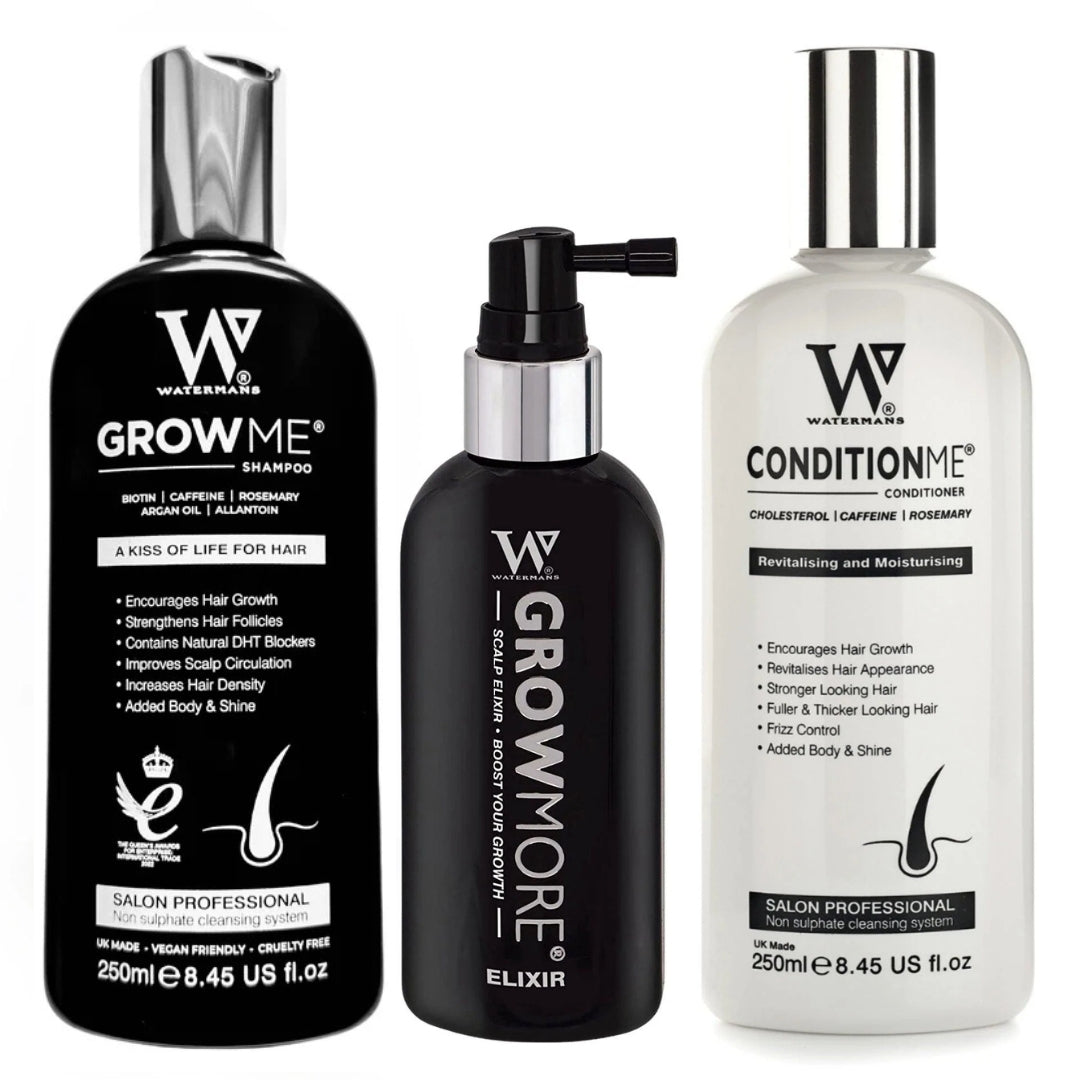
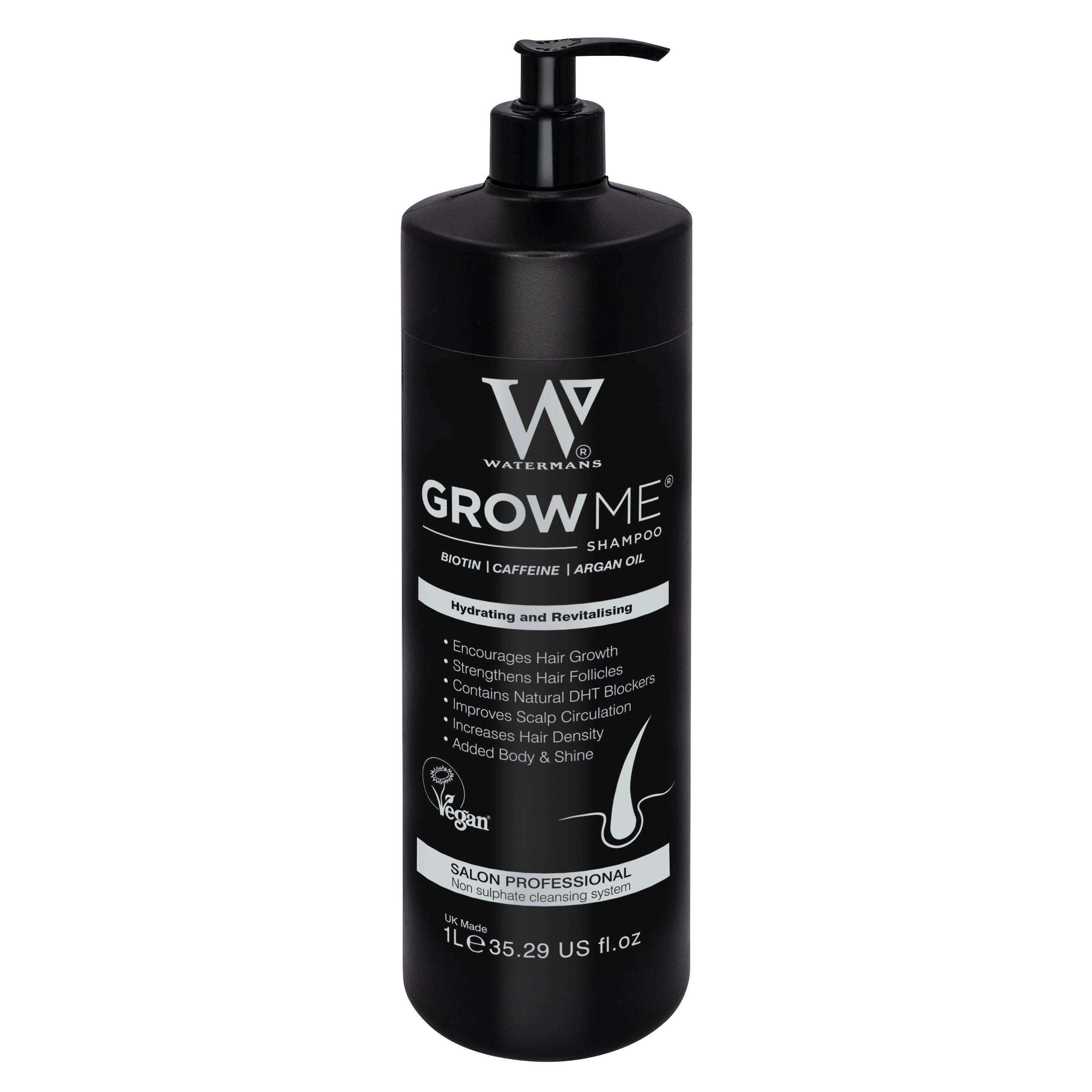
Grow Me® Hair Growth Shampoo, £14.95
Sulphate free daily shampoo with biotin, caffeine, rosemary, niacinamide and hydrolysed lupine protein. Gentle enough to wash as often as your scalp needs without stripping it. Vegan.

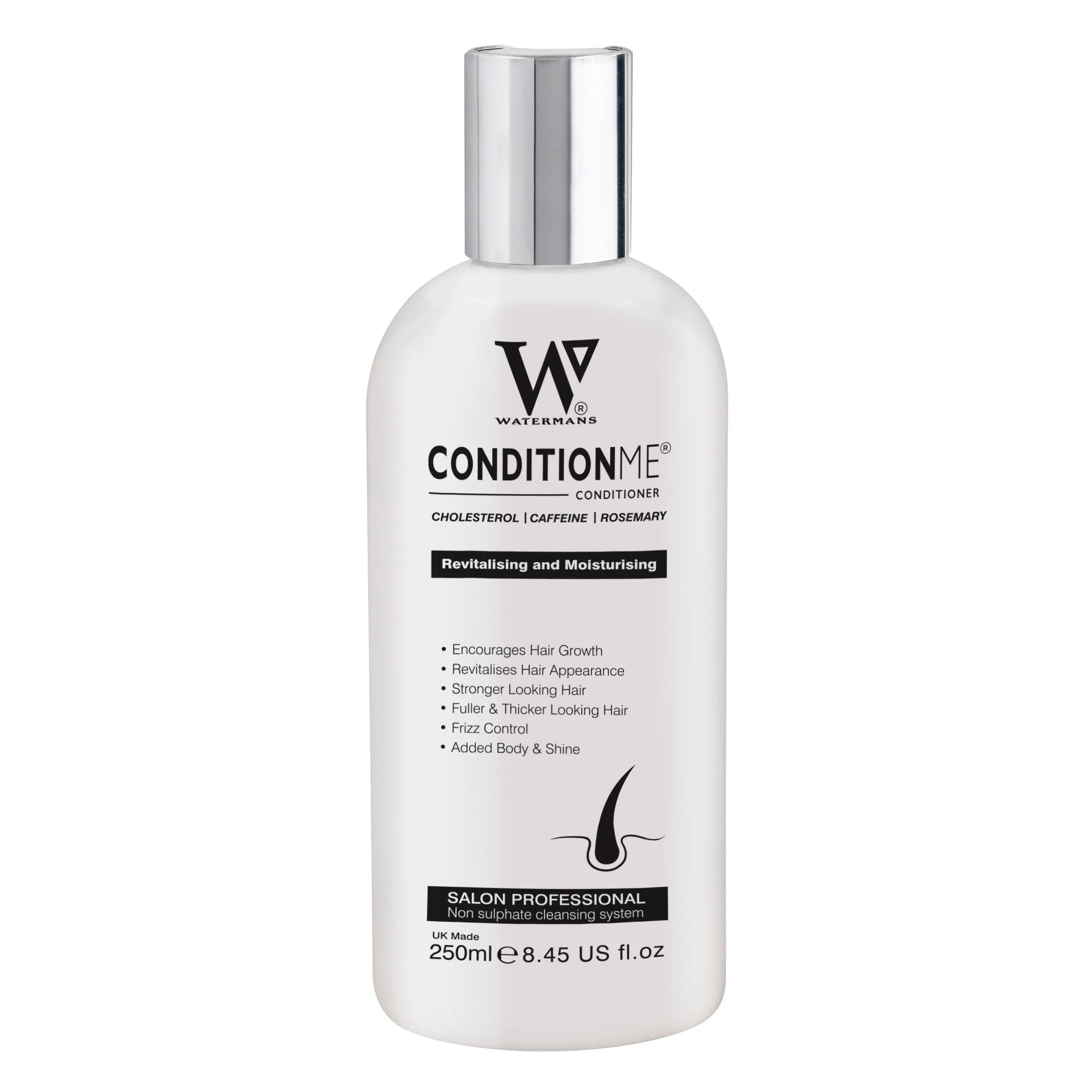
Condition Me® Hair Growth Conditioner, £13.95
Shea butter, glycerin, cholesterol and lupine protein for slip and breakage defence, so detangling costs you fewer strands. The everyday partner to Grow Me.

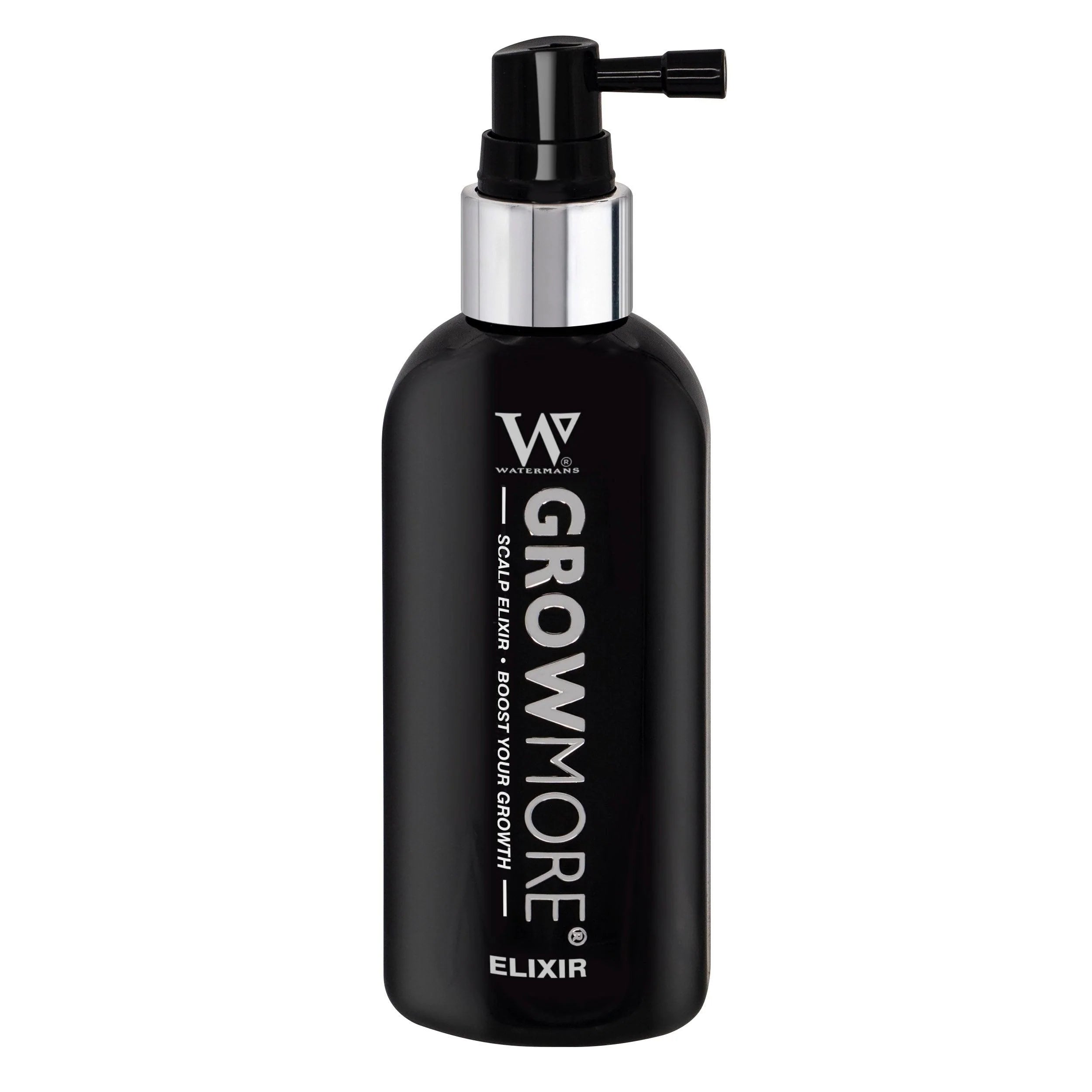
Grow More® Leave In Scalp Elixir, £25.50
A leave on overnight serum for the parting and crown, with caffeine, rosemary, niacinamide and lupine protein. Useful when your concern sits in one area rather than all over. Vegan.
Watermans has sold over 6.5 million bottles since 2012, is made in Britain and is free from sulphates and parabens. Grow Me shampoo is vegan. Condition Me conditioner is not, because its cholesterol comes from lanolin, and neither are our Hair Building Fibres, which use wool keratin. Alongside the products, the free levers matter more than people expect: wash two to four times a week, detangle from the ends upwards with a wide tooth comb, lower the heat and loosen the styling. Our guide to keeping your scalp healthy for stronger hair covers the routine in full. For what shifts in each direction and when, the order hormone related hair changes usually arrive in sets out the twelve month shape. Once you are measuring properly, our HRT hair care routine guide sets out what to actually do between photographs. For the wider set of measurements worth logging each month, see our guide to HRT hair biomarkers. For how long HRT is usually taken and how the yearly review works, our HRT duration guide explains the NHS position.
Frequently asked questions
What does hair density actually mean?
Density is how many hairs occupy a given area of scalp, together with how thick each of those hairs is. It is not the same as how much falls out. You can shed heavily for three months with density unchanged, and you can shed normally while density slowly declines, which is why the plughole is such a poor guide. For the calibre side of this, our guide to how hair miniaturisation is measured explains what to look for on your own scalp.
Does HRT improve hair density?
There is no reliable answer to give you, and anyone offering a confident one is going beyond the evidence. Hair density is not a licensed reason to take HRT, the research is limited and inconsistent, and any hair effect would be secondary to what the medicine is actually for. Discuss it with the clinician managing your HRT.
How long before I could see any change?
Twelve months is the honest window. Hair grows roughly a centimetre a month, so a follicle that changes what it produces today needs most of a year for that change to reach a visible length. Judging at eight weeks tells you about styling and lighting, not about density.
Why did my hair shed heavily after starting or stopping HRT?
Shedding and density are different measurements on different timescales. A shift in the hair cycle can push many follicles into the resting phase at once, and they release together about three months later. NHS inform describes this pattern of increased shedding as triggered by illness, stress, nutritional deficiencies, childbirth or thyroid disorders, and it usually settles once the trigger passes.
Is hair thinning a normal part of menopause?
It is a recognised one. NHS inform lists hair loss or thinning among the signs and symptoms of menopause, alongside an increase in facial hair. Recognised does not mean unexplained, though, so the standard blood tests are still worth having rather than attributing everything to hormones by default.
How do I measure HRT hair density at home?
Three ways, all cruder than a magnified scalp assessment and all better than memory. Photograph the same parting in the same daylight against a ruler each month. Measure ponytail circumference at a fixed point. And feel whether new hairs along the parting are as thick as the ones that fell out.
Which blood tests should I ask about?
Ferritin with a full blood count, thyroid function and vitamin D. NHS inform names iron deficiency and both underactive and overactive thyroid among the causes of increased shedding, and all three are correctable once identified. They are free through your GP practice and they rule things in or out that hormones cannot explain. If your question is about products or a routine rather than a medical one, you can talk to Gail Waterman, our co-founder, as an AI avatar on the Watermans homepage.
Can shampoo change my hair density?
No. Cosmetic products work on the fibre and the scalp surface, not on how many follicles are producing hair. What they can do is reduce breakage, which affects how thick your hair looks and how a ponytail measures, so the honest claim is fuller looking hair rather than more hair.
Should I stop my HRT if my hair is thinning?
Never stop a prescription on your own. Raise the timing with the clinician managing it: when the change started, what it looks like, and what your dated photographs show. That is a conversation about the whole picture, and hair is one part of a decision that involves several others.
What is the single most useful thing I can do today?
Take the first photograph. Same parting, same daylight, dated, with a ruler in the frame. Every question about HRT hair density becomes answerable once you have a series to compare, and completely unanswerable without one.
Sources & references
Every factual claim above was checked against the following on 12 September 2026. For what density actually is and the three separate reasons it falls, see our guide to what hormone therapy does to hair density.
- NHS inform, Signs and symptoms of menopause
- NHS inform, Menopause and post menopause health
- NHS inform, Treating menopause symptoms
- NHS inform, Hormone replacement therapy (HRT)
- NHS inform, Alopecia (hair loss)
- NHS inform, Blood tests
- NHS inform, Iron deficiency anaemia
- NHS inform, Underactive thyroid
- NHS inform, Overactive thyroid
- NHS inform, Vitamins and minerals
- NHS inform, Scotland's service directory: GP practices
- DermNet, Telogen effluvium
- DermNet, Female pattern hair loss
- DermNet, Menopause and the skin
- DermNet, Traction alopecia
- British Association of Dermatologists, alopecia areata leaflet
- Scottish Intercollegiate Guidelines Network, Our guidelines
What is the bottom line on HRT hair density?
Measure it, do not feel it. HRT hair density moves too slowly to judge from a mirror and far too slowly to judge from a bad shower, so the only useful answer comes from a dated monthly photograph with a ruler in the frame, a ponytail measurement, and a twelve month review. Have the blood tests first so hormones are not carrying blame that belongs elsewhere, and take any confident promise about hair and HRT as a claim going well beyond what the evidence supports.
While the twelve months run, breakage is the part entirely in your hands, and a gentle daily hair growth shampoo is the simplest way to stop it undoing your progress.
Watermans products are 100% cosmetic and do not treat medical hair loss. Individual results may vary. This article is general information about hair and scalp care and is not medical advice. If you have sudden, patchy or painful hair loss, hair loss in a child, or hair loss alongside other symptoms, please speak to your GP practice.