Female Pattern Hair Loss: The Options, Compared
Female pattern hair loss is the most common reason women see less hair at the parting while the frontal hairline largely holds. It is gradual, it is driven by inherited follicle sensitivity, and it is frequently confused with a temporary shed or with breakage. This guide compares the honest options, explains which need a GP and which do not, and says plainly what a cosmetic can and cannot contribute.
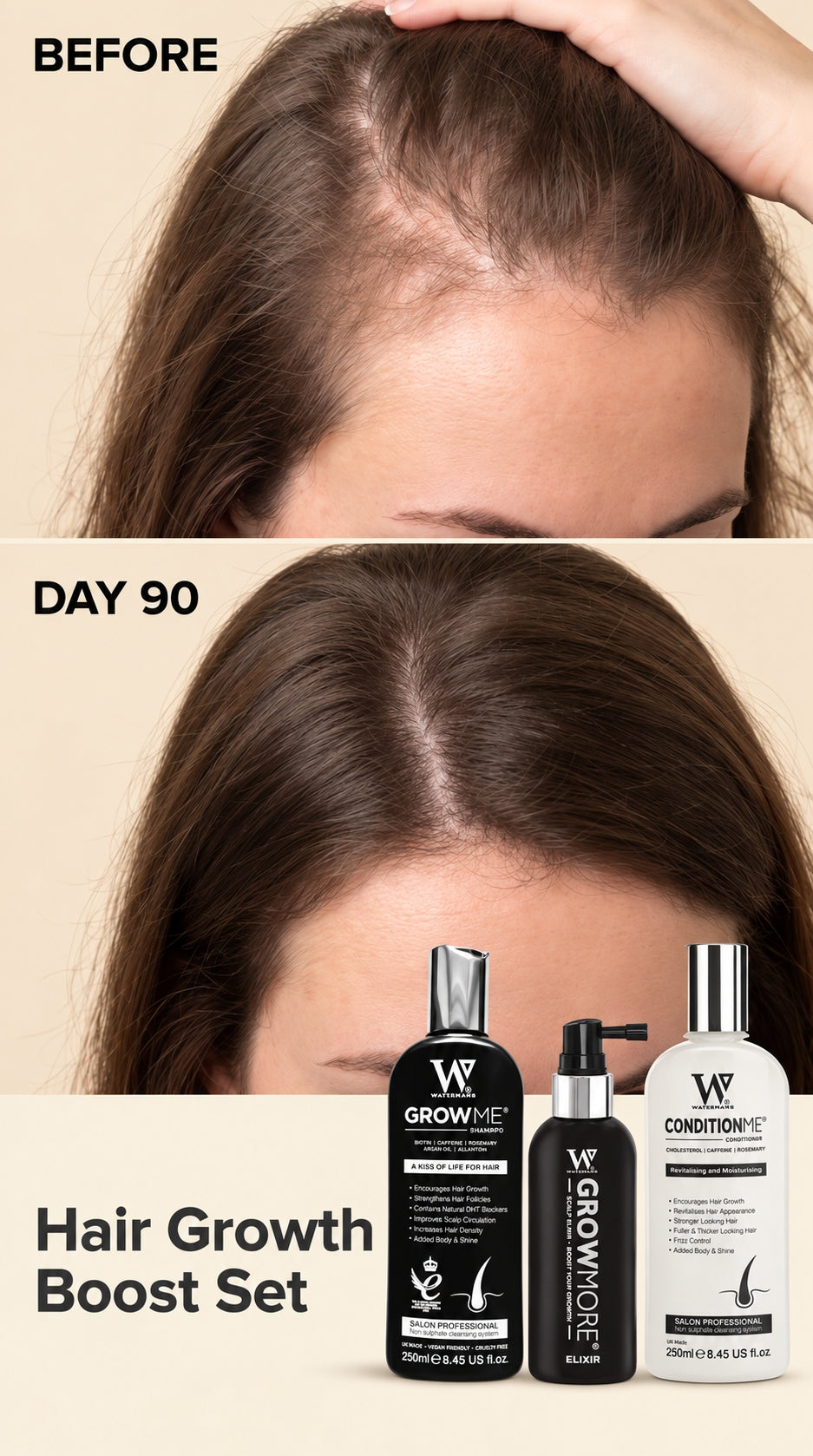
Our hair growth shampoo
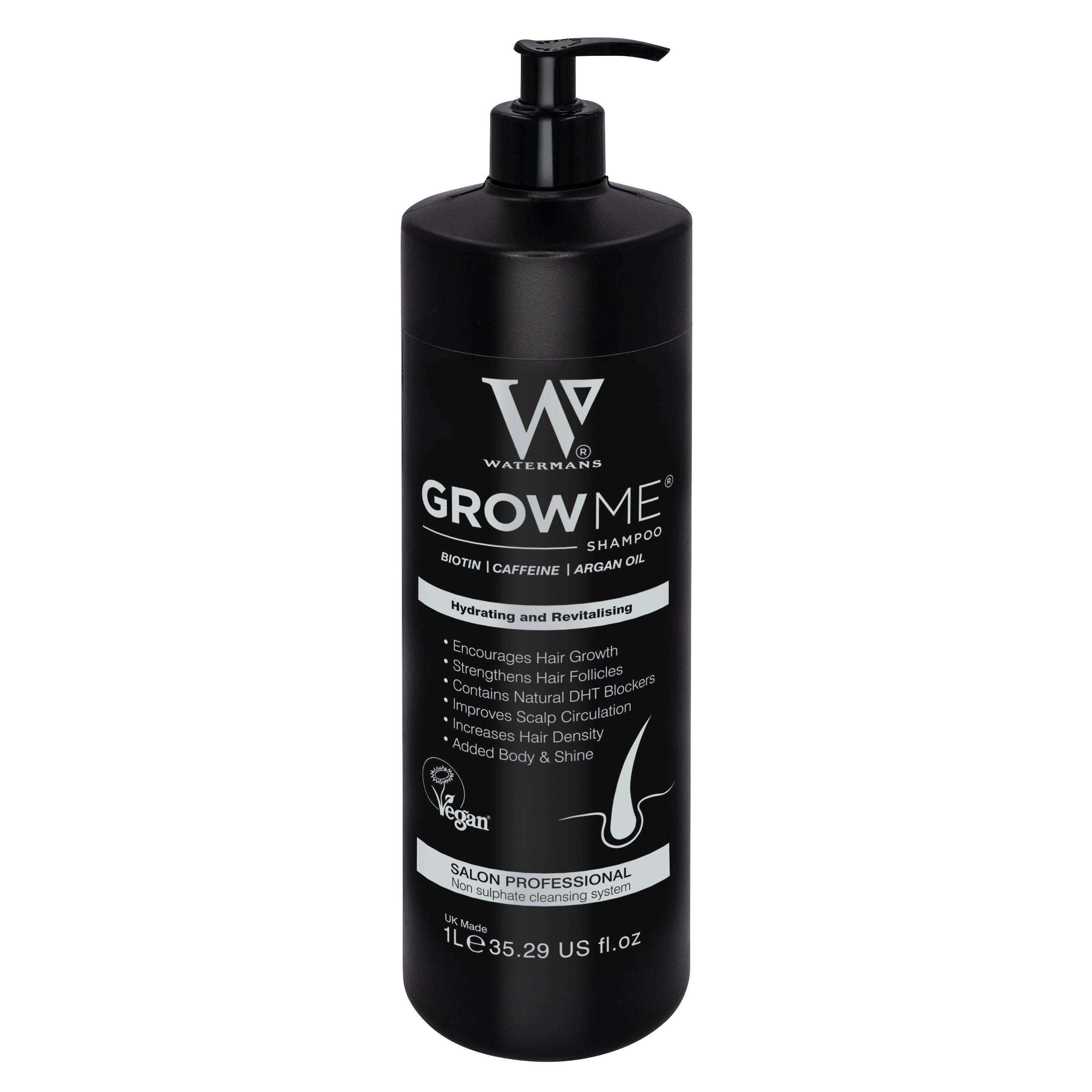
Grow Me® Hair Growth Shampoo, £14.95. A sulphate free daily shampoo that supports a healthy scalp environment and helps reduce breakage, so lengths hold on and look fuller.
Key takeaways
- The parting widening while the hairline holds is the classic picture. A receding front or patchy round bald areas is something else.
- Ask a GP for ferritin, thyroid function, vitamin D and B12 before assuming the inherited kind. Low iron is common in women and produces the same symptom.
- Medical options exist and are a GP conversation. We do not name or recommend medicines, because we sell cosmetics.
- Cosmetic care works on the scalp and on breakage. Camouflage works today. Neither changes the underlying pattern.
- Nothing in this category is judged fairly in under three months.
What is female pattern hair loss, and how do you recognise it?
Female pattern hair loss is a gradual reduction in the thickness of individual hairs across the top of the scalp, caused by follicles that carry an inherited sensitivity to androgens. Each growth cycle the follicle produces a slightly finer and shorter hair, so density falls without the scalp ever going completely bare in most cases. The classic sign is a parting that looks wider than it used to, most obvious in bright overhead light or in a photograph.
Two features separate it from the alternatives. The frontal hairline usually stays put, which is the main visual difference from the male pattern. And it develops over years rather than weeks, so a sudden change over a fortnight is pointing somewhere else. Age is not a requirement either: it can begin in the twenties, though it becomes considerably more common around and after the menopause.
Our guide to pattern hair loss and its stages covers the underlying mechanism in more detail for anyone who wants it.

Is it hair loss, hair shedding or hair breakage?
Getting this wrong costs women months and a good deal of money, because the three problems respond to entirely different things. Hair loss means follicles miniaturising, which is gradual and patterned. Hair shedding means a large number of hairs releasing at once because the growth cycle was disturbed, typically two to four months after childbirth, illness, surgery, sharp weight loss or a stressful period. Hair breakage means the fibre snapping partway along, which is a damage problem rather than a follicle problem. If you want the detail on that, our guide to hair shedding after weight loss in women walks through it step by step.
| Clue | Female pattern hair loss | Shedding | Breakage |
|---|---|---|---|
| Speed | Years | Weeks, after an event | Builds with a habit |
| Where | The parting and the top | All over evenly | Where heat, bleach or tension lands |
| The hairs | Finer and shorter than they were | Full length, pale bulb at the root | Short snapped pieces, no bulb |
| Best first step | Photographs and a GP conversation | Blood tests and time | Less heat and tension, more conditioning |
Many women have two of these at once, which is why a single product so often disappoints. Our three clue self check separates them in about five minutes.
What should you check before assuming it is the inherited kind?
Four blood tests cover most of what is both common and correctable in women: ferritin, which reflects iron stores and is frequently low in anyone with heavy periods, thyroid function, vitamin D and B12. A full blood count is usually done alongside. Low iron stores in particular produce exactly this presentation and are missed constantly, partly because a normal haemoglobin result can sit next to a poor ferritin one.
Worth mentioning to a GP as well: irregular or absent periods, new facial hair, acne appearing in adulthood, unexplained weight change and persistent fatigue. Those point towards causes with their own answers, and they change what happens next. Where the hormonal picture is the question, our guide to which hormone does what to hair is a useful thing to read first.
Before the appointment. Take photographs of your parting from above, note when you first noticed the change, list anything significant in the six months before that, and write down every supplement you take. Ten minutes of preparation makes a ten minute appointment far more productive.
What are the options, honestly compared?
There are five broad categories, and they are not competing so much as answering different questions. Some women use three at once.
| Option | What it offers | Where it comes from | Worth knowing |
|---|---|---|---|
| Correcting a deficiency | Addresses a genuine, fixable cause | A GP, after blood tests | Only helps if you are actually deficient. Supplementing blind is not harmless |
| Medical options | The only route that acts on the pattern itself | A GP or pharmacist | We sell cosmetics and do not name or advise on medicines. Ask a clinician |
| Cosmetic routine | Scalp comfort, less breakage, better handling | Any decent shampoo, conditioner and leave on serum | Real but modest. Judge at ninety days, not at three weeks |
| Camouflage | Immediate visual density | Fibres, root sprays, cut and colour, toppers | Works the same day and changes nothing underneath, which is fine |
| Surgical restoration | Redistributes existing follicles | A specialist clinic, privately | Expensive, permanent, and suitability varies considerably in women. Research the clinic hard |
Notice which row is missing: there is no cosmetic entry that acts on the pattern, because no cosmetic does. A brand that offers you one is selling you the medical row at a cosmetic price.
Get a discount on your next order
Join the Watermans mailing list and we will email a discount code straight to your inbox. Made in the UK, over 6.5 million bottles sold since 2012.
Does the menopause change the picture?
The menopause does not cause female pattern hair loss on its own, but it commonly unmasks it. Falling oestrogen shifts the balance so that the androgen sensitivity a woman always carried becomes visible, which is why so many notice the parting widening in their late forties and fifties. Hair may also feel drier and more brittle at the same time, which is a separate fibre problem layered on top and often the one that is easier to improve.
That combination is worth naming because the two are frequently taken as one thing. The density change is slow and largely inherited. The dryness and breakage respond well to conditioning and to less heat, and improving them can make a meaningful difference to how thick the hair looks well before anything else does.

What can a cosmetic routine honestly contribute?
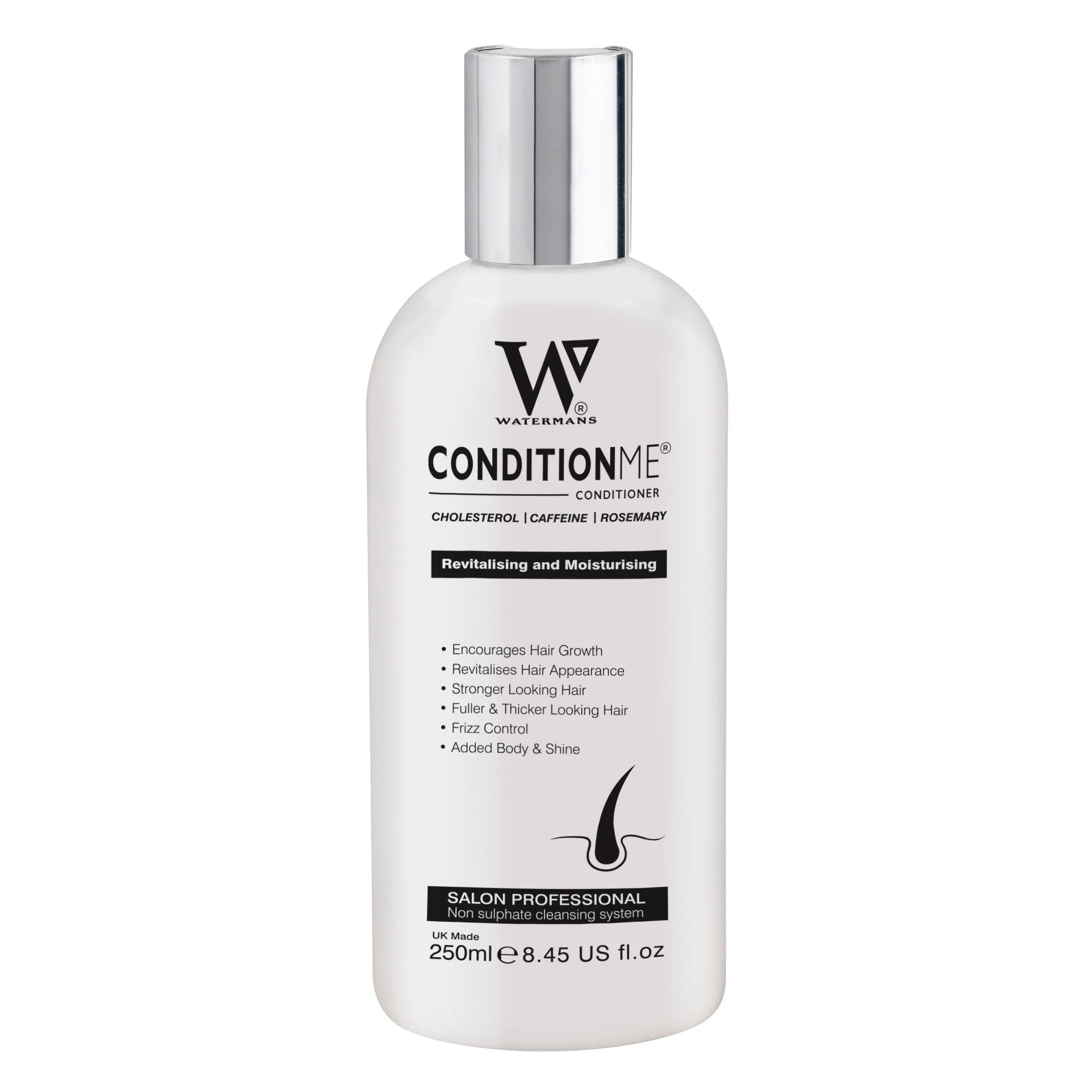
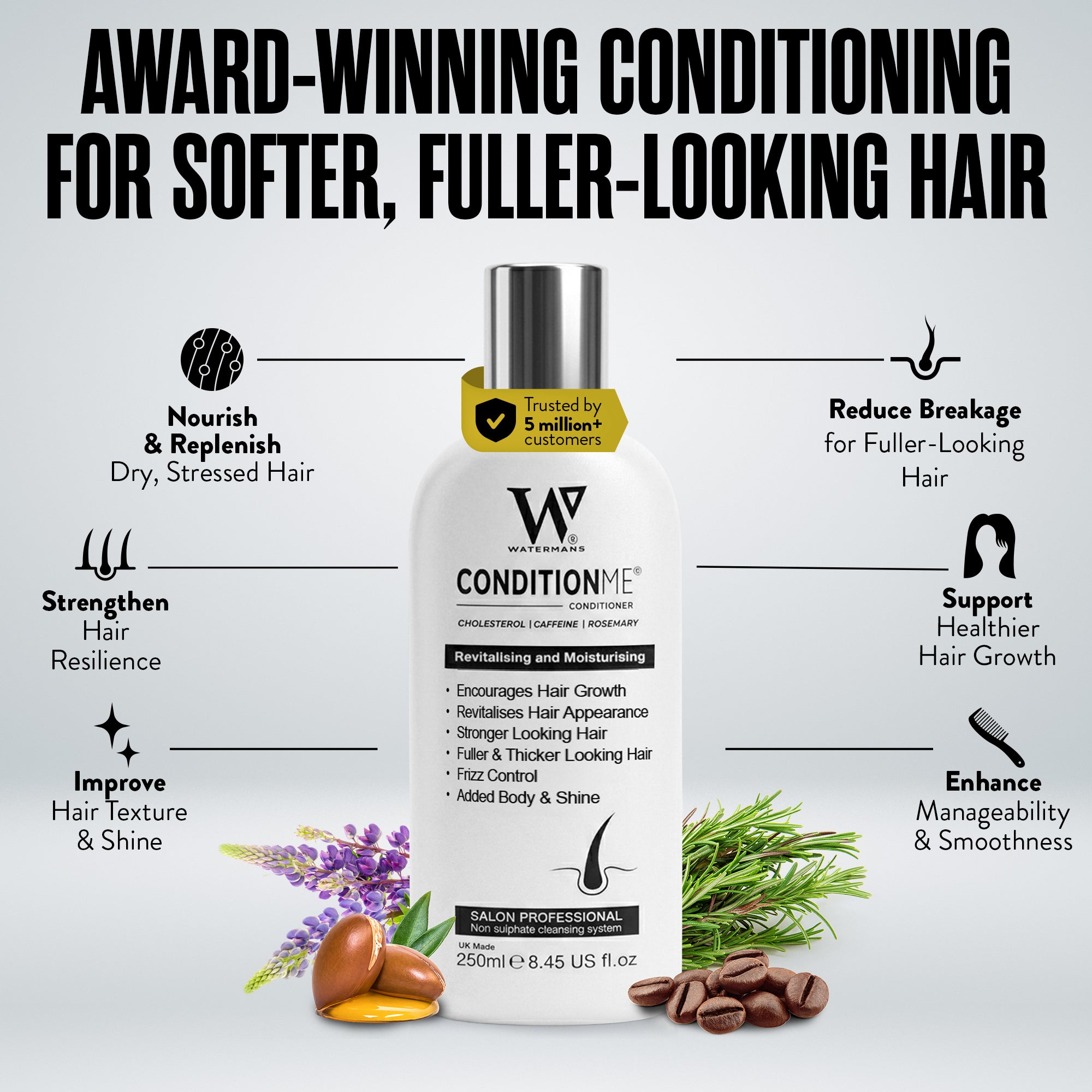
Three things, none of which involve the follicle. A cleanser that does not strip leaves the scalp comfortable. Conditioning gives the fibre slip so it survives washing, towelling and detangling instead of snapping. And a leave on scalp product provides contact time, which is the only sensible argument for that format existing.
The reason this matters more than it sounds is arithmetic. Visible thickness depends on how many hairs reach a decent length, so every hair that stops snapping mid shaft is a hair contributing to density. That is a genuine cosmetic gain, and it is the whole of what we claim.

Grow Me Shampoo
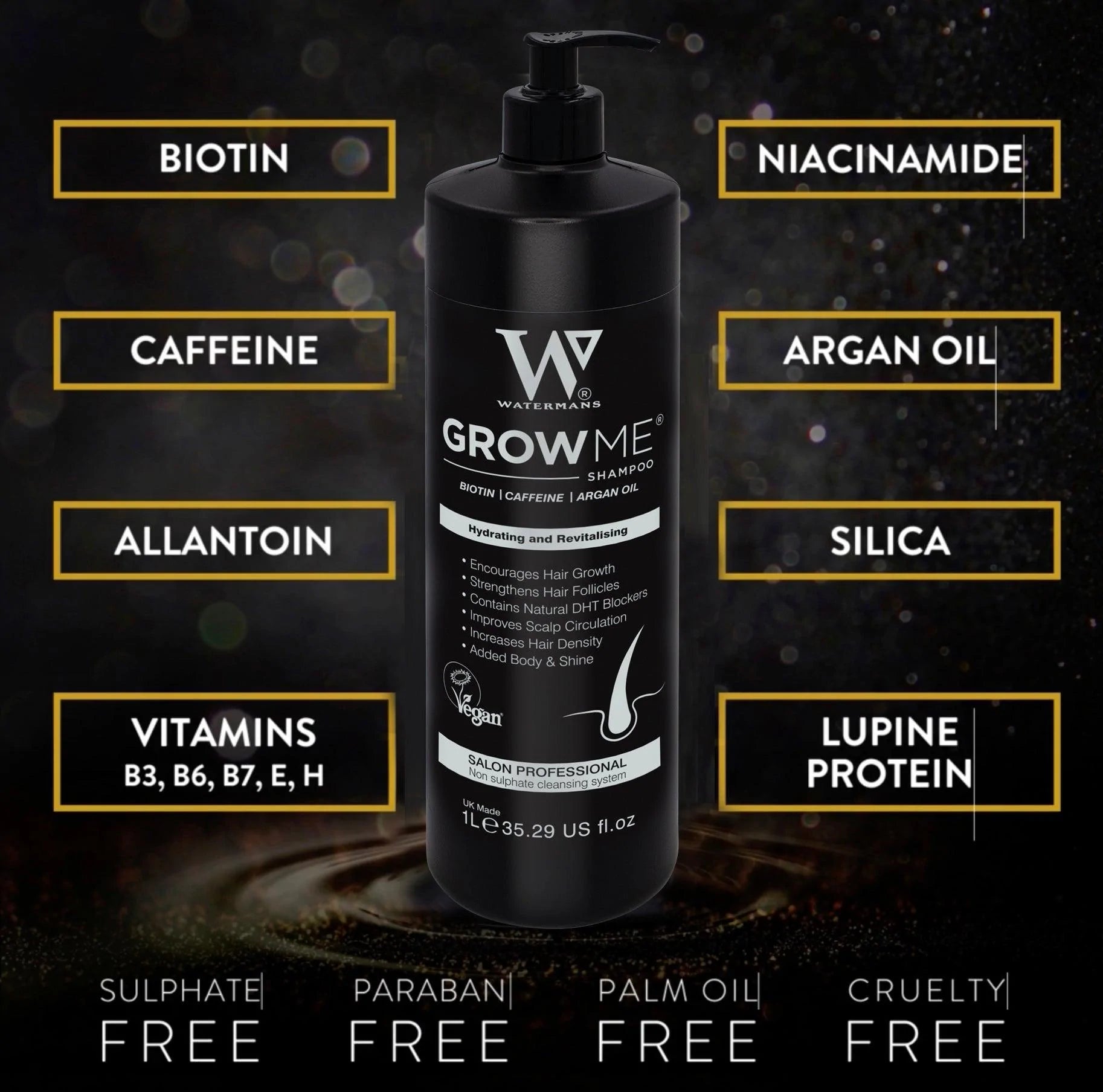
Sulfate free cleanse with caffeine, rosemary, biotin and niacinamide. Judge it on scalp comfort and on how your hair handles afterwards, which is what a cleanser can be judged on.

Menopause Hair Care Kit
The cleanse, condition and leave on routine together, aimed at the dryness and breakage that often arrive alongside menopausal hair changes. Cosmetic, and clear that it is not acting on hormones.

Hair Building Fibres
For the wider parting specifically, applied in a minute and washed out at night. It is camouflage and nothing more, which for a wedding, an interview or a Tuesday is often precisely the point.
Over 6.5 million bottles sold since 2012, made in the UK. If your blood tests come back showing a deficiency, that is the thing worth acting on, not a shopping basket. We would rather say so.
What helps how the hair looks while you decide?
Cut and colour do more for perceived density than most products. A blunt cut makes ends look thicker than long layers, which thin out towards the bottom. Lighter root colour reduces the contrast between hair and scalp so the parting reads as less obvious. Moving the parting a centimetre or switching sides lifts hair that has been trained flat for years.
Beyond that, the mechanical habits matter more than they get credit for. Loosen tight styles, avoid dragging a brush through wet hair without conditioner, drop the heat setting, and give the scalp a break from tension. None of this is glamorous and all of it is free. For the wider version of this plan, see our 90 day hair thinning action plan.
Frequently asked questions
Is female pattern hair loss permanent?
It is progressive rather than permanent in the sense people usually mean: follicles miniaturise gradually rather than dying overnight, and the pace varies enormously. What is not realistic is a cosmetic returning the density of a decade ago. What is realistic is understanding the cause and making informed decisions early, which is when options are widest.
Can female pattern hair loss start in your twenties?
Yes, though it is less common. Early onset is worth taking to a GP rather than to the internet, partly because other causes are more likely at that age and partly because information is more useful early than late.
Will hair grow back after a shed?
Usually, yes. A shed triggered by childbirth, illness or a stressful period generally settles over several months and density returns, though it can take the better part of a year to look normal again. That is different from female pattern hair loss, which does not resolve on its own.
Do I need to see a GP, or can I sort this myself?
See a GP if the change is sudden, patchy, painful, itchy, scarring, or accompanied by fatigue, weight change or period changes. Even for straightforward gradual thinning, the blood tests are worth having, because the fixable causes are common and invisible without them. If your question is about products or a routine rather than a medical one, you can talk to Gail Waterman, our co-founder, as an AI avatar on the Watermans homepage.
Are hair supplements worth taking?
Only where you are actually short of something. Iron in particular should follow a test rather than a hunch. Mention any supplement, especially biotin, before blood tests, because it can distort some results.
Does colouring or bleaching make it worse?
It does not affect the follicle, but it damages the fibre, and damaged fibre snaps. On hair that is already finer than it was, that loss of length and body is very visible. Stretch out the intervals and condition more.
Are wigs and toppers a defeat?
No, they are an option that works immediately, and modern toppers are far better than their reputation. Plenty of women use one on some days and nothing on others. Whatever gets you through the day comfortably is the right answer.
How long should I give a cosmetic routine?
Ninety days, with photographs at the start and every month. If scalp comfort, handling and the pictures have all stayed the same at week twelve, stop buying it. That is a legitimate conclusion and not a failure on your part.
What is the bottom line on female pattern hair loss?
Female pattern hair loss shows as a widening parting with the frontal hairline holding, develops over years, and is driven by inherited follicle sensitivity. Rule out the fixable causes with a GP first, because low iron and thyroid problems are common and correctable. The pattern itself is a medical conversation. Cosmetic care earns its place on scalp comfort and on keeping the hair you have from snapping, camouflage works the same day, and everything in this category needs ninety days before a fair verdict.
For the cosmetic side of a fuller look, the Grow Me hair growth shampoo is the step that does the heavy lifting. Vegan and made in the UK.
Watermans products are 100% cosmetic and do not treat medical hair loss. Individual results may vary.
Sources and References
- NHS, Hair loss: causes, types and when to see a GP. nhs.uk/conditions/hair-loss
- NICE Clinical Knowledge Summaries, Alopecia, androgenetic. cks.nice.org.uk
- NICE Clinical Knowledge Summaries, Anaemia, iron deficiency. cks.nice.org.uk
- British Association of Dermatologists, Female pattern hair loss information leaflet. bad.org.uk
- NHS, Menopause: symptoms and treatment. nhs.uk/conditions/menopause