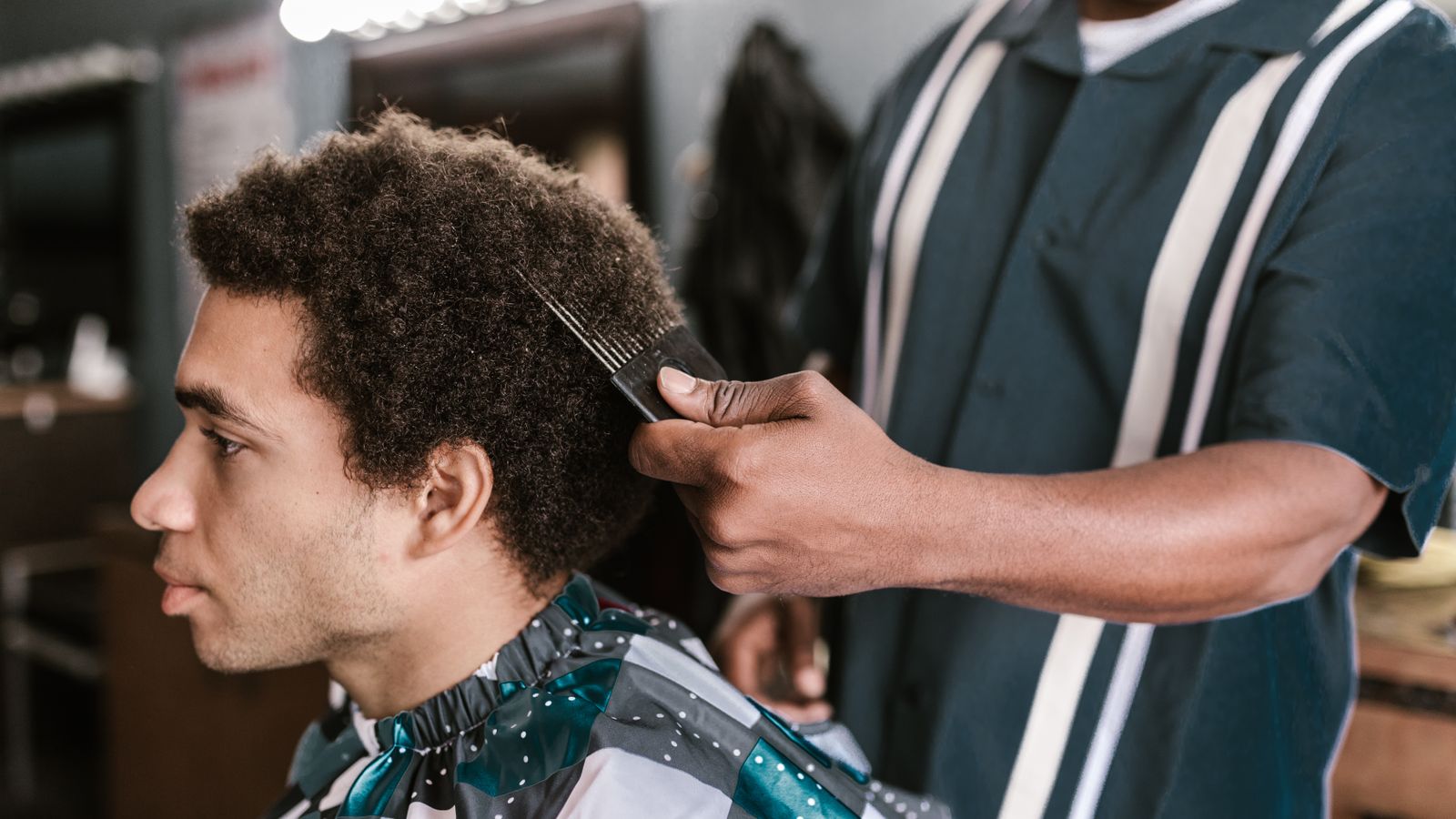
How to Grow Hair Faster Black Male: The Real Guide
The honest answer to how to grow hair faster black male readers are looking for is this: your hair already grows at a normal rate, roughly 1 cm a month, but tightly coiled hair loses more of that growth to breakage than any other texture. Every bend in a coil is a potential snap point, and scalp oils struggle to travel down the spiral. Growing longer hair is therefore about keeping the length you already make.
Our curly hair set
Curly Hair Shampoo & Conditioner Set, £24.95. A moisture led cleanse and condition pairing made for curls and coils, defining the curl pattern without stripping it.
Key takeaways
- Afro and coily hair grows at a near normal rate. Shrinkage and breakage hide it, so retention is the whole game.
- Moisture comes first. Hydrated coils flex, dry coils snap at the bend.
- Protective styles only protect when they are loose. Tight braids, tight durags and weekly tight line-ups cost you hairline.
- Separate the three problems: follicular hair loss, cycle driven shedding, and fibre breakage. They need different responses.
- Measure stretched length once a month. Daily mirror checks tell you nothing useful.
How to grow hair faster black male: what actually controls it?
Three factors decide the length you see. The first is genetics, which sets your growth rate and your maximum terminal length, and which you cannot change. The second is strand survival, meaning how much of that growth actually reaches visible length, and this is almost entirely under your control. The third is the scalp environment the follicle grows from. Scalp condition is not a cosmetic afterthought either: research published in the peer reviewed literature links poor scalp condition and oxidative stress to weaker hair growth and poorer retention.
Most "my hair will not grow" complaints are survival problems rather than growth problems. The hair grows, dries out, snaps somewhere along a coil, and length never accumulates. Fix moisture and handling and the same follicles suddenly appear twice as productive. That is why every serious answer to how to grow hair faster black male questions starts at the ends of the strand, not at the root.

Is it hair loss, hair shedding or hair breakage?
These three get lumped together constantly, and the fix for one does nothing for the others. Work out which you are dealing with before you change anything.
| What it is | What you notice | Where it comes from | What helps |
|---|---|---|---|
| Hair loss | Hairline moving back, crown thinning, scalp showing through | The follicle itself, whether pattern loss or traction damage | Removing tension early, and a GP or dermatologist for anything progressive |
| Hair shedding | More hair in the sink or on the pick, hairline unchanged | The growth cycle, often after illness, stress or a big weight change | Time, food, sleep, and finding the trigger |
| Hair breakage | Short broken pieces, rough ends, length that never changes | The fibre snapping partway along the strand | Moisture, gentler detangling, looser styling, satin at night |
For most black men asking why their hair seems stuck, the answer is breakage, and breakage is the most fixable of the three. Hair loss at the temples with a family history is a different conversation, and the honest move there is to see a GP rather than to buy another bottle of anything.
What does a wash day routine for coily hair look like?
1. Wash smart, not often
Once a week with a sulphate free shampoo, warm water rather than hot, fingertips rather than nails. Sulphates strip the oils coils depend on, which matters roughly double for textured hair compared with straight hair. Our guide to whether sulphate free shampoo is genuinely better covers the chemistry if you want the detail.
2. Moisturise like it is part of the job
Deep condition weekly, then seal damp hair with a light natural oil. Castor, jojoba and coconut are the classics. Focus on the last few inches, because those are the oldest and most weathered part of the strand. A few minutes of scalp massage while you apply is the best free habit on this list.
3. Detangle wet, in sections, from the ends up
Dry detangling on coily hair is how most breakage happens. Work on damp, conditioned hair, in four or six sections, starting at the ends and moving up. A wide tooth comb or your fingers beats a fine comb every time.
4. Style for protection, not for tension
Braids, twists and cornrows shield hair from daily friction, but only when they are installed loose. Tight installs and constantly re-pulled line-ups are the classic route to traction alopecia, the slow hairline recession barbers see every week. The British Association of Dermatologists is blunt about this: sustained pulling on the hairline damages follicles, and caught early the damage usually settles once the tension stops. If a style hurts going in, it is taking hair out.
5. Protect the nights
Cotton pillowcases sand coils down over eight hours. A satin or silk durag, bonnet or pillowcase is the cheapest length retention tool available, and the durag itself is fine as long as it is comfortable rather than compression tight.
6. Trim on a schedule
A light shape up of the ends every six to eight weeks removes split ends before they travel up the strand. You keep more length than you give away. This is the one piece of how to grow hair faster black male advice that feels counterintuitive and is still correct.

Do line-ups, waves and fades damage the hairline?
Not by themselves. A line-up is a cut, and cutting hair does nothing to the follicle. The damage comes from what usually travels with it: a razor taken to the same edge every week, brushing sessions for waves that pull hard at the root, and durags worn tight enough to leave a mark. Each of those is mechanical stress applied to the most fragile part of a black man's hairline, which is the fine baby hair at the temples.
A practical compromise is to go two to three weeks between razored line-ups rather than every week, to brush for waves firmly rather than aggressively, and to tie the durag so it holds without pressure. If your barber has to press to get the edge, the edge is already retreating.
Get a discount on the afro and coily hair range
Join the Watermans mailing list and we will email a discount code straight to your inbox, so you can try the afro and coily hair range for less. Vegan, made in the UK, over 6.5 million bottles sold since 2012.
Which products earn a place in the routine?
Two, for most people. A wash day pair built for coils, and a scalp focused shampoo if thinning is part of your picture. Everything else is optional.

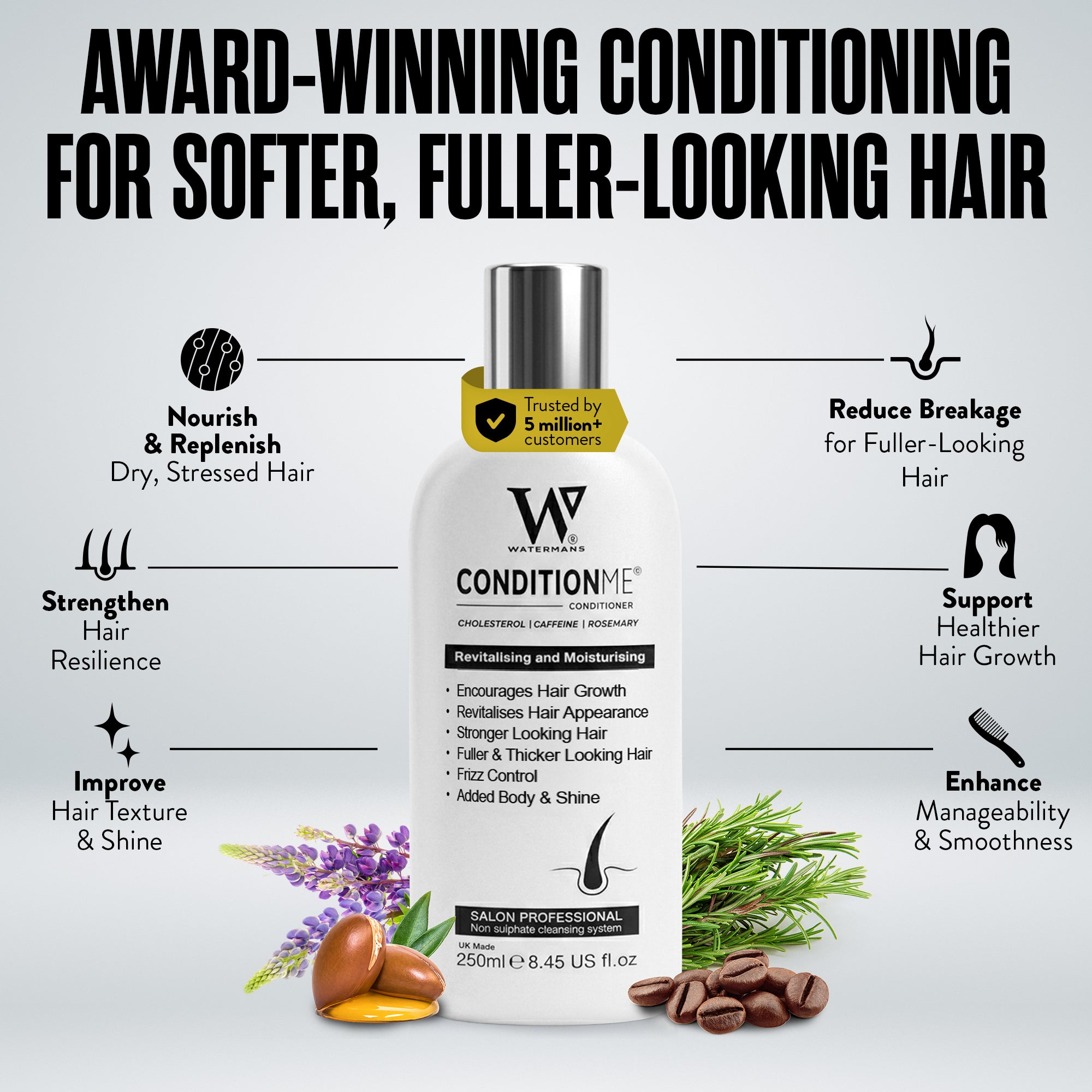
Curly Hair Shampoo & Conditioner Set
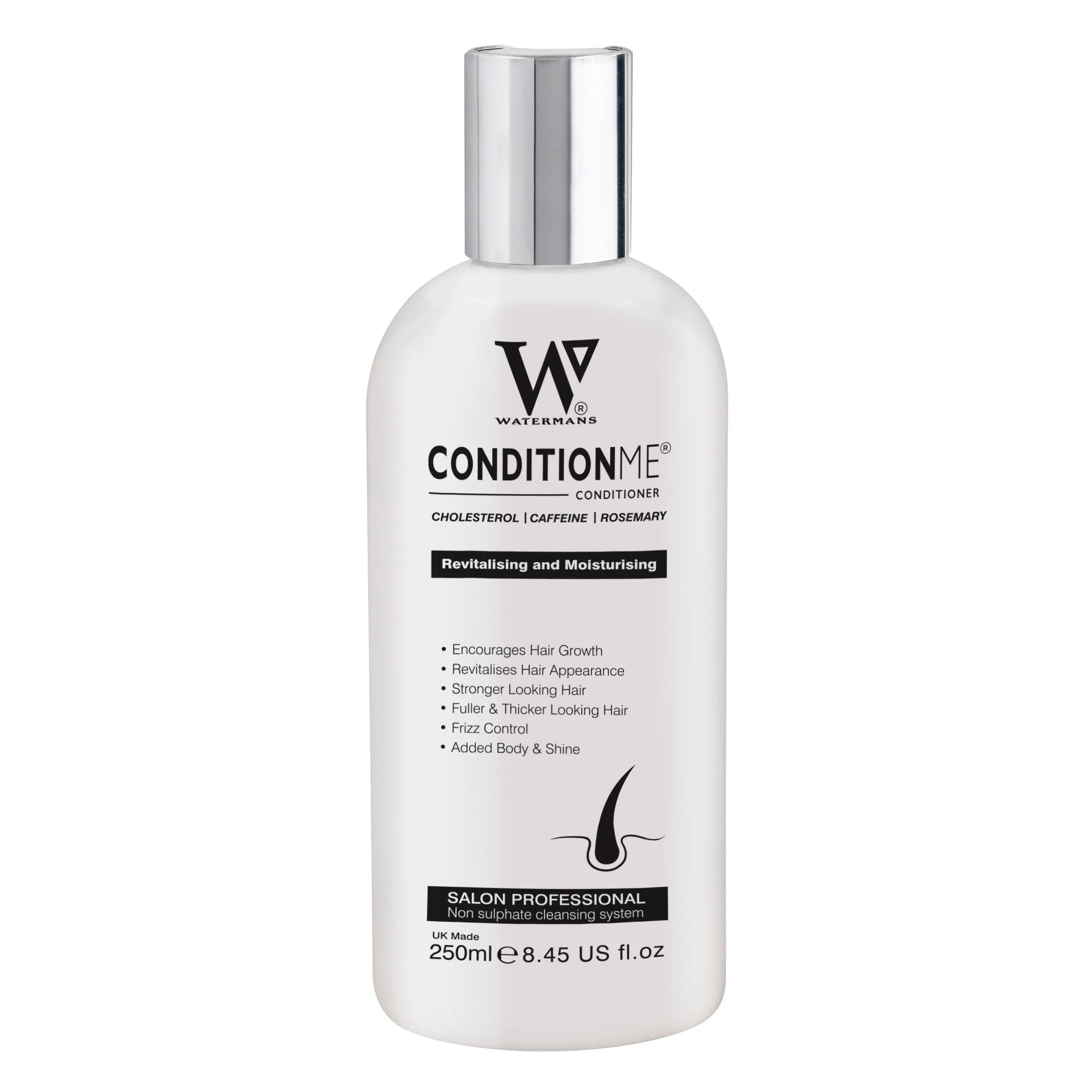
Sulphate free washing plus the conditioning slip coils actually need, which is the wash day foundation of the routine above. Keeps moisture in and breakage down.

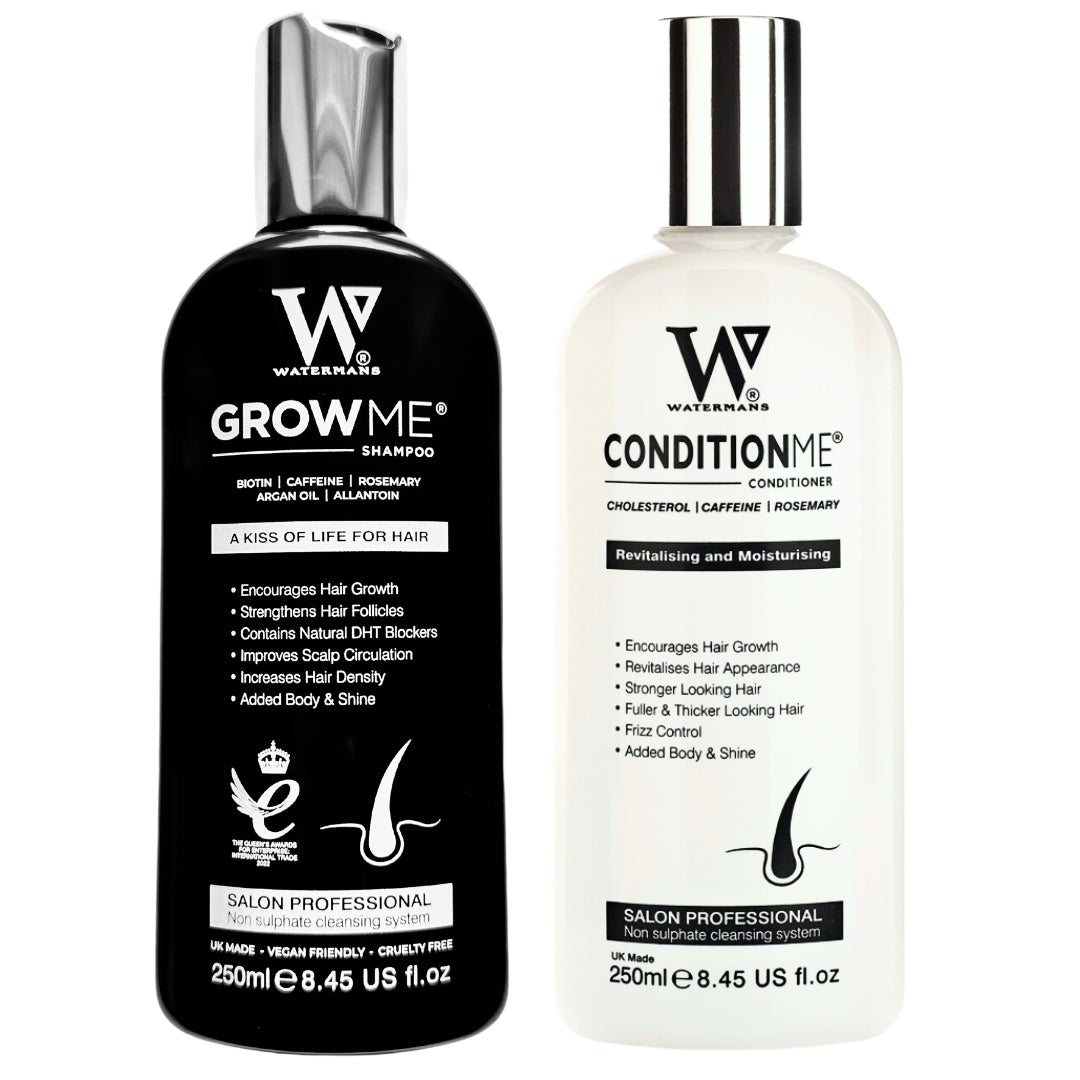
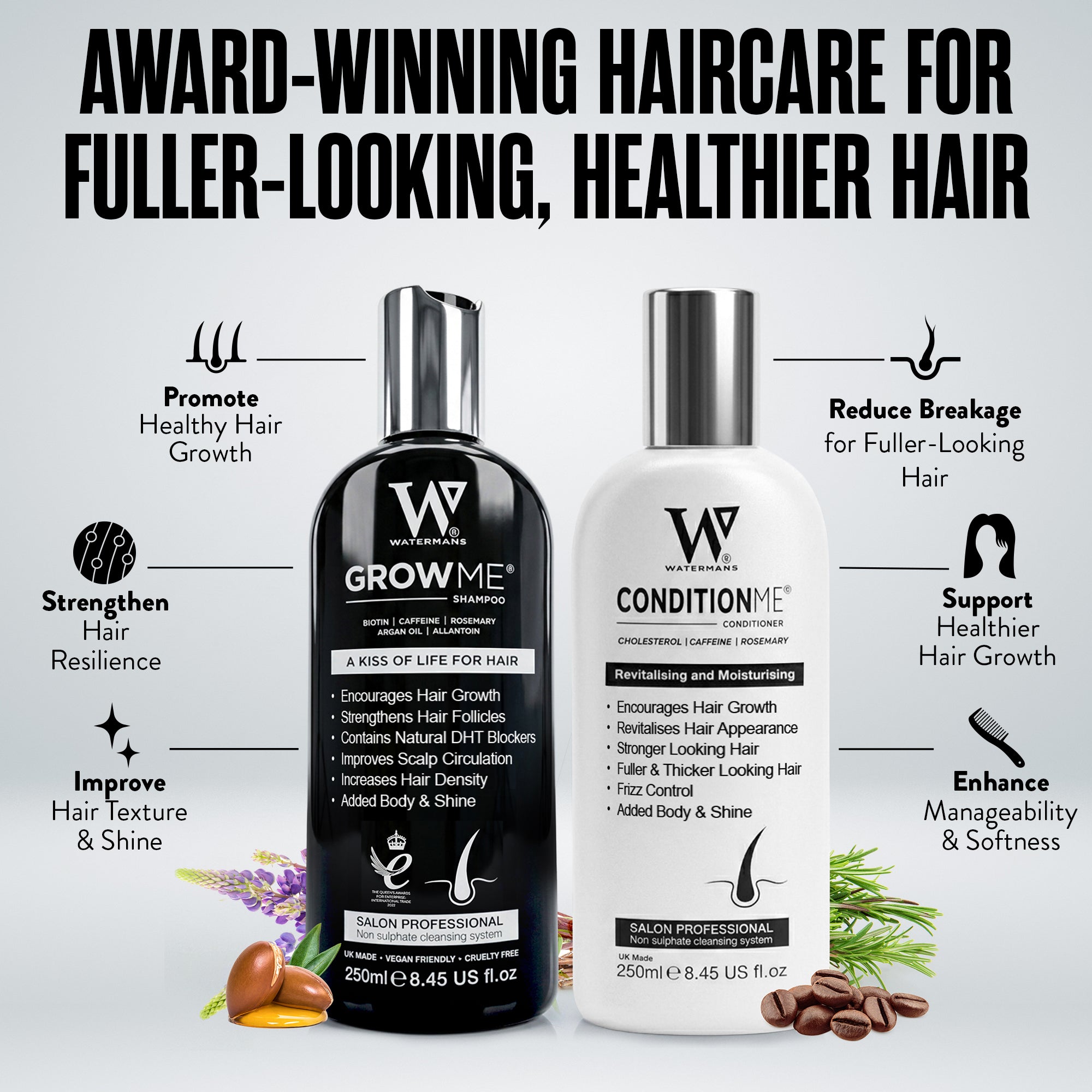
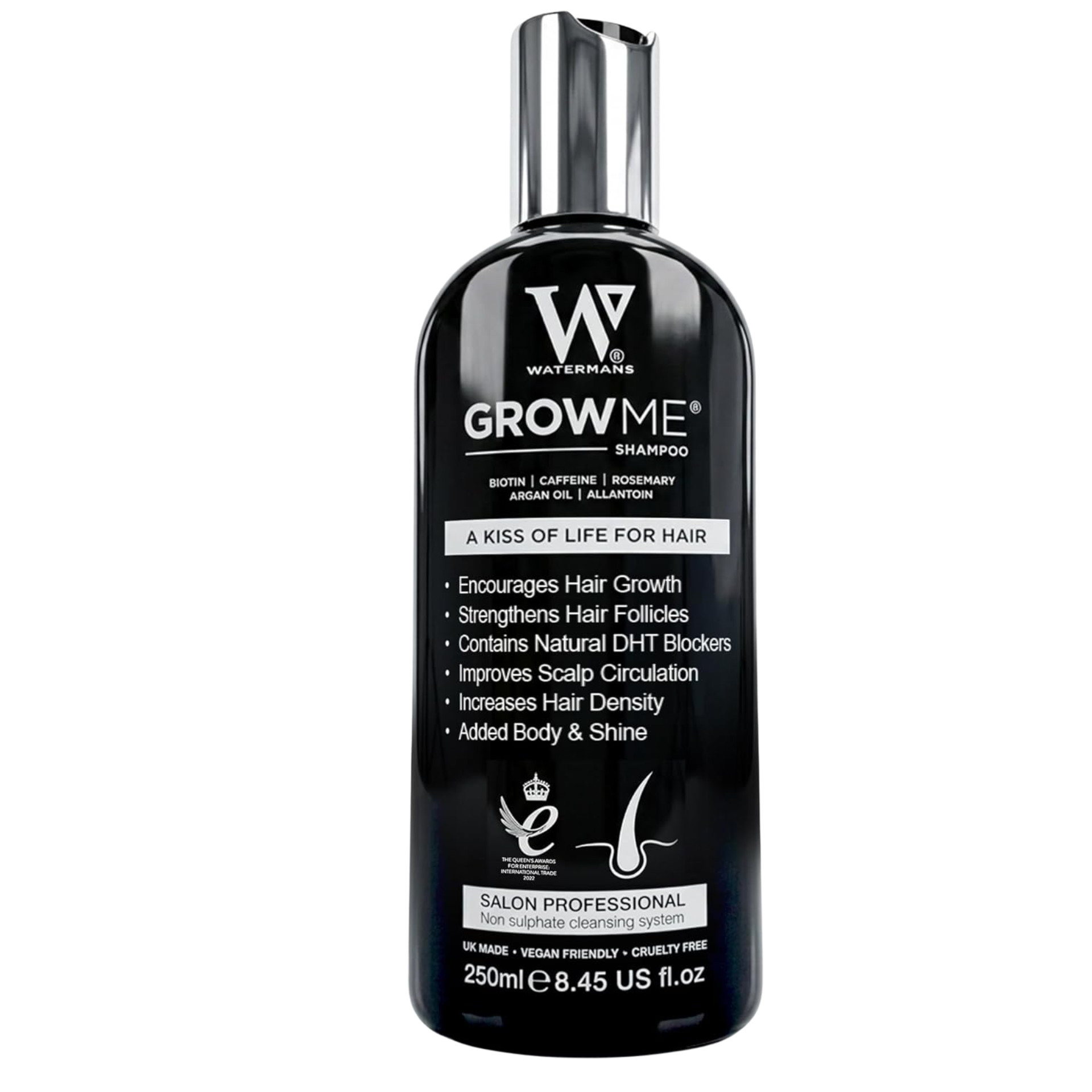
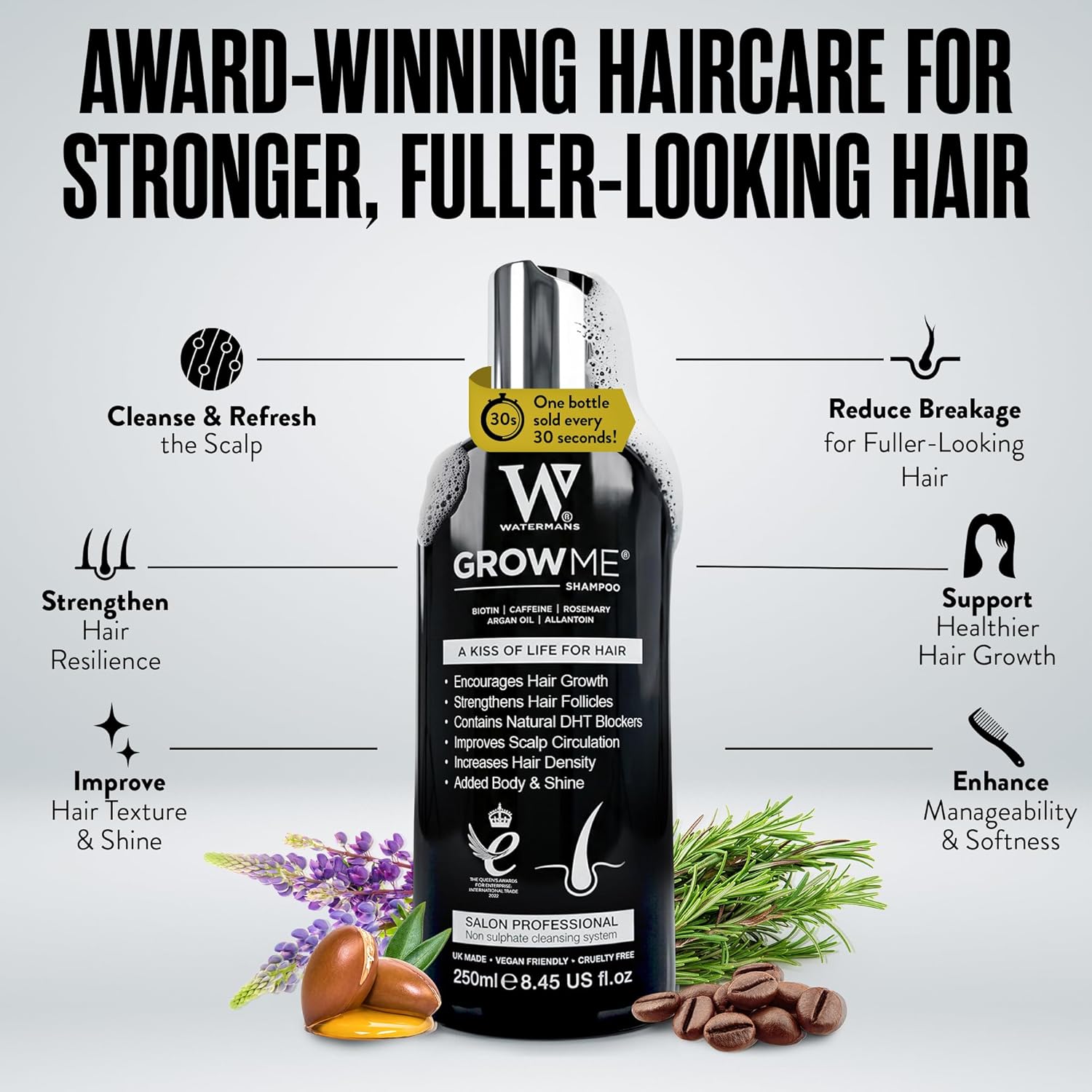
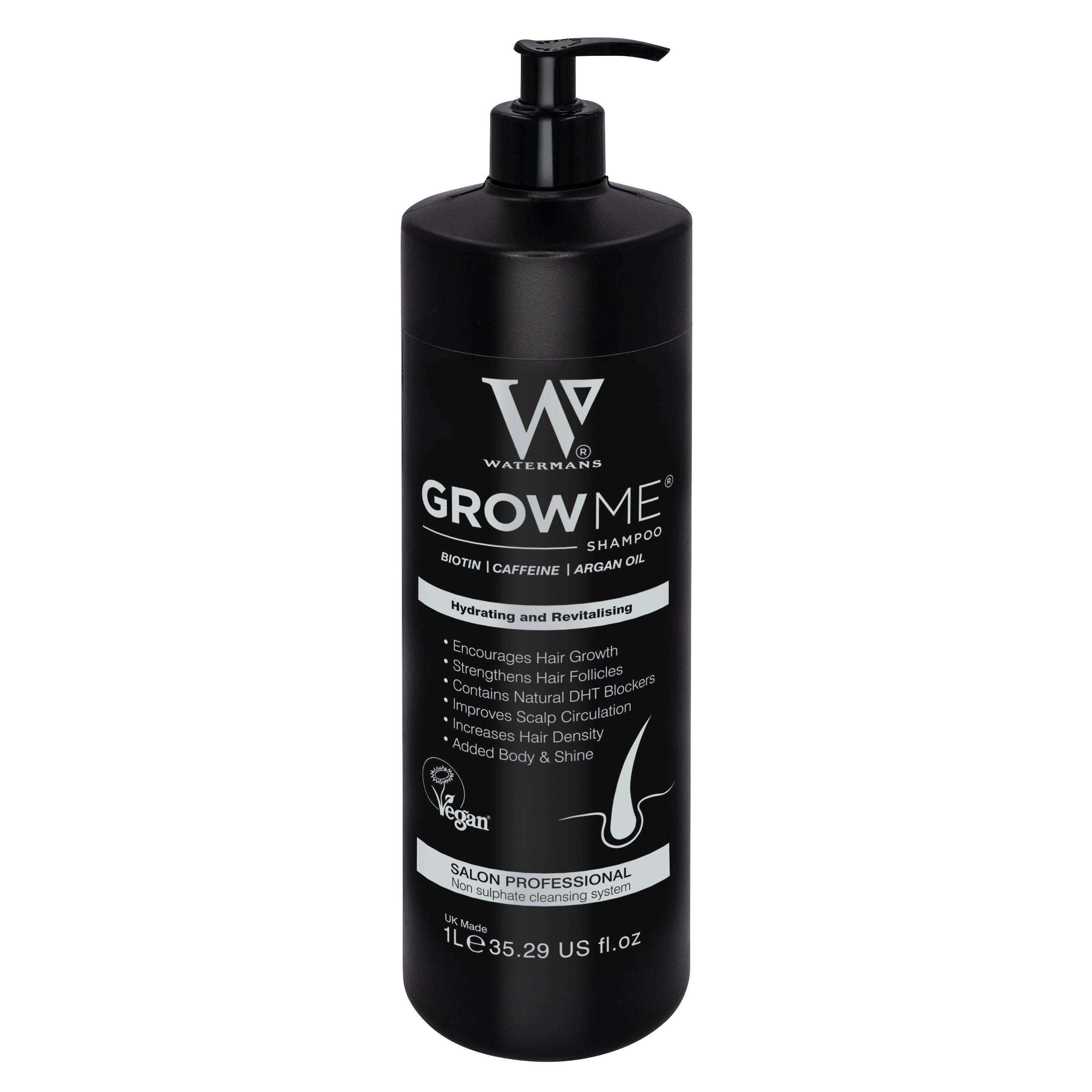
Grow Me Shampoo
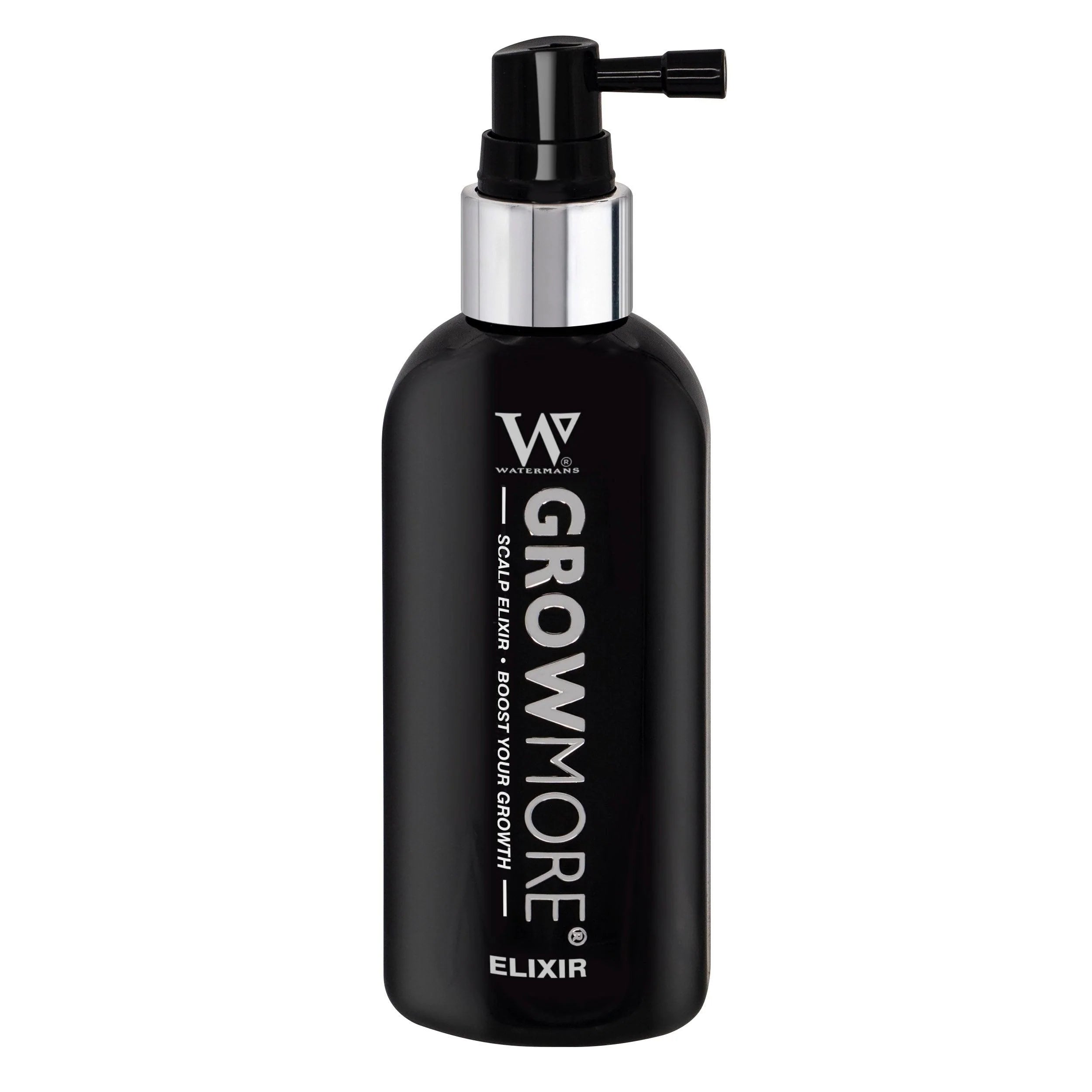
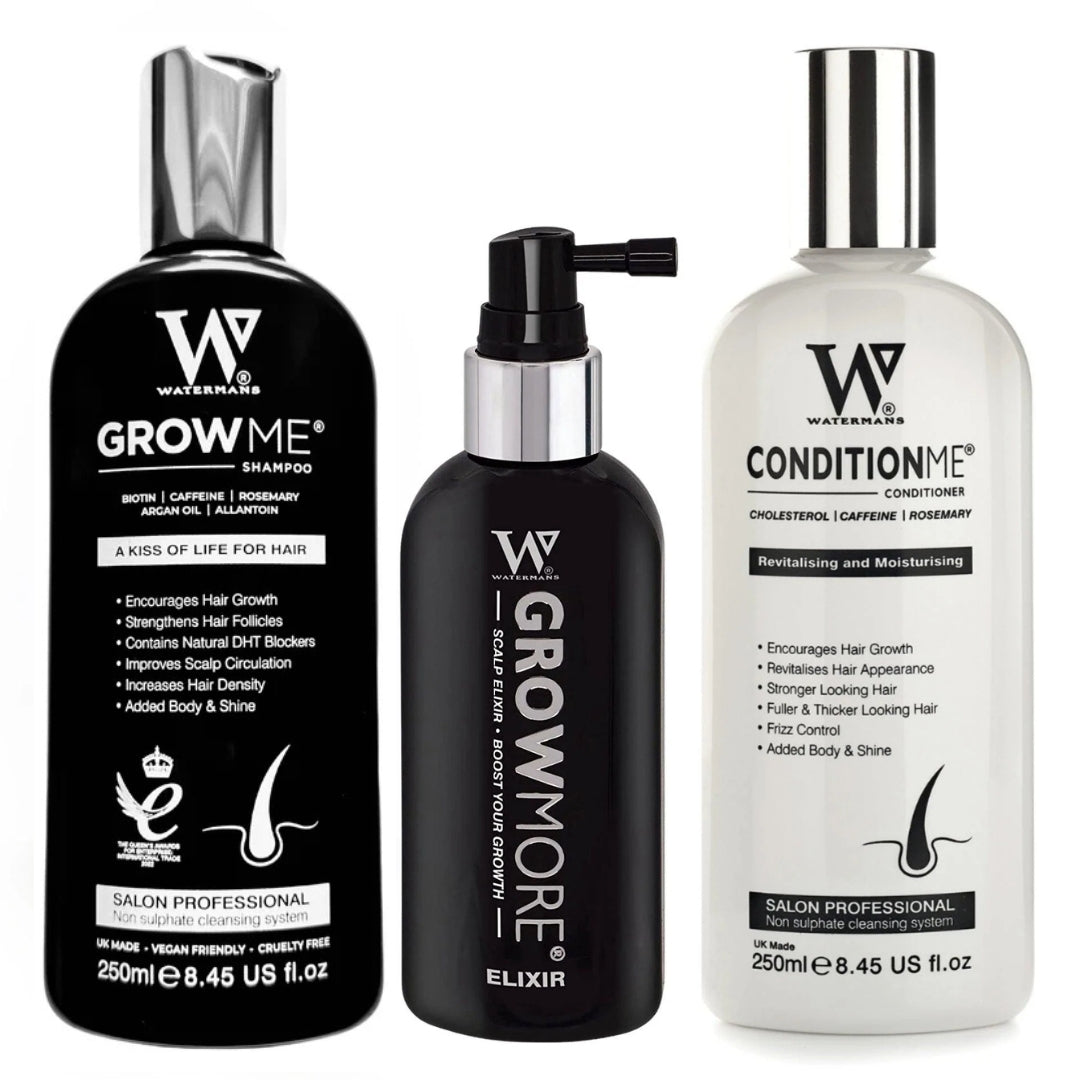
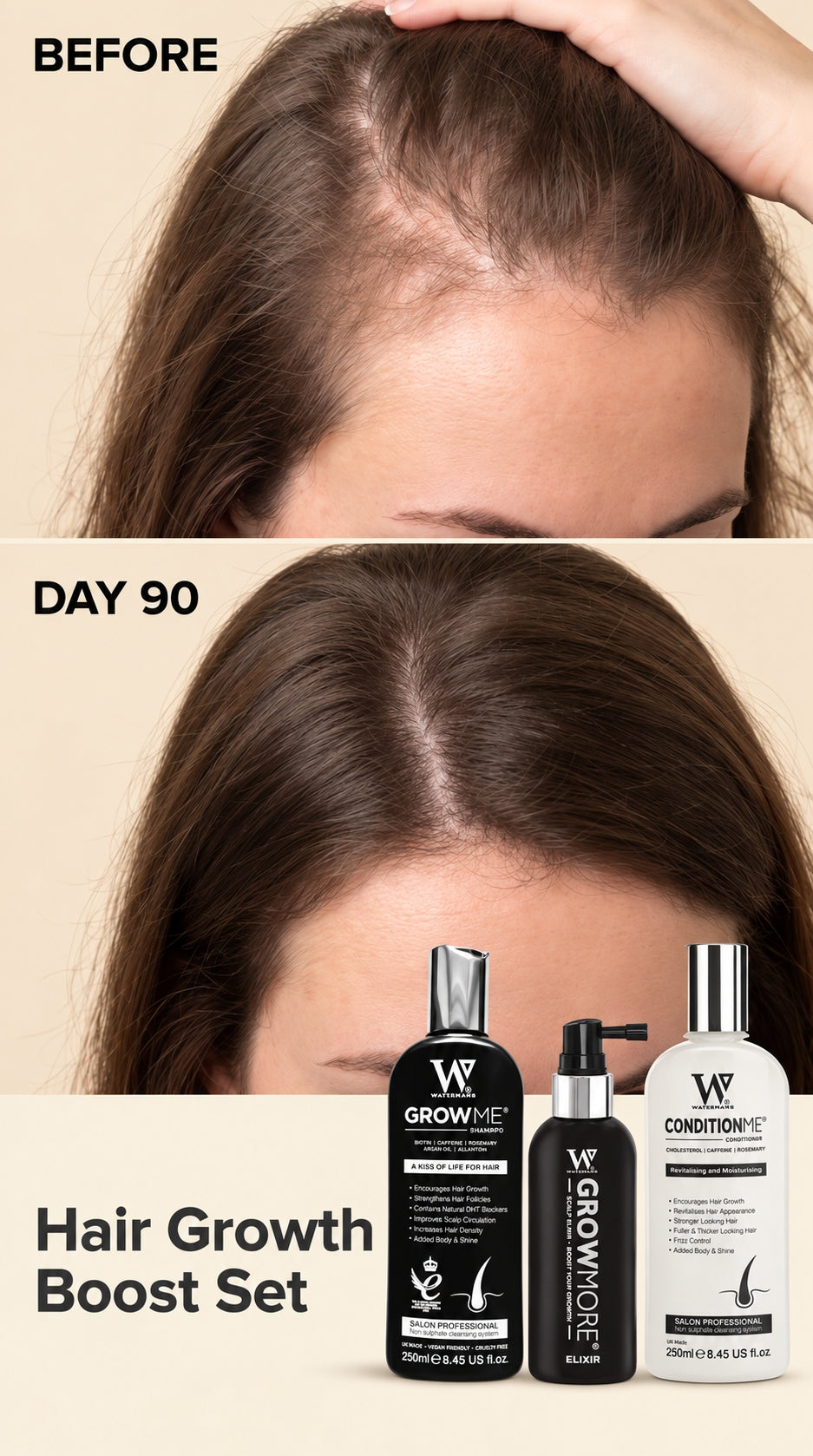
If thinning or a softening hairline is part of the picture, Grow Me brings biotin, caffeine and rosemary scalp care into the wash. A UK made, vegan wash that supports a healthy scalp environment and fuller looking hair.
If you want the wider comparison rather than our two, our roundup of the best products for afro hair growth works through the categories properly.
What should you eat, and does sleep really matter?
Hair is made of protein, and it is metabolically expensive, so it is one of the first things the body deprioritises when supply runs short. Protein at every meal is the baseline. Beyond that, iron and vitamin D are the two the NHS flags most often in the UK, partly because low iron is common and partly because vitamin D is genuinely hard to get from a British winter, especially for people with darker skin who make less of it from the same sunlight.
The practical version: eggs, fish, beans, nuts and leafy greens on the plate, and a conversation with your GP about a blood test if you are shedding noticeably rather than just breaking. Sleep matters because the shedding phase of the cycle responds to sustained stress, and poor sleep is sustained stress by another name. None of this speeds the root up beyond its genetic rate, which is worth saying plainly, but it stops you dropping below it. If your question is about products or a routine rather than a medical one, you can talk to Gail Waterman, our co-founder, as an AI avatar on the Watermans homepage.

Which myths should you drop?
- "Afro hair just does not grow." It grows at a near normal rate. Shrinkage hides between half and three quarters of the real length, and breakage removes the rest. Stretch a coil and measure it.
- "Cutting makes it grow faster." Trims protect the length you have. They do nothing at the root.
- "Grease the scalp every day." Heavy daily grease clogs more than it helps. Moisturise the hair, oil in moderation, keep the scalp clean.
- "Tight styles train the hair." Tension trains the hairline to leave. Loose is the rule.
- "There is a product that does it overnight." There is not, and anyone selling you one on how to grow hair faster black male terms is selling you a story.
If you want the full length retention routine written for afro hair generally rather than for men specifically, our companion piece on how to grow an afro goes deeper on wash day technique, while our pattern hair loss guide covers what to do when the hairline itself is the problem.
Frequently asked questions
How fast does afro hair actually grow?
Afro hair grows around 1 cm a month, which sits in the same biological range as every other hair type. Shrinkage can hide 50 to 75 per cent of the real length, which is why coily hair appears to grow more slowly than it does. Measure stretched, once a month, in the same spot.
Do durags stop hair growing?
No. A satin lined durag protects hair overnight and is one of the better habits on this list. The problem is tightness, not the durag. If it leaves a mark on your forehead, it is too tight.
Which oils are best for black men's hair?
Castor, jojoba and coconut oil are the reliable three, used to seal moisture into damp hair rather than applied to a dry scalp. Jojoba is closest to the scalp's own sebum, castor is heavier and suits ends, coconut penetrates the fibre better than most.
Does shaving my head make hair come back thicker?
No. Shaved hair grows back with a blunt tip rather than a tapered one, which feels coarser to the touch. The follicle underneath is unchanged and the strand is the same thickness it always was.
How long before I see a difference?
Breakage improvements show within four to six weeks because you stop losing what you already have. Genuine length is slower, roughly 12 cm a year at the root, so give any routine three months before you judge it.
Is there a fast route in how to grow hair faster black male routines?
The fastest lever is stopping breakage, because it changes what you keep rather than what you make. Loosen the styles, add moisture, switch to satin at night, and most people see visible length within a season without changing anything else.
Should I see a GP about my hairline?
Yes, if the hairline is moving back steadily, if you can see scalp through the crown, or if shedding has been heavy for more than three months. Those are follicle questions rather than hair care questions, and a GP is the right first stop.
What is the bottom line on growing Black men's hair faster?
Everything useful about how to grow hair faster black male routines reduces to one idea: you are not trying to speed the root up, you are trying to stop losing what it makes. Wash gently once a week, keep the coils moisturised, detangle wet and from the ends, keep every style and every durag loose, sleep on satin, and trim on a schedule. Then leave it alone for three months and measure stretched.
Watermans is a UK family business that has sold over 6.5 million bottles since 2012. The range is cruelty free.
If you want something to act on today, our sulphate free hair growth shampoo is the simplest place to begin.
Watermans products are 100% cosmetic and do not treat medical hair loss. Individual results may vary.
Sources & References
- NHS, Hair loss
- British Association of Dermatologists, Traction alopecia information leaflet
- Trueb RM et al., Scalp Condition Impacts Hair Growth and Retention via Oxidative Stress, International Journal of Trichology (PMC6369642)
- NHS, Vitamins and minerals: Iron
- NHS, Vitamins and minerals: Vitamin D