Should I Wet My Hair Everyday? What Water Really Does
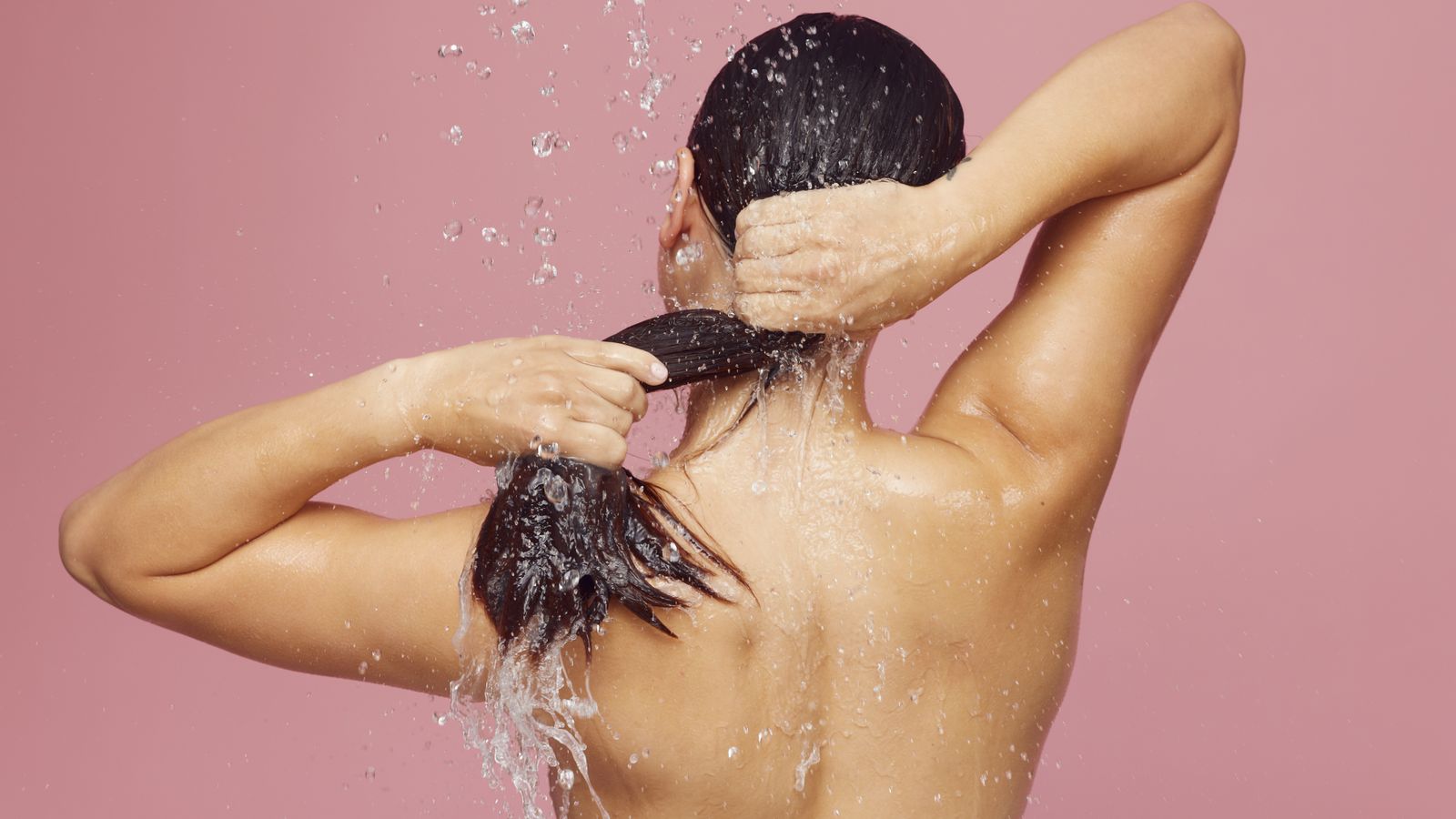
Should I wet my hair everyday is a different question from should I wash it every day, and confusing the two is why the advice online contradicts itself. Water on its own does not strip the scalp oil that shampoo is designed to remove. So daily wetting is safe for almost everyone. The real variables are your hair type, whether you condition afterwards, and how gently you handle the fibre while it is wet.
Our hair growth conditioner
Condition Me® Hair Growth Conditioner, £13.95. Detangles and strengthens the hair fibre so lengths snap less on the brush and look thicker through the ends.
Key takeaways
- Wetting and washing are not the same thing. Water alone does not remove sebum, so it is far gentler than a daily shampoo.
- Wet hair is weaker hair. A saturated fibre swells and loses a significant share of its strength, so handling matters more than frequency.
- Fine and oily hair copes well with daily wetting and often daily washing. Curly, coily, coloured and porous hair wants the water but not the shampoo.
- Condition every time hair gets wet, mid lengths to ends. That is what puts the slip back and stops the comb snapping strands.
- More hairs in the drain on a daily rinse is collection, not loss. You are gathering each day what you would otherwise gather in one batch.
Should I wet my hair everyday, or is washing the real question?
Separate the two actions and the confusion disappears. Wetting means water only. Washing means water plus a surfactant that lifts oil, sweat, product and pollution off the scalp and out of the hair. Sebum is an oil, and water alone cannot carry it away, which is precisely why shampoo exists.
That single fact settles most of the anxiety. Rinsing your hair under the shower every morning is not a daily strip. It is closer to rinsing your hands under a tap than to washing them with soap. The advice you have read about not washing too often is real advice, and it simply does not apply to the water on its own.
The distinction in one line
Water rehydrates and reshapes. Shampoo removes. If you only want your hair to lie differently or your curls to re-form, water is the whole tool and you need nothing else.
What does water actually do to a hair fibre?
Hair is keratin, and keratin is hygroscopic. Wet a strand and it absorbs water into its cortex, swelling by roughly a sixth of its diameter. Three consequences follow, and every practical rule on this page comes out of them.
First, the fibre softens and becomes reshapeable, which is why a rinse resets bed hair and why curls re-form when they are wet. Second, it loses tensile strength while it is saturated, so the same brush stroke that a dry fibre shrugs off can break a wet one. Third, repeated swelling and drying puts the cuticle through a mechanical cycle, which over time roughens porous hair. That last effect is real but slow, and conditioning offsets most of it.

Should I wet my hair everyday given my hair type?
This is where a single answer stops being useful. The table below is the honest version, and the differences between rows are larger than the differences between brands of anything.
| Hair type | Daily wetting | Shampoo frequency | Watch for |
|---|---|---|---|
| Fine and oily | Fine, and often preferable | Daily to every other day | Rinse only days can look greasy by lunchtime, because water does not lift sebum |
| Medium and normal | Fine | Two to three times a week | Little to watch. Condition the ends each time |
| Thick and coarse | Fine and often helpful for manageability | Once or twice a week | Drying time. Do not go to bed wet |
| Curly | Genuinely useful. Water is what re-forms the pattern | Once or twice a week, or co-wash | Frizz if it dries without a conditioner or leave in |
| Coily and afro textured | Useful, with a conditioner every time | Once a week or less | The driest type by geometry. Protect the ends, never comb dry |
| Coloured or bleached | Fine, but the most porous case | Two to three times a week | Faster fade and more swelling. Cool water, always condition |
Read down the second column and the pattern is clear: almost nobody is harmed by the water. Read down the third and the differences are enormous. The question people actually need answered is nearly always about shampoo frequency, which is why so much of the advice online misses.
What are the real risks of daily wetting?
There are four, and none of them is the water itself.
Handling while wet. The fibre is at its weakest saturated, so brushing, rough towel drying and impatient detangling do more damage than they would on dry hair. This is the single biggest cause of breakage in anyone who wets daily.
Going to bed damp. A whole night of friction against cotton while the fibre is swollen and soft is a reliable route to tangling and snapped ends.
Skipping conditioner. Water lifts the cuticle slightly. Conditioner is what lays it flat again and restores slip. Wetting daily without conditioning is the version of this habit that genuinely costs you hair.
Hard water minerals. In much of Britain the water is hard, and calcium and magnesium deposit on the fibre with every wetting. Daily wetting simply delivers more of them, which shows up as dullness and rough texture rather than as damage.

Notice that three of the four are about what you do afterwards. Our guide to wet hair care after the shower goes into the post shower habits in more detail, and they are the difference between daily wetting being neutral and being costly.
Get a discount on the hair breakage range
Join the Watermans mailing list and we will email a discount code straight to your inbox, so you can try the hair breakage range for less. Made in the UK, over 6.5 million bottles sold since 2012.
Why do I see more hair in the drain when I wet it daily?
Because you are collecting it more often, not losing more of it. A scalp releases somewhere in the region of fifty to a hundred hairs a day as part of the normal cycle. Those hairs detach from the follicle but stay caught in the surrounding hair until something dislodges them, and water and fingers are the most effective dislodger most people apply. Wet daily and you collect a day's worth each time. Wet twice a week and the same total arrives in two alarming handfuls.
It is worth being precise about the three things that get muddled here. Hair loss means the follicle has stopped producing a usable hair. Hair shedding means an unusual number of hairs have entered the resting phase at once, which happens after illness, childbirth, surgery or sharp weight loss and resolves over months. Hair breakage means the fibre snapped along its length while the follicle carried on working. Wetting can only ever contribute to the third, and only through how you handle it. If you want the full picture, what causes thinning hair sets the three mechanisms out side by side.
Should I wet my hair everyday but skip the shampoo?
This is the follow up question almost everyone arrives at, and it deserves its own page rather than a paragraph. The short version is that rinsing without washing is a legitimate routine, it goes by co-washing or water only depending on whether you use conditioner, and it suits curly, coily, coarse and coloured hair far better than it suits fine oily hair. The longer version, including technique and when you still genuinely need shampoo, is in our guide to wetting your hair every day without washing it.
How should you actually do it?
- Lukewarm, not hot. Hot water swells the fibre more and lifts the cuticle further. Finish with a cool rinse if you can stand it.
- Condition mid lengths to ends every time. Not the scalp. Two minutes, then rinse.
- Detangle in the shower, with conditioner in, using a wide tooth comb. Start at the ends and work up. Never start at the roots.
- Squeeze, do not rub. Press water out with the towel or a cotton t shirt rather than scrubbing.
- Do not sleep on it wet. Dry to at least damp, and use a silk or satin pillowcase.
- Protect it if you then apply heat. Wet to hot is where the worst fibre damage happens.
Where does cosmetic hair care fit into a daily wetting routine?

If hair is getting wet every day, the products that matter are the ones that put slip back and reduce the friction that snaps fibres. That is a cosmetic job about retention, keeping the length and density you already have looking as full as it can, and we are explicit that it is a cosmetic job.

Condition Me® Hair Growth Conditioner
The one that matters most here. Slip through the mid lengths and ends is what lets a wide tooth comb pass without snapping a swollen fibre. Every time hair gets wet, two minutes, rinse cool.

Grow Me® Hair Growth Shampoo
A sulphate free daily shampoo for the days you do wash, so a higher wash frequency does not mean a harsher one. Fingertips into the scalp, never scrub the lengths.

Protect Me® Heat Protection Spray
If wetting daily is followed by a dryer or irons, this is the gap to close. Wet to hot is where most fibre damage actually happens.
Watermans products are 100% cosmetic and do not treat medical hair loss. Individual results may vary.
For the technique itself, our step by step on using conditioner properly is worth five minutes, and what causes hair damage covers the four things that genuinely wreck a fibre so you can rule them out one at a time.
When is this a GP question rather than a routine question?
Adjusting how often you wet or wash is the right response to greasiness, dryness, frizz, flatness or hair that snaps when you comb it. It is the wrong response to a widening parting, a receding hairline, visible scalp at the crown, bald patches, a scalp that is sore, scaly or scarred, or a shed that has continued past six months. Those warrant a GP appointment, where blood tests for iron, ferritin, thyroid function and vitamin D can be arranged. No change to a shower routine answers them.
Frequently asked questions
Should I wet my hair everyday if I have fine, oily hair?
Yes, and you can usually shampoo daily too. Fine hair sits closest to the scalp, picks up sebum fastest and carries the least oil along its length, so a daily wash rarely dries it out. Water alone will not remove that oil, so a rinse only day on fine hair tends to leave it looking greasy by lunchtime.
Should I wet my hair everyday if it is curly or coily?
Water is genuinely useful for curls, because it is what re-forms the curl pattern and softens frizz. Daily shampoo is not. Wet, condition or use a leave in, and reserve shampoo for once or twice a week. Coily hair is the driest type by geometry, so protect the ends rather than cleansing them daily.
Does wetting your hair every day cause hair loss?
No. Water does not act on the follicle and cannot cause pattern hair loss or shedding. What you may notice is more hairs in the shower, but those are hairs that had already released and were waiting to be dislodged. Wetting daily just collects them daily instead of in one larger batch.
Should I wet my hair everyday before the gym or a swim?
Wetting hair with clean water before you swim is a genuinely good habit. A fibre already saturated with tap water absorbs far less chlorinated pool water, because there is less room left in it. Rinse again straight afterwards rather than letting chlorine dry in. Our guide to chlorine shampoo covers the once-a-week chelating wash that regular swimmers need.
Is it bad to go to bed with wet hair?
It is not dangerous, but it is the single worst thing you can do to wet hair. A wet fibre is at its most fragile, and a night of friction against a pillow while it is swollen is a reliable route to breakage and tangling. Dry to at least damp first, and use a silk or satin pillowcase if you can.
Should I wet my hair everyday and skip conditioner?
No. If you are wetting daily, conditioner matters more, not less. Water swells the fibre and lifts the cuticle slightly, and it is the conditioner that flattens it back down and puts the slip back so a comb does not snap strands. Mid lengths and ends, every time it gets wet.
Will wetting my hair every day make it dry?
Water alone does not strip oil, so plain wetting is far gentler than washing. It can still leave hair feeling drier over time through repeated swelling and drying of the fibre, especially on porous, coloured or coily hair. Conditioning each time and drying gently is what offsets that.
How does hard water change the answer?
In hard water areas the minerals left behind after each wetting can build on the fibre, leaving hair dull, rough and harder to detangle. Daily wetting simply delivers more of them. A shower filter or an occasional chelating wash deals with it.
Should i wet my hair everyday, and what is the bottom line?
So, should I wet my hair everyday? For almost everyone, yes. Water alone does not strip the scalp oil that shampoo removes, so daily wetting is a mild act rather than a harsh one, and for curly and coily hair it is actively useful because water is what re-forms the pattern. The variables that decide whether the habit costs you anything are not the water at all. They are whether you condition each time, how gently you handle a fibre that is temporarily weaker while saturated, whether you sleep on it damp, and how often you reach for shampoo as opposed to just water. Get those four right and daily wetting is neutral to positive. If hair keeps thinning regardless, that is a conversation for a GP rather than a change of routine.
If the lengths are what keep letting you down, Condition Me hair growth conditioner is built to cut the snapping.
Sources and References
- NHS. Hair loss. nhs.uk. Used for the description of normal daily shedding and when to speak to a GP.
- British Association of Dermatologists. Information leaflets for the public on hair care, telogen effluvium and seborrhoeic dermatitis. bad.org.uk.
- Robbins, C. R. Chemical and Physical Behavior of Human Hair, 5th edition, Springer. Standard reference for hygral fatigue, wet fibre swelling and the drop in tensile strength when hair is saturated.
- Royal Society of Chemistry and Drinking Water Inspectorate material on water hardness in the UK, used for the mineral build up section.
- European Commission. CosIng cosmetic ingredient database. ec.europa.eu. Used to check the declared function of the conditioning ingredients named here.
If your question is about products or a routine rather than a medical one, you can talk to Gail Waterman, our co-founder, as an AI avatar on the Watermans homepage.