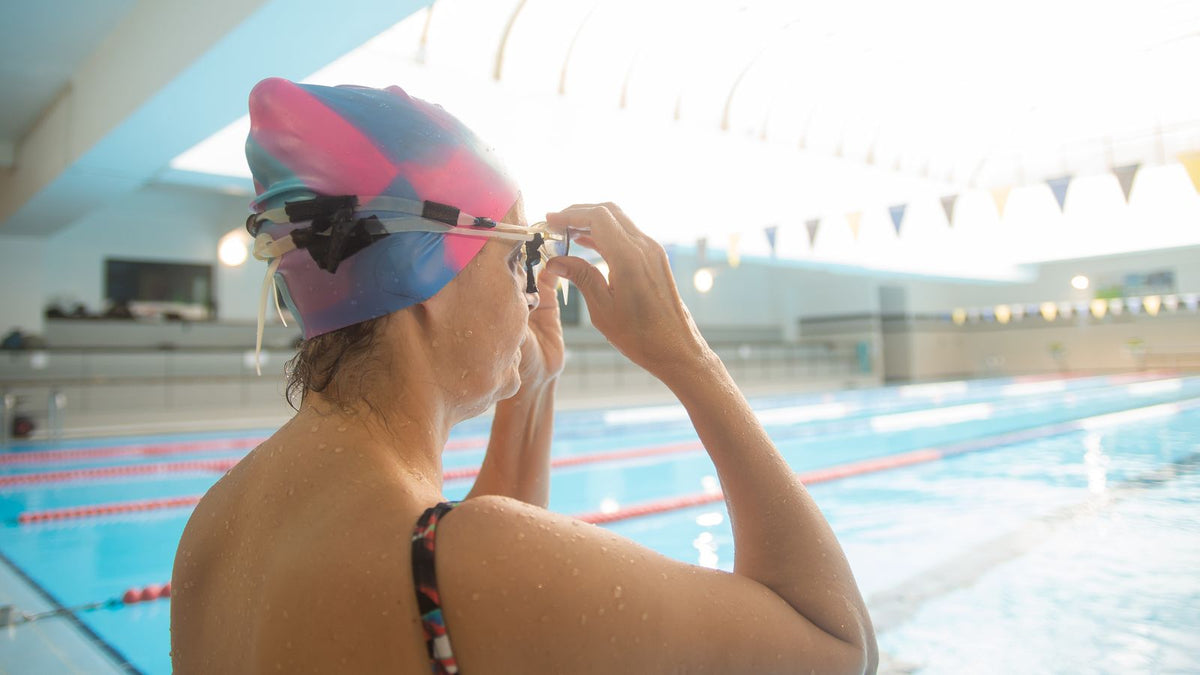
Chlorine Shampoo: Does It Work, and How to Protect Hair from Pool Water
A chlorine shampoo is a chelating or clarifying wash made for swimmers. It uses a chelator such as EDTA to lift the copper and mineral residue that an ordinary shampoo leaves behind, which is what turns light hair green and makes any hair feel rough and squeaky. Used once or twice a week after the pool and followed by a conditioner, it keeps swimmers' hair manageable. It is only half the answer, because the free pre-soak before you get in does more than any bottle.
To protect hair from chlorine tap water and pool water you need two different habits, because these are two different problems. Chlorine is an oxidiser that strips lipids and roughens the cuticle. Hard tap water leaves calcium and magnesium deposits that build up on the shaft and make hair feel coarse and dull. The fixes are a pre-soak with clean water before you swim, a chelating wash afterwards, and a shower filter or weekly clarifying routine at home.
Our weekly hair mask
Masque Me® Hair Mask, £24.95. A deep conditioning weekly mask for dry, stressed lengths, adding gloss and hydration where heat and colour have taken their toll.
Key takeaways
- Soak your hair in clean water before you get in the pool. Saturated hair absorbs far less chlorinated water.
- Hard water deposits minerals on the shaft. UK studies have measured reduced hair strength after repeated hard-water washing.
- Green hair in blondes is copper from pool plumbing, not chlorine itself. A chlorine shampoo with a chelator such as EDTA lifts it.
- Clarify, then always follow with a deep conditioner. Clarifying alone leaves the hair worse off than before.
- This is a hair breakage problem, not hair loss. Broken hairs have no bulb at either end.
What does chlorine actually do to hair?
Chlorine is added to pool water and to mains water as a disinfectant, and it works because it is an oxidising agent. That same property is what affects your hair. It oxidises the fatty acid layer on the outside of each strand, the 18-MEA layer that gives healthy hair its water-repellent, smooth feel. Strip that and the cuticle scales lift, the hair loses shine, tangles more and feels squeaky and rough.
The dose matters enormously and this is where the two sources part company. UK mains water is chlorinated at a fraction of a milligram per litre, which the Drinking Water Inspectorate regulates and which is a level you would struggle to detect on your hair. A swimming pool is typically maintained at a far higher free chlorine level and you are immersed in it for an hour. Almost all genuine chlorine damage comes from pools, not from the tap.
The exception is the green tinge that blonde and light hair sometimes picks up after a summer of swimming. That is not chlorine colouring the hair. It is copper, dissolved from pool pipework and algaecides, binding to the oxidised hair. A 1995 report in Cutis on green hair and a study of Japanese elite swimmers both point at the same mechanism. That distinction matters, because a chelating shampoo lifts copper and an ordinary clarifying shampoo largely does not.

How do you protect hair from chlorine tap water before you swim?
Everything here works on one principle: a hair fibre can only hold so much water, so fill it with clean water first and there is far less room for pool water.
- Soak it in the poolside shower for a full minute. Not a splash. Genuinely saturated hair absorbs dramatically less chlorinated water, and this single step does more than every product on this page.
- Add a barrier while it is wet. A leave-in conditioner or a light oil on the mid-lengths and ends. It slows uptake further and helps with the tangling afterwards. Our Protect Me leave-in spray does this job, and its product page notes that the same barrier helps against chlorine from the pool.
- Wear a cap, and wear it properly. A silicone cap over damp, conditioned hair. No cap is watertight, so treat it as a reduction rather than a seal.
- Tie long hair up first. Loose hair in a pool is hair being dragged and tangled for an hour, which is mechanical damage on top of chemical.
The one-minute rule
If you do nothing else, do the pre-soak. It costs a minute, it is free, and it addresses the mechanism directly rather than trying to repair the consequences afterwards. Swimmers who adopt it usually notice the difference within a fortnight.
What should you do straight after swimming?
The habits that protect hair from chlorine tap water at home are slower and duller than the poolside ones, but the post-swim routine is where most of the damage is either locked in or washed out. Rinse before you dry off, not when you get home. Chlorine left sitting in hair keeps oxidising it, and the hour between the pool and your bathroom is doing damage you can avoid for free. If you live in an area with hard tap water, our Southampton guide to hard water and dry, brittle hair looks at what the research does and does not show.
Then, once or twice a week rather than daily, use a chlorine shampoo, which is a chelating shampoo made for swimmers. This is the specific tool for metals and mineral build-up, and it is different from a general clarifying shampoo. Look for EDTA or sodium phytate on the ingredient list. Regular swimmers should treat it as maintenance, not as a rescue.
Always follow a chelating or clarifying wash with a proper conditioner or a mask. A clarifying wash strips the hair back deliberately, and leaving it there is why people say clarifying shampoo wrecked their hair. It is half a routine, not a routine.

Masque Me® Repairing Hair Mask £24.95
A deep conditioning mask for the wash after a clarifying or chelating shampoo, with argan oil, provitamin B5 and hydrolysed lupine protein. This is the step regular swimmers skip and then wonder why the ends feel like straw.
Get a discount on the hair breakage range
Join the Watermans mailing list and we will email a discount code straight to your inbox, so you can try the hair breakage range for less. Made in the UK, over 6.5 million bottles sold since 2012.
What is in a chlorine shampoo and does it work?
A chlorine shampoo works by doing two things an everyday shampoo does not: binding metals with a chelator so they rinse away, and cleansing hard enough to strip the film that chlorine, copper and minerals leave on the cuticle. It cannot undo oxidation that has already happened, so the conditioner that follows it matters as much as the bottle itself. The dose question also matters: the Drinking Water Inspectorate says water companies typically keep residual chlorine in tap water to 0.5 mg/l or less, against a World Health Organization guideline maximum of 5 mg/l, so at home you are washing out pool residue, not tap water.
| On the label | What it does | Worth knowing |
|---|---|---|
| Disodium EDTA or tetrasodium EDTA | Chelates copper, calcium and magnesium so they rinse out | The ingredient that lifts a green tinge; a tiny amount in an ordinary shampoo is a preservative aid, not a chelating dose |
| Sodium gluconate or sodium phytate | Gentler chelators doing the same job | Common in sulphate-free versions |
| A strong anionic surfactant, such as sodium laureth sulfate | Clarifies, lifting product film and sebum along with the residue | Why daily use dries hair out; once or twice a week is the limit |
| Conditioning agents, such as panthenol or hydrolysed protein | Soften the stripping effect | Helpful, but not a substitute for a separate conditioner or mask afterwards |
| Citric acid | Lowers the pH so the cuticle lies flatter after the wash | The same reason a diluted vinegar rinse helps |
Where do ours fit? We do not sell a chlorine shampoo, and we will not pretend otherwise. Grow Me is a sulphate-free daily wash, not a chelating or clarifying product, so do not expect it to lift copper; use it for the everyday washes between swims and keep a dedicated swimmers' wash for once or twice a week. Masque Me is the conditioning step after the chelating wash, and Protect Me is the pre-swim barrier.
Is hard tap water genuinely damaging your hair?
Hard water is water high in dissolved calcium and magnesium, and most of southern and eastern England sits in a hard or very hard band. The mechanism is different from chlorine. Rather than oxidising the fibre, the minerals deposit onto and into it, and they react with the fatty acids in your shampoo to leave a soap scum film.
The effects most people report are real and specific: hair that feels rough and coated, colour that fades or shifts brassy, shampoo that will not lather, and a scalp that feels tight or itchy because the residue never fully rinses.
There is measurement behind this rather than just complaint. A 2018 study in the International Journal of Trichology compared hair strength after washing with deionised water and with hard water and found reduced baseline strength in the hard water group. A 2016 study in the Journal of the Pakistan Medical Association reported similar weakening with topical hard water application. Both are small studies and neither is the last word, but they point in the same direction and they match what people describe.
| Problem | Chlorine (pool) | Hard tap water |
|---|---|---|
| Mechanism | Oxidises the lipid layer, lifts the cuticle | Deposits calcium and magnesium, leaves soap scum |
| How it feels | Squeaky, dry, straw-like, tangled | Coated, heavy, dull, will not lather |
| Colour effect | Green tinge on blondes, from copper | Brassy or faded, colour lifts faster |
| Main fix | Pre-soak, cap, rinse immediately, chelating wash | Shower filter, weekly chelating wash, acidic rinse |
| Exposure | Occasional but intense | Low level but every single day |

Do shower filters actually work for hard water?
Partly, and it depends what you expect. A shower filter using KDF media or activated carbon will reduce free chlorine noticeably. That part is well established.
Reducing calcium hardness is harder. A filter cannot soften water in the way a plumbed-in softener can, because ion exchange needs a resin bed and a regeneration cycle. Some filters use a small amount of exchange media and will take the edge off, but be sceptical of any shower head claiming to soften genuinely hard water. Change the cartridge on schedule, because a spent filter is a wet plastic tube doing nothing.
If you live in a very hard water area and it bothers you, a plumbed water softener is the honest answer and a filter is the affordable compromise. Both cost less than replacing damaged length.
What weekly routine actually holds up?
Everything above only helps if you protect hair from chlorine tap water on a schedule you will actually keep. The routine that works is boringly consistent rather than clever.
- Every wash: a gentle sulfate-free shampoo, then condition mid-lengths to ends. Rinse cooler than feels nice, because cool water helps the cuticle lie flat.
- Once a week, or after every second swim: a chelating or clarifying shampoo, then immediately a deep conditioner or mask for five to ten minutes.
- Once a fortnight, optional: a diluted acidic rinse, roughly one part apple cider vinegar to four parts water, poured through and rinsed out. It helps dissolve mineral film and smooth the cuticle.
- Daily: a leave-in on the ends, and detangle with a wide-tooth comb from the ends upwards.

Grow Me® Hair Growth Shampoo £14.95
A sulfate-free daily shampoo that cleans gently rather than stripping, which matters when your water is already doing the stripping. It is a cosmetic product for the look and condition of hair, not for medical hair loss.

Condition Me® Hair Growth Conditioner £13.95
The pairing conditioner, for slip and breakage defence. Hard water makes hair harder to comb, and hair that is harder to comb is hair that snaps during detangling.

Is this hair breakage or hair loss?
Before you spend a penny trying to protect hair from chlorine tap water, check which problem you have. This distinction decides whether anything on this page is relevant to you, so it is worth thirty seconds with the hair in your hand.
Hair breakage is the fibre snapping along its length. Broken hairs are short, blunt at both ends and have no bulb. This is what chlorine and hard water cause, and it is entirely a cosmetic problem with a cosmetic answer.
Hair shedding is the follicle releasing a hair at the end of its cycle. Shed hairs are full length with a small pale club at the root. Fifty to a hundred a day is normal. Water chemistry does not cause this. For the rest of the warmer months, our guide to summer hair care covers sun, salt water and heat as well as the pool.
Hair loss is follicular: hair getting finer over years in a pattern, or coming out in patches. Nothing in your shower causes that either, and it is a GP conversation rather than a product one.
If what you are finding is short broken pieces after a summer of swimming, you are in the right article. If you are finding full-length hairs with a bulb, or your parting is widening, see your GP. If your question is about products or a routine rather than a medical one, you can talk to Gail Waterman, our co-founder, as an AI avatar on the Watermans homepage.
Please note. Watermans products are 100% cosmetic and do not treat medical hair loss. Individual results may vary.
What are the frequently asked questions about chlorine shampoo?
Does chlorine shampoo actually work?
Yes, for the residue: a chlorine shampoo with a chelator such as EDTA lifts the copper and mineral film that an ordinary shampoo leaves behind, which is what clears a green tinge and the squeaky, straw-like feel. It does not repair oxidation that has already happened, so always follow it with a conditioner or mask, and remember that the pre-soak before swimming is the more important habit.
What shampoo is best for chlorine?
One that names a chelator high on the ingredients list, cleans firmly enough to lift film, and is used once or twice a week rather than daily. No single brand is right for everyone, and we do not sell one, so judge a bottle on the label rather than the word swimmers on the front.
Does a swimming cap really protect hair from chlorine tap water and pool water?
It reduces exposure rather than preventing it, because no cap is watertight. A silicone cap worn over hair that has already been soaked in clean water and coated with conditioner is a genuinely effective combination. A cap over dry hair is much less useful, because dry hair pulls in whatever water gets under it.
Why has my blonde hair gone green after swimming?
Copper, not chlorine. Copper dissolves from pool pipework and from algaecides, then binds to hair that chlorine has already oxidised, which shows as a green tinge on light hair. A chelating shampoo containing EDTA lifts it. An ordinary clarifying shampoo largely will not.
How often should I use a clarifying shampoo?
Once a week is enough for most people, or after every second swim if you are in the pool often. Daily use strips the hair and leaves it worse than the build-up did. Always follow with a conditioner or mask, because clarifying is only half of a routine.
Can hard water cause hair loss?
No. Hard water is associated with hair breakage and with scalp irritation from residue, not with loss at the follicle. Small studies have measured reduced hair strength after repeated hard-water washing. If you are losing hair rather than snapping it, look elsewhere and speak to your GP.
Is UK tap water chlorinated enough to damage hair?
Not meaningfully on its own. Mains water in the UK is chlorinated at a small fraction of the level held in a swimming pool, and the Drinking Water Inspectorate regulates it. If your hair suffers at home, hardness is a far more likely culprit than chlorine.
Does apple cider vinegar help with hard water build-up?
It can help, diluted at roughly one part vinegar to four parts water, used every week or two. The acidity helps dissolve mineral film and encourages the cuticle to lie flat. Undiluted vinegar is too harsh, and it is not a substitute for a proper chelating shampoo if build-up is significant.
Will a shower filter soften my water?
It will reduce chlorine well and hardness only slightly. Genuine softening needs a plumbed ion exchange system with a regeneration cycle, which a shower head cannot house. Treat a filter as a worthwhile compromise and change the cartridge on schedule.
Should I wash my hair every day if I swim every day?
Rinse thoroughly every day, straight after the pool, but you do not need to shampoo every day. A gentle sulfate-free shampoo most days and a chelating wash once or twice a week is a better balance than daily clarifying, which will leave your hair drier than the pool did.
What is the bottom line on chlorine shampoo?
The bottom line on chlorine shampoo is that it earns its place once or twice a week for anyone who swims regularly, after a free pre-soak that matters more. To protect hair from chlorine tap water and from pool water, treat them as two problems. For pools: soak your hair in clean water for a full minute first, add a leave-in, wear a cap, and rinse the moment you get out. For hard tap water: a shower filter helps with chlorine and only slightly with hardness, so lean on a weekly chelating shampoo followed immediately by a deep conditioner, plus a diluted acidic rinse if you like one. Green hair is copper and needs a chlorine shampoo with a chelator specifically. And check what is actually in your hand before you buy anything, because broken hair and shed hair are different problems. Watermans is made in the UK, with over 6.5 million bottles sold since 2012.
Swimming through the winter? Pair a chelating wash with Masque Me, made in the UK.
Related reading: the four things that genuinely damage hair, how to match the repair to the cause, and whether your water is really the problem.
Sources & References
- Luqman MW. et al. To Evaluate and Compare Changes in Baseline Strength of Hairs after Treating them with Deionized Water and Hard Water. International Journal of Trichology, 2018.
- Effect of topical application of hard water in weakening of hair in men. Journal of the Pakistan Medical Association, 2016.
- Hair-discoloration of Japanese elite swimmers. Journal of Dermatology, 2000.
- Green hair. Cutis, 1995.
- Drinking Water Inspectorate. Chlorine in drinking water.
- World Health Organization. Guidelines for Drinking-water Quality, fourth edition.
- Pool Water Treatment Advisory Group. Guidance on swimming pool water treatment.