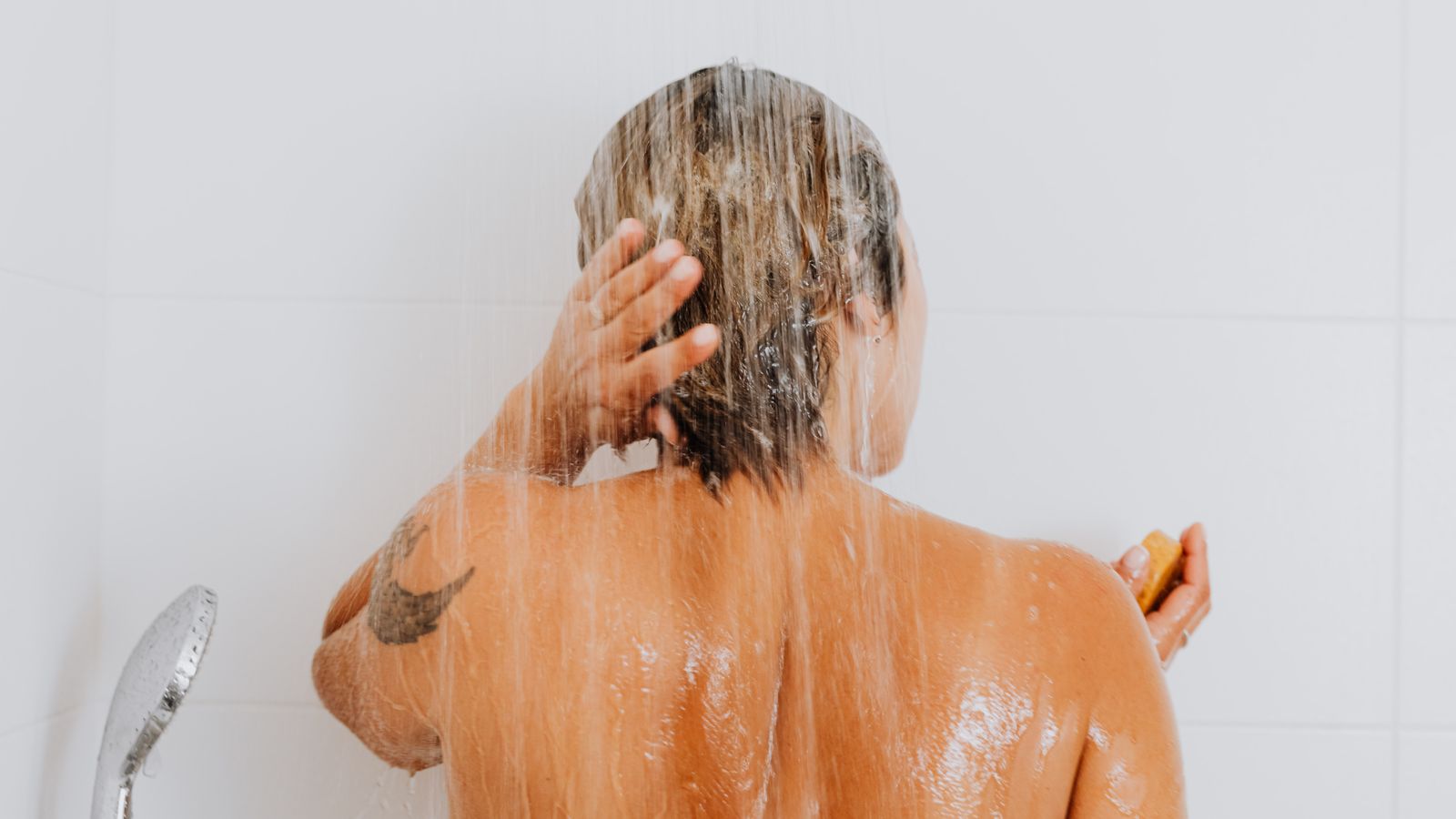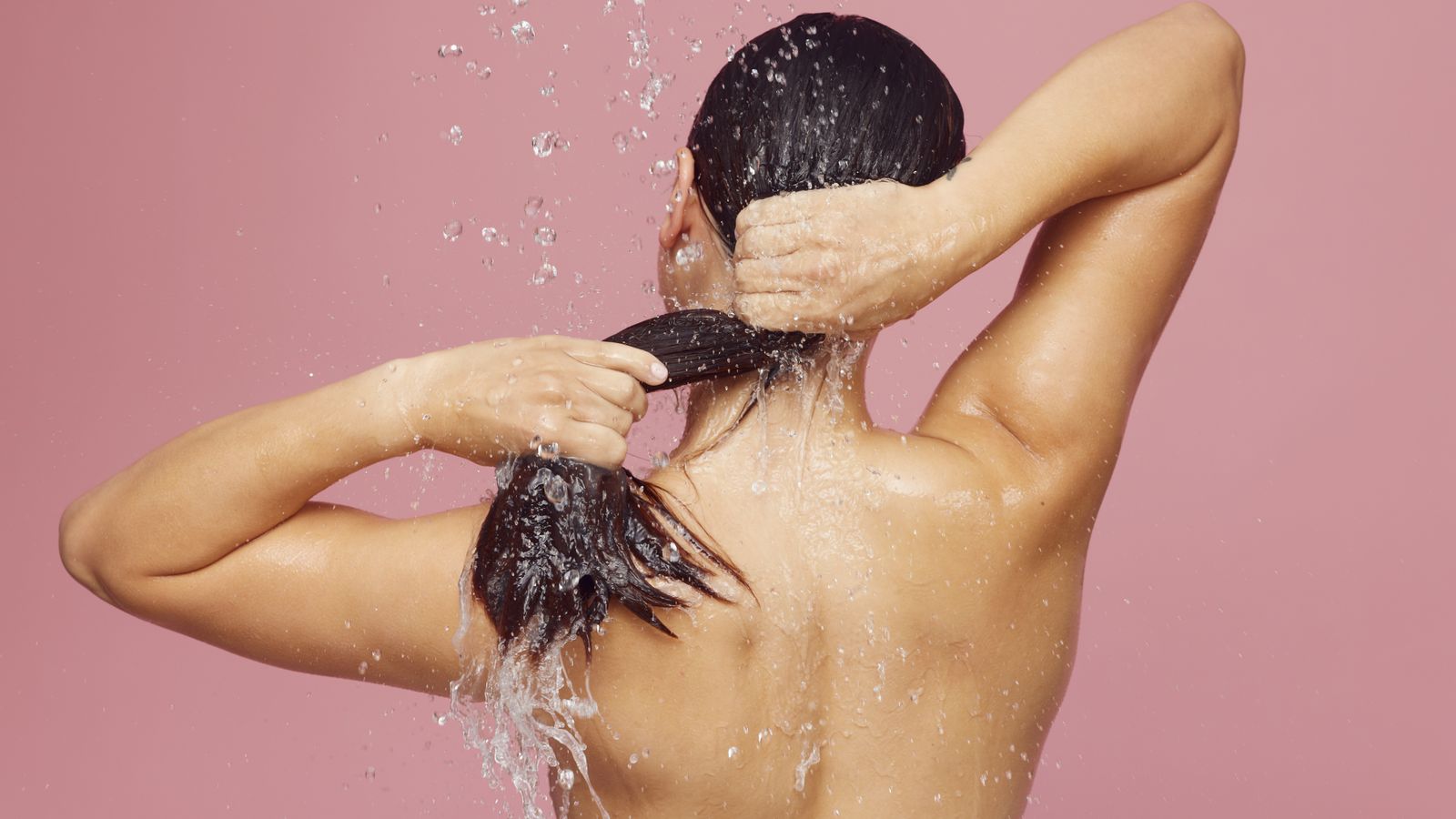
Is It Bad to Wet Your Hair Everyday But Not Wash It?
Is it bad to wet your hair everyday but not wash it? For most hair types, no, and it is gentler than the alternative. A plain rinse removes sweat and surface dust while leaving the sebum that keeps hair supple, whereas daily shampoo removes both. The routine suits curly, coily, coarse and coloured hair particularly well. It suits fine, oily hair least, because water cannot lift the oil that makes roots look flat. If you lean on dry shampoo between washes, our guide to dry shampoo after exercise covers how to use it without build up.

Condition Me® Hair Growth Conditioner
The workhorse of a rinse only routine, and the product that does the most for it. Mid lengths down every time hair gets wet, two minutes, detangle while it is in, rinse cool.
Key takeaways
- Rinsing without shampooing is a legitimate routine with two names: water only for a plain rinse, co-washing when you use conditioner instead of shampoo.
- Water removes sweat, dust and light debris. It does not remove sebum, silicone or wax, so you still need real shampoo sometimes.
- It suits curly, coily, coarse and coloured hair best. Fine, oily hair gets the least from it and usually needs a genuine cleanse.
- The risk is not the water. It is handling a swollen, temporarily weaker fibre roughly, and sleeping on it damp.
- If roots go flat and greasy, hair stops responding to product, or the scalp itches, the rinse only stretch has gone on too long.
Is it bad to wet your hair everyday, or is it just misunderstood?
The worry usually comes from advice about washing, which then gets applied to water. They are different actions. Shampoo contains surfactants, molecules with a water loving end and an oil loving end, and their whole job is to grab sebum and carry it down the drain. Water on its own has no such mechanism. Pour it over an oily surface and the oil stays where it is. If your scalp turns greasy fast between washes, our Walsall guide to an oily scalp explains what drives it and when a trichologist can help.
So a daily rinse is not a daily strip. It refreshes, it re-forms curl patterns, it flattens a slept on parting and it clears the sweat and dust of a day. What it leaves behind is the sebum layer that keeps the cuticle smooth and the fibre flexible, which for anyone with dry, coarse, curly or coloured hair is exactly the material they cannot afford to lose five times a week.
A note on what this page covers
This page is about the practice of rinsing without shampooing: co-washing, water only, technique and when you still need a real cleanse. If your question is the broader one of whether daily wetting is a good idea at all, and how it interacts with wash frequency by hair type, that is covered in should I wet my hair every day.
Water only or co-washing, and which do you actually want?
| Water only | Co-washing | Shampoo | |
|---|---|---|---|
| What it is | A plain rinse, nothing applied | Washing with conditioner in place of shampoo | A surfactant cleanse |
| Removes | Sweat, dust, loose debris | The above plus light oil and residue | Sebum, product, silicone, wax, minerals |
| Leaves behind | All sebum, all product | Most sebum, some conditioning film | Very little |
| Best for | Refreshing curls, between wash days, dry ends | Curly, coily, coarse and coloured hair | Everyone, at the right frequency |
| Weak point | Cannot clean a genuinely dirty scalp | Builds up over weeks without a periodic real wash | Strips if used too often on dry hair |
Most people asking is it bad to wet your hair everyday actually want co-washing and do not yet know the word for it. Conditioner contains cationic surfactants which cling to the fibre and carry a mild cleansing action, and combined with your fingertips working the scalp, that clears more than water alone. It is a middle setting, not a replacement for shampoo, and treating it as a permanent replacement is where the routine goes wrong.
Who does this routine genuinely suit?

The answer changes most sharply with texture. Coily and afro textured hair benefits most, and the reason is geometry rather than preference. Sebum travels down a straight fibre easily and down a tightly coiled one hardly at all, so the ends of coily hair are dry even when the scalp is not. Removing that limited oil supply every day is counterproductive. Water plus a conditioner or leave in keeps the fibre pliable and the curl pattern intact. Our guide to products for afro hair covers the wider retention routine.
Curly hair follows the same logic one step down. Coloured and bleached hair benefits for a different reason: every shampoo carries some dye out along with the oil, so fewer shampoos means slower fade. Coarse, thick hair simply does not need daily cleansing to look clean.
Fine and oily hair is the poor fit. The fibre sits close to a scalp producing plenty of sebum and has little length to distribute it along, so the oil accumulates at the roots where it is most visible. Water will not move it. For this group a rinse only day usually means a flat, greasy afternoon, and a gentle daily shampoo is the better answer.
Get a discount on the curly hair range
Join the Watermans mailing list and we will email a discount code straight to your inbox, so you can try the curly hair range for less. Made in the UK, over 6.5 million bottles sold since 2012.
What does daily wetting actually do to the fibre?
Keratin absorbs water and swells by roughly a sixth of its diameter when saturated. That swelling is what lets a rinse reshape hair, and it is also what makes wet hair temporarily weaker. A saturated fibre gives way under far less force than a dry one, which is why brushing wet hair aggressively is one of the most reliable ways to break it.

Repeated swelling and drying cycles do gradually roughen a porous cuticle, an effect sometimes called hygral fatigue. It is real, it is slow, and it matters mainly on bleached or very porous hair. Conditioning each time offsets most of it, and it is dwarfed by the damage from rough handling. In practice, if you rinse daily and detangle gently with conditioner in, the fibre is fine.
Is more hair in the drain a sign something is wrong?
Usually not, and the reason is arithmetic. A scalp releases roughly fifty to a hundred hairs a day as part of the normal cycle. Those hairs detach but stay trapped among the others until water and fingers dislodge them. Rinse daily and you collect one day's worth each time. Rinse twice a week and the identical total arrives in two frightening handfuls.
Keep the three mechanisms separate, because they have different causes and different answers. Hair loss is the follicle ceasing to produce a usable hair, as in androgenetic alopecia. Hair shedding is an unusual number of hairs entering the resting phase together, which follows illness, childbirth, surgery or sharp weight loss and settles over months. Hair breakage is the fibre snapping along its length while the follicle works normally. A daily rinse can only ever contribute to breakage, and only through handling. Our explainer on what causes thinning hair sets the three out in full.
When do you still need a real shampoo?
Five signals, and any one of them means it is time.
- The roots go flat and greasy and stay that way after rinsing.
- Products stop performing. A conditioner that used to soften does nothing, because the fibre is already coated.
- You have used silicone or wax. Conditioner will not lift either. This one is not negotiable.
- The scalp itches, flakes or smells. Water is not managing what is on it.
- You swam, or you live somewhere with hard water. Chlorine and mineral deposits both need a proper cleanse, and in hard water areas an occasional chelating wash.
How do you do it well?

- Lukewarm water, and take your time at the scalp. Work your fingertips in properly. The mechanical action is most of the cleaning.
- Conditioner mid lengths to ends, every single time. On a rinse only routine this is the step that protects the fibre.
- Detangle with a wide tooth comb while conditioner is in, starting at the ends and working upwards.
- Squeeze the water out with a cotton t shirt, never rub with a rough towel.
- Do not sleep on it soaking. Dry to damp, and a silk or satin pillowcase pays for itself.
- Schedule the real wash. Once or twice a week, so the routine never drifts into build up.
Where does cosmetic hair care fit alongside a rinse only routine?
On a routine built around water, conditioner stops being an optional extra and becomes the main product. Its job is slip, which is what allows a comb through a swollen fibre without snapping it. That is a cosmetic job about retention, keeping the length and density you have looking as full as it can, and we are clear that it is a cosmetic one.

Curly Hair Shampoo & Curl Definition Conditioner Set
Built for curly and coily hair, which is the texture this routine suits best. The conditioner is the half you will reach for daily, with the shampoo for the weekly proper cleanse.
View Curly Hair Shampoo & Curl Definition Conditioner Set - £24.95

Masque Me® Hair Growth Mask
For the weekly wash day, in place of conditioner rather than on top of it. Most useful on coloured, coarse or very porous hair.
Watermans products are 100% cosmetic and do not treat medical hair loss. Individual results may vary.
Two further reads: using conditioner properly for the technique, and how to fix dry hair if the ends are the part giving you trouble.
When should you see a GP instead?
Changing how you rinse is the right response to greasiness, dryness, frizz or hair snapping under a comb. It is the wrong response to a widening parting, a receding hairline, visible scalp at the crown, bald patches, a scalp that is persistently sore, scaly or scarred, or shedding that has run past six months. Those deserve a GP, who can arrange blood tests for iron, ferritin, thyroid function and vitamin D. A shower routine does not answer them. For how often to shampoo by hair type, our guide to how often you should wash your hair sets out a range for oily, curly and coily hair. Go with specifics rather than a general worry, because they are what shorten the appointment: how long the change has been going on, whether it is thinning at the parting or hair snapping mid length, and whether the scalp itself is sore, scaly or itchy. If your question is about products or a routine rather than a medical one, you can talk to Gail Waterman, our co-founder, as an AI avatar on the Watermans homepage.
Frequently asked questions
Is it bad to wet your hair everyday without shampooing?
No, for most hair types it is actively kinder than shampooing daily. Water rinses away sweat, dust and loose surface debris without touching the sebum that keeps the fibre supple. The exception is a scalp that produces a lot of oil, where a water only day leaves the roots looking greasy rather than refreshed.
What is the difference between co-washing and water only?
Water only means a plain rinse and nothing else. Co-washing means washing with conditioner instead of shampoo, using its mild cleansing agents and the mechanical action of your fingers to lift light debris. Co-washing cleans more than water alone and less than shampoo, which is exactly the point of it.
How often do I still need real shampoo?
Most people who rinse daily still need a proper shampoo once or twice a week. Sooner if you use styling products, wear silicones, swim, exercise hard, live in a hard water area or notice the roots going flat and greasy. Conditioner cannot fully remove a silicone or a heavy wax.
Is it bad to wet your hair everyday if it is coloured?
It is one of the better routines for coloured hair, because every shampoo carries some dye out with the oil. Rinsing keeps hair fresh between washes and slows the fade. Use lukewarm rather than hot water, since heat opens the cuticle and speeds the loss.
Will rinsing daily make my scalp greasy or fix it?
Neither reliably. The idea that shampooing less trains the scalp to produce less oil is not well supported. Sebum output is largely governed by hormones and genetics. What does change is your perception, as hair adjusts and you get used to a different look, and the build up if you never cleanse properly.
Can I wet my hair every day if I have dandruff?
Rinsing will not clear dandruff, because the flaking is driven by a yeast that lives on the scalp and needs an active shampoo to manage. Water can make the flakes less visible for a few hours. If you are flaking, itching and sore, that is a pharmacist or GP question rather than a rinsing one.
Is it bad to wet your hair everyday for afro or coily hair?
It is one of the best routines for it, provided a conditioner or leave in goes on each time. Coily hair is the driest type by geometry, because the natural oils cannot travel down a tightly coiled fibre. Daily water plus conditioner keeps it pliable, and daily shampoo would do the opposite.
Does daily rinsing weaken hair over time?
Repeated swelling and drying does put the cuticle through a mechanical cycle, and on very porous or bleached hair that shows up as roughness eventually. It is a slow effect and conditioning offsets most of it. Rough handling while the fibre is wet does far more damage, far faster.
What is the bottom line: is it bad to wet your hair everyday?
Is it bad to wet your hair everyday but not wash it? No, and for curly, coily, coarse and coloured hair it is a better routine than shampooing daily, because water clears sweat and dust while leaving the sebum those hair types cannot spare. The honest limits are worth holding on to: water will not remove oil, silicone or wax, so a real shampoo once or twice a week keeps the routine from drifting into build up, and fine oily hair generally does better with a gentle daily cleanse than with a rinse. Beyond that the risks are all about handling. Condition every time, detangle gently with a wide tooth comb, do not sleep on it soaking, and the water itself costs you nothing. Persistent thinning, a sore scalp or a shed past six months is a GP conversation, not a routine one.
If you rinse daily, the conditioner is the step doing the real work, and our hair growth conditioner is built for exactly that: enough slip to handle wet hair safely, and a breakage defence job that matters more the more often the fibre swells and dries.
Sources and References
- NHS. Dandruff. nhs.uk. Used for the description of what drives flaking and when to seek advice.
- NHS. Hair loss. nhs.uk. Used for normal daily shedding and the point at which to speak to a GP.
- British Association of Dermatologists. Information leaflets for the public on seborrhoeic dermatitis and hair care. bad.org.uk.
- Robbins, C. R. Chemical and Physical Behavior of Human Hair, 5th edition, Springer. Reference for sebum distribution along the fibre, wet fibre strength and hygral fatigue.
- Drinking Water Inspectorate material on water hardness across England and Wales, used for the mineral build up section.