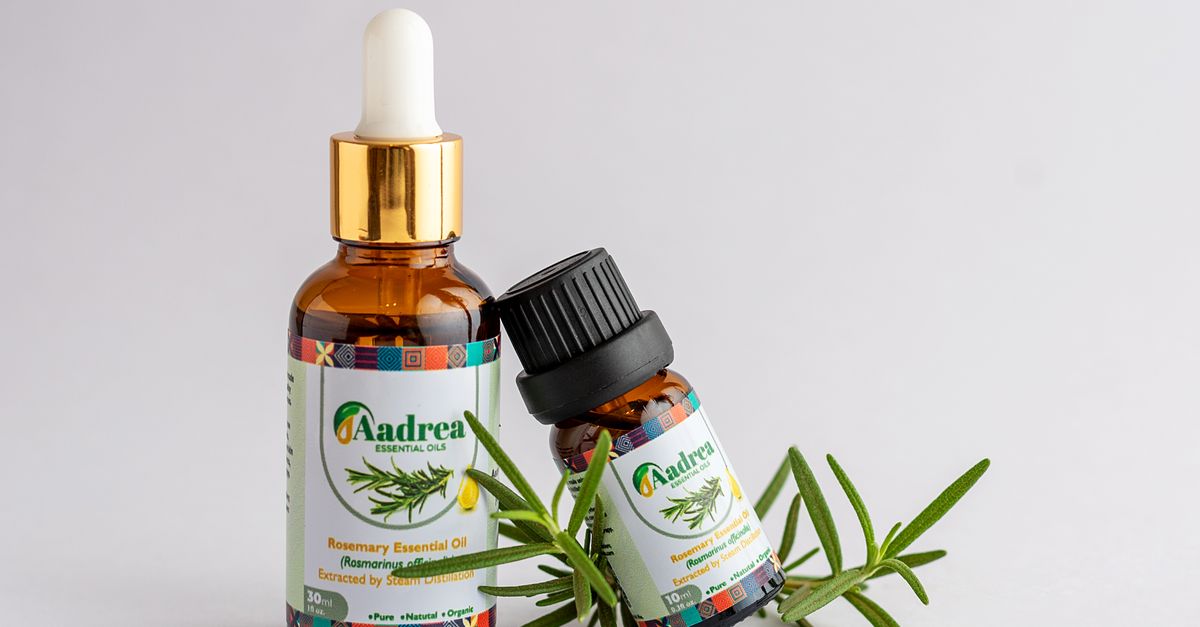
Rosemary Oil for Thinning Hair: How to Use It
Rosemary oil for thinning hair is used as a diluted scalp application, not as a neat oil and not as a rinse. The practical version is roughly 2 percent rosemary essential oil in a carrier, massaged into the scalp two or three times a week, left on for at least half an hour or overnight, then washed out. Give it twelve weeks before judging it, and expect scalp comfort to change before anything else does.
The simple option
Grow Me® Shampoo, £14.95, is a sulphate free rosemary shampoo with caffeine, biotin and niacinamide. It is cosmetic: it reduces breakage for fuller looking hair. What the research does and does not show is below.
Key takeaways
- Dilute to about 2 percent, which is roughly 12 drops of rosemary essential oil in 30ml of carrier oil. Never neat.
- Patch test on the inner forearm and wait 24 hours. Scalp irritation costs you more hair than the oil could ever add.
- Two or three applications a week is the usual pattern. More often is not better and makes hair harder to keep clean.
- Twelve weeks minimum before you judge it. The published human work ran for six months.
- It is a scalp-comfort and routine ingredient. It does not change an inherited pattern, and this page will not pretend it does.
Who is rosemary oil for thinning hair actually suited to?
Rosemary oil for thinning hair suits people whose scalp is itchy, tight or flaky alongside the thinning, and people whose hair is snapping during handling rather than falling from the root. Those two groups get something real from it. It suits people with an established inherited pattern far less well, because nothing applied to the outside of the scalp changes how a follicle responds to androgens.
The honest way to place it is as a routine ingredient rather than an intervention. If your scalp is uncomfortable and your routine is stripping, adding a diluted oil step and easing off harsh washing will make a noticeable difference to how your scalp feels within a few weeks. That is worth having. It is simply a different thing from changing your hair density, and the two get blurred together in most of what is written about this oil.
If you have not yet worked out which problem you have, start with our three clue self-check. For the research itself, rather than the routine, our page on what the evidence on rosemary oil actually says covers the studies in detail. This page is deliberately about the doing rather than the reading.
Is your problem hair loss, hair shedding or hair breakage?
This matters more than any dilution ratio, because rosemary oil helps a great deal with one of the three, a little with another and almost not at all with the third. Hair loss means the follicle producing progressively finer, shorter hair over years, in a pattern. Hair shedding means an unusual volume of hairs releasing at once, arriving suddenly, spread evenly, usually two to four months after a trigger. Hair breakage means the fibre snapping partway along, so the follicle is fine and the hair is damaged.
| What you see | Most likely | Will a diluted oil step help? |
|---|---|---|
| Short snapped pieces, no pale bulb, ends look ragged | Breakage | Yes, as a pre-wash step on the lengths. This is where oils are strongest. |
| Itch, tightness, flaking alongside the thinning | Scalp irritation | Yes, this is the effect most consistently reported in the research. |
| Sudden even shed, full length hairs with pale bulbs | Shedding after a trigger | Barely. Find the trigger. Time does the work here. |
| Slowly widening parting or receding corners over years | Inherited pattern | No meaningful effect on the pattern. A GP conversation is the honest next step. |

How do you dilute and apply rosemary oil for thinning hair?
Start with the dilution, because this is where most people go wrong and where the harm sits. Rosemary essential oil is a concentrated plant extract and a recognised skin sensitiser. Aim for about 2 percent, which works out at roughly 12 drops of essential oil in 30ml of carrier. Jojoba, sweet almond, coconut and argan all work as carriers. Mix it in a small dark bottle and make small batches, because the oil oxidises.
Patch test before anything else. A coin sized amount on the inner forearm, left alone for 24 hours. If there is redness, itching or any raised reaction, that formula is not for you and increasing the dilution is the only sensible response. This step takes a day and prevents the single most common bad outcome of this whole routine.
To apply, part the hair in sections and put the oil on the scalp rather than the lengths, using fingertips rather than nails. Massage gently for a couple of minutes. Leave it for at least 30 minutes, or overnight on a towel-covered pillow, then shampoo out. Two washes are often needed, which is one reason overnight use suits people who wash every other day rather than daily.
Frequency is two or three times a week. Daily application does not speed anything up, it just leaves hair greasy, encourages over-washing, and over-washing is itself a cause of the tight, uncomfortable scalp you are trying to settle.
Do not use it neat, and skip it entirely if you are pregnant. Undiluted essential oil on the scalp is a well recognised route to contact dermatitis. Rosemary essential oil is also generally advised against in pregnancy, and it should be kept away from children and off broken or inflamed skin. If your scalp is already sore, settle that first with a GP rather than adding an oil to it.
What should you expect, week by week?
Weeks one to four are about comfort. If irritation was part of your picture, this is when you should notice less itch and less tightness after washing. If nothing changes here, that is useful information rather than a reason to apply more.
Weeks four to eight are about the fibre. Less snapped hair on the towel, less resistance when you comb, ends that look less ragged. This is largely the carrier oil and the gentler handling doing the work, and it is a genuine result even though it is not the one people hope for.
Weeks eight to twelve are the earliest point at which anything could show at the roots, because hair grows around a centimetre a month and anything entering the growing phase today is not visible for a season. Photograph three angles monthly in the same light, hair dry, no filters, and compare pictures rather than memories. At week twelve, if the scalp is no more comfortable, the hair is no less fragile and the photographs are identical, stopping is a perfectly rational decision.
Set the expectation properly before you start and you will make a better call at the end. Our 90 day thinning action plan covers the photograph method and the blood tests worth asking a GP about, which are the two things that actually change decisions.
Get a discount on your next order
Join the Watermans mailing list and we will email a discount code straight to your inbox. Made in the UK, over 6.5 million bottles sold since 2012.
Neat oil or a formulated product: which is the better route?
Mixing your own gives you control over the dilution and costs very little. It also means you are responsible for getting the ratio right, storing it before it oxidises, and washing it out properly. Plenty of people do this happily for years.
A formulated shampoo or leave-on serum containing rosemary takes the dilution decision away from you, spreads more evenly, and washes out normally. The rosemary content is lower than a home blend, which is a fair trade against never irritating your scalp and actually sticking with the routine. Adherence beats potency in anything you have to do three times a week for three months.
Neither route is the better one in the abstract, and rosemary oil for thinning hair is worth exactly the same whichever bottle it arrives in. Choose the one you will genuinely keep doing. If you have sensitive skin, a history of reacting to fragrance, or you simply know you will not measure drops accurately, buy something formulated. If you like making things and your skin is robust, mix your own and patch test properly.

Which Watermans products contain rosemary, and where do they fit?
Rosemary is in most of our range because it is a well-tolerated cosmetic ingredient with a decent safety record and the best supporting research of the botanicals we use. Here is where each one fits in the routine described above, and where it does not.

Grow Me Shampoo
Sulfate free with rosemary, caffeine and niacinamide. This is the practical replacement for a stripping shampoo if over-washing is part of why your scalp feels tight. It also does the job of washing out an overnight oil without you needing three lathers.

Grow More Scalp Elixir
The direct alternative to mixing your own. A leave-on scalp step with rosemary and caffeine at cosmetic levels, applied to the parting or crown, no dilution maths and no oily pillowcase. Judge it on scalp comfort over twelve weeks like anything else here.

Condition Me Conditioner
If the table above put you in the breakage row, this matters more than any oil. Slip is what stops hair snapping when you detangle, and snapped hair is length you never get back. Unglamorous and the highest value item on this page for that group.
Over 6.5 million bottles sold since 2012, made in the UK. If your problem is an inherited pattern, none of this is the answer to that, and we would rather you knew before you bought than after.
When should you stop and see a GP instead?
Stop the oil and see a GP if the scalp becomes red, sore, blistered or intensely itchy after starting, because that is a reaction rather than a settling-in period. Also see a GP, regardless of any product, for round smooth bald patches appearing quickly, hair coming out in clumps, scalp pain or scarring, thinning alongside new fatigue, weight change or irregular periods, and any sudden loss of eyebrow or eyelash hair. If your question is about products or a routine rather than a medical one, you can talk to Gail Waterman, our co-founder, as an AI avatar on the Watermans homepage.
Ask about ferritin, full blood count, thyroid function, vitamin D and B12. Low iron stores are common in menstruating women and produce exactly this symptom. Thinning in a child is always a GP matter first. None of this is a sign you have failed at anything, it is simply how the correctable causes get found, and correctable causes are more common than the internet lets on.
Frequently asked questions
How much rosemary oil for thinning hair should I actually use?
About 2 percent dilution, which is roughly 12 drops of rosemary essential oil in 30ml of carrier oil, and enough of the finished blend to lightly cover the scalp rather than saturate the hair. For most people that is around a teaspoon.
Can I leave rosemary oil in overnight?
Yes, once you have patch tested and are using it properly diluted. Overnight suits people who wash every other day. Use an old pillowcase and expect to shampoo twice in the morning.
How often should I apply it?
Two or three times a week. Daily use does not accelerate anything and tends to push people into over-washing, which works against the scalp comfort you are trying to build.
Can I mix rosemary oil into my shampoo instead?
You can, but contact time is about a minute before it goes down the drain, so it is the weakest version of this routine. A leave-on step or a formulated product designed to stay on the scalp makes far more sense.
Will it work if my thinning is inherited?
Not on the pattern itself. It may still make the scalp more comfortable and the hair easier to handle, which is worth something. For the pattern, the conversation to have is with a GP.
Is rosemary oil safe in pregnancy?
Rosemary essential oil is generally advised against during pregnancy, so leave it out and ask a midwife or GP before using any essential oil on the skin. Postpartum shedding is extremely common and usually settles on its own.
Does it smell strong?
Yes, noticeably herbal, and it lingers on a pillow. Some people like it. If you do not, that is a genuine reason to choose a formulated product where the fragrance is balanced.
Can I use it alongside other scalp products?
Change one thing at a time, at least at first. If you start an oil, a new shampoo and a supplement in the same week you will not know which one did anything, and you will keep paying for all three.
What is the bottom line on rosemary oil for thinning hair?
Rosemary oil for thinning hair is a diluted, twice or three times weekly scalp step that earns its place on scalp comfort and on protecting the hair you have already grown. Dilute to 2 percent, patch test, apply to the scalp not the lengths, leave it at least half an hour, and review honestly at week twelve against photographs rather than memory. Where the thinning is an inherited pattern, keep this as routine care and take the pattern itself to a GP.
For the cosmetic side of a fuller look, the Grow Me hair growth shampoo is the step that does the heavy lifting. Vegan, made in the UK.
Watermans products are 100% cosmetic and do not treat medical hair loss. Individual results may vary.
Sources and References
- NHS, Hair loss: causes, types and when to see a GP. nhs.uk/conditions/hair-loss
- NICE Clinical Knowledge Summaries, Alopecia, androgenetic. cks.nice.org.uk
- Panahi Y and colleagues, Rosemary oil versus a topical comparator in androgenetic alopecia, Skinmed, 2015, a six month randomised comparison whose clearest finding was on scalp itch.
- British Association of Dermatologists, contact dermatitis information leaflet, on essential oils as skin sensitisers. bad.org.uk
- Rele A S and Mohile R B, Effect of mineral oil, sunflower oil and coconut oil on prevention of hair damage, Journal of Cosmetic Science, 2003, on protein loss from the hair fibre.
- NHS, Hair loss and pregnancy, and general guidance on essential oil use in pregnancy. nhs.uk