Natural Hair Loss Remedies: What Is Worth Trying
Natural hair loss remedies are the plant oils, kitchen-cupboard rinses and botanical actives people reach for before, or instead of, anything from a pharmacy. Some have real research behind them, most have very little, and none of them change an inherited pattern. What they can genuinely do is keep the scalp comfortable and the hair you already have intact, which is a smaller promise than the internet makes but a real one worth understanding properly before you spend.
Our hair growth shampoo
Grow Me® Hair Growth Shampoo, £14.95. A sulphate free daily shampoo that supports a healthy scalp environment and helps reduce breakage, so lengths hold on and look fuller.
Key takeaways
- Work out which problem you have first. Loss, shedding and breakage look identical in the plughole and answer to completely different things.
- Rosemary oil has the most published research of the common natural hair loss remedies, and it is still a small, imperfect body of work.
- Anything applied to the scalp is judged over 90 days minimum, because the hair cycle sets the pace and nothing shortens it.
- Natural does not mean harmless. Undiluted essential oils are a common cause of contact dermatitis on the scalp.
- If the pattern is inherited, a botanical routine is a comfort and maintenance decision, not a density one. Say that plainly and you will make better choices.
What can a natural routine realistically do for your hair?
A botanical routine works on two things: the environment the hair grows in, and the condition of the fibre once it has grown. A calm, non-irritated scalp is a better place to grow hair than an itchy, flaking one. A well-conditioned fibre survives brushing, towel drying and tying up without snapping, so you keep the length you have grown. Both of those are real gains, and both are measurable by you at home within weeks.
What a botanical routine does not do is change the follicle's programming. Inherited pattern change is driven by how sensitive the follicle is to androgens, and no oil, rinse or shampoo alters that sensitivity. Anyone selling you a plant extract on the promise that it will restore an inherited pattern is either mistaken or hoping you will not check. That is worth knowing before you buy, not after.
The honest framing is that natural options are the floor rather than the ceiling. They make the most difference to people whose problem is mechanical or environmental, and the least difference to people whose problem is genetic. Our guide to pattern hair loss and its stages explains which group you are probably in.
Is it hair loss, hair shedding or hair breakage?
These three get used as if they were the same word and they are not, which is why so many people buy the wrong thing. Hair loss means the follicle producing progressively finer, shorter hair until it produces almost nothing, which is gradual and follows a pattern. Hair shedding means hairs releasing in unusual volume because the growth cycle was disturbed, which arrives suddenly, spreads evenly and usually settles on its own. Hair breakage means the fibre snapping partway along its length, so the follicle is perfectly healthy and the hair is damaged.
| Clue | Hair loss | Hair shedding | Hair breakage |
|---|---|---|---|
| How it starts | Slowly, over years | Suddenly, weeks after an event | Gradually, tracking a habit |
| Where | Parting, temples, crown | The whole scalp evenly | Wherever heat, bleach or tension lands |
| The fallen hair | Fine, short, wispy | Full length with a pale bulb | Short snapped pieces, no bulb |
| Where botanicals help | Scalp comfort only | Very little, time does the work | A great deal, this is their strength |
That last row is the practical point of this whole page. Botanical oils and conditioning ingredients earn their keep against breakage, do a modest supporting job on scalp comfort, and are close to irrelevant against a genetic pattern. If you take one thing away, take that. Our three clue self-check walks you through working out which of the three you are actually dealing with.

Which natural hair loss remedies have the most evidence behind them?
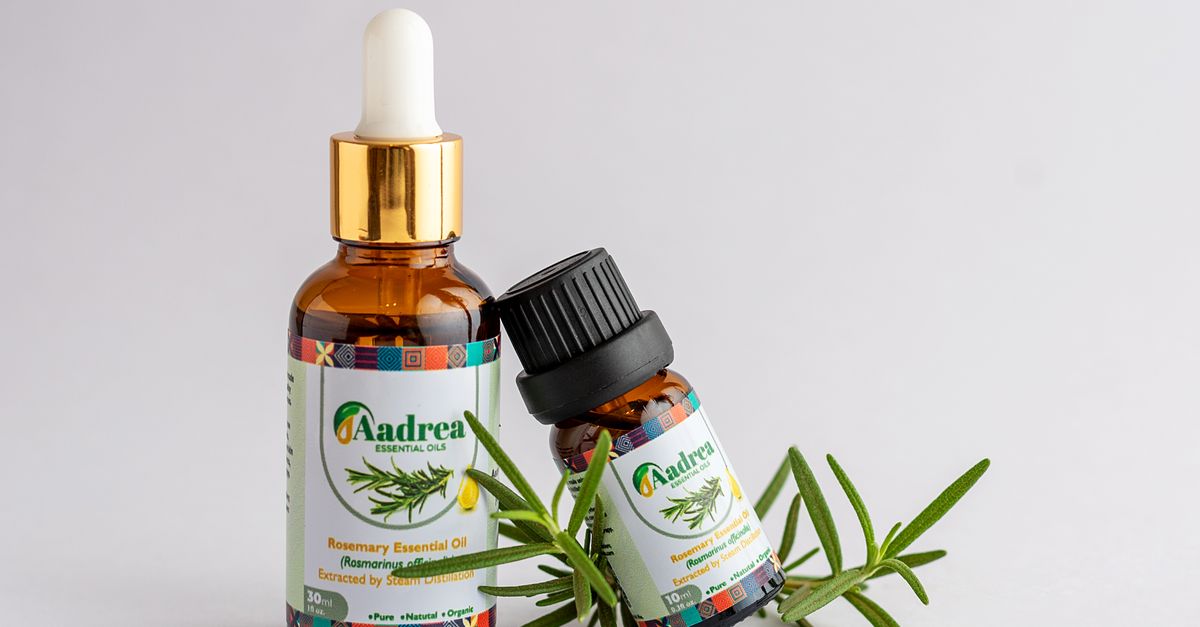
Ranking natural hair loss remedies by evidence rather than by popularity changes the list considerably. Rosemary oil sits at the top, not because the research is strong in absolute terms but because it is the only one with a published human comparison study of any size behind it, and that study ran for six months rather than six weeks. Its most consistently reported effect was on scalp itch, which is a modest and believable finding.
Below that sit caffeine and niacinamide, both of which have laboratory and small human work behind them and both of which are ordinary cosmetic ingredients rather than exotic ones. Then come the oils used mainly for conditioning: argan, coconut, camellia and castor. Their research is about the fibre, not the follicle, and it is genuinely decent research for what it claims. Coconut oil reducing protein loss from the hair shaft is a real, repeatable laboratory finding.
At the bottom sit onion juice, garlic, rice water, apple cider vinegar and the large family of remedies that exist mostly because they photograph well. Some have one small paper. Most have none. That does not make them dangerous, it makes them unproved, and the honest thing is to say so rather than borrow authority they have not earned. Where good sources disagree, and on rosemary they do, the disagreement is about effect size rather than about safety. Our guide to garlic for hair growth is the place to go next on that.
Natural is not the same as gentle. Undiluted essential oils are one of the more common causes of scalp contact dermatitis seen in dermatology clinics. Dilute to roughly 2 percent in a carrier oil, which is about 12 drops in 30ml, and patch test on the inner forearm for 24 hours before it goes anywhere near your head.
How do you choose between a botanical route and a medical one?
This is the decision most people are actually making when they search, and it deserves a straight answer rather than a sales pitch. The choice turns on three questions: what is causing your hair change, how much of a change you want, and what you are willing to keep doing indefinitely.
If the cause is mechanical, seasonal or a one-off shed, botanical care plus patience is a sensible first move and often the only one you need. If the cause is inherited pattern change and you want to hold or improve density, that is a GP conversation, because the options with the strongest evidence for that specific job are medicines and we do not sell medicines. Choosing natural hair loss remedies instead, in that situation, is a legitimate choice as long as you make it with your eyes open rather than because a website implied the two routes are equivalent. Some home remedies carry more risk than reward, and lime for hair is a good example of one to handle carefully.
The third question catches people out. Every route for pattern change, medical or cosmetic, works only while you keep doing it. There is no course you complete. Our page on what happens when you stop covers that honestly, and it is worth reading before you start anything rather than after.
Get a discount on your next order
Join the Watermans mailing list and we will email a discount code straight to your inbox. Vegan, made in the UK, over 6.5 million bottles sold since 2012.
How should you actually run a 90 day botanical trial?
Photograph before you change anything. Three angles, the hairline straight on, the crown from above and the parting combed to its usual side, in the same room and light, hair dry, no filters. Repeat monthly on the same date. Six months of honest photographs beat six months of squinting in the bathroom mirror, because the change is slow enough that your impressions are genuinely unreliable.
Then change one thing. Not four. If you start an oil, a new shampoo, a supplement and a scalp brush in the same week you will learn nothing about any of them and keep paying for all four. Give the single change twelve weeks before you judge it, because a hair grows roughly a centimetre a month and anything entering the growing phase today is not visible for a season.
Judge it on three honest measures: does the scalp feel more comfortable, is there less snapped hair on the towel and the brush, and do the photographs differ. Scalp comfort usually improves first, within a few weeks. Fibre condition follows. Density, if it moves at all, moves last and least. If nothing has changed by week twelve, stopping is a rational decision rather than a failure, and it is the decision most product pages will never suggest to you.
If the shed is heavy and recent rather than gradual, work through our 90 day thinning action plan first, because a shed has a trigger and finding it matters more than any bottle.

Which Watermans products fit a botanical routine?
Three jobs are worth paying a cosmetic company for while you work this out: cleanse without stripping the scalp, condition so the fibre survives being handled, and, if you want it, a leave-on scalp step. Everything beyond that is optional, and we would rather say so than sell you a fourth thing.

Grow Me Shampoo
Sulfate free, with rosemary, caffeine and niacinamide, which are the three botanical-adjacent actives on this page with the most human research behind them. It is a cleanser that leaves the scalp comfortable, judged on that and not on density promises.

Camellia and Black Castor Oil
If you want an oil, this is a pre-diluted blend rather than a neat essential oil, which removes the most common way people irritate their own scalp. Best used on the lengths as a pre-wash step, where oils have their strongest evidence.

Grow More Scalp Elixir
A leave-on step for the parting or crown if you want one, with rosemary and caffeine at cosmetic levels. Optional rather than essential. If your problem is breakage rather than the scalp, spend the money on conditioner instead.
Over 6.5 million bottles sold since 2012, made in the UK. If none of this fits your problem, do not buy it. A gentler wash routine and a looser ponytail beat the wrong purchase every time, and they cost nothing.
When should hair change send you to a GP instead of a shop?
Some presentations are not a shopping decision at all. Round smooth bald patches appearing quickly, hair coming out in clumps, scalp pain, burning, persistent itching, scaling, redness or any scarring, hair change alongside new fatigue, weight change or irregular periods, and any sudden loss of eyebrow or eyelash hair all warrant a GP visit rather than a bottle.
Ask about ferritin, full blood count, thyroid function, vitamin D and B12. Low iron stores in particular are common in menstruating women and produce exactly this symptom, and they are straightforward to correct once someone has actually looked. Hair change in a child is always a GP matter first, and hair change that starts after a new medicine is a conversation with the clinician who started it rather than a reason to stop taking anything by yourself.
Seeing a GP costs you nothing and commits you to nothing. It is simply how the fixable causes get found, and the fixable ones are far more common than the internet suggests.
Frequently asked questions
Do natural hair loss remedies work as well as pharmacy options?
For an inherited pattern, no, and no honest source claims otherwise. For scalp comfort and for keeping the hair you already have intact, a good botanical routine does a genuine job. The two routes are answering different questions, which is why comparing them head to head is usually the wrong comparison.
How long before I can tell if rosemary oil is doing anything?
Twelve weeks minimum, and the published human work ran for six months. Scalp itch, if that is your issue, may settle sooner. Anything you notice in week two is almost certainly the wash routine rather than the oil.
Can I put rosemary oil straight on my scalp?
No. Dilute it to roughly 2 percent in a carrier oil, which is about 12 drops in 30ml, and patch test on your inner forearm for 24 hours first. Neat essential oil on the scalp is a well recognised route to contact dermatitis, which will cost you more hair than it saves.
Does onion juice do anything for hair?
There is one small study often cited and very little else, so it sits firmly in the unproved column. It also smells strongly enough that adherence collapses within a fortnight, which is its own kind of answer.
Is rice water worth trying?
It coats the fibre and can make hair feel temporarily thicker and look glossier, which is a cosmetic effect on the hair you already have rather than anything happening at the follicle. Used too often it can leave hair stiff and more prone to snapping.
Do hair supplements belong in a natural routine?
They help when you are genuinely short of something, which a blood test establishes rather than a guess. Taking iron without a documented deficiency is not harmless, and biotin can interfere with some blood test results, so mention any supplement to your GP before testing.
Will scalp massage on its own help?
The evidence is thin but it is free, it is pleasant and it carries no risk, which makes it one of the few things worth doing even on weak evidence. Keep the pressure gentle and the nails away from the scalp.
Are botanical shampoos better than ordinary ones?
Not inherently. What matters is whether the formula leaves your scalp comfortable and your hair manageable. A pleasant ingredient list on a shampoo that strips your scalp is worse than a plain one that does not.
What is the bottom line on natural hair loss remedies?
Natural hair loss remedies are worth using for what they genuinely do, which is supporting a comfortable scalp and protecting the hair you have already grown from snapping. They are not a substitute for a medical conversation when the cause is an inherited pattern, and pretending otherwise just costs you time at the age when time matters most. Identify which of loss, shedding and breakage you have, change one thing, photograph it, and review at week twelve.
If you want the wash step doing something useful in the meantime, Grow Me hair growth shampoo is the one most people start with. Vegan, made in the UK.
Watermans products are 100% cosmetic and do not treat medical hair loss. Individual results may vary.
Sources and References
- NHS, Hair loss: causes, types and when to see a GP. nhs.uk/conditions/hair-loss
- NICE Clinical Knowledge Summaries, Alopecia, androgenetic. cks.nice.org.uk
- British Association of Dermatologists, information leaflets on androgenetic alopecia and telogen effluvium. bad.org.uk
- Panahi Y and colleagues, Rosemary oil compared with another topical product for androgenetic alopecia, Skinmed, 2015, a six month randomised comparison whose clearest finding was on scalp itch.
- Rele A S and Mohile R B, Effect of mineral oil, sunflower oil and coconut oil on prevention of hair damage, Journal of Cosmetic Science, 2003, on protein loss from the hair fibre.
- British Association of Dermatologists, contact dermatitis information leaflet, on essential oils as sensitisers. bad.org.uk
If your question is about products or a routine rather than a medical one, you can talk to Gail Waterman, our co-founder, as an AI avatar on the Watermans homepage.