Medical Reasons Hair Wont Grow: What to Check

Short answer first: hair that seems stuck is usually breaking off, not failing to grow.
The medical reasons hair wont grow are mostly reasons hair is not being kept, rather than reasons it is not growing. Scalp hair grows around one centimetre a month in almost everybody. Low iron, an underactive thyroid, heavy shedding after illness or stress, hormonal conditions such as PCOS, and poor absorption of nutrients all shorten how long each hair stays on your head. A GP can check most of these with a blood test.
Key takeaways
- Growth rate barely varies between people. Retention does, which is why length plateaus.
- Before assuming a medical cause, check the ends of your hair. Blunt broken ends mean breakage, not a follicle problem.
- Iron, thyroid function and recent illness or stress cover a large share of genuine medical causes.
- Shedding typically starts two to three months after its trigger, so look back a season, not a week.
- Blood tests come from a GP. No shampoo, supplement or serum can stand in for one.
What are the medical reasons hair wont grow?
Most people asking this have hair that grows perfectly well and then stops getting any longer. That is a retention problem, and it has two broad families of cause. The first is mechanical: the hair is snapping at the ends as fast as it grows from the root. The second is biological: something is cutting the growing phase short, so hairs fall out before they reach their potential length.
The genuinely medical reasons hair wont grow sit in that second family, and the common ones are surprisingly few. Iron deficiency, thyroid problems, telogen effluvium after a shock to the body, hormonal conditions such as polycystic ovary syndrome, malabsorption conditions such as coeliac disease, and severe calorie or protein restriction account for most of what a GP will look for. Some medicines can affect hair as well, which is a question for your GP or pharmacist rather than for the internet.
Everything else on that list is checkable. That is the useful part: you are not stuck guessing, because a blood test and a proper look at the scalp will settle most of it.
Is your hair not growing, or is it breaking?
This is the first question to settle before you go looking at the medical reasons hair wont grow, and it is the one most often skipped. Scalp hair grows at roughly one centimetre a month, or about six inches a year, and that rate is remarkably consistent across healthy adults. If your hair has sat at shoulder length for three years, it has grown around 36 centimetres in that time. It has simply lost the same amount from the bottom.

Two checks separate breakage from a follicle problem:
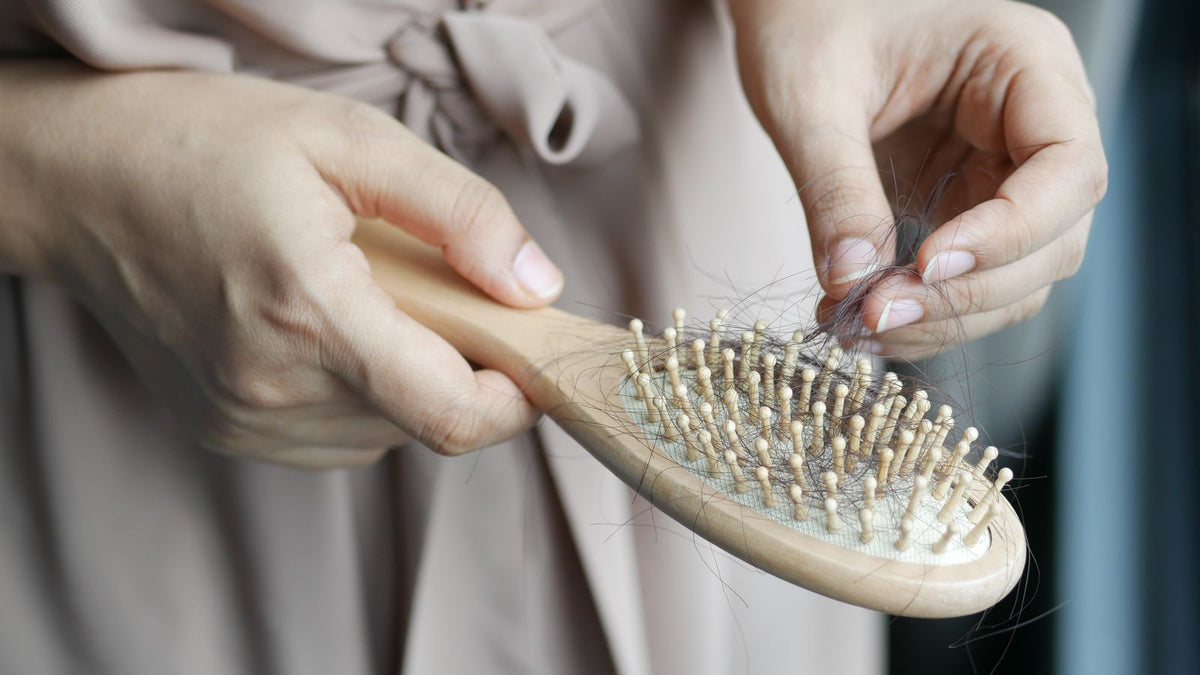
- Look at the ends. Pull a shed hair taut in good light. A hair that has completed its cycle has a small pale bulb at the root end and a tapered tip. A broken hair has a blunt, ragged end and no bulb. A brush full of short blunt pieces is breakage.
- Compare layers. If the top layers are shorter than the underneath layers, and the ends look wispy and see-through, the hair is wearing out before it reaches full length. That is bleach, heat, tight styling or friction, not a medical cause.
There is also a natural ceiling. Every hair has a maximum length set by how long its growing phase lasts, and for some people that is genuinely mid-back and for others it is shoulder length. That ceiling is inherited and is not a medical problem.
Can low iron be one of the medical reasons hair wont grow?
Yes, and it is one of the most common. Iron deficiency, with or without anaemia, is strongly associated with increased shedding, and it is more common in women with heavy periods, in people who eat little or no red meat, and in anyone who has recently lost a lot of blood. The NHS lists hair changes among the less common symptoms of iron deficiency anaemia, alongside tiredness, breathlessness and pale skin.

Two important cautions. First, iron levels are a blood test question, not a guessing question, and ferritin is the marker usually looked at alongside a full blood count. Second, do not start iron supplements on your own. Too much iron is harmful, and taking it blindly can also mask what is actually going on. Ask your GP to check before you buy anything.
Food-wise, red meat, liver, beans, lentils, tofu, fortified cereals and dark green leafy vegetables all contribute. Vitamin C alongside a plant-based iron source helps absorption, while tea and coffee with a meal reduce it.
How does the thyroid affect hair growth?
The thyroid sets the pace of metabolism, and hair follicles are among the fastest-dividing tissues in the body, so they feel a change quickly. Both an underactive and an overactive thyroid are associated with diffuse thinning across the whole scalp rather than in a pattern. Hair may also become coarse and dry with an underactive thyroid, or unusually fine with an overactive one.
The other symptoms are what make it worth checking: tiredness, weight change, feeling cold or hot, low mood, changes to periods, or a change in bowel habit. If any of those sit alongside your hair change, mention them together when you speak to your GP, because the combination is far more informative than the hair on its own. Our overview of thyroid related hair changes goes into more detail.
Get a discount on the hair growth range
Join the Watermans mailing list and we will email a discount code straight to your inbox, so you can try the hair growth range for less. Vegan, made in the UK, over 6.5 million bottles sold since 2012.
What about shedding after illness, surgery or stress?
Telogen effluvium is the single most common reason hair suddenly seems to stop making progress. A shock to the body pushes a large number of follicles out of their growing phase and into resting all at once. Two to three months later, those hairs come out together, often in the shower, and the hair looks thinner all over rather than in any pattern.
Common triggers include a high fever or serious infection, surgery, childbirth, a crash diet or rapid weight loss, a bereavement or a sustained period of severe stress. The delay is the part that confuses people, because by the time the shedding starts the trigger has usually passed and been forgotten. Look back three months, not three days. Our guide to what causes telogen effluvium covers the pattern and the timeline properly.
The reassuring part is that this type of shedding usually settles on its own once the trigger has resolved, and density typically recovers over the following months.
Can hormones and PCOS be medical reasons hair wont grow?
They can. Polycystic ovary syndrome is a common hormonal condition, and hair changes are among its recognised features, usually thinning at the top of the scalp alongside irregular periods, acne or unwanted hair growth elsewhere. Perimenopause and menopause bring their own shift, with many women noticing finer hair and a wider parting as oestrogen falls.
None of this is something to work out alone, because the useful next step is a conversation with a GP and, where appropriate, blood tests. Our piece on PCOS and hair changes sets out what to expect from that conversation.
Do nutrition and absorption problems matter?
They matter a great deal, and not only through iron. Hair is made almost entirely of protein, and it is metabolically expensive, so the body deprioritises it early when energy or protein is short. Very low calorie dieting, rapid weight loss and eating disorders are all associated with increased shedding within a few months.
Absorption is the other half. Coeliac disease damages the lining of the small intestine and can leave someone short of iron and other nutrients despite a reasonable diet, and hair changes sometimes appear before the digestive symptoms are obvious. Other malabsorption conditions and some bowel surgery have similar effects. If your hair change comes with bloating, diarrhoea, unexplained weight loss or persistent tiredness, say so to your GP.
One thing to be careful about: more is not better with supplements. Excess vitamin A and excess selenium are both associated with hair shedding, so taking large doses of several products at once can work against you.
Thyroid function sits behind both hair changes and energy levels, which we cover in our guide to whether you really have a slow metabolism.
What can a GP actually check?

A GP has the two tools that matter for the medical reasons hair wont grow: blood tests, and a proper look at your scalp and hair. Depending on your history, they may consider a full blood count, ferritin and iron studies, thyroid function, and where relevant vitamin D, B12 and coeliac screening, plus hormone tests if periods are irregular. They will also ask about family history, recent illness, medicines and diet, because the timeline usually points at the answer faster than any single result does.
Go and see one if you are shedding heavily or in handfuls, if the scalp is itchy, sore, flaky, red or scarred, if hair is coming out in smooth round patches, if there are other symptoms such as tiredness or weight change, or if a hair change has lasted more than about six months without improving. We sell cosmetic hair care. We do not run clinics and nothing here replaces medical advice.
Hair loss, hair shedding and hair breakage are three separate problems
These get used interchangeably and they should not be, because the answer to each is different.
- Hair loss is a follicle problem. Follicles miniaturise or stop producing, as in pattern hair loss or alopecia areata. Products do not change what the follicle is doing.
- Hair shedding is a cycle problem. Follicles that were growing switch to resting early and release their hair a few months later. This is where most of the medical causes on this page do their damage, and it is usually temporary. For a benchmark on what is normal day to day, see how much hair fall counts as normal.
- Hair breakage is a fibre problem. The follicle is healthy, the hair grows, and the strand snaps before it gains any length. This is the single most common reason hair seems not to grow, and it is the one that genuinely responds to gentler handling and better conditioning.
What can you do while you wait for answers?
Nothing cosmetic will correct a low ferritin level or an underactive thyroid, and it would be dishonest to suggest otherwise. What good care does is stop you losing length to breakage while the medical side is being sorted out, and for most people that is where the visible difference actually comes from.
Five habits carry most of the benefit: condition every wash, detangle from the ends upward with a wide-tooth comb, keep heat low and always use protection, loosen tight ponytails and buns, and get the ends trimmed every ten to twelve weeks so splits do not travel up the shaft.

A weekly deep conditioner for hair that keeps snapping at the ends. Cosmetic support for the fibre itself, so length survives brushing, towels and heat.

The everyday half of the job. Slip for detangling and cuticle support, so wet hair stops breaking on the comb, which is where most length is lost.
Watermans products are 100% cosmetic and do not treat medical hair loss. Individual results may vary. If you suspect a medical cause, please speak to your GP. Vegan, made in the UK, over 6.5 million bottles sold since 2012.
Frequently asked questions
What are the most common medical reasons hair wont grow?
Iron deficiency, thyroid problems, telogen effluvium after illness or stress, hormonal conditions such as PCOS, and poor nutrient absorption cover most of them. All are checkable by a GP, usually with a blood test and a look at the scalp.
How fast should hair actually grow?
About one centimetre a month, roughly six inches a year, and that rate varies little between healthy adults. If your length has not changed in a year, the hair is almost certainly being lost from the ends rather than failing to grow from the root.
Can a vitamin deficiency stop hair growing?
Deficiencies of iron, vitamin D, B12 and zinc are all associated with increased shedding, which shortens the length hair reaches. Excess vitamin A and excess selenium are associated with shedding too, so more supplements is not a safe strategy. Get levels checked rather than guessing.
How long does it take for hair to recover after shedding?
Once the trigger has resolved, density usually improves over several months, and many people see a fringe of short new hairs at the hairline as evidence. Length takes longer, because it grows back at the same one centimetre a month as everything else.
Should I take a hair supplement while I wait?
If a blood test shows you are short of something, follow the advice you are given for that specific thing. Taking a general hair supplement on spec is a poor substitute for knowing your levels, and it can delay finding the real cause.
Does trimming make hair grow faster?
No, trimming does nothing at the root. It helps because it removes split ends before they travel up the shaft and cost you more length than the trim did. That is retention, not speed, and retention is the whole game.
When should I stop waiting and see a GP?
If shedding is heavy, if it has gone on beyond about six months, if there are patches, if the scalp is sore or scaly, or if there are other symptoms such as tiredness, weight change or irregular periods. Sooner is better, because iron and thyroid results take minutes to interpret and months to guess at.
Sources and references
- NHS, Hair loss, on common causes and when to see a GP.
- NHS, Iron deficiency anaemia, on symptoms including hair changes, and on why iron should be checked rather than assumed.
- NHS, Iron: vitamins and minerals, on dietary sources and on the risks of taking too much.
- NHS, Underactive thyroid (hypothyroidism), on the wider symptom picture that accompanies hair change.
- NHS, Polycystic ovary syndrome, on hair thinning as a recognised feature.
- NHS, Coeliac disease, on malabsorption and nutrient deficiency.
Sources do not fully agree on how strongly low ferritin drives hair shedding, or on the threshold at which it becomes relevant, and studies have reached different conclusions. We have reflected that uncertainty rather than picking the most flattering version, and the practical advice is the same either way: have it measured instead of guessing.
The short version
The medical reasons hair wont grow are almost always reasons hair is not being kept long enough to show length. Check the ends first, because blunt broken pieces mean the problem is breakage and not your follicles. If shedding is genuinely increased, the short list a GP will work through is iron, thyroid, a recent shock to the body, hormones and absorption, and every one of those is a blood test rather than a guess. While that is being sorted, protect the length you have with conditioning, gentle detangling, less heat and a regular trim.