Methionine for Hair: What It Does and the Best Food Sources
If you have been reading about amino acids and hair, one name keeps coming up. Methionine for hair is talked about because of a genuine piece of biology, not marketing: your hair fibre is mostly keratin, and keratin gets its toughness from sulfur. Methionine is one of only two sulfur-containing amino acids in the human diet, and it is the one your body cannot make for itself. That makes it worth understanding properly, along with its limits.
Our hair, skin and nails gummies
GrowPro® Hair, Skin & Nails Gummies, £22.95. Sugar free daily gummies for people who would rather chew than swallow a tablet, supporting hair care from the inside out.
Methionine for hair is a sulfur-containing essential amino acid that your body uses to build keratin, the structural protein of the hair fibre. Your body converts it into cysteine, which forms the disulfide bonds that give each strand its strength and shape. You get it from food such as eggs, fish, poultry, soya and seeds. A normal UK diet usually supplies enough, so extra is only likely to matter if your overall protein intake is genuinely low.
Key takeaways
- Methionine is an essential amino acid, meaning you have to eat it. Your body cannot make it.
- Its value to hair is indirect: it is converted to cysteine, and cysteine forms the disulfide bonds that make a strand strong.
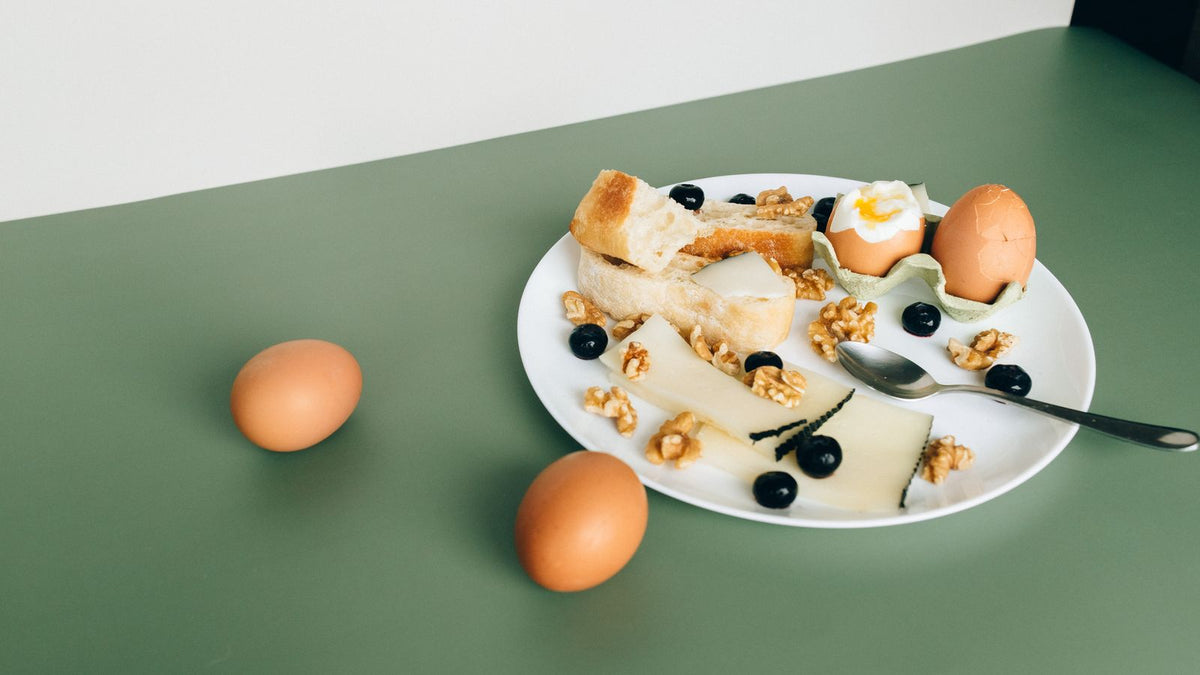
- Eggs, fish, chicken, turkey, soya, sesame seeds, Brazil nuts and oats are among the richest everyday sources.
- Most people eating enough total protein already get enough. Topping up on an adequate intake does not add anything.
- It does not act on the follicle the way a medicine does. If hair is coming out at the root, food is the wrong lever.
- Where methionine genuinely helps is fibre quality, so hair that snaps less on the way to the length you want.
What is methionine, and why does hair need it?
Methionine is one of the nine essential amino acids. Essential means your body has no way to build it, so every molecule you use has to arrive in food. When people ask about methionine for hair, these are the two jobs that matter. First, it is a building block in the protein chains your body assembles, including keratin. Second, it carries a sulfur atom, and sulfur is what makes hair keratin different from most other proteins in your body.
Hair keratin is unusually rich in sulfur. That is the whole reason a single strand can be stretched, wound round a brush, blow-dried and still hold its shape. The sulfur atoms on neighbouring protein chains pair up into disulfide bonds, which act like rungs on a ladder holding the chains together. Break enough of those rungs and the fibre loses its tensile strength, which is what you feel as mushy, stretchy, easily snapped hair.
How does methionine for hair actually work inside the fibre?
The mechanism runs through a second amino acid. Your body uses methionine for hair keratin indirectly, by converting it via the transsulfuration pathway into cysteine. Cysteine is the amino acid that actually carries the reactive sulfur group into the keratin chain, and two cysteines bonded together form one disulfide bond. So methionine is the raw material and cysteine is the finished part.
This matters for expectations. Because cysteine is made from methionine, and because your body is good at that conversion when protein intake is adequate, extra methionine on top of an already sufficient intake does not force extra bonds to appear. Biology does not work on a more-is-better curve here. It works on a threshold: below it, the raw material is limiting, and above it, something else is.
The practical version: methionine is a floor, not a ceiling. Get above the floor and the next gain comes from how you handle the hair, not from eating more of the amino acid.

Which foods are richest in methionine?
You do not need to count methionine for hair purposes. You need to know roughly where it lives, so that a low-protein week is obvious to you. Animal proteins are the densest sources, and among plant foods the standouts are soya, sesame and Brazil nuts. Note that pulses such as beans and lentils are relatively low in methionine, which is why a diet built mainly on pulses benefits from pairing them with grains, seeds or soya across the day. Our guide to hemp seed oil for hair is the place to go next on that.
| Food | Typical serving | Roughly how it ranks | Worth knowing |
|---|---|---|---|
| Eggs | 2 medium | High | The classic reference protein, and easy to add to breakfast |
| Salmon, tuna, white fish | 1 fillet | High | Also brings iodine and, in oily fish, omega 3 fats |
| Chicken and turkey breast | 1 portion | High | The densest everyday source for most UK households |
| Sesame seeds and tahini | 2 tbsp | High for a plant food | An easy way to raise a plant-based day |
| Brazil nuts | 3 to 4 nuts | High for a plant food | Also very high in selenium, so keep to a few a day |
| Soya, tofu, tempeh, edamame | 1 portion | Good | The best complete plant protein for this purpose |
| Oats | 40 to 50 g dry | Moderate | Useful because most people eat it regularly |
| Beans and lentils | 1 portion | Lower | Pair with grains or seeds rather than relying on them alone |
If you eat plant-based
You are not short of options, but you do need a little more intent. Build the day around soya foods, add sesame or tahini to something, and keep a handful of mixed seeds within reach. That combination closes the gap that a beans-and-rice-only pattern can leave.
Get a discount on the hair strength range
Join the Watermans mailing list and we will email a discount code straight to your inbox, so you can try the hair strength range for less. Made in the UK, over 6.5 million bottles sold since 2012.
Do you need a methionine supplement?
For most people in the UK, no. The reason is simple arithmetic: if you are eating enough total protein, you are almost certainly eating enough of this particular amino acid, because it comes bundled into every protein food you eat. Supplementing an amino acid you already have enough of does not produce a second effect.
There are situations where intake genuinely can be low: very low-calorie dieting, a period of illness or poor appetite, recovery from surgery, restrictive eating patterns, or a plant-based diet built mostly on pulses. In those cases the fix is food first, because food brings the iron, zinc and B vitamins that hair also needs, and an isolated amino acid does not. If you want to look at the supplement form specifically, we cover it separately in our guide to L-methionine and what it does for hair, and the wider nutrient picture in which nutrients actually matter for keratin.
One safety note worth stating plainly. Single amino acids taken in large amounts are not automatically harmless, and methionine intake interacts with your B vitamin status, particularly B12, B6 and folate. If you are considering a standalone amino acid product, especially alongside other supplements, run it past your GP or a pharmacist first rather than working it out from a label.
What can methionine not do?
This is where most articles on the subject go wrong, so it is worth being precise. Three different things get called hair loss, and nutrition only touches one of them.
| What is happening | What it looks like | Does methionine intake affect it? |
|---|---|---|
| Hair loss (follicular) | Follicles miniaturise or are damaged, as in androgenetic alopecia or a scarring condition. Density falls at the root. | No. This is follicle biology, not fibre chemistry. Food does not change it. |
| Hair shedding (cycle) | More hairs than usual pushed into the resting phase and released a few months later, often after illness, a crash diet, childbirth or major stress. | Sometimes indirectly. Severe restriction can trigger shedding, so restoring adequate protein and calories removes that trigger. |
| Hair breakage (fibre) | Hair snaps mid-length. Short broken pieces, split ends, hair that never gains length even though the scalp is fine. | Yes, this is the one. Fibre built with adequate raw material, and handled gently, breaks less. |
So if you are seeing whole hairs with a small white bulb at the root all over the bathroom, you are looking at shedding, and the useful questions are about the last three to six months of your health, not your amino acid intake. If you are seeing short broken fragments and a ragged hemline, you are looking at breakage, and that is a fibre and handling problem. Our guide to what causes telogen effluvium walks through the shedding side properly.
Please note: Watermans products are 100% cosmetic and do not treat medical hair loss. Individual results may vary.

How can you tell whether diet is really the problem?
Run through this honestly before you buy anything.
- Has your eating changed in the last six months? New diet, illness, a stressful period with skipped meals, or a big drop in calories. Hair responds on a delay, so look back, not at this week.
- Are you actually low on protein, or just worried about it? A rough check: most adults do well with a palm-sized portion of a protein food at two or three meals a day. If that describes you, protein is not your bottleneck.
- Is the hair coming out, or breaking off? Look at the ends of the hairs you find. A small pale bulb means it came from the follicle. A blunt or frayed end means it snapped.
- Are your nails and skin also struggling? A genuine protein or micronutrient shortfall rarely shows up in hair alone.
- Have you had bloods done? Iron, ferritin, thyroid function and B12 are the ones that most often explain diffuse shedding, and none of them are fixed by an amino acid. Ask your GP.
When to see your GP rather than change your diet
Sudden or patchy loss, a widening parting, scalp pain, itching, scaling or hair coming out in clumps all deserve a medical opinion first. So does shedding that carries on beyond about six months. Nutrition is a supporting act, and it should never delay getting a proper look at something that is not behaving like ordinary shedding.
What simple routine protects the fibre you have grown?
Once methionine for hair keratin is adequate, everything else is retention. The measurable damage in hair happens during washing, combing, heat and colour, and repeated mechanical stress is one of the best-documented causes of fibre failure. That is where the gains are.
- Detangle before you wash, from the ends upward, on dry or damp hair with a wide-toothed comb. Wet hair is at its weakest and combing it aggressively is where a lot of breakage is created.
- Wash the scalp, condition the lengths. The scalp is what gets dirty. The mid-lengths and ends are the oldest, most worn part of the fibre and mostly need conditioning, not cleansing.
- Always condition after shampoo. Slip is not a luxury, it is what stops the comb tearing through.
- Use heat protection and turn the temperature down. Most styling can be done well below the maximum setting on the tool.
- Deep condition weekly if you colour, heat-style or have coarse or curly hair.
- Protect it overnight with a silk or satin pillowcase, or loosely tied hair, to cut friction.
If breakage is the main issue you are dealing with, our guide to what causes hair damage and how to stop it goes through each cause in turn.
Where do Watermans products fit in?
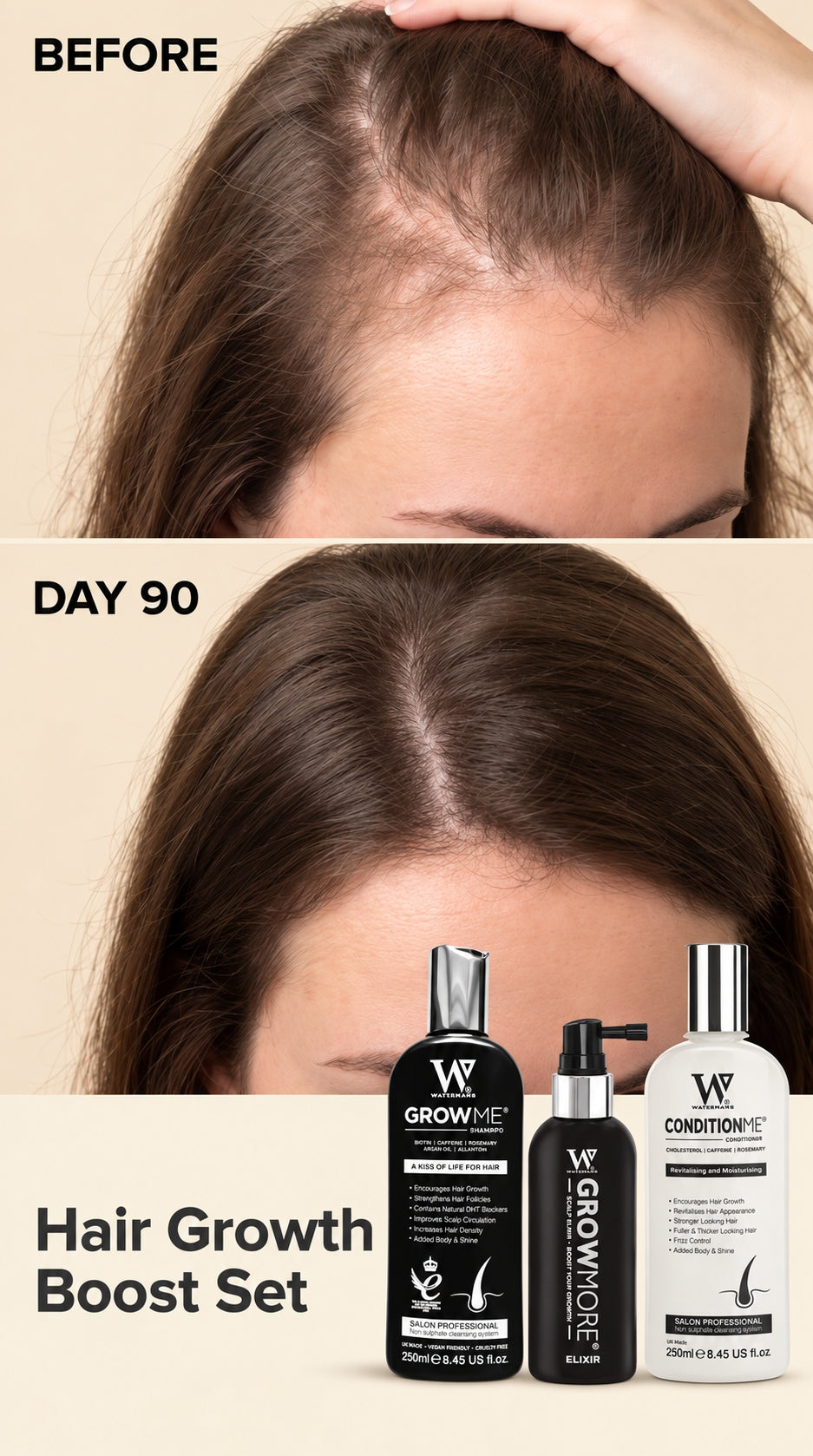
Nothing on this page is a substitute for eating properly. What a good routine can do is reduce the amount of the fibre you lose to breakage between washes, so more of what grows stays attached to your head.

GrowPro Hair Growth Gummies £22.95
Vegan, sugar-free gummies with biotin, zinc, MSM, bamboo silica and B vitamins. A sensible top-up alongside food if your diet has been patchy, not a replacement for meals.

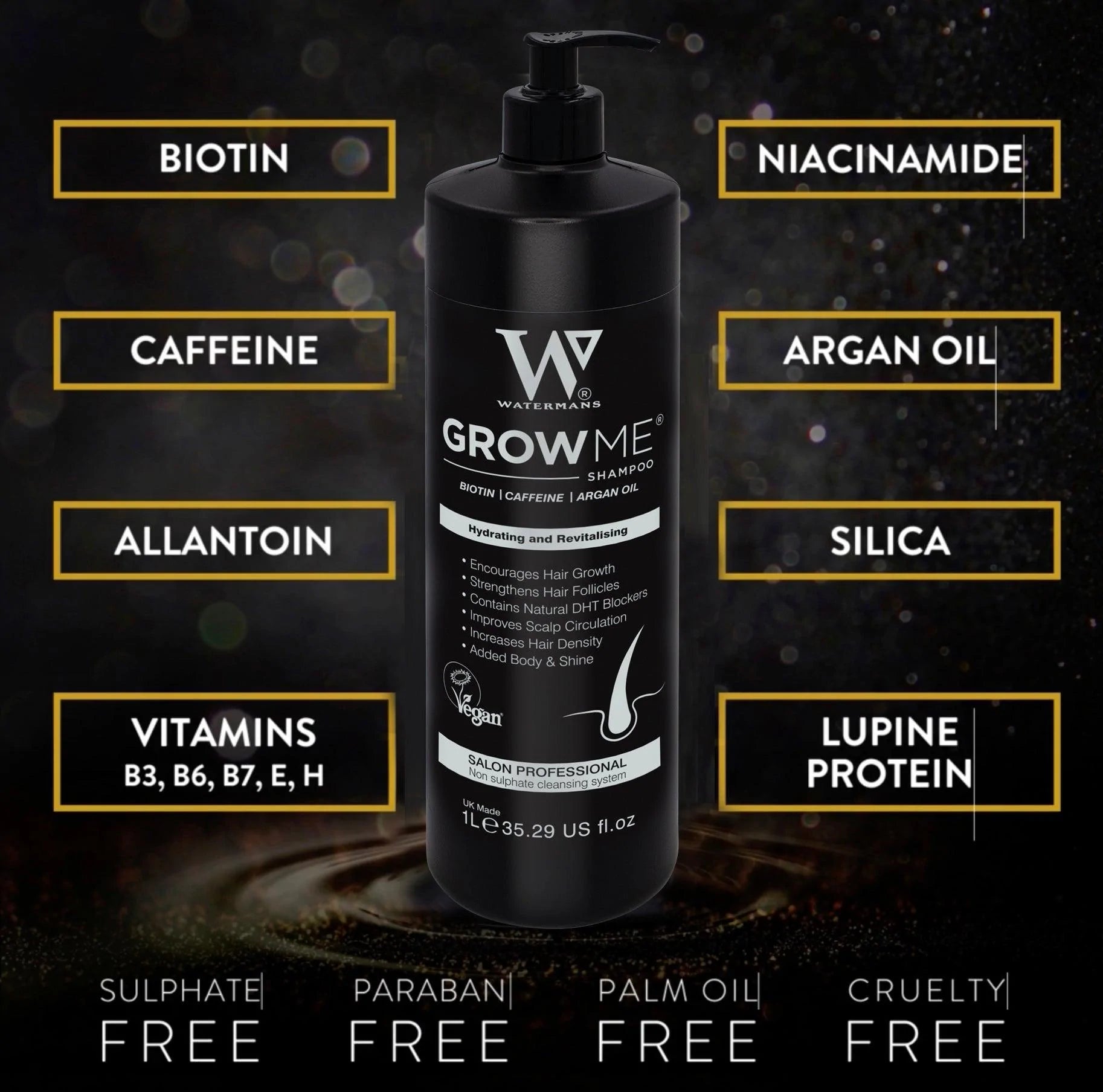
Grow Me® Hair Growth Shampoo £14.95
A sulphate-free daily shampoo with biotin, caffeine, rosemary and hydrolysed lupine protein, formulated to cleanse the scalp gently and leave hair looking thicker and fuller.

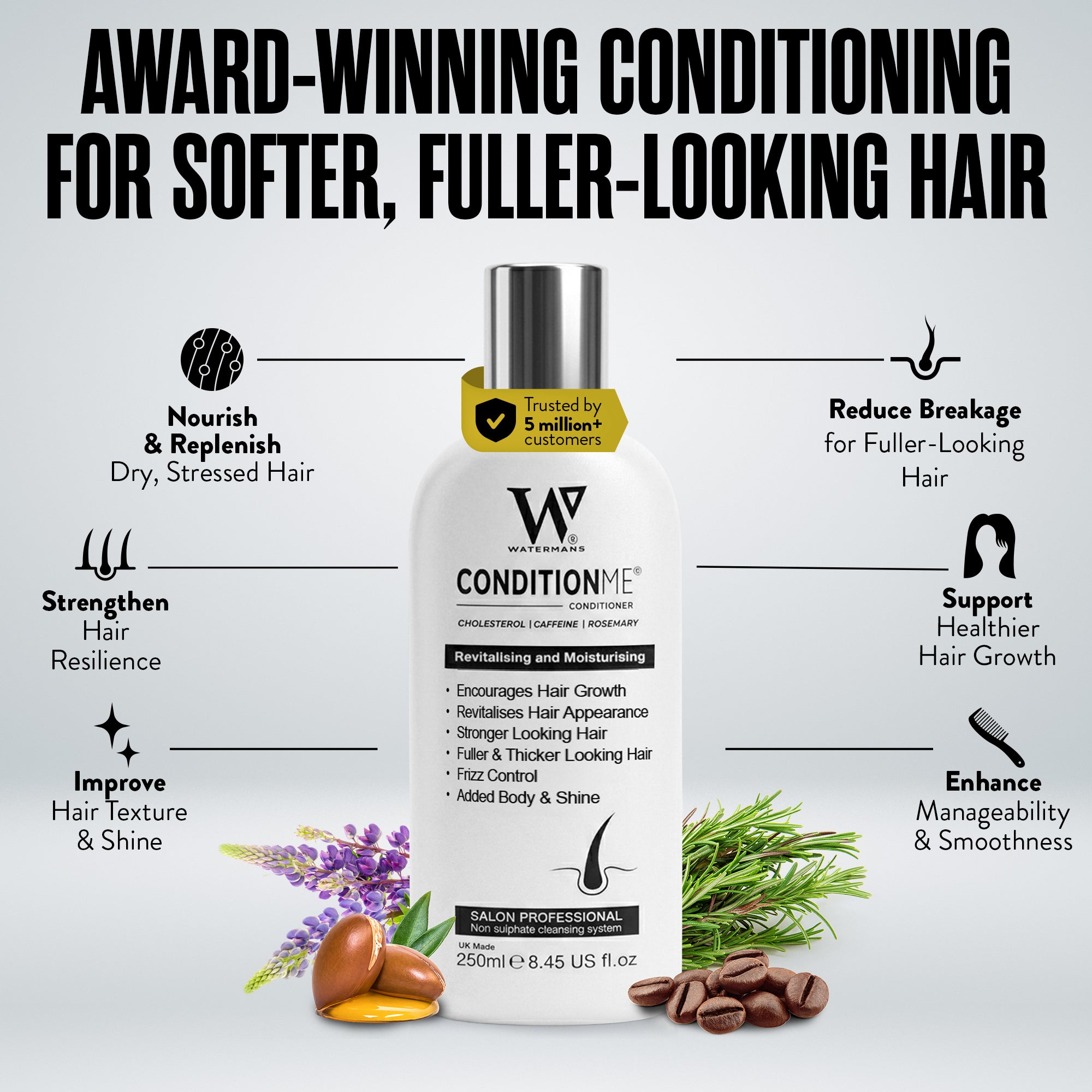
Condition Me® Conditioner £13.95
Breakage defence for the lengths. Adds slip so the comb glides instead of tearing, which is where most avoidable damage happens.
Made in the UK, and over 6.5 million bottles sold since 2012.

Frequently Asked Questions
Does methionine for hair actually work?
It works as a building block, not as an active. Your body converts methionine into cysteine, which forms the disulfide bonds that give a strand its strength, so an adequate supply matters. What it does not do is act on the follicle, so it will not change hereditary thinning.
How much methionine do I need each day?
There is no separate methionine for hair target most people need to track. Adults who eat enough total protein, roughly a palm-sized portion of a protein food at two or three meals, will be getting enough of this amino acid as part of it.
Which foods have the most methionine?
Eggs, fish, chicken and turkey lead among animal foods. Among plant foods, sesame seeds and tahini, Brazil nuts, soya, tofu and tempeh are the strongest, with oats a useful everyday contributor.
Is methionine the same as cysteine?
No, but they are linked. Both contain sulfur, and your body can convert methionine into cysteine. Cysteine is the one that is built into keratin in large amounts and forms the disulfide bonds directly.
Can a methionine supplement help thinning hair?
Only if a genuine dietary shortfall is part of the picture, which is uncommon in people eating adequate protein. Hereditary thinning is follicle-driven and does not respond to amino acid intake. See your GP if your parting is widening.
Is it safe to take methionine on its own?
Single amino acids in large amounts are a different proposition from food, and methionine intake interacts with your B12, B6 and folate status. Speak to your GP or pharmacist before starting a standalone amino acid product. If your question is about products or a routine rather than a medical one, you can talk to Gail Waterman, our co-founder, as an AI avatar on the Watermans homepage.
How long before I would notice anything?
Hair grows roughly one centimetre a month, and any change appears in new growth rather than in the length you already have. If a real shortfall is corrected, expect months rather than weeks, and judge it by how the new growth behaves.
Do vegans get enough methionine?
Yes, with a little planning. Soya foods, sesame, Brazil nuts and seeds cover it well. The pattern that can fall short is one built almost entirely on beans and lentils, which are relatively low in this amino acid.
Sources & References
- NHS, Vitamins and minerals
- NHS, B vitamins and folic acid
- NHS, Hair loss
- COCH Expression in the Hair Follicle Microenvironment Is Associated With Cortical Disulfide Bonding and Tensile Strength, Experimental Dermatology, 2026
- Cyclic combing of untreated and bleached human hair: analysis of the time-dependent breakage of hair through repeated combing, International Journal of Cosmetic Science, 2026
What is the bottom line on methionine for hair?
Thinking about methionine for hair is worth doing once, properly, and then mostly forgetting. It is a genuine input into keratin, it comes from ordinary protein foods, and if you are eating enough of those you already have what you need. The honest gains after that come from the other end of the problem: handling the fibre gently, conditioning it, protecting it from heat, and getting a medical opinion if hair is leaving at the root rather than snapping in the middle.
If your diet is the weak link, the GrowPro hair growth gummies are the simple version. Vegan and made in the UK.