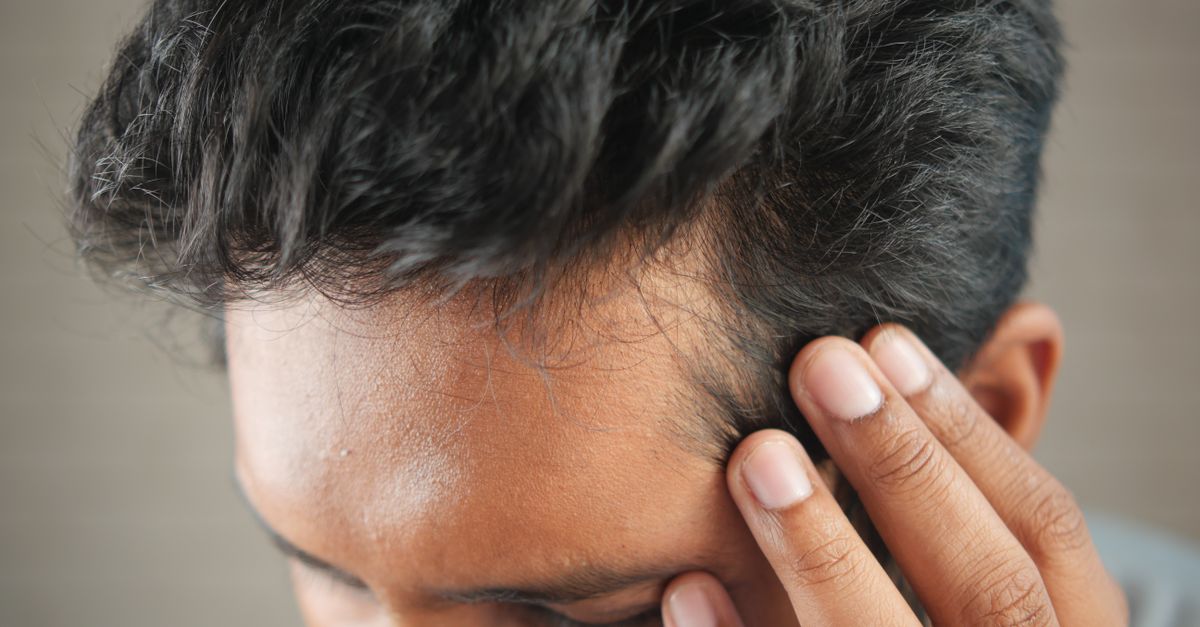
Hair Growth Expectations: What Is Realistic
Realistic hair growth expectations start with one number: scalp hair grows around 1cm a month, or roughly half an inch, and that rate is set by your biology rather than by anything you buy. Nothing on a shelf makes hair grow faster than its own cycle allows. What a good routine can change is how much of that growth you keep instead of losing to snapping, and how comfortable the scalp is while it happens.
Our hair growth conditioner
Condition Me® Hair Growth Conditioner, £13.95. Detangles and strengthens the hair fibre so lengths snap less on the brush and look thicker through the ends.
Key takeaways
- About 1cm a month, 12 to 15cm a year. That is the ceiling, and it is fixed. Sensible hair growth expectations start there.
- Length is growth minus breakage. For most people the breakage side is the only part they can actually influence.
- Nothing visible happens in under 12 weeks, because a hair entering the growing phase today is not on show until next season.
- Scalp comfort improves first, fibre condition second, density last and least. Judge in that order.
- Photographs beat memory. Three angles, same light, monthly, starting before you change anything.
How fast does hair actually grow?
Scalp hair grows at roughly 0.3mm to 0.4mm a day, which works out at about 1cm a month and somewhere between 12cm and 15cm in a year. There is genuine individual variation around that, and hair on the scalp grows faster than body hair, but the range is narrow and nobody sits far outside it. Age nudges it down slightly. Nothing nudges it meaningfully up.
That number does most of the work in setting honest hair growth expectations. If you want shoulder length hair from a chin length cut, you are looking at somewhere between one and two years, assuming you keep every centimetre. If you are watching a shed recover, the returning hairs come back short and fine first and take months to blend in with the rest, which is why recovery so often feels like nothing is happening when it is.
The second thing that number tells you is how long any trial has to run. Twelve weeks is the minimum to see anything at all, and six months is a fairer review point. Anyone promising a visible difference in three weeks is describing the shine and the volume of the styling, not the follicle.

Why does your hair seem to stop at a certain length?
Because every follicle has its own maximum, set by how long it stays in the growing phase. That growing phase runs anywhere from two to seven years depending on the person, and the length it can reach is simply the growth rate multiplied by that time. Someone with a two year growing phase tops out around shoulder length no matter what they do. Someone with a seven year phase can reach the waist without trying.
The other reason, and the more common one, is that growth at the root is being cancelled out by breakage at the ends. Hair that snaps at four years of age never becomes five year old hair, so the length plateaus while the follicle carries on working perfectly. This is the single biggest gap between what people expect and what they get, and it is the part that is genuinely within your control.
Our guide to the three stages of the hair growth cycle explains the phases in detail, including why a shed shows up months after whatever caused it.
Is it hair loss, hair shedding or hair breakage?
Getting this right changes what you should expect entirely, because the three have completely different timelines. Hair loss means the follicle producing progressively finer, shorter hair over years, in a pattern. Hair shedding means an unusual number of hairs releasing at once, arriving suddenly, spread evenly, typically two to four months after a trigger. Hair breakage means the fibre snapping partway along, so the follicle is healthy and the hair is damaged.
| Which one | Realistic timeline | What actually changes it |
|---|---|---|
| Breakage | Improvement within 4 to 8 weeks of handling it better | Conditioning, less heat, less tension, a trim |
| Shedding after a trigger | Settles over 3 to 6 months, density returns over 6 to 12 | Time, plus fixing the trigger if it is still there |
| Inherited pattern | Progressive over years, managed rather than resolved | A GP conversation. Cosmetics support, they do not alter the pattern |
If you are not sure which you have, our 90 day thinning action plan walks through the photograph method, the bulb test and the blood tests worth asking a GP about.
The bulb test, ten seconds. Look at the end of a fallen hair. A small pale bulb means it completed its cycle and released normally, which points to shedding. A clean blunt end with no bulb means it snapped, which is breakage. This one check settles more arguments than any product review, and it sets your expectations for the next six months.
What are honest hair growth expectations month by month?
Month one is about the scalp and nothing else. If your routine was stripping, this is when tightness and itch settle. No visible length change is possible yet, so do not look for one. Take the first set of photographs before you begin so month three has something to be compared against.
Months two and three are about the fibre. Less snapped hair on the towel and in the brush, less resistance when you comb, ends that look less ragged. You have gained roughly 2cm to 3cm of new growth by now, all of it at the roots and invisible under the rest of your hair. Anyone claiming a transformation at this point is selling something.
Months four to six are the first honest review point. Around 5cm to 7cm of new growth, a shed that started six months ago should be settling, and short new hairs standing up along the parting are a genuinely good sign rather than frizz. Compare photographs, not memories.
Months seven to twelve are where real change shows. Roughly 12cm to 15cm of growth, recovered density from a shed largely blended in, and a clear answer on whether the routine earned its place. If twelve months of consistent effort has changed nothing on any of the three measures, that is a real answer too, and changing course is sensible rather than a defeat.
Get a discount on your next order
Join the Watermans mailing list and we will email a discount code straight to your inbox. Made in the UK, over 6.5 million bottles sold since 2012.
What genuinely influences how much length you keep?
Length retention, not growth rate, is where the wins are, and it is the part of your hair growth expectations you can genuinely move. Detangle from the ends upwards with a wide tooth comb on wet, conditioned hair rather than dragging a brush from the roots. Condition every wash, on the lengths. Turn the heat setting down and use protection when you do apply heat. Loosen the ponytail and move where it sits, because tension damage lands in the same place every day until you change it.
Trim when the ends are visibly split. This feels contradictory when you are trying to gain length, but a split travels up the shaft and costs you more than the trim does. Sleep on a smooth pillowcase or tie hair loosely if it tangles overnight. None of this is exciting, and all of it is more effective than the average serum.
The nutritional angle is real but narrow. Being genuinely short of iron, protein, vitamin D or B12 does affect hair, and correcting a documented deficiency helps. Taking supplements without a deficiency does not add anything, and iron in particular is not harmless taken speculatively, so the order is blood test first, supplement second.
Where hairline change is the specific concern rather than overall length, our page on temple thinning and its two causes separates tension damage from pattern change, which is a distinction worth making before you set any expectation at all.

Which products support the retention side of the equation?
Since growth rate is fixed and retention is not, the useful products are the ones that keep hair intact between the root and the scissors. That is a smaller and cheaper list than the shelf suggests.

Condition Me Conditioner
The single most useful item here if length is your goal. Slip is what stops hair snapping during detangling, and every centimetre that does not snap is a centimetre you keep. Unglamorous, and the one most people skip.

Masque Me Hair Mask
A weekly deep conditioning step for hair that has been bleached, coloured or heat styled, which is where most breakage originates. Worth adding only if your ends are the problem. If they are not, save the money.

Grow Me Shampoo
Sulfate free with rosemary, caffeine and niacinamide, for the scalp comfort half of the picture. It will not make hair grow faster than 1cm a month, because nothing does, and we would rather say that than imply otherwise.
Over 6.5 million bottles sold since 2012, made in the UK. If your ends are fine and your scalp is comfortable, you do not need any of this, and a wide tooth comb costs a couple of pounds.
When should slow growth send you to a GP?
Hair that grows normally but breaks is a hair care problem. Hair that is genuinely not growing, or is coming out faster than it arrives, is worth a medical opinion. See a GP for round smooth bald patches appearing quickly, hair coming out in clumps, scalp pain, burning, persistent itching, scaling, redness or scarring, and for hair change alongside new fatigue, weight change or irregular periods.
Ask about ferritin, full blood count, thyroid function, vitamin D and B12. An underactive thyroid and low iron stores both slow hair and both are straightforward to correct once identified. Slow growth in a child is a GP matter first. None of this commits you to anything, and it is how the correctable causes get found.
Frequently asked questions
How much does hair grow in a month?
Around 1cm, or roughly half an inch. Over a year that is 12cm to 15cm. Individual variation exists but it is small, and no product moves the rate meaningfully.
Can anything make hair grow faster?
Not in any way you would notice. Correcting a genuine nutritional deficiency restores a normal rate if illness or shortage had slowed it, but that is returning to baseline rather than exceeding it. Realistic hair growth expectations do not include speeding up the follicle.
Why does my hair never get past my shoulders?
Either your growing phase is naturally on the shorter side, which sets a genetic maximum, or breakage at the ends is cancelling out growth at the roots. The second is much more common and is the one you can do something about.
How long does hair take to grow back after a shed?
The shedding itself usually settles within three to six months. Density typically looks normal again between six and twelve months, because the new hairs arrive short and fine and take time to blend in.
Do hair vitamins speed things up?
Only if you were short of something, which a blood test establishes rather than a guess. Taking iron without a documented deficiency is not harmless, and biotin can interfere with some blood test results, so mention any supplement to your GP before testing. If your question is about products or a routine rather than a medical one, you can talk to Gail Waterman, our co-founder, as an AI avatar on the Watermans homepage.
Does trimming make hair grow faster?
No, growth happens at the root and scissors cannot reach it. Trimming does help you keep length, because removing a split end stops the split travelling further up the shaft.
Is it normal for new short hairs to stick up along my parting?
Yes, and it is usually a good sign rather than frizz. Short upright hairs along the parting after a shed are new growth arriving. Be gentle with them and resist the urge to straighten them flat.
Should I see a difference in 30 days?
In scalp comfort, possibly. In hair, no. Thirty days is about 1cm of new growth hidden under everything else, so any visible change at that point is styling rather than biology.
What is the bottom line on hair growth expectations?
Honest hair growth expectations are simple: about 1cm a month, nothing you can buy changes that rate, and the winnable part of the equation is how much of it you keep. Photograph before you start, work on breakage and scalp comfort, and review at months three, six and twelve against the pictures rather than your memory. Where the pattern is inherited or growth has genuinely stalled, that is a GP conversation rather than a shopping one.
If you want something to act on today, our sulphate free hair growth shampoo is the simplest place to begin.
Watermans products are 100% cosmetic and do not treat medical hair loss. Individual results may vary.
Sources and References
- NHS, Hair loss: causes, types and when to see a GP. nhs.uk/conditions/hair-loss
- NHS, Underactive thyroid (hypothyroidism), on its effect on hair. nhs.uk/conditions/underactive-thyroid-hypothyroidism
- NICE Clinical Knowledge Summaries, Alopecia, androgenetic, and Anaemia, iron deficiency. cks.nice.org.uk
- British Association of Dermatologists, information leaflets on telogen effluvium and androgenetic alopecia, including typical recovery timelines. bad.org.uk
- Rele A S and Mohile R B, Effect of mineral oil, sunflower oil and coconut oil on prevention of hair damage, Journal of Cosmetic Science, 2003, on protein loss from the hair fibre.