MTF Hair Loss: What Changes, and What Helps
MTF hair loss usually means androgenetic hair loss that began before feminising hormone therapy started, and it behaves differently from the shedding many people expect. Androgen suppression generally slows the process down, but follicles that have already miniaturised over years respond far less than newer ones, and any change is measured over 12 to 24 months rather than weeks. The people best placed to advise you are the clinicians who manage your hormone therapy.
Our hair growth conditioner
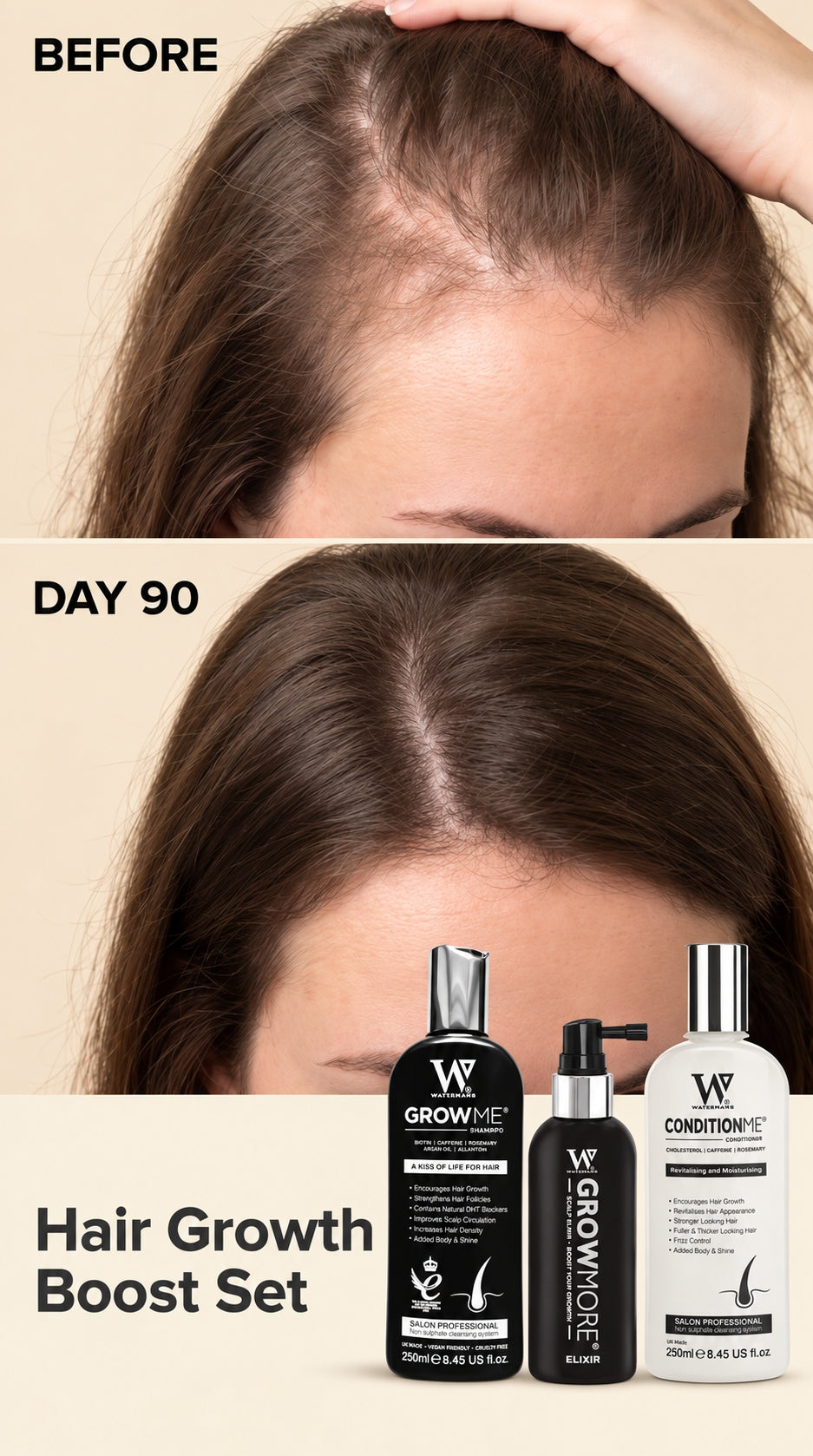
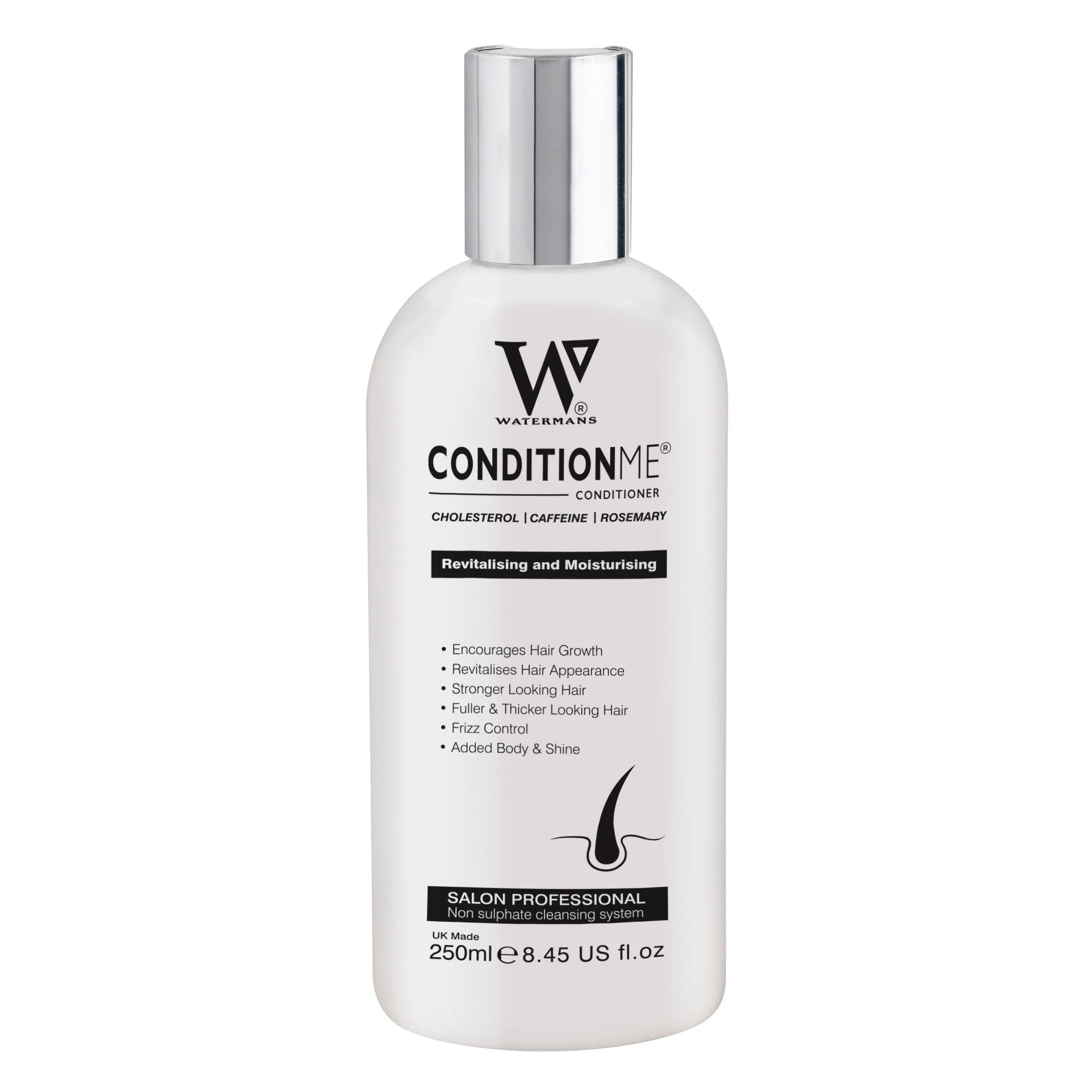
Condition Me® Hair Growth Conditioner, £13.95. Detangles and strengthens the hair fibre so lengths snap less on the brush and look thicker through the ends.
Key takeaways
- Most MTF hair loss is androgenetic and predates hormone therapy, so the starting point is how much change had already happened.
- Change is slow. Hormone-related effects on hair are assessed over 12 to 24 months, and hair grows about 1cm a month regardless.
- Take your questions to your gender clinic team or GP. Hair is a legitimate part of that conversation and it is worth raising early.
- Cosmetic products can help with breakage, scalp comfort and camouflage. They do not act on hormones and nothing here suggests they do.
- Photograph three angles monthly from today. Slow change is genuinely impossible to judge from memory.
What causes MTF hair loss in the first place?
The mechanism is androgenetic. In people with a genetic susceptibility, follicles on the top of the scalp are sensitive to androgens and respond by producing progressively finer, shorter hairs over successive cycles until the hair produced is barely visible. This is the same process described as male pattern hair loss, and it typically begins at the temples and the crown while the sides and back remain dense.
Because it is driven by androgens acting on susceptible follicles over years, the amount of change that happened before feminising hormone therapy began is the single most important variable. Someone who started therapy in their early twenties with a full hairline is in a very different position from someone who started at forty after two decades of gradual recession, and general timelines that ignore that distinction are not much use to either.
Genetics decide susceptibility, not lifestyle. Nothing you did caused this, and the common advice about stress, washing frequency or hats has very little to do with it. Our page on which hormone does what to hair covers the underlying biology in more detail.

What generally happens to MTF hair loss on hormone therapy?
The broad pattern reported in clinical guidance is that suppressing androgens slows or halts further androgenetic loss for most people, and that recovery of hair already lost is limited and unpredictable. Follicles that have miniaturised recently have more scope to improve than follicles that stopped producing visible hair years ago. A frontal hairline that receded before therapy commonly stays where it is.
Timescales are long. Guidance for gender-affirming hormone therapy generally frames hair changes as something assessed at 12 months and again at 24 months, not at three. That is consistent with the biology, since hair grows around a centimetre a month and a follicle changing behaviour today produces visible evidence a season later.
Body and facial hair follow different rules from scalp hair and change on their own timeline, which is a frequent source of confusion. Both are worth raising with your clinical team rather than inferring from forums, because the answers depend on your specific regimen, your age and where you started.
Good sources do disagree on how much scalp recovery to expect, and honest ones say so. Anyone quoting you a confident percentage is going beyond what the published evidence supports.
Raise hair with your clinical team, early. Hair is often left out of appointments because it feels cosmetic next to everything else being managed, and then it becomes the thing people most want to discuss two years in. It is a reasonable thing to ask about at any stage, and the answers depend on details only the team managing your care can see. Never adjust or stop any medicine on the basis of an article.
Is it hair loss, hair shedding or hair breakage?
These three are constantly confused and they need opposite responses, which matters here because more than one can be running at once. Hair loss means follicles miniaturising over years in a pattern. Hair shedding means an unusual volume of hairs releasing at once, typically two to four months after a trigger such as illness, surgery, a general anaesthetic or sharp weight change, and it usually settles. Hair breakage means the fibre snapping partway along, so the follicle is healthy and the hair is damaged.
| What you are seeing | Most likely | Where to take it |
|---|---|---|
| Gradual recession at temples and crown over years | Androgenetic pattern | Your gender clinic team or GP |
| Sudden even shed a few months after surgery or illness | Shedding after a trigger | GP, and usually time |
| Short snapped pieces, no pale bulb, ragged ends | Breakage from heat, colour or tension | Your routine. This is the fixable one |
| Thinning exactly where a wig cap, clip or tight style pulls | Traction | Change the style now. It recovers early, not late |
The last row deserves emphasis. Traction damage from tight styles, clips and daily wig wear is common, entirely preventable and fully recoverable if caught early, and it is the one form of hair change on this page that responds quickly. Our 90 day thinning action plan covers the bulb test and the photograph method for telling these apart at home.
Get a discount on your next order
Join the Watermans mailing list and we will email a discount code straight to your inbox. Made in the UK, over 6.5 million bottles sold since 2012.
How should you track MTF hair loss over a two year timescale?
Photograph before anything changes. Three angles: the hairline straight on, the crown from above, and the parting combed to its usual side. Same room, same light, same phone, hair dry, no filters. Repeat on the same date every month and keep them in one folder. Over a 24 month timescale this is the only reliable record you will have, because the change is far too slow to hold accurately in memory and mirrors are unkind on bad days.
Write down the date anything changed: a new regimen, a surgery, an illness, a significant weight change. Shedding follows its trigger by two to four months, so when a heavy shed appears the cause is usually further back than people expect, and having the dates written down turns a frightening month into an explainable one.
Judge progress in the right order. Scalp comfort can change within weeks. Fibre condition, meaning less snapping and less resistance when you comb, changes over a couple of months. Density, if it changes at all, changes last and least. Holding those three apart stops a good month for your ends being mistaken for something it is not, and stops a bad week being read as failure.
For the routine side of things alongside hormone therapy, our guide to transgender hair care and how HRT changes hair goes into daily practicalities, and what testosterone actually does to hair covers the mechanism from the other direction.
What can everyday hair care realistically contribute?
It can contribute three things and it is worth being precise about them, because the gap between what cosmetics do and what people hope they do is where money and trust get lost.
First, protecting what you have. Growing hair out, heat styling, colouring and daily wig or clip wear all put mechanical stress on the fibre, and breakage quietly cancels out length you have waited months for. Conditioning every wash, detangling from the ends upwards on wet hair with a wide tooth comb, dropping the heat setting and loosening anything that pulls will preserve more hair than any bottle will add.
Second, scalp comfort. A wig cap, a bonded system or frequent styling can leave the scalp irritated, and an uncomfortable scalp makes everything else harder to keep up with.
Third, camouflage on the days you want it. Fibres and powders that cling to existing hair make a parting or a thin area look denser until the next wash. They change nothing underneath and are not pretending to, and for some people that is exactly the right product on exactly the right day.
What everyday hair care cannot do is act on hormones or alter an androgenetic pattern. Any product marketed to you on that basis, from any brand including this one, is overreaching.

Condition Me Conditioner
A breakage-defence conditioner for the growing-out phase, where slip is what stops hair snapping during detangling. Cosmetic, and offered for that job only. If your ends are already in good condition you do not need it.

Hair Building Fibres
Cosmetic camouflage for a wider parting or a thinner area, washed out at the end of the day. It changes nothing underneath. On the days that matters more than the biology, this is an honest product to have in a drawer.
Over 6.5 million bottles sold since 2012, and made in the UK. We have deliberately kept this page to two products, because the rest of the range is not relevant to what this article is about and selling it to you here would be the wrong thing to do.

When should you see a GP or your gender clinic team?
Always for the pattern itself, because that conversation belongs with the people managing your care and there are options a shop cannot offer. Sooner rather than later, because the amount of change already present is the main thing shaping what is possible, and time is the variable you cannot get back.
Promptly for round smooth bald patches appearing quickly, hair coming out in clumps, scalp pain, burning, persistent itching, scaling, redness or any scarring, and for hair change alongside new fatigue, weight change or other new symptoms. Ask about ferritin, full blood count, thyroid function, vitamin D and B12 as well, since ordinary correctable causes affect everybody and are easy to overlook when a more interesting explanation is available. Not every situation has the same outlook, and which kinds of hair loss can come back explains which ones genuinely refill.
Hair change can land heavily when it sits alongside everything else a transition involves, and that is a legitimate thing to raise with your team rather than something to manage alone. If it is affecting your mood, say so out loud at your next appointment. The wider picture is in how hair responds to a change in hormonal signalling, month by month. If it is the front corners that bother you most, softening the hairline with styling covers what a haircut alone can change. If an orchidectomy is part of your pathway, hair changes after that surgery run on their own schedule and are worth reading about separately.
Frequently asked questions
Will MTF hair loss stop once hormone therapy starts?
For many people androgen suppression slows or halts further androgenetic loss, but this is not universal and is not something anyone can promise in advance. The honest answer depends on your regimen, your age and how much change happened first, which is a conversation for your clinical team.
Does hair grow back where it has already gone?
Recovery is limited and unpredictable. Recently miniaturised follicles have more scope than ones that stopped producing visible hair years ago, and a hairline that receded before therapy commonly stays as it is.
How long before I can judge anything?
Twelve months for a first honest look and 24 months for a fuller picture. Hair grows about 1cm a month, so nothing meaningful is visible in the first season whatever is happening underneath.
Can hair care products change MTF hair loss?
No. Cosmetic products work on the fibre, the scalp surface and appearance. They do not act on hormones or on follicle sensitivity, and any brand implying otherwise is overreaching.
Is wearing a wig bad for my hair?
Not inherently, but tight caps, clips and bonded systems worn daily can cause traction damage at the hairline. Vary the tension, give the scalp breaks where you can, and act early if you see thinning exactly where something pulls, because traction damage recovers early and not late.
Why did I shed heavily a few months after surgery?
Surgery, general anaesthesia and significant physical stress are common triggers for a shed that appears two to four months later and settles over the following months. It is frightening and it is usually self limiting, though it is worth mentioning to a GP.
Do supplements help?
Only where a blood test has shown you are genuinely short of something. Taking iron without a documented deficiency is not harmless, and biotin can interfere with some blood test results, so mention any supplement to your GP before testing. If your question is about products or a routine rather than a medical one, you can talk to Gail Waterman, our co-founder, as an AI avatar on the Watermans homepage.
Is a hair transplant worth considering?
It is a real option for some people and a significant decision involving cost, surgery and permanence, so it belongs in a proper consultation with a qualified surgeon rather than in an article. Most surgeons prefer the pattern to be stable first, which is another reason to have the medical conversation early.
What is the bottom line on mtf hair loss?
MTF hair loss is usually androgenetic change that started before hormone therapy, it is generally slowed rather than undone, and it is judged over 12 to 24 months rather than weeks. Take it to your gender clinic team or GP early, photograph three angles monthly so you have a real record, deal with traction and breakage now because those are the parts that respond, and see cosmetic products for what they are: help with condition, comfort and camouflage.
If the lengths are what keep letting you down, Condition Me hair growth conditioner is built to cut the snapping. Made in the UK, with over 6.5 million bottles sold since 2012.
Watermans products are 100% cosmetic and do not treat medical hair loss. Individual results may vary.
Sources and References
- NHS, Gender dysphoria: treatment and gender identity clinic services. nhs.uk/conditions/gender-dysphoria
- NHS, Hair loss: causes, types and when to see a GP. nhs.uk/conditions/hair-loss
- NICE Clinical Knowledge Summaries, Alopecia, androgenetic. cks.nice.org.uk
- Endocrine Society clinical practice guideline on the care of gender-dysphoric and gender-incongruent people, 2017, on monitoring intervals and expected timescales for hormone-related changes.
- British Association of Dermatologists, information leaflets on androgenetic alopecia, telogen effluvium and traction alopecia. bad.org.uk