Hormone Therapy Hair Loss: Shedding, Breakage or Real Loss?
Almost everyone searching for hormone therapy hair loss is describing one of three different problems, and they have three different outcomes. Hair leaving at the root in handfuls is shedding, which eases over six to nine months. Hair snapping in the mid lengths is breakage, which improves in weeks. A parting that widens slowly is follicle change, which behaves differently again. Working out which one you have is the whole job.
Our menopause hair care kit
Menopause Hair Care Kit, £69.99. A complete hair, skin and wellbeing routine put together for the hair changes that arrive around the menopause.
Key takeaways
- Shedding, breakage and follicle change are three separate problems with three different timescales.
- Cycle-driven shedding shows two to four months after a hormonal change and tapers over six to nine months.
- Breakage is the route most often missed: texture changes, styling increases, the fibre snaps.
- Look at the root end. A pale bulb means the hair completed its cycle. A squared break means the fibre gave way.
- The NHS and DermNet both put normal daily loss at 50 to 100 hairs. Count on wash days only.
- Any decision about the hormone therapy itself belongs with the clinician who started it, not with a shampoo.
Is hormone therapy hair loss actually hair loss, shedding or breakage?
Hormone therapy hair loss is a search term rather than a finding, and it covers three separate situations: follicles producing progressively finer hair is genuine hair loss, more hairs than usual completing the cycle and being released is shedding, and the fibre snapping above the scalp is breakage. All three feel like losing hair, and only one involves the follicle.
The test takes a minute. Collect five or six of the hairs that worry you and look at the ends under a lamp. A small pale swelling at one end means that hair finished its resting phase and was released normally, which points to shedding. A clean squared off end at both ends, on a hair shorter than the rest of your length, means the fibre broke. Finer, shorter hairs appearing along your parting point at the follicle.
Mixed results are the norm rather than the exception when people describe hormone therapy hair loss. Someone going through a hormonal change can easily be shedding from the cycle, breaking at the ends because their hair now feels drier and needs more styling, and slowly thinning at the parting with age, all at the same time. Separating them stops you buying the wrong answer for the wrong problem.
| What you are seeing | Which problem | Typical timing | What actually helps |
|---|---|---|---|
| Handfuls of full length hairs with a pale bulb, all over the scalp | Shedding from the hair cycle | Starts two to four months after the change, eases over six to nine months | Time, gentle handling, ruling out thyroid and iron |
| Short blunt stubs of differing lengths, rough texture, ends splitting | Breakage in the fibre | Follows a change in texture or styling, improves within weeks | Less heat and tension, cutting the damage off, conditioner and masks |
| A parting that looks wider in photographs, finer hairs mixed with coarse | Follicle change | Gradual over years, in phases rather than steadily | Assessment, cosmetic support, realistic expectations |
| Defined patches, or a sore, scaly or weeping scalp | A skin or medical problem | Any time | Your GP, before any product |

Why can one hormonal change cause all three at once?
One hormonal change reaches your hair by three different routes, which is exactly why three problems can start together: the hair cycle is sensitive to systemic change so the timing of every follicle can shift at once, scalp skin and oil production alter how hair behaves, and the fibre itself becomes drier or coarser, which changes how it gets handled.
DermNet describes the underlying skin picture in menopause clearly: oestrogen levels fall, oestrogen receptors are distributed unevenly around the body, and the long term consequences of that deficiency extend well beyond the skin. It also notes that menopausal hormone therapy may offer improvement to adverse effects of menopause on the skin and hair, which is why the effect on hair is genuinely reported in both directions.
The third route is the one nobody counts. Drier, coarser hair gets more conditioner, more heat, more brushing and more tying back. Each of those is reasonable in isolation and together they produce mid shaft breakage, which then arrives on the bathroom floor looking exactly like hair loss. The guide to adjusting a hair care routine on hormone therapy covers the handling side.
Three routes, three timescales. Breakage improves in weeks, shedding in six to nine months, follicle change over years.
How long after starting or stopping does hair change show?
Two to four months is the answer for cycle-driven shedding, because DermNet records that increased hair fall is noticed two to four months after a triggering event, since a hair nudged into the resting phase is not released until that phase finishes. The resting phase itself runs around three to four months, and that is what sets the lag.
That lag is the most useful diagnostic tool available to you, and it works in both directions. Shedding that began three months after a change in hormone therapy fits the pattern. Shedding that began the week you started does not, and something else deserves the attention. The full sequence is set out in the timeline of what happens and when on hormone therapy.
Recovery has its own shape. DermNet describes hair fall reaching a peak and then tapering back to normal over six to nine months in most cases. So the honest question at month three is whether the count is falling, not whether it has stopped, and a falling count is a good result rather than a disappointing one. Shedding after stopping hormone therapy follows the same logic and is covered in the page on shedding after stopping hormone therapy.
The count that means something
Count only on wash days, always with the same gap between washes, and write the number down. Wash days look catastrophic because four or five days of shed hair leaves at once. Compared against other wash days, the trend is honest.
Get a discount on the hormonal hair shedding range
Join the Watermans mailing list and we will email a discount code straight to your inbox, so you can try the hormonal hair shedding range for less. Made in the UK, over 6.5 million bottles sold since 2012.
Which pattern points to the cycle and which points to the follicle?
Diffuse points to the cycle and patterned points to the follicle, because shedding from a cycle shift comes from the whole scalp at once so hair thins everywhere while parting width stays roughly the same, whereas follicle change concentrates at the parting and crown, so the parting widens visibly while the back and sides hold their density.
DermNet puts a helpful shape on the follicle version: female pattern hair loss commonly runs in accelerated phases of three to six months, followed by periods of stability lasting six to eighteen months. That stop start rhythm is why people conclude that whatever they happened to be using during a stable phase was working, and it is worth knowing before you credit or blame anything.
The two also coexist. DermNet notes that increased shedding is itself a feature of female pattern hair loss, and that chronic shedding with no clear trigger is often confused with it. A widening parting plus heavy shedding is a common combination rather than a contradiction, and it means neither finding rules out the other. The guide to what hormone therapy can and cannot change sets out where the limits sit.

Watermans Menopause Hair Care Kit
A five step routine built for hair going through a hormonal transition, covering cleanse, condition, scalp and daily support in one box. Cosmetic care for how hair looks and feels, which sits alongside whatever your own clinician advises rather than instead of it.
What does hormone therapy hair loss look like on the ends rather than the roots?
On the ends it looks like hair that will not grow past a certain length, rough texture, visible splits and short stubs appearing on your shoulders, and none of that involves the follicle at all. Hair that has changed texture gives way sooner under the same brushing and heat it tolerated a year ago, collecting where shed hair collects.
The giveaway is length. Shed hairs are as long as the rest of your hair, because they completed a full cycle before being released. Broken hairs are short and of varying lengths, because they snapped at whatever point the fibre was weakest. A handful containing mostly short pieces is a breakage problem wearing the costume of hair loss.
Wet hair is where most of it happens, because wet hair stretches further before it gives way. Combing from the ends upwards with a wide tooth comb, blotting instead of rubbing with a towel, and loosening whatever holds your hair up will reduce breakage faster than anything you add to it.

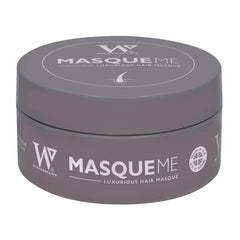
An eight in one mask with rosemary and caffeine, used weekly on the mid lengths and ends rather than the scalp. This is the one that addresses the breakage route, and it makes no difference at all to what is happening at the follicle.
What can you do about each of the three while you wait?
Act on breakage immediately, support the scalp steadily and give shedding the time it needs, because breakage is the only one of the three that responds within weeks. Reducing heat, tension and wet combing force therefore pays off fastest, and it makes everything else look better while the slower processes quietly run their course.
For shedding, the useful work is elsewhere: get thyroid function and iron status checked through your GP, since both produce diffuse shedding that is indistinguishable from a hormonal cause, and NHS blood tests cost nothing. Keep your routine constant rather than adding a product a fortnight, because a changing routine makes it impossible to attribute anything later.
For follicle change, the honest goal is looking after what is there and getting the cut right. Blunt ends read as denser than tapered ones, and less weight on top keeps fine hair away from the scalp instead of lying flat and showing skin.

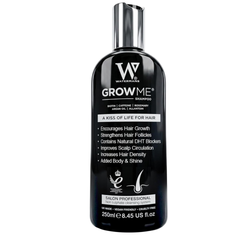
A sulfate free hair growth shampoo with biotin, caffeine, rosemary and niacinamide. Worth keeping as the one fixed step across three months, because a constant routine is what lets you judge whether anything is actually changing.
When should you speak to your own clinician rather than change your shampoo?
Speak to a clinician when shedding is still increasing after three months, when there are defined patches of complete loss, when the scalp is sore, scaly or weeping, or when you are considering altering your hormone therapy because of your hair. That last one matters most, because the decision belongs with whoever started the hormone therapy.
Bring evidence rather than impressions. Dated photographs of your dry parting in the same light, a wash day count kept over several weeks, and the date the change began give a medical review something concrete to work with. NICE guideline NG23 on menopause, first published in November 2015 and last updated in April 2026, is the framework UK clinicians work to, and arriving with specifics makes that conversation shorter and more useful.
What nobody should do is quietly stop hormone therapy to see whether the hair recovers. Hair changes are usually temporary and the reasons for hormone therapy usually are not, so the trade is rarely as simple as it feels at the three month mark when shedding is at its peak.
Frequently asked questions
Is hormone therapy hair loss the same thing as shedding?
Usually not, and the difference decides what happens next. Shedding means more hairs than usual completing the cycle and being released, which eases once the trigger passes. Hair loss means follicles producing finer hair or none at all, which is gradual and continues. Most people who report hormone therapy hair loss in the first six months are describing shedding.
How long after starting hormone therapy does hair change appear?
Expect roughly two to four months. DermNet records that increased hair fall from a shift in the hair cycle is noticed two to four months after the triggering event, because a hair pushed into the resting phase is not released until that phase completes. Hair changes in week one or two are very unlikely to be related.
Will the shedding stop on its own?
In most cases it eases. DermNet describes hair fall reaching a peak and then tapering back to normal over six to nine months in most cases, once the trigger has passed. That is the expected course for cycle-driven shedding. Gradual patterned thinning at the parting behaves differently and does not follow that curve.
Can hormone therapy make my hair break rather than fall out?
Yes, indirectly, and this is the route most often missed. A change in texture or dryness leads to more heat, more brushing and more styling, and the hair fibre snaps. Short blunt stubs of differing lengths across the mid lengths point to breakage rather than anything happening at the follicle.
How many hairs a day is too many?
The NHS puts normal daily loss at between 50 and 100 hairs, and DermNet gives the same range. Wash days always look worse because several days of shed hair leaves at once, so count on wash days only and compare against other wash days. A single alarming morning tells you nothing useful.
Does hormone therapy help hair, or hurt it?
Both effects are reported and the picture is genuinely mixed. DermNet notes that menopausal hormone therapy may offer improvement to adverse effects of menopause on the skin and hair, while a change in hormone levels in either direction can also disturb the hair cycle and produce temporary shedding. That is why the timing of your change matters more than the direction.
Should I stop my hormone therapy because of my hair?
That decision belongs with the clinician who started it, not with a hair article and not with a shampoo. Hair changes are usually temporary while the reasons for hormone therapy are usually not. Take dated photographs and a wash day count to your next medical review so the conversation rests on something concrete.
What about thyroid or iron as the real cause?
Both are worth ruling out, because both cause diffuse shedding that looks identical to a hormonal cause. NHS blood tests cost nothing and cover thyroid function and iron status. If shedding began around the same time as a hormonal change, that timing is suggestive rather than conclusive, and the tests settle it. Our month by month hair cycle timeline for hormone therapy maps where the shedding wave falls across the first year.
What is the bottom line on hormone therapy hair loss?
Work out which of three problems you have before you buy anything, because hormone therapy hair loss covers all three and they resolve on completely different timescales. Look at the root end of the hairs that worry you: a pale bulb on a full length hair means shedding from the cycle, which shows two to four months after a hormonal change and tapers over six to nine months. Short blunt stubs mean breakage in the fibre, which is the route most often missed and the one that improves within weeks of gentler handling. A parting that widens slowly in fixed light photographs means follicle change, which runs in phases over years. Get thyroid function and iron status checked through your GP, keep your routine constant so a count means something, and take any decision about the hormone therapy itself to the clinician who started it. If your question is about products or a routine rather than a medical one, you can talk to Gail Waterman, our co-founder, as an AI avatar on the Watermans homepage.
If your hair now snaps when you comb it wet, start with a repairing hair mask once a week, because breakage is the one part of this you can change quickly.
Watermans products are 100% cosmetic and do not treat medical hair loss. Individual results may vary.
Sources & references
- DermNet, Telogen effluvium (increased hair fall noticed two to four months after a trigger, peaking then tapering to normal over six to nine months, 85 to 15 anagen to telogen ratio, normal loss up to about 100 hairs a day).
- DermNet, Female pattern hair loss (normal loss of 50 to 100 hairs a day; accelerated phases of three to six months followed by stability of six to eighteen months; increased shedding as a feature, often confused with chronic telogen effluvium).
- DermNet, Menopause and the skin (falling oestrogen and uneven receptor distribution; menopausal hormone therapy may offer improvement to adverse effects of menopause on the skin and hair).
- NHS, Hormone replacement therapy (HRT) and Menopause (what hormone therapy is used for and how it is reviewed).
- NICE, Menopause: identification and management (NG23) (published 12 November 2015, last updated 15 April 2026).
- NHS, Underactive thyroid and iron deficiency anaemia (general causes of diffuse shedding a GP can check).