Trichologist Hillingdon: The Short Crop Decision for Men
Most men researching a trichologist Hillingdon have already had the thought: cut it all off and stop managing it. That is often the right call cosmetically, because contrast is what makes scalp show and a short crop removes the contrast. This guide covers when a crop genuinely helps, what a cropped scalp needs that a full head of hair does not, and which changes are worth getting looked at first.
Our hair growth shampoo
Grow Me® Hair Growth Shampoo, £14.95. A sulphate free daily shampoo that supports a healthy scalp environment and helps reduce breakage, so lengths hold on and look fuller.
Key takeaways
- A short crop looks denser than thin long hair, because long fine hair separates and reveals scalp.
- Clippers change nothing at the follicle. Hair does not come back thicker, it just feels coarser at a blunt cut end.
- DermNet records up to half of male Caucasians with some hair loss by 50, and possibly 80 per cent by 70.
- A cropped scalp still needs washing, because shampoo is for the scalp rather than the hair.
- NHS guidance: sunscreen on the head if you have thinning or no hair, at least SPF 30 and 4-star UVA, and a wide-brimmed hat is better.
- Get sudden, patchy or sore changes looked at before you decide, because those behave differently from gradual pattern thinning.
What can a trichologist Hillingdon tell you before you cut it all off?
A trichologist Hillingdon can tell you whether your change follows the usual pattern or whether it does not, which is the one thing genuinely worth knowing before you decide anything, because gradual thinning at the temples and crown over years behaves predictably while sudden diffuse shedding, defined patches of complete loss or a sore scaly scalp do not.
Cutting your hair short is not a medical decision, and nobody needs permission from a trichologist Hillingdon for it. The reason to get the change looked at first is that a crop removes your main way of noticing what happens next. Once hair is at three millimetres all over, a widening parting and a receding temple stop being visible, so a baseline photograph and an honest note of what was seen is worth having on record.
Check who you are seeing. Trichology is not regulated the way medicine is, so the practical safeguard is the Institute of Trichologists register, which is accredited by the Professional Standards Authority. Its Level 5 course runs over two and a half years and includes 126 hours of hands-on clinical work, which is the standard worth asking about.
Before the clippers, take one photograph
One photograph of the top of your head in daylight, and one of your hairline straight on. Once you are cropped you lose the ability to track change, and a dated pair of photographs costs nothing and settles a lot of arguments with yourself later.
Why does thinning show more at the crown and temples than elsewhere?
Pattern thinning concentrates at the temples and crown because follicles in those areas respond differently to hormones from the ones at the back and sides, and DermNet explains that DHT, derived from testosterone, is believed to shorten the growing phase from a usual three to six years down to weeks or months, so affected hairs never reach full thickness.
The hair at the back and sides is far less sensitive to that effect, which is why it usually persists when the top does not. That difference is also the whole basis of how hair transplant surgery works, moving hair from the back to thinning areas, as the NHS describes among the options for hair loss.
The practical consequence for a crop is a good one. Because the back and sides hold, a short cut all over reads as a deliberate style rather than as thinning, whereas a longer style with a persistent dense back and a sparse top reads as exactly what it is. Where the change sits on your head is covered further in the guide to hairline and crown changes.

Up to half of male Caucasians see some degree of hair loss by 50, and possibly 80 per cent by 70. The crop is a common answer because the situation is common.
Is it thinning, shedding or breakage when your hair is already short?
Thinning, shedding and breakage are three different things, and cutting your hair short changes which of them is likely: breakage almost disappears below about two centimetres because there is not enough length for the fibre to snap, shedding continues but becomes hard to see, and thinning at the follicle carries on regardless of how short the hair is.
| Problem | What is happening | How it shows on short hair | What actually helps |
|---|---|---|---|
| Pattern thinning | Follicles producing finer, shorter hairs at the crown and temples | Scalp visible through the crop under overhead light | A shorter, more even cut, scalp care, cosmetic camouflage |
| Shedding | More hairs than usual released from the resting phase | Hard to see, but the scalp can look emptier within weeks | Time, and dealing with the trigger; usually eases over months |
| Breakage | The fibre snapping along its length | Rarely an issue below two centimetres | Largely solved by the crop itself |
| Patchy loss | Defined bald areas with clear borders | Very obvious on a crop, sharp-edged patches | Your GP, not a product |
The one that matters most on a crop is patchy loss, because a short cut makes defined edges unmistakable. Smooth, sharply bordered patches are not pattern thinning and are worth showing to a GP rather than working around, and it is the one finding a trichologist Hillingdon should send you onwards for rather than advise on. Gradual, diffuse thinning across the top is the usual picture and the one the crop handles best.
Younger men often see the earliest changes long before anyone else notices. The guide to thinning in your twenties and thirties covers that stage, and the page on thinning hair after 60 covers the other end.
Get a discount on the men's thinning hair range
Join the Watermans mailing list and we will email a discount code straight to your inbox, so you can try the men's thinning hair range for less. Vegan, made in the UK, over 6.5 million bottles sold since 2012.
Does clipping or shaving change how fast hair grows back?
Clipping and shaving change nothing at all about growth rate, density or thickness, because growth happens entirely at the follicle beneath the scalp while clippers only remove fibre above the skin. The persistent belief otherwise comes from how a blunt cut end feels, since freshly clipped hair is stiff and coarse where an uncut end tapers to a point.
What a crop does change is what you can see. Shorter hair means less contrast between hair and scalp, and contrast is what makes thinning read as thinning. It also removes the daily reminders, since there is no parting to check and no hair collecting on a comb. Several men describe the relief of that more strongly than the cosmetic effect. For the styling side of that decision, our guide to the Jacob Batalon crop covers how the look is cut and kept.
The trade-off is honesty about scalp shape and skin. A crop shows the shape of your head, any marks on the scalp and any redness, all of which longer hair hides. If your scalp is flaky or sore, sorting that out before cutting short is worth the delay.

How do you look after a closely cropped scalp?
A cropped scalp needs three things: regular gentle washing, moisture and sun protection, because the scalp produces the same oil and sheds the same skin cells whatever the hair length, and with almost no hair left to distribute that oil the surface can look shiny while simultaneously feeling tight, dry and flaky to the touch.
Sun protection is the part most men skip and the part with the clearest official guidance. The NHS states that sunscreen should be applied to all exposed skin, including the head if you have thinning or no hair, though a wide-brimmed hat is better. It recommends at least SPF 30 with at least 4-star UVA protection, and particular care between 11am and 3pm from March to October in the UK.
Washing frequency is a matter of comfort rather than rules. Two or three washes a week suits most cropped scalps, using a gentle shampoo rather than anything harsh, since stripping the scalp tends to produce more oil and more flaking rather than less. Whether men actually need a different formula is addressed in the guide to men's shampoo versus women's.

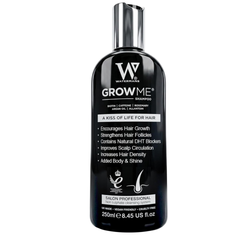
A sulfate free hair growth shampoo with biotin, caffeine, rosemary and niacinamide. On a crop the point is the scalp rather than the hair, so a gentle wash two or three times a week that does not strip the skin is what matters.
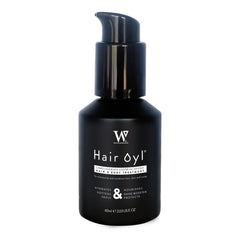
Camellia and Black Castor Hair and Body Oil
A multi-use hair and body oil with black castor and camellia oils, useful in small amounts on a cropped scalp that feels tight or flaky after washing. Apply sparingly, since a short head shows shine far more readily than long hair does.
What does a short crop cost you, and what does it gain?
A crop gains you evenness, low maintenance and an end to daily monitoring, and it costs you the styling options that hide scalp while committing you visibly to the decision. Most men who regret a crop regret going to bare skin in one step rather than working down through a graded cut first, which is easy to get right.
Work down in stages. A number four all over, then a three, then a two over a few haircuts tells you where your own comfort line is without a single irreversible appointment. Barbers do this routinely and it costs no more than the normal cuts you were having anyway, which is why most men never need a trichologist Hillingdon to make the styling decision for them. Our guide to haircuts for men's thin hair is the place to go next on that.
If you want to keep some length, a cut designed for thinning hair does a lot of the work: blunt ends rather than tapered, less weight on top, and no long side sections pulled over. The guide to haircuts and styling for men with thinning hair covers those choices, and the page on scalp micropigmentation, risks and rules is worth reading before considering anything permanent.
Frequently asked questions
Will shaving my head make my hair grow back thicker?
No. Growth happens at the follicle under the scalp and clippers only cut the fibre above it, so nothing about the follicle changes. Freshly cut hair feels coarser because a blunt cut end is stiffer than a tapered one, which is where the myth comes from. Thickness and density are set below the skin, not by the blade.
Is a short crop better than trying to hold on to length?
A short crop usually looks denser than thin long hair, because contrast is what makes scalp show. Long fine hair separates under its own weight and reveals skin, while hair kept to a few millimetres sits evenly and reduces the difference between hair and scalp. Whether that trade is worth it is a personal call, not a hair health question.
How common is male pattern thinning, really?
DermNet records that up to half of male Caucasians experience some degree of hair loss by age 50, and possibly as many as 80 per cent by the age of 70, with other population groups such as Japanese and Chinese men far less affected. Being in your twenties or thirties and seeing early changes at the temples or crown is common rather than unusual.
Do I still need shampoo if my hair is two millimetres long?
Yes, because shampoo is for the scalp rather than the hair. A cropped head still produces the same oil and sheds the same skin cells, and with no length to distribute it the scalp can look shiny or feel tight. A gentle wash two or three times a week keeps the scalp comfortable without stripping it.
Does a cropped scalp need sun protection?
Yes, and the NHS is explicit about it: sunscreen should be applied to all exposed skin including the head if you have thinning or no hair, though a wide-brimmed hat is better. Use at least SPF 30 with at least 4-star UVA protection, and take particular care between 11am and 3pm from March to October in the UK.
Should I see a trichologist Hillingdon if I have already decided to cut it short?
Worth it if the change was sudden, patchy or came with a sore scalp, and probably not worth it if the pattern has been gradual over years and you are content with a crop. The value of a visit is in ruling out something that is not pattern hair loss, because patchy or rapid change behaves differently and may be time sensitive.
Can thinning hair break as well as thin?
Yes, though breakage is far less of an issue on very short hair because there is little length to snap. On longer men's styles, heat, tight caps and rough towel drying still cause mid shaft breaks, and those short broken stubs get mistaken for new growth. Cropping the hair effectively removes the breakage question altogether.
Is hair fibre or micropigmentation worth considering instead?
Both are cosmetic camouflage rather than anything that changes the follicle, and the NHS lists permanent make-up, or micropigmentation, among the options people use for hair loss. Fibres and sprays are reversible and cheap to try. Micropigmentation is a tattoo, so it is a long commitment worth researching carefully before booking anything.
What is the bottom line on trichologist Hillingdon?
A short crop is usually the honest cosmetic answer to male pattern thinning, because contrast between hair and scalp is what makes thinning visible and cropping removes it. Clippers change nothing at the follicle, so expect no effect on density either way. Before you commit, take dated photographs of your hairline and crown, because a crop removes your ability to track change afterwards. See a trichologist Hillingdon first if the change was sudden, diffuse, patchy or came with a sore scalp, since those do not follow the usual pattern and patchy loss belongs with a GP. Then look after the scalp you are showing: gentle washing two or three times a week, a little oil if it feels tight, and sunscreen of at least SPF 30 on any exposed scalp from March to October. If your question is about products or a routine rather than a medical one, you can talk to Gail Waterman, our co-founder, as an AI avatar on the Watermans homepage.
For the everyday scalp side of a crop, a gentle hair growth shampoo is the one thing worth getting right, because on short hair the scalp is the whole job.
Watermans products are 100% cosmetic and do not treat medical hair loss. Individual results may vary.
Sources & references
- DermNet, Male pattern hair loss (DHT shortening the growing phase from three to six years to weeks or months; up to half of male Caucasians affected by 50 and possibly 80 per cent by 70; lower rates in Japanese and Chinese men).
- NHS, Sunscreen and sun safety (apply sunscreen to the head if you have thinning or no hair, a wide-brimmed hat is better, at least SPF 30 and 4-star UVA, extra care 11am to 3pm March to October).
- NHS, Hair loss (normal daily loss of 50 to 100 hairs; permanent make-up or micropigmentation and hair transplant listed among options).
- DermNet, Telogen effluvium (shedding from the resting phase, noticed two to four months after a trigger and tapering over six to nine months).
- The Institute of Trichologists, register and training standards (Professional Standards Authority accredited register; Level 5 course over two and a half years with 126 hours of clinical practice).