Widening Parting in Women: What It Means and What Helps
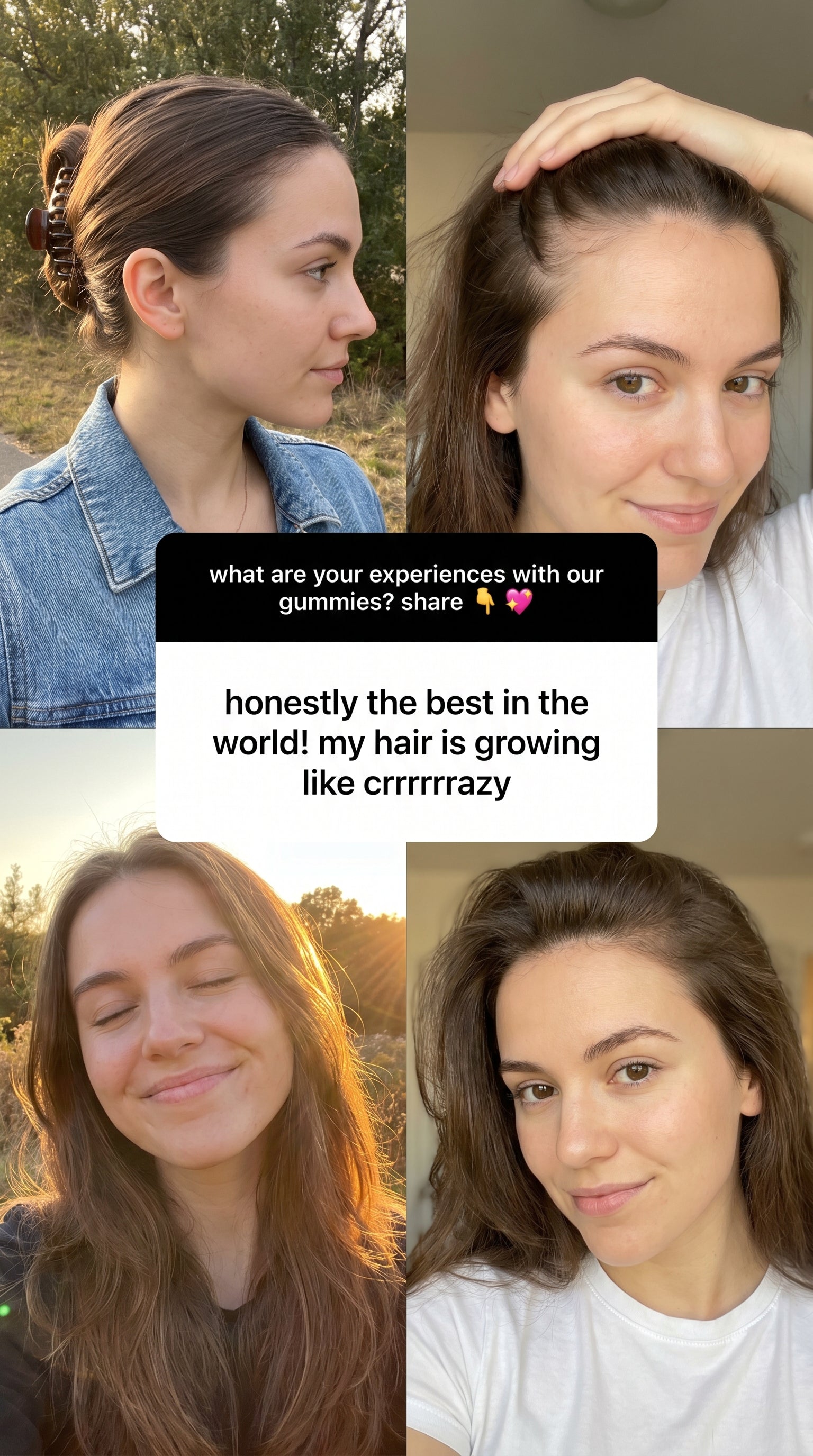
A widening parting in women is the earliest visible sign of female pattern hair loss, and it is also the sign most often dismissed for a year or more before anyone acts on it. The parting is where scalp shows most readily, so density changes there long before they are obvious anywhere else. Noticing it is genuinely useful information, not vanity, and it is worth measuring properly rather than worrying about it in the mirror.
Our overnight scalp elixir
Grow More® Overnight Scalp Elixir, £25.50. A leave in scalp serum worked into the roots at night, supporting a healthy scalp environment while you sleep.
Key takeaways
- The parting shows changes first, because it is the one place scalp is meant to be visible.
- Measure it, do not eyeball it. Same parting, same light, same phone, once a month.
- A widening parting with a narrow front hairline is the classic pattern, sometimes described as a Christmas tree shape.
- See your GP early. Iron and thyroid are checkable, and the earlier pattern hair loss is looked at the more options tend to be available.
- Cosmetics change how it looks, not what it is. Styling, colour and a good cut do more for appearance today than any bottle.
What does a widening parting in women usually mean?
Most commonly it means female pattern hair loss, in which follicles along the top of the scalp gradually produce finer, shorter hairs. Fewer thick hairs in the same area means more light reaching the scalp, and the parting looks wider even though the skin has not changed. It usually spares the front hairline, which is why the shape is often described as a Christmas tree spreading back from a fairly intact front edge. There is more on mcdonalds hairline in a separate guide.
It is not the only explanation. A heavy shedding episode, low iron, thyroid problems, a recent pregnancy, rapid weight loss or years of tight styling can each widen a parting, and several of those are reversible in the everyday sense that hair returns once the cause is dealt with. That is exactly why a GP visit is worth more than a shopping trip at this stage.

How do you tell a real change from a bad hair day?
Use a method rather than a mood. Hair looks thinner when it is unwashed, flat, damp, or under a downlight, and none of those tell you anything. A repeatable measurement does.
- Wash and fully dry your hair with no styling product and no root lift.
- Part it in exactly the same place every time. Pick a landmark, such as directly above the outer corner of your left eyebrow.
- Photograph from directly above, in daylight from a window, never under a spotlight, with the phone at the same height.
- Put a ruler or a coin in the shot so the width has a reference and cannot drift with camera distance.
- Repeat monthly and keep them in one album. Compare month one with month six, never with last week.
Six good photographs answer the question in seconds. Six months of worrying without them answers nothing.
| What you see | Often points towards | Sensible next step |
|---|---|---|
| Parting widens slowly over years, front hairline intact | Female pattern hair loss | See your GP, ask about referral options |
| Sudden heavy shedding all over, 2 to 3 months after an event | Telogen effluvium | Usually settles in 6 to 9 months, GP if not |
| Short broken hairs, frizzy halo, no scalp change | Hair breakage | Lower heat, protect, condition, trim |
| Thinning at the temples and along the hairline edges | Traction from tight styles | Loosen styles now, this one is time sensitive |
| Smooth round bald patches with clear edges | Alopecia areata | See your GP |
| Redness, scaling, soreness or scarring | An inflammatory scalp condition | See your GP promptly, do not wait |
Is it hair loss, hair shedding or hair breakage?
These three get used interchangeably and they are not the same thing at all, which matters because the answer to each is different.
- Hair loss is follicular. In female pattern hair loss the follicle miniaturises, producing progressively finer hairs. The count on your brush may be completely normal. The parting still widens, because the hairs that remain are thinner.
- Hair shedding is a cycle event. Telogen effluvium pushes many hairs into the resting phase at once after childbirth, illness, surgery, crash dieting or serious stress, and they release together two or three months later. The brush is dramatic, the parting may widen temporarily, and it usually recovers.
- Hair breakage is the fibre snapping. It leaves short, blunt ended hairs and a fuzzy halo of new growth that never gets longer. The scalp is unchanged, and a widening parting from breakage is really a loss of length and body rather than of density.
Getting this right matters, because a widening parting in women caused by breakage is fixable with better handling, while one caused by follicular change is not. The brush test separates the first two from the third: shed hairs have a small pale bulb at the root end, broken hairs do not. Our guides to hair shedding and what genuinely helps and crown thinning cover the neighbouring patterns, and a thinning crown behaves slightly differently from a widening parting because the crown is a whorl rather than a line.

When should you see a GP, and what is worth asking about?
Sooner than most people do. A widening parting in women is worth raising at a routine appointment rather than saved up for when it becomes obvious, because several of the reversible causes are simple blood tests and because pattern hair loss is easier to hold than to recover.
Things reasonably raised with a GP include ferritin and full iron studies, thyroid function, vitamin D, and whether anything you already take might be contributing. It is also worth mentioning changes in periods, unusual hair growth on the face or body, or acne that started in adulthood, because those together can point to a hormonal cause worth investigating. Ask what the referral pathway looks like in your area.
Said plainly, because it matters more than anything we sell: if a widening parting is caused by female pattern hair loss, no shampoo, conditioner, serum or supplement changes what is happening in the follicle. Ours included. What a cosmetic routine can do is keep the hair you have in better condition so less of it snaps off, and make the hair you have look fuller. Those are worth having, and they are not the same as changing the condition. The GP conversation is the one that opens the doors we cannot.
Get a discount on your next order
Join the Watermans mailing list and we will email a discount code straight to your inbox. Vegan, made in the UK, over 6.5 million bottles sold since 2012.
What actually makes a widening parting look better today?
Styling, and it is genuinely underrated. None of the following changes a widening parting in women at the follicle, and all of them change what other people see. These change appearance within an hour, which is more than any bottle can claim.
- Move the parting. A parting sits in a groove worn by habit. Shifting it two centimetres, or going slightly zigzag, breaks the straight line of visible scalp immediately and adds root lift.
- Get the cut right. Layers around the crown and a blunt line at the ends create the impression of density. Very long, very fine hair drags flat and shows the parting most.
- Add a little colour depth at the roots. Contrast between dark scalp and light hair is what makes a parting read as wide. Reducing the contrast reduces the effect.
- Dry with the roots lifted, head tipped forward, cool shot at the end to set. Volume at the root closes the gap visually.
- Try a root touch up powder in your own shade for events. It darkens the scalp, not the hair, and works in seconds.
- Loosen tight styles. Repeated tension at the same point causes real, eventually permanent damage, and it is the one cause on this page you can stop today for free.
What can a cosmetic routine realistically contribute?
Two honest things. It can keep the scalp comfortable, which matters because an itchy, flaking or irritated scalp makes everything worse and makes people scratch and pull at hair that is already fragile. And it can reduce breakage, so the fine hairs you do have reach their full length instead of snapping halfway and adding to the sparse look at the parting.
Neither of those changes the follicle. Both of them change how the parting looks over six to twelve months, because retained length and better condition genuinely read as more hair. If you want a realistic sense of how long that takes, we set it out in how long before hair products show results.

Grow More Scalp Elixir
A leave on elixir applied along the parting itself, which is the area in question. Biotin, caffeine, rosemary, niacinamide and hydrolysed lupine protein. Cosmetic support for a comfortable scalp and fuller looking hair, three to five nights a week.

Grow Me Shampoo
Sulphate free, so fine hair is cleaned without being stripped and left flat. Vegan and made in the UK, with over 6.5 million bottles sold since 2012. Judge it on how your scalp feels and how much length you keep.

Frequently asked questions
At what age does a widening parting in women usually start?
It can begin at any age after puberty, though it becomes far more common from the forties onwards and often becomes noticeable around the menopause. Starting young does not mean it will progress quickly, and starting late does not mean it will not.
Can a widening parting go back to normal?
It depends entirely on the cause. If low iron, thyroid problems or a shedding episode were responsible, density often returns once the underlying issue is dealt with. If it is female pattern hair loss, the follicular change is progressive and the realistic goal is slowing and disguising rather than restoring.
Does washing my hair less often help?
No. Hairs that come out during washing were already released and would have come out on the pillow or the brush instead. Washing less concentrates the shed into fewer, more alarming days and leaves the scalp less comfortable.
Is a widening parting the same as a thinning crown?
They overlap but are not identical. The parting is a line along the top of the head, the crown is the whorl towards the back. In female pattern hair loss the parting usually shows first, whereas in male pattern hair loss the crown and the front hairline tend to lead.
Could stress alone widen my parting?
Significant physical or emotional stress can trigger a shedding episode that temporarily widens the parting, usually two to three months after the event. Ordinary day to day stress is not a common cause, and a slow widening over years is more likely to be a pattern change.
Do hair supplements help a widening parting?
Only if you are genuinely short of something. Correcting a real iron or vitamin D deficiency can make a difference. Taking supplements when your bloods are normal will not, and very high dose biotin can interfere with some blood tests, so mention any supplement to your GP before testing.
Will dyeing my hair make it worse?
Colour damages the fibre rather than the follicle, so it can add breakage, but it does not cause pattern hair loss. Used sensibly, colour that reduces the contrast between scalp and hair makes a parting look narrower, which is often a net gain.
Should I wear a hairpiece or topper?
Many people find them genuinely liberating, and there is nothing wrong with using one. The main caution is attachment method: clips gripping the same fragile spot every day can cause traction damage, so rotate the position.
Sources and references
- NHS, Hair loss, for common causes in women and when to seek medical advice.
- NICE Clinical Knowledge Summaries, Female pattern hair loss, for the pattern, assessment and typical course.
- British Association of Dermatologists information leaflets, for female pattern hair loss and telogen effluvium.
- NHS, Iron deficiency anaemia, for symptoms and testing of one of the common reversible contributors.
What is the bottom line on widening parting in women?
A widening parting in women is usually the first visible sign of female pattern hair loss, though shedding, low iron, thyroid problems and tight styling can all do the same thing. Measure it properly with monthly photographs and a reference object, take it to your GP early and ask about iron and thyroid, loosen anything that pulls, and use styling, cut and colour to change how it reads today. A cosmetic routine earns its place by keeping the scalp comfortable and reducing breakage, and it is worth being clear that this is a different job from changing the condition itself. If your question is about products or a routine rather than a medical one, you can talk to Gail Waterman, our co-founder, as an AI avatar on the Watermans homepage.
If the shampoo is already sorted, our overnight scalp serum is the next step worth adding.
Watermans products are 100% cosmetic and do not treat medical hair loss. Individual results may vary. If your parting is widening, please speak to your GP, particularly if it came with changes to your periods, weight, energy or skin.