Beard Growth on Testosterone: Timeline and Care
Beard growth on testosterone follows a slow, uneven schedule rather than a steady one. Most people see the first dark hairs somewhere between three and six months, a beard that reads as a beard by the end of year two, and final coverage only at the three to five year mark. Genetics set the ceiling. Time and gentle handling decide how close you get to it.
Our hair and body oil
Camellia & Black Castor Hair & Body Oil, £24.95. Adds hydration and shine to dry lengths and smooths the hair before a blow dry, without weighing fine hair down.

Key takeaways
- First terminal hairs usually appear at three to six months, most often on the chin, upper lip and the line of the jaw.
- Year two is where most people feel stuck. Growth has not stopped, it has moved from new hairs appearing to existing hairs thickening and darkening.
- Final density is largely inherited. Follicle number is fixed before puberty, so testosterone changes what existing follicles do, not how many you have.
- Scalp hair can thin at the same time as facial hair fills in, because the same androgen signal acts in opposite directions on the two sites.
- Separate the three things you may be seeing: hair loss at the follicle, shedding from a disturbed cycle, and breakage where the fibre snaps. They need different fixes.
How long does beard growth on testosterone actually take?
Beard growth on testosterone runs on a multi year timeline that almost nobody is warned about properly. The usual pattern is soft vellus fluff turning darker around month three to six, a patchy but recognisable beard through months twelve to twenty four, and continued filling for another two to three years after that.
The reason is mechanical rather than mysterious. Facial follicles have to convert from producing fine, pale vellus hair to producing thick, pigmented terminal hair, and each follicle makes that switch on its own schedule. DermNet describes the same androgen driven vellus to terminal conversion when it explains androgen sensitive hair growth, and the conversion is gradual by design. A follicle also has to complete a full growth cycle at its new setting before you see the result on your face, and a facial anagen phase runs months, not weeks.
| Stage | Rough timing | What you typically see |
|---|---|---|
| Earliest change | Weeks 4 to 12 | Existing fluff darkens slightly. Skin gets oilier. No real length yet. |
| First terminal hairs | Months 3 to 6 | Isolated coarse hairs on the chin, upper lip and jawline. Very patchy. |
| Recognisable beard | Months 12 to 24 | Connected coverage on the chin and moustache. Cheeks usually lag. |
| Filling phase | Years 2 to 4 | Existing hairs thicken and darken. Gaps close by density, not by new territory. |
| Final coverage | Years 3 to 5 | Close to your genetic ceiling. Cheek lines stop moving. |
Two honest caveats. Age at starting matters, and people who start younger often fill in faster and further. And the timeline above describes a pattern, not a promise: plenty of cisgender men never grow full cheeks either.
Why does beard growth on testosterone feel like it stalls in year two?
The year two plateau is the single most common worry, and it is usually a change in the kind of progress rather than a stop. By month eighteen most follicles that were going to convert early have already converted, so new territory stops appearing. What continues is slower and much harder to see day to day: each existing hair getting thicker, darker and longer with every cycle.
Photography is the only reliable way to judge it. A phone photo in the same light, same angle and same trimmed length every eight weeks will show change that a daily mirror check never will, because the mirror resets your baseline every morning. Compare month eighteen with month six, not with yesterday.
A fair test takes twelve weeks
Any change you make to grooming, washing or oiling needs a full facial hair cycle to show. Give a new routine twelve weeks and one set of photos before you decide it did nothing.
What decides how full a beard gets on testosterone?
Follicle number is the ceiling, and it is inherited. The face you have was laid down with a fixed count of hair follicles before puberty, and no hormone, supplement or shampoo adds new ones. Testosterone changes the behaviour of the follicles already there, which is why family resemblance predicts beard pattern better than anything else.
Three factors sit underneath that ceiling and are worth knowing about. Androgen receptor sensitivity in the skin varies between individuals, so two people on identical care can get different results. Age at start correlates with final density. And general health matters at the margins: the NHS lists iron deficiency and thyroid problems among the things that affect hair generally, so if your hair changed suddenly rather than gradually, that is a conversation for your GP and a blood test, not a grooming problem.

Get a discount on the beard and scalp care range
Join the Watermans mailing list and we will email a discount code straight to your inbox, so you can try the beard and scalp care range for less. Made in the UK, over 6.5 million bottles sold since 2012.
How should you look after the skin under a new beard?
Skin under a developing beard behaves like skin in puberty, because hormonally that is roughly what is happening. Oil production rises, pores block more easily, and new coarse hairs pushing through can leave the jawline and neck sore, bumpy and flaky. Most beard complaints in the first year are skin complaints wearing a beard costume.
A short routine covers almost all of it. Wash the face once or twice a day with something gentle rather than stripping, because aggressively degreasing skin usually makes it produce more oil. Dry properly, since damp skin under hair is where irritation starts. Then put a small amount of oil through the beard and onto the skin beneath while it is still slightly damp, which is what stops the flaking that gets mistaken for dandruff.


Camellia & Black Castor Hair & Body Oil £24.95
Black castor and camellia oil with omega 3, 6 and 9. A few drops warmed between the palms for pre-wash scalp work, dry ends or facial hair.
Ingrown hairs deserve their own note. Do not dig them out. Warm compress, leave the area alone, and let it lift on its own. If a spot is hot, spreading or painful, that is one for your GP rather than a mirror and tweezers.
What happens to scalp hair during beard growth on testosterone?
Scalp hair and facial hair respond to the same androgen signal in opposite directions, which is why so many people gain a beard and lose ground at the temples in the same year. DermNet describes this pattern of scalp follicle miniaturisation, where hairs at the hairline and crown get progressively finer and shorter with each cycle, while androgen sensitive facial follicles go the other way.
Whether it happens to you, and how fast, is again mostly family history. If the men in your family recede early, that is the pattern to plan around. Watching the temples and parting in photographs from the start is far more useful than trying to remember what your hairline looked like two years ago.

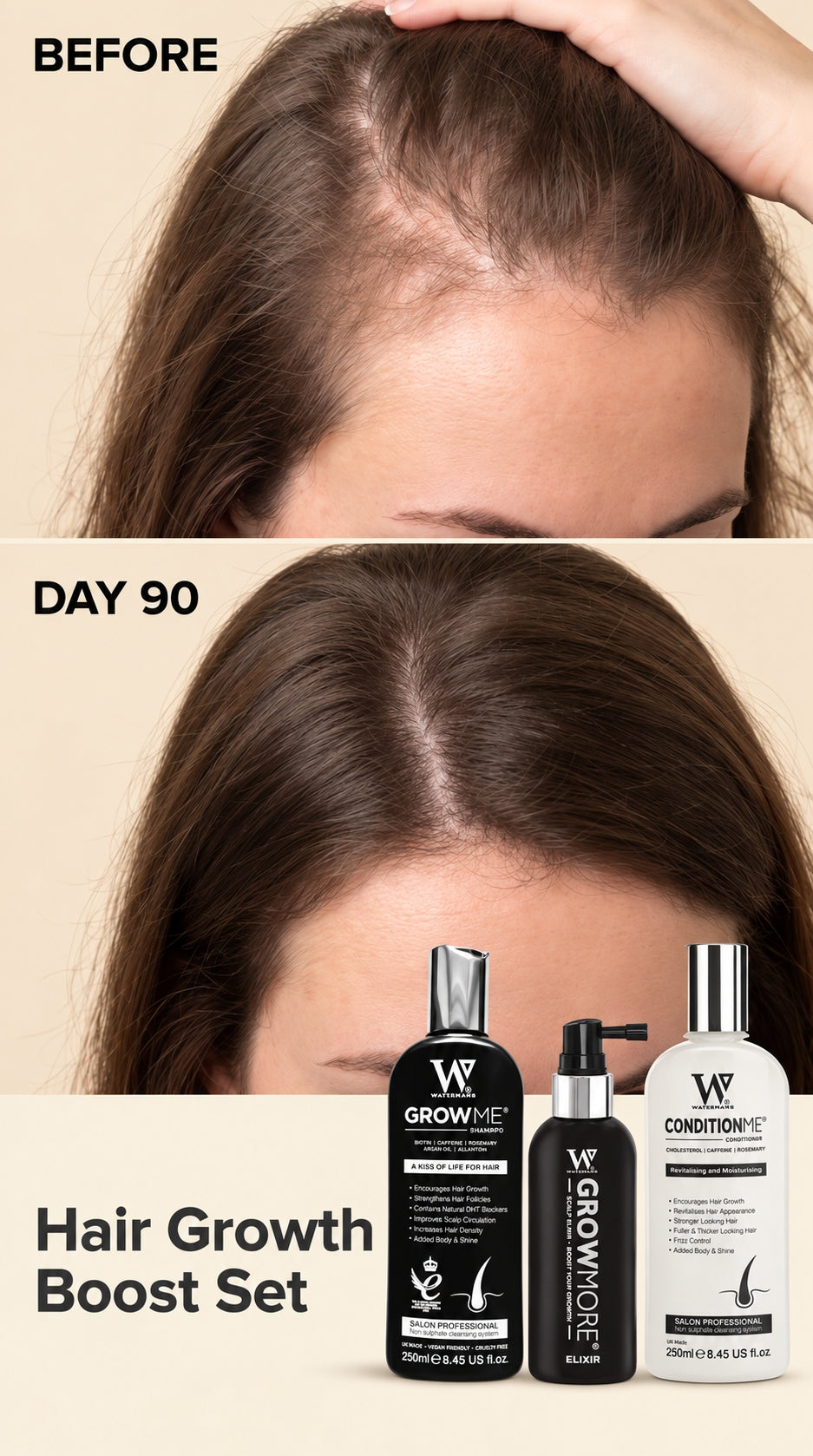
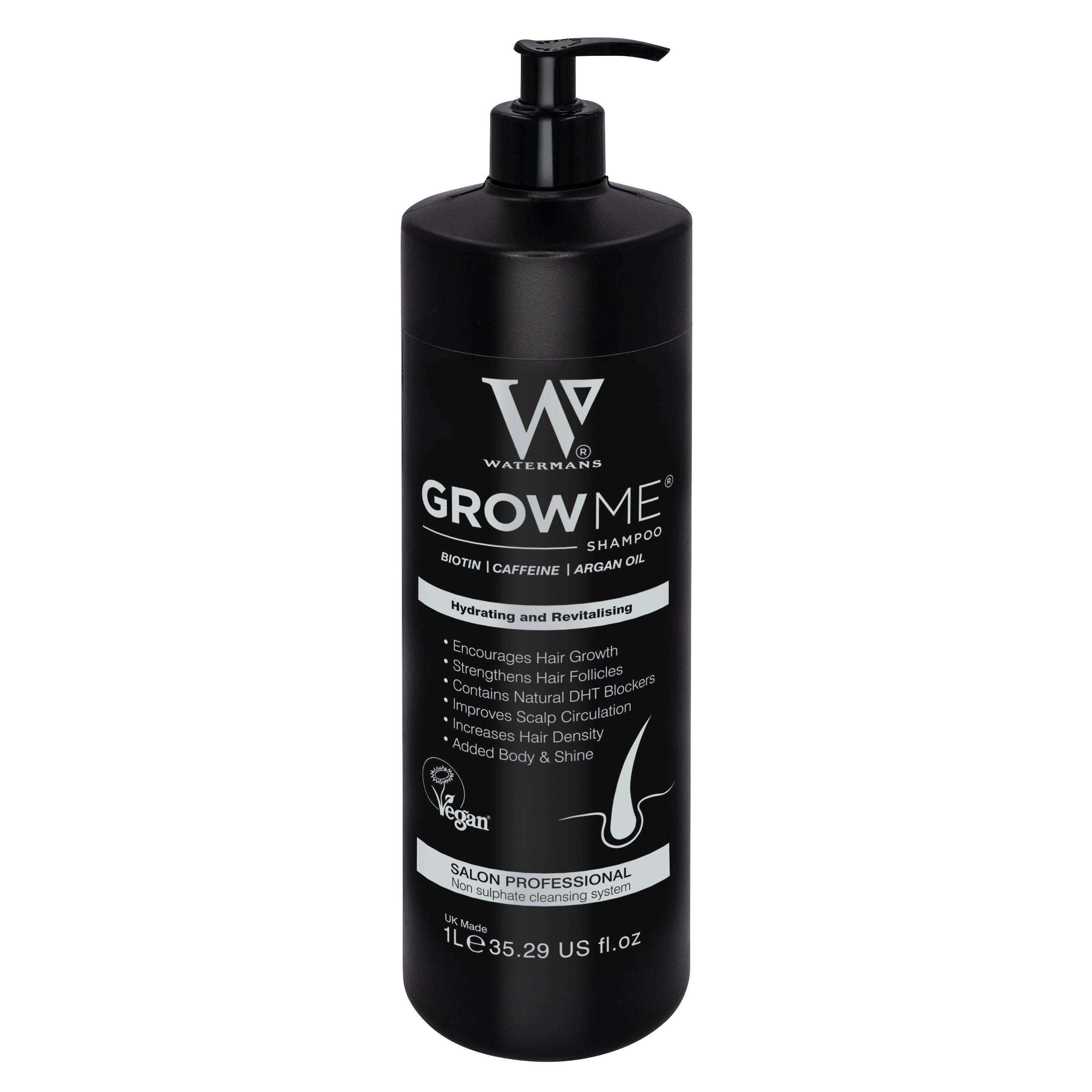
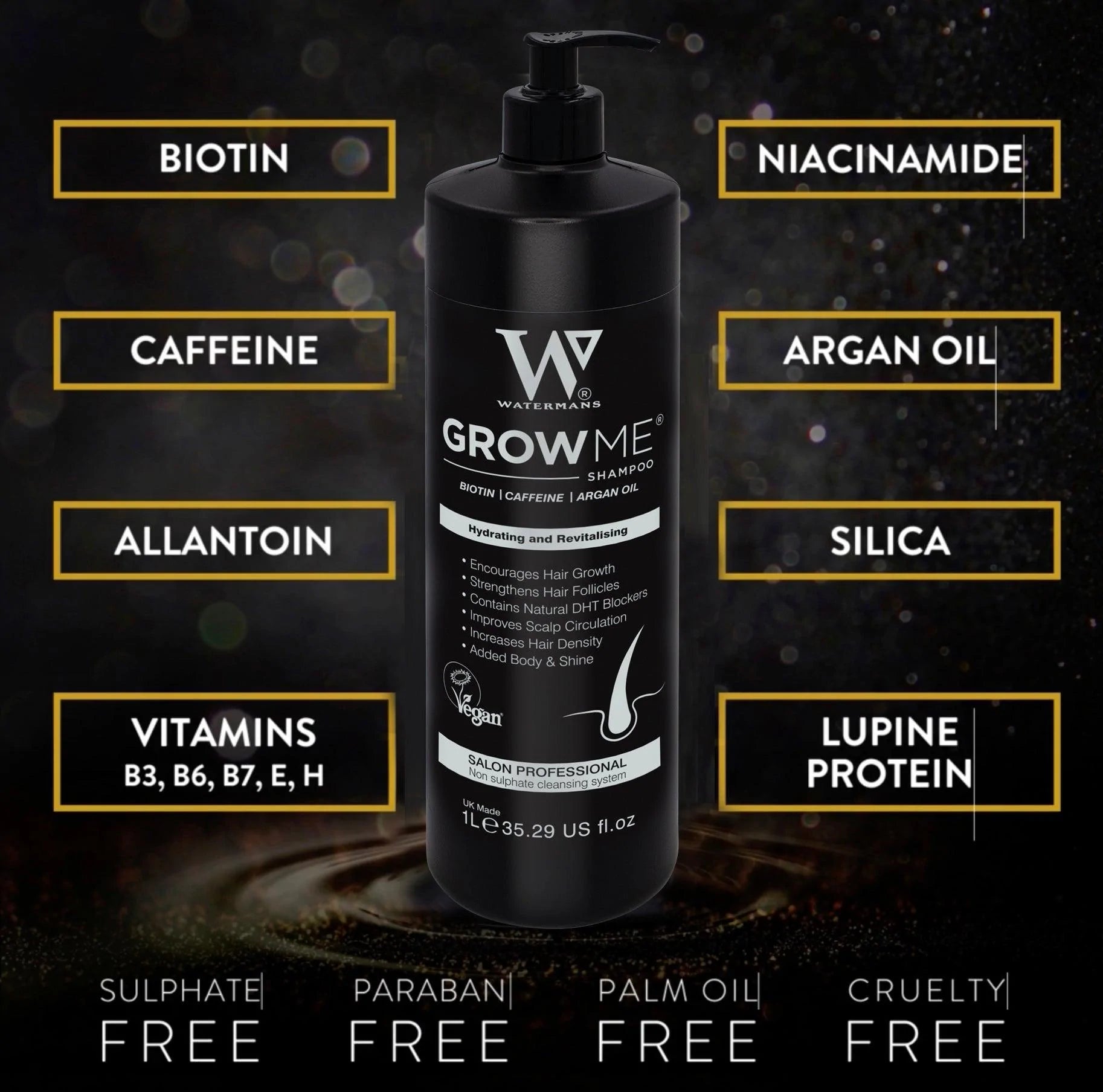
Grow Me® Hair Growth Shampoo £14.95
Sulphate free, 250ml. Biotin, caffeine, rosemary and hydrolysed lupine protein (ANAGELINE®) in a everyday cleanse that leaves hair looking thicker and fuller.
Worth reading alongside this: our guides on hair thinning on testosterone and what to watch for and on keeping the scalp itself in good condition.
Is scalp thinning during testosterone the same as shedding or breakage?
Three different things get called the same name, and telling them apart changes what you should do next. Hair loss means the follicle itself is producing a finer, shorter hair each cycle, which is the miniaturisation pattern above. Hair shedding means normal hairs are leaving the scalp faster than usual because the growth cycle has been disturbed. Hair breakage means the fibre is snapping partway along its length, so the follicle is fine and the hair is not.
| What you are seeing | Where it comes from | The tell | What helps |
|---|---|---|---|
| Hair loss | Follicle miniaturisation at the hairline or crown | Parting widens, temples recede, hairs come out with a white bulb at the root | Track it with photos and talk to a GP or a registered trichologist early |
| Hair shedding | The growth cycle, often two to four months after a trigger | Sudden increase all over, not one patch. Full length hairs with a root | Usually settles on its own once the trigger has passed |
| Hair breakage | The fibre, from heat, tension or friction | Short broken pieces with no bulb, flyaways, rough ends | Conditioner, less heat, looser styling |
The practical point: breakage is the one that responds fastest to what you do in the shower, and it is also the one most often misread as thinning. The NHS notes that most hair loss is not caused by illness, but that sudden or patchy change is worth getting looked at.

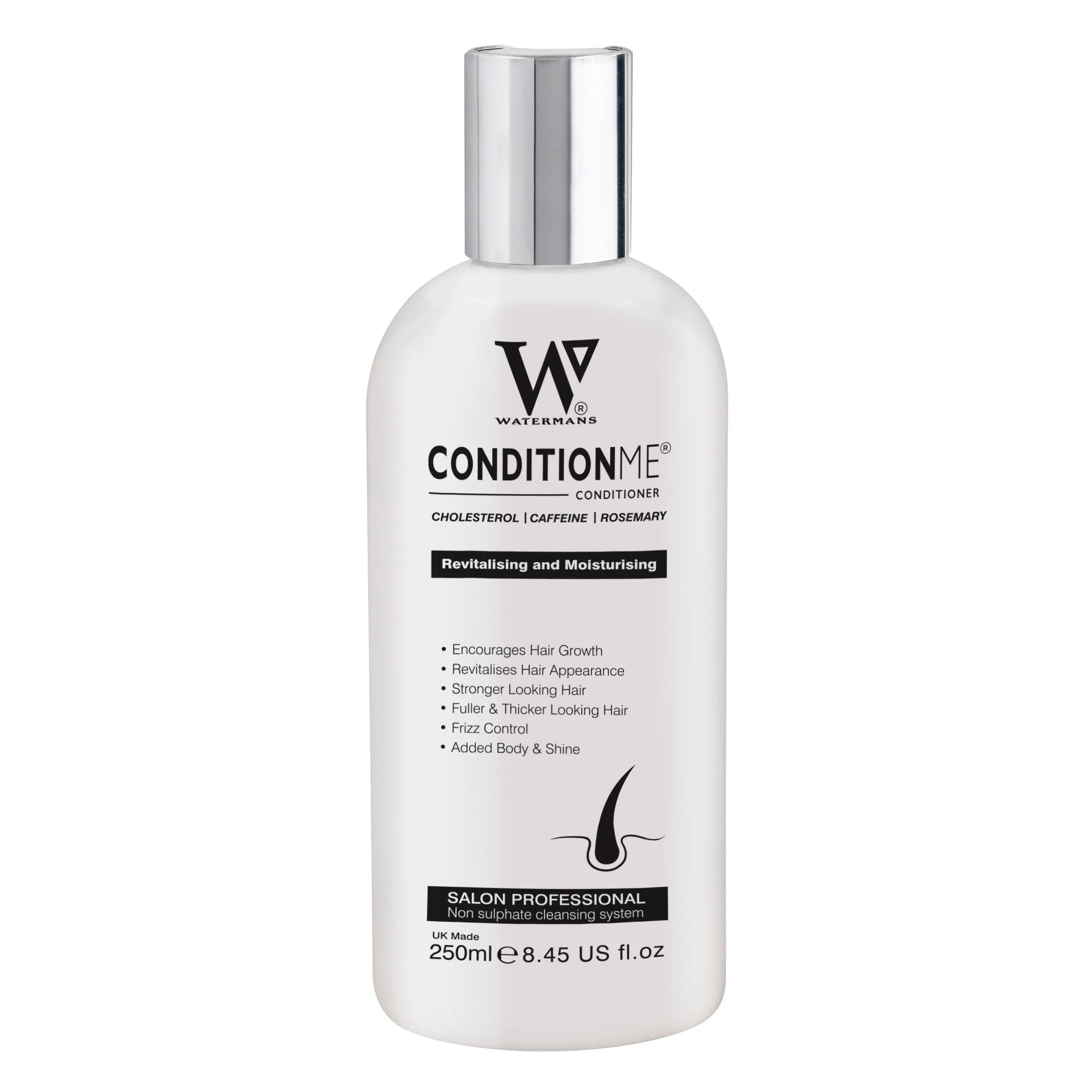
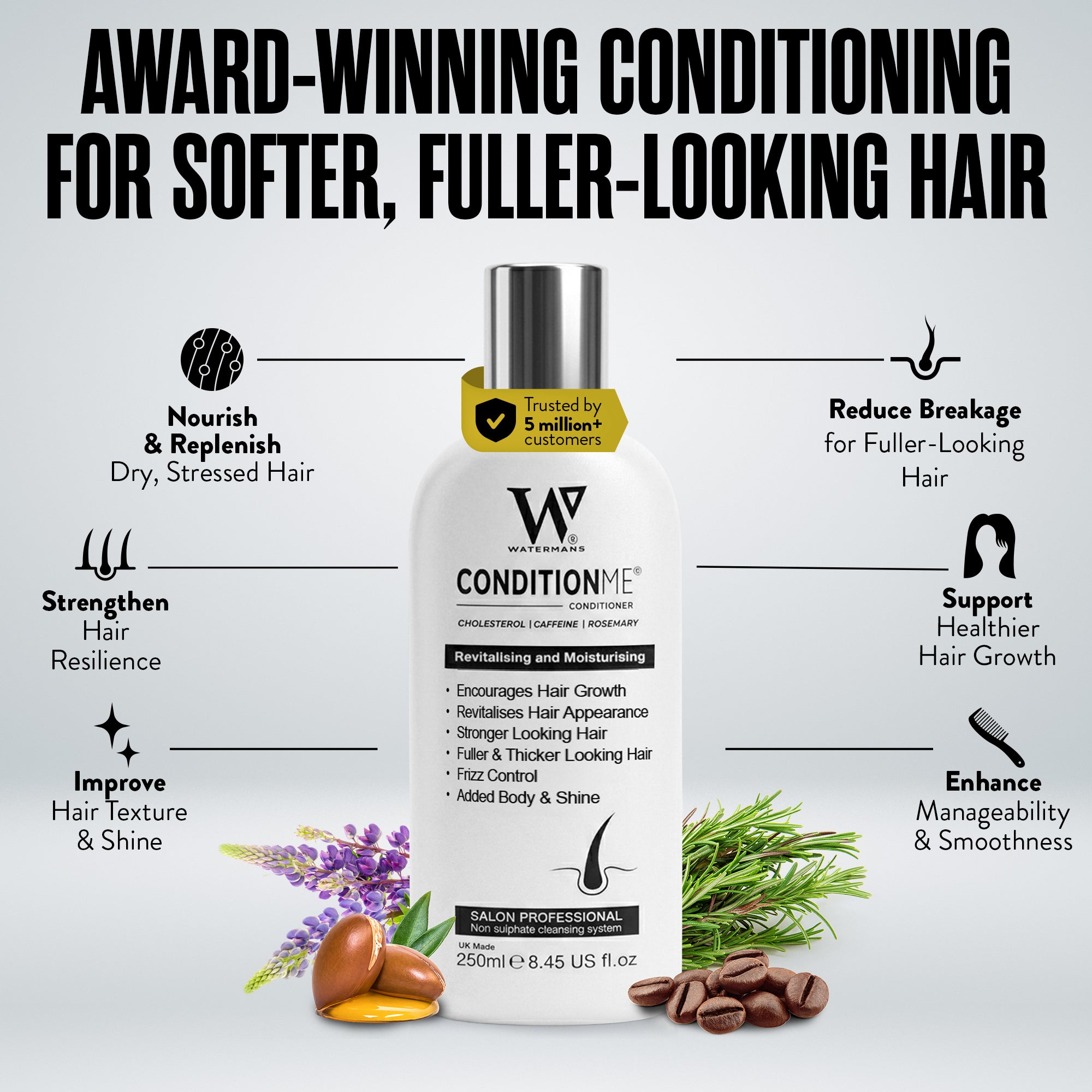
Condition Me® Hair Growth Conditioner £13.95
Breakage defence conditioner with cholesterol, shea butter, glycerin and silica. Slip for detangling, so fewer strands snap on the way through.
Which grooming habits make a patchy beard look fuller?
Grooming cannot add follicles, but it changes how the ones you have read to other people, and in the patchy first two years that is most of the battle. Four habits do the heavy lifting, and none of them involve buying anything clever. For why beards differ so much between men, see our guide to facial hair growth.
- Stop shaving the gaps to fix them. Shaving does not change how thick a hair grows back. That idea persists because a cut hair has a blunt, wider tip. Cheek gaps close with time, not with a razor.
- Let the perimeter grow before you tidy it. A defined neckline and cheek line make a thin beard look deliberate. Tidying too high on the neck makes it look thinner than it is.
- Trim to one length across the patchy zone. Even length reads as even density. Uneven length exaggerates every gap.
- Brush against the grain, then settle it. Thirty seconds with a boar bristle brush lifts hairs away from the skin so they cover more surface, and distributes oil onto the skin underneath at the same time.
If you also style the hair on your head with heat, the same restraint applies there. Our guide to hair care through an FTM transition covers the scalp side of the same routine.
Frequently asked questions
How long before I see any beard growth on testosterone at all?
Most people notice the first darker, coarser hairs between three and six months, usually on the chin, the upper lip and along the jaw. Before that the change is mostly oilier skin and slightly darker fluff. Nothing in the first eight weeks predicts your final result.
Will my beard ever fill in on the cheeks?
Cheeks are the last area to fill and the most likely to stay sparse, because cheek follicles are the least androgen sensitive on the face. Many people gain some cheek coverage between years two and four. Some never do, and that is a genetic pattern rather than something going wrong.
Does shaving or trimming speed up beard growth on testosterone?
No. Shaving cuts the hair at the surface and does nothing to the follicle below, so it cannot change thickness, colour or speed. The hair feels coarser as it grows back only because a cut hair has a blunt tip instead of a tapered one.
Why is my scalp hair thinning while my beard is filling in?
Scalp and facial follicles react to the same androgen signal in opposite directions. Facial follicles convert fine hair to thick hair, while androgen sensitive scalp follicles at the temples and crown go the other way and produce progressively finer hairs. Family history is the best predictor of whether it happens to you.
Can a shampoo or oil make my beard grow faster?
No cosmetic product changes how fast a follicle grows hair or how many follicles you have. What good cleansing, conditioning and oiling do is keep the skin underneath comfortable and stop the hair you have snapping or looking dull, so the beard looks fuller than it would neglected.
Is beard itch in the first months normal?
Itch and small bumps are extremely common as coarse hairs push through skin that is also producing more oil than it used to. Gentle washing, thorough drying and a little oil on the skin under the beard handle most of it. Hot, spreading or painful spots should be seen by a GP.
Should I be worried if my beard growth has not changed in six months?
A flat six month stretch in year two is normal, because progress at that stage is hairs thickening rather than new hairs appearing. Photograph the same area in the same light every eight weeks. If your facial or scalp hair changed suddenly rather than gradually, ask your GP about iron and thyroid checks. If your question is about products or a routine rather than a medical one, you can talk to Gail Waterman, our co-founder, as an AI avatar on the Watermans homepage.
What is a realistic expectation for beard growth on testosterone after five years?
By year five you are close to your genetic ceiling, which for most people means solid chin and moustache coverage, a defined jawline and cheeks that range from full to noticeably sparse. Comparing yourself to the men in your family is a far better guide than comparing yourself to anyone online.
What is the bottom line on beard growth on testosterone?
Beard growth on testosterone is a three to five year process with a genetically fixed ceiling, an obvious early phase, a frustrating middle, and a long quiet filling phase that only shows up in photographs. You cannot speed the follicle up. You can keep the skin under it comfortable, stop the hair you have from breaking, and give every change twelve weeks before you judge it.
Keep an eye on the scalp at the same time, and separate loss, shedding and breakage before you decide what to do about any of them. If something changes suddenly or in patches, that is a GP question, not a grooming one.
If the hair on your head is getting finer while your beard fills in, the everyday step that changes the most is the wash. Grow Me hair growth shampoo is sulphate free and built around biotin, caffeine, rosemary and hydrolysed lupine protein, for hair that looks and feels thicker without stripping an already oilier scalp.
Sources & references
- NHS, Hair loss, on when hair change should be checked by a GP.
- NHS, Gender dysphoria care, NHS guidance on gender affirming care pathways in the UK.
- DermNet, Hirsutism, on androgen driven conversion of vellus hair to terminal hair.
- DermNet, Male pattern hair loss, on progressive follicle miniaturisation at the temples and crown.
- NHS, Iron, on iron intake and deficiency.
- NHS, Underactive thyroid, on thyroid symptoms including hair change.
Watermans products are 100% cosmetic and do not treat medical hair loss. Individual results may vary.