Total Testosterone and Your Hair: What Your Result Really Means
Total testosterone is the number most people see first when they have a hormone blood test, and it is often the number they worry about when their hair starts to thin. This guide explains what the result actually measures, how it differs from free testosterone and the free androgen index, what high and low readings can mean for hair in women and men, why most people with thinning hair have perfectly normal levels, and what you can do for your hair while you wait for answers.
Our hair growth shampoo
Grow Me® Hair Growth Shampoo, £14.95. A sulphate free daily shampoo that supports a healthy scalp environment and helps reduce breakage, so lengths hold on and look fuller.
Total testosterone is the full amount of testosterone in your blood, both the part bound to proteins such as SHBG and the small free part. On its own it says little about hair. Most women with pattern hair thinning have normal androgen levels, and male pattern balding comes from inherited follicle sensitivity to DHT, not from high testosterone. A GP reads the result alongside SHBG, the free androgen index and your symptoms.
Key takeaways
- The blood test counts all the testosterone in a blood sample, bound and free, so it is only a starting point.
- NICE guidance uses testosterone and SHBG together to work out a free androgen index (100 x testosterone / SHBG), usually under 5 in women.
- DermNet says the majority of women with female pattern hair loss have normal androgen levels in their blood.
- In men, the NHS says testosterone falls steadily by about 1% a year from around 30 to 40, which is unlikely to cause problems by itself.
- Raising testosterone is not a hair strategy. Look after the hair you have and let a GP interpret the numbers.

What is total testosterone?
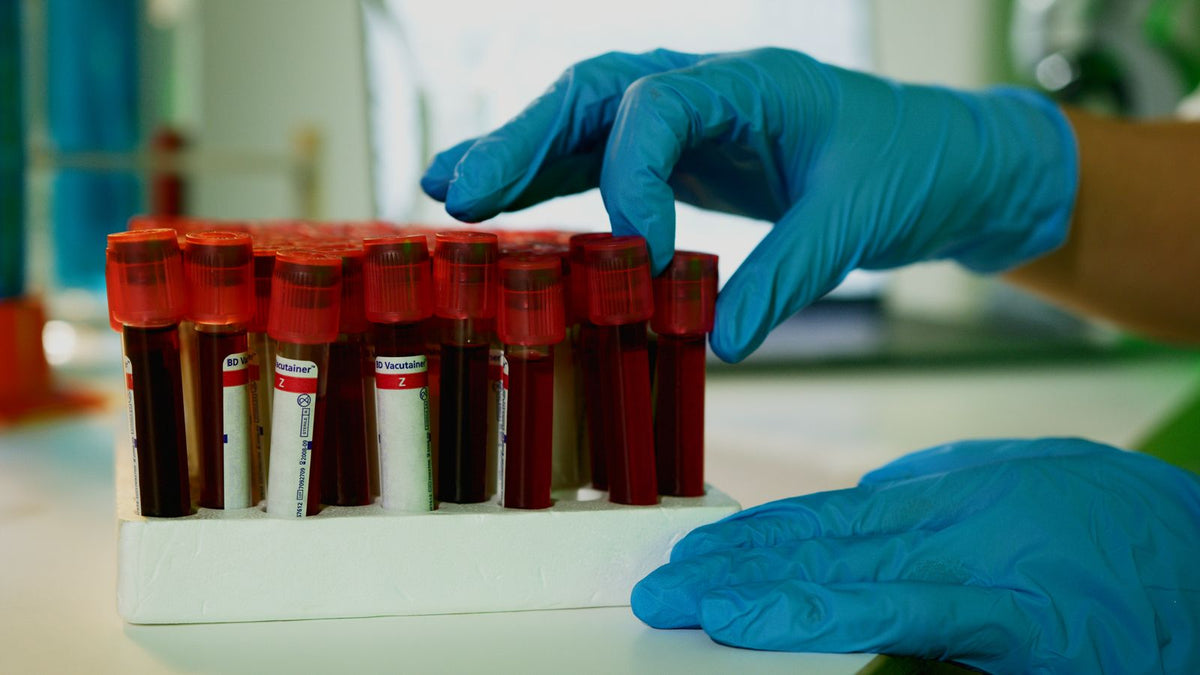
The total figure is the combined amount of testosterone circulating in your blood, including hormone bound tightly to sex hormone binding globulin (SHBG), hormone bound loosely to albumin and a small free fraction. A standard blood test reports this combined figure in nanomoles per litre (nmol/l), and each laboratory prints its own reference range next to your result.
Everyone makes testosterone. Men produce most of theirs in the testes, while women make much smaller amounts in the ovaries and adrenal glands, so the normal ranges for the two sexes are very different. That is why a number that looks alarming on one report can be entirely ordinary on another, and why comparing your figure with a friend's, or with a range you found online, rarely helps.
What matters for the body, including the hair follicles, is how much hormone is actually available to cells and how sensitive those cells are to it. A total figure cannot tell you either of those things on its own, which is why doctors almost always look at it alongside other results.
How is the total figure different from free testosterone and SHBG?
The total figure differs from free testosterone because it includes the hormone locked up by SHBG, which cells cannot easily use. Free testosterone is the unbound part, and bioavailable testosterone adds the loosely bound part. SHBG is the carrier protein, and when SHBG is low, more of the same total is left free and active.
| Measure | What it tells you | How it is used |
|---|---|---|
| Total figure | All testosterone in the sample, bound and free | Usually the first test ordered |
| SHBG | How much carrier protein is holding testosterone | Read with the total figure to judge availability |
| Free androgen index (FAI) | 100 x the total figure divided by SHBG | NICE says the normal range in women is usually under 5, though labs vary |
| Free or bioavailable testosterone | The unbound, or unbound plus loosely bound, part | Calculated or measured when the picture is unclear |
NICE Clinical Knowledge Summaries describe exactly this approach when androgen excess is suspected in women: measure testosterone, measure SHBG, then calculate the free androgen index. The same guidance notes that the assessment is not reliable while someone is using hormonal contraception, because the pill changes SHBG, so tell your GP about any contraception or hormone use. Our guides to the free androgen index and bioavailable testosterone go into those two results in more detail.
Do testosterone levels affect hair loss?
Testosterone levels affect hair loss far less than most people expect. In pattern hair loss the key factor is how sensitive particular scalp follicles are to androgens, especially dihydrotestosterone (DHT), which the body makes from testosterone. That sensitivity is inherited, so two people with identical levels can have very different hair.
DermNet explains that in male pattern hair loss, DHT is thought to shorten the growing (anagen) phase of affected follicles from its usual 3 to 6 years to just weeks or months, while the follicles gradually shrink and produce finer, shorter hairs. For women the picture is less clear. DermNet says it is not certain androgens play a role in female pattern hair loss at all, and that the majority of women with it have normal androgen levels in their blood.
So a normal result does not rule out pattern thinning, and a slightly high result does not prove hormones are the cause. If you want the wider hormone story, our guide to testosterone and hair loss covers how the hormone and the hair cycle interact.

What does a high testosterone result mean for women's hair?
A high testosterone result in a woman can point to androgen excess, most often from polyendocrine metabolic ovarian syndrome (PMOS, previously called PCOS). The NHS lists excess hair growth (hirsutism) and hair loss among its main symptoms, alongside irregular periods, acne and oily skin, so hair changes rarely appear alone.
The NHS page on hirsutism says unwanted coarse hair on the face, chest or back is usually linked to changes in androgen levels, and that PMOS is the most common cause. NICE CKS adds that testosterone in PMOS is normal to moderately raised. It flags a much higher result, above 5 nmol/l or more than twice the upper limit of the lab's range, especially with rapidly worsening symptoms, as a reason for urgent specialist input to look for rarer causes.
If your result is high, the useful next step is not a supplement or a new shampoo but a proper conversation with your GP about the whole pattern: periods, skin, body hair, weight and any medicines you take.
Get a discount on the thinning hair range
Join the Watermans mailing list and we will email a discount code straight to your inbox, so you can try the thinning hair range for less. Made in the UK, over 6.5 million bottles sold since 2012.
What does low testosterone mean for men's hair?
Low testosterone in men does not cause male pattern balding, and it does not protect against it either. The NHS explains that testosterone falls steadily as men age, at about 1% a year from around the age of 30 to 40, and that this gradual decline is unlikely to cause problems in itself.
A genuine deficiency later in life, called late-onset hypogonadism, is described by the NHS as uncommon and not a normal part of ageing. The NHS says symptoms men often blame on hormones in their late 40s and 50s, such as low mood, tiredness, poor concentration and loss of sex drive, frequently have lifestyle or psychological causes instead, and that a deficiency is confirmed with symptoms plus blood tests. Receding at the temples or thinning at the crown on its own is far more likely to be inherited pattern loss than a hormone shortage.
This is also why men who assume that more testosterone means more hair are usually disappointed. Scalp follicles that are genetically sensitive respond to the DHT made from ordinary testosterone levels, so pushing levels higher does nothing good for a receding hairline.
Can you raise testosterone naturally, and would it help your hair?
You can support healthy hormone levels with ordinary good habits, but raising testosterone is not a way to get thicker hair. Sleep, regular activity, a balanced diet and a healthy weight support general wellbeing, and the NHS notes that many symptoms blamed on testosterone in men actually come from stress, lifestyle or mental health.
A word of caution on boosters
Supplements sold to raise testosterone are not a hair product, and anabolic steroids are listed by the NHS among the rare causes of unwanted hair growth in women. If you think your levels are off, get them checked properly rather than trying to push them up yourself. Our guide to hair shedding after steroid treatment is the place to go next on that.
If your aim is fuller-looking hair, the evidence points in a different direction: find out whether you are dealing with shedding, breakage or pattern thinning, fix anything a GP finds, such as low iron or a thyroid problem, and look after the hair fibre and scalp day to day.
Is it hair loss, shedding or breakage?
Hair loss, hair shedding and hair breakage are three different problems, and knowing which one you have matters more than any single hormone number.
| Problem | What is happening | What you will see | Hormone link |
|---|---|---|---|
| Hair loss (pattern thinning) | Follicles slowly produce finer, shorter hairs | A widening parting, thinning crown or receding temples | Inherited sensitivity to androgens, usually with normal levels |
| Hair shedding | Whole hairs fall from the root as the hair cycle shifts | Full-length hairs with a small white bulb, all over | Can follow illness, stress, childbirth or hormone changes |
| Hair breakage | The hair fibre snaps along its length | Short, uneven pieces with no bulb, frizz and split ends | None; heat, colour and rough handling are the usual causes |

How can you look after thinning hair while your levels are checked?
You can look after thinning hair while results come back by keeping the scalp comfortable and the lengths strong, so the hair you have looks as full as possible. None of this changes your hormones, and it does not need to.
- Wash with a gentle, sulfate-free shampoo as often as your scalp needs, since a clean, balanced scalp makes fine hair look fuller.
- Condition every wash to cut friction and snapping on finer strands.
- Go easy on heat and tight styles, which turn thinning into visible breakage.
- Eat enough protein and iron. The NHS lists iron deficiency among the causes of temporary hair loss.
- Take photos in the same light every month so you and your GP can see real change rather than guessing.

Grow Me® Hair Growth Shampoo £14.95
A sulfate-free shampoo with caffeine, biotin, rosemary and niacinamide, made to cleanse gently and support a healthy scalp environment for fuller-looking hair. Vegan and made in the UK.

Condition Me® Hair Growth Conditioner £13.95
A lightweight conditioner that smooths and strengthens the lengths, helping fine hair resist breakage without weighing it down.

Grow More® Leave-In Scalp Elixir £25.50
A leave-in scalp elixir for a daily scalp routine, designed to leave hair looking thicker and feeling healthier at the roots.
When should you see a GP about total testosterone and hair?
You should see a GP about testosterone and hair if thinning is getting worse, if you are a woman with new coarse facial or body hair, irregular periods or acne, or if you are a man with low energy, low mood or loss of sex drive alongside your hair changes. The NHS advises seeing a GP about hair loss before going to a commercial hair clinic.
Bring any previous blood results, a list of medicines and supplements, and your monthly photos. Watermans does not give medical advice. If your question is about products or a routine rather than a medical one, you can talk to Gail Waterman, our co-founder, as an AI avatar on the Watermans homepage.
If your GP has already run tests, our guide to free testosterone and hair helps you read the other numbers on the report.
What are the frequently asked questions about total testosterone?
What is total testosterone?
All the testosterone in your blood, including the part bound to SHBG and albumin and the small free part. It is reported in nmol/l against the lab's own reference range.
Does high testosterone cause hair loss?
Not on its own. Pattern hair loss depends mostly on inherited follicle sensitivity, and DermNet says most women with female pattern hair loss have normal androgen levels.
Does low testosterone cause baldness in men?
No. The NHS says testosterone falls by about 1% a year from around 30 to 40, and male pattern balding comes from inherited sensitivity to DHT, not low levels.
What is a normal free androgen index for women?
NICE CKS says the normal range is usually under 5, though it can vary between laboratories.
Can the pill affect a testosterone test?
Yes. NICE CKS notes that hormonal contraception changes SHBG, so tell your GP if you use it before the results are interpreted.
Will boosting testosterone thicken my hair?
No. Raising testosterone is not a hair strategy, and in people with sensitive follicles more androgen can make pattern thinning worse, not better.
What hair care helps while I wait for results?
A gentle shampoo, conditioner every wash, less heat and enough protein and iron help protect the hair you have from breakage.
What is the bottom line on total testosterone?
The bottom line on total testosterone is that it is a useful first number but a poor predictor of hair on its own. Your GP needs SHBG, the free androgen index and your symptoms to make sense of it, most people with thinning hair have normal levels, and trying to raise testosterone will not thicken hair. Get the cause checked, and meanwhile keep your scalp comfortable and your lengths strong.
If you want one simple change to your routine, start with a hair growth shampoo made for a clean, comfortable scalp.
Sources & references
- NICE CKS, Polycystic ovary syndrome: investigations, checked 19 September 2026.
- NHS, The 'male menopause', checked 19 September 2026.
- NHS, Polyendocrine metabolic ovarian syndrome (PMOS), checked 19 September 2026.
- NHS, Hirsutism, checked 19 September 2026.
- NHS, Hair loss, checked 19 September 2026.
- DermNet, Female pattern hair loss, checked 19 September 2026.
- DermNet, Male pattern hair loss, checked 19 September 2026.
Watermans products are 100% cosmetic and do not treat medical hair loss. Individual results may vary.