Testosterone and Hair Loss: What Your Levels Really Mean
Looking for testosterone boosters for energy or libido? That is a question for your GP. This page is about hair.
The link between testosterone and hair loss is real but widely misunderstood. Pattern hair loss is driven by how sensitive your follicles are to androgens, not by how much testosterone is circulating, which is why two men with identical blood results can have completely different hairlines. Sensitivity is inherited. Blood levels usually are not the variable that decides the outcome. For readers taking testosterone as part of transition, we set out the practical side in keeping the hair you have on testosterone.
Our hair growth shampoo
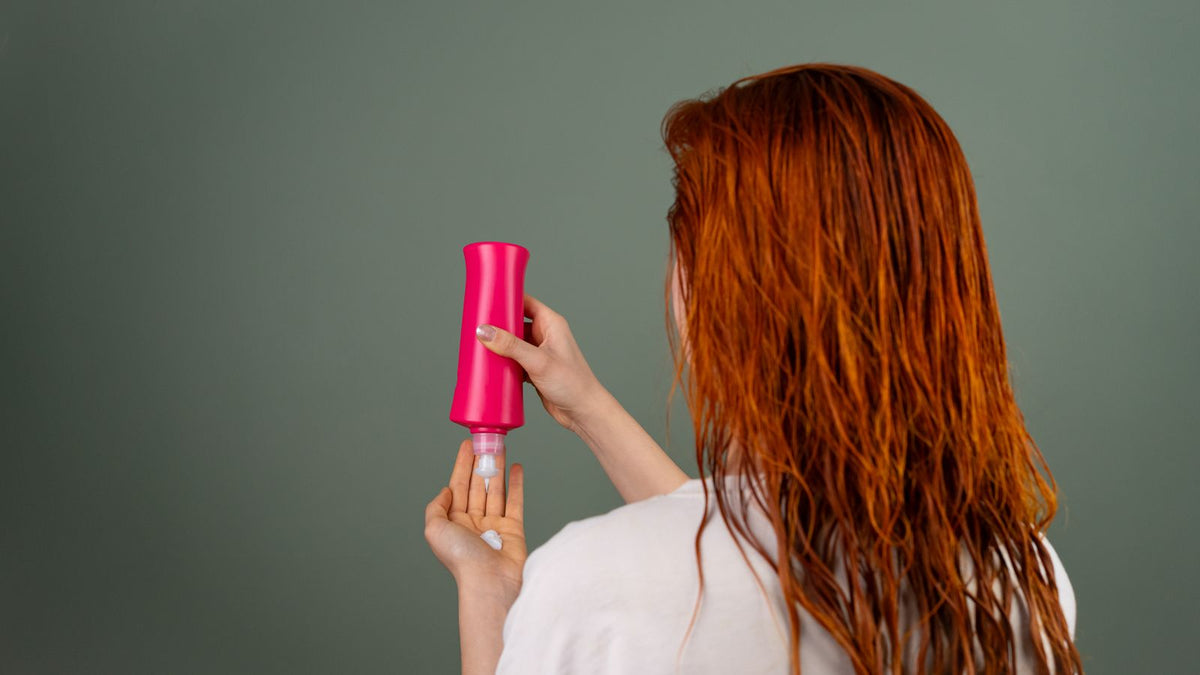
Grow Me® Hair Growth Shampoo, £14.95. A sulphate free daily shampoo that supports a healthy scalp environment and helps reduce breakage, so lengths hold on and look fuller.
Most people first wonder about testosterone and hair loss at the bathroom mirror, not at a blood test.
Key takeaways
- Follicle sensitivity to androgens, not the level in your blood, is what drives pattern hair loss.
- Testosterone is converted to dihydrotestosterone, and susceptible follicles at the temples and crown respond to it by miniaturising.
- The NHS says testosterone declines steadily at about 1% a year from around age 30 to 40, which is unlikely to cause problems in itself.
- Women have testosterone too, and androgen-driven hair change in women is assessed alongside periods, acne and skin.
- A normal blood result does not rule out pattern hair loss, and a low one does not confirm it.
What is the link between testosterone and hair loss?
Testosterone itself is not the culprit. It is converted in the skin into dihydrotestosterone, a more potent androgen, and follicles that carry an inherited sensitivity to it respond by miniaturising over successive growth cycles. Each new hair emerges shorter, finer and less pigmented than the one before, until the follicle is producing vellus hair that no longer covers the scalp. Follicles at the sides and back of the head largely lack that sensitivity, which is why the horseshoe survives when everything above it has gone.
That inherited sensitivity is the whole story, and it explains the pattern. If circulating levels were the driver, hair would thin evenly all over rather than in a shape you can predict from a family photograph. Our guide to why hair thins in a pattern covers the receptor distribution in detail.
What is the difference between total and free testosterone?
Most testosterone in the blood is bound to carrier proteins and is not immediately available to tissues. The unbound fraction, usually called free testosterone, is the small share that is. Total testosterone measures everything, bound and unbound together. Because the amount of carrier protein varies between people and shifts with age, weight, thyroid function and other factors, two people with the same total can have quite different free levels. This is also the reasoning behind one of the internet's most persistent claims, which we take apart in does masturbation cause hair loss, myth versus fact.
| Measure | What it counts | Why it can mislead about hair |
|---|---|---|
| Total testosterone | All testosterone, bound and unbound | Says nothing about how follicles respond |
| Free testosterone | The small unbound fraction | Varies with carrier protein, not with follicle sensitivity |
| Carrier protein level | How much testosterone is bound up | Changes free levels without changing the inherited pattern |
| Dihydrotestosterone | The more potent androgen made from testosterone | Acts locally in the skin, so blood levels are an imperfect proxy |
None of these measurements tells you how strongly your follicles will react. That is the frustrating part for anyone who has paid for a private panel hoping for an answer.
Does high testosterone cause baldness?
High levels do not reliably cause it and low levels do not reliably protect against it. Men with levels comfortably inside the normal range lose hair in a classic pattern all the time, and men at the top of the range often keep a full head of hair into their sixties. The variable that separates them is receptor sensitivity in the scalp, which is set by genetics rather than by circulating hormone.
This is also why the folk wisdom linking baldness to virility does not survive contact with the evidence. It is a story about follicles in one part of the scalp reacting to a normal hormone, not a story about having more of the hormone. Our companion pieces on why follicles react differently and what DHT levels actually tell you go further into it.

Everyday scalp care is where cosmetic products genuinely help with testosterone and hair loss.
Why do blood test results rarely explain hair thinning?
Because the action happens in the skin, not in the bloodstream. Conversion to dihydrotestosterone takes place locally in the follicle and surrounding tissue, and the density and responsiveness of androgen receptors there is what determines whether a follicle miniaturises. A blood sample measures what is circulating, which is several steps upstream of the thing that matters.
There is a second reason, and it is more practical. Blood tests are genuinely useful for the causes that are not pattern hair loss at all. The NHS lists iron deficiency, illness, stress, weight loss and cancer care among the causes of hair loss, and most of those do show up in bloods. A hormone panel run in isolation often answers a question you did not need to ask while skipping the ones you did.
What a normal result does and does not mean
A normal testosterone result does not rule out pattern hair loss, because the pattern is about sensitivity rather than supply. Equally, a low result does not confirm that hormones are behind your thinning, because the two can simply coexist.
Get a discount on the thinning hair range
Join the Watermans mailing list and we will email a discount code straight to your inbox, so you can try the thinning hair range for less. Made in the UK, over 6.5 million bottles sold since 2012.
How does testosterone and hair loss work in women?
Women produce testosterone too, in smaller amounts, and the same conversion and receptor biology applies. Female pattern hair loss typically shows as diffuse thinning that widens the central parting while the frontal hairline is preserved, rather than as the receding temples seen in men. Because of that, a woman can have significant loss and still look normal by any male-oriented scale.
Where androgens are genuinely involved, they rarely arrive alone. The NHS names polycystic ovary syndrome as the most common cause of hirsutism, excess hair in a male pattern, and advises seeing a GP where thick dark hair appears alongside symptoms such as irregular periods, because a blood test can measure hormone levels. Thinning on the head, new coarse hair on the face, acne and cycle changes are assessed together, not one at a time.

Testosterone and hair loss is not a male-only subject; women thin diffusely along the parting.
Our guide to the signs and stages of female pattern hair loss covers the presentation properly, and hormonal hair thinning looks at the wider hormonal picture across life stages.
What happens to testosterone as men get older?
It falls, slowly and predictably. The NHS states that testosterone levels decline at about 1% a year from around the age of 30 to 40, and that this steady decline is unlikely to cause problems in itself. The NHS is also blunt about the term “male menopause”, calling it an unhelpful and misleading label, because it implies a sudden mid-life drop comparable to the female menopause, which does not happen.
A genuine deficiency developing later in life, known as late-onset hypogonadism, does exist and can be responsible for symptoms such as low mood, low sex drive, poor concentration and reduced muscle mass. The NHS also notes that in many cases those symptoms have nothing to do with hormones at all, and points to stress, depression and anxiety as common causes. If that list describes you, the useful conversation is with a GP about the symptoms, not with a supplement shelf.
What is the difference between hair loss, hair shedding and hair breakage?
Three different problems, three different responses, and confusing them wastes years. Hair loss is follicular: the follicle miniaturises or is destroyed, which is what androgen sensitivity produces and what changes the shape of a hairline or parting. Hair shedding is cyclical: a stressor pushes many follicles into the resting phase at once and they release together a few months later, which is telogen effluvium. Hair breakage is a fibre problem: the follicle is healthy and the strand is snapping along its length from heat, bleach, tight styling or friction.
The NHS puts normal daily loss at 50 to 100 hairs. A sudden increase above that which settles within months is almost always shedding, covered in our guide to how long telogen effluvium lasts. A changing shape over years is pattern loss. Short broken strands with rough mid-lengths, while density at the roots looks unchanged, is breakage.
Which other causes of thinning get mistaken for a hormone problem?
Several common causes look hormonal from the outside and are not, which is exactly why the GP step matters more than a private panel. The NHS names illness, stress, cancer care, weight loss and iron deficiency among the causes of hair loss, and none of those needs a testosterone result to be found. Two more, traction and breakage, are mechanical and get missed constantly because people are looking for an internal explanation.
| Looks like | Actually is | The tell |
|---|---|---|
| Sudden all-over thinning three months after a bad year | Telogen effluvium | Increased shedding that settles within months, with no change in shape |
| Thinning with fatigue and breathlessness | Low iron | A blood test finds it, and hair recovers once levels are corrected |
| Thinning with weight, temperature or mood changes | A thyroid problem | Other symptoms almost always arrive alongside the hair |
| Thinning at the temples in someone who wears tight styles | Traction from tension | Worst exactly where the tension sits, often with small broken hairs |
| Hair that never gets longer | Breakage | Blunt, split ends and short strands with normal density at the roots |
The reason this list matters is timing. Reversible causes respond well when they are found early and much less well after years of being attributed to hormones. If your thinning arrived suddenly, arrived with other symptoms, or arrived without any change in the shape of your hairline or parting, the hormonal explanation is the least likely one on the table.
What should you actually ask a GP about?
Bring the timeline and the pattern rather than a hormone number. When it started, whether the shape has changed, whether anyone in the family has the same pattern, what else has changed in your health, and whether you have noticed fatigue, weight change, mood change or skin and cycle changes. The NHS advises seeing a GP to get an idea of what is causing hair loss before approaching a commercial hair clinic, and that order exists to stop people paying for something aimed at the wrong problem.
A GP can look for the reversible causes that are worth finding: iron deficiency, thyroid problems, the aftermath of an illness or a period of significant weight loss. If a hormonal cause is genuinely suspected, they can arrange the right tests in the right context. Watermans does not run clinics and cannot assess anyone; this page is information. If your question is about products or a routine rather than a medical one, you can talk to Gail Waterman, our co-founder, as an AI avatar on the Watermans homepage.
How should you care for thinning hair day to day?
Cosmetic care does not change androgen sensitivity, and we do not claim it does. What it can do is stop avoidable damage making the picture look worse than the underlying situation. Thinning hair is finer hair, and finer hair snaps more easily, so the basics carry more weight: a gentle sulfate-free wash, conditioner through the mid-lengths and ends every time, blotting rather than rubbing with a towel, and heat styling kept low and occasional. The related figure, bioavailable testosterone, adds the albumin-bound portion and is usually the more practical measure of what tissues can use. In women, testosterone is often reported alongside a ratio, explained in our guide to the free androgen index. If your report only shows one number, our guide to total testosterone explains what that figure does and does not tell you about hair.

Grow Me® Hair Growth Shampoo £14.95
A sulfate-free shampoo with biotin, caffeine, rosemary, niacinamide and hydrolysed lupine protein. Cosmetic support for a comfortable scalp and fuller-looking hair.

Condition Me® Hair Growth Conditioner £13.95
Cholesterol, shea butter and glycerin help fine hair detangle with less snapping, which protects the length you have.

Grow More® Leave-In Scalp Elixir £25.50
A leave-on overnight scalp serum for lower-density areas, with biotin, caffeine, rosemary and hydrolysed lupine protein. Cosmetic, used after washing on a towel-dried scalp.

A gentle daily routine is the practical half of dealing with testosterone and hair loss.
Frequently asked questions
Does high testosterone make you go bald?
Not on its own. Pattern hair loss depends on inherited follicle sensitivity to androgens rather than on how much testosterone is circulating, which is why men with normal levels lose hair and men with high levels often do not.
Should I get my testosterone tested for hair loss?
A hormone panel rarely explains pattern hair loss, because the action happens locally in the skin. A GP is more likely to check iron, thyroid function and general health first, since those causes are reversible.
Can low testosterone cause hair thinning?
A genuine deficiency can affect body hair and general wellbeing, but low levels do not protect against pattern hair loss and are not a typical explanation for a receding hairline or a widening parting.
Do testosterone boosters affect hair?
Over-the-counter products marketed for energy or libido are not regulated as medicines and should not be taken on the assumption that they change hair either way. Raise the symptoms you actually have with a GP.
Is testosterone and hair loss different in women?
The biology is the same but the presentation differs. Women usually thin diffusely along the central parting with the frontal hairline preserved, and androgen-driven change is assessed alongside periods, acne and skin.
Does testosterone decline with age cause hair loss?
The NHS puts the decline at about 1% a year from around age 30 to 40 and says it is unlikely to cause problems in itself. Hair change over the same decades usually reflects the inherited pattern, not the decline.
Can shampoo change how my follicles respond to androgens?
No, and nobody should tell you otherwise. Cosmetic products support scalp comfort and reduce breakage in the hair you have. They do not alter receptor sensitivity.
Why does transplanted hair keep growing?
Because it comes from the back and sides, where follicles largely lack the inherited sensitivity. Moved to the front, they keep behaving like donor hair, which is the whole principle behind hair transplant surgery.
What is the bottom line on testosterone and hair loss?
Testosterone and hair loss are connected through sensitivity, not supply. Your follicles inherit how strongly they react to dihydrotestosterone, and that inherited reaction decides the pattern, which is why blood results so rarely give the answer people are hoping for. Take the timeline and the pattern to a GP, let them rule out the reversible causes that genuinely show up in bloods, and read any product promising to change your hormones as marketing. Then look after the hair you have, because breakage is the part of this you can actually control.
For that part, a sulfate-free hair growth shampoo with a breakage-defence conditioner is the honest cosmetic baseline.
Sources and references
- NHS: The ‘male menopause’
- NHS: Hair loss
- NHS: Hirsutism
- NHS: Polycystic ovary syndrome
- DermNet: Female pattern hair loss
- StatPearls: Physiology, Hair (NCBI Bookshelf)
Watermans products are 100% cosmetic and do not treat medical hair loss. Individual results may vary.