Trichologist Ballymena: What Happens at the Appointment
Knowing what happens in the room removes most of the anxiety and nearly all of the wasted time. A first appointment with a trichologist Ballymena practitioner runs 45 to 60 minutes, and most of it is conversation rather than examination, because your history tells them more than your scalp does on any single day. Here is the whole sequence, what each part is for, and what you should be holding when you walk out.
Our hair growth shampoo
Grow Me® Hair Growth Shampoo, £14.95. A sulphate free daily shampoo that supports a healthy scalp environment and helps reduce breakage, so lengths hold on and look fuller.
Key takeaways
- Expect 45 to 60 minutes, with the history doing most of the work and the examination confirming it.
- Trichoscopy shows follicle openings and variation in hair calibre, which is what identifies miniaturisation early.
- A pull test on around 50 hairs separates active shedding from settled thinning in under a minute.
- You should leave with written findings, dated photographs, a named pattern and a review date.
- nidirect advises seeing your GP before a commercial hair clinic, and your blood results change the advice you get.
- Trichologist is not a protected title in the UK, so check the membership number before you book anything.
What does a trichologist Ballymena appointment actually involve?
Four parts, in a fairly standard order: history, visual assessment, trichoscopy, then a pull test and a plan. The proportions surprise people. Roughly half the appointment is questions, perhaps a quarter is examination, and the rest is working out what it means and what you do next.
That is not a practitioner padding the hour. The pattern of hair change over twelve months, the timing relative to illness or a new prescription, and the family history narrow the possibilities far more sharply than a single snapshot of a scalp can. Anyone searching trichologist Ballymena should expect to talk more than they expect to.
It also means the value you get depends heavily on what you bring. A written timeline and dated photographs turn a good appointment into an excellent one, and their absence turns it into an educated guess.

How should you prepare in the two weeks before?
Five things, and the first two matter most because they cannot be created retrospectively. Start them the day you decide to make an appointment, not the night before it.
- Start the dated photographs. Same parting, same spot, same daylight, dry hair, with a ruler or coin in frame for scale. Even two weeks of series beats none.
- Write the timeline. When you first noticed, and what happened in the three to four months before that: illness, surgery, a birth, a bereavement, a crash diet, a new prescription.
- Arrange the bloods. Ferritin with a full blood count, thyroid function and vitamin D through your GP practice. Bring the actual numbers, not the word normal.
- List every medicine and supplement with start dates. Timing is frequently the whole answer, and you should never stop a prescription yourself.
- Stop changing your routine. Introducing three new products the week before makes the assessment harder. Arrive with your ordinary hair.
One caution about the blood test: high dose biotin can distort thyroid and cardiac results, so mention any hair supplement to whoever takes the sample so nobody chases a false reading.
What happens in the first fifteen minutes?
Questions, almost entirely. Expect to cover the family pattern on both sides, any illness or surgery in the past year, medicine and supplement start dates, iron and thyroid status, diet and any recent weight change, stress, and in detail how you wash, dry and style your hair.
That last area is often where something useful turns up. Daily heat at high temperature, tight styling, aggressive wet brushing and infrequent washing all leave signatures that a practitioner recognises, and they are the fastest things to change. nidirect notes that hair loss is not usually anything to worry about and can follow illness, stress, weight loss or iron deficiency, so an honest account of the past year is genuinely diagnostic material. Reports often come back full of terms nobody explains, so it is worth knowing how to read the report you were given before acting on any recommendation in it.
Answer precisely rather than reassuringly. Underplaying the heat or the diet is a natural instinct and it removes exactly the information you are paying for.
Get a discount on the thinning hair range
Join the Watermans mailing list and we will email a discount code straight to your inbox, so you can try the thinning hair range for less. Made in the UK, over 6.5 million bottles sold since 2012.
What is trichoscopy, and what does it show?
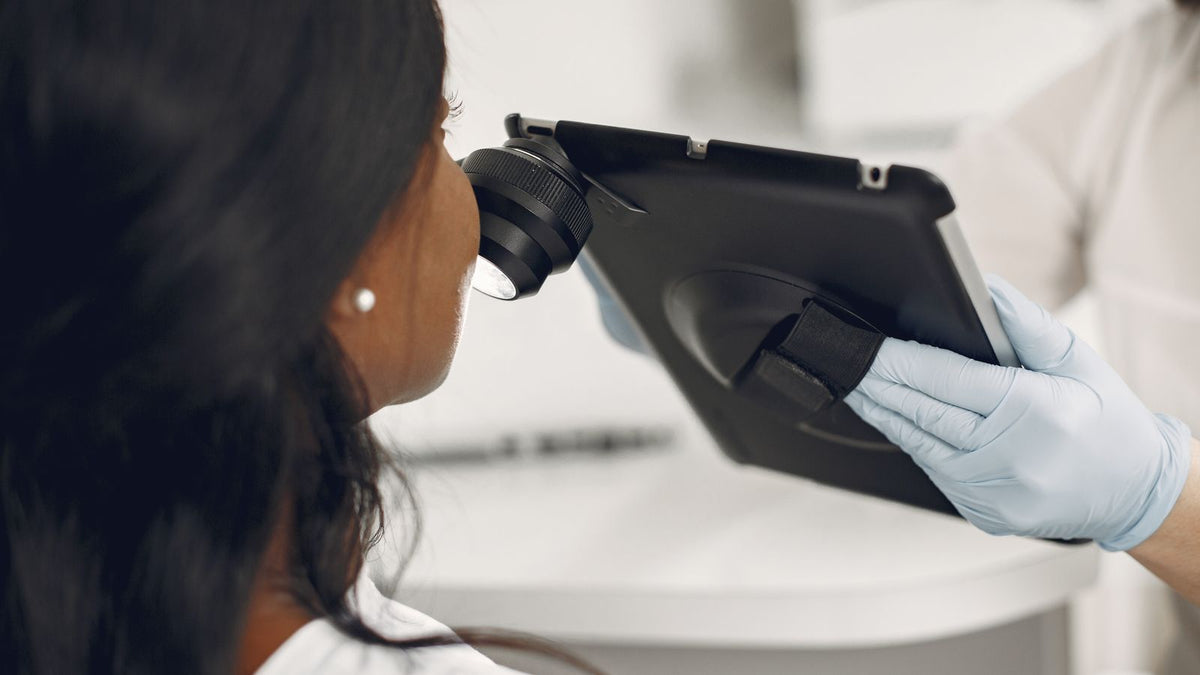
Magnified examination of the scalp, usually with a handheld digital device connected to a screen. At that magnification a practitioner can see things no mirror resolves: how many hairs emerge from each follicular opening, how much the calibre varies between neighbouring hairs, whether openings are present at all, and whether there is redness, scale or scarring.
Variation in hair thickness is the key observation. A healthy scalp shows fairly uniform calibre. Wide variation, with fine hairs interspersed among normal ones, is the signature of miniaturisation and it appears well before anything is visible to you. That is the single strongest argument for seeing a trichologist Ballymena practitioner early rather than once the parting has widened.
Absent follicle openings point the other way entirely, toward scarring, and that is a medical matter. A good practitioner will say so and send you to your GP rather than proposing a routine.
What is a pull test, and what does the result mean?
The practitioner takes roughly 50 hairs close to the scalp and draws firmly along them, usually in several areas. It is quick and it should not hurt. The number that comes away separates two things that look identical in a mirror.
- A few hairs releasing is normal. nidirect notes you can lose between 50 and 100 hairs a day without noticing, so a small number on a pull test is expected.
- Substantially more releasing suggests active shedding, where a large group of follicles have entered the resting phase together and are letting go. DermNet notes this pattern usually recovers once the trigger has passed.
- Very little releasing, but visibly finer hair points toward settled pattern thinning rather than shedding, which is the slower problem and the one where acting early matters.
The result changes the advice completely. Active shedding usually means finding and addressing a trigger and waiting. Settled thinning means a longer term plan and a twelve month review.

What should you leave the appointment holding?
Five things, and it is entirely reasonable to confirm they are included before you book. An appointment that produces nothing you can review in six months has given you a pleasant hour and no baseline.
| What you take home | Why it matters |
|---|---|
| Written findings | You will not remember the detail accurately a week later, and a second opinion needs something to read. |
| Dated baseline photographs | The only honest way to judge change later. Taken under their lighting, consistently repeatable. |
| A named pattern | Shedding, pattern thinning, breakage or a scalp condition. Everything downstream depends on which. |
| Anything to raise with your GP | The practitioner cannot arrange bloods or refer you, so this is how the medical half gets picked up. |
| A review date | A plan without a review date never gets reviewed. Six months is the usual first checkpoint. |
What can a trichologist not do?
Three things, and they are the same three everywhere. A trichologist cannot write a prescription, cannot order health service blood tests, and should not be managing an autoimmune or scarring condition. Those belong with a doctor, and the referral route from Ballymena runs through your GP into the Northern Health and Social Care Trust.
Because trichologist is not a protected title in the UK, there is no statutory register and no legal barrier to using the word, so checking is on you. Ask which professional body they belong to and for a membership number, then verify it against the Institute of Trichologists or The Trichological Society before booking.
Read any gallery of before and after photographs as marketing rather than evidence. Lighting, hair length, styling, wet against dry and camera angle can transform apparent density without one new hair existing.
When should you see your GP instead?
Whenever the signs point at something medical. nidirect lists the triggers: sudden hair loss, developing bald patches, losing hair in clumps, a head that also itches and burns, or simply being worried about it. Hair loss in a child is always a GP matter and never a product one.
The same guidance sets the general order too, and it is the step most often skipped: see your GP first to get a clear and accurate idea of the cause, before thinking about going to a commercial hair clinic, which can be costly. The bloods are free, and they settle questions a scalp examination cannot.
Practically, the two fit together well. GP for the medical half and the referral, trichologist Ballymena for the time, the magnification and a routine you can actually follow. More on distinguishing the causes in why your hair is thinning and what causes telogen effluvium.

What everyday care helps between appointments?
Products do not address a medical cause and we will not suggest otherwise. What a gentle routine does is cut the breakage working against you and keep the scalp comfortable, which is the part entirely within your control between a first appointment and a six month review.

Grow Me® Hair Growth Shampoo, £14.95
Sulphate free daily shampoo with biotin, caffeine, rosemary, niacinamide and hydrolysed lupine protein. Gentle enough to wash as often as your scalp needs without stripping it. Vegan.

Condition Me® Hair Growth Conditioner, £13.95
Shea butter, glycerin, cholesterol and lupine protein for slip and breakage defence, so detangling costs you fewer strands. The everyday partner to Grow Me.

Hair Growth Boost Set, £53.40
The three step routine in one box: Grow Me shampoo, Condition Me conditioner and the Grow More scalp elixir. Sensible when you want the whole routine settled before a review date. Not vegan, because it contains Condition Me.
Watermans has sold over 6.5 million bottles since 2012 and is made in Britain, free from sulphates and parabens. Grow Me shampoo is vegan. Condition Me conditioner is not, because its cholesterol comes from lanolin, and neither are our Hair Building Fibres, which use wool keratin. Our guide to keeping your scalp healthy for stronger hair covers the routine in full.
Frequently asked questions
How long does a first appointment take?
Budget 45 to 60 minutes. Most of that goes on the history rather than the examination, because what has happened to you over the last year tells a practitioner more than a single look at your scalp does. A twenty minute slot is not a full assessment, and it is fair to ask the length before you commit.
What should I bring with me?
Dated photographs of the same parting in the same daylight, a written timeline of when the change started, every medicine and supplement with start dates, your blood results with the actual numbers, and a note of any family pattern. nidirect points out that pattern baldness usually runs in the family, so that last one matters.
What is trichoscopy?
Magnified examination of the scalp, usually with a handheld digital device. It shows follicle openings, how many hairs emerge from each, variation in hair calibre, redness, scale and any scarring. Wide variation in thickness between neighbouring hairs is the signature of miniaturisation, and it appears long before a mirror shows anything.
What is a pull test and what does it mean?
The practitioner grasps roughly 50 hairs near the scalp and draws firmly along them. A handful of hairs releasing is normal. Substantially more suggests active shedding rather than settled thinning. It is quick, painless and it distinguishes two things that look identical in the mirror.
Will I get a written report?
You should, and it is worth asking before booking. Written findings, dated baseline photographs, a plain statement of which pattern they think fits, anything worth raising with your GP, and a review date. Verbal advice alone leaves you with nothing to compare against in six months.
Can a trichologist Ballymena practitioner write me a prescription?
No. Trichologists are not doctors, so they cannot write a prescription, order health service blood tests, or manage an autoimmune or scarring condition. A good one states that in the first five minutes. Vagueness about that boundary is the most reliable warning sign there is.
Should I see my GP first?
Yes, in almost every case. nidirect advises seeing your GP first to get a clear and accurate idea of what is causing your hair loss before going to a commercial hair clinic, which can be costly. Your blood results also change what any practitioner would advise, so having them first makes the appointment worth more.
What if they find something medical?
A good practitioner stops and refers you back to your GP, and says so plainly. Smooth round patches, a painful or scarring scalp, or loss alongside other symptoms all belong with a doctor and, through them, the Northern Health and Social Care Trust. That referral is free and you cannot make it yourself.
Is my hair shedding or actually thinning?
That is largely what the appointment is for, and the pull test plus trichoscopy answer it. Shedding means whole hairs leaving from the resting phase, often temporary. Thinning means the follicle producing finer hair over years. Breakage is a third thing: the fibre snapping with a healthy follicle underneath.
What should I do in the two weeks before?
Start the dated monthly photograph immediately, write the timeline while you still remember it, arrange blood tests through your GP practice, and stop changing your routine. Introducing three new products the week before makes the assessment harder rather than easier.
Sources & references
Every factual claim above was checked against the following on 12 September 2026.
- nidirect, Hair loss
- nidirect, Iron deficiency anaemia
- nidirect, Underactive thyroid (hypothyroidism)
- nidirect, Overactive thyroid (hyperthyroidism)
- nidirect, Health conditions A to Z
- nidirect, GP online services
- Northern Health and Social Care Trust
- National Institute for Health and Care Excellence, guidance
- Institute of Trichologists, Find a trichologist
- The Trichological Society
- DermNet, Telogen effluvium
- DermNet, Female pattern hair loss
- DermNet, Traction alopecia
- DermNet, Seborrhoeic dermatitis
- British Association of Dermatologists, alopecia areata leaflet
- NHS inform, Alopecia (hair loss)
What is the bottom line on trichologist Ballymena?
Prepare for it like an appointment that matters, because the preparation is most of the value. A trichologist Ballymena consultation runs 45 to 60 minutes, spends half of that on your history, uses trichoscopy and a pull test to separate shedding from thinning, and should end with written findings, dated photographs, a named pattern and a review date. Get the free bloods through your GP first, bring the timeline, and you will get an answer rather than an opinion. If your question is about products or a routine rather than a medical one, you can talk to Gail Waterman, our co-founder, as an AI avatar on the Watermans homepage.
Between now and the appointment, breakage is the one thing you can improve without anyone's help, and a gentle daily hair growth shampoo is where that starts.
Watermans products are 100% cosmetic and do not treat medical hair loss. Individual results may vary. This article is general information about hair and scalp care and is not medical advice. If you have sudden, patchy or painful hair loss, hair loss in a child, or hair loss alongside other symptoms, please speak to your GP practice.