Trichologist Havering: Looking After Hair After 50
Most people notice it in a photograph rather than a mirror.
A trichologist Havering consultation is worth booking once you can describe what changed and when, because hair after 50 usually changes in three ways at once. There are fewer fibres on the head, each fibre is finer than it was, and the scalp makes less oil so the ends look duller. Ordinary ageing accounts for most of that. Sudden heavy shedding, a bald patch or a sore scalp does not, and that is a GP visit first.
Our hair growth shampoo
Grow Me® Hair Growth Shampoo, £14.95. A sulphate free daily shampoo that supports a healthy scalp environment and helps reduce breakage, so lengths hold on and look fuller.
Key takeaways
- Hair after 50 usually changes in three ways at once: fewer fibres, finer fibres and a drier scalp.
- The NHS puts normal daily hair loss at 50 to 100 hairs a day, so counting strands in the plughole is rarely the useful test.
- UK trichologists are hair and scalp specialists, not medical doctors, so blood tests still come from your GP.
- Grey and white fibres are not stronger or weaker by definition, but they scatter light differently, which is why they read as coarse and dull.
- Hair loss, hair shedding and hair breakage are three separate problems, and after 50 it is common to have two of them at once.
- Watermans products are cosmetic. They reduce breakage and support a healthy scalp environment, and they do not replace medical advice.
What does a trichologist Havering consultation actually cover after 50?
A trichologist Havering consultation is a structured conversation followed by a close look at the scalp, usually with a magnifier or a scalp camera. The practitioner asks when the change started, what else changed in your life around then, how you wash and style, what you eat, and what medicines you take. Then they look at the parting width, the density at the crown, and the condition of the ends.
Trichology is not a protected title in the UK, which matters more than most people realise. Anyone can use the word. The Institute of Trichologists keeps a public register of members who have completed its training, and checking that register before you pay is the single most useful five minutes you can spend.
- Ask what qualification the practitioner holds and which body registers them.
- Ask whether the fee covers a follow up, or whether each visit is charged again.
- Ask what happens if the answer turns out to be medical rather than cosmetic.
- Ask, before you go, whether they sell their own products, and what proportion of a typical visit ends in a purchase.
Go in this order
Ask your GP about blood tests first, wait for the results, then take a copy to whichever trichologist you choose. Going the other way round often means paying for an hour that ends with the advice to go and get blood tests.
What actually changes in hair after the age of 50?
Three things change in hair after 50, and they change at different speeds. Follicle numbers fall slowly across the whole scalp. Individual fibres get finer, so the same number of hairs covers less scalp than it used to. And sebum output falls, so the hair shaft is less well coated and the ends look dry sooner after washing.
That combination is why hair after 50 can feel thinner to the touch while the parting still looks normal in the mirror. Volume is a function of fibre diameter as much as fibre count, and diameter is the part that changes first.
| What you notice | Most likely mechanism | Who to ask first |
|---|---|---|
| Ponytail feels thinner, parting looks the same | Finer fibres, same fibre count | A trichologist can measure it |
| Parting looks wider in photographs | Pattern hair loss, common after menopause | Your GP, then a specialist |
| Handfuls coming out for a few weeks | Shedding after an illness, surgery or stress | Your GP, for blood tests |
| Short broken pieces around the crown | Breakage from heat, colour or friction | A stylist or a trichologist |
| A smooth round bald patch | Alopecia areata is one possibility | Your GP, promptly |

Is it hair loss, hair shedding or hair breakage?
Hair loss, hair shedding and hair breakage look similar in the bathroom and behave completely differently. Separating them is the first thing a good trichologist Havering does, because the three have different causes, different timescales and different answers.
- Hair loss is a follicular problem. The parting widens or the crown thins over months and years, and the strands that fall out have a small white bulb at the root.
- Hair shedding is a cycle problem. The whole head sheds more heavily for a few weeks or months, usually starting about three months after a trigger such as an illness, an operation, a crash diet or a bereavement.
- Hair breakage is a fibre problem. Nothing has left the follicle at all. Short broken pieces of hair snap off mid shaft, most often around the crown, the nape and wherever a hair tie sits.
After 50 it is very common to have two of these at once, most often slow pattern loss underneath and breakage on top. The breakage is the part you can change quickly, and it is usually the part that has made the difference between hair that looks tired and hair that looks thin.
Get a discount on the hair after 50 range
Join the Watermans mailing list and we will email a discount code straight to your inbox, so you can try the hair after 50 range for less. Made in the UK, over 6.5 million bottles sold since 2012.
Why does grey hair feel coarser and behave differently?
Grey and white hair feels coarser mostly because of how it reflects light and how it sits, not because the fibre is inherently tougher. Pigment cells in the follicle stop depositing melanin, and the resulting fibre is more translucent, so it scatters light instead of reflecting it in a smooth sheet. That reads to the eye as dull and to the hand as wiry.
Grey hair also arrives at the same age as the drop in scalp oil, so the two get blamed on each other. In practice the fix for both is the same: less stripping at the wash stage, more conditioning at the mid lengths and ends, and less heat.

How should you wash and condition hair after 50?
Washing after 50 should be gentler at the roots and more generous at the ends, which is the opposite of what most people do. Sebum production has fallen, so the scalp needs less aggressive cleansing than it did at 25, while the ends have been on your head for two to four years and need more help than ever.
- Wash as often as your scalp actually needs. For most people over 50 that is two or three times a week, not daily.
- Use a sulfate free shampoo and work it into the scalp with your fingertips, not your nails. Let the lather rinse down the lengths rather than scrubbing them.
- Condition from the ears down, every single wash, and comb it through with a wide tooth comb before you rinse.
- Add a deeper conditioning mask once a week if the ends are dry, porous or coloured.
- Dry with a microfibre towel or an old cotton t shirt. Rubbing a wet head with a rough towel is one of the most common causes of avoidable breakage.

Grow Me® Hair Growth Shampoo £14.95
A sulfate free daily shampoo with biotin, caffeine, rosemary, niacinamide and hydrolysed lupine protein. It cleanses gently enough for a scalp that no longer produces the oil it used to, and it supports a healthy scalp environment so fewer strands snap off before their time.

Condition Me® Hair Growth Conditioner £13.95
Breakage defence conditioner with cholesterol, shea butter and hydrolysed lupine protein. It makes wet detangling easier, and wet detangling is where most of the avoidable snapping happens on fine, mature hair.
If the ends are the worst part of the picture, a weekly mask does more than any amount of extra shampoo. Our guide to using conditioner properly covers the order and the timings in detail.

Masque Me® Repairing Hair Mask £24.95
A weekly deep conditioning mask for dry, porous or coloured hair. Left on for five to ten minutes it smooths the cuticle so the mid lengths and ends comb through without tearing, which is exactly where mature hair tends to fail.
What styling habits protect hair after 50?
Styling habits protect mature hair mainly by removing heat, tension and friction, in that order. Fine, grey or coloured fibres have less margin for error than the hair you had at 30, so the same straighteners at the same setting do visibly more damage now.
- Drop the heat setting rather than the frequency. Most modern dryers and irons run far hotter than mature hair needs.
- Let hair dry to about 80 per cent before any hot tool touches it, and never iron hair that is still damp.
- Swap tight ponytails, clips and grips for looser styles, and change where the tie sits so the same centimetre of hair is not stressed every day.
- Silk or satin pillowcases are not a miracle, but they genuinely reduce overnight friction on fine hair.
- Book the trim. Split ends travel upward, and cutting them off is the only thing that stops them.

If the parting itself is what worries you, the everyday habits that matter most are set out in our guide to protecting the hair you have, and the mechanics behind mature thinning are covered in what causes thinning hair.
When should you see your GP rather than a trichologist Havering?
See your GP first whenever the change is fast, patchy or painful, because those three patterns point at something a hair specialist cannot investigate. A GP can arrange the blood work, and blood work is free on the NHS while a private consultation is not.
- Sudden heavy shedding that started within the last three months.
- A smooth, round bald patch, or patches appearing anywhere on the body.
- A scalp that is sore, scaly, weeping or scarring rather than simply itchy.
- Hair change alongside fatigue, weight change, feeling cold, or heavy periods.
- Hair change that started within weeks of a new medicine.
The four blood results that carry most of the weight are a full blood count, serum ferritin, thyroid function, and vitamin B12 and folate. NICE Clinical Knowledge Summaries put the iron deficiency threshold at a serum ferritin below 30 micrograms per litre, and ferritin also rises with infection and inflammation, so a normal looking number is not automatically reassuring.
What does a trichologist Havering cost, and is it worth it?
UK trichology clinics commonly advertise an initial consultation somewhere between fifty and one hundred and fifty pounds, with follow ups lower. Havering readers are within reach of both local practitioners and central London clinics, and central London prices sit at the top of that range without necessarily buying more time.
It is worth the money when you go in with a specific question and a printout of your blood results. It is poor value when you go in hoping to be told what is wrong, because that is the question the free NHS tests answer better. If that sounds familiar, our piece on how the camouflage options for thinning hair really compare.
| Route | Typical cost | What it is good for |
|---|---|---|
| GP appointment | Free on the NHS | Blood tests, medical causes, referral |
| Private trichology consultation | Fifty to one hundred and fifty pounds | Scalp assessment, routine advice, monitoring over time |
| NHS dermatology referral | Free, waiting list applies | Scarring, patchy loss, scalp disease |
| Hairdresser you trust | Cost of a cut | Breakage, colour damage, styling that flatters finer hair |
What are the frequently asked questions about seeing a trichologist Havering?
Is thinning hair after 50 normal?
For a large proportion of people, yes. Fibre diameter falls with age in both men and women, and pattern hair loss becomes more common after the menopause. That does not make it trivial, and it does not rule out an additional cause sitting on top of it, which is why sudden change still deserves a GP visit.
Do I need a trichologist Havering or a dermatologist?
A dermatologist is a medically qualified doctor who specialises in skin, hair and nails, and can investigate scarring, patchy or inflammatory scalp conditions. A trichologist is a hair and scalp specialist who is usually not a doctor. Start with your GP, who can refer you to dermatology on the NHS if the picture is medical.
How many hairs a day is normal to lose?
The NHS puts normal daily loss at 50 to 100 hairs. Most people never count, and the number is far less useful than the pattern: whether the parting is widening, whether the shedding is all over, and whether the strands coming out are full length or short broken pieces.
Does grey hair grow more slowly?
Not meaningfully. Scalp hair grows at roughly one centimetre a month across most adults. What changes with age is fibre diameter and the length of the growing phase, so hair can reach a shorter maximum length than it used to before it is shed.
Can shampoo make thin hair look thicker?
A cosmetic shampoo cannot add follicles, but it can change how the hair you have behaves. Reducing breakage keeps more of each strand on your head, and a cleaner scalp lets fine hair sit with more lift at the root. That is a real visual difference, and it is not the same as a medical claim.
Should I stop colouring my hair after 50?
Not necessarily. Colour itself is not the problem; the combination of bleach, heat and tight styling on finer, drier fibres is. If you colour, stretch the intervals, keep bleach off the scalp, and add a weekly mask. A good trichologist will usually say the same.
Will hair vitamins help if my blood results are normal?
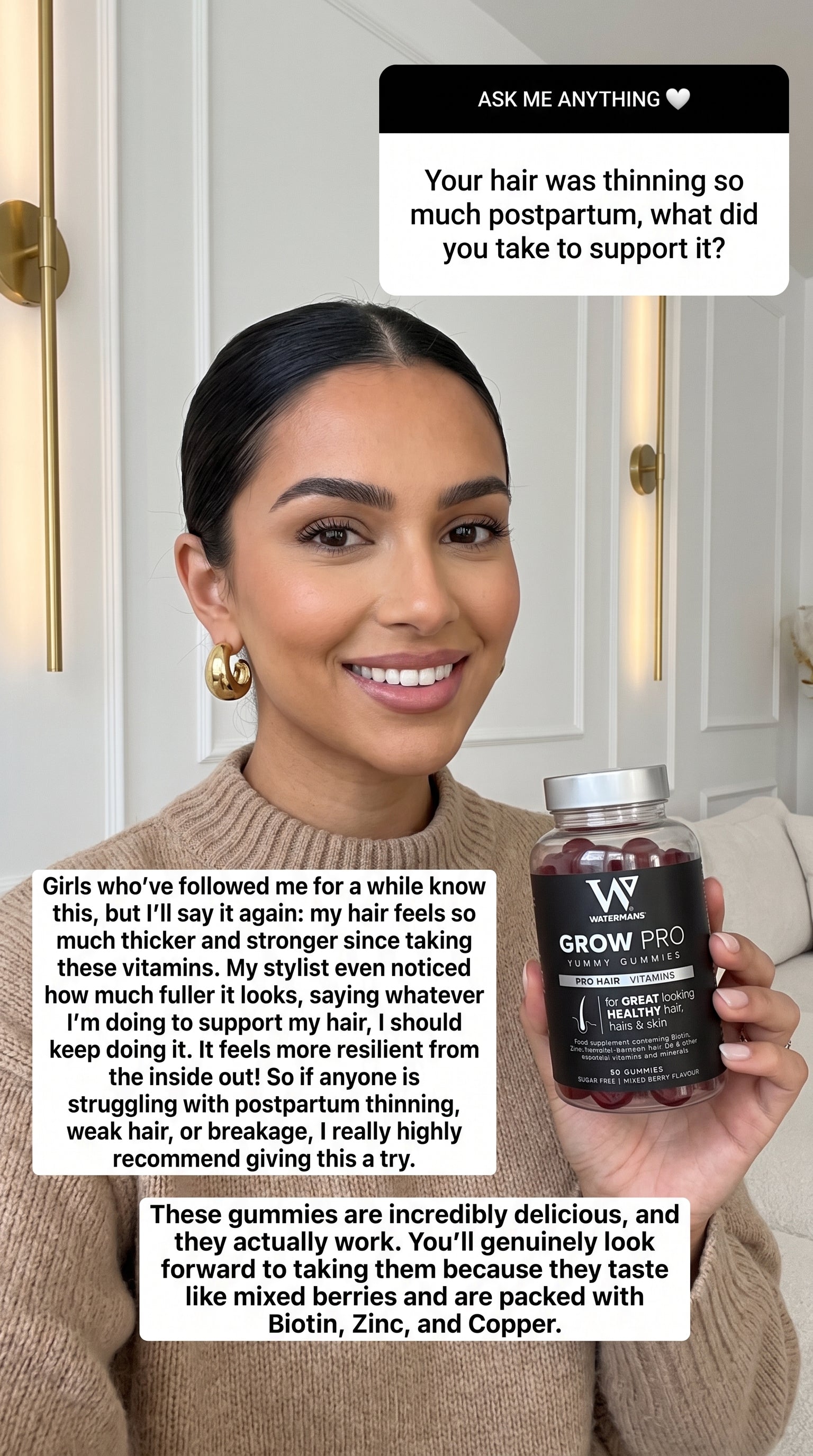
If nothing is low, a supplement has nothing to correct. Watermans GrowPro gummies are nutritional support for hair, skin and nails, not a fix for a deficiency, so they belong alongside your blood results rather than instead of them.
How long before a change in routine shows in the hair?
Allow three to six months. Hair grows roughly one centimetre a month, so any change you make today is only visible once new fibre has grown far enough out of the scalp to see. Breakage improves faster than density, often within six to eight weeks.
Sources & references
- NHS, Hair loss
- NICE Clinical Knowledge Summaries, Anaemia: iron deficiency
- DermNet, Female pattern hair loss
- The Institute of Trichologists
- NHS, Vitamin B and folate
- NHS, Menopause
What is the bottom line on trichologist Havering?
The bottom line on a trichologist Havering visit is that it answers a different question from the one most people arrive with. It is very good at telling you what your scalp and your fibres are doing right now, and it is not the place to find out whether your thyroid or your iron is the reason.
So do the free part first. Ask your GP for a full blood count, ferritin, thyroid function and B12 and folate, and take the printout with you. Then use the paid hour on the things a good trichologist can genuinely see: parting width, fibre diameter, scalp condition, and whether what you are looking at is loss, shedding or breakage. If your question is about products or a routine rather than a medical one, you can talk to Gail Waterman, our co-founder, as an AI avatar on the Watermans homepage.
And in the meantime, protect what is on your head. After 50 the fastest visible gain is almost always the breakage you stop, not the follicles you chase.
If you want one change to make this week, make it the wash. Watermans hair growth shampoo is a sulfate free daily cleanser that reduces breakage and supports a healthy scalp environment, so fewer fine strands snap off before their time. Vegan, made in the UK, and over 6.5 million bottles sold since 2012.
Please note: Watermans products are 100% cosmetic and do not treat medical hair loss. Individual results may vary.