Trichologists Hull: Menopause and Midlife Thinning
Hair often changes in the years around the menopause. Knowing who to ask, and in what order, saves time and money.
Women looking for trichologists Hull in their forties and fifties are most often dealing with menopause hair changes: a wider parting, less volume at the crown, drier and more fragile lengths, and sometimes more hair on the chin. A trichologist can examine the scalp, track density and sort out breakage. Your GP handles the hormonal side, including whether HRT suits you, and blood tests for iron and thyroid, which cause very similar thinning.
Key takeaways
- Falling oestrogen lets the effect of androgens on the scalp show more, which is why a widening parting often appears around the menopause.
- Low iron and thyroid problems cause similar thinning in midlife, so blood tests through your GP come first.
- HRT is a conversation for your GP about menopause symptoms as a whole. Evidence on hair specifically is limited and mixed.
- A trichologist is useful for measuring density, examining the scalp and fixing breakage from drier, finer hair.
- A gentler routine makes the hair you have look as full as possible, whatever is happening at the follicle.

What does the menopause do to hair?
The menopause changes hair in three separate ways, and it helps to keep them apart because each has a different fix. Oestrogen helps keep hairs in their growth phase. As it falls, the relative effect of androgens on sensitive follicles becomes more noticeable, and hair can become finer, drier and slower growing. If your mother or grandmother thinned in the same way, our Colchester guide to whether thinning hair runs in families looks at what the genetics can and cannot predict.
- Hair loss (female pattern hair loss). Follicles gradually shrink and produce finer, shorter hairs, mainly across the top of the head. The centre parting widens while the front hairline usually stays in place. It is common after the menopause and it is measured on the Ludwig scale.
- Hair shedding. Extra hairs falling out all over, with a small pale bulb at the root. In midlife this is often driven by something other than the menopause itself, such as low iron, an underactive thyroid, illness, surgery or a stressful period two to three months earlier.
- Hair breakage. Midlife hair, and grey hair especially, tends to be drier and more wiry, so it snaps more easily with heat, colour and brushing. Breakage looks like thinning but the follicles are fine.
| What you notice | Likely mechanism | Who helps first |
|---|---|---|
| Wider parting, more scalp showing on top | Female pattern hair loss | GP for bloods, then a specialist |
| More hair in the brush all over, with bulbs | Shedding, often iron, thyroid or illness | GP for blood tests |
| Short broken pieces, frizzy dry ends | Breakage from dryness, heat or colour | Your routine, then a trichologist if it persists |
| Hot flushes, sleep, mood and periods changing too | The menopause itself | GP, including a conversation about HRT |
| Patches, soreness, scaling or scarring | A scalp condition | GP promptly |
Our guide to the Ludwig scale shows what each stage looks like, and menopause and thinning hair goes deeper into the hormonal picture. If you are younger and the change is mainly a widening parting, our Brighton guide to a widening parting in women is the better starting point. If you are past 60 and the change is finer, drier or greying hair, our Bolton guide to thinning hair after 60 covers that stage. If it is the front hairline or your temples that are moving back, our Watford guide to a receding hairline in women covers the signs that need a prompt word with your GP.

What can trichologists Hull offer during the menopause?
Trichologists Hull practices can offer a proper look at the scalp and hair, a measured baseline, and practical help with the drier, more fragile hair that often arrives in midlife. A good first visit takes a full history, including your cycle, symptoms and any medicines, examines the scalp under magnification, checks whether hairs are varying in thickness, and does a gentle pull test to see how many hairs are loose.
The most useful thing you walk away with is a written record: photographs of the parting and crown taken in standard light, and notes you can compare against in six months and hand to your GP. Without a baseline, most women genuinely cannot tell whether things are getting worse, staying still or improving.
What a trichologist cannot do is manage hormones, run blood tests or supply medicines. A reputable one will say so, and will send you back to your GP if the history suggests anything medical.
Which parts belong with your GP?
Your GP should handle anything hormonal or medical: blood tests, the menopause as a whole, and whether HRT is right for you. If you are over 45 with typical symptoms, NICE guidance says the menopause can usually be recognised from symptoms alone, without a hormone blood test, but tests for iron, ferritin, thyroid function and vitamin D are still worth asking about when hair is thinning, because each can cause very similar changes.

On HRT, good sources genuinely differ in emphasis, so it is worth being clear. HRT is offered for menopause symptoms such as hot flushes, night sweats, sleep problems and low mood, and many women say their hair feels better on it. But hair thinning on its own is not the usual reason to start it, the research specifically on hair is limited, and the decision rests on your overall symptoms, benefits and risks. The NHS and NICE pages on HRT and the menopause are the best place to start that conversation.
What to take to the GP
A short written list of your symptoms, not just your hair: periods, flushes, sleep, mood, energy, weight and anything else that has changed. Add how long the hair change has been going on, dated photographs of your parting, and any supplements you take. It turns a ten minute slot into a useful one.
How should your hair routine change in midlife?
Midlife hair usually needs more moisture, less heat and less tension, because the fibre is drier and more easily broken. Changing the routine will not alter what is happening at the follicle, but it keeps more of the hair you grow on your head, and that makes a visible difference to fullness.
- Wash to suit the scalp, condition every time. A mild shampoo on the scalp and conditioner on the lengths at every wash.
- Turn the heat down. Irons at 180°C or below, with a heat protection spray, and let hair dry most of the way first.
- Go easier on colour. Frequent bleach over grey is hard on a drier fibre. Ask your colourist about gentler options and less overlap.
- Choose a cut that works with finer hair. A little shorter, with some layering and a moved parting, often looks fuller than long, heavy lengths.
- Look after the scalp. A comfortable, clean scalp is the best environment for the hair you have.

Five products in one kit: Grow Me shampoo, Condition Me conditioner, the Grow More scalp elixir, the Allevi8 supplement and Moisturise Me cream. A cosmetic routine for drier, finer feeling hair and scalp comfort through the menopause years, alongside whatever you and your GP decide on the medical side.

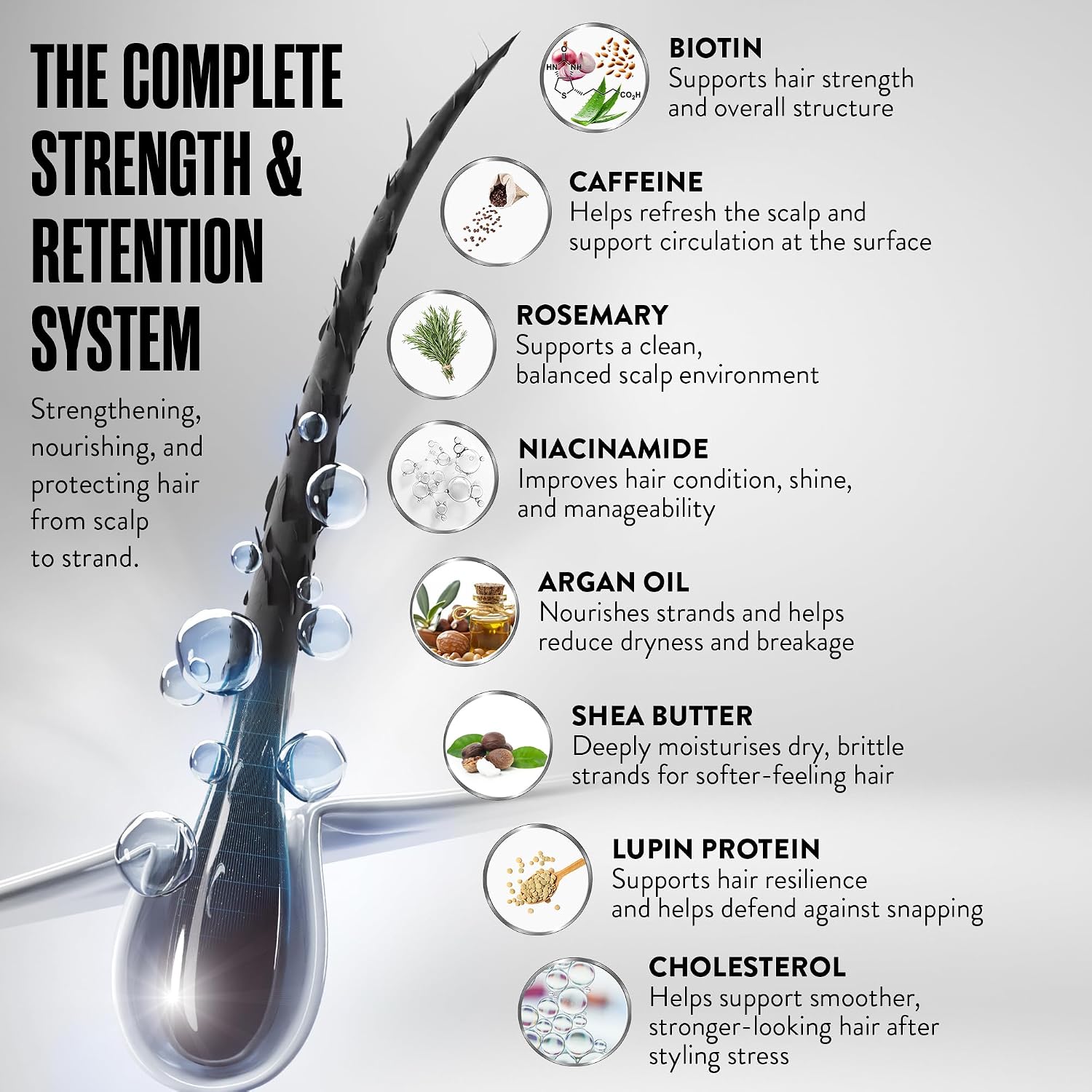
A leave on overnight elixir for the parting and crown, with caffeine, rosemary, niacinamide and hydrolysed lupine protein. It is a cosmetic product for scalp comfort and fuller looking hair.
Get a discount on the menopause hair range
Join the Watermans mailing list and we will email a discount code straight to your inbox, so you can try the menopause hair range for less. Vegan, made in the UK, over 6.5 million bottles sold since 2012.
How can you tell whether things are improving?
You can only tell whether menopause thinning is improving, holding steady or progressing by comparing like with like over months, because hair changes too slowly for a mirror to show it. Take photographs of your centre parting and crown now, in daylight, with hair dry and parted in the same place, and repeat them every three months.
- Parting width. Lay a ruler beside the parting in each photograph. A parting that stays the same width over six months is holding steady.
- Ponytail thickness. Wrap a soft tape measure around a loose ponytail at the same point each time. It is crude, and it is surprisingly consistent.
- Shed count. Count the hairs in your brush after one ordinary wash a month. You are looking for the trend, not a single number.
- Symptom notes. Keep a line a month on sleep, flushes, energy and periods. If you start or change HRT, it lets you and your GP see what changed alongside it.
Bring the photographs and notes to any of the trichologists Hull has, and to your GP. They turn an impression into evidence, and they stop you mistaking a bad hair week for a trend.
Where do women in Hull look for help?
Hull and the East Riding have a small number of local practitioners, and Leeds, York and Sheffield widen the choice considerably. Leeds is about an hour by train. Our Leeds guide covers how to tell a genuine assessment from a sales funnel. Because "trichologist" is not a protected title in UK law, check the Institute of Trichologists and Trichological Society directories, and ask a few direct questions first.
- Are you a registered member of the Institute of Trichologists or the Trichological Society?
- Do you see many women with menopause hair changes?
- Will you take standardised photographs so we can compare over time?
- What is the fee, and what do follow ups cost?
- What would make you send me back to my GP?
If you are still working out what is behind the change, our guide to the causes of hair loss in women by life stage is a useful starting point.
When should you see a GP promptly?
See your GP promptly, rather than waiting for a private visit, if you have smooth bald patches, a sore, weeping, crusted or heavily scaling scalp, shiny scarred areas, sudden heavy shedding, or thinning alongside heavy or irregular bleeding, extreme tiredness, feeling unusually cold, or new hair growth on the face and body. Bleeding after the menopause always needs checking.

We sell hair care, so weigh our view accordingly. Our range is vegan, made in the UK, and has sold over 6.5 million bottles since 2012. It helps hair look thicker and feel healthier, which is cosmetic, and we would rather say that plainly than overpromise.
Frequently asked questions
Can trichologists Hull help with menopause hair loss?
Trichologists Hull practices can examine the scalp, measure density with standardised photographs, and help with the breakage and dryness that often come with midlife hair. They cannot manage hormones or run blood tests, so your GP should be part of the picture too.
Why is my hair thinning during the menopause?
Falling oestrogen makes the effect of androgens on sensitive follicles more noticeable, so hair on top can become finer. Low iron, thyroid problems and stress also cause thinning in midlife, which is why blood tests are worth asking your GP about.
Will HRT help my hair?
Some women notice their hair feels better on HRT, but hair thinning alone is not the usual reason to start it and the research on hair is limited. HRT is a decision to make with your GP based on your overall symptoms, benefits and risks. A rapid change in eating is a separate trigger with its own three month lag, covered in our guide to shedding after weight loss.
Is menopause hair thinning permanent?
Shedding from triggers such as low iron or illness usually settles once the cause is addressed. Female pattern hair loss tends to be gradual and ongoing, which is why measuring it early and discussing options with your GP or a specialist is worthwhile.
Why does my hair feel drier and more wiry now?
Hair, and grey hair especially, tends to become drier and coarser with age as the scalp produces less oil. Drier hair breaks more easily, so more conditioning, less heat and gentler colour make a real difference.
How much does a trichologist cost?
A first private visit commonly costs £50 to £150 for 45 to 60 minutes, with follow ups extra. Ask for the full fee structure before booking, including any testing and products.
Can my GP refer me to a trichologist?
No. Trichology is private and self referred. Your GP can arrange blood tests, discuss HRT and refer you to NHS dermatology if a scalp or hair condition needs a specialist.
Sources & references
- NHS, Menopause and perimenopause
- NHS, Hormone replacement therapy (HRT)
- NICE Clinical Knowledge Summaries, Menopause
- NHS, Hair loss
- NHS, Iron deficiency anaemia
- NHS, Underactive thyroid (hypothyroidism)
- DermNet, Female pattern hair loss
- StatPearls, Androgenetic Alopecia (NCBI Bookshelf)
- The Institute of Trichologists
What is the bottom line on trichologists Hull?
Menopause hair changes are really three things: pattern thinning on top, shedding from triggers such as low iron or thyroid problems, and breakage from drier hair. Start with your GP for blood tests and a conversation about your symptoms as a whole, including whether HRT suits you. Then use one of the trichologists Hull and the surrounding area can offer for a measured baseline, a scalp examination and help with breakage, and keep a gentler routine going at home so the hair you have looks as full as it can.
If you would rather follow one joined-up routine through the menopause, our menopause hair care kit brings the shampoo, conditioner, overnight scalp elixir, Allevi8 supplement and Moisturise Me cream together in five steps, designed to help thinner-looking hair look fuller and feel stronger.
Watermans products are 100% cosmetic and do not treat medical hair loss. Individual results may vary.