Trichologists Walthamstow: Hard Water or Real Thinning?
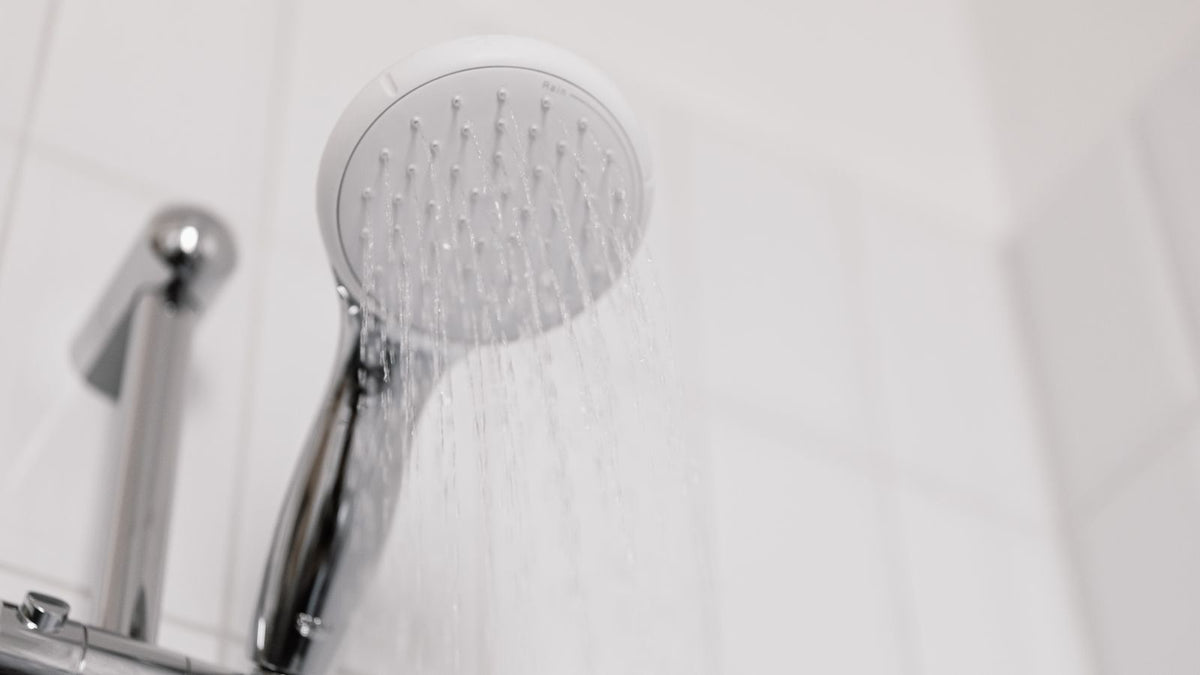
Plenty of people who end up searching for trichologists Walthamstow are not losing hair at all. Their hair has gone flat, dull, rough to the touch and harder to get a comb through, and it feels thinner because it behaves differently. In east London the usual explanation is mineral and product build-up from hard water, and that is a very different problem from hair loss.
Our hair growth shampoo
Grow Me® Hair Growth Shampoo, £14.95. A sulphate free daily shampoo that supports a healthy scalp environment and helps reduce breakage, so lengths hold on and look fuller.
In short: Before paying trichologists Walthamstow, work out whether you have less hair or worse-behaved hair. Hard water leaves mineral and product residue on the cuticle that makes hair feel rough, look dull and tangle more, which reads as thinner without any hair being lost. A clarifying wash and a proper conditioner fix that in one wash. A parting that is genuinely widening is a different problem and does not resolve by itself.
Key takeaways
- Build-up changes how hair behaves, not how much you have. Rough, dull, flat and tangly is a surface problem.
- Most of London sits in the hard or very hard water band. Your supplier publishes the figure for your postcode.
- There is no good evidence that hard water causes hair loss. NHS guidance on hair loss does not list it.
- Build-up costs you length indirectly. Rougher hair tangles more, and tangles are where breakage happens.
- Two objective tests separate the two. Ponytail thickness and the width of your parting in a monthly photo.
- Flaking, itching or soreness is a scalp issue, not a water issue, and it has its own answers.
Is hard water why trichologists Walthamstow hear about flat hair so often?
Partly, and the mechanism is simpler than most people expect. Calcium and magnesium in hard water react with shampoo and leave a fine mineral and soap residue on the outside of the hair. That residue roughens the cuticle surface, which scatters light instead of reflecting it, so hair looks duller and feels coarser while weighing slightly more.
Rough hair also tangles against itself more readily, which is where the real cost lands. Tangles mean more force at the comb, more force means more snapped fibres, and snapped fibres mean less length even though the follicles are producing hair normally. The follicle is fine; the fibre is being lost on the way down.
None of that is hair loss. It is worth being precise, because the two lead to completely different spending. Build-up is fixed by a wash. Follicles producing progressively finer hair is not, and our guide to the three clue self check for thinning hair sets out how to tell which one you are looking at.
How hard is the water in east London?
Hard, on the standard UK classification. Water companies report hardness as milligrams per litre of calcium carbonate, and anything above roughly 200 mg/l is classed as hard, with the band above 300 mg/l counted as very hard. Most of London sits in those upper bands, which is why limescale on kettles and taps is so familiar here.
Check your own postcode rather than taking a general figure. Every UK supplier publishes a hardness lookup, and drinking water quality across England and Wales is regulated by the Drinking Water Inspectorate. The number is free to find and takes a minute, and it tells you whether this page is relevant to you at all.
Hardness is a taste and limescale issue, not a safety one. Hard water is perfectly safe to drink and to wash in, and the minerals in it are the same ones present in food. The only thing at stake here is how your hair and skin feel afterwards.

Does hard water cause hair loss?
No good evidence says so. Laboratory work examining hair fibres washed in hard water has reported measurable changes to the fibre surface and its mechanical properties, but that is a long way from causing follicles to shut down, and NHS guidance on hair loss does not list water hardness among the causes.
The sources broadly agree on where the line sits. Hard water is a well-supported explanation for dullness, roughness, tangling and the build-up that follows. It is not a supported explanation for a widening parting, round bald patches or a sudden diffuse shed. Mistaking a genuine hair loss pattern for a water problem wastes the months that mattered.
So the honest framing is this: hard water can cost you length through breakage, which looks like less hair, while leaving the number of hairs on your head unchanged. That is worth fixing, and it is cheap to fix, but it is a fibre problem rather than a follicle problem.
| What you notice | Build-up | Genuine thinning |
|---|---|---|
| Onset | Gradual after moving house or changing products | Gradual over months to years, or sudden after an event |
| Feel | Rough, coated, squeaky when wet, hard to detangle | Feels normal, there is just less of it |
| Ponytail | Same circumference, sits flatter | Measurably thinner circumference |
| Parting width | Unchanged | Visibly wider in a photo taken a year apart |
| Response to a clarifying wash | Obvious improvement in one wash | No change at all |
| Hairs in the brush | Normal number | Raised number, hairs with a pale root bulb |
How do you tell build-up from real thinning?
Two tests do it, both free, and they are the first things trichologists Walthamstow would ask for anyway. Measure your ponytail circumference with a tape or a piece of string and note it down; build-up does not change it, while genuine thinning does. Then photograph your parting in the same light once a month, because a widening parting is the clearest sign that follicles are producing finer hair and that is not something a shampoo addresses.
The third check is the response test. Wash once with a clarifying or chelating shampoo and see what happens. Build-up improves noticeably in a single wash, because the residue is sitting on the surface and comes off. If hair looks and feels exactly the same afterwards, the problem was never build-up and you have saved yourself a long detour.
Keep the three mechanisms separate while you do it. Hair shedding is whole hairs leaving from the root, normal at roughly 50 to 100 a day. Hair loss is follicles producing progressively finer hair or stopping. Hair breakage is the fibre snapping mid-length, leaving short pieces with no root bulb, and it is the one that hard water genuinely contributes to.
Get a discount on the flat, dull hair range
Join the Watermans mailing list and we will email a discount code straight to your inbox, so you can try the flat, dull hair range for less. Made in the UK, over 6.5 million bottles sold since 2012.
What clears build-up, and what does not?
The clarifying or chelating shampoo trichologists Walthamstow reach for clears it, used roughly every one to two weeks rather than daily. Chelating agents bind the metal ions so they rinse away instead of clinging to the cuticle, which is why a clarifying wash works in one go where an ordinary shampoo has been failing for months. Follow it with conditioner, because clarifying strips deliberately.
An acidic rinse helps between washes. Diluted apple cider vinegar, roughly one tablespoon to a mug of water, poured through after conditioning and rinsed out, smooths the cuticle back down and removes light residue. It is cheap, it is not a miracle, and it is not a substitute for clarifying when build-up is heavy.
What does not work: washing more often with the same shampoo, adding more product on top, or heat styling to force shine back. All three make it worse, the last one measurably so, because heat on a rough, dry cuticle is how split ends start. Our guide to preventing split ends covers the habits that matter most.
Do not clarify every wash
Clarifying shampoos are designed to strip, which is exactly what you want once a fortnight and exactly what you do not want daily. Over-clarifying leaves the cuticle rough for a different reason and the hair ends up dry, static and more prone to snapping. One clarifying wash every one to two weeks, a gentle cleanse in between, and conditioner every time is the pattern that holds up.

Do shower filters actually work?
Some reduce certain minerals and chlorine, and the effect people report most consistently is on skin rather than hair. Evidence for a meaningful, lasting difference to hair is thin, filters need replacing on a schedule that is easy to forget, and an expired cartridge does nothing at all. As a first purchase, a clarifying shampoo costs a fraction as much and answers the question faster.
If you want to test the idea for nothing, use bottled or filtered water for the final rinse once and see whether the hair feels different when it dries. That single experiment tells you more about your own hair than any product description, and it costs the price of a bottle of water.
Conditioner does more of the work than any filter. A conditioner that gives genuine slip means the comb moves through wet hair instead of dragging, and dragging is where length is lost. Our guide to using conditioner properly covers where to apply it and how long to leave it.

Grow Me® Hair Growth Shampoo · £14.95
A daily cleanse with caffeine, biotin and allantoin that washes gently enough for regular use between clarifying washes, and reduces breakage for fuller-looking hair. Vegan and made in the UK.

Condition Me® Hair Growth Conditioner · £13.95
A slip-focused conditioner that makes wet detangling easier, so hair roughened by hard water loses less length at the comb. Made in the UK.

When is it a scalp problem rather than a water problem?
Flaking, itching, redness, soreness or greasy yellowish scale is a scalp condition and not a build-up issue, however hard your water is. Those symptoms have their own causes and their own answers, and clarifying repeatedly in the hope of shifting them usually makes an irritated scalp drier and more uncomfortable.
Seborrhoeic dermatitis is the most common of these and is easily mistaken for stubborn build-up, because both produce flakes. The difference is that build-up flakes come off with a wash and do not itch, while a seborrhoeic scalp itches, comes back within days and often looks slightly red underneath. Our guide to a flaky scalp and what sits behind it explains how to tell them apart.
Persistent scalp symptoms are worth a GP visit rather than another product. A pharmacist is a reasonable first stop for mild flaking, and a GP is the right call if it is sore, spreading, bleeding, or not settling with over-the-counter options.
When should you see a GP or pay a trichologist?
See a GP if there are round bald patches, if the scalp is scarring, shiny, sore or scaly, if hair is coming out in clumps, if a child is affected, or if the change comes with fatigue, weight change or heavy periods. Blood tests for ferritin, full blood count and thyroid function are free on the NHS and rule out most of what matters. If your question is about products or a routine rather than a medical one, you can talk to Gail Waterman, our co-founder, as an AI avatar on the Watermans homepage.
Paying trichologists Walthamstow makes sense once the simple explanations are exhausted: the clarifying wash made no difference, the ponytail really is thinner, the parting really is wider, and GP blood tests came back clear. At that point a magnified look at hair shaft diameters genuinely tells you something a mirror cannot.
Check credentials before you pay either way. Trichologist is not a protected title in the United Kingdom and there is no statutory register for it, unlike the Health and Care Professions Council register covering titles such as physiotherapist and dietitian. The Institute of Trichologists and The Trichological Society both run assessed training and publish member lists, and first sessions across London commonly run from roughly 75 to 250 pounds. Before agreeing to any multi-month course, our guide to which trichology add-ons are worth paying for explains what to refuse on a first visit and which four fees to get in writing. For the citywide picture, our London guide to finding a good trichologist covers which registers to search and what a fee should include.
Frequently asked questions
Does hard water cause hair loss?
There is no good evidence that it does, and NHS guidance on hair loss does not list water hardness among the causes. Laboratory work has reported changes to the hair fibre after washing in hard water, but that concerns the fibre rather than the follicle. Hard water can cost you length through breakage, which looks like less hair while the number of hairs on your head is unchanged.
How do I know whether it is build-up?
Use the response test. Wash once with a clarifying or chelating shampoo and see what happens. Build-up improves noticeably in a single wash because the residue sits on the surface. If the hair feels and looks identical afterwards, build-up was not the problem, and measuring your ponytail circumference and photographing your parting will tell you what is.
How often should I use a clarifying shampoo?
Roughly every one to two weeks, not daily. Clarifying shampoos are designed to strip, which is useful occasionally and harmful as a routine. Over-clarifying leaves hair dry, static and more prone to snapping. Use a gentle cleanse between times, and always follow a clarifying wash with conditioner because it removes the good with the bad.
Is a water softener worth it for hair?
A whole-house softener has real benefits for limescale, appliances and skin, and many people say hair feels softer afterwards. As a purchase made specifically to solve a hair problem, it is a large amount of money for an effect a clarifying shampoo will demonstrate for a few pounds. Test the cheap option first and decide afterwards.
Will a shower filter fix it?
Sometimes a little, mostly for skin, and only while the cartridge is current. Evidence for a lasting difference to hair is thin and filters are easy to forget to replace. For the price of a bottle of water you can rinse once with bottled or filtered water and see whether your hair feels different when it dries, which answers the question directly.
Should I see trichologists Walthamstow for flat, dull hair?
Usually not as a first step. Flat, rough, dull hair that improves after one clarifying wash was a surface problem, and you have solved it for the price of a shampoo. Paying makes sense once the clarifying wash changed nothing, the ponytail is measurably thinner or the parting is visibly wider, and GP blood tests have come back clear.
Can hard water make my scalp itch?
It can leave skin feeling tight and dry, but persistent itching, flaking, redness or soreness usually points to a scalp condition rather than to water. Seborrhoeic dermatitis is the most common and is easily confused with build-up, the difference being that it itches and returns within days. Persistent symptoms are worth a pharmacist or GP rather than another wash.
Does apple cider vinegar help?
A diluted acidic rinse, roughly one tablespoon to a mug of water after conditioning, smooths the cuticle and lifts light residue, which can genuinely help hair look shinier between washes. Use it diluted, keep it off broken or irritated skin, and do not expect it to clear heavy build-up, which needs a proper clarifying or chelating wash.
What is the bottom line on trichologists Walthamstow?
Before paying trichologists Walthamstow, find out whether you have less hair or worse-behaved hair. Most of London sits in the hard or very hard water band, and mineral and product build-up leaves hair rough, dull, flat and tangly without a single follicle being affected. One clarifying wash answers it: a clear improvement means build-up, no change means look elsewhere. Measure the ponytail, photograph the parting, get free GP blood tests if anything else has changed, and save the 75 to 250 pounds for the point where those simple checks have run out.
Between clarifying washes, cleanse gently. Our hair growth shampoo is a daily shampoo made in the UK that washes without stripping and reduces breakage for fuller-looking hair.
Sources and references
- Drinking Water Inspectorate, the regulator of drinking water quality in England and Wales, including hardness reporting.
- NHS, hair loss: recognised causes and when to see a GP. Water hardness is not listed among them.
- NHS, dandruff: symptoms, self care and when to see a pharmacist or GP.
- DermNet, seborrhoeic dermatitis: how a flaking, itching scalp differs from surface residue.
- DermNet, hair shaft abnormalities: how cuticle damage and breakage present.
- British Association of Dermatologists, public information leaflets on hair and scalp conditions.
- NICE, Clinical Knowledge Summaries: iron deficiency anaemia: guidance on ferritin testing.
- Health and Care Professions Council, Check the Register: the statutory register of protected titles, which does not include trichologist.
- The Trichological Society, professional body and membership information.
Important: Watermans products are 100% cosmetic and do not treat medical hair loss. Individual results may vary.