Slower Hair Growth: Why It Happens and What Genuinely Helps
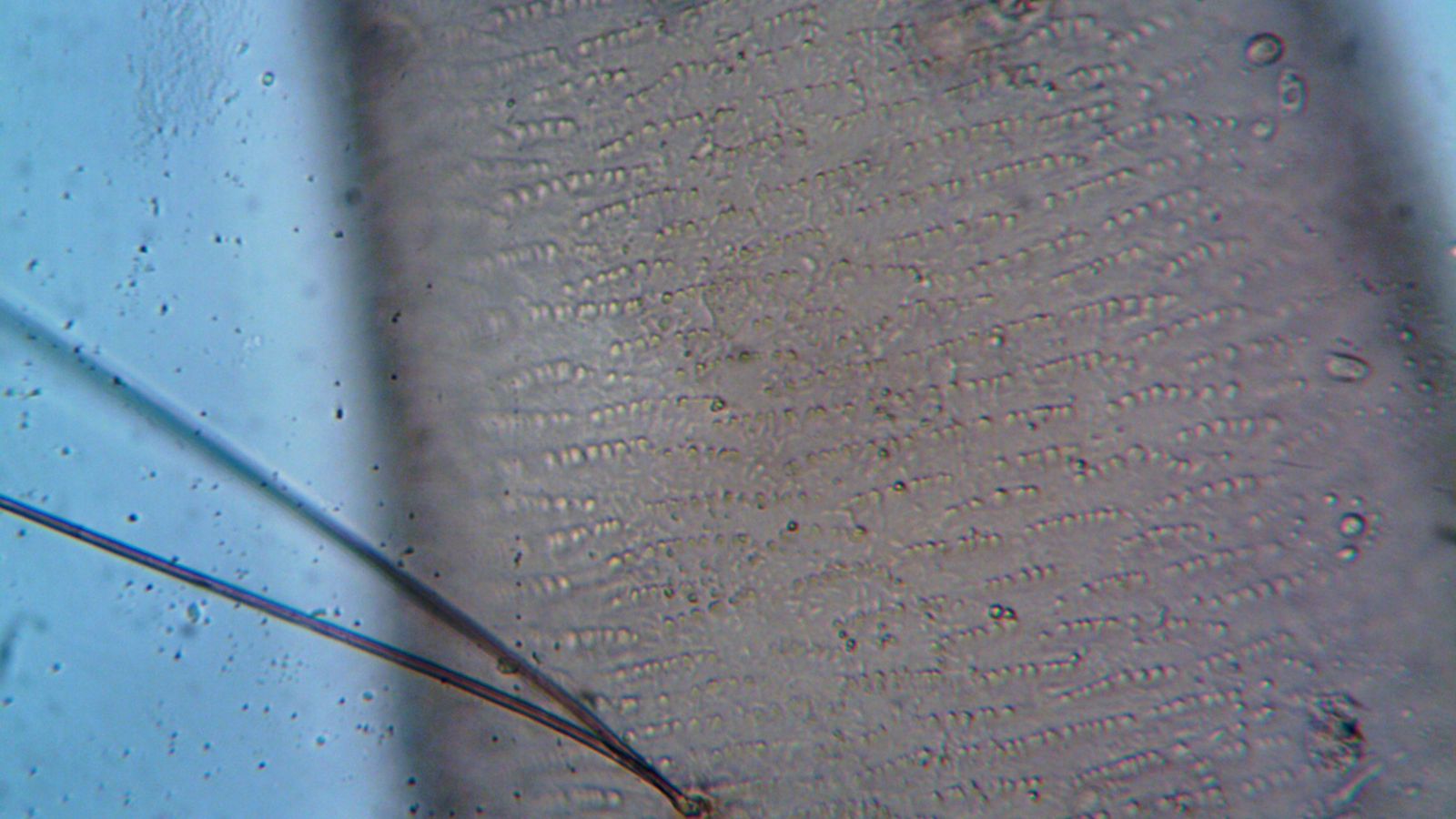
Arrived looking for cell biology research? Here is the practical hair version of that question instead.
Slower hair growth is usually not the follicle producing hair at a reduced speed. Scalp hair grows at roughly one centimetre a month for most of adult life, and that figure barely moves. What changes is how long each hair stays in its growing phase before it is released, and how much length is lost at the ends to breakage. Genuine slower hair growth does occur with age, illness and poor nutrition, but it is smaller than most people assume.
Our hair growth shampoo
Grow Me® Hair Growth Shampoo, £14.95. A sulphate free daily shampoo that supports a healthy scalp environment and helps reduce breakage, so lengths hold on and look fuller.
Key takeaways
- Normal scalp hair grows about 1cm a month, roughly six inches a year.
- Hair that will not get past a certain length is usually breaking at the ends, not growing slowly at the root.
- Your maximum length is set by how long the growing phase lasts, which is largely genetic.
- Age genuinely does slow growth and shorten the growing phase, but gradually, over decades.
- No shampoo speeds up growth. Anything that reduces breakage makes hair longer in practice, which is a different mechanism with the same visible result.
How fast is hair supposed to grow?
Scalp hair grows at an average of about 1cm per month, or a little over a centimetre for some people and a little under for others. Rate varies by body site, by age, by ethnicity and between individuals, and reference texts on hair physiology put the scalp figure at roughly 0.3 to 0.4mm a day.
That average hides an important detail. Growth is not continuous. Each follicle cycles through a long growing phase called anagen, a short transition called catagen, and a resting phase called telogen, after which the hair is released and a new one starts. At any moment around 85 to 90 percent of scalp follicles are growing and the rest are resting, which is why hair does not all fall out at once.
The length you can reach is decided by the growing phase, not by the growth rate. Anagen lasts anywhere from about two to seven years depending on the person. A three year anagen at 1cm a month gives you about 36cm of hair. A six year anagen gives you double. Neither person is growing hair faster than the other. Our explainer on the three stages of the hair growth cycle goes through the phases in detail.

Is your hair growing slowly, or breaking?
Most people who report slower hair growth are actually losing length at the other end. If hair grows 12cm in a year and you lose 12cm to splitting, snapping and trimming, the length in the mirror never changes, and it looks exactly like hair that has stopped growing.
There is a simple way to tell the difference. Look at your roots. If you have any colour, a natural root line or grey coming through, you can measure real growth directly: mark the date, then measure the new growth eight weeks later. Around 2cm means your follicles are doing their job perfectly well and the problem is at the ends.
Three separate things get confused here, and they need different responses.
| What it is | What you notice | Where the answer lies |
|---|---|---|
| Hair loss | Wider parting, more visible scalp, thinner ponytail | At the follicle. A question for your GP, not a shampoo. |
| Hair shedding | More whole hairs with a white bulb, 50 to 100 a day is normal | The cycle. Usually settles within months after illness or stress. |
| Hair breakage | Short broken pieces with no bulb, hair stuck at one length | The ends. This is what masquerades as slower hair growth. |
Breakage is by far the most common of the three among people who say their hair will not grow, and it is also the only one a hair care routine genuinely changes.
Does hair really grow more slowly with age?
Age does produce genuine slower hair growth, and it works through three mechanisms at once rather than one. The growing phase shortens, so hairs are released sooner and reach less length. The growth rate itself declines modestly. And individual follicles produce progressively finer strands, so the same number of hairs occupies less visual space.
Research on oxidative stress in ageing hair describes the underlying picture: the follicle's own antioxidant defences decline over the years, pigment production winds down, and the follicle becomes less efficient at sustaining a long growing phase. This is a gradual, decades long process, not something that happens in a year.
Worth saying plainly: this part is not fixable with cosmetics, and nobody selling you a bottle can change the length of your anagen phase. What is still fully within reach at any age is keeping the length you do grow, which is the breakage half of the equation.
The opposite problem. Some people arrive at this topic wanting hair to grow back more slowly, usually body or facial hair. That is a genuinely different question with different answers, and we cover it separately in can you make hair grow slower.
Get a discount on your next order
Join the Watermans mailing list and we will email a discount code straight to your inbox. Made in the UK, over 6.5 million bottles sold since 2012.
What actually causes slower hair growth?
Several things genuinely reduce growth or shorten the growing phase, and they are worth checking in roughly this order.
- Iron stores. Low ferritin is common, particularly in women who menstruate, and is associated with increased shedding and poorer growth. It is a simple blood test through your GP. Our guide on ferritin levels and hair covers what to ask for.
- Protein and overall energy intake. Hair is made of keratin, a protein, and it is metabolically expendable. Crash dieting and very low calorie eating reliably push follicles into the resting phase.
- Thyroid function. Both an underactive and an overactive thyroid affect the hair cycle. Again, a blood test rather than a guess.
- Illness, surgery, high fever or major stress. These push a large batch of follicles into resting together, and the shedding shows up two to three months later.
- Some medicines. If growth changed after starting something new, that is a conversation with your GP or pharmacist, not something to work around with hair care.
Notice that four of those five need a clinician rather than a shampoo. We are a cosmetic hair care company, we do not run clinics, and if slower hair growth arrived suddenly alongside other changes, the NHS overview of hair loss causes is a better starting point than our shop. If your question is about products or a routine rather than a medical one, you can talk to Gail Waterman, our co-founder, as an AI avatar on the Watermans homepage.
What can you actually do about it?
Practical actions split into two groups: the ones that change how much length you keep, which work for everyone, and the ones that address an underlying cause, which only work if that cause is yours.
- Cut the heat exposure. Two heat free days a week and a lower temperature setting do more for visible length than any product.
- Condition every wash and detangle on damp hair, from the ends upwards. Snapping during detangling is a large, entirely avoidable source of lost length.
- Trim on a schedule, not in a panic. A small trim every ten to twelve weeks removes splitting ends before they travel up the shaft. Counterintuitively, trimming leaves you longer after a year.
- Protect at night. Loose hair against cotton for eight hours is a lot of friction. A silk or satin pillowcase, or a loose plait, reduces it.
- Eat enough, including protein and iron rich foods, and get bloods checked if you suspect a deficiency rather than supplementing blindly.
- Give it time. At 1cm a month, any change you make takes three months to produce 3cm of evidence. Judging a routine after two weeks tells you nothing.
For the underlying biology of what is happening while you wait, our guide to how hair actually grows is the companion piece to this one.

Which Watermans products are relevant here?
Start with the honest part. Nothing we sell makes hair grow faster than your follicles grow it, and any brand telling you otherwise is overselling. What our products do is reduce the breakage that eats the length you already grow, and supply nutrients that contribute to the maintenance of normal hair. That is a smaller claim, and it is the true one.

A sulfate free everyday wash with biotin, caffeine and rosemary. It cleans gently and supports a healthy scalp environment. It does not accelerate the growth cycle.

The step that actually matters for keeping length. Adds slip so detangling snaps fewer strands, which is where most lost length goes.

Biotin, zinc and selenium contribute to the maintenance of normal hair. Useful if your diet is genuinely short. If you eat well already, skip these and save your money.
Grow Me shampoo is vegan, and Watermans is cruelty free and made in the UK, with over 6.5 million bottles sold since 2012.
Frequently asked questions about slower hair growth
How much hair growth should I see in a month?
About one centimetre. Over three months that is roughly 3cm of new root growth, which is measurable against a colour line or a grey root.
Why does my hair never get past my shoulders?
Usually because the growing phase is genetically short, or because the ends are breaking at the same rate the roots are growing. Measuring root growth over eight weeks tells you which.
Does trimming make hair grow faster?
No. Trimming has no effect on the follicle. It does remove splitting ends before they travel upwards, so people who trim regularly usually end up with more length after a year, not less.
Can scalp massage speed up growth?
Evidence is limited and mostly from small studies. Massage is pleasant, costs nothing and is unlikely to do harm, but be sceptical of dramatic claims about it.
Does shaving or cutting change how thick hair grows?
No. Cut hair feels blunter at the tip, which reads as thicker, but the follicle is unaffected and the diameter of the strand does not change.
How long before I can judge whether something is working?
Three months minimum, and six is better. At one centimetre a month, anything judged sooner is guesswork.
Is slower hair growth a sign of something serious?
Usually not. Gradual change over years is normal ageing. A sudden change, especially with heavier shedding, tiredness or other symptoms, is worth raising with your GP, who can check iron and thyroid function.
What is the bottom line on slower hair growth?
Slower hair growth is real but usually smaller than it feels, and it is very often breakage wearing a disguise. Measure your roots before you spend anything: if you are growing a centimetre a month, your follicles are fine and the work is at the ends, where heat, friction and detangling decide how much length survives. If growth genuinely dropped off suddenly, get iron and thyroid checked rather than shopping. Everything else is patience, because a centimetre a month is the speed limit and no bottle raises it.
For the cosmetic side of a fuller look, the Grow Me hair growth shampoo is the step that does the heavy lifting. Made in the UK, with over 6.5 million bottles sold since 2012.
Watermans products are 100% cosmetic and do not treat medical hair loss. Individual results may vary.
Sources and References
- Physiology, Hair, StatPearls, National Center for Biotechnology Information. ncbi.nlm.nih.gov/books/NBK499948
- Oxidative stress in ageing of hair, International Journal of Trichology, 2009. pmc.ncbi.nlm.nih.gov/articles/PMC2929555
- NHS, hair loss overview. nhs.uk/conditions/hair-loss
- The impact of shampoo wash frequency on scalp and hair conditions, Skin Appendage Disorders, 2021. pmc.ncbi.nlm.nih.gov/articles/PMC8138261
- American Academy of Dermatology, tips for healthy hair. aad.org