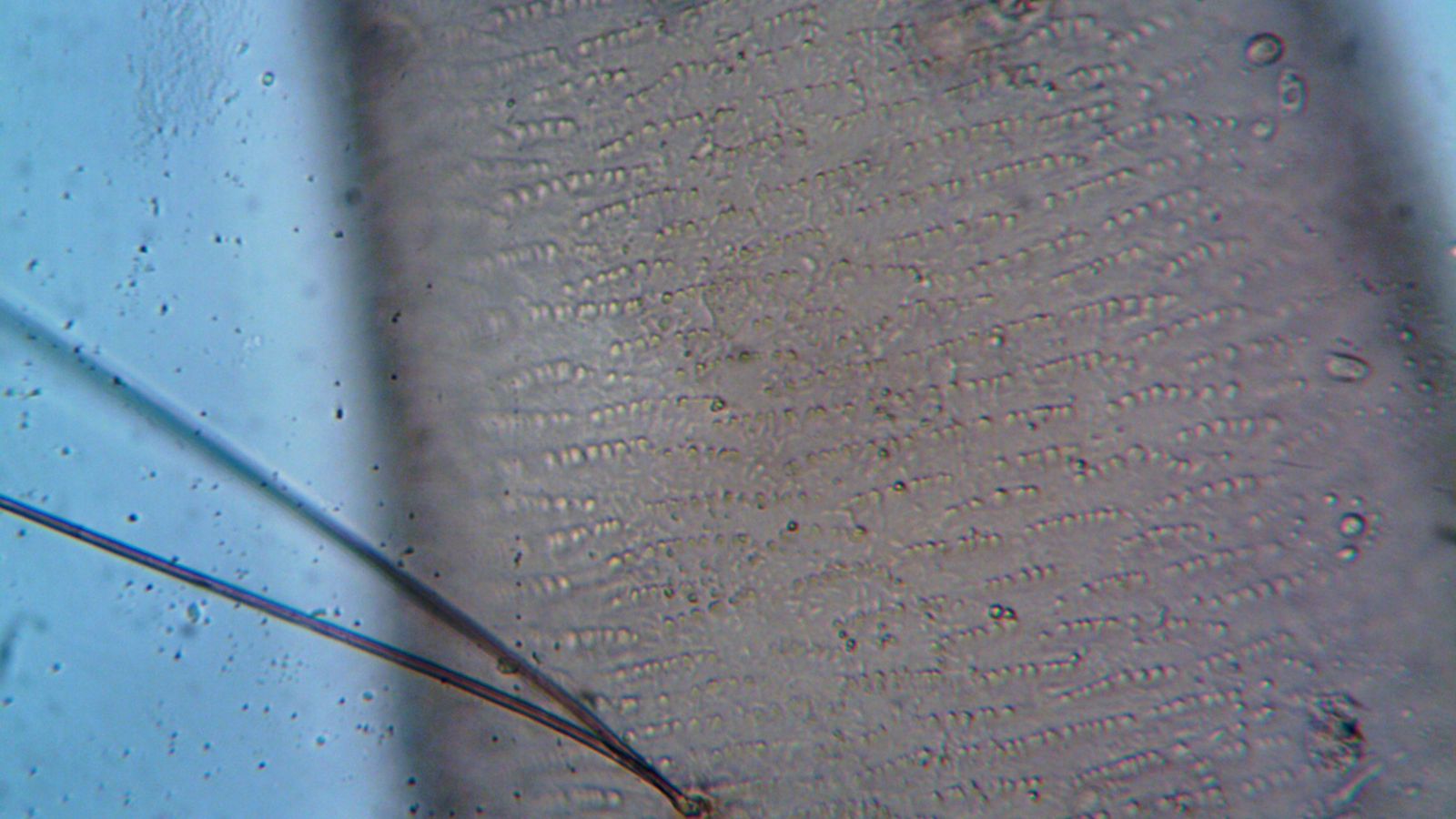
Trichogram: What the Hair Test Shows and What It Cannot
Looking for the parasitic wasp of a similar name used in crop protection? Wrong site. This page is about hair.
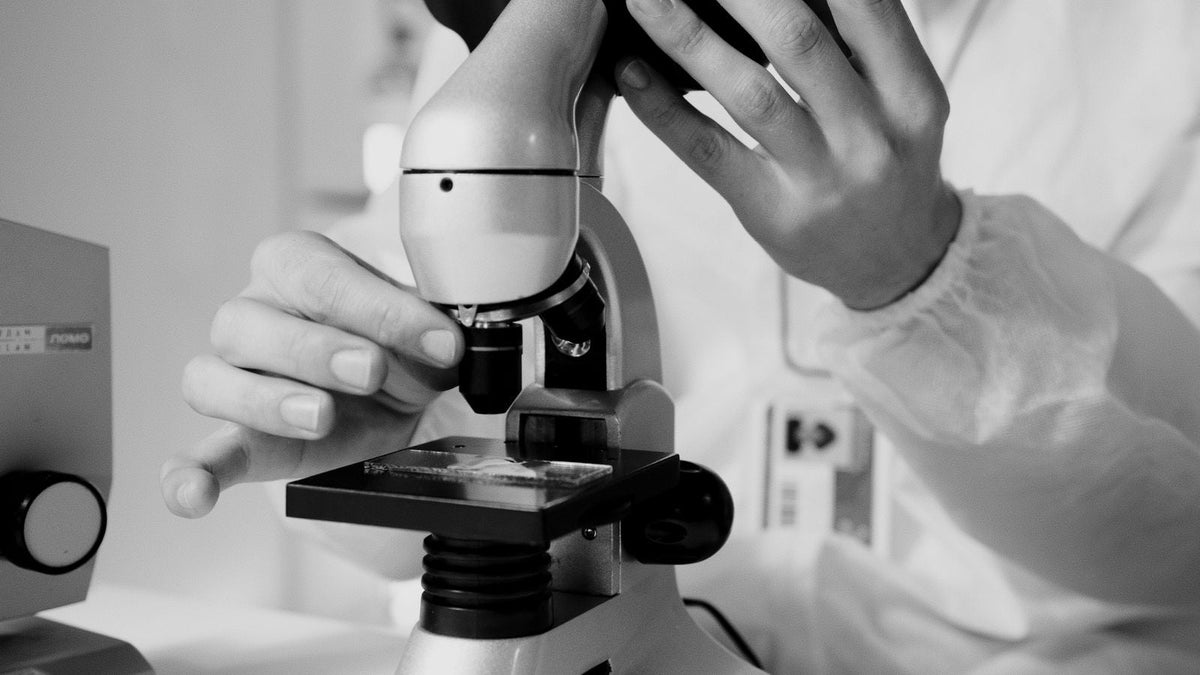
A trichogram is a hair assessment in which around 50 to 100 hairs are plucked from a marked area of scalp and their roots examined under a microscope. Each root is classified by which phase of the growth cycle it was in, and the resulting ratio of growing to resting hairs is compared against normal values. The test measures what proportion of your follicles are actively growing at one moment in time. It cannot tell you why, and it says nothing at all about breakage.
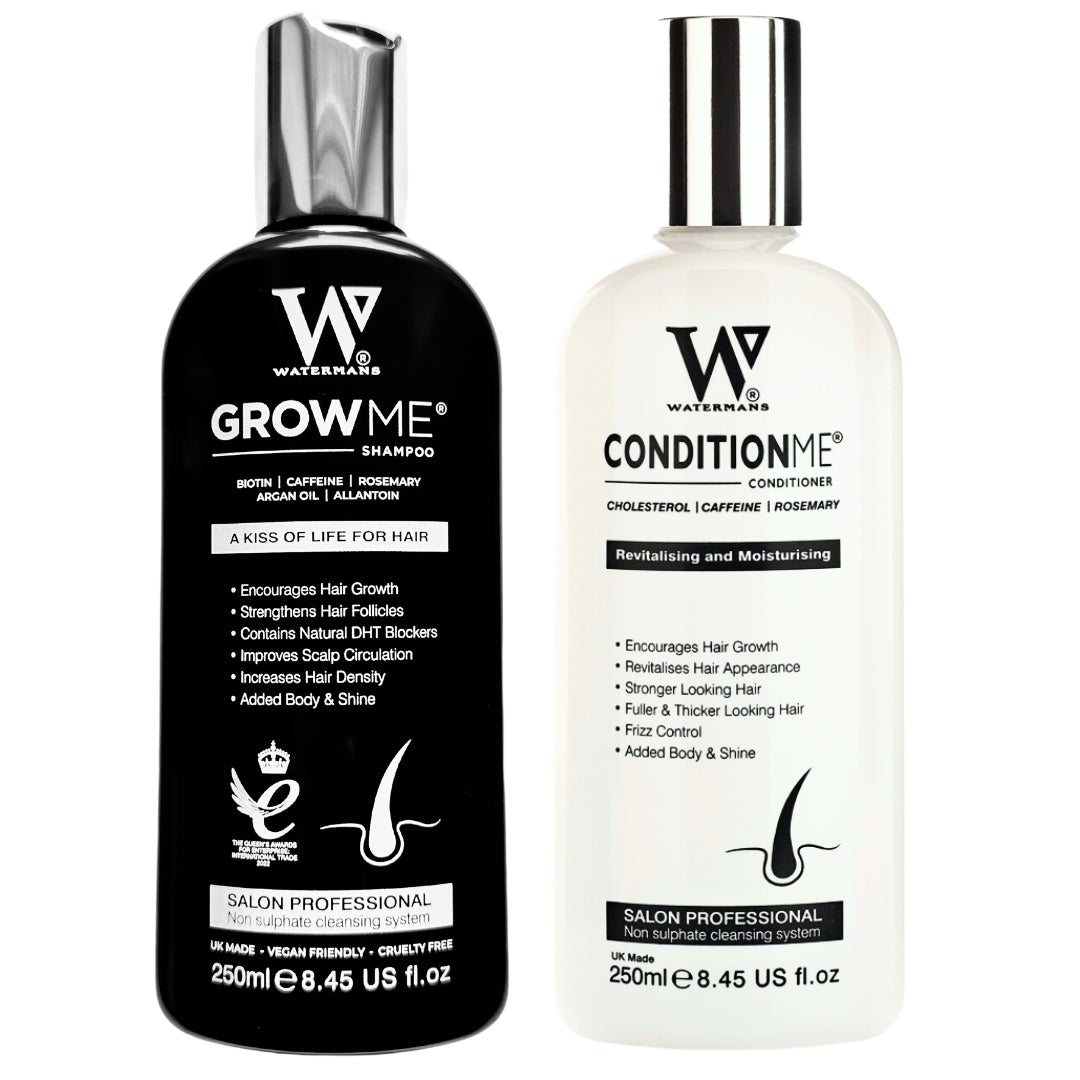
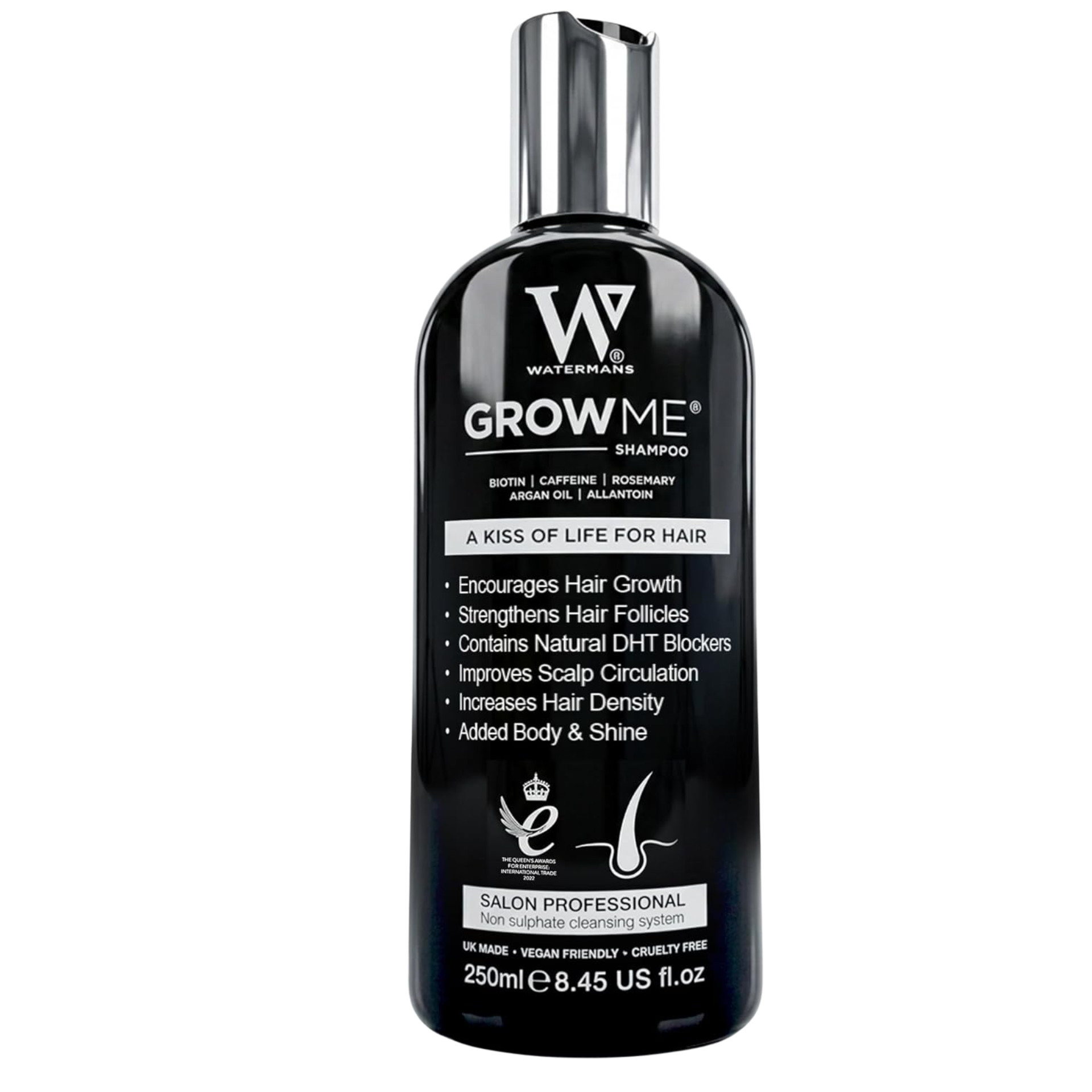
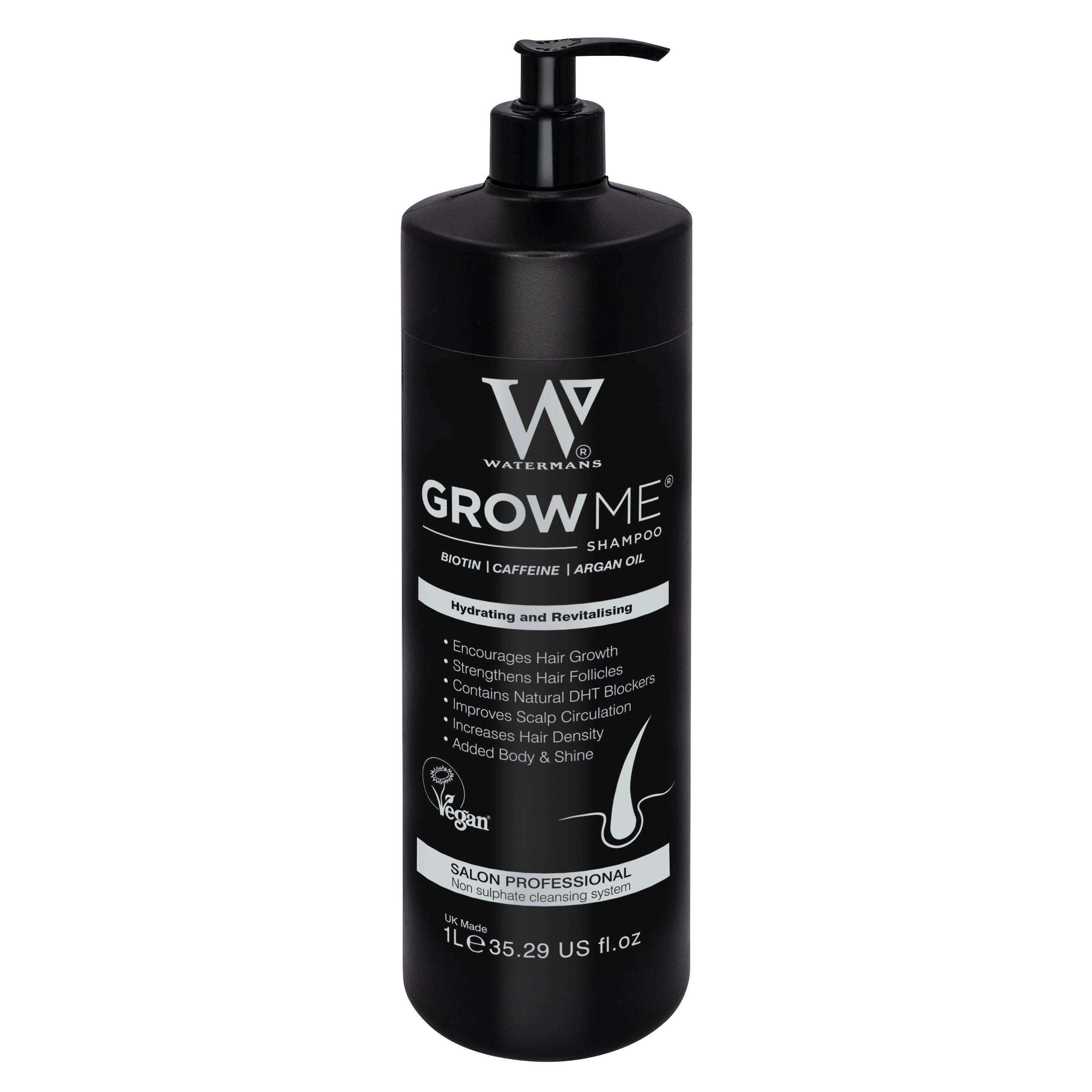
Our hair growth shampoo
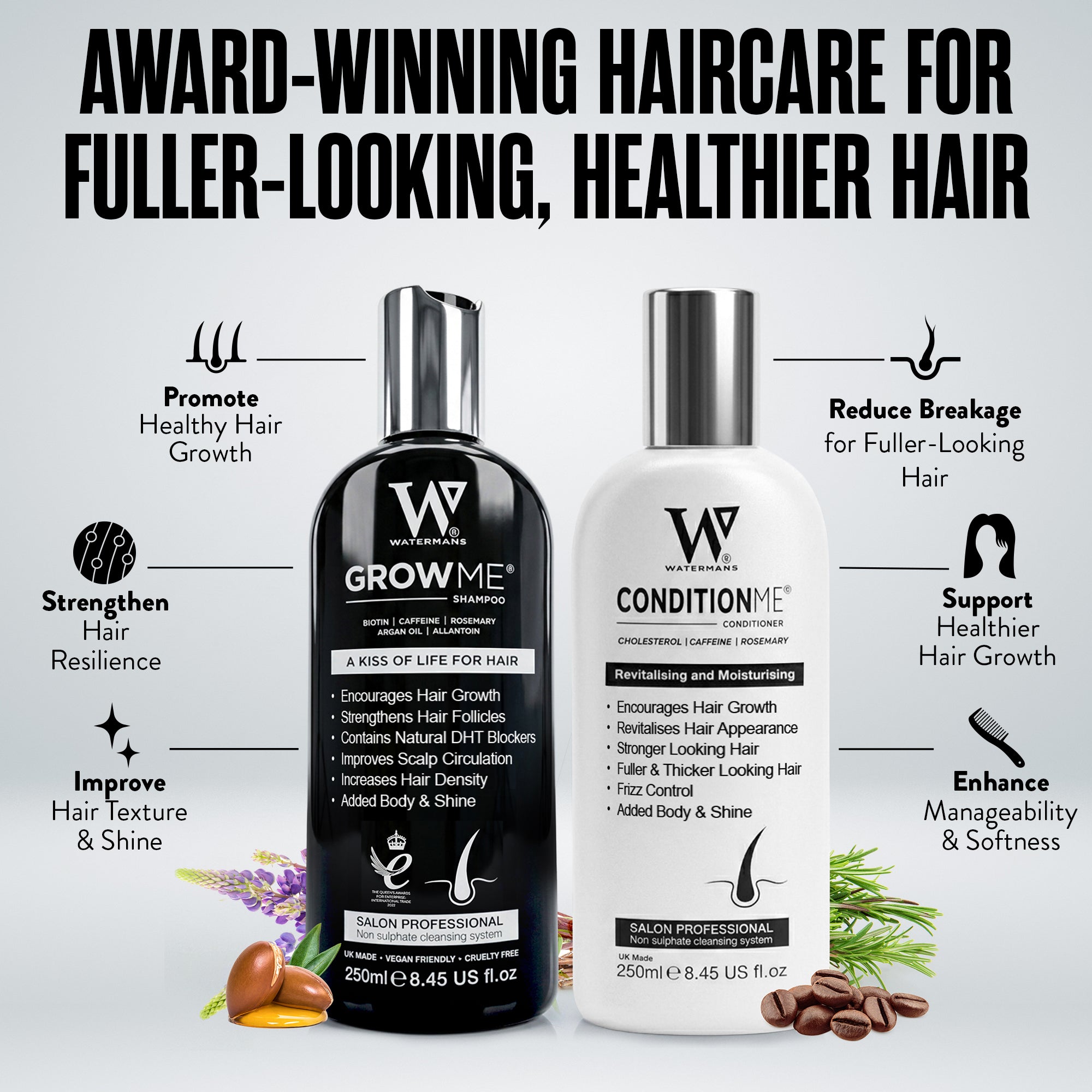
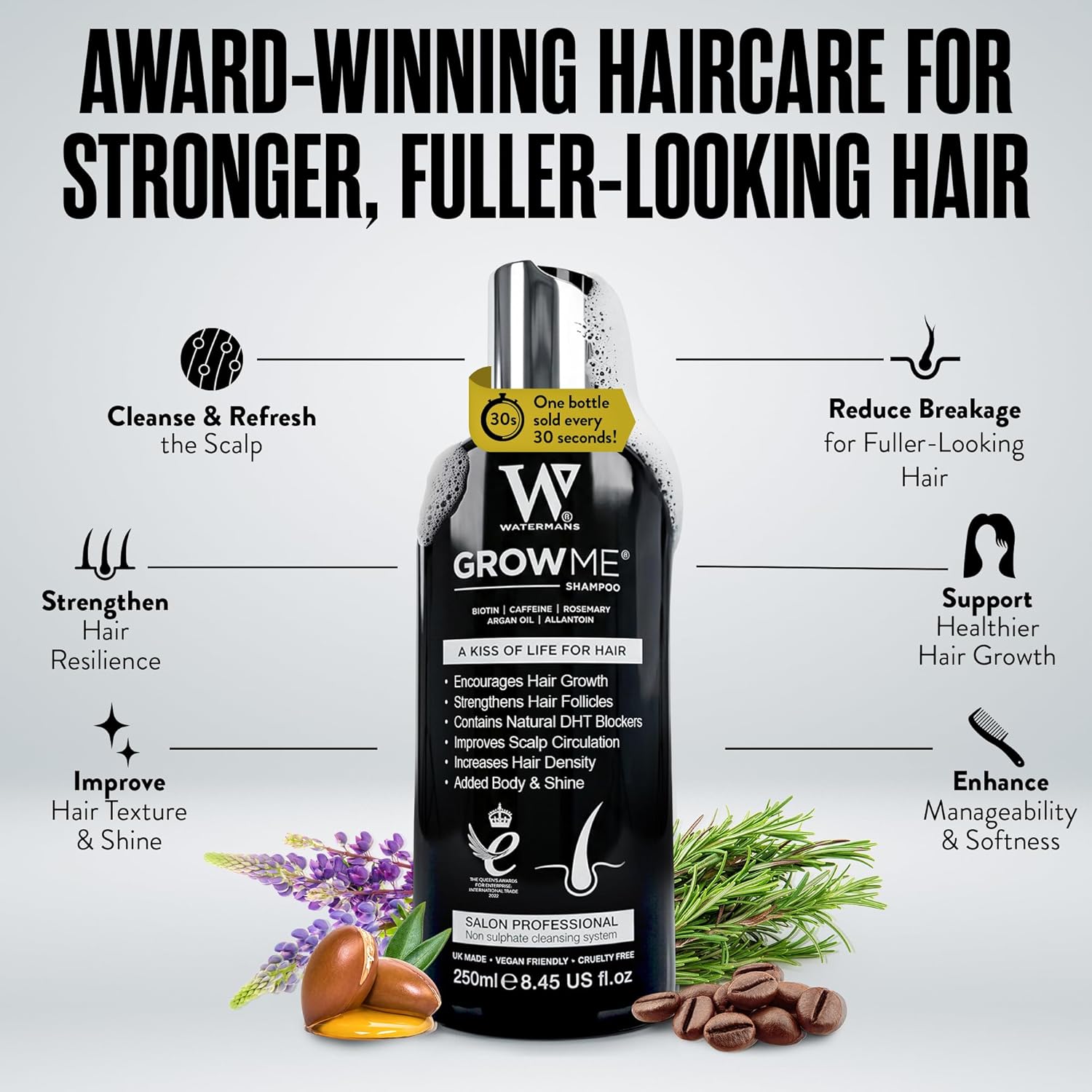
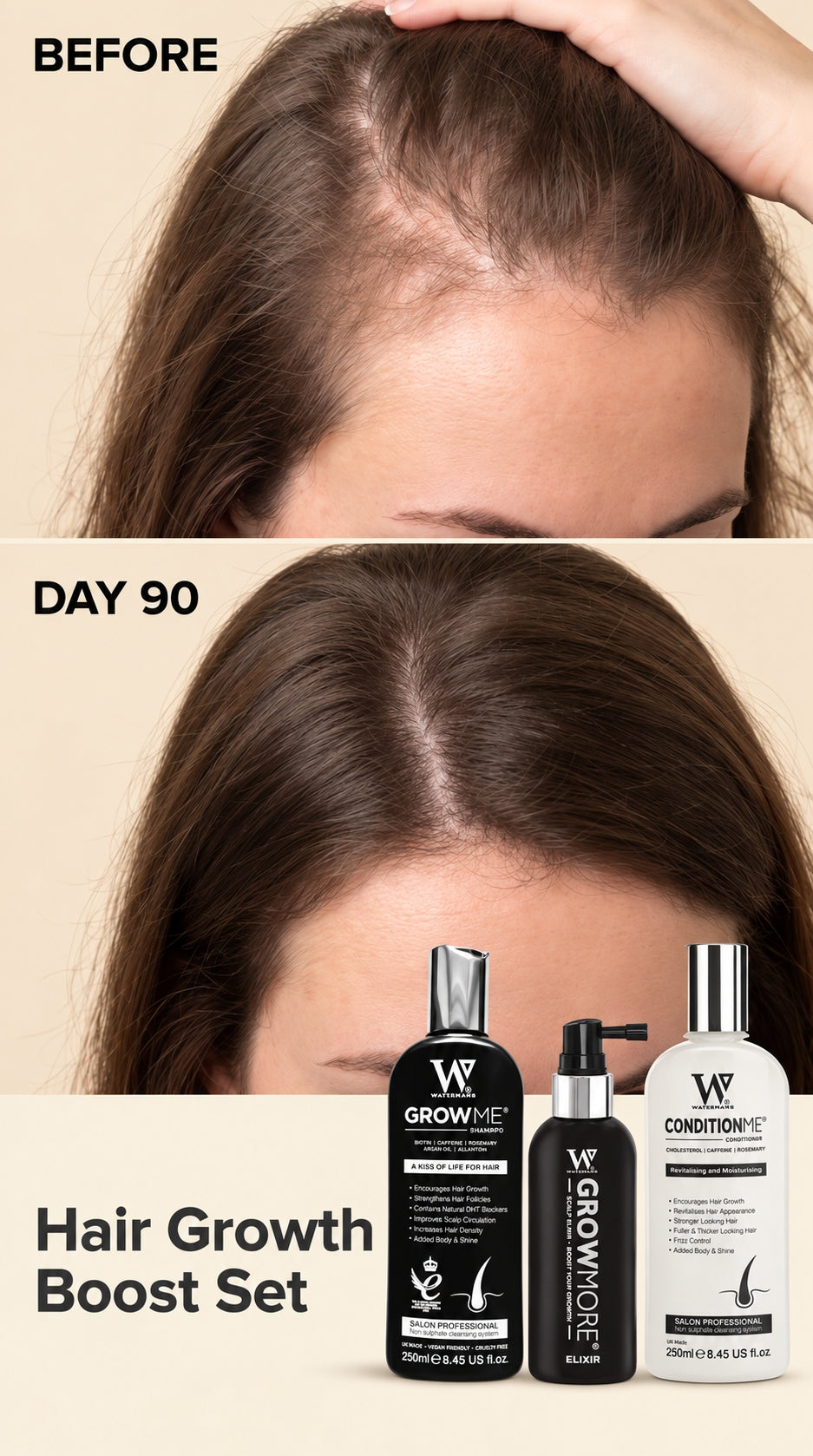
Grow Me® Hair Growth Shampoo, £14.95. A sulphate free daily shampoo that supports a healthy scalp environment and helps reduce breakage, so lengths hold on and look fuller.
Key takeaways
- A trichogram counts hair roots by growth phase. It is a measurement, not an answer.
- Normal scalp values sit at roughly 80 to 90 percent growing and 10 to 15 percent resting.
- It requires plucking real hairs, so it is uncomfortable and operator dependent.
- Newer non invasive imaging methods have largely overtaken it for everyday assessment.
- Free home checks and a GP blood test will answer more for most people than a private test will.
What does a trichogram actually measure?
The test rests on a simple idea. Every scalp follicle cycles through a long growing phase called anagen, a brief transitional phase called catagen, and a resting phase called telogen, after which the hair is released. Roots from each phase look distinctly different under magnification. Anagen roots are pigmented and sheathed, telogen roots are club shaped and pale.
A practitioner plucks a defined bundle of hairs from a marked area, usually with rubber tipped forceps and a firm pull along the direction of growth, then mounts them and counts the root types. The output is a percentage split, sometimes with a count of dystrophic or broken roots alongside.
Interpretation is comparison against reference ranges. A shift towards a higher proportion of resting roots is consistent with the kind of increased shedding seen in telogen effluvium. A raised proportion of very fine, short growing hairs points in a different direction. Neither result names a cause on its own.

How reliable is the test?
Reliability is the honest weak point, and it is worth knowing before anyone charges you for one. Results move depending on how recently the hair was washed, how the hairs were gripped, how firmly they were pulled, which area was sampled and who did the counting. Guidance generally suggests not washing for several days beforehand, which by itself tells you how sensitive the method is to conditions.
Comparative work published in the International Journal of Trichology in 2012 set the trichogram against trichoscopy, a non invasive method that uses magnified imaging of the scalp surface instead of plucked hairs, in women with pattern hair loss. That kind of comparison is why non invasive imaging has become the more common approach in practice: it hurts less, it can be repeated as often as you like, and it does not depend on how hard someone pulled.
None of that makes the method worthless. It remains a genuine, quantitative measurement, and in the right hands it produces useful numbers. It is simply not the definitive answer that the word "test" tends to suggest, and it should not be the first money you spend.
What can the test not tell you?
Three limits matter, and the third one catches people out constantly.
| Limit | Why it matters |
|---|---|
| It does not identify a cause | A shifted ratio is consistent with several different causes. Blood tests and history do the narrowing down. |
| It is a snapshot | One sample on one day. Shedding fluctuates with season, illness and stress, so a single number can mislead. |
| It ignores breakage entirely | Only intact plucked roots are counted. Hair snapping halfway along the shaft never appears in the result. |
That last point deserves spelling out, because it is where a great deal of confusion sits. Three different things get called hair loss in everyday speech.
- Hair loss means follicles are not replacing hair at the rate it is released, so the parting widens and the ponytail thins. This is what the test is designed to shed light on.
- Hair shedding is the normal cycle releasing old hairs, roughly 50 to 100 a day, rising temporarily after illness, childbirth, crash dieting or major stress.
- Hair breakage is the fibre snapping partway along its length, leaving short pieces with no root bulb. It makes hair look thinner while the follicles are entirely healthy, and no root count will ever detect it.
If what you are collecting is short broken pieces with no white bulb on the end, the answer is in your styling routine rather than in a laboratory. Our guides to what causes hair breakage and to heat damage cover that side properly.
Get a discount on your next order
Join the Watermans mailing list and we will email a discount code straight to your inbox. Made in the UK, over 6.5 million bottles sold since 2012.
Who performs these tests in the UK, and do they cost anything?
Trichograms are carried out privately, usually by trichologists and occasionally in dermatology settings. Prices vary widely because there is no standard fee, and the assessment is normally bundled into a wider paid appointment rather than sold on its own.
One thing worth knowing before you book anything: trichology is not a protected profession in the UK. The Health and Care Professions Council regulates a defined list of professions, and trichologist is not among them, so the title carries no statutory standing. Reputable practitioners exist and belong to voluntary professional bodies, but the responsibility for checking credentials falls on you.
To be clear about our own position: Watermans sells cosmetic hair care. We do not run clinics, we do not offer assessments, and we have no clinician on staff. If you want a hair assessment, your GP is the free first step and can arrange a dermatology referral where one is warranted. Our page on what trichologists do and when to see a GP goes through that decision in more detail. If your question is about products or a routine rather than a medical one, you can talk to Gail Waterman, our co-founder, as an AI avatar on the Watermans homepage.

What should you do before paying for a trichogram?
Four free steps will answer more, for more people, than a paid test will. Do these first.
- Count for a week. Collect the hairs from your brush and plughole daily and write down the number. Consistently well above 100 a day for more than a few weeks is meaningful. A single alarming day is not.
- Photograph your parting monthly in the same spot, same light, same time of day. Memory is unreliable and month to month photographs are not.
- Check whether the pieces have a bulb. A tiny white bulb at one end means the hair came from the follicle. No bulb means it snapped, which is breakage.
- See your GP and ask about bloods. Iron stores, thyroid function and general health explain a large share of sudden shedding, and those tests are free.
Our guide to six home checks for thinning hair walks through the practical versions of these, and the hair pull test covers the simple check a clinician may do in the room.
What happens on the day, step by step?
Knowing the sequence removes most of the anxiety, and it also makes it easier to judge whether the person doing it is being careful.
- Preparation. You will normally be asked not to wash your hair for around three to five days beforehand, and to arrive with it unstyled and product free.
- History first. A careful practitioner spends longer on questions than on the sample: when the change started, family history, recent illness, diet, medication and how you style your hair.
- Marking the area. A defined site is chosen, often at the vertex and a second comparison site, so that any repeat sample can be taken from the same place.
- The pluck. Rubber tipped forceps grip a bundle close to the scalp and pull firmly along the direction of growth, in one movement. It is over in seconds.
- Mounting and counting. The hairs are laid on a slide and the roots classified under magnification, then expressed as percentages.
- The conversation afterwards. The numbers should be explained against a reference range, in plain language, alongside what they do not show.
If a practitioner produces a percentage and an immediate product recommendation in the same breath, without bloods, history or any mention of the method's limits, that is a reasonable moment to seek a second opinion.
Where does cosmetic hair care fit, and where does it not?
Honestly: if a trichogram is on your mind, a shampoo is not your answer, and we would rather say that than sell you one. What a cosmetic routine does is reduce the breakage and mechanical damage that sit on top of whatever else is happening, which is worth having but is a different problem from the one a trichogram examines. Before agreeing to any multi-month course, our guide to which trichology add-ons are worth paying for explains what to refuse on a first visit and which four fees to get in writing.

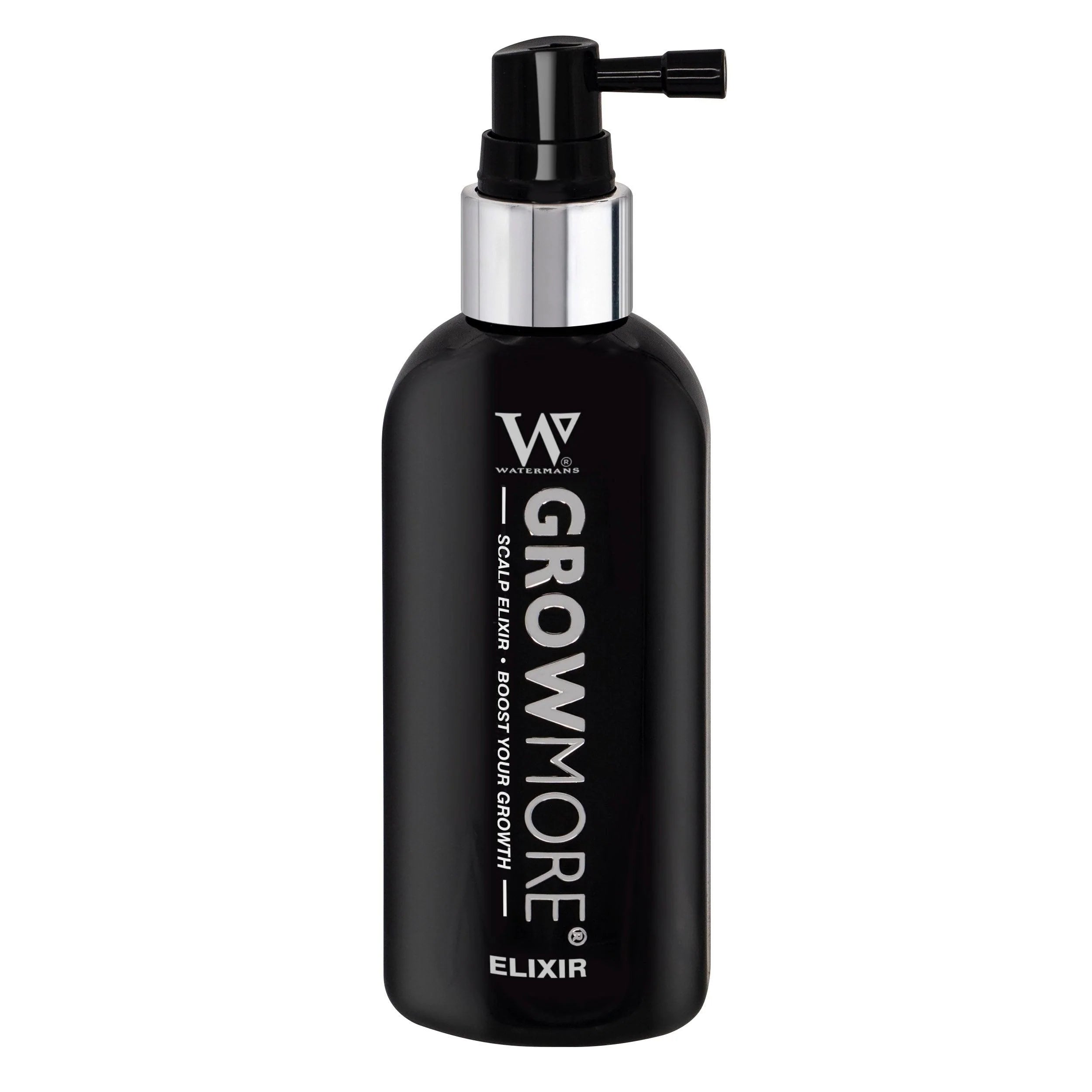
A gentle sulfate free everyday wash that supports a healthy scalp environment. Sensible general care while you work out what is going on. Not a substitute for finding the cause. For the home equivalents of these measurements, see how to track parting width, ponytail circumference and hair calibre month by month.

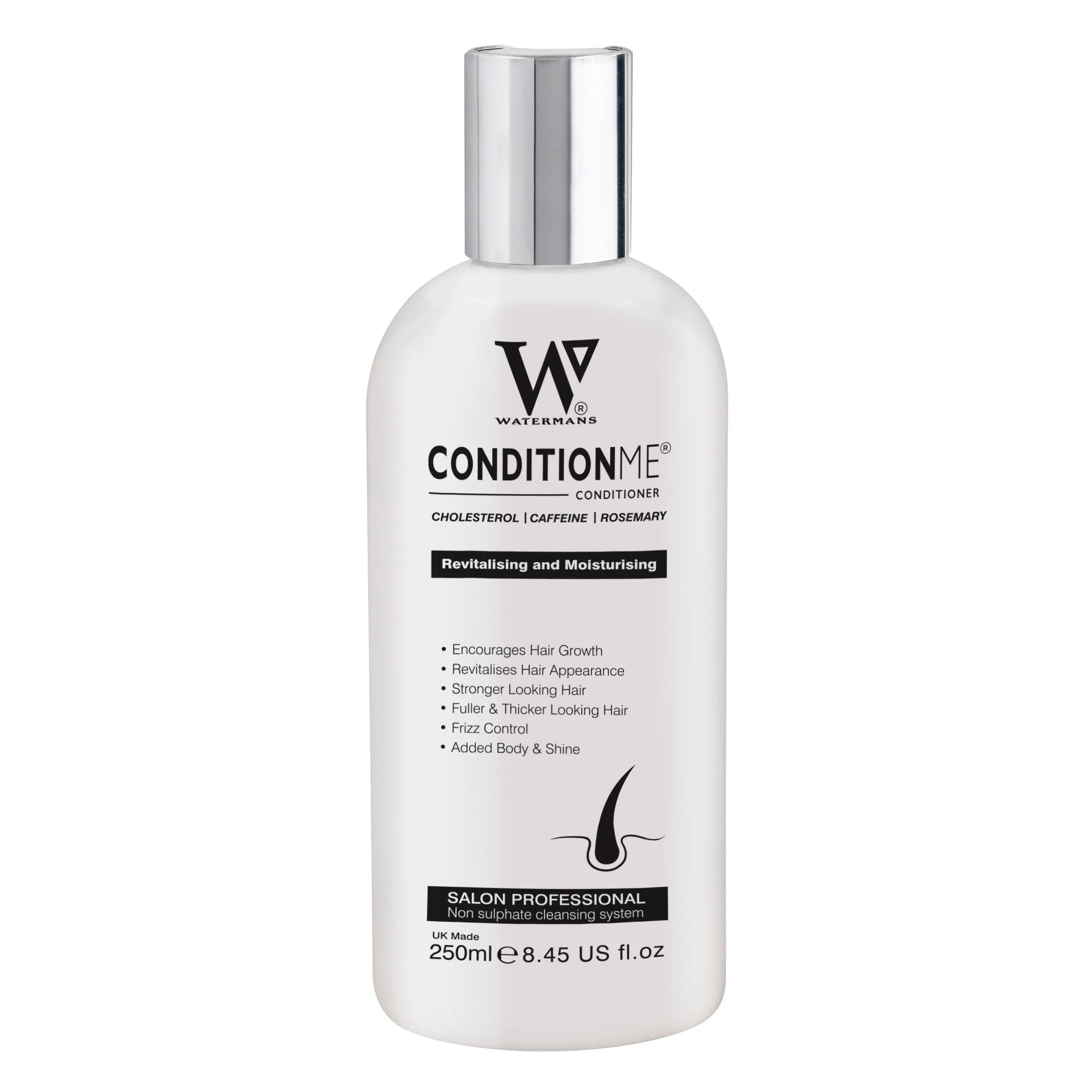
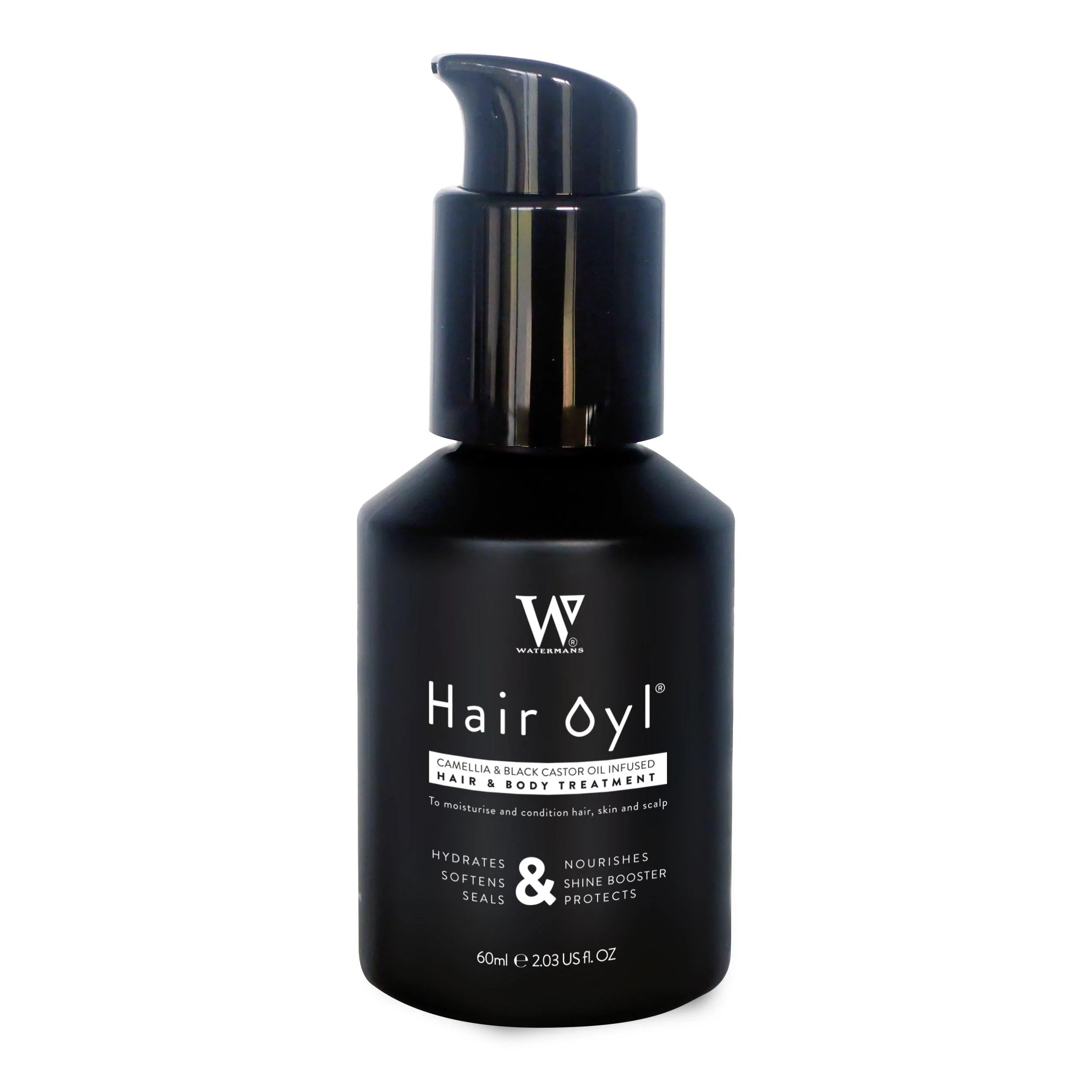
Adds slip so detangling snaps fewer strands. This is the part of the picture a root count never sees, and the part you can change today.
Watermans is cruelty free and made in the UK, with over 6.5 million bottles sold since 2012.
Frequently asked questions about the trichogram
Does it hurt?
Plucking 50 to 100 hairs at once is uncomfortable, though brief. Most people describe it as a sharp sting rather than lasting pain. Discomfort is one reason non invasive imaging has become more common.
Do the plucked hairs grow back?
Yes. Plucking removes the hair, not the follicle, and normal cycling continues afterwards. This is a temporary cosmetic cost rather than a lasting one.
What is a normal trichogram result?
Reference ranges vary between laboratories, but scalp values are commonly quoted at roughly 80 to 90 percent growing hairs and 10 to 15 percent resting hairs. Your practitioner should interpret against their own reference range.
Should I wash my hair beforehand?
No. Practitioners usually ask you to avoid washing for several days beforehand, because recent washing removes loose telogen hairs and shifts the count. Follow whatever instruction you are given.
Is the test available on the NHS?
This is not a routine NHS test. NHS assessment of hair concerns is normally based on history, examination and blood tests, with dermatology referral where warranted. Trichograms are generally private.
What is the difference between a trichogram and trichoscopy?
A trichogram requires plucking hairs and examining their roots. Trichoscopy uses magnified imaging of the scalp surface, so nothing is pulled out and the check can be repeated as often as needed.
Will the result tell me why my hair is thinning?
No. It quantifies the ratio of growing to resting hairs. Working out the reason takes history, examination and usually blood tests, which is why a GP visit is the sensible starting point.
What is the bottom line on trichogram?
A trichogram is a real measurement with real limits. It counts roots by growth phase, it cannot name a cause, it is sensitive to how and when it was taken, and it is blind to breakage, which is the single most common reason hair looks thinner than it did. Before paying for one, count your shedding for a week, photograph your parting monthly, check whether the pieces have a bulb, and ask your GP about iron and thyroid bloods. Those four steps are free and they answer more.
If you are changing one thing this month, make it the wash: our sulphate free hair growth shampoo is sulphate free and built for the scalp. Vegan and made in the UK.
Watermans products are 100% cosmetic and do not treat medical hair loss. Individual results may vary.
Sources and References
- Comparison of trichoscopy and the trichogram in women with pattern hair loss, International Journal of Trichology, 2012. pmc.ncbi.nlm.nih.gov/articles/PMC3358933
- Physiology, Hair, StatPearls, National Center for Biotechnology Information. ncbi.nlm.nih.gov/books/NBK499948
- NHS, hair loss overview. nhs.uk/conditions/hair-loss
- Health and Care Professions Council, the professions it regulates. hcpc-uk.org