

Holiday Hair Care: How to Protect Hair from Sun, Salt and Chlorine
Last updated: August 2026
The single most effective piece of holiday hair care costs nothing: wet your hair with clean tap water before you get into the sea or the pool. Hair absorbs water like a sponge, and hair already full of fresh water takes up far less salt and chlorine. Add a leave in product, a hat, a rinse straight after swimming and one deep conditioning treatment mid trip, and you will come home with hair in roughly the condition it left in.
Key takeaways
- Soak your hair in fresh water first. A saturated hair shaft cannot take on much more salt or chlorine.
- Rinse immediately after swimming, even if you cannot wash properly. Salt and chlorine do their damage while they sit and dry on the hair.
- A hat protects the scalp, which sunscreen usually misses, and shields the hair shaft from UV at the same time.
- Chlorine plus blonde or lightened hair equals brassiness or a green cast. Copper in the water, not the chlorine itself, causes the green.
- Pack a deep conditioning mask and use it once or twice on a week's trip, not just when you get home.
- UK carry on rules cap liquids at 100ml per container in a single clear one litre bag, so 75ml travel sizes matter.
- Sun and salt damage the hair shaft, which is dead tissue. Condition it or cut it, because it cannot be repaired.
What does a week in the sun actually do to your hair?
Three things happen at once, and they compound. UV breaks down the keratin proteins in the hair shaft and bleaches the melanin that gives hair its colour. Salt water draws moisture out of the cortex by osmosis and leaves crystals behind that roughen the cuticle. Chlorine strips the natural sebum film and binds to the hair, leaving it porous and squeaky.
Because hair is dead tissue with no blood supply, none of this repairs itself. A roughened cuticle stays roughened. That is why holiday hair care is a prevention job rather than a rescue job, and why the products that help are the ones that put a barrier on before exposure and put moisture back afterwards. Our guide to what causes hair damage covers which kinds of damage are genuinely reversible.
| Culprit | What it does to hair | What actually helps |
|---|---|---|
| UV | Degrades keratin, bleaches pigment, fades colour, causes brittleness | A hat, a leave in product, keeping hair up and covered at midday |
| Salt water | Draws moisture out, leaves crystals that abrade the cuticle | Pre soak in fresh water, oil or leave in before swimming, rinse straight after |
| Chlorine | Strips sebum, raises porosity, makes hair squeaky and tangly | Pre soak, swim cap for long trips, clarify and deep condition after |
| Copper in pool water | Oxidises and deposits on light hair, giving the green cast blamed on chlorine | Pre soak, rinse fast, a chelating or clarifying wash |
| Heat and hard water | Mineral build up, dullness, added dryness on top of everything else | Skip the hotel hairdryer where you can, deep condition mid trip |

Why does chlorine turn blonde hair green?
Chlorine gets the blame but copper is the culprit. Copper enters pool water from algaecides and from copper pipework, oxidises in the presence of chlorine, and binds to the protein in the hair shaft. On dark hair it is invisible. On blonde, grey, highlighted or bleached hair, which is more porous and lighter in tone, it shows as a green or brassy cast.
Prevention is the same soak and rinse routine. If a cast has already appeared, a clarifying or chelating wash lifts the deposit, and a purple toning shampoo neutralises yellow and brassy tones afterwards. Do not reach for household remedies involving bleach or strong acids on lightened hair, because porous hair is fragile and easily snapped.

Tone Me Purple Shampoo, 250ml, £12.95
Sulphate free purple shampoo for blonde, bleached, highlighted and grey hair that has gone brassy or yellow over a summer of sun and pool water. Violet pigment neutralises warm tones cosmetically. Leave it on for two to three minutes, then condition, and use it once a week rather than every wash.
View Tone Me purple shampooWhat should you actually pack for your hair?
Keep it to five things. A packing list that needs a second wash bag gets abandoned by day three, and most of what gets recommended for holidays is the same product in different packaging. The list below covers prevention, daily washing and one repair treatment, and fits UK hand luggage rules.
| Item | Why it earns space | Size to pack |
|---|---|---|
| Travel shampoo and conditioner | Hotel shampoo is usually harsh and drying, and there is rarely conditioner | 75ml each, cabin bag legal |
| Deep conditioning mask | The one product that visibly changes how hair looks by the end of the week | Decant 50ml into a travel pot |
| Leave in or hair oil | Your pre swim barrier and your daily detangler in one | Small bottle, apply before the beach |
| A wide brimmed hat | Protects the scalp and parting, which no sunscreen reliably covers | Packable straw or fabric |
| Silk or satin scrunchie | Ties hair up without the snapping a tight elastic causes on dry hair | Two, they get lost |
UK hand luggage reminder: liquids, gels and creams must be in containers of 100ml or less, all fitting in one transparent resealable bag of about one litre. Some UK airports have relaxed this for newer scanners, but the rule is not consistent between airports, so pack to the 100ml limit unless you have checked your specific departure and return airports.

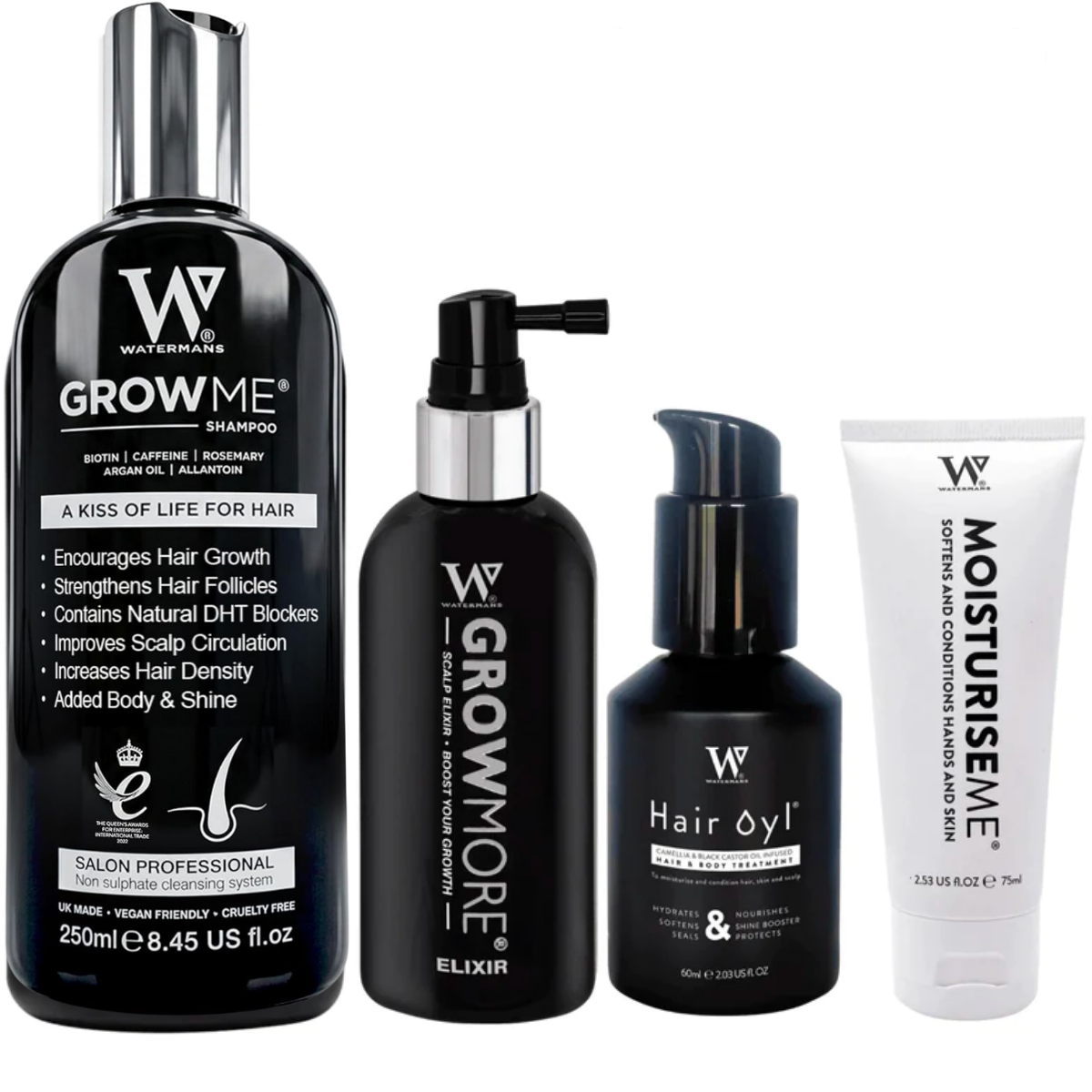
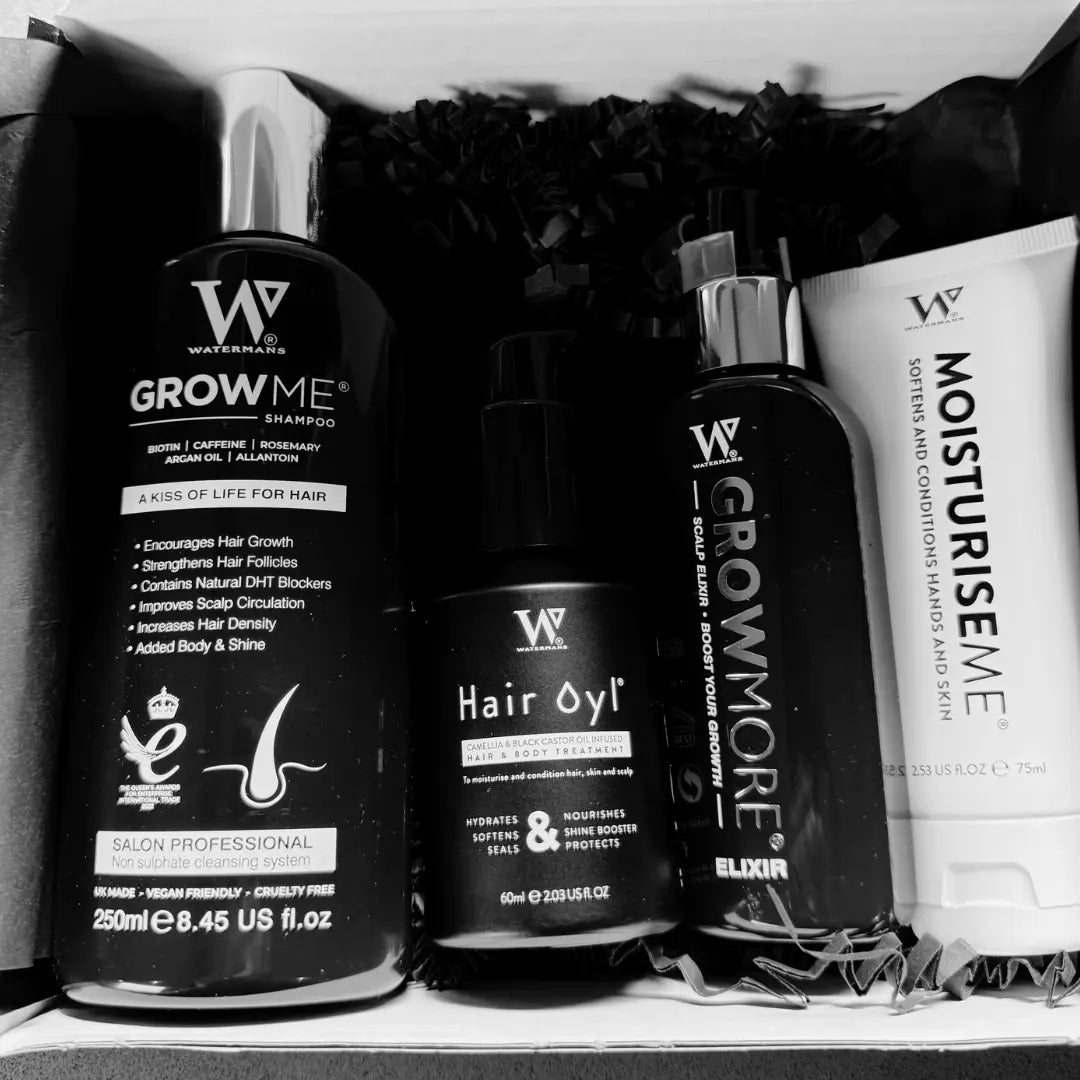
Travel Shampoo & Conditioner Set, 2 x 75ml, £9.95
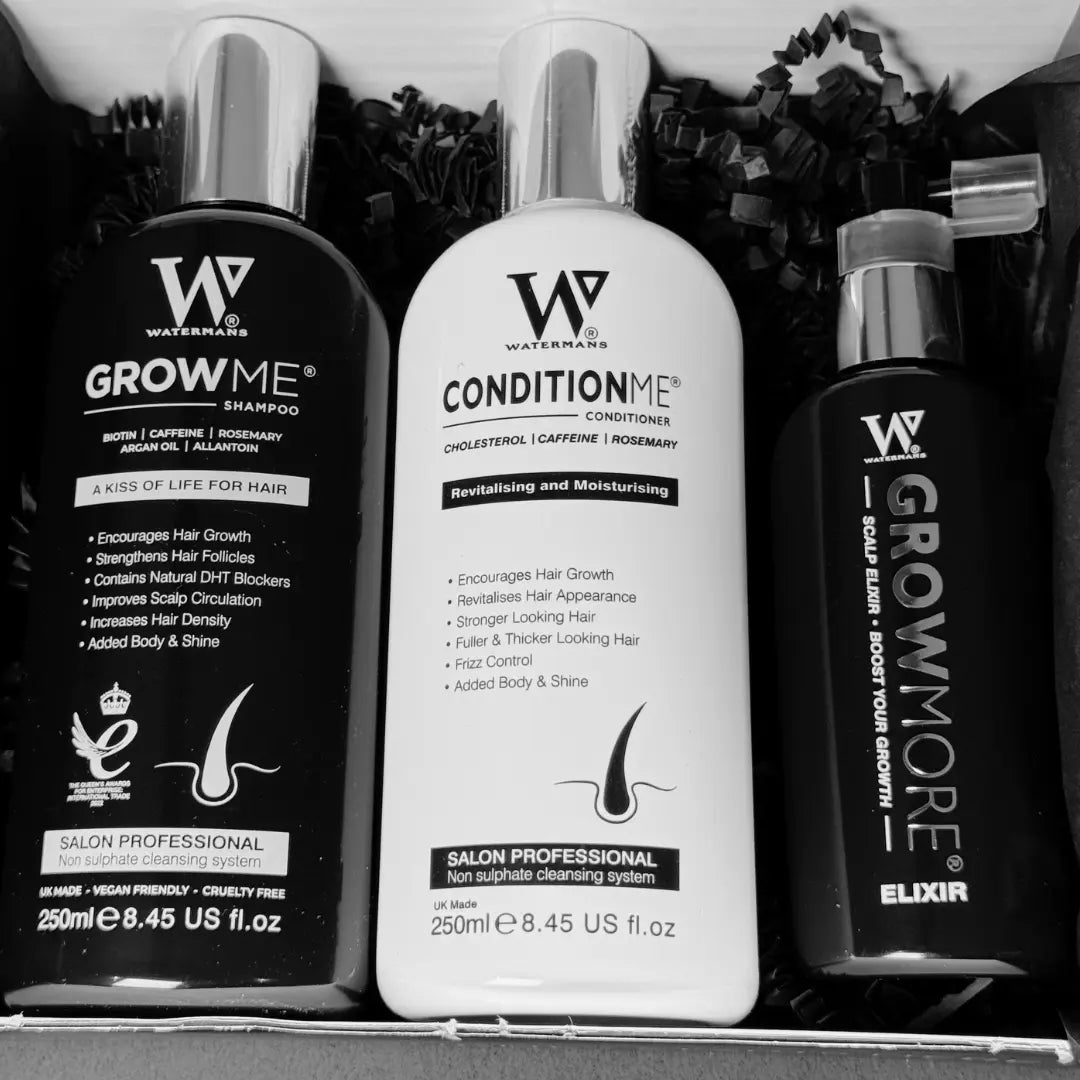
Grow Me shampoo and Condition Me conditioner in 75ml bottles, comfortably inside the 100ml cabin bag limit. Sulphate free, vegan and made in the UK, with caffeine, biotin, rosemary and hydrolysed lupine protein. Gentle enough for daily washing after swimming, and it reduces breakage for fuller looking hair.
View the travel set
What is the right routine before, during and after a swim?
The routine takes about ninety seconds and it is the difference between hair that survives a week and hair that needs cutting. Do it every time you swim, in the sea or the pool, and treat the after rinse as non negotiable even when you cannot get to a proper shower.
- Before. Soak your hair thoroughly with fresh tap water at the poolside shower. Hair that is already saturated absorbs far less chlorinated or salt water.
- Before. Smooth a small amount of oil or leave in through mid lengths and ends. It sits in the cuticle and slows uptake further.
- Before. Tie it up loosely, or wear a swim cap for long swims. Loose hair in salt water tangles and then gets torn apart by a comb.
- After. Rinse with fresh water within minutes. The damage happens while salt and chlorine sit and dry on the hair.
- After. Condition, then detangle with fingers or a wide tooth comb, working from the ends upwards. Never drag a brush through wet, salty hair.
- Evening. Let it air dry where you can. Hotel dryers are usually harsh and a week of daily blow drying compounds the UV damage.

Does your scalp need protecting as well as your hair?
Yes, and it is the part almost everyone forgets. The scalp faces the sun almost vertically, and a parting, a receding hairline or thinning hair leaves skin fully exposed. Scalp sunburn is genuinely painful, it flakes for a week afterwards in a way that is easily mistaken for dandruff, and the itching leads to scratching hair that is already fragile.
A wide brimmed hat is the most reliable answer, because thick body sunscreen through hair is unpleasant and rarely reapplied. If you part your hair, move the parting a couple of centimetres for the week so the same strip of skin is not exposed every day. Our guide to keeping your scalp healthy covers recovery if you do burn.
How do you repair hair after a holiday?
Start with one clarifying wash to lift chlorine, copper, salt, sunscreen residue and hard water minerals, because conditioning on top of build up achieves very little. Then deep condition properly, twice in the first week, and get the ends trimmed. Split ends travel up the shaft and no product closes them, so the scissors are doing real work.
Expect the improvement to be cosmetic rather than structural. Masks smooth the cuticle, reduce friction and make hair feel and look better, which is genuinely worth having, but they do not rebuild broken keratin. If your hair is snapping mid shaft rather than just feeling dry, our guides to preventing split ends and rescuing dry hair set out the realistic fixes.

Masque Me® Deep Conditioning Hair Mask, £24.95
An 8 in 1 treatment mask with rosemary, caffeine, hydrolysed lupine protein, niacinamide, provitamin B5 and argan oil, for hair left dry and rough by sun, salt and chlorine. Decant 50ml into a travel pot for mid holiday use, then run a full treatment when you get home. Cosmetic conditioning that smooths the cuticle and reduces breakage.
View Masque MeWatermans is a founder led British brand. Our products are vegan, made in the UK, and we have sold over 5 million bottles since 2012.
Does a holiday cause hair loss?
Sun, salt and chlorine damage the hair shaft, they do not affect the follicle, so they cause breakage rather than shedding. Breakage looks like short broken pieces and a thinner, wispier ponytail. Shedding looks like whole hairs with a small white bulb at the root, coming out of the scalp.
That distinction matters. If you notice genuine shedding a few weeks after a trip, the more likely explanations are illness, a stressful period, a change in diet or medication, or an underlying condition, rather than the swimming pool. Sudden, patchy or heavy shedding is worth a GP or trichologist appointment rather than a new shampoo.
See a GP or a registered trichologist if you notice sudden or patchy hair loss, a widening parting, visible scalp where there was none, or a scalp that is painful, scaly or not healing. Also get any new or changing mole or rough patch on the scalp checked, because it is easily missed and skin cancer is highly treatable when caught early. Cosmetic hair care cannot diagnose or treat any of that.
Frequently asked questions about holiday hair care
Should you wet your hair before swimming in the sea or a pool?
Yes, and it is the highest value thing on this list. Hair absorbs water readily, so a shaft already saturated with clean tap water takes up much less salt or chlorinated water. Use the poolside or beach shower for thirty seconds before you get in, every single time.
How do you stop chlorine turning blonde hair green?
Soak your hair in fresh water first, rinse within minutes of getting out, and use a clarifying or chelating wash if a cast appears. The green comes from copper in the pool water oxidising and binding to porous light hair, not from chlorine itself, so removing the deposit is what fixes it. A purple toning shampoo then neutralises brassiness.
Does salt water damage your hair?
Yes. Salt draws moisture out of the hair cortex and leaves crystals that roughen the cuticle, which is why hair feels stiff, tangly and matte after a swim in the sea. The damage happens mostly while it dries on the hair, so an immediate fresh water rinse prevents most of it.
What size hair products can you take in hand luggage from the UK?
Containers of 100ml or less, all fitting inside one transparent resealable bag of roughly one litre. Some UK airports have relaxed this with newer scanners but the rules differ between airports, so pack to the 100ml limit unless you have checked both your departure and return airports.
Should you wash your hair every day on holiday?
If you are swimming daily, yes, but with a gentle sulphate free shampoo and always followed by conditioner. Leaving salt, chlorine and sunscreen residue on the hair overnight does more harm than a mild daily wash. If you are not swimming, every other day is plenty.
Do hair sunscreens and UV protection sprays work?
They help a little by adding a filming layer, but there is no standardised SPF rating for hair products and none of them match a hat for reliability. Treat them as a supplement to physical cover rather than a replacement, and reapply after every swim, as you would with any leave in.
Can you repair sun damaged hair?
Not structurally. Hair is dead tissue with no blood supply, so broken keratin and a stripped cuticle do not regrow. Masks and conditioners smooth the cuticle, cut friction and make hair look and feel much better, which is worth doing, but genuinely damaged ends need trimming off.
Does swimming in a pool cause hair loss?
No. Chlorine damages the hair shaft and causes breakage, not shedding from the follicle. Broken hairs are short and have no white bulb at the root, whereas shed hairs are full length with a bulb. Persistent shedding after a holiday is far more likely to be illness, stress or a medical cause and is worth a GP appointment.
The short version
Soak your hair in fresh water before you swim, rinse straight after, wear a hat for your scalp, and use one deep conditioning treatment mid trip rather than saving it all for when you get home. Pack five things, not fifteen, in 75ml bottles. Then clarify, condition and trim when you are back, and treat any real shedding as a medical question rather than a shopping one.