



Vitamin A Deficiency: Symptoms, Causes and the Bile Link
Last updated: August 2026
Vitamin A deficiency is uncommon in the UK because the average British diet supplies plenty of it, and the liver can store several months' worth. When it does happen here, it is usually caused by a condition that blocks fat absorption rather than by diet alone, because vitamin A is fat soluble and needs bile to be absorbed at all. The earliest reliable symptom is difficulty seeing in dim light. Excess vitamin A, not shortage, is the more common problem in Britain, and it can cause hair loss.
Key takeaways
- Vitamin A is fat soluble, so it needs bile and dietary fat to be absorbed. No bile flow means poor absorption, whatever you eat.
- Deficiency is rare in the UK. It is a leading cause of childhood blindness globally, but here it usually signals an underlying absorption problem.
- The classic early sign is night blindness, meaning slow adaptation to dim light, followed by dry eyes and dry, rough skin.
- Too much vitamin A is the bigger UK risk. Chronic excess causes hair loss, dry skin, headaches and liver damage, and high doses in pregnancy can harm a baby.
- Do not eat liver or take vitamin A supplements in pregnancy unless your midwife or GP has told you to.
- Plant beta carotene is self limiting and will not cause toxicity. Retinol from animal foods and supplements is what accumulates.
- Persistent night vision problems, unexplained hair shedding or pale, greasy stools are GP appointments, not supplement decisions.
What does vitamin A actually do in the body?
Vitamin A is a family of fat soluble compounds essential for vision, immune defence, reproduction, and the growth and repair of the epithelial tissues that line your eyes, gut, airways and skin. In the retina, retinal combines with a protein to form rhodopsin, the pigment that lets you see in low light. That single mechanism is why night blindness is the first symptom to appear.
It comes in two forms. Preformed vitamin A (retinol) is found in animal foods and supplements and is used directly. Provitamin A carotenoids, mostly beta carotene, come from orange, red and dark green plants and are converted to retinol as needed. That conversion is regulated, which is why you cannot poison yourself with carrots but you can with retinol.
Why does vitamin A absorption depend on bile?
Bile is a detergent. Produced by the liver and concentrated in the gallbladder, it emulsifies dietary fat in the small intestine into droplets small enough for enzymes to work on, and it forms the mixed micelles that ferry fat soluble vitamins across the intestinal wall. Vitamin A cannot cross that wall efficiently without them, so bile flow is a genuine gate on absorption.
This matters clinically, not casually. Conditions that reduce or block bile flow, such as biliary obstruction, primary biliary cholangitis, cystic fibrosis, coeliac disease, Crohn's disease, chronic pancreatitis and some bariatric surgery, are the realistic UK routes to deficiency in all the fat soluble vitamins at once. If you want to understand what your own liver blood tests are saying, our guide to liver function test results explained walks through ALT, AST, ALP and GGT marker by marker.
| Fat soluble vitamin | Main job | What low levels look like |
|---|---|---|
| A | Vision, immunity, epithelial repair | Night blindness, dry eyes, rough dry skin |
| D | Calcium handling, bone and muscle | Bone pain, muscle weakness, frequent infections |
| E | Antioxidant, nerve function | Nerve and muscle problems, poor coordination |
| K | Blood clotting, bone metabolism | Easy bruising, slow clotting, raised INR |
Because they share one absorption route, a genuine bile problem rarely shows up as an isolated vitamin A issue. That is a useful diagnostic clue, and it is why a doctor investigates the cause rather than handing out a single supplement. Vitamin D is the one exception where UK supplementation is routinely advised for everyone, for reasons explained in our guide to vitamin D deficiency in the UK.

What are the symptoms of vitamin A deficiency?
Symptoms appear in a predictable order because the eye is the most sensitive tissue. Night blindness comes first, meaning your eyes take an unusually long time to adjust when you walk into a dark room or drive at dusk. Dryness of the eyes and skin follows, then more serious corneal damage in prolonged deficiency.
| Stage | Sign | What is happening |
|---|---|---|
| Early | Night blindness, slow dark adaptation | Not enough retinal to rebuild rhodopsin in the rod cells |
| Early | Dry, gritty eyes | Tear producing tissue changes, called xerophthalmia |
| Moderate | Dry, rough, bumpy skin | Epithelial cells keratinise abnormally |
| Moderate | Repeated infections, slow healing | Weakened epithelial barriers and immune response |
| Advanced | Bitot's spots, corneal ulceration | Structural eye damage, can become irreversible |
Note what is not on that list: sinus congestion, tiredness and general run down feelings are not specific signs of vitamin A deficiency, and treating them as such leads people to supplement when they should be getting investigated. Dry skin in particular is far more often a barrier and weather problem than a nutritional one, as our guide to caring for dry skin in winter explains.
Who is actually at risk of vitamin A deficiency in the UK?
Risk in Britain concentrates in specific groups rather than the general population. Anyone with a fat malabsorption condition, significant chronic liver or biliary disease, a history of bariatric surgery, alcohol dependence, or a very restricted long term diet is the realistic risk group. Premature infants also have low stores at birth.
- Fat malabsorption: cystic fibrosis, coeliac disease, Crohn's disease, chronic pancreatitis, bile duct obstruction.
- Liver disease: the liver both stores vitamin A and makes the transport protein that moves it around.
- After bariatric surgery: particularly procedures that bypass part of the small intestine. Lifelong monitoring is standard.
- Very restricted diets: long term diets with almost no fat, no dairy, no eggs and few coloured vegetables. Note that fat free eating impairs absorption even when the vegetables are there.
Diagnosis is a blood test for serum retinol, interpreted alongside the clinical picture, because levels stay normal until liver stores are largely depleted. It is not something you can establish from symptoms at home.

Which foods give you the most vitamin A?
Liver is by a very wide margin the richest source, to the point that it is a caution rather than a recommendation. For everyday intake, orange and dark green vegetables provide beta carotene safely and abundantly, and dairy, eggs and oily fish provide modest amounts of retinol. Adding a little fat to vegetables genuinely improves absorption.
| Food | Form | Practical note |
|---|---|---|
| Liver and liver pate | Retinol, very high | Avoid entirely in pregnancy. Others should limit to about once a week |
| Sweet potato, carrot, butternut squash | Beta carotene | Cook and eat with a little oil or butter to absorb more |
| Spinach, kale, spring greens | Beta carotene | The orange pigment is masked by chlorophyll but still there |
| Red pepper, mango, apricot | Beta carotene | Easy raw sources, no upper limit concern |
| Eggs, cheese, whole milk, butter | Retinol, modest | The everyday background source in a typical UK diet |
| Oily fish, cod liver oil | Retinol, high in the oil | Cod liver oil counts towards your retinol total. Do not stack it with a multivitamin |
UK reference intakes are roughly 700 micrograms a day for men and 600 for women. Most British adults comfortably exceed that without trying, which is why routine supplementation is not recommended here.
Can you have too much vitamin A, and what does it do to your hair?
Yes, and in the UK this is the more likely problem. Because vitamin A is stored in the liver rather than excreted like the water soluble vitamins, retinol accumulates. Chronic excess, known as hypervitaminosis A, is well documented to cause diffuse hair loss, dry cracked lips, dry skin, headaches, bone and joint pain, and in severe cases liver damage.
The hair loss pattern is a telogen effluvium: a large share of follicles shift prematurely into the resting phase and shed together two to three months later, giving sudden diffuse thinning all over rather than a receding pattern. It is usually reversible once the excess stops, though regrowth takes months. This is the same mechanism described in our guide to what causes telogen effluvium.
The usual route to excess is stacking: a multivitamin, plus a hair skin and nails supplement, plus cod liver oil, plus a prescribed retinoid. Nobody sets out to overdose on vitamin A, they just take four things that each contain some. Add up the retinol on every label you take, and note that beta carotene from food does not count towards that total because conversion is regulated.

Pregnancy warning. High doses of preformed vitamin A can cause birth defects. UK guidance is clear: if you are pregnant or trying to conceive, do not take supplements containing vitamin A, including cod liver oil, and avoid liver and liver products such as pate altogether. Beta carotene from fruit and vegetables is fine. Prescription oral retinoids for acne are a separate and stricter matter, and are managed with a pregnancy prevention programme by your prescriber.
Never stop or change a prescribed medicine on the strength of a blog post, including a prescribed retinoid. Speak to the doctor who prescribed it.
How should you support absorption sensibly?
For most people the answer is unglamorous and effective: eat coloured vegetables regularly, include some fat with them, and do not remove whole food groups without a reason. There is no food, drink or supplement that increases bile production in a clinically meaningful way, and the flush and detox protocols sold on that premise have no good evidence behind them.
- Eat fat with your vegetables. Olive oil on roasted carrots or butter on greens measurably improves carotenoid absorption.
- Cook them. Gentle cooking breaks down plant cell walls and makes beta carotene more available than raw.
- Do not go fat free. Very low fat diets impair every fat soluble vitamin at once.
- Audit your supplement shelf. Add up the retinol across everything you take, and drop the duplicates.
- Get symptoms investigated, not supplemented. Persistent night vision problems, or pale greasy floating stools that suggest fat malabsorption, need a GP.
Where does hair care fit into this?
Honestly, at the edges. Nutrition affects hair from the inside, and no shampoo, conditioner or oil changes bile flow, liver function or how much vitamin A you absorb. Any brand telling you otherwise is selling you something. What topical hair care can genuinely do is cosmetic: reduce breakage, improve condition and make hair look fuller while an underlying issue is being sorted out with your GP.
If you are shedding and you suspect nutrition, the sensible order is to see a GP for blood tests first, correct any confirmed deficiency under their guidance, and treat supplements as a top up rather than a diagnosis. Our overview of the vitamins and minerals that matter for hair growth covers which ones have real evidence behind them and which do not.

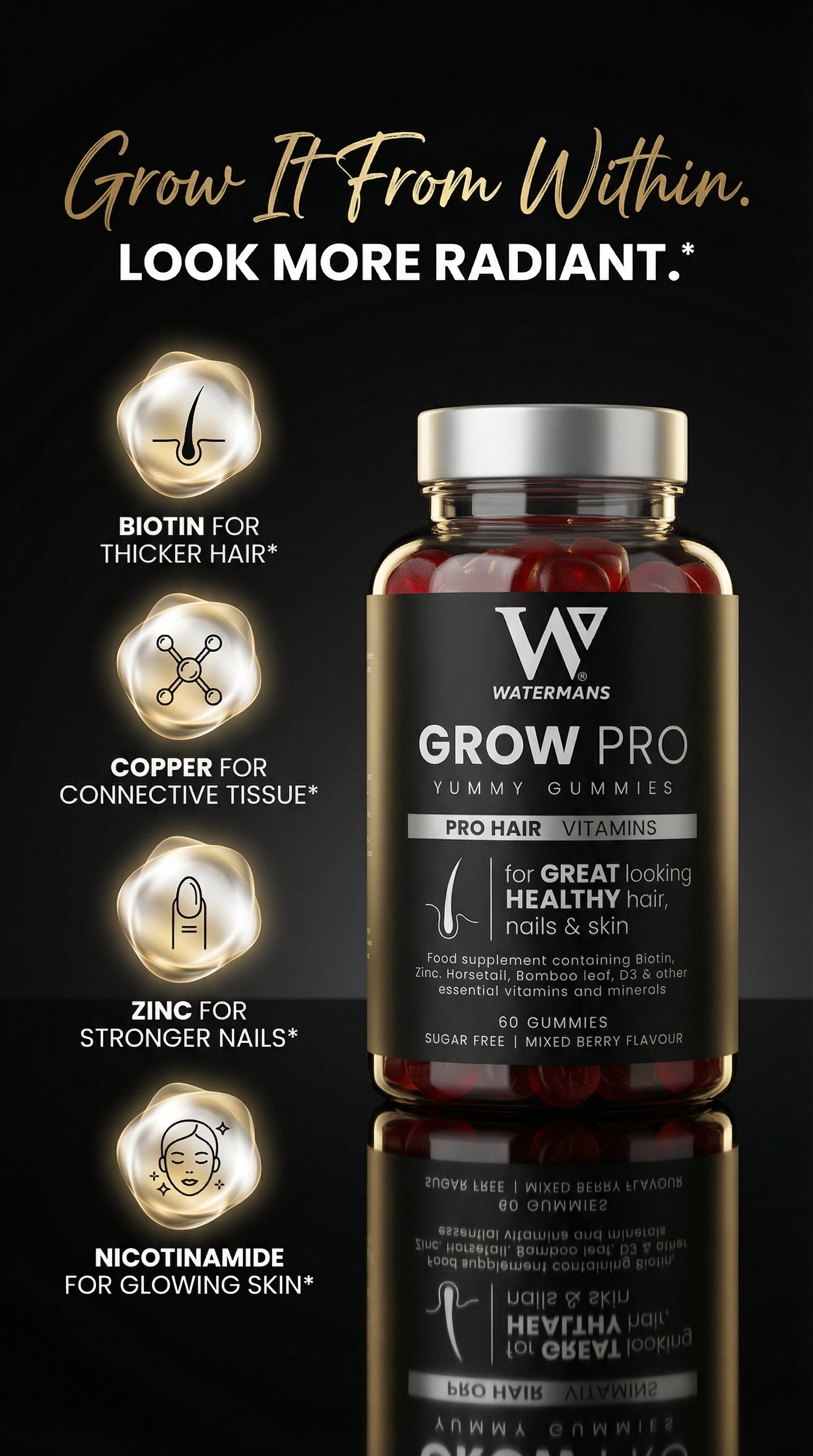
GrowPro® Hair, Skin & Nails Gummies, £22.95
A sugar free vegan food supplement with biotin, zinc, MSM, bamboo silica and B vitamins, where those nutrients contribute to the maintenance of normal hair. It is a supplement, not a treatment for any medical condition. If you already take a multivitamin or cod liver oil, check the labels so you are not doubling up, and speak to your GP first if you are pregnant, breastfeeding or taking a prescribed retinoid.
View GrowPro gummiesWatermans is a founder led British brand. Our products are vegan, made in the UK, and we have sold over 5 million bottles since 2012.
Frequently asked questions about vitamin A and bile
What is the first sign of vitamin A deficiency?
Night blindness, meaning your eyes adapt unusually slowly when you move from bright light into a dark room, or when driving at dusk. It happens because the retina needs vitamin A to rebuild rhodopsin, the pigment used by the rod cells that handle low light vision. It is an early and specific sign worth reporting to a GP.
Can poor bile flow cause a vitamin A deficiency?
Yes, and this is the usual mechanism in developed countries. Bile forms the micelles that carry fat soluble vitamins across the intestinal wall, so blocked or reduced bile flow impairs absorption of vitamins A, D, E and K together. The cause is normally an underlying condition such as biliary obstruction or coeliac disease, which needs medical investigation.
Does too much vitamin A cause hair loss?
Yes. Chronic excess of preformed vitamin A, known as hypervitaminosis A, is a recognised cause of diffuse hair shedding called telogen effluvium. It typically comes from stacking several supplements that each contain retinol. Shedding usually reverses over several months once intake returns to normal, but confirm the cause with a GP first.
Can you get too much vitamin A from carrots?
No. Carrots and other plants supply beta carotene, which the body converts to retinol only as required, so the process is self limiting. Eating very large amounts can turn the skin faintly orange, a harmless condition called carotenaemia that fades. Toxicity comes from retinol in liver, cod liver oil and supplements, not from vegetables.
Is it safe to take a vitamin A supplement in pregnancy?
No, not unless your midwife or doctor has specifically advised it. High doses of preformed vitamin A can cause birth defects, so UK guidance is to avoid supplements containing vitamin A, avoid cod liver oil, and avoid liver and liver pate during pregnancy. Beta carotene from fruit and vegetables remains perfectly safe.
How much vitamin A do adults need each day?
UK reference intakes are around 700 micrograms a day for men and 600 micrograms for women. Most people in Britain reach that from ordinary food without trying, which is why routine supplementation is not recommended here. Higher long term intakes from supplements raise the risk of toxicity rather than adding benefit.
Do sinus problems mean I have a vitamin A deficiency?
No. Recurrent sinus symptoms are far more commonly caused by allergy, infection, nasal polyps or a structural issue, and there is no reliable way to diagnose a nutritional deficiency from them. An earlier version of this article made that link and it was wrong. Persistent sinus problems should be assessed by a GP.
Can a shampoo or supplement improve liver or bile function?
No. Topical hair care does not reach the liver or influence bile production in any way, and no cosmetic product should be sold on that basis. Liver health is a medical matter driven by alcohol intake, body weight, medication, viral hepatitis and underlying disease, and it belongs with your GP.
The short version
Vitamin A needs bile and dietary fat to be absorbed, which is why deficiency in the UK usually points to a fat absorption problem rather than a poor diet. Night blindness is the signal worth acting on. For most British adults the practical risk runs the other way, towards taking too much retinol across stacked supplements, which can cause diffuse hair shedding and, in pregnancy, real harm. Eat coloured vegetables with a little fat, add up your supplement labels, and take persistent symptoms to a GP.