

Are Expensive Serums Worth It? An Ingredient Guide
Price tells you very little about whether a serum will work. Some expensive products contain genuinely well researched actives at sensible concentrations in packaging that keeps them stable. Others contain the same commodity ingredients as a supermarket bottle, wrapped in heavier glass and a better fragrance. The only way to tell them apart is to stop looking at the price and start reading the ingredients list, and that is a skill anyone can learn in about ten minutes.
Key takeaways
- Ingredients are listed in descending order by weight down to 1 per cent, then in any order. Most actives sit below that line.
- A patent proves novelty, not effectiveness. A trademarked ingredient name proves only that someone registered the name.
- The ingredients with the strongest evidence are cheap and boring: sunscreen, retinoids, some vitamin C forms, niacinamide.
- Expensive products genuinely do tend to win on texture, stability and packaging, which is not nothing, but it is not the same as better results.
- Consistency beats potency. A mid-priced product you use every day beats a luxury one you ration.
- Your scalp is skin, and it is the patch most people spend nothing on.
What does the price of a serum actually pay for?
The raw materials in most skincare are a small fraction of the retail price. That is not a scandal, it is how the category works, but it does explain why two bottles with similar ingredients can differ tenfold in cost.
| What you are paying for | Does it affect results? |
|---|---|
| Retail and distribution margin | No. Often the single largest slice. |
| Marketing, advertising, counter staff | No. |
| Packaging: glass, weight, dropper, box | Rarely. Airless and opaque packaging is the exception, and it genuinely matters. |
| Fragrance and sensory experience | Not on the skin. But it does affect whether you keep using it. |
| Formulation and stability work | Yes. An unstable active is a wasted active. |
| Patented or exclusive actives | Sometimes. Depends entirely on the evidence behind them. |
| Concentration of the active | Yes, and it is almost never disclosed. |
Notice how many rows are a no. That is the honest reason a well formulated pharmacy serum can outperform a luxury one, and also the honest reason it sometimes does not: the luxury brand may have spent real money on the two rows that matter.

How do you read an ingredients list?
Cosmetic ingredients are listed using INCI names, an international naming standard, and the order is not random. Learn these four rules and you can assess any product in a shop aisle.
- Descending order by weight, until you reach 1 per cent. Everything present at 1 per cent or less can be listed in any order the manufacturer likes. This is the single most useful thing to know.
- Find the 1 per cent line. Preservatives such as phenoxyethanol, and thickeners such as xanthan gum or carbomer, are typically used at well under 1 per cent. Once you spot one of those, assume everything after it is in trace territory.
- Where is the hero ingredient? If the ingredient on the front of the box appears after the preservative, it is present in a token amount. This is called fairy dusting and it is extremely common.
- Parfum near the top is a warning for sensitive skin. Fragrance is a leading cause of cosmetic contact allergy, and its position tells you roughly how much is in there.
There are legitimate exceptions. Some actives genuinely work at very low concentrations, retinoids being the obvious example. But the burden of proof sits with the brand, and if they will not tell you the concentration, that is information in itself.
What do the headline actives actually do?
Rather than reviewing individual bottles, which reformulate constantly, it is far more useful to understand the ingredients that keep appearing on the front of premium serums. Here is what each one is and how solid the case for it is.
Thiamidol (INCI: isobutylamido thiazolyl resorcinol)
A tyrosinase inhibitor developed and patented by a German manufacturer. Tyrosinase is the rate-limiting enzyme in melanin production, so inhibiting it reduces new pigment formation, which is a sound mechanism for fading dark spots and evening tone. It is one of the more interesting patented actives of recent years. The caveat worth stating plainly: most of the published research on it has been funded by the company that owns it, which is normal for proprietary ingredients but means independent replication carries more weight than the brand claims do.
Ferment lysates (bifida ferment lysate, galactomyces, saccharomyces)
These are the filtered products of fermented bacteria or yeast, marketed for barrier support and soothing. They are complex mixtures rather than single molecules, which makes them difficult to study rigorously. The realistic position is that they are pleasant, generally well tolerated humectant-rich ingredients with plausible soothing effects, and that the more dramatic anti-ageing claims made for them outrun the evidence.
Adenosine
A nucleoside involved in cellular energy transfer. It is approved as a functional anti-wrinkle ingredient in some regulatory markets, which is a stronger signal than most cosmetic ingredients carry. Effects reported are real but modest.
Vitamin C derivatives (sodium ascorbyl phosphate, magnesium ascorbyl phosphate, ascorbyl glucoside)
Pure L-ascorbic acid has the best evidence but is notoriously unstable, going yellow and losing potency. Derivatives are far more stable and gentler, but they must be converted in the skin, so they are generally considered less potent. If a serum is water-clear after six months, it either contains a derivative or very little vitamin C.
Tetrahydrocurcumin
A colourless derivative of curcumin from turmeric, used as an antioxidant that does not stain the skin yellow. Antioxidants are a sensible supporting act, particularly under sunscreen, but they are supporting actors rather than leads.
Niacinamide
Vitamin B3, and one of the genuinely well supported ingredients in cosmetic science, associated with barrier support, reduced redness and improved evenness of tone. It is also cheap and stable, which is why it appears everywhere from budget to luxury. It is used in hair care too, and we cover what niacinamide does for hair and scalp separately.
Glycerin and hyaluronic acid
Humectants that draw and hold water. They make skin look plumper and smoother almost immediately, which is why they feature in so many before-and-after photos. That effect is real, useful and entirely temporary. Glycerin is one of the most reliable ingredients in skincare and costs almost nothing.
Which ingredients have the strongest evidence?
It helps to sort claims into tiers rather than treating everything on a label as equivalent.
| Evidence tier | Examples | What to expect |
|---|---|---|
| Established | Broad spectrum sunscreen, retinoids, L-ascorbic acid | Meaningful change over months, well replicated |
| Good cosmetic support | Niacinamide, ceramides, glycerin, azelaic acid, tyrosinase inhibitors | Visible improvement in tone, comfort and texture |
| Immediate cosmetic effect | Hyaluronic acid, silicones, light-diffusing powders | Looks better now, resets after washing |
| Limited evidence | Most ferments, most botanical extracts, peptide blends | Plausible, poorly quantified, heavily marketed |
| Marketing language | Plant stem cells, DNA repair claims, energising complexes | Treat as decoration on the label |
The uncomfortable implication of that table is that the highest-value item in any routine is sunscreen, which is the cheapest step and the one most often skipped. If you are choosing between a luxury serum and a sunscreen you will actually enjoy wearing daily, the sunscreen wins every time. Related reading on why: why some people burn and others tan.

What does a patent actually prove?
This deserves its own section because it is the most misread signal in the category. A patent establishes that an invention is novel, non-obvious and useful enough to register. It is a legal instrument for protecting commercial territory. It is not a certificate of effectiveness, and no regulator reviewed the clinical evidence before granting it.
Similarly, a trademarked ingredient name written in small capitals with a registered symbol tells you the brand owns the name. The underlying substance may be well studied or may be a common extract with a proprietary label attached. The question to ask is always the same: what is the INCI name, at what concentration, and who ran the studies.
A quick shelf test
Turn the box over. Find the hero ingredient in the INCI list. If it appears in the first five names, it is present in a meaningful amount. If it appears after the preservative, you are mostly buying the front of the box. If the brand publishes the concentration, that is a good sign about how confident they are.
Where expensive products genuinely win
It would be dishonest to end on the idea that price never matters. Three areas where the premium is often real:
- Stability and packaging. Vitamin C, retinoids and some ferments degrade with light and air. Opaque, airless packaging costs more to produce and protects the formula. A clear jar with a screw lid containing a light-sensitive active is a bad sign at any price.
- Texture and cosmetic elegance. Getting an active to feel light, absorb well and sit under makeup without pilling is genuinely difficult formulation work. It sounds frivolous until you consider that the product you enjoy using is the product you use every day, and consistency is the biggest determinant of results.
- Tolerability. Reformulating to remove common irritants and stabilise pH costs money. For reactive or sensitive skin, that can be the difference between a product that works and one you abandon after four days.
What price does not buy is a shortcut. There is no serum that outperforms daily sunscreen, and none that undoes the effect of skipping it. If you want the sequence right, see our guide to the order to apply skincare in and the basics that actually hold up.
The patch of skin nobody budgets for
Here is the blind spot in most skincare spending. People will happily spend eighty pounds on a serum for the skin on their cheeks and nothing at all on the skin under their hair, which is the same organ, has the highest density of sebaceous glands on the body, and is where every hair you own is produced.
A scalp that is dry, flaky, tight or inflamed does not grow hair well. The principles transfer directly from face to scalp: cleanse without stripping, do not over-exfoliate, protect the barrier, and treat persistent redness or scaling as a reason to see a pharmacist or GP rather than something to scrub harder. We go into this in how to keep your scalp healthy for longer, stronger hair, and the same barrier logic applies to caring for dry skin through winter.


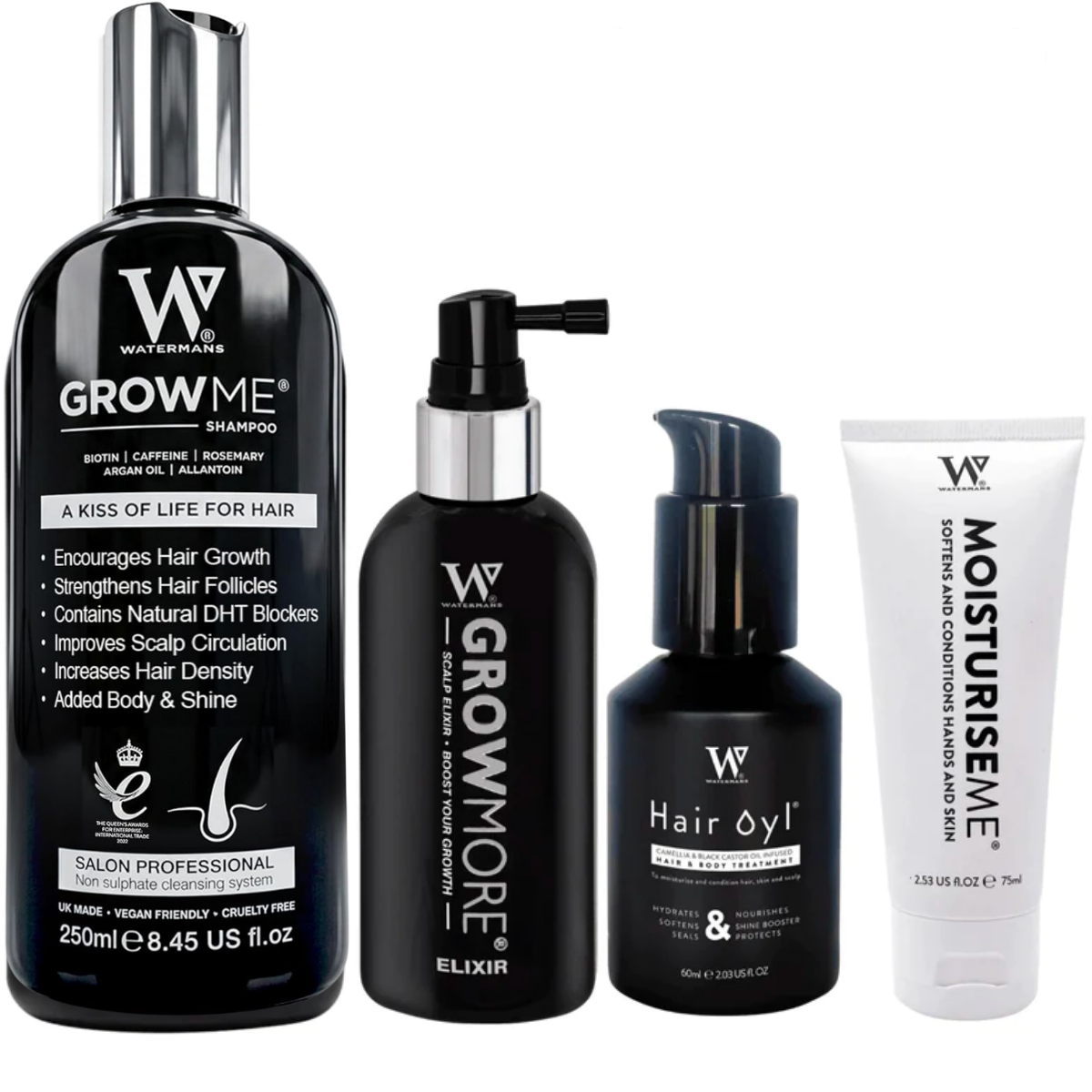
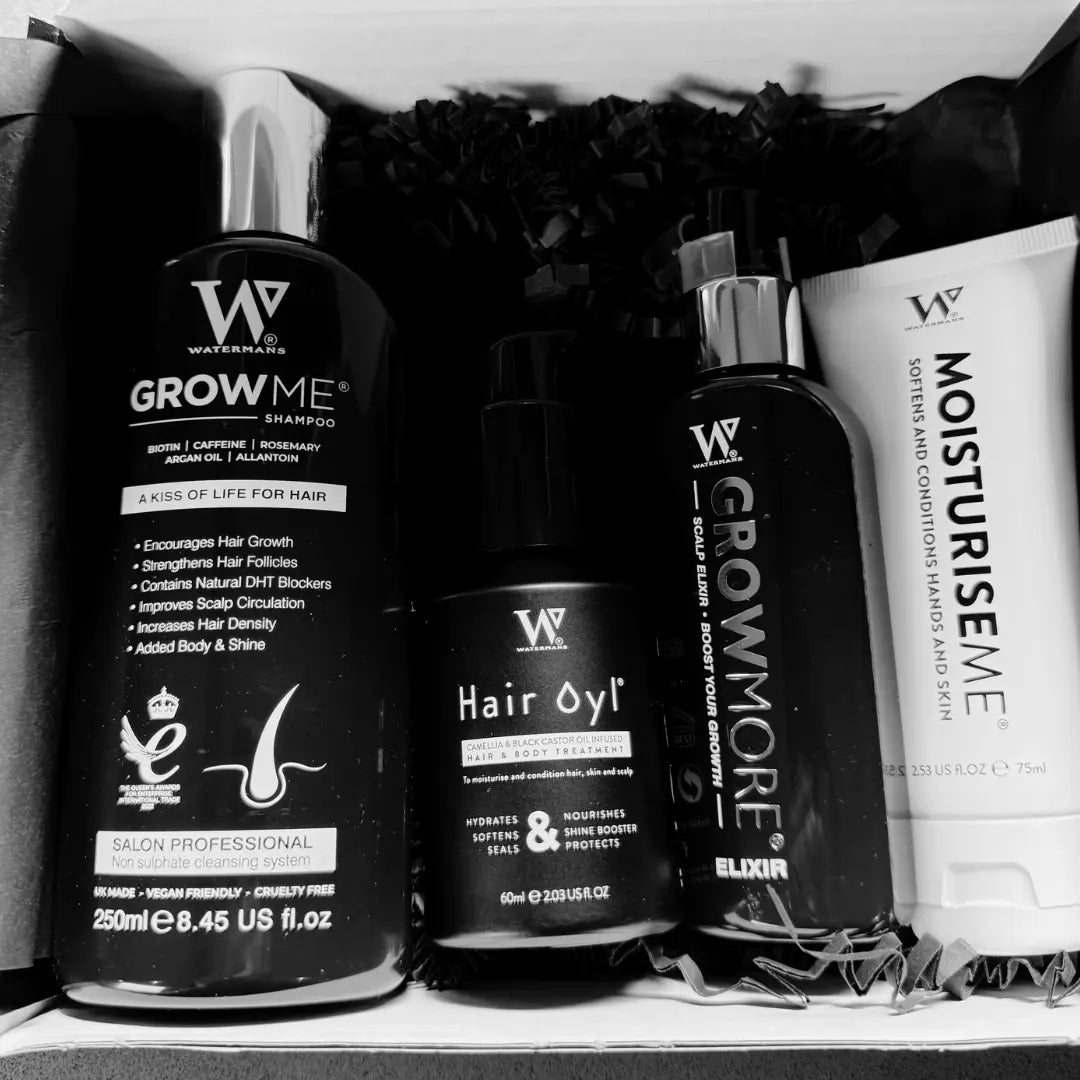
Moisturise Me® Face & Hand Cream
A straightforward emollient cream with cupuaçu, shea and cocoa butters, allantoin and almond oil. No patented complex, no exclusive extract, no claim to do anything a good moisturiser does not do. It is the boring, high-frequency step that most routines under-invest in.
£15.00. Vegan and made in the UK. Cosmetic moisturisation only.
Frequently asked questions
Is a 100 pound serum ten times better than a 10 pound one?
No. The relationship between price and performance is weak and flattens out quickly. Above roughly the mid-market point you are usually paying for texture, packaging, fragrance and brand rather than for a bigger effect on the skin.
How do I know if an ingredient is fairy dusted?
Find the preservative in the INCI list, commonly phenoxyethanol or a benzoate or sorbate. Anything listed after it is almost certainly present at under 1 per cent. If the hero ingredient sits there, it is decoration.
Are drugstore dupes really the same formula?
Sometimes the key active is genuinely the same at a similar concentration, in which case the dupe is a good buy. Often the active is the same but at a lower level, or the supporting formula is less stable or less pleasant to use. Compare the position of the active in both lists rather than trusting the word dupe.
How long should I use a serum before deciding it works?
Give it a full skin cycle plus margin. Eight to twelve weeks is a reasonable window for tone and texture changes. Anything that transforms your skin in three days changed the water content, not the skin.
Should I use several serums at once?
It is generally better to change one thing at a time. Layering four actives makes it impossible to know which one helped and which one caused the stinging, and increases the chance of irritation from combined acids, retinoids and high strength vitamin C.
Does natural mean gentler?
No. Natural has no legal definition in cosmetics, and botanical extracts and essential oils are among the more common causes of contact allergy. Gentleness comes from the formulation, not from the origin of the ingredients.
Do I need a separate serum for my neck and hands?
Not usually. Those areas benefit most from the same two things the face does: sun protection and consistent moisturisation. Hands in particular are washed constantly, so frequency of application matters more than the sophistication of the product.
Can skincare ingredients help my scalp?
Some transfer well, particularly humectants, niacinamide and gentle cleansing. But a face serum is not designed for hair-bearing skin and will usually leave hair greasy. Use products formulated for the scalp, and treat persistent flaking, itching or soreness as a medical question rather than a product one.
The short version
Buy the sunscreen. Buy a moisturiser you will use twice a day without thinking about it. Then, if you have a specific concern such as pigmentation or texture, buy one targeted product and give it three months of consistent use before judging it. Read the INCI list, find the 1 per cent line, and treat patents and trademarks as marketing until someone shows you the concentration and the independent data.
Watermans has been making vegan, UK-made skin and hair care since 2012, with over five million bottles sold. Our Moisturise Me Face & Hand Cream is deliberately in the boring, high-frequency category described above, and we would rather tell you that than invent a complex to justify a higher price.
This article is general cosmetic information and is not medical advice. Speak to a pharmacist, GP or dermatologist about persistent skin conditions, reactions or pigmentation that is changing.