

Skincare Routine Order: The Evidence Based Basics That Work
Last updated: August 2026
Four things carry almost all of the evidence in skincare: daily broad spectrum sunscreen, a retinoid, a moisturiser suited to your skin, and a cleanser gentle enough that it does not strip the barrier. Everything else is optional refinement. The correct application order is thinnest to thickest, actives before occlusives, sunscreen always last in the morning. A ten step routine built on unproven products will underperform a four step one built on proven ones.
Key takeaways
- Sunscreen is the single highest value step for both skin cancer risk and visible ageing.
- Retinoids have the strongest evidence of any anti ageing ingredient, and they take months, not weeks.
- Apply thinnest to thickest: cleanser, water based actives, serum, moisturiser, then sunscreen in the morning.
- Price correlates poorly with efficacy. Formulation and consistency matter far more than cost.
- Over exfoliating and stacking multiple actives is the most common cause of a damaged barrier.
- Changing moles, non healing sores, scarring acne and persistent flushing are doctor problems, not product problems.
What is the minimum skincare routine that actually works?
A gentle cleanser, a moisturiser and a daily broad spectrum SPF 30 or higher in the morning, plus a cleanser, a retinoid and a moisturiser at night. That is the entire evidence backed core. Adding more steps is not wrong, but it produces diminishing returns quickly, and every extra active product adds a chance of irritation.
Two of those four steps do most of the work. Sunscreen prevents the damage. A retinoid helps repair some of what is already there by increasing cell turnover and stimulating collagen production, which is why it remains the most studied topical ingredient in dermatology after sunscreen itself.
The other two steps exist to keep your skin barrier intact so the first two can work. A harsh cleanser that leaves your face feeling squeaky has stripped lipids you need, and a compromised barrier makes every active you apply afterwards sting more and irritate faster.

What order should you apply skincare in?
Thinnest to thickest, water based before oil based, actives before occlusives, and sunscreen last in the morning. The principle is that a heavier product forms a film that slows anything applied on top of it, so a rich cream applied before a watery serum simply blocks the serum from reaching the skin.
| Step | Morning | Night |
|---|---|---|
| 1 | Gentle cleanser, or water only if your skin is dry | Cleanser, twice if you wore sunscreen or makeup |
| 2 | Water based active if you use one, such as vitamin C | Retinoid on dry skin, a pea sized amount for the whole face |
| 3 | Moisturiser | Moisturiser, or moisturiser before the retinoid if you are sensitive |
| 4 | Broad spectrum SPF 30 or higher, always last | Nothing. Sunscreen at night does nothing |
Two ordering details are worth knowing. Applying moisturiser before a retinoid, sometimes called buffering, reduces irritation at the cost of a little potency, and it is a sensible trade for anyone struggling to tolerate one. And most sunscreens are tested as the final layer, so putting anything over the top other than makeup can disturb the film.
The sunscreen step is the one people get wrong most often, and usually through quantity rather than product choice. Our companion guide to applying sunscreen properly covers how much to use and where people habitually miss, and lips need their own step, covered in our guide to choosing an SPF lip balm.
Which skincare ingredients actually have evidence behind them?
Sunscreen and retinoids sit in a tier of their own, supported by decades of clinical data. Below them sit a group with solid but narrower evidence, including azelaic acid, benzoyl peroxide, alpha and beta hydroxy acids, niacinamide and ceramides. Below that sit ingredients that are pleasant and harmless but whose marketing claims outrun their trials.
| Ingredient | Strength of evidence | Mainly used for |
|---|---|---|
| Broad spectrum sunscreen | Established | Preventing burning, photoageing and skin cancer risk |
| Retinoids | Established | Fine lines, texture, acne, pigmentation |
| Benzoyl peroxide | Established | Inflammatory acne |
| Azelaic acid | Good | Acne, rosacea redness, pigmentation |
| AHAs and BHAs | Good | Texture, congestion, dullness |
| Niacinamide | Moderate | Barrier support, redness, oil balance |
| Ceramides and glycerin | Moderate | Barrier repair and hydration |
| Topical vitamin C | Mixed, formulation dependent | Antioxidant support, tone |
| Peptides | Limited | Marketed for firmness |
| Collagen in a cream | Weak | The molecule is too large to penetrate meaningfully |
Nutrition sits alongside this rather than replacing it. Our look at what the evidence actually supports for glowing skin separates the diet claims that hold up from the ones that do not.

How long before a new routine shows results?
Hydration changes are visible within days, acne takes six to twelve weeks to respond, pigmentation takes three to six months, and fine lines and texture from a retinoid take six to twelve months of consistent use. Skin cell turnover alone runs roughly a month, so nothing that works by changing turnover can show its full effect in less than several cycles.
This timeline is the single most useful thing to know, because impatience is what wrecks most routines. People start a retinoid, get the expected purging and flaking at week three, decide it is not working or is making things worse, and stop just before the point where it starts paying off. Then they buy something new and restart the clock.
The practical rule is to change one thing at a time and give it three months before judging it, with the exception of anything that causes genuine burning, swelling or a spreading rash, which you stop immediately.
What actually happens in a dermatology consultation?
A dermatologist takes a history, examines the skin under good light, often uses a dermatoscope to magnify and polarise light through a lesion, and where necessary takes a biopsy for laboratory analysis. The clinical value is in pattern recognition across thousands of cases and in the ability to order tests, not in anything visible from the outside.
Knowing what the appointment involves helps you prepare for it and get more from it.
- Bring photographs. A rash that comes and goes is best documented on your phone when it is present.
- Bring your products. Or photograph the ingredient lists. Contact reactions to a product you consider harmless are common.
- Bring your medicine list. Several common medicines cause photosensitivity, acneiform eruptions or dryness.
- Wear no makeup to the appointment if you can, so the skin can be assessed as it is.
- Note the timeline. When it started, what makes it better or worse, and whether anything in your life changed just before it appeared.
Which skin problems need a doctor rather than a product?
Anything that is changing, scarring, spreading or refusing to heal. No cosmetic product treats a medical skin condition, and delaying assessment while working through a shelf of serums is the genuine risk in a market that sells a solution for everything.
Book a GP appointment for any of these.
- A mole that is changing in size, shape or colour, is asymmetrical, has an irregular border, more than one colour, is wider than 6 mm, itches or bleeds.
- Any sore, scab or lesion that has not healed within three weeks.
- Acne that is leaving scars or pitting, or that is not responding to over the counter products after three months.
- Persistent facial flushing, visible vessels, or bumps that could be rosacea.
- A rash that is spreading rapidly, blistering, painful, or accompanied by fever or feeling unwell.
- Severe itching without an obvious cause, especially at night.
- Any new or changing lesion if you are immunosuppressed or have a history of skin cancer.
Nothing on this page is a diagnosis, and no cosmetic product treats or prevents any of these conditions.

What are the most common skincare mistakes?
Over exfoliating and stacking too many actives are far and away the most common, and they produce the same result: a stripped barrier that stings, flushes, flakes and reacts to products it used to tolerate. The irony is that the person is usually doing more precisely because their skin looks worse, which accelerates the problem.
The frequent offenders, in rough order of how often they cause trouble.
- Exfoliating daily. Two or three times a week is plenty for most people, and some skin needs less.
- Layering a retinoid, an acid and a vitamin C at once. Alternate nights instead, or drop one.
- Skipping moisturiser because your skin is oily. Dehydrated skin frequently produces more oil, not less.
- Assuming expensive means effective. Formulation, concentration and consistency decide outcomes, not price.
- Not patch testing. A new active on a small area behind the ear or on the inner forearm for a few days costs nothing.
- Changing everything at once. If something reacts, you will have no idea which product did it.
- Using sunscreen only on sunny days. UVA passes through cloud and window glass all year.
- Picking. Squeezing and picking is a leading cause of the scarring and pigmentation people then buy products to fix.
If your barrier is already damaged, the fix is subtraction rather than addition. Stop all actives and exfoliants, wash with lukewarm water and the mildest cleanser you own, apply a plain emollient moisturiser twice a day, keep using sunscreen, and wait two to four weeks. Reintroduce one active at a time. Almost nobody needs a new product to recover a barrier, they need fewer.
Does any of this apply to the scalp?
Yes. The scalp is skin, and it develops the same conditions as the rest of your face, including seborrhoeic dermatitis, psoriasis, contact reactions and sun damage. It also has the highest density of sebaceous glands on the body, which is why the same product can feel greasy on the scalp and drying on the cheek.
The same principles transfer directly. Do not over cleanse, do not use aggressive exfoliants on inflamed skin, protect the parting from the sun, and treat persistent itching, scaling, burning or hair loss as a medical question rather than a shampoo question. Our guide to keeping your scalp healthy for longer, stronger hair covers the routine version, and what a burning scalp actually means and when to see a doctor covers the symptom people most often ignore.

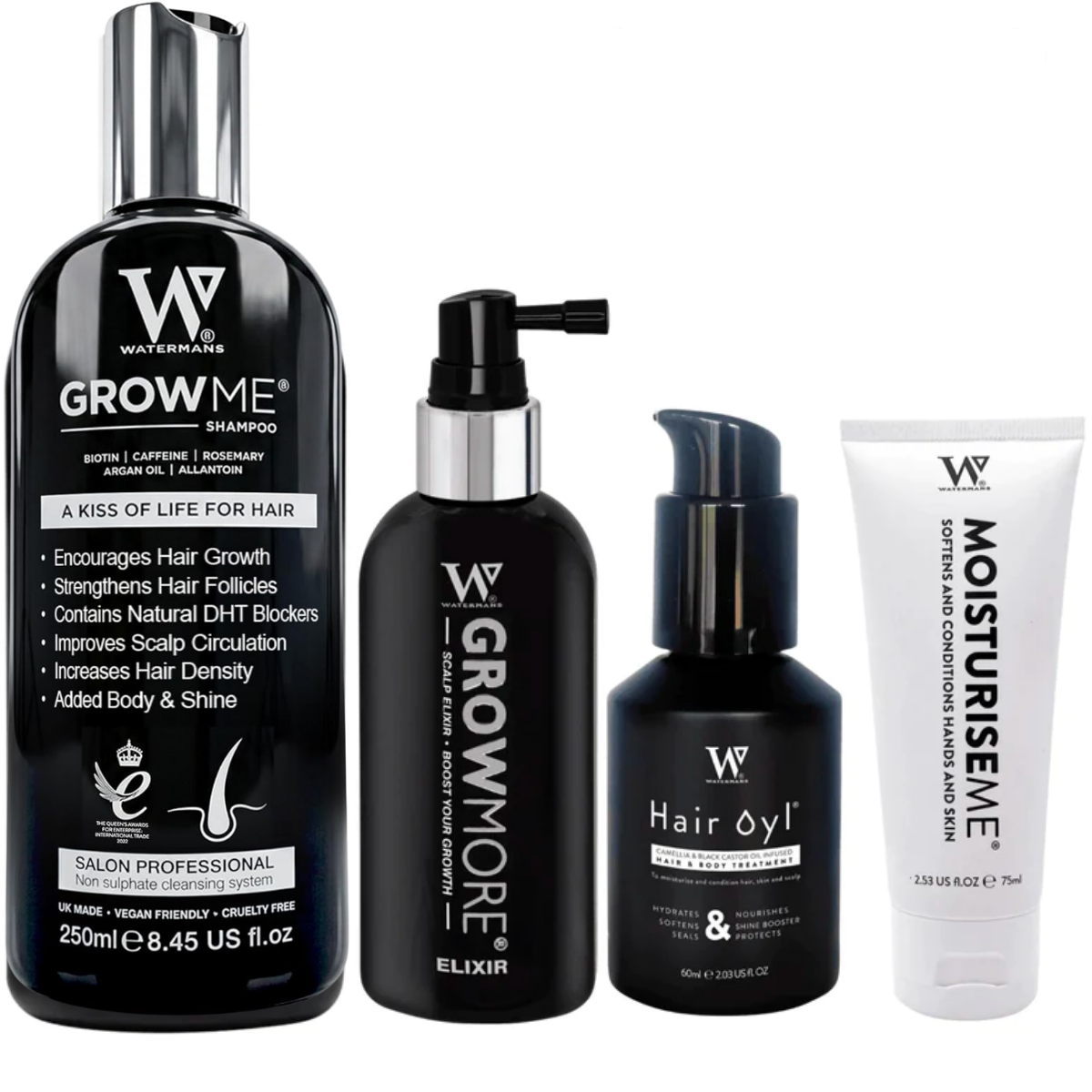
Plumping Moisturise Me Face and Hand Cream, 15.00 GBP
A fast absorbing, non greasy cream with cupuacu butter, shea butter, cocoa butter, almond oil and allantoin, made in the UK and vegan. It covers the moisturiser step for face and hands, which is the least glamorous part of a routine and one of the two that keeps the others tolerable. It is a cosmetic moisturiser with no SPF and no active drug ingredient, so it sits alongside a proper sunscreen rather than replacing one.
Frequently asked questions
Do I really need a separate serum, essence and toner?
No. None of those categories is defined by what it does, only by its texture, and a routine of cleanser, moisturiser and sunscreen with a retinoid at night covers the evidence. Extra steps are a preference, and each one adds cost and a chance of irritation without adding much benefit.
Should I use sunscreen indoors?
UVA passes through window glass, so if you sit near a window for long periods or drive a lot, daily sunscreen is worth it. If you spend the day away from windows, it matters far less. The practical answer for most people is to apply it every morning and stop thinking about it.
Can I use vitamin C and a retinoid together?
You can, but many people find the combination irritating. The simplest approach is vitamin C in the morning and the retinoid at night, which also suits their different roles: antioxidant protection during the day, repair and turnover overnight. If either stings, use them on alternate days.
Is expensive skincare better?
Not reliably. Price reflects packaging, marketing and brand positioning as much as formulation, and several of the best evidenced ingredients are available very cheaply. Consistency with a modest product beats sporadic use of an expensive one every time.
What is skin purging and how long does it last?
Purging is a temporary increase in breakouts when an ingredient speeds up cell turnover and brings existing congestion to the surface faster. It typically settles within four to six weeks and appears where you usually break out. Spots in new areas are more likely a reaction than purging.
Do I need different products in winter and summer?
Often a texture change is enough: a richer moisturiser in cold weather and a lighter one in humidity. The active ingredients rarely need swapping. Sunscreen stays year round, and central heating is a common and overlooked cause of winter dryness.
At what age should I start using a retinoid?
There is no fixed age. Retinoids are used from the teens for acne and from the twenties or thirties for prevention. Starting later is still worthwhile, because turnover and collagen respond at any age. Start low strength, twice a week, and build up slowly.
Can skincare products fix acne scarring?
Topicals can improve post inflammatory pigmentation, the flat marks left behind, but they cannot lift textural scarring or pitting. That needs procedural treatment from a dermatologist. If acne is currently scarring, the priority is treating the acne itself, which is a GP appointment rather than a purchase.
The practical summary
Skincare is one of the few areas where doing less, consistently, beats doing more. Sunscreen every morning, a retinoid at night, a moisturiser that suits you, a cleanser that does not strip you, applied thinnest to thickest and judged over months rather than weeks. Change one thing at a time. And treat anything that is changing, scarring, spreading or not healing as a medical question, because that is the one thing no product on any shelf can answer.
Watermans has sold over 5 million bottles since 2012, and every product is vegan and made in the UK. If you need the unglamorous moisturiser step covered for face and hands, Moisturise Me does that job. For anything medical, your GP or a dermatologist comes first.