

Sunscreen for Acne-Prone Skin: Why It Stings and How to Fix Your Routine
Sunscreen stings on acne-prone skin far more often than people admit, and the sunscreen is usually not the real culprit. In most cases the skin barrier has already been irritated by an acne active such as benzoyl peroxide, a retinoid or an exfoliating acid, so anything applied on top of it burns. Fix the barrier first, switch to a fragrance-free SPF 30 or 50 with a light fluid or gel texture, and apply it to dry skin a few minutes after moisturiser. Most people stop stinging within two weeks.
Last updated: August 2026
Key takeaways
- Sunscreen that burns is usually a damaged barrier problem, not an allergy: pause acids and retinoids for 7 to 10 days and retest.
- Fragrance, denatured alcohol and high concentrations of chemical filters are the three ingredients most likely to sting compromised skin.
- In the UK, look for SPF 30 or higher plus the UVA logo in a circle, which guarantees UVA protection of at least a third of the SPF number.
- Sunscreen matters most when the UV index reaches 3 or above, which in the UK is roughly March to October between 11am and 3pm.
- Common acne antibiotics such as lymecycline and doxycycline, and isotretinoin, make skin far more sun sensitive, so daily SPF is not optional on those.
- Spot treatments calm a spot, they do not remove one: a hydrocolloid patch on an open lesion often does more than any late-night dab of benzoyl peroxide.
- See a GP if over-the-counter products have not helped after 8 weeks, or straight away for deep, painful or scarring spots.
Why does sunscreen sting or burn on acne-prone skin?
Sunscreen stings on acne-prone skin mainly because the skin barrier is already compromised by acne treatment. Benzoyl peroxide, adapalene, tretinoin, salicylic acid and glycolic acid all thin and dry the outer layer, so filters, preservatives and fragrance that healthy skin ignores can reach living tissue and trigger a burning sensation within seconds.
The tell is timing. A true allergy usually shows up as redness, swelling and itch hours later and keeps getting worse with repeat use. Barrier stinging is immediate, fades in a few minutes, and improves when you stop the actives. If your skin also feels tight after cleansing, flakes around the nose, or shines and peels at the same time, the barrier is the problem.
| Trigger | Why it stings | What to do instead |
|---|---|---|
| Fragrance (parfum, essential oils) | The most common cause of contact irritation in cosmetics | Choose a product labelled fragrance-free, not unscented |
| Alcohol denat. high in the list | Used to make gels feel light, but strips lipids from a thin barrier | A fluid or milk texture with silicones instead of alcohol |
| Chemical filters at high strength | Avobenzone and octocrylene are frequent stingers on broken skin | A mineral or hybrid SPF while the barrier recovers |
| Applying to damp skin | Water increases how much of any ingredient penetrates | Wait until skin is fully dry, then apply |
| Undiagnosed eczema or rosacea | Both leave the barrier permanently more reactive | Get the underlying condition treated by a GP first |

How do you calm a stinging reaction and get back to daily SPF?
Run a barrier reset for 7 to 10 days: stop every acid, retinoid and benzoyl peroxide product, cleanse once a day with a non-foaming cleanser, and use a simple moisturiser containing ceramides or glycerin twice daily. Reintroduce sunscreen first, then bring the acne actives back one at a time.
Reintroduce in this order, giving each step three days before adding the next: sunscreen daily, then moisturiser at night, then the acne active twice a week, then every other night. Most people who thought they were allergic to sunscreen tolerate it fine once the barrier is intact, because the reaction was never to the SPF itself.
Patch test properly. Apply a coin-sized amount of the sunscreen to the same spot in front of your ear or on your inner forearm, once a day for five days. A single test on the back of the hand tells you almost nothing, because the skin there is thicker and far less reactive than the face.
Which sunscreen filter type suits acne-prone skin best?
No filter type is inherently better for acne. Mineral sunscreens using zinc oxide and titanium dioxide tend to sting less on a damaged barrier, while modern chemical and hybrid formulas usually feel lighter and leave no white cast. Texture and finish predict whether you will actually wear it, and that matters more than the filter.
| Filter type | Feel on oily skin | Sting risk on a raw barrier | Best for |
|---|---|---|---|
| Mineral (zinc oxide, titanium dioxide) | Can look chalky, often mattifying | Lowest | Reactive skin, active breakouts, post-procedure |
| Chemical (avobenzone, octocrylene, Tinosorb) | Lightest, invisible finish | Highest | Intact barrier, deeper skin tones, under makeup |
| Hybrid (low-percentage zinc plus organic filters) | Light with a soft matte finish | Moderate | Most acne-prone skin, once healing has started |
Two practical filters for the texture, not the chemistry. If your skin is oily and congested, choose a fluid or gel-cream in a matte finish and skip anything sold as dewy or glowy, because those rely on emollient esters that sit heavily in pores. If your skin is dry and peeling from a retinoid, a slightly richer SPF often replaces your morning moisturiser entirely.
How do you read a UK sunscreen label?
A UK sunscreen label carries two separate ratings. SPF measures protection against UVB, the burning rays, and the NHS advises at least SPF 30. UVA protection is shown either by the letters UVA inside a circle, an EU mark meaning UVA protection is at least a third of the SPF, or by a star rating of up to five stars.
- SPF 30 or 50. The jump from 30 to 50 is real but modest. Applying enough of an SPF 30 beats a thin layer of SPF 50 every time.
- The UVA circle. This is the mark to look for on any product sold in the UK or EU. UVA rays drive photoageing and pigmentation, and they pass through window glass.
- Star ratings. The star system, developed by Boots, runs to five stars and rates UVA protection relative to SPF. Four or five stars is the sensible floor.
- Amount. Roughly two finger lengths of product covers the face and neck. Most people apply between a quarter and a half of the tested amount, which is why real-world protection falls well short of the number on the bottle.

Can you skip sunscreen in the late afternoon or evening?
Yes, for most people. Sunscreen protects against UV, and UV falls away sharply late in the day. In the UK the UV index rarely reaches 3, the level at which protection is advised, before about 10am or after about 4pm, and from November to February it seldom reaches 3 at all. A 6pm dog walk in October does not need SPF.
The honest version of the daily-sunscreen rule is this: wear it when the UV index is 3 or above, which in the UK means roughly March to October, and reapply if you are outdoors for hours. Indoors, away from a bright window, the exposure is negligible. Turning sunscreen into a moral obligation at 8pm in January is how people give up on it altogether.
Who should not skip it, whatever the hour
- Anyone taking an acne antibiotic such as lymecycline or doxycycline, or isotretinoin: these make skin markedly more sun sensitive.
- Anyone with lupus, dermatomyositis or another photosensitive condition, where even modest exposure can trigger a flare.
- Anyone treating melasma or dark post-acne marks, since visible light and UVA both deepen pigmentation.
- Anyone with a personal or family history of skin cancer, or on immunosuppressant medication after a transplant.
If any of these apply to you, take sun protection advice from your GP or prescriber rather than from a general guide.

What does a morning routine for acne-prone skin look like?
A morning routine for acne-prone skin needs three steps and no more: cleanse, moisturise, protect. Adding serums, toners and essences on top of an acne regimen is the fastest way to end up with the stinging problem this article opens with. Keep the morning simple and put the active ingredients at night.
| Step | Mild or sensitive skin | Oily, congested, moderate acne |
|---|---|---|
| 1. Cleanse | Gentle non-foaming wash, or water only | 2% salicylic acid wash, or a benzoyl peroxide wash left on 30 seconds |
| 2. Moisturise | Ceramide or glycerin cream, always | Light gel-cream, or skip if the SPF is hydrating enough |
| 3. Protect | Mineral or hybrid SPF 30 to 50, fragrance-free | Matte fluid SPF 30 to 50 |
| Skip | Toners, scrubs, acid pads, physical exfoliants | Layering two actives in the same morning |
One note on benzoyl peroxide: it bleaches fabric. Use a white towel and a white pillowcase, or you will work out why your bath towels have gone patchy about three weeks too late.
What should the evening acne routine include?
The evening routine does the heavy lifting: remove sunscreen and makeup properly, apply one acne active, then moisturise. In the UK, benzoyl peroxide and salicylic acid are available over the counter from any pharmacy, while adapalene and tretinoin are prescription-only, so a topical retinoid means a GP or pharmacist-led consultation rather than an off-the-shelf purchase.
- First cleanse. Micellar water or a cleansing balm to lift sunscreen and makeup. Water-based cleansers alone do not fully remove modern water-resistant SPF.
- Second cleanse. A gentle wash to clear the residue. This is where a double cleanse earns its place on acne-prone skin.
- One active, on dry skin. A pea-sized amount for the whole face. Two actives on the same night is how barriers break.
- Moisturise. Applied over the active, not instead of it. This blunts irritation without meaningfully reducing how well the active works.
The retinoid ramp-up that prevents the peeling phase
- Weeks 1 and 2: two nights a week.
- Weeks 3 and 4: three nights a week.
- Weeks 5 and 6: alternate nights.
- Week 7 onwards: nightly, if your skin is comfortable. Plenty of people stay at alternate nights permanently and still do well.
Expect things to look worse for two to six weeks before they look better. That purge phase is the single most common reason people abandon a treatment that was about to start working.

Do spot treatments actually work once a spot has formed?
Spot treatments help far less than the marketing suggests. Once a spot is red and raised, the inflammation is already underway deep in the follicle, and a topical dab reaches only the surface. Realistically a good spot treatment shortens the lifespan by a day or two and reduces redness. Nothing over the counter removes an established spot overnight.
| Option | What it realistically does | Best used on |
|---|---|---|
| Benzoyl peroxide 5% | Reduces acne bacteria and inflammation over a few days | Red inflamed spots, whole affected zone rather than one dot |
| Salicylic acid 2% | Loosens the plug in the pore, mild anti-inflammatory effect | Blackheads and closed comedones, not deep cysts |
| Hydrocolloid patch | Absorbs fluid, flattens the spot and stops you picking it | Open or weeping spots, overnight |
| Sulphur or clay dab | Dries the surface, cosmetic effect only | Surface pustules, occasional use |
| Toothpaste or lemon juice | Nothing useful, and both commonly cause chemical burns | Nothing. Do not do this. |
The strategy that actually clears skin is prevention, not spot-by-spot firefighting. A consistent nightly active applied across the whole area stops the next round of spots forming three or four weeks from now. Judge any acne routine on a 12-week horizon, not a 12-hour one.
Why do you break out along the hairline and on the scalp?
Breakouts along the hairline, temples and upper back are frequently caused by hair products rather than facial skincare. Heavy oils, waxes, silicones and styling creams migrate onto the skin overnight and through sweat, blocking follicles. Dermatologists call the pattern pomade acne, and it clears when the products change rather than when the face routine gets stricter.
- Change the shower order. Shampoo and condition first, rinse thoroughly, then wash your face and body last so residue is carried away instead of left on the skin.
- Keep leave-in products off the scalp edge. Apply oils and styling creams from mid-length down, never at the roots and hairline.
- Wash after sweating. Sweat plus product plus a gym headband is the classic hairline breakout combination.
- Change the pillowcase twice a week if you use overnight hair treatments.
If the scalp itself is flaking, greasy and itchy rather than spotty, the cause is more likely to be seborrhoeic dermatitis than acne, and the treatment is completely different. Our guide to managing a flaky, irritated scalp covers how to tell them apart, and the broader scalp health routine explains why a clean, balanced scalp matters for hair as well as skin. If your current shampoo leaves a heavy residue at the hairline, it is worth reading why people switch to a sulphate-free shampoo.
Does moisturiser cause breakouts, and where does a rich cream belong?
Moisturiser does not cause acne, but the wrong texture in the wrong place can worsen congestion. Butter-rich creams are excellent on hands, elbows, shins and dry patches, and a poor choice spread over an oily, actively breaking-out face. Match the weight of the cream to the area, and the same product becomes useful rather than a problem.
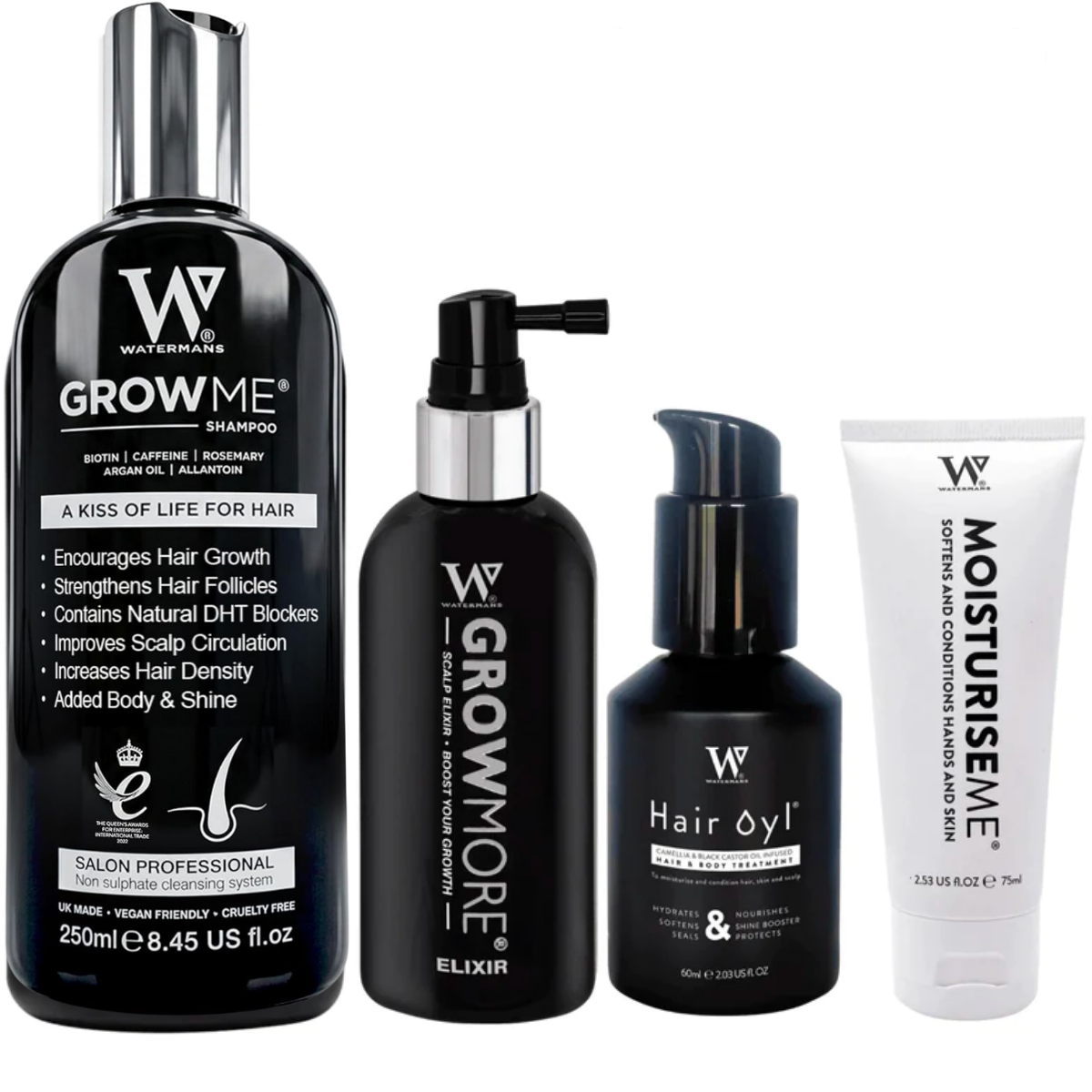
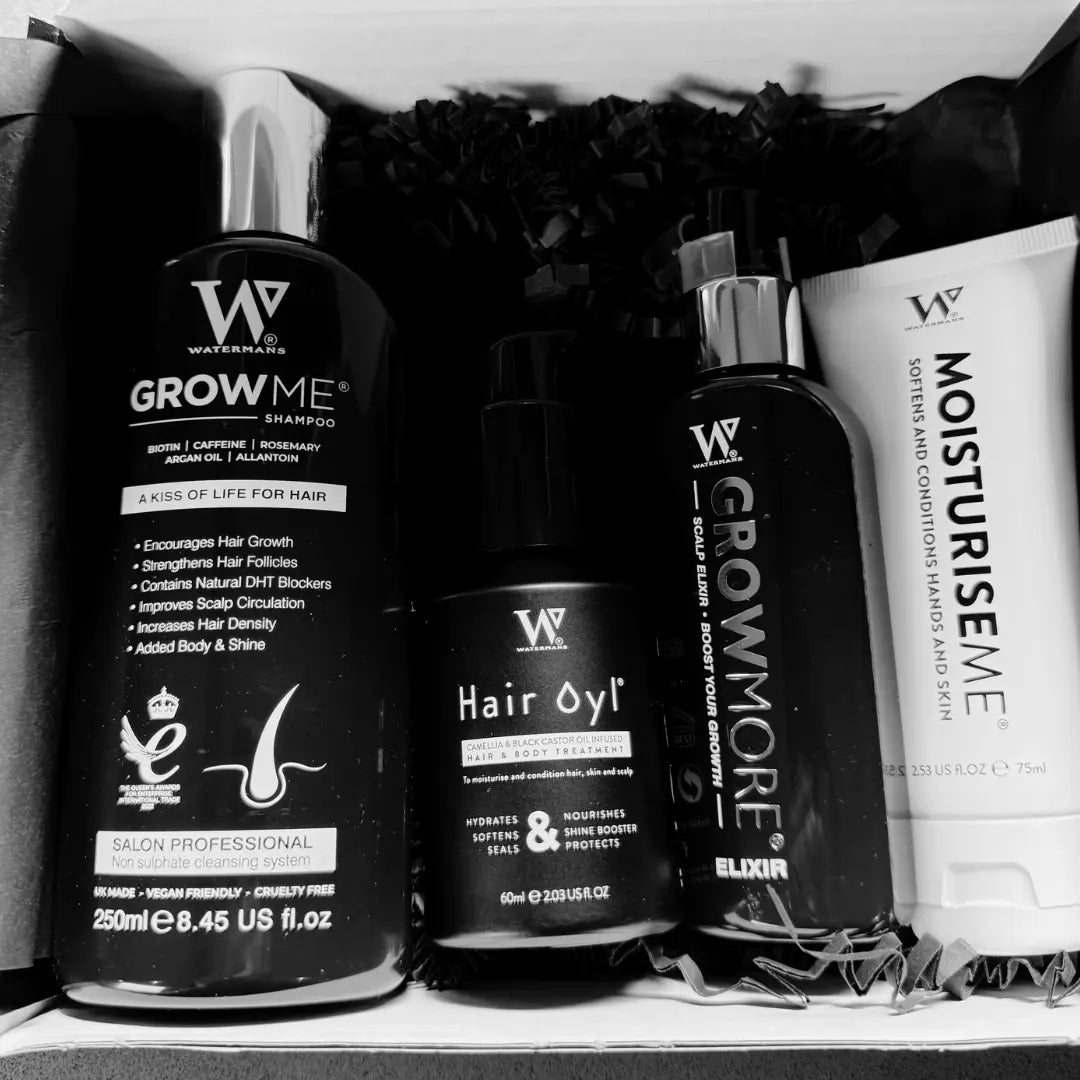
This is worth saying plainly about our own product. Moisturise Me is a plumping face and hand cream built around cupuacu, shea and cocoa butters with allantoin and almond oil. That combination is genuinely good for the tight, papery dryness that acne actives cause on hands, and for dry patches around the jaw and cheeks in winter. It is not the cream we would recommend spreading over an oily T-zone in the middle of an active breakout. A light gel-cream belongs there.

Plumping Moisturise Me® Face & Hand Cream, £15.00
Cupuacu, shea and cocoa butters with allantoin and almond oil. Vegan, made in the UK, and best used on hands, dry patches and the drier areas of the face rather than over active breakouts.
View Moisturise MeFor the seasonal version of this problem, our guide to caring for dry skin in winter goes further on barrier repair, and if it is your hands taking the punishment from constant washing, how to rescue dry hands covers the routine in detail.
When should you see a pharmacist, GP or dermatologist about acne?
See a pharmacist first for mild acne, a GP if over-the-counter treatment has not worked after about eight weeks, and ask for a dermatology referral for deep, painful nodules or any spots that are leaving scars. Scarring acne is time-critical, because scars are much harder to treat than the acne that caused them.
- Pharmacist: can advise on benzoyl peroxide, salicylic acid and suitable moisturisers, and will flag anything that needs a GP.
- GP: can prescribe topical retinoids, topical or oral antibiotics, azelaic acid, or the combined pill for some women, and will review after a set period rather than leaving you on a treatment indefinitely.
- Dermatologist: needed for isotretinoin, which is prescribed and monitored under specialist supervision only.
- Sooner rather than later if acne is affecting your mood, sleep or willingness to leave the house. That is a recognised reason for referral, not a soft one.
A related point worth knowing if you use both skin and scalp treatments: retinoids and minoxidil are sometimes used together, and the interaction is not trivial. Our guide to combining tretinoin and minoxidil explains why. If you are also managing sun exposure and self-tanning while on acne treatment, applying fake tan safely is worth a read, as is our piece on why dermatologists turn down cosmetic clients, which explains why active acne often means a clinic will ask you to wait.
The five mistakes that keep acne going
- Switching products every fortnight, so nothing gets the 12 weeks it needs.
- Treating dryness by adding oils, which congest the skin further.
- Scrubbing. Physical exfoliants inflame active spots and spread bacteria.
- Skipping moisturiser to dry out spots, which triggers more oil production.
- Stopping treatment the moment skin clears, rather than tapering to a maintenance routine.
Frequently asked questions
Can I use sunscreen over benzoyl peroxide?
Yes, and you should. Apply benzoyl peroxide at night and sunscreen in the morning to reduce irritation. If you use benzoyl peroxide in the morning too, let it absorb fully for ten minutes before layering sunscreen on top, and choose a fragrance-free formula to limit stinging.
Does sunscreen clog pores and cause breakouts?
Sunscreen itself rarely causes acne, but heavy, emollient-rich formulas can worsen congestion on oily skin. Choose a fluid, gel or matte-finish product rather than anything marketed as dewy or nourishing, and remove it properly at night with a first cleanse before your usual wash.
Do I need sunscreen indoors or on cloudy days in the UK?
Indoors and away from windows, protection is not needed. Cloud cover still lets a substantial share of UV through, so if you are outdoors for a stretch between March and October, apply sunscreen regardless of cloud. Check the UV index in a weather app and use 3 as the threshold.
How much sunscreen should I actually apply to my face?
Roughly two finger lengths of product covers the face and neck, which is about a third of a teaspoon. Most people apply far less, which is why real-world protection falls well below the SPF on the label. Reapply every two hours when you are outdoors for a long period.
Is mineral sunscreen better than chemical sunscreen for acne?
Neither type is inherently better for acne. Mineral filters tend to sting less on a damaged barrier and often look more matte, while chemical filters feel lighter and leave no cast on deeper skin tones. Pick by texture and finish, because the sunscreen you will wear daily wins.
Why does my skin get worse when I start a retinoid?
Retinoids speed up the turnover of skin cells, which brings existing microcomedones to the surface faster. That purge typically lasts two to six weeks and then settles. Reduce frequency rather than stopping entirely, and always moisturise over the top to keep irritation manageable.
Can hair products cause spots on my forehead and hairline?
Yes. Waxes, heavy oils and styling creams migrate onto the skin and block follicles, a pattern known as pomade acne. Keep leave-in products from mid-length down, rinse hair before washing your face in the shower, and change pillowcases twice a week if you use overnight treatments.
How long before an acne routine shows results?
Give any acne routine 12 weeks before judging it. Meaningful improvement usually starts around week six to eight, with the fullest effect at three months. If nothing has changed after eight weeks on over-the-counter products, book a GP appointment rather than buying another product.
The routine beats the product
Skin that stings under sunscreen is skin asking for a gentler week, not a different bottle every fortnight. Repair the barrier, choose an SPF 30 or 50 with the UVA circle and a texture you will genuinely reapply, keep the actives to the evening, and give the whole thing 12 weeks. If your hands and dry patches are taking the hit from acne treatment, a butter-rich cream in the right place solves that neatly.
Watermans has sold over 5 million bottles since 2012, and every formula is vegan and made in the UK. If dryness on your hands and drier facial areas is the part of this you want fixed today, Moisturise Me Face & Hand Cream is where to start. For anything persistent, painful or scarring, see your GP.