


Double Cleansing: Does It Work and Do You Actually Need It?
Last updated: August 2026
Double cleansing genuinely helps if you wear water-resistant sunscreen or long-wear makeup, and is largely unnecessary if you do not. The method is one oil-based cleanser to dissolve oil-based products, followed by a water-based cleanser to remove sweat, dirt and the residue left behind. It solves a specific problem well. It is not a universal upgrade, and for dry, sensitive or eczema-prone skin, doing it twice a day usually makes things worse rather than better.
Key takeaways
- Double cleansing means an oil or balm cleanser first, then a water-based cleanser, and it is an evening routine only.
- The strongest case for it is removing water-resistant or mineral sunscreen, which water-based cleansers struggle with by design.
- If you wear no makeup and no sunscreen, one gentle cleanse at night is enough.
- Never double cleanse in the morning. Overnight your skin has accumulated nothing that needs dissolving.
- Skin surface pH sits around 4.7 to 5.5, and traditional soap at pH 9 to 10 disrupts that barrier. The cleanser matters more than the number of steps.
- Tightness after washing is not the feeling of clean, it is the feeling of a stripped barrier.
- The same logic applies to the scalp, where dry shampoo, styling product and sunscreen at the hairline genuinely do build up.
What is double cleansing, and where did it come from?
Double cleansing is a two-step evening routine: an oil-based cleanser worked into dry skin to dissolve oil-soluble products, then a water-based cleanser to lift away everything water can carry. The principle behind it is simply that like dissolves like. Water and a foaming wash cannot break down a silicone-heavy sunscreen, but an oil can.
The method comes from Japanese and Korean skincare traditions, where it developed as a way to remove heavy, long-wearing makeup thoroughly without scrubbing at the skin. It arrived in the West via K-beauty and was quickly repackaged as something everybody should be doing every night, which is where the useful idea started to overreach.

Does double cleansing actually do anything, or is it marketing?
The mechanism is sound and the benefit is real, but it is narrower than it is sold as. There is no good trial evidence that two cleanses beat one for skin health in general, and nobody has shown that double cleansing improves acne, texture or brightness on its own. What it demonstrably does is remove water-resistant products that a single water-based wash leaves behind.
That matters most for sunscreen. Water-resistant and mineral formulas containing zinc oxide or titanium dioxide are engineered to stay put through sweat and swimming. A gel wash is not going to shift them properly, and sunscreen left sitting on the skin overnight is a common and avoidable cause of congestion.
Double cleansing is a solution to a specific problem. If you do not have that problem, you do not need the solution.
Who should double cleanse, and who should not?
Match the routine to what is actually on your face at the end of the day. That is the whole decision, and it changes with the season and with what you wore.
| If this is you | What to do at night |
|---|---|
| Daily water-resistant or mineral sunscreen | Double cleanse. This is the clearest case for it. |
| Full coverage or long-wear makeup | Double cleanse. Foundation, waterproof mascara and transfer-proof lip products all need an oil step. |
| Oily or congestion-prone skin | Double cleanse if you wear sunscreen or makeup, but choose a lightweight oil or a gel-to-oil rather than a rich balm. |
| No makeup, no sunscreen, mostly indoors | One gentle cleanse is enough. A second adds nothing but cost. |
| Dry, sensitive or eczema-prone skin | Single cleanse with a cream or milk cleanser most nights. Double only on the days you wore something that needs it. |
| Rosacea, or actively using retinoids or benzoyl peroxide | Keep cleansing minimal. Your barrier is already under load. Speak to a GP or pharmacist if skin is sore or reactive. |
Which cleanser should be the first step?
Any oil-based format works, and the choice comes down to skin type and preference rather than efficacy. The one thing that matters technically is that a proper cleansing oil contains an emulsifier, which is why it turns milky and rinses cleanly when you add water. Plain kitchen oil does not, which is why it leaves a film.
| Format | Best for | Watch out for |
|---|---|---|
| Cleansing oil | Heavy sunscreen and makeup, most skin types | Needs proper emulsifying or it leaves residue |
| Cleansing balm | Dry skin, winter, a more cushioned feel | Can feel heavy on oily skin |
| Micellar water | Light makeup, travel, a quick first pass | Not designed to be left on. Rinse it off, and it will not shift water-resistant sunscreen alone |
| Cream or milk cleanser | Sensitive and dry skin, as a gentle single cleanse | Not strong enough on its own for heavy sunscreen |
| Foaming gel wash | The second step, oily skin | A tight, squeaky finish means it is too harsh for you |

How do you double cleanse properly?
Most people get poor results because they skip the emulsifying step, which is the part that actually lifts the dissolved product off the skin rather than smearing it around.
- Start on completely dry skin and dry hands. Water on either will stop the oil binding to what you are trying to remove.
- Massage for a full 30 to 60 seconds. Gently, with fingertips. This is dissolving, not scrubbing, so pressure achieves nothing.
- Add a little lukewarm water and keep massaging. The oil should turn milky. This emulsification is the step almost everyone rushes, and it is what makes the difference between clean skin and a greasy film.
- Rinse thoroughly with lukewarm water. Hot water strips lipids and leaves skin red and tight.
- Follow with your water-based cleanser for 20 to 30 seconds, then rinse.
- Pat dry and apply the rest of your routine to slightly damp skin.
Never double cleanse in the morning
Overnight your skin has produced some sebum and touched a pillowcase. That is it. There is no sunscreen and no makeup to dissolve, so an oil cleanse at 7am removes lipids you actually want. A splash of water, or one gentle cleanse if you are oily, is the whole morning job.
Can you over-cleanse, and how would you know?
Yes, and it is far more common than under-cleansing. Your skin surface is mildly acidic, sitting around pH 4.7 to 5.5, and that acid mantle supports the barrier and the microbes living on it. Traditional soap is alkaline at around pH 9 to 10, and repeatedly pushing the surface alkaline compromises the barrier's ability to hold water in and irritants out.
The signs of over-cleansing are specific enough to self-diagnose:
- Skin feels tight or squeaky straight after washing, and only settles once you apply moisturiser.
- Serums or acids that used to be fine now sting.
- Fine flaking, particularly around the nose and mouth.
- Skin looks dull and feels rough despite doing more, not less.
- Oily skin that gets oilier through the day, a rebound response to being stripped.
If several of those apply, the fix is subtraction. Drop to one gentle cleanse at night, pause exfoliating acids and scrubs for two weeks, and let the barrier recover. Our guide to the evidence based skincare routine order covers what to reintroduce and when, and how to care for dry skin in winter is worth reading if this happens every year around October.
Does the same idea apply to washing your hair?
It does, and this is the part of the conversation that gets left out. Your scalp is skin, with the densest sebaceous glands on the body alongside the face, and it accumulates products that water alone will not lift: dry shampoo starch, silicones from styling products, hairspray, and the sunscreen you rubbed into your hairline.
If you have ever noticed that the first lather barely foams and the second one foams properly, you have already experienced the reason. The first pass is being absorbed by buildup. That is the same principle as a first cleanse, and on a heavy buildup week a two-lather wash is genuinely more effective than one long one.

The same caution applies too. Over-washing the scalp produces exactly the pattern people misread as oily hair: strip the lipids, the scalp compensates, the roots grease up faster, and the response is to wash more. Meanwhile the lengths get progressively drier, because the mid-lengths and ends were never the oily part. Flaking that persists whatever you do is worth reading about separately, since seborrheic dermatitis is a condition rather than a hygiene problem. For the fundamentals, see how to keep your scalp healthy for longer, stronger hair.

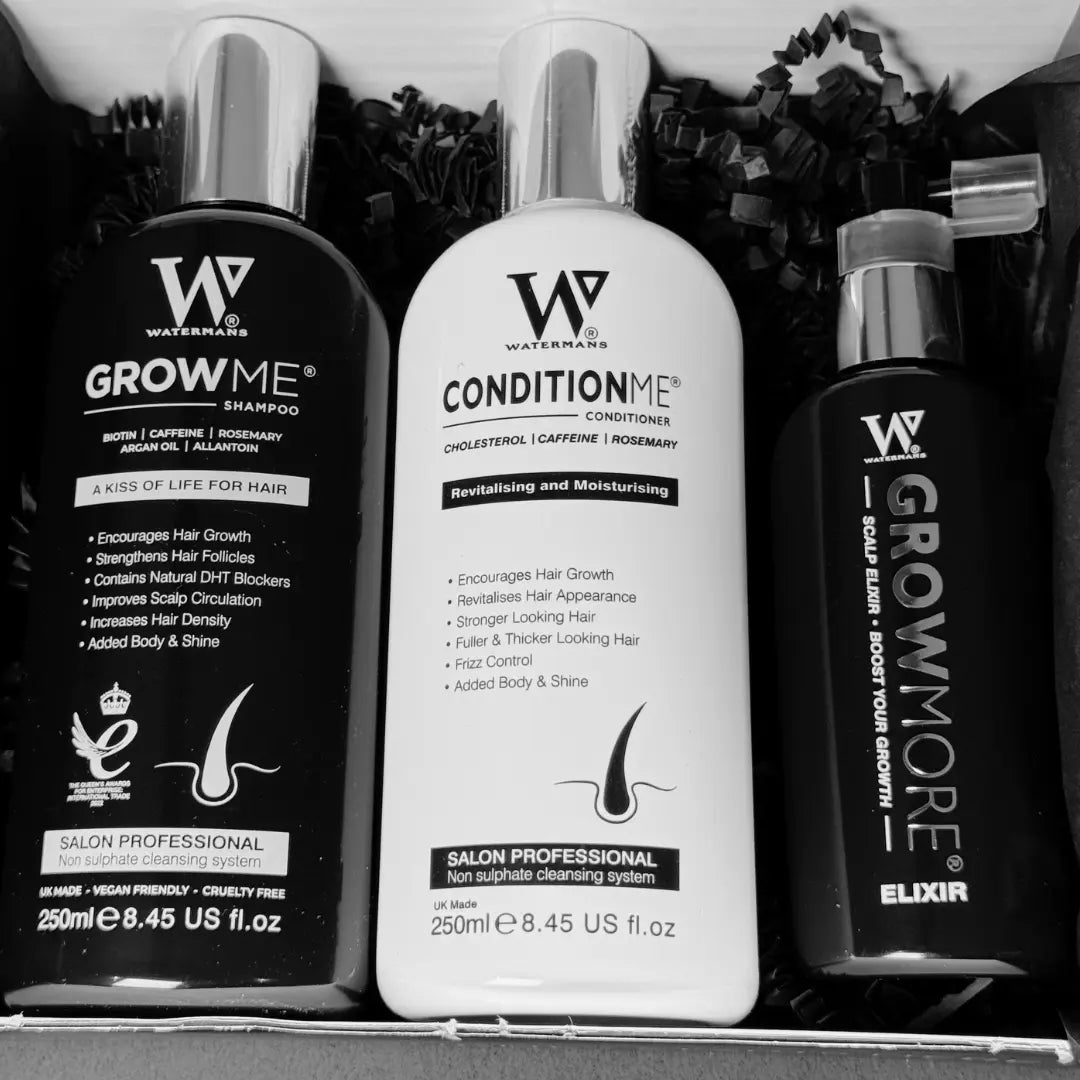
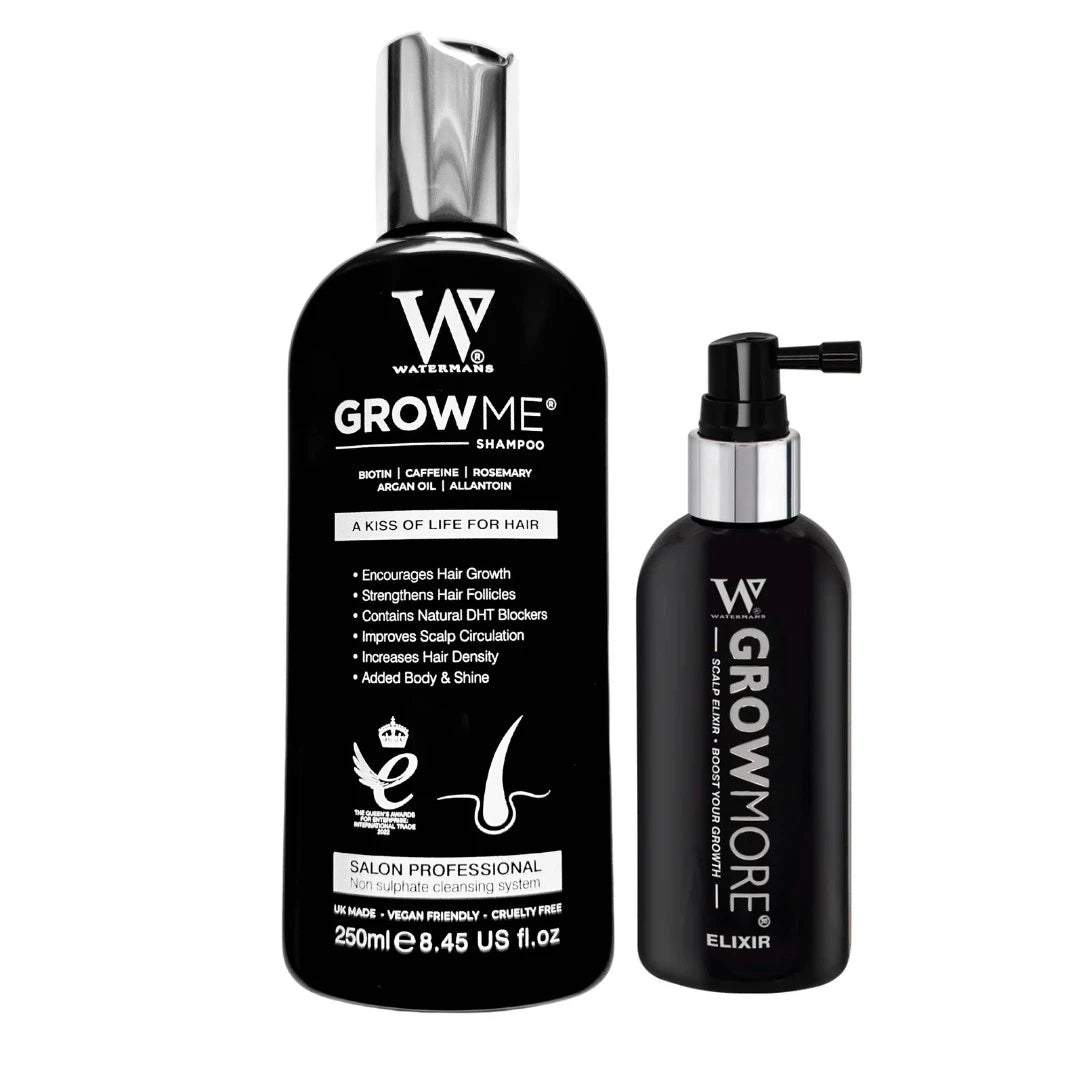
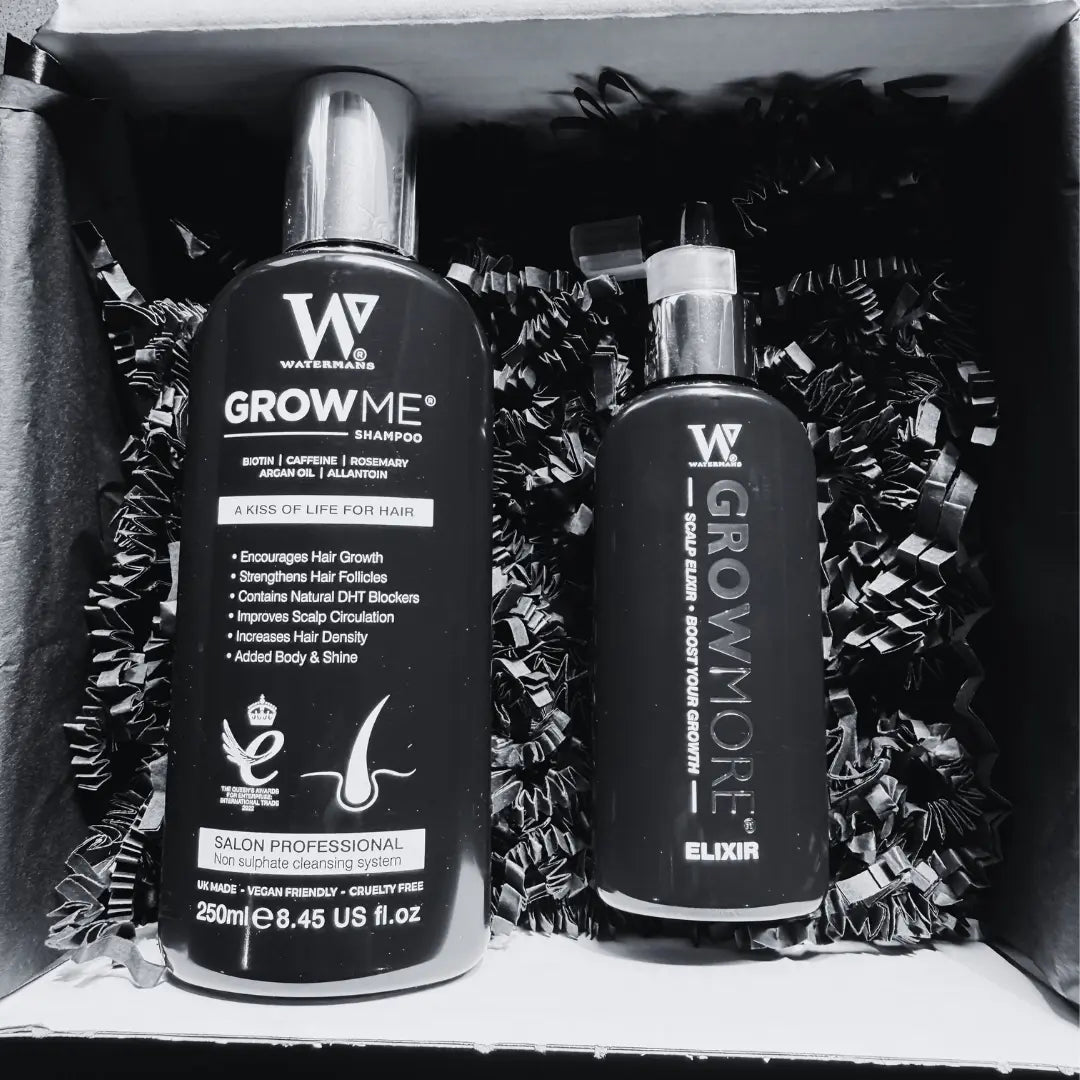
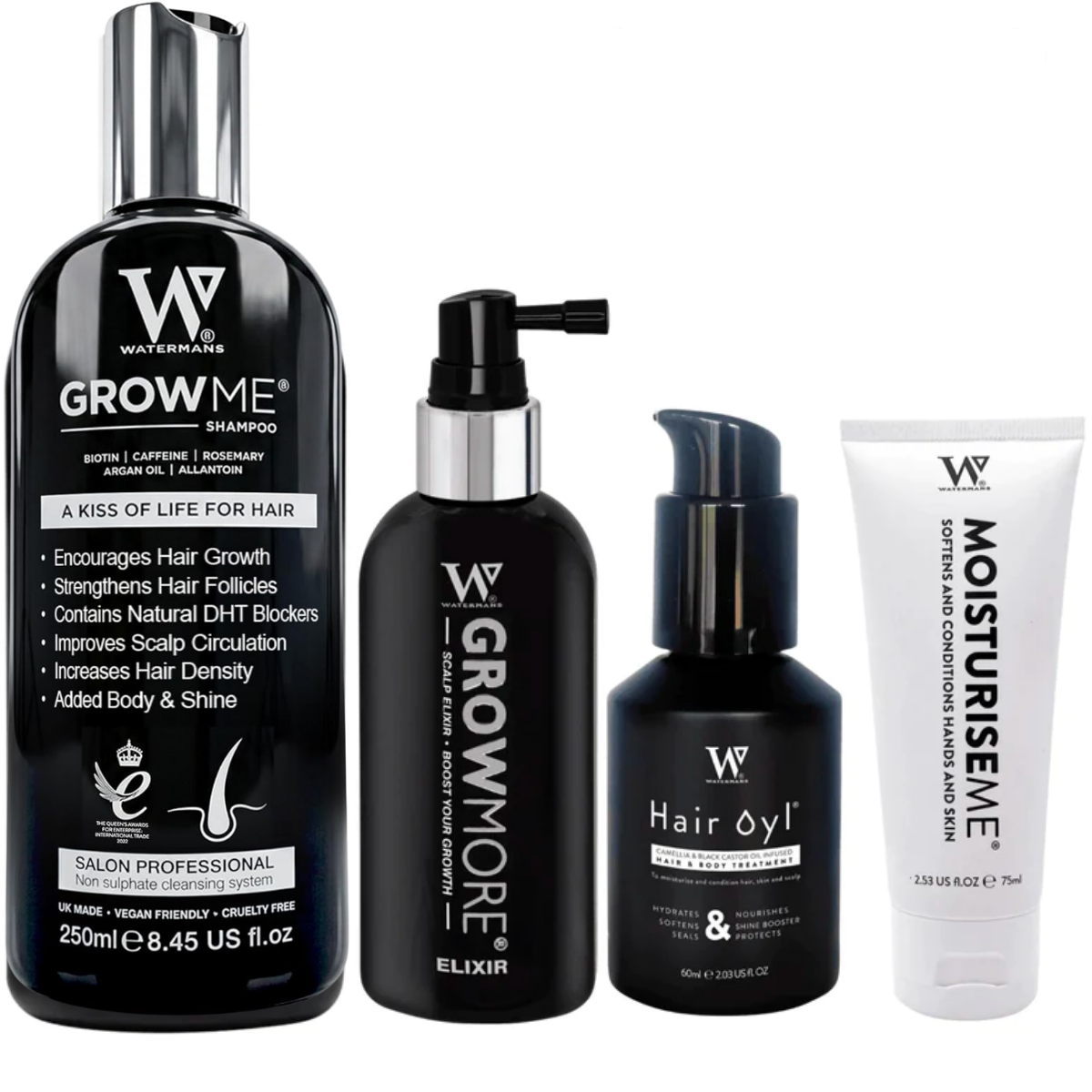
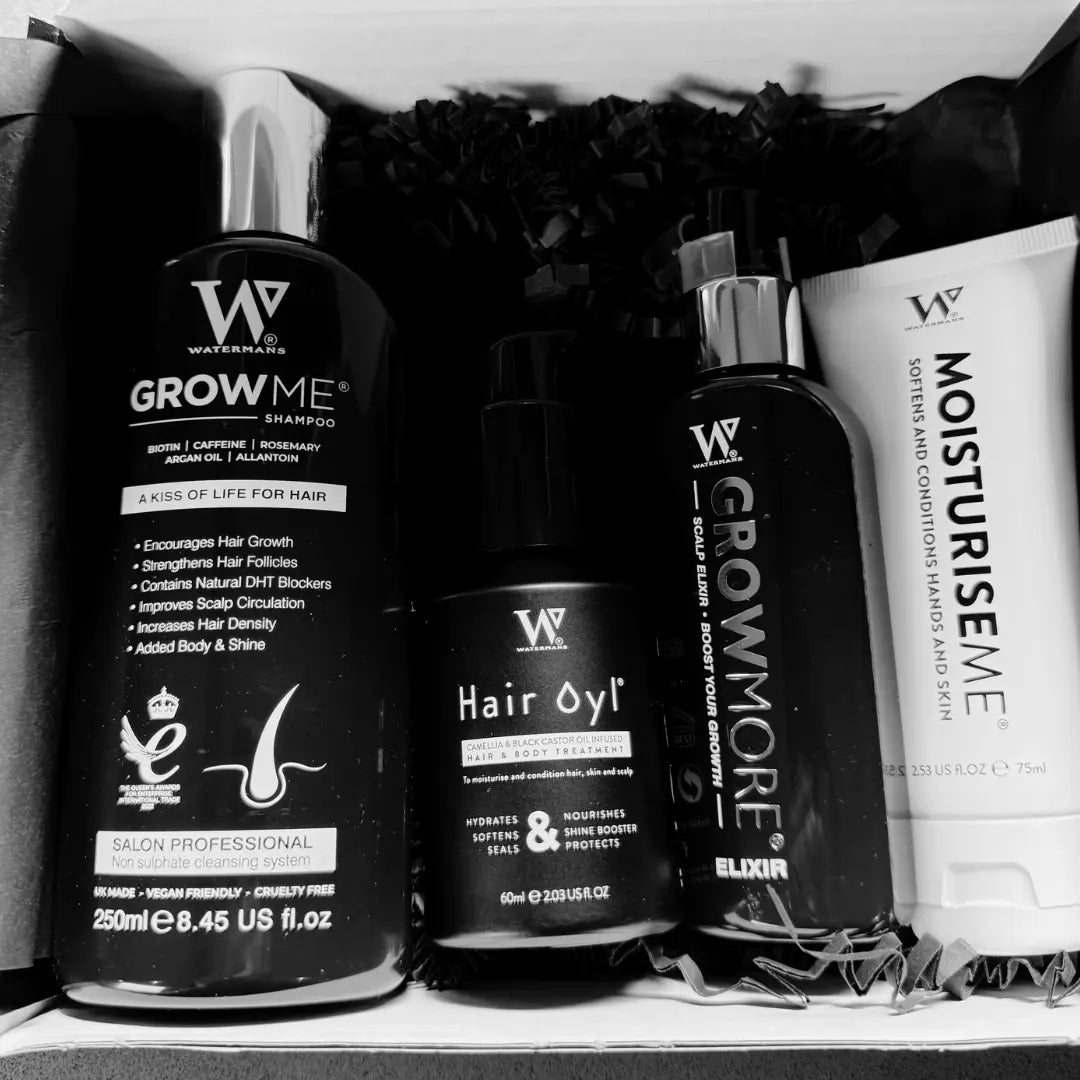
Grow Me Hair Growth Shampoo, 14.95 pounds
Sulfate-free, so it cleans buildup without the stripped, squeaky finish that sends the scalp into overdrive. Formulated with biotin, caffeine, rosemary and niacinamide, and made to reduce breakage for fuller-looking hair. Cosmetic care rather than a treatment: for a scalp that is sore, persistently flaking or shedding, see a GP or trichologist.
View the shampoo
Condition Me Conditioner, 13.95 pounds
The other half of the job. Cleansing removes, conditioning replaces: shea butter, glycerin, cholesterol and hydrolysed lupine protein to detangle and reduce the breakage that happens when dry hair meets a comb. Apply through mid-lengths and ends rather than the roots, which is the most common conditioner mistake.
View the conditionerFrequently asked questions
Will double cleansing clear up my acne?
Not by itself. Removing sunscreen and makeup properly helps avoid added congestion, but acne is driven by oil production, follicle blockage, bacteria and inflammation, none of which a second cleanse addresses. Persistent or scarring acne is worth seeing a GP about, since effective treatments exist.
Can I use coconut or olive oil as my first cleanse?
You can dissolve makeup with them, but they contain no emulsifier so they will not rinse cleanly and tend to leave a film. Coconut oil in particular is widely reported to clog pores in acne-prone skin. A purpose-made cleansing oil rinses properly for the same money.
Is micellar water enough on its own?
For light makeup on a no-sunscreen day, yes, provided you rinse afterwards rather than leaving it on. It is not designed to sit on the skin, and it will not remove water-resistant sunscreen without an oil step.
How often should I double cleanse?
Only on evenings when you wore something that needs it. For most people that means most weekdays and rarely at weekends. There is no benefit to doing it on a bare-faced day.
Does double cleansing help with blackheads?
It helps prevent new congestion by clearing products that would otherwise sit in the follicle overnight, but it will not remove blackheads that already exist. Those are oxidised plugs of sebum and dead skin, and a cleanser does not reach them.
Should men double cleanse?
The same rule applies to everyone. If you wear water-resistant sunscreen, a first cleanse is worth it. If you do not, one gentle wash at night is enough. Skin type, not gender, decides the routine.
Can I double cleanse my scalp the same way?
Two shampoo lathers on a heavy buildup week is the practical version, and it works for the same reason. Do not add facial cleansing oils to your scalp, and do not do it every wash, since over-cleansing the scalp drives the oiliness people are trying to fix.
Why does my skin feel tight after cleansing?
Because the cleanser has stripped lipids from the barrier along with the dirt. Tightness is a warning sign, not proof of cleanliness. Switch to a lower-foaming, pH-balanced cleanser and use lukewarm rather than hot water.
The short answer
Double cleanse at night if you wore sunscreen or makeup. Cleanse once, gently, if you did not. Never do it in the morning. Judge the routine by whether your skin feels comfortable rather than squeaky, and if it is tight, flaking or stinging, do less rather than buying something else. The same restraint applies to your scalp.
Watermans has sold over 5 million bottles since 2012, and everything we make is vegan and produced in the UK.