5-Alpha Reductase: The Enzyme Behind DHT and Hair
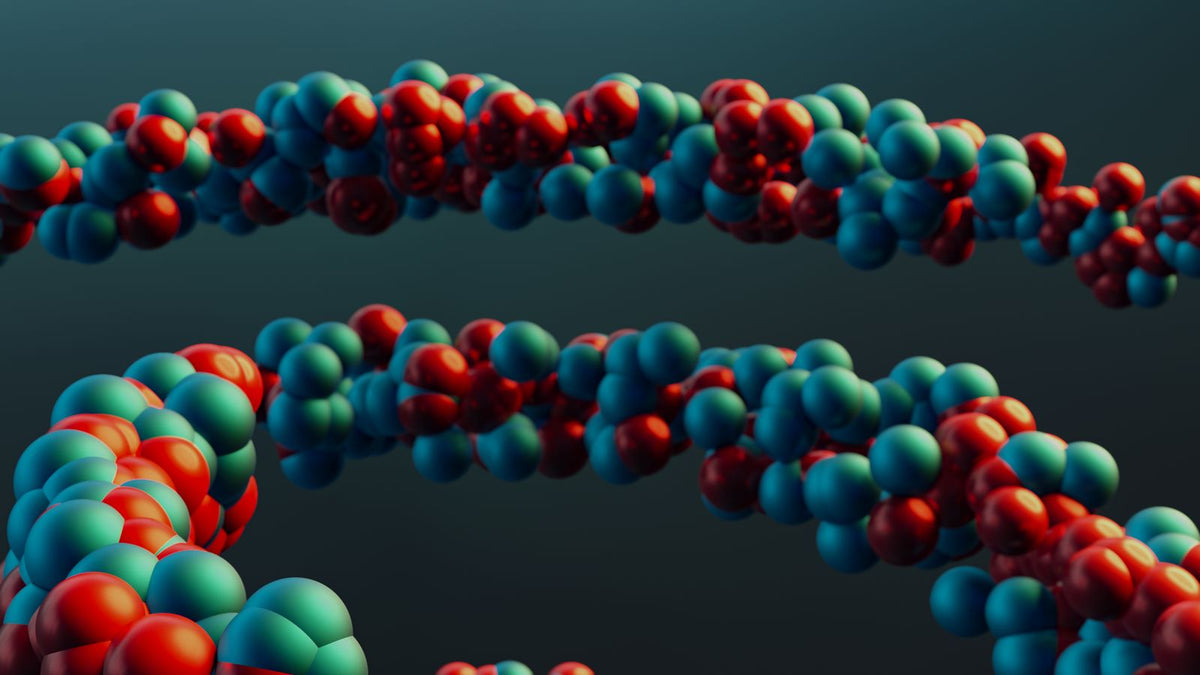
5-alpha reductase is an enzyme that regulates how much dihydrotestosterone, or DHT, your body makes from testosterone. DermNet describes it plainly: an enzyme is a protein that acts as a catalyst to speed up a chemical reaction, and this one governs DHT production. It matters for hair because DHT is believed to shorten the growing phase of the hair cycle in follicles that are genetically sensitive to it.
Our hair growth shampoo
Grow Me® Hair Growth Shampoo, £14.95. A sulphate free daily shampoo that supports a healthy scalp environment and helps reduce breakage, so lengths hold on and look fuller.
Key takeaways
- The enzyme does not cause hair loss by itself. It regulates the supply of a hormone some follicles react to.
- DermNet reports DHT is believed to shorten the growing phase from a usual three to six years down to weeks or months.
- Around 90 per cent of scalp hairs are in the growing phase at any moment, and that phase normally runs two to six years.
- Susceptibility genes come from both parents, and DermNet states genetic testing to predict balding is unreliable.
- No cosmetic product acts on this enzyme. Any shampoo claiming to is making a medicine claim it cannot support.
- Up to half of Caucasian men see some hair loss by 50, and rates differ markedly between populations.
What does 5-alpha reductase actually do?
5-alpha reductase converts testosterone into dihydrotestosterone, a more potent androgen, and in doing so it sets how much DHT is available to the tissues that respond to it. DermNet notes DHT is found in several tissues in the body including the prostate gland and the skin, so this is not a hair specific chemical. It is ordinary body chemistry that happens to have a visible consequence on some people's scalps.
The consequence is a shortened growing phase. A scalp follicle normally spends two to six years in anagen, its growth phase, then one to two weeks in a brief transition phase, then about three months resting before the cycle restarts. Compress that multi year growth window and the fibre never reaches the length or calibre it used to, which is what a widening parting actually is.
| Phase | Normal duration | Share of scalp hairs | What happens to it in pattern hair loss |
|---|---|---|---|
| Anagen (growing) | Two to six years | About 90 per cent | Shortened, potentially to weeks or months |
| Catagen (transition) | One to two weeks | Small fraction | Largely unchanged |
| Telogen (resting) | About three months | Roughly 10 per cent | Proportionally larger as anagen shrinks |
Why tufts matter more than single hairs
DermNet points out that scalp hairs grow in tufts of three to four, unlike hair elsewhere on the body. In androgenetic alopecia those tufts progressively lose members, and bald scalp only becomes visible once a whole tuft has gone. That is why thinning looks like nothing at all for years and then seems to appear all at once.
Does more 5-alpha reductase mean more hair loss?
Enzyme activity is only half the equation, and on its own it predicts very little. DermNet is explicit that male pattern hair loss occurs in men who are genetically predisposed to be more sensitive to the effects of DHT. Two people can carry similar hormone chemistry and end up with completely different heads of hair, because the difference lives in the follicle's response, not in the supply chain.

The strongest everyday proof is the back of your own head. Follicles there sit in exactly the same bloodstream as the ones on your crown and are exposed to the same hormone, yet they keep producing thick hair for decades. Nothing about the enzyme differs between the two sites. The receptors do. Our guide to how scalp androgen receptors decide which follicles react covers that half of the mechanism.
Inheritance is messier than the old myth about your mother's father, too. DermNet states that several genes are involved, that susceptibility genes are inherited from both mother and father, and that this accounts for differing age of onset, progression, pattern and severity between family members. It also states that genetic testing to predict balding is currently unreliable, which is worth knowing before anyone sells you a test.
Is this different in women?
Women usually follow a different route, and hormone tests are typically normal. DermNet notes that women losing hair with age are more likely to have female pattern hair loss, in which hormone tests come back normal, rather than the androgen driven male pattern. A small number of women do present with male pattern hair loss because they have both excessive androgen levels and a genetic predisposition.
In that smaller group the hair change usually arrives with company: acne, irregular periods and excess facial or body hair. DermNet describes these as characteristic of polycystic ovarian syndrome, while adding an important caveat that most articles skip, which is that the majority of women with the condition do not experience hair loss at all. If that combination sounds familiar, our page on PCOS related hair loss and how it is managed goes further, and a GP is the right next step.
How do hair loss, shedding and breakage differ here?
Androgen driven hair loss, hair shedding and hair breakage are three different problems, and only one of them has anything to do with this enzyme. Mixing them up is how people spend years buying the wrong product for the wrong mechanism.
| Hair loss (follicular) | Hair shedding (cycle) | Hair breakage (fibre) | |
|---|---|---|---|
| Mechanism | Follicles miniaturise over years | Too many follicles rest at once | The fibre snaps along its length |
| Link to this enzyme | Indirect, through DHT and inherited sensitivity | None | None |
| Timescale | Years | Weeks to months, then settles | Builds until length stalls |
| What actually helps | GP assessment first, then protecting what remains | Fix the trigger, then wait | Gentler handling, heat control, conditioning |
Shedding after illness, childbirth, crash dieting or a stressful few months is self limiting and has nothing to do with androgens. Breakage from bleach, straighteners and tight styling is mechanical and completely fixable. If you are not sure which you have, our breakdown of the three mechanisms and what fine vellus hairs on a parting are telling you are the two fastest ways to place yourself.
Get a discount on the thinning hair range
Join the Watermans mailing list and we will email a discount code straight to your inbox, so you can try the thinning hair range for less. Vegan, made in the UK, over 6.5 million bottles sold since 2012.
Can diet or supplements change enzyme activity?
No food or supplement has been shown to change this enzyme's activity in a way that visibly changes hair, and the ingredients most often marketed for it rest on thin evidence. Saw palmetto, pumpkin seed oil and green tea extract all appear in this conversation. What exists is mostly small, short studies rather than the kind of evidence that would justify a confident claim on a bottle. Related reading: our guide to nettle tea benefits for hormones. Our guide to natural DHT remedies and what the evidence says works through the same ingredient list one by one.

That does not make eating well pointless. It makes it honest to say what it does. Adequate protein, iron and overall calories keep the hair cycle running normally, and a real deficiency will show up in your hair. Correcting a deficiency you actually have is worth a great deal. Taking supplements for a deficiency you do not have is worth nothing, which is why a blood test from a GP beats a guess from a shelf.
A fair question to ask any product
If a hair product claims to act on an enzyme or a hormone, ask what regulatory category it is sold in. Cosmetics are regulated on safety and on what they do to hair and skin, not on changing body chemistry. A product making a body chemistry claim is either a medicine or is overstating itself, and on a shop shelf it is almost always the second.
What can a cosmetic routine genuinely do?
A cosmetic routine works on the hair fibre and the scalp surface, and it does that well. Hair that is already finer at the root is mechanically weaker, so everyday heat, friction and tight styling cause visible damage where they previously caused none. Breakage then sits on top of thinning and the two become indistinguishable in a mirror. Removing the breakage half is achievable and it is the half you control.


Our caffeine and biotin hair growth shampoo cleans a scalp thoroughly without stripping it, which is what fine hair needs. Vegan, made in the UK, and part of a range that has sold over 6.5 million bottles since 2012.

Grow More Leave In Scalp Elixir
A leave in scalp elixir you apply to towel dried hair and leave in. It is a cosmetic conditioning step for the scalp and roots, not a hormonal one, and it is vegan and made in the UK.
Three practical habits beat any single bottle. Detangle upward from the ends. Let hair dry to roughly eighty per cent before heat touches it. And vary where you part and how tightly you tie, because repeated traction at one point is mechanical damage you can simply stop doing.
When should you see a GP?
See a GP if your hair is thinning fast, coming out in patches, or arriving alongside other changes such as irregular periods, unexplained tiredness or weight change. The NHS advises speaking to a GP to understand what is causing hair loss before spending money at a commercial hair clinic, and that is sound advice from a body with nothing to sell.
This is also the right place for any conversation about medicines that act on this pathway. Watermans sells cosmetics, does not run clinics, and is not the right source for that discussion. A GP can also check iron and thyroid function, which are common, checkable and behave nothing like inherited pattern thinning. If your question is about products or a routine rather than a medical one, you can talk to Gail Waterman, our co-founder, as an AI avatar on the Watermans homepage. Herbal extracts sold on the same promise are covered in our guide to saw palmetto, including its safety record.
Frequently asked questions about 5-alpha reductase
Is 5-alpha reductase bad for you?
No. It is a normal enzyme doing a normal job, and the androgen it helps produce has roles throughout the body, including in the prostate gland and skin as DermNet notes. It is only relevant to hair because some scalp follicles are genetically sensitive to the hormone it regulates.
Can a blood test tell me my enzyme activity?
Routine blood tests measure circulating hormone levels rather than enzyme activity in your scalp follicles, and those levels are often perfectly normal in people whose hair is visibly thinning. A GP may still run bloods to check iron and thyroid function, which are far more actionable.
Does saw palmetto work?
The evidence is thin. Studies that exist tend to be small and short, and none of them supports the confident claims made on packaging. If you want to try it, treat it as an experiment with your own money rather than as an established option, and tell a GP if you take other medicines.
Why does the back of my head keep its hair?
Because follicles there are less sensitive to DHT, not because less hormone reaches them. The bloodstream is the same across your whole scalp. That inherited difference in sensitivity is also why transplanted follicles keep behaving the way they did in their original location.
Is hair loss inherited from my mother's side?
Not exclusively. DermNet states that susceptibility genes are inherited from both mother and father, and that several genes are involved, which is why age of onset, pattern and severity vary so much between relatives. The single gene story from your mother's father is folklore.
Does washing my hair remove DHT from my scalp?
Washing removes oil, sweat, dead skin and product from the surface of the scalp, which is a real and useful job. It does not reach into follicles or change body chemistry. A clean scalp is worth having on its own terms rather than as a hormonal intervention.
How quickly would I notice a change from anything I do?
Hair grows at roughly a centimetre a month, so whatever you start today is invisible for weeks. Give any change three months and take a photograph of the same parting in the same light on day one, because comparing images beats comparing memories.
Does 5-alpha reductase affect women's hair the same way?
Usually not. DermNet notes that women losing hair with age more often have female pattern hair loss, in which hormone tests are normal. A smaller group does have raised androgen levels alongside a genetic predisposition, and that group tends to notice acne, irregular periods and excess facial hair too.
What is the bottom line on 5-alpha reductase?
5-alpha reductase is a normal enzyme that regulates DHT production, and it is only half the story of pattern hair loss. The other half, and the more decisive one, is an inherited sensitivity in particular follicles, which is why the crown thins while the back of the head does not. No cosmetic changes the enzyme, and a product that says it does is selling a medicine story. What cosmetic care changes is breakage and scalp condition, and on fine hair that is a real share of what you see.
The practical move is to stop losing length you already grew. A hair growth shampoo that cleans without stripping, used for three months with photographs in the same light, tells you more than another evening of reading.
Watermans products are 100% cosmetic and do not treat medical hair loss. Individual results may vary.
Sources & references
- DermNet, Male pattern hair loss, on the enzyme regulating DHT production, the shortened growth phase, hair cycle timings, tufts of three to four, inheritance from both parents and unreliable genetic testing
- DermNet, Female pattern hair loss, on normal hormone results in most affected women and on polygenic inheritance
- NHS, Hair loss, on seeing a GP before a commercial hair clinic and on normal daily hair loss
- DermNet, Hair loss, on pattern hair loss being apparent in about half of individuals by the age of 50